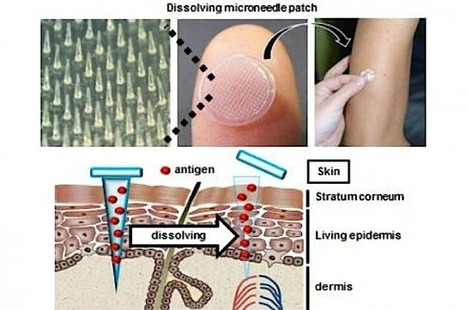
Transdermal delivery via microneedles is increasingly gaining traction as one of the more promising drug delivery technologies. Microneedles are of a few hundred microns in size, capable of creating transient pores across the skin by penetrating the stratum corneum layer to deliver molecules. These needles are not big enough to reach the nerve-rich regions of the skin; as a result, the drug delivery is perceived as completely painless and devoid of bleeding. Drugs, vaccines, proteins, peptides and other biomolecules are suitable for delivery using the microneedle technology.
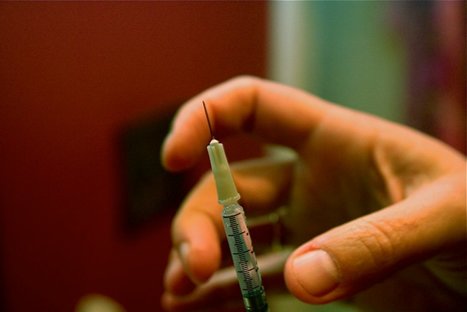
Needle-free drug delivery technologies are used to deliver drugs or vaccines into a patient’s body without the need for a traditional needle. The primary objectives of the development of these technologies are to eliminate NSI and its associated complications and increase patient compliance and comfort. Needle-free drug delivery systems include jet injectors, microneedles, nanopatches, and vaccine implants. The advantages of these systems over conventional syringes are expanded immunization coverage, decreased healthcare costs, and increased patient compliance.
J&J may not be in the front ranks of the immuno-oncology giants, but it is carving out a place for itself in the hottest field in biopharma R&D. J&J's ($JNJ) research unit Janssen has inked back-to-back I/O deals with two small biotechs in the U.S. and Europe.
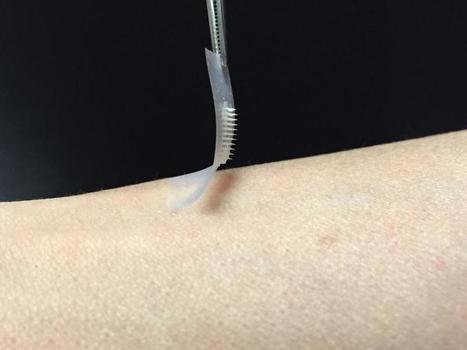
A comparison of two methods for delivering influenza vaccines has concluded that dissolvable microneedles perform at least as well as the traditional hypodermic. Microneedle patches could have advantages both in delivering vaccines to remote locations and in overcoming resistance to vaccination. Microneedles replace a single large needle with numerous needles so small they can barely be seen or felt, each delivering a fraction of the dose required to induce an immune response in the patient.
Pricking your finger and meticulously checking your blood sugar could no longer be the only way people with diabetes handle the disease. Researches from the University of North Carolina at Chapel Hill and N.C. State University are working to replace this painful process with a thin square patch the size of a penny. It is a “smart insulin patch” that can detect increases in blood sugar levels. The patch has more than a hundred tiny microneedles, each about the size of an eyelash.
OND are developing novel techniques and materials to produce low cost needle patches to deliver vaccines and drugs to the immune system http://www.oxfordnanodelivery.com
Microneedles continue to show promise as a replacement - in at least some applications - for the hypodermic needle. Typically, a sheet containing an array of the tiny needles is adhered to the patient's skin, like a bandage. The microneedles painlessly pierce the top layer of skin, then gradually deliver the medication within them by harmlessly dissolving into the patient's bloodstream. As an added bonus, once everything is complete, there are no bio-hazardous used needles to dispose of. Now, bioengineers from Massachusetts' Tufts University have de
The market is still in its infancy. So far, only one microneedle based delivery device, Soluvia prefilled microinjection system, has reached the market. The vaccine-device combination product was FDA approved in May 2011 for intradermal delivery of Fluzone influenza vaccine. We have identified more than 25 companies, with proprietary microneedle technology, actively working towards the development of microneedle-based drug or vaccine products. Clearside Biomedical, NanoPass Technologies, Corium International, Circassia, Radius Health and Zosano Pharma are examples of companies which are evaluating microneedle based drug/vaccine – device combination products (referred to as products hereafter) in clinical trials.
A microneedle patch being developed by Georgia Tech and the Centers for Disease Control and Prevention (CDC) could make it easier to vaccinate people ...
Prof Prausnitz has been a pioneer in microneedle development for over a decade. It has taken over a decade to get to prototype stage and preliminary clinical trials and I believe another decade to mature, but this is indeed the future, at least for important high demand vaccines that require rapid distribution (e.g. pandemic vaccines).
The flu vaccine used in the study is the same as the FDA-approved flu vaccine from last season. The purpose of the study is to assess the safety of the microneedle patch, how the body's immune system responds to the vaccine delivered through a patch, and participants' opinions about using the patch. Participants will receive follow up, including blood work, during six visits over six months.
Transdermal delivery via microneedles is increasingly gaining traction as one of the more promising drug delivery technologies. Microneedles are of a few hundred microns in size, capable of creating transient pores across the skin by penetrating the stratum corneum layer to deliver molecules. These needles are not big enough to reach the nerve-rich regions of the skin; as a result, the drug delivery is perceived as completely painless and devoid of bleeding. Drugs, vaccines, proteins, peptides and other biomolecules are suitable for delivery using the microneedle technology.
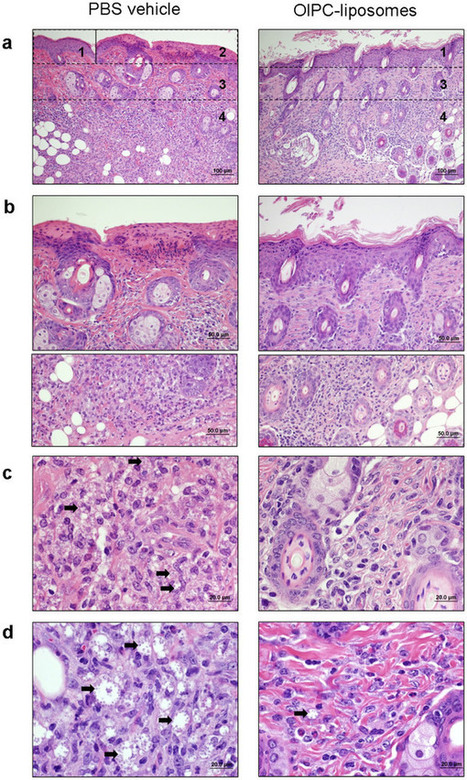
This study establishes a proof-of-concept that a tattoo device can target intra-dermal drug delivery against cutaneous leishmaniasis (CL). The selected drug is oleylphosphocholine (OlPC) formulated as liposomes, particles known to be prone to macrophage ingestion. We first show that treatment of cultured Leishmania-infected macrophages with OlPC-liposomes results in a direct dose-dependent killing of intracellular parasites.
In a paper published this month in Biomaterials, scientists from Osaka University describe their successful experimentation with a new inoculation method which utilizes tiny, biodegradable microneedles made of hyaluronic acid, a naturally occurring substance found in your body’s joints. Those microneedles sit on a coin-sized patch which a patient simply affixes to their arm, allowing the tips of the needles to pass through just the very top dermal layers. As medicine flows through the patch and into you, the needles themselves begin to disintegrate from the moisture in your skin. The patch, dubbed “MicroHyala,” is easy to apply, and requires no extensive medical training, which makes it perfect for use by aid workers in remote, or developing locales in which trained professional physicians may be scarce.
One hundred sixty years after the invention of the needle and syringe, we're still using them to deliver vaccines; it's time to evolve. Biomedical engineer Mark Kendall demos the Nanopatch, a one-centimeter-by-one-centimeter square vaccine that can be applied painlessly to the skin. He shows how this tiny piece of silicon can overcome four major shortcomings of the modern needle and syringe, at a fraction of the cost.
Microneedles could also be used for drug delivery. The team has reportedly used the same microneedle patches to administer a wide variety of drugs, and immunologists are already excited about their potential for delivering vaccines painlessly and easily. There's no word yet on cost or timeframe — as you'd expect, the patches need to undergo rounds of clinical testing before they'll be seen in the real world. But if they deliver even half of their promise, it could be a major leap forward for medical science. And, most importantly, no more painful trips to the doctor.
Dr Ryan Donnelly, from the School of Pharmacy at Queen's University Belfast, demonstrates his microneedle technology that could revolutionise the way drugs are delivered -- from small molecules to vaccines and biological compounds.
Scientists at King's have demonstrated the ability to deliver a dried live vaccine to the skin without a traditional needle, and shown for the first time tha...
King's is one of many leading academia exploring microneedle vaccine delivery. It does require a critical mass of clinical trials and peer reviewed publications to persuade the relevant stakeholders, mostly big vaccine pharma companies and regulators, to promote, develop and foster micorneedle developments.
Eventually, through concerted and massive efforts of many, we will prevail.
To get content containing either thought or leadership enter:
To get content containing both thought and leadership enter:
To get content containing the expression thought leadership enter:
You can enter several keywords and you can refine them whenever you want. Our suggestion engine uses more signals but entering a few keywords here will rapidly give you great content to curate.


 Your new post is loading...