 Your new post is loading...

|
Scooped by
Jim Lerman
February 18, 2013 1:39 AM
|
By Wesley Fryer "These are my notes from Matt Hardy‘s WONDERFUL presentation on February 9th on Classroom 2.0 Live about Blogging in the classroom and the platform he co-founded, KidBlog! The official title of his presentation was “Using Kidblog to Document Student Learning.” I listened to the audio-only version of this presentation available via the iTunes-U channel of Classroom 2.0 Live. I titled this post “A Vision for Interactive Writing, Student Publishing, and Digital Portfolios in the Classroom” because that summarizes a lot of the ideas Matt shared in this preso. If you’re not aware of Classroom 2.0 Live, definitely check out their website and try to attend their Saturday morning LIVE sessions! If you miss a session, however, the archives are GREAT to download and enjoy afterwards! For more resources related to interactive writing and student blogging, check out the “Interactive Writing” page of “Mapping Media to the Common Core.”
|
|
Scooped by
Jim Lerman
February 18, 2013 1:21 AM
|
|
|
Scooped by
Jim Lerman
February 18, 2013 12:51 AM
|
By Richard Byrne "inClass is a fantastic free iPad app that students can use to take and keep track of the notes they record in all of their courses. inClass allows students to organize notebooks for each of their courses. Within each notebook students can include typed notes, audio notes, video notes, and pictures. The ability to store those four types of notes makes inClass a great app for students to use in a science lab where they might want to have a little video clip of an experiment along with their own typed notes about the lab experiment."
|
|
Scooped by
Jim Lerman
February 15, 2013 12:24 PM
|
Presented by Leslie Kuhlthau Maniotes, PhD, effectiveness coach in the Denver Public Schools "One main goal of Guided Inquiry is to have our students increase their awareness of learning how they learn. How do we help students to become aware of their own learning through the inquiry process? How do teachers assess this learning? Guided Inquiry Design includes a comprehensive set of tools embedded through the inquiry process. These tools have multiple functions. They are used to help students become aware of how they learn through inquiry and, at the same time, give teachers a formative assessment of the learning. In our community’s next webinar, we will showcase the tools in Guided Inquiry Design, explore the depth and reach of their use, and explain how to implement tools throughout the inquiry process. Join Leslie Maniotes, NBCT, MEd, PhD is a Teacher Effectiveness Coach in Denver Public Schools, on February 26th for an exploration of Guided Inquiry Design tools to help your students learn how to be better learners."
|
|
Scooped by
Jim Lerman
February 14, 2013 6:34 PM
|
Description by EdSurge " HACKTIVITY KITS is a collection of nine hands-on and web 2.0 activities intended to explain and reinforce the concept of web hacking -- that is, the idea of remixing, reusing, and re-purposing existing content to create new material or glean interesting insights. Created by NYC HIVE, a MacArthur Foundation-supported group of civic-minded organizations (there's a Chicago one, too), the Hacktivity Kits are largely built upon Mozilla WebMaker tools: Popcorn Maker, Thimble, and X-Ray Goggles. Each Hacktivity includes a detailed list of learning goals and objectives, expected results, and supporting resources. There's also an extensive list of icebreakers to get the creative juices flowing and skills tutorials for the WebMaker tools. For example, look to the Online Storytelling kit which explains the SVT (Story, Vision, Tech) model for making "web native" stories. In addition to introductory tutorials on how to use the kit and associated technology, there's also the Spectrogram icebreaker, Popcorn Maker deep-dive, and an out-of-the-box design challenge for teachers just getting their feet wet."
|
|
Scooped by
Jim Lerman
February 14, 2013 4:37 PM
|
By Gwenn Schurgin O'Keefe, MD Summary by SmartBrief on EdTech "As the National Day of Unplugging -- scheduled for March 1 -- approaches, Dr. Gwenn Schurgin O'Keeffe, a pediatrician and author, is offering some suggestions to get a head start. She suggests reading a traditional book or magazine, going for a walk and leaving the cellphone behind, or organizing a family game night. Other suggestions include spending time on a hobby, going to a lecture or show, and using a real camera to take photos."
|
|
Rescooped by
Jim Lerman
from :: The 4th Era ::
February 14, 2013 3:23 PM
|
From the website "In this Educational Leadership article, Mel Levine discusses the importance of helping students develop "soft skills" and what he calls the four Is: interpretation, instrumentation, interaction, and inner direction. As he says, students can have superb memories for facts, but educators must make sure students learn how to decipher, interpret, and think. "If high schools merely require students to memorize and mimic, Levine says, students will struggle in college and not be able to decrypt content or have true comprehension. Instead, educators need to help students analyze, evaluate issues, and interpret. "Levine goes on to suggest ways in which high schools can alter their curriculum to support active mental engagement and set students on the road to success in higher education and in life."
|
|
Rescooped by
Jim Lerman
from Digital Presentations in Education
February 14, 2013 2:44 PM
|
Short talk about presentations given at Startup Dynamo, a workshop held by Startup@Singapore NUS using the Learn Startup Methodology. My segment was on Present
Via Baiba Svenca
|
|
Scooped by
Jim Lerman
February 14, 2013 2:28 PM
|
Humankind has been telling complex stories through simple visuals long before you saw your first infographic at Mashable. History is humbling, let's go back in
|
|
Rescooped by
Jim Lerman
from Digital Presentations in Education
February 14, 2013 12:00 AM
|
With stylish templates which are already within the application, you will be able to create posters without great effort. When you do the first step making posters, you can utilize various effects and decorations to complete the chic posters of your own.
Via Baiba Svenca
|
|
Rescooped by
Jim Lerman
from Digital Presentations in Education
February 13, 2013 11:57 PM
|
Add the ultimate personal touch to any document: turn your handwriting into a font and use that. There’s a lot of creative potential here, and it’s a lot easier to do than you’d think thanks to MyScriptFont.
Via Baiba Svenca
|
|
Scooped by
Jim Lerman
February 13, 2013 1:38 PM
|
Posted by Lucien Vattel Figuring out the next generation model of education isn't as hard as you'd think. Interactive learning and making are already here.
|
|
Rescooped by
Jim Lerman
from :: The 4th Era ::
February 13, 2013 1:26 PM
|
By Roger Riddell "Last year, iPads in education took the world by storm, finding their ways into initiatives at both the K-12 and university levels. Here at Education Dive, we talked to some of the people responsible for those rollouts and watched as schools decided how to use tablets, whether they were Apple's or not. "In 2013, iPads are still going strong. New pilot programs are winning over former doubters—and in some cases existing programs are expanding. So how will iPads be used as their classroom roles evolve in 2013? Education Dive found these examples:"
|
|
|
Scooped by
Jim Lerman
February 18, 2013 1:33 AM
|
By Wesley Fryer "Three days ago the blogging service Posterous officially announced they will close up shop / go offline on April 30, 2013. Those of us who have used Posterous in the past few years and grown to love it are disappointed, but thankfully there are several alternatives available to Posterous and even more are likely to pop up in the weeks ahead. Posterous was one of the primary blogging platforms I recommended in my 2011 eBook, “Playing with Media: simple ideas for powerful sharing,” because it permitted people to post rich media files (including images, audio, video, and files like ePUB ebooks) directly via email AND included optional “moderation” features very important to classroom teachers working with students. In this post, I’ll share some tips and lessons learned about migrating your Posterous site to either a free site on WordPress.com or a self-hosted site you manage using WordPress.org. I’ll also address some other commercial options (possibly well worth your money, depending on how deep you want go get into “the weeds” of migrating content) like Posthaven (thanks Cyndi Danner-Kuhn and TechCrunch) and Import2, which supports exports to Tumblr."
|
|
Scooped by
Jim Lerman
February 18, 2013 1:20 AM
|
By Med Kharbach "Now Google Docs has more than 450 new fonts added to it and from which you can select the one you like. Yes 450, it is a huge number of fonts and I have already been experimenting with some of them and guess what ? they are awesome. Now you wont run out of font options.:
|
|
Scooped by
Jim Lerman
February 17, 2013 8:32 PM
|
. . 21st Century How-To Guide For Teaching-People (teachers, professors, educators, instructors...)... A practical guide for teaching-people (teachers, professors, educators, instructors...) on How...
|
|
Rescooped by
Jim Lerman
from :: The 4th Era ::
February 14, 2013 6:42 PM
|
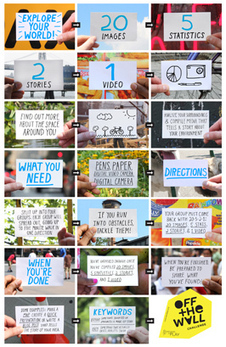
Description by EdSurge " OFF THE WALL LEARNING is a "highly visual approach to sharing challenge-based informal learning activities" brought to you by the Institute of Play. (You may recall another one of its projects is to create an "edu" version of SimCity.) The aim of Off the Wall Learning is to reinvent activity facilitation by removing the do-as-I-say interaction between instructors and learners, and isolating acitivity instructions (in this case, on a wall poster) such that instructors and learners can approach the activity on equal footing. The first design iteration, conducted in concert with HIVE NYC, has produced this Water Filter Challenge poster and an inquiry-based exploration activity. They've even provided a template poster for educators looking to adapt their own activities. If creating graphic posters is outside of your comfort zone, check out Easel.ly which may help remove some of the anxiety."
|
|
Scooped by
Jim Lerman
February 14, 2013 6:11 PM
|
Posted by Jeff Dunn "If you’re like most connected educators and students out there, you’ve got a blog. You’ve got a little digital place called home that you wish more people would visit. There’s more to getting the word out than just publishing and wishing. There’s SEO, social media, commenting, links, pinning, liking, guest posting, tweeting, the list goes on … "Lucky for you, the fine folks over at Launch Grow Joy have published a fabulous boiled-down cheat sheet for bloggers. It details quite a few useful ways to help you grow and promote your blog. From using your current contacts to reaching out to fellow bloggers, the tips in the below infographic are important to know. "Whether you’re a seasoned blogger or not, these tips should help you on your path to blogging glory! (Note: blogging glory is a relative term and actual glory may vary)"
|
|
Scooped by
Jim Lerman
February 14, 2013 4:30 PM
|
By Ki Mae Heussner "Summary: In his State of the Union speech, President Obama recognized the IBM-backed Pathways in Technology Early College High School (P-TECH) in New York. Rashid Davis, P-TECH’s principal, chats with GigaOM about what makes his school work and how it could be replicated around the country."
|
|
Rescooped by
Jim Lerman
from Organisation Development
February 14, 2013 2:46 PM
|
What is this ability to step into someone else’s shoes? To imagine how they feel - and to hurt for them or be happy for them? Host Frank Stasio is joined by a panel of experts to discuss empathy, the trait that makes us uniquely human. Lasana Harris is an assistant professor in psychology and neuroscience at Duke University; Jesse Prinz is a Distinguished Professor of philosophy at the Graduate Center of the City University of New York; Pate Skene is an associate professor of neurobiology at Duke University and a second year law student; and Ralph Savarese is an associate professor of English at Grinnell College, a Duke Humanities Writ Large Fellow, and the author of “Reasonable People: A Memoir of Autism and Adoption”
Via Edwin Rutsch, David Hain
|
|
Rescooped by
Jim Lerman
from :: The 4th Era ::
February 14, 2013 2:40 PM
|
By Robert Korsara "Presentation and communication of data have so far played a minor role in visualization research, with most work focused on exploration and analysis. We propose that presentation, in particular using elements from storytelling, is the next logical step and should be a research focus of at least equal importance as each of the other two. Stories package information into a structure that is easily remembered, which is important in many collaborative scenarios when an analyst is not the same person as the one who makes decisions, or simply needs to share information with peers. Data visualization lends itself well to being a communication medium for storytelling, in particular when the story also contains a lot of data. We review the literature on storytelling and presentation and outline the research area. "
|
|
Rescooped by
Jim Lerman
from Digital Presentations in Education
February 14, 2013 12:02 AM
|
This digital learning tool can be used for so much...explaining a topic, expressing your thoughts, and more. This week we will complete our Unit 2. Students will finalize their unit of study with a project using data from...
Via Baiba Svenca
|
|
Rescooped by
Jim Lerman
from Digital Presentations in Education
February 13, 2013 11:58 PM
|
Electric Slide is the easiest way to wirelessly present PowerPoint slides, Office documents, PDFs and videos with your iPhone or iPad. Your device is a remote control that works anywhere with any screen. Since viewers just need your simple URL to follow along, setup is a cinch. You can also connect your device directly to a TV or projector via HDMI or VGA.
Via Baiba Svenca
|
|
Scooped by
Jim Lerman
February 13, 2013 2:57 PM
|
Presentation for the Midwest Educational Technology Conference
|
|
Scooped by
Jim Lerman
February 13, 2013 1:30 PM
|
Posted by Jeff Dunn "You may have a Twitter account that you don’t use very often. You may tweet once in blue moon. You may just use it to ‘lurk’ during hashtag chats you enjoy. (Check out our list of Twitter hashtags for to get started with that!) But you may not be a full-fledged Twitter user … yet. "This dense and highly visual approach to understanding Twitter is just great. From the fine folks at Twiends, it lays out all the vocabulary you need, actions you can perform, and even gives a rough idea of what you should expect from Twitter. It’s a great visual introduction to Twitter or refresher for any active Twitter user. "The below infographic is basically a beginner’s guide to Twitter except it’s one easy-to-read format: infographics! The only problem I have with this visual is that it’s simply too much information crammed into the relatively small space of an infographic. That being said, that’s probably a good thing."
|


















Kidblog is on my to do list to look into...