International Economics: IB Economics
15.6K views | +57 today
Follow
 
Scooped by Graham Watson
onto International Economics: IB Economics
March 17, 3:22 AM
Scoop.it!

How the World Bank Group Measures What Really Matters: Results Achieved vs. Expected

The World Bank Group (WBG) Scorecard is shifting the focus to measuring impact by prioritizing real-world development outcomes, results achieved, and results expected over simply counting projects.

The video explains the critical difference between "Results Achieved" - the tangible outcomes already delivered, such as new internet connections or safe drinking water, and "Results Expected," which signals the full ambition of our operations. By tracking both, the WBG Scorecard provides a transparent picture of the WBG's impact and future goals.
Moving beyond just tracking financing and activities to measure what truly matters for people, communities, and the planet. To better understand how progress is tracked, measured, and strengthened visit: http://wrld.bg/MmlA50Ytth8

Graham Watson's insight:

Another little snippet looking at how the World Bank Group's Scorecard is going to be used to track the difference between Results Achieved and Results Expected outcomes, to inform policy decisions. It will track diverse indicators such as connection to the internet, access to clean drinking water and the learning outcomes of students, all things that imply a higher level of development.

No comment yet.
International Economics: IB Economics
A collection of articles relating to the 'international' elements of Economics and relating to IB, Pre-U and A-Level Economics.
Curated by Graham Watson
Your new post is loading...
Scooped by Graham Watson
Today, 3:01 PM
Scoop.it!

How Results Narratives Capture Development Impact Beyond Financing | World Bank Group Scorecard

Results Narratives in the World Bank Group Scorecard provide a complete picture of development outcomes, policy reforms, and institutional strengthening beyond just financing. Results Narratives outline the crucial context needed to understand how change happens. This video explores how we capture the impact of non-financial support - such as legal reforms, governance improvements, and market creation, that drives sustainable development. You will see real-world examples from Kenya, Jordan, and Colombia that illustrate how connecting the dots between policy and systems leads to lasting results for people and the planet.

Graham Watson's insight:

Another clip looking at the new World Bank Group Scorecard, highlighting how it it attempting to capture all elements of development stories - both the quantitative and qualitative aspects of development. This clip looks at three different examples - Kenya,  Jordan and Colombia helping young people to get jobs, increase female participation and fund improvements in healthcare. 

No comment yet.
Scooped by Graham Watson
March 18, 4:16 AM
Scoop.it!

Egypt 30by30: Mobilizing Finance for Smart, Resilient Growth

Egypt30by30 is an IFC program strengthening the foundations of sustainable finance in Egypt. Working with banks and regulators, it helps expand financing for investments that improve efficiency, strengthen resilience, and support long-term growth.

Through landmark transactions—including Egypt’s first private-sector Green Bond and Africa’s largest sustainability bond by a private bank—the program has mobilized more than $700 million in financing, supporting smart development across the economy.

Graham Watson's insight:

The importance of finance for development is set out in this International Finance Corporation clip which emphasises the importance of financial markets for sustainable development. In the case of Egypt, this means the issuing of green bonds to support development and achieve climate change targets. 

No comment yet.
Scooped by Graham Watson
March 17, 3:13 AM
Scoop.it!

‘If we have to change tack, we will’: RBA hikes rates but not aiming to put Australia into recession, Bullock says | Reserve Bank of Australia | The Guardian

‘If we have to change tack, we will’: RBA hikes rates but not aiming to put Australia into recession, Bullock says | Reserve Bank of Australia | The Guardian | International Economics: IB Economics | Scoop.it
Reserve Bank of Australia’s second consecutive increase lifts cash rate target to 4.1%, back to where it was in February last year
Graham Watson's insight:

The first monetary policy response to the Iran conflict? Either way, the Reserve Bank of Australia has raised its cash interest rate target to 4.1%, taking interest rates back to where they were in February 2025. 


However, if you read the accompanying article - which I know you will - you'll actually find that the RBA governor was intending to increase rates even prior to recent events because inflation was "already too high". You might want to refresh your understanding of how the monetary transmission mechanism will translate the change in rates into changes in real variables. 

No comment yet.
Scooped by Graham Watson
March 16, 11:59 AM
Scoop.it!

Africa particularly vulnerable as Iran conflict disrupts supply chains, say experts | Africa | The Guardian

Africa particularly vulnerable as Iran conflict disrupts supply chains, say experts | Africa | The Guardian | International Economics: IB Economics | Scoop.it
Food production in many African countries depends heavily on fertiliser imported from the Gulf through the strait of Hormuz
Graham Watson's insight:

As ever, it seems that some of the world's most vulnerable are going to suffer the most as a result of the ongoing conflict in the Middle East. African farmers are heavily dependent upon fertiliser being imported via the Strait of Hormuz, so any lengthy blockage of that waterway will have severe implications for agricultural productivity and food security. 

No comment yet.
Scooped by Graham Watson
March 16, 3:22 AM
Scoop.it!

Oil prices rise after Trump claims US ‘totally demolished’ Iran’s Kharg Island export hub | US-Israel war on Iran | The Guardian

Oil prices rise after Trump claims US ‘totally demolished’ Iran’s Kharg Island export hub | US-Israel war on Iran | The Guardian | International Economics: IB Economics | Scoop.it
Another weekend of violence compounded global market concerns over war in the Middle East, following US strikes on the vital oil hub
Graham Watson's insight:

I could put this in the Microeconomic section and sell it as D&S, however, I'll leave it here. You could be forgiven for thinking that there was no overarching strategy governing the recent intervention in Iran. 

No comment yet.
Scooped by Graham Watson
March 15, 5:31 AM
Scoop.it!

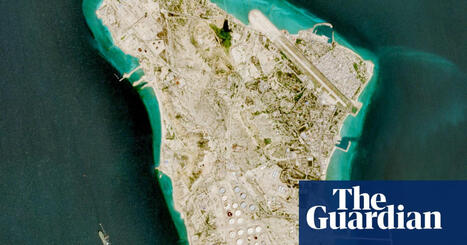
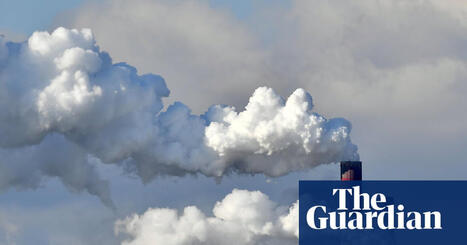
Germany misses climate targets as emissions barely fall in 2025 | Germany | The Guardian

Germany misses climate targets as emissions barely fall in 2025 | Germany | The Guardian | International Economics: IB Economics | Scoop.it
Greenhouse gases dropped just 0.1% last year as environment minister criticises lack of improvement
Graham Watson's insight:

Germany has missed some of its climate change targets, with greenhouse gases only falling by 0.1% last year. However, it's an interesting issue - wouldn't we expect there to be diminishing marginal returns to environmental reforms?

No comment yet.
Scooped by Graham Watson
March 13, 4:52 PM
Scoop.it!

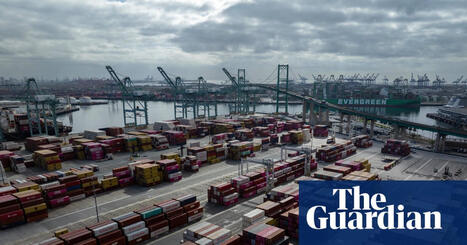
Seven in 10 Americans say Trump tariffs have cost them more money | Trump tariffs | The Guardian

Seven in 10 Americans say Trump tariffs have cost them more money | Trump tariffs | The Guardian | International Economics: IB Economics | Scoop.it
Exclusive survey finds negative economic impacts felt across party lines as White House doubles down on tariffs
Graham Watson's insight:

Well, I never. A Harris Poll finds that Americans of all hues think that Trump's tariffs have increased prices for consumers, albeit Republican are less willing to do so, with 72% thinking they've had a negative impact. 


The other 28% are, presumably, not Economics students. Or morons. Or both. 


No comment yet.
Scooped by Graham Watson
March 13, 4:20 AM
Scoop.it!

US eases Russia oil sanctions as Iran war pushes up energy prices

US eases Russia oil sanctions as Iran war pushes up energy prices | International Economics: IB Economics | Scoop.it
US Treasury Secretary Scott Bessent said it was a temporary measure that will last until 11 April.
Graham Watson's insight:

I know what the US is hoping the relaxation of sanctions against Russia is going to achieve - an increase in the supply of Russian oil - and lower global oil prices. However, I'm not sure that it's the wisest move in that in signals that the US foreign policy has no ethical basis, and is driven almost exclusively by economic imperatives. 


However, more D&S, AD-AS analysis possible... 

No comment yet.
Scooped by Graham Watson
March 12, 10:12 AM
Scoop.it!

The war in Iran is an American failure. What do we do now? | Robert Reich | The Guardian

The war in Iran is an American failure. What do we do now? | Robert Reich | The Guardian | International Economics: IB Economics | Scoop.it
The most powerful nation in the world is now being led by a rogue president who rejects its longstanding values
Graham Watson's insight:

Robert Reich touches upon the opportunity cost of the war with Iran, apparently costing "roughly $1bn per day, or $41,666,667 per hour, $11,574 per second.


He argues that the longer-term political cost of this might be much higher.

No comment yet.
Scooped by Graham Watson
March 12, 4:34 AM
Scoop.it!

Asia scrambles to confront energy crisis unleashed by Iran war – with no end in sight | US-Israel war on Iran | The Guardian

Asia scrambles to confront energy crisis unleashed by Iran war – with no end in sight | US-Israel war on Iran | The Guardian | International Economics: IB Economics | Scoop.it
From fuel caps to four-day work weeks, the Middle East conflict has left the world’s top crude oil importing region desperate to shore up supplies
Graham Watson's insight:

A quick look at government interventions across Asia to mitigate the effects of higher oil prices as a result of the Iran conflict. Everything from price controls, rationing fuel a shorter working week and encouraging working from home. 

No comment yet.
Scooped by Graham Watson
March 11, 4:09 AM
Scoop.it!

Iran war cost will be passed to consumers, shipping giant boss tells BBC

Iran war cost will be passed to consumers, shipping giant boss tells BBC | International Economics: IB Economics | Scoop.it
Maersk chief executive Vincent Clerc has called on the US, Israel and Iran to reach "some kind of deal".
Graham Watson's insight:

More on Iran, and, surprise, surprise, its about cost increase being passed onto consumers. Elementary AD-AS analysis, I would think.

No comment yet.
Scooped by Graham Watson
March 10, 4:19 AM
Scoop.it!

How high could oil prices go – and what might the global economic fallout be? | Economics | The Guardian

How high could oil prices go – and what might the global economic fallout be? | Economics | The Guardian | International Economics: IB Economics | Scoop.it
Crude prices could surpass their 2008 record, with potentially dire effects for consumers and businesses
Graham Watson's insight:

How high could oil prices go? And what are the implications of this. More on the conflict in the Middle East.

No comment yet.
Scooped by Graham Watson
March 10, 4:14 AM
Scoop.it!

Why the price of oil matters more than you might think

Why the price of oil matters more than you might think | International Economics: IB Economics | Scoop.it
A shock to oil supplies is rattling financial markets, driving up prices at the pump and raising fears of a bigger economic hit.
Graham Watson's insight:

Yet another article on the wider macroeconomic implications of the Iran conflict. The usual themes emerge: supply-side shock with significant ramifications for almost every sector of industry. 

No comment yet.
Scooped by Graham Watson
March 18, 4:25 AM
Scoop.it!

Isolated and exposed: can New Zealand’s fragile economic recovery withstand the global oil shock? | New Zealand | The Guardian

Isolated and exposed: can New Zealand’s fragile economic recovery withstand the global oil shock? | New Zealand | The Guardian | International Economics: IB Economics | Scoop.it
New Zealand economic growth tipped to overtake Australia’s this year but Middle East conflict casts a shadow over outlook
Graham Watson's insight:

It's always interesting to read about another economy facing the same problems that we are. In this case it's New Zealand, which was forecast to grow this year but, because it's so heavily dependent upon global trade and tourism, there are concerns that the Middle East conflict could stall growth, and its size makes it more vulnerable than most to supply-side shocks such as this. 

No comment yet.
Scooped by Graham Watson
March 17, 3:22 AM
Scoop.it!

How the World Bank Group Measures What Really Matters: Results Achieved vs. Expected

The World Bank Group (WBG) Scorecard is shifting the focus to measuring impact by prioritizing real-world development outcomes, results achieved, and results expected over simply counting projects.

The video explains the critical difference between "Results Achieved" - the tangible outcomes already delivered, such as new internet connections or safe drinking water, and "Results Expected," which signals the full ambition of our operations. By tracking both, the WBG Scorecard provides a transparent picture of the WBG's impact and future goals.
Moving beyond just tracking financing and activities to measure what truly matters for people, communities, and the planet. To better understand how progress is tracked, measured, and strengthened visit: http://wrld.bg/MmlA50Ytth8

Graham Watson's insight:

Another little snippet looking at how the World Bank Group's Scorecard is going to be used to track the difference between Results Achieved and Results Expected outcomes, to inform policy decisions. It will track diverse indicators such as connection to the internet, access to clean drinking water and the learning outcomes of students, all things that imply a higher level of development.

No comment yet.
Scooped by Graham Watson
March 17, 3:09 AM
Scoop.it!

‘Very damaging’: how the Iran war is hitting energy-intensive industries | Business | The Guardian

‘Very damaging’: how the Iran war is hitting energy-intensive industries | Business | The Guardian | International Economics: IB Economics | Scoop.it
Conflict pushes companies struggling with rising costs in sectors such as steel and chemicals to the edge
Graham Watson's insight:

More on the Iran conflict, with the Guardian focusing on the implications of higher oil and energy prices for energy-intensive industries, like chemicals and steel, and by definition, inflation more generally.


In short, not good. 

No comment yet.
Scooped by Graham Watson
March 16, 3:23 AM
Scoop.it!

Trump claims he has ‘absolute right’ to impose new tariffs after supreme court blow | Trump tariffs | The Guardian

Trump claims he has ‘absolute right’ to impose new tariffs after supreme court blow | Trump tariffs | The Guardian | International Economics: IB Economics | Scoop.it
US supreme court has ‘ransacked’ the country, president argues, in wake of its ruling against his trade agenda
Graham Watson's insight:

Madman howls at the moon. 


Or something to that effect, as President Trump has again used social media to criticize the Supreme Court and push his tariff agenda. 

No comment yet.
Scooped by Graham Watson
March 15, 11:30 AM
Scoop.it!

America needs a movement to curb billionaires’ power | Steven Greenhouse | The Guardian

America needs a movement to curb billionaires’ power | Steven Greenhouse | The Guardian | International Economics: IB Economics | Scoop.it
The country’s 900 billionaires have far too much influence over our government and economy. Here’s how we can reduce the power of the ultra-rich
Graham Watson's insight:

Steven Greenhouse writes in the Guardian arguing that there needs to be a concerted attempt to curb the power of the nation's billionaires, arguing that the select group of 900 has too much influence on policymaking, not least in the form of the tax cuts delivered by President Trump's Big Beautiful Bill. 

No comment yet.
Scooped by Graham Watson
March 14, 2:52 AM
Scoop.it!

Inside the WBG Scorecard: Measuring Progress to End Poverty

The World Bank Group (WBG) Scorecard connects global aspirations with real-world results. Built around 22 results indicators across 15 outcome areas, the WBG Scorecard provides a clear, measurable framework for tracking progress toward ending poverty and boosting shared prosperity on a livable planet.

Graham Watson's insight:

I've never seen development presented like this before, and you'd have thought I would have been aware of the World Bank Group's Scorecard, but I'm not. Its purpose is to track the Bank's ability to assist poverty reduction and shared prosperity - which to me strikes me as giving good insights into development and the challenges to development that remain.  


There are four aspects to the measure - vision indicators, client context indicators, results indicators, results narratives - all of which underscore the multl-faceted nature of economic development and the extent to which the World Bank is helping overcome them.


And it's available here: Measuring Impact | World Bank Group Scorecard

No comment yet.
Scooped by Graham Watson
March 13, 2:02 PM
Scoop.it!

Second US trade probe targets EU, Canada and UK over forced labour

Second US trade probe targets EU, Canada and UK over forced labour | International Economics: IB Economics | Scoop.it
The US said it would examine whether countries are effectively blocking goods made with "forced labour".
Graham Watson's insight:

Any excuse for further tariffs - it seems the US is now pretending that many of its trade partners gain unfair cost advantages because of forced labour. Has it really come to this? 


The answer, alas, is yes.

No comment yet.
Scooped by Graham Watson
March 12, 1:25 PM
Scoop.it!

Middle East war creating ‘largest supply disruption in the history of oil markets’ | Oil | The Guardian

Middle East war creating ‘largest supply disruption in the history of oil markets’ | Oil | The Guardian | International Economics: IB Economics | Scoop.it
Vast release of emergency crude reserves fails to quell mounting fears about supply crunch, rattling markets
Graham Watson's insight:

The largest supply disruption in the history of oil markets: you read it here first.


A supply-side shock to end all supply-side shocks. 

No comment yet.
Scooped by Graham Watson
March 12, 10:06 AM
Scoop.it!

How Iran war laid bare the world's reliance on Gulf oil and gas

How Iran war laid bare the world's reliance on Gulf oil and gas | International Economics: IB Economics | Scoop.it
Countries around the world are feeling the impact of the conflict and the resulting energy price shock.
Graham Watson's insight:

You could be forgiven for thinking that the media have done the US-Iran war to death, and you'd be right. However, if you crave more, here's consideration of the global dependence upon fossil fuels in the fact of the supply-side shock. 

No comment yet.
Scooped by Graham Watson
March 12, 4:19 AM
Scoop.it!

US launches probe into trading partners including the EU, China and India

US launches probe into trading partners including the EU, China and India | International Economics: IB Economics | Scoop.it
The move comes weeks after the US Supreme Court struck down a key part of Trump's tariffs policies.
Graham Watson's insight:

The notion that the US is investigating the trade practices of some of its most important trade partners shouldn't be surprising in the current environment. However, you should be cautious about the phrase "unfair practices": does simply being able to produce at a lower price imply "unfair practices"? 


It's clearly an attempt to justify more tariffs, but I'd argue that it's liable to impose an even higher burden on US consumers and have little effect on America's trade deficit.  

No comment yet.
Scooped by Graham Watson
March 11, 4:07 AM
Scoop.it!

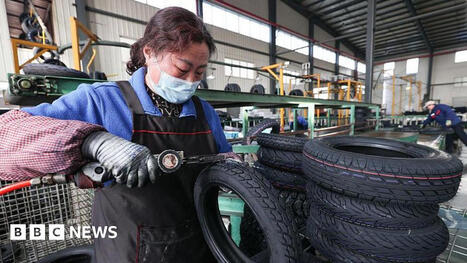
China Two Sessions: Will China's new plan to boost spending work?

China Two Sessions: Will China's new plan to boost spending work? | International Economics: IB Economics | Scoop.it
Beijing has spent decades relying on exports and innovation but that model is now under strain.
Graham Watson's insight:

The policy decisions resulting from this year's Two Sessions and embodied in the 15th Five Year Plan seem to mark a departure from China's previous strategy of export-led growth.


Keen to stabilize the economy and offset the negative effect of the stagnant property market on growth, China's leadership are going to focus on encouraging domestic consumption, something that they've been talking about for over a decade.  


This BBC article looks at whether or not this is going to be successful or not, and also concludes by suggesting that China still has significant structural issues to tackle, not least its ageing population. 

No comment yet.
Scooped by Graham Watson
March 10, 4:17 AM
Scoop.it!

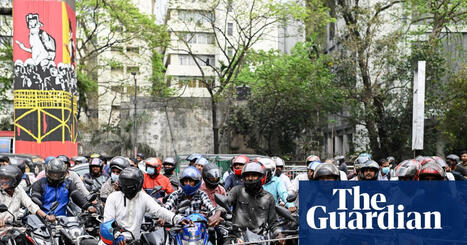
China exports surge in first two months of the year despite Trump tariffs

China exports surge in first two months of the year despite Trump tariffs | International Economics: IB Economics | Scoop.it
The jump in shipments puts the world's second largest economy on track to top the record-breaking annual trade surplus it saw in 2025.
Graham Watson's insight:

So much for President Trump's tariffs damaging the Chinese economy, with Chinese exports surging in the first two months of 2026, meaning that China's trade surplus is likely to grow again. 


And yes, whilst exports to the US have fallen by around 10%, exports to the EU and to ASEAN member states are both up by nearly 30%. 

No comment yet.