Your new post is loading...

|
Scooped by
Gilbert C FAURE
April 1, 3:34 AM
|
𝐓𝐨𝐩 𝐂𝐨𝐦𝐩𝐚𝐧𝐢𝐞𝐬 𝐢𝐧 𝐕𝐚𝐜𝐜𝐢𝐧𝐞𝐬 𝐈𝐧𝐝𝐮𝐬𝐭𝐫𝐲
𝐃𝐨𝐰𝐧𝐥𝐨𝐚𝐝 𝐏𝐃𝐅 𝐁𝐫𝐨𝐜𝐡𝐮𝐫𝐞: https://lnkd.in/dFNjk8eY
The global vaccines market (excluding COVID-19 vaccines), valued at USD 49.59 billion in 2024, stood at USD 47.65 billion in 2025 and is projected to advance at a resilient CAGR of 7.3% from 2025 to 2030, culminating in a forecasted valuation of USD 67.91 billion by the end of the period.
The market is growing due to several factors, including the rapid development and global commercialization of vaccines, the increasing prevalence of infectious diseases that require vaccination for prevention, the rising number of immunization programs, advancements in technology that support vaccine development, and increased government support through investments and funding aimed at creating new vaccines for various disease indications.
• The North America vaccines market accounted for a 52.3% revenue share in 2024.
• By disease indication, the pneumococcal disease segment is expected to register the highest CAGR of 10.6%.
• By technology, the inactivated & subunit vaccines segment is projected to grow at the fastest rate from 2025 to 2030.
• By end user, the adult vaccines segment accounted for a larger share of 54.0% of the market in 2024.
• Companies such as GSK, Merck Group, Pfizer were identified as some of the star players in the vaccines market (global), given their strong market share and product footprint.
• Companies such as SINOVAC BIOTECH LTD., Incepta Pharmaceuticals Ltd., Valneva among others, have distinguished themselves among startups and SMEs by securing strong footholds in specialized niche areas, underscoring their potential as emerging market leaders
|
|
Scooped by
Gilbert C FAURE
March 25, 2:35 PM
|
🐄 Understanding Vaccination & Antibody Titre Dynamics in Dairy Cattle 🧬
Effective vaccination is not just about injecting vaccines—it’s about understanding how the immune system responds and how long protection lasts.
🔬 What happens after vaccination?
The animal’s immune system produces antibodies. The first response is slow and low, while booster doses create a faster and stronger immunity.
📊 Antibody Titre Dynamics:
Antibody levels follow a pattern:
➡️ Lag Phase → 📈 Peak → 📉 Decline
This is why timely booster doses are essential to maintain protection.
🐮 Maternal Antibodies in Calves:
- Obtained through colostrum
- Provide early protection
- Can interfere with early vaccination
⏳ Proper timing of vaccination in calves is critical to avoid vaccine failure.
📅 Practical Vaccination Strategy:
- Calves: 3–6 months
- Boosters: 2–4 weeks after first dose
- Adults: Annual or biannual vaccination
⚠️ Factors Affecting Immune Response:
- Nutrition (Protein, Zinc, Selenium)
- Stress & disease conditions
- Proper vaccine storage & handling (cold chain)
🧪 Why Antibody Titre Testing Matters?
- Evaluate vaccine effectiveness
- Monitor herd immunity
- Optimize vaccination programs
(Common method: ELISA)
💡 Key Takeaways:
✔ Boosters are critical
✔ Good nutrition improves immunity
✔ Monitor and adapt vaccination plans
🌱 Strong immunity = Healthy herd = Better productivity
#DairyFarming #HerdHealth #DairyNutrition
|
|
Scooped by
Gilbert C FAURE
March 24, 11:48 AM
|
The immune system can be your best friend for mRNA vaccines - and also your biggest bottleneck.
A new paper in npj Vaccines by Lobb et al., highlights a counterintuitive point: type I interferon (IFN), a key innate immune alarm signal, can reduce mRNA-LNP vaccine effectiveness if it’s triggered at the wrong time, because activated dendritic cells lose the ability to take up new antigen.
In their models, blocking IFNα/β receptor signaling before vaccination (or removing the receptor specifically in dendritic cells) increased vaccine uptake/expression in DCs, improved CD8⁺ T-cell priming, and led to better tumor control. They also show a practical implication: IFN already “in the system” (for example after an infection or a recent prior vaccination) can blunt the response to an mRNA-LNP vaccine given shortly afterwards.
This connects directly to a theme we care about at Sensible Biotechnologies: for mRNA medicines, purity and innate immune activation are not “nice-to-have” quality attributes - they can materially shape uptake, translation, and ultimately efficacy. If IFN signaling suppresses antigen acquisition and translation capacity in key antigen-presenting cells, then minimizing unnecessary innate triggers (including those driven by impurities) becomes part of the performance equation, not just the safety story.
That’s why Sensible is focused on maximizing mRNA purity and minimizing immunogenicity as we build a vertically integrated, cell-based platform for mRNA design and manufacturing.
Read the paper in npj Vaccines on the link below:
https://lnkd.in/dh46rrgy
#mrna #biotech #immunology #drugdevelopment
|
|
Scooped by
Gilbert C FAURE
March 20, 11:28 AM
|
This week’s Global Health Notes looks at how science and policy are shaping disease prevention — from vaccine‑carrying mosquitoes and India’s HPV rollout to new ways countries plan and fund vaccines.
|
|
Scooped by
Gilbert C FAURE
March 14, 8:33 AM
|
Butantan Dengue Vaccine 81% Effective Against Severe Disease for 5 years -
The results of a phase 3 clinical trial of the Butanan vaccine are now published in Nature Medicine. The single-dose tetravalent dengue vaccine developed by Brazil’s Butantan Institute is 80.5% effective against hospitalization for the mosquito-borne disease for at least five years.
The double-blind, placebo-controlled trial included 10,259 vaccinated individuals and 5,976 in the placebo control.
Over five years, no vaccinated participants were hospitalized. VE against symptomatic dengue was 65.0%. VE was 77.1% in previously infected participants, 58.9% in dengue-naive participants, 73.0% against DENV-1, and 55.7% against DENV-2. Cases of DENV-3 and DENV-4 weren’t observed.
https://lnkd.in/eAUyiYs8
#dengue #vaccines #Brazil #takeda #sanofi #health #globalhealth #publichealth #medicine #biotechnology #medicine #pharmaceuticals #FDA #CDC #WHO #ECDC #NIAID #clinicaltrials #immunology
|
|
Scooped by
Gilbert C FAURE
March 10, 2:46 PM
|
TWiV 1303: Overachieving vaccines 〰️ TWiV reviews an association between shingles vaccination and slower biological aging, and how mucosal immunization in mice provides protection against disease caused by diverse viruses and bacteria. Hosts: Vincent Racaniello, Alan Dove, Rich Condit, and Brianne Barker. 📺 bit.ly/4lgWW0w
|
|
Scooped by
Gilbert C FAURE
January 31, 11:31 AM
|
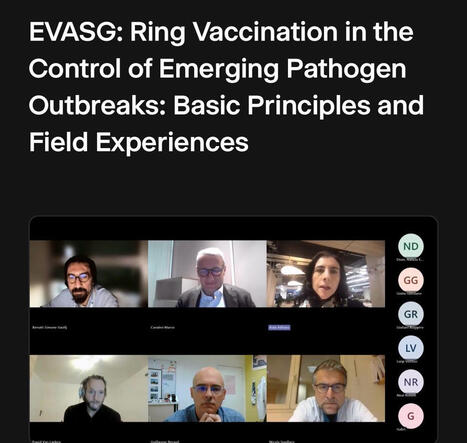
Ring vaccination strategies- a tribute to legendary Dr. William Foege who recently passed away.
His pioneering work that led to the eradication of smallpox remains a model to look at, when considering ring vaccination strategies.
Ring vaccination, which means vaccination of contacts and contacts of contacts around infected cases, has been successfully used during the Ebola outbreak in 2014-2105 in the #CaSuffit! clinical trial in Guinea, emphasizing its suitability for fast-acting vaccines and localized transmission settings.
The Ebola vaccine #Ervebo has been approved based on the pivotal evidence from the #CaSuffit! clinical trial, a milestone in clinical trial and regulatory innovation.
If you are interested to know more about ring vaccination please have a look at this ESCMID - European Society of Clinical Microbiology and Infectious Diseases #EVASG webinar:
Ring Vaccination in the Control of Emerging Pathogen Outbreaks: Basic Principles and Field Experiences,
to which I contributed together with Simone Benatti Guillaume Beraud Giulia Giordano David Van Laeken Muyembe Jean-Jacques Ruggero Giuliani
https://lnkd.in/egxkNjHw
|
|
Scooped by
Gilbert C FAURE
January 16, 6:29 AM
|
|
|
Scooped by
Gilbert C FAURE
January 8, 7:32 AM
|
🦠rHVT IBD
🐔Protection of the "Immune Engine" (Bursa of Fabricius)-
The Bursa of Fabricius is the primary organ where a chicken’s B-lymphocytes (cells that produce antibodies) develop.Infectious Bursal Disease (IBD or Gumboro) targets and destroys these cells, leading to permanent immunosuppression.
The HVT-IBD Role: Because it uses a non-pathogenic HVT vector, the vaccine does not cause bursal atrophy or lesions.By preventing the IBD virus from damaging the bursa, the vaccine preserves the bird’s "immune engine," allowing it to produce antibodies effectively against all other diseases.
📊Overcoming the "Immunity Gap"-
One of the biggest challenges in young chicks is Maternally Derived Antibodies (MDA). In traditional vaccination, high levels of MDA can neutralize a live vaccine, leaving a "gap" where the chick is unprotected once maternal immunity fades but before vaccine immunity kicks in.[3]
The HVT-IBD Role: The HVT vector is not neutralized by IBD maternal antibodies.This allows the vaccine to be administered in the hatchery (either in ovo or at day-old), ensuring that active immunity begins to develop immediately.[1][5] This "closes the gap" and provides a seamless transition from maternal protection to vaccine-induced protection.
🐣💪Early and Lifelong Foundation-
The "immune foundation" must be established as early as possible to protect the bird during its most vulnerable stage.
Early Onset: Immunity against IBD typically begins as early as 12–14 days of age.[6]
Lifelong Duration: The HVT virus stays in the bird's system for life, continuously expressing the IBD antigen (VP2 protein). This provides a permanent immune memory without the need for repeated boosters in the field, which can be stressful and costly.
💉 Enabling "Vaccine Take" for Other Diseases-
A bird with a compromised immune foundation (due to subclinical IBD) will respond poorly to other essential vaccinations, such as those for Newcastle Disease (ND) or Infectious Bronchitis (IB). The HVT-IBD Role: By preventing immunosuppression, the HVT-IBD vaccine ensures that the bird’s immune system is "primed" and healthy enough to respond vigorously to subsequent vaccines.[5] This improves the overall "take" and efficacy of the entire vaccination program.
🪬Broad Spectrum Protection-
Field strains of IBDV are constantly evolving into variant and very virulent (vvIBDV) forms.The HVT-IBD Role: Recombinant HVT-IBD vaccines provide broad protection against a wide range of strains, including classic, variant, and very virulent strains.This ensures the immune foundation is robust enough to withstand diverse environmental challenges.
🥔Reduction of Viral Shedding-
By establishing a strong immunity early, vaccinated birds shed significantly less of the field virus into the environment. This reduces the "infection pressure" in the poultry house, protecting future flocks and further stabilizing the health foundation of the entire farm.
|
|
Scooped by
Gilbert C FAURE
January 4, 4:42 AM
|
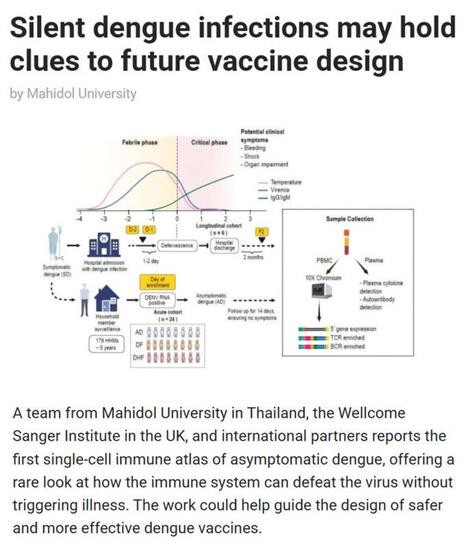
🦟 #Dengue is one of the world’s fastest-spreading #mosquito-borne diseases, with half of the global population now at risk and #climatechange is accelerating transmission. While most research focuses on people who become sick, scientists have long wondered how some individuals clear #denguevirus #DENV without ever developing symptoms.
▪️ A new study in Science Translational Medicine led by Mahidol University (Thailand), the Wellcome Sanger Institute (UK), and international partners provides the first single-cell immune atlas of asymptomatic dengue, revealing how the immune system defeats the virus without triggering illness.
▪️ Through a five-year household surveillance program in #Thailand, the team - including Assoc. Prof. Ponpan Matangkasombut, Dr. Waradon Sungnak, Dr. Tiraput Poonpanichakul, Dr. Natnicha Jiravejchakul, Prof. Sarah Teichmann FMedSci FRS, and Assoc. Prof. Varodom Charoensawan - captured extremely rare asymptomatic #infections and analyzed over 134,000 immune cells using cutting-edge single-cell RNA and immune receptor sequencing.
▪️ They found that people without symptoms showed distinct immune signatures involving CD8 #Tcells, natural killer cells, and #antibody-producing cells, while symptomatic #denguefever showed stronger inflammatory and antibody-driven processes associated with disease.
💡 Why is this research important? This work reveals how the #immunesystem can eliminate dengue without illness, provides an unprecedented dataset for global researchers, and offers a roadmap for designing safer, more effective dengue #vaccines that mimic naturally protective immune responses.
🗃️ See comments for reference.
|
|
Scooped by
Gilbert C FAURE
January 2, 4:38 AM
|
Over the past century, #vaccines have transformed #publichealth, most recently playing a critical role in combating the #COVID19 #pandemic. While prophylactic #cancer vaccines have successfully prevented malignancies caused by infectious agents, we are now seeing real clinical promise from therapeutic #cancervaccines designed to train the #immunesystem to eliminate established tumors.
Emerging data show encouraging outcomes:
▪️ Adjuvant setting: vaccines in #melanoma and #pancreaticcancer may reduce minimal residual disease and relapse
▪️Macrometastatic setting: in-situ vaccines have induced systemic tumor regressions in advanced #lungcancer, #breastcancer, and #lymphoma
▪️Advances are being driven by deeper understanding of tumor #immunology, incorporation of smarter vaccine components, integration of omics and #AI in vaccine design, and synergy with #immune #checkpointinhibitors
This work highlights the potential of next-generation cancer vaccines to improve outcomes and quality of life for patients worldwide. A fascinating and hopeful step forward for #cancerimmunotherapy.
Authors: Orrin Pail, MD • Matthew Lin, PhD • Theodora Anagnostou, MD • Brian Brown, PhD • Joshua Brody, MD.
Institutions: The Tisch Cancer Institute, Icahn School of Medicine at Mount Sinai, New York, NY, USA, Precision Immunology Institute, Icahn School of Medicine at Mount Sinai, New York, NY, USA, Icahn Genomics Institute, Icahn School of Medicine at Mount Sinai, New York, NY, USA, Perlmutter Cancer Center, NYU Langone Health, New York, NY, USA
🗃️ See comments section for reference.
|
|
Scooped by
Gilbert C FAURE
December 29, 2025 6:12 AM
|
Pandemic Preparedness: Key Considerations for Future Vaccine Development
As global health threats continue to evolve, the development of next-generation vaccines remains a cornerstone of pandemic preparedness. Recent analyses highlight several priorities the ecosystem must integrate to ensure rapid, scalable and equitable response in the event of a worldwide pandemic.
What must be taken into account?
1️⃣ Anticipating emerging pathogens
Zoonotic influenza, SARS-like coronaviruses and vector-borne viruses remain high-risk candidates. Vaccine platforms must be adaptable to new viral families and support rapid antigen redesign.
2️⃣ Accelerating timelines through flexible technologies
mRNA, viral vectors and recombinant platforms have demonstrated their value. Their modularity and scalability are essential to shorten development and production cycles.
3️⃣ Strengthening surveillance to guide vaccine targets
Real-time genomic and epidemiological data are critical to detect variants, adjust immunogenic targets and adapt vaccination strategies during global spread.
4️⃣ Ensuring manufacturing resilience
Distributed production capacities, standardized processes and secure supply chains will be essential to meet global demand and avoid bottlenecks seen during COVID-19.
5️⃣ Integrating One Health upstream
Climate change, biodiversity loss and urbanization increase spillover risks. Vaccine strategies must be developed in connection with environmental and animal-health surveillance.
6️⃣ Guaranteeing equitable access
Global deployment requires early planning for regulatory harmonization, technology transfer, and fair allocation frameworks to avoid widening health disparities.
At Infectious Diseases Cluster 🇫🇷 , we continue to support collaborative initiatives that bring together research, industry and public health stakeholders to strengthen preparedness capacities and accelerate vaccine innovation for future global threats.
Source: The Lancet Group Microbe
https://lnkd.in/evkgHuyt
|
|
Scooped by
Gilbert C FAURE
December 18, 2025 4:40 AM
|
At Nature Medicine, it has become a tradition to close the year with a sneak peek of what's coming down the clinical pipeline.
So here is our selection of 11 clinical trials that hold the promise to shape medicine in 2026 - from long-awaited vaccines for infectious diseases to new treatments for advanced cancers and long COVID.
Read now online in Nature Medicine (link 👇 )
#oncology #longcovid #vaccines #immunotherapy #stemcells #rnatherapy | 19 comments on LinkedIn
|
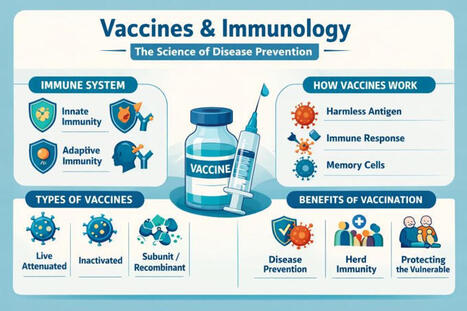
Vaccines and Immunology: A Foundation of Preventive Medicine
One of the most impactful applications of immunology is vaccination—a concept built on a simple yet powerful idea: training the immune system before exposure to disease.
The adaptive immune system’s ability to develop long-term memory allows vaccines to provide lasting protection with minimal risk. This principle has transformed global health outcomes and continues to shape modern medical innovation.
What’s particularly remarkable is how advancements in biotechnology—especially mRNA platforms—have accelerated vaccine development timelines without compromising safety or efficacy.
Vaccination is not only an individual health decision; it is a collective responsibility that strengthens public health systems through herd immunity.
As science continues to evolve, the role of immunology in preventive medicine will only become more critical.
The future of healthcare is not just about treating disease—but preventing it.
#Leadership #HealthcareInnovation #Vaccines #Immunology #FutureOfMedicine
|
|
Scooped by
Gilbert C FAURE
March 25, 2:31 PM
|
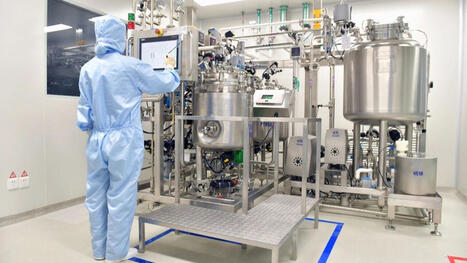
The most critical strategy for controlling the spread of infectious diseases is vaccination—making vaccine production processes pivotal to disease control and eventual eradication. Vaccination is an artificial process where inactivated, attenuated infectious pathogens, or their components, are delivered to the human body, using antigenic structures to activate the immune system. This process stimulates an effective response against specific pathogens to combat impending infections.
Since the mid-20th century, viral vaccines have been produced using chicken embryos, with dozens of approved traditional human vaccines manufactured via embryo-based processes. Today, however, cell culture-based vaccine production has become widespread: it enables simple infection and replication in controlled environments, with harvesting steps conducted in closed bioreactor systems to ensure sterility and further reduce biosafety risks through automation. This approach significantly boosts factory capacity, enabling the production of large quantities of vaccine doses.
|
|
Scooped by
Gilbert C FAURE
March 23, 2:44 AM
|
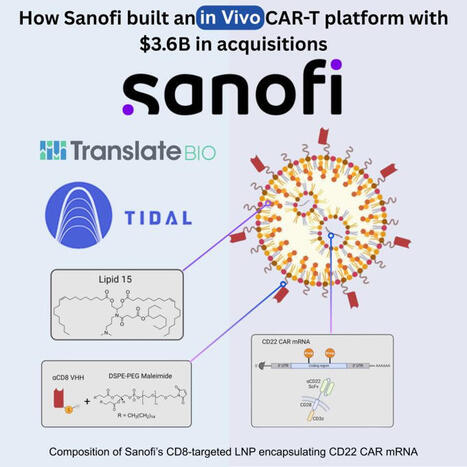
Sanofi just published their in vivo CAR-T data.
The paper will be published in 𝘔𝘰𝘭𝘦𝘤𝘶𝘭𝘢𝘳 𝘛𝘩𝘦𝘳𝘢𝘱𝘺 this month.
Was this built in-house? Not really. It's the result of two strategic acquisitions that tell you exactly how big pharma is entering in vivo cell engineering.
Everything started about 8 years ago with Sanofi entering the mRNA therapeutics space first.
In 2018, Sanofi partnered with Translate Bio for mRNA vaccines. $45M upfront. Focusing specifically on up to five infectious diseases.
COVID hit.
They expanded the deal in 2020 to $300M cash + $125M as stock investment, covering all infectious diseases.
Then in August 2021, they acquired the whole company for $3.2B!!!
What did they get? One of the largest private LNP libraries in the industry. mRNA manufacturing expertise. A platform ready to go beyond vaccines.
𝘉𝘶𝘵 𝘮𝘙𝘕𝘈 𝘵𝘦𝘤𝘩 𝘢𝘭𝘰𝘯𝘦 𝘥𝘰𝘦𝘴𝘯'𝘵 𝘮𝘢𝘬𝘦 𝘪𝘯 𝘷𝘪𝘷𝘰 𝘊𝘈𝘙-𝘛 𝘸𝘰𝘳𝘬!
Three months before closing Translate Bio, Sanofi acquired Tidal Therapeutics in April 2021. $160M upfront, $470M total including milestones.
𝗦𝗮𝗻𝗼𝗳𝗶'𝘀 𝘁𝗼𝘁𝗮𝗹 𝗰𝗼𝗺𝗺𝗶𝘁𝗺𝗲𝗻𝘁:
+$𝟯.𝟲𝗕 𝘁𝗼 𝗲𝗻𝘁𝗲𝗿 𝘁𝗵𝗲 𝗺𝗥𝗡𝗔 𝗮𝗻𝗱 𝗶𝗻 𝘃𝗶𝘃𝗼 𝗖𝗔𝗥-𝗧 𝘀𝗽𝗮𝗰𝗲
Tidal brought the missing piece: targeted nanoparticle technology to reprogram immune cells directly in the body.
Now the paper shows what happens when you combine both platforms.
The technical execution is solid:
• Proprietary ionizable lipid 15 for T cell transfection
• Anti-CD8 VHH nanobody outperforming other ligands
• CD22 CAR benchmarked against clinically validated CARs (FMC63 and m971)
• Hepatic de-targeting, under 5% liver uptake
• Tumor suppression in aggressive human models
That last point matters. Getting mRNA into T cells is hard enough.
Keeping it away from liver trapping while maintaining efficacy is the real challenge.
They solved both.
This is how platforms get built in 2025. You don't develop everything internally. You acquire the best technology, integrate it fast, and publish validation data within a few years.
Translate Bio gave them the mRNA engine. Tidal gave them the targeting system. Together, they created an in vivo CAR-T platform neither could build alone.
The question now is whether improvements we witness in the in vivo CAR-T space will scale beyond hematological malignancies.
The delivery is transient.
The safety profile looks clean (mRNA).
Serial killing durability up to 8 days.
And repeat dosing gave no signs of toxicity.
Can this match the persistence of ex vivo products?
Will in vivo CAR-T platforms ever be efficacious in solid tumors?
So much money has been invested in this tech and we are seeing progress with creative solutions to optimize in vivo CAR-T platforms.
Pre-print link to the article in the comments!
-----------------------------------------------------------
I share insights on all things xRNA, CAR-X and CGT innovation. Follow me for more biotech insights | 33 comments on LinkedIn
|
|
Scooped by
Gilbert C FAURE
March 16, 5:49 AM
|
🔬 Recent Trends in Vaccine Delivery Systems: Transforming Modern Immunization
Vaccines remain one of the most powerful tools in preventive medicine, protecting millions of lives each year.
While traditional vaccines have been highly effective, modern science is now focusing on innovative vaccine delivery systems to improve immunogenicity, stability, and targeted immune responses.
Here are some important advancements shaping the future of vaccination:
🧬 1. Subunit and Recombinant Vaccines
Instead of using whole pathogens, these vaccines use specific antigenic components such as proteins or polysaccharides.
✔ Higher safety profile
✔ Targeted immune response
✔ Reduced adverse reactions
However, these vaccines often require adjuvants to enhance immune stimulation.
💉 2. Advanced Vaccine Delivery Platforms
Modern delivery systems are being designed to optimize antigen presentation and immune activation.
Key technologies include:
• Liposomes – Lipid-based vesicles that encapsulate antigens and improve immune recognition
• Microparticles / Nanoparticles – Controlled release systems that enhance antigen stability
• ISCOMs (Immune Stimulating Complexes) – Improve antigen uptake by antigen-presenting cells
• Emulsion-based delivery systems – Facilitate sustained antigen release
These technologies help ensure better immune activation with lower antigen doses.
🧪 3. Role of Adjuvants
Adjuvants play a critical role in vaccine effectiveness by:
✔ Enhancing immune response
✔ Promoting long-lasting immunity
✔ Reducing the amount of antigen required
They function by stimulating pattern recognition receptors (PRRs) of the innate immune system, thereby strengthening adaptive immune responses.
🌍 Why This Matters
The development of advanced vaccine delivery systems is critical for:
• Emerging infectious diseases
• Pandemic preparedness
• Cancer immunotherapy
• Chronic viral infections such as hepatitis
These innovations are helping us move toward safer, more effective, and more targeted immunization strategies.
💡 Key Takeaway
The future of vaccination is not just about the antigen itself, but also about how it is delivered to the immune system.
Modern delivery platforms and adjuvants are revolutionizing vaccine science and opening new possibilities for global disease prevention.
🔗 Let’s continue advancing collaborative research in microbiology, immunology, and pharmaceutical sciences to strengthen global health security.
#Vaccines #Immunology #Microbiology #PharmaceuticalScience #PublicHealth #DrugDelivery #BiomedicalResearch #InfectiousDiseases #HealthcareInnovation
|
|
Scooped by
Gilbert C FAURE
March 12, 5:05 AM
|
Researchers at Virginia Tech are developing a new class of #vaccines designed to block #opioids from reaching the #brain - an approach that could help address the ongoing #overdose crisis in the United States.
▫️ In a study published in the Journal of Controlled Release, a team led by Chenming Zhang , professor and Turner Faculty Fellow in the Department of Biological Systems Engineering, created a hybrid lipid-polymer #nanoparticle #vaccine that triggered stronger #immuneresponses and improved protection against #oxycodone in mice. The work was supported by The National Institutes of Health and involved contributions from undergraduate researcher Kari Cochran from the Virginia Tech College of Engineering.
▫️The vaccine uses biodegradable nanoparticles that mimic viruses in size and structure, prompting the #immunesystem to produce #antibodies that bind to opioid molecules such as oxycodone or #fentanyl. By preventing these drugs from crossing the blood–brain barrier, the approach blocks the euphoric effects that drive addiction while still allowing other medical treatments to function normally.
▫️Early findings suggest the antibodies remain active for months and could potentially be optimized to provide year-long protection. While not intended for general vaccination, the strategy could be used for individuals with opioid use disorder or those at high risk of exposure.
💡 If successful, this research could open a new frontier where vaccines are used not only to prevent #infectiousdiseases but also to address chronic conditions like #addiction, potentially reducing overdose deaths and supporting recovery.
🗃️ See comments for reference.
|
|
Scooped by
Gilbert C FAURE
March 9, 5:47 AM
|
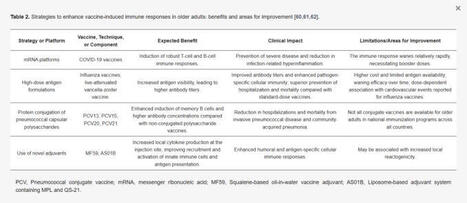
The remodeling of the immune system with age has significant implications for public health. Vaccines that are highly effective in children and young adults often elicit weaker responses in older adults, resulting in reduced protection. This challenge has spurred the development of new strategies, including high-dose formulations, vaccines with novel adjuvants that enhance antigen presentation, and antigen conjugation technologies that improve immunogenicity.
https://lnkd.in/dybunHnu
|
|
Scooped by
Gilbert C FAURE
January 19, 4:50 AM
|
Polysaccharide conjugate vaccines: From historical milestones to future strategies.
CPSs serve as highly effective antigens in polysaccharide-based vaccines. The advent of polysaccharide-protein conjugate vaccines has marked a major public health breakthrough, saving millions of lives by eliciting robust immunity and enabling herd protection.
https://lnkd.in/eV7cCwXg
|
|
Scooped by
Gilbert C FAURE
January 15, 4:17 AM
|
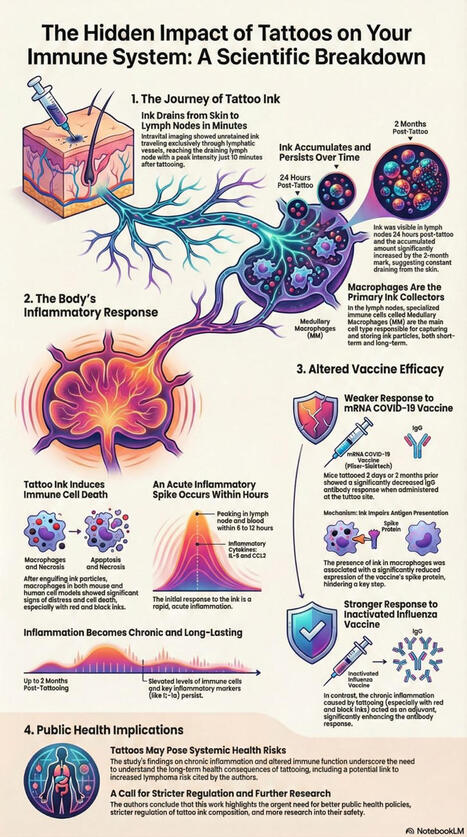
🧬 Can tattoos influence vaccine trial outcomes?
A recent PNAS (Nov, 2025) study shows that tattoo ink migrates to lymph nodes, persists for months, and alters immune function. In mouse and human immune-cell models, ink-loaded macrophages showed chronic inflammation and impaired antigen presentation.
What’s striking is the vaccine effect:
• mRNA COVID-19 vaccine → lower antibody responses
• UV-inactivated influenza vaccine → equal or even enhanced responses
So tattoos don’t just “interfere” — they shift immune behavior in a vaccine-specific way.
This raises a practical trial-design question:
Should tattoo status (location, size, or timing) be recorded—or even controlled—for—in vaccine clinical trials?
Especially for mRNA and other cell-dependent platforms, this could be a previously overlooked source of variability.
I’m curious how clinical trialists, immunologists, and biostatisticians see this.
Would this warrant stratification, exclusion, or is it noise in the real world?
#ClinicalTrials #Vaccines #Immunology #mRNA #PNAS #TattooScience #NovotechLab
Original Reference:
https://lnkd.in/gnahq4BQ
|
|
Scooped by
Gilbert C FAURE
January 6, 11:21 AM
|
⚠️ Reduced childhood vaccination policies will likely cause spikes in preventable diseases AND may reduce uptake of recommended vaccines....
👉 Reduced coverage of Diphtheria toxoid vaccine has resulted in a resurgence in cases with a high case-fatality rate in young children and treatment relying on antitoxin (DAT) ☝ most countries lack stockpiles!
It's therefore incredibly topical and important to see this study now out in Emerging Infectious Diseases highlighting the current challenges in DAT production and procurement.
🔊 https://lnkd.in/eh3Y6jzZ
Market, Manufacturing, Procurement and Stockpiling challenges (akin to those of antivenoms), threaten global health security!
We highlight an urgent need for improved coordination, financing, and innovation in DAT supply.
⏩ A transition to monoclonal antibody therapies offers a best-in-class solution to many of these challenges........ But remains neglected!
Caroline Marshall Erin Sparrow Julien Potet World Health Organization Wellcome Trust
|
|
Scooped by
Gilbert C FAURE
January 3, 2:05 AM
|
mRNA vaccines (including those used against #COVID19) are exceptionally good at generating #antibody responses largely because they drive germinal center formation, the immune “training hubs” that produce high-quality #antibodies and long-lived memory.
In a Cell study, researchers at the University of Pennsylvania Perelman School of Medicine show that the two core components of mRNA vaccines work together as built-in immune stimulators:
✅ The #mRNA (even with chemical modifications) isn’t fully “invisible” - it triggers low but meaningful type I interferon signaling that helps steer helper #Tcells toward germinal-center–supporting functions.
✅ The lipid nanoparticles (LNPs) activate dendritic cells and help position them in lymph nodes to effectively instruct T cells and support #Bcell help.
✅ Led by Michela Locci, PhD (Associate Professor of Microbiology, Perelman School of Medicine, University of Pennsylvania), the team also identifies IL-1 as a critical, independent signal shaping these responses.
Bottom line: understanding how #mRNA + LNPs cooperate to promote germinal centers and durable #immunememory can inform the design of next-generation mRNA #vaccines.
🗃️ See comments section for reference.
|
|
Scooped by
Gilbert C FAURE
December 30, 2025 1:31 PM
|
To spur an immune response to fentanyl, a synthetic compound, the University of Houston's Colin Haile, an ARMR co-founder and scientific adviser, and his colleagues tied the opioid to something else.
They combined fentanyl fragments with deactivated diphtheria toxin and a nontoxic portion of the e-coli bacterium. This new compound builds antibodies that react to real fentanyl. These antibodies bind to the opioid, keeping it from crossing the brain's protective membrane — the blood-brain barrier — and then clearing it from the body.
In rat studies, the vaccine blocked fentanyl from entering the rodents' brain and also blocked the drug from depressing respiration and causing overdose.
Learn more about how vaccines are being used to address drug addiction.
https://lnkd.in/g2UUrZDd
#immunizations #vaccines #publichealth #fentanyl
Donate
https://lnkd.in/g2cKWfre
|
|
Scooped by
Gilbert C FAURE
December 26, 2025 4:47 AM
|
💉 Malaria vaccines and long-acting monoclonal antibodies are moving from pipeline to programs – but how do we compare their full value across products and use cases?
📄 A new WHO-commissioned vaccine value profile brings together evidence on public health impact, economic value, and programmatic feasibility for malaria vaccines and prophylactic mAbs. It’s designed to help countries, funders, and manufacturers align R&D, financing, and introduction strategies with real-world priorities.
🔗 Read the article here: https://lnkd.in/eSyDqW95
Authors: Ashley Birkett, EVELYN KORKOR ANSAH, W. Scott Gordon, Margaret Gyapong, Shanelle Hall, Sherrie Kelly, Matt Laurens, Melissa Penny, Meredith Shirey, MIA, MPH, Larry Slutsker, Erin Sparrow, Sally Ethelston, Nelli Westercamp, Lindsey Wu, Mary Hamel. PATH, University of Health and Allied Sciences, The Yellow House, Swiss Tropical and Public Health Institute, University of Maryland, The Kids Research Institute Australia, University of Basel, The University of Western Australia, World Health Organization, Centers for Disease Control and Prevention
|