Your new post is loading...

|
Scooped by
Gilbert C FAURE
December 31, 2016 5:19 AM
|
Health and WellBeing in Urban environment
|
|
Scooped by
Gilbert C FAURE
October 22, 8:41 AM
|
|
|
Scooped by
Gilbert C FAURE
October 19, 10:46 AM
|
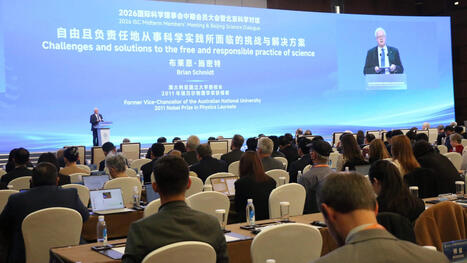
Beijing, 19 October 2026 – The Beijing Science Dialogue opened today, bringing together over a 1000 delegates from more than 80 countries to examine how scientific organizations can strengthen international cooperation and respond to global challenges.
|
|
Scooped by
Gilbert C FAURE
October 9, 10:57 AM
|
In may commentary in Nature I argue argues that scientists must communicate their value more clearly, acknowledge uncertainty and ensure research remains connected to society’s needs. Indeed public support for science rests on a social contract: in return for support, science demonstrates its value to society.
That contract is under pressure, though. Governments are becoming more prescriptive about research priorities, while political polarisation, disinformation and declining trust are making it harder for science to maintain public support. Researchers must engage more effectively with policymakers, business and civil society, and explain how science contributes to social, environmental, economic and security interests. Trust also depends on acknowledging uncertainty. Scientists should be clear about what they do not know, avoid overstating findings and recognise that people also draw on other systems of thought, including religion and Indigenous knowledge.
We also need to protect the trustworthiness of science. Artificial intelligence is creating further risks through low-quality papers, fraudulent content and weak peer review. Stronger safeguards and more meaningful ways of assessing research are needed.
My commentary discussed the work that the International Science Council is undertaking on these and related issues.
see: https://lnkd.in/eY9KyTt7
|
|
Scooped by
Gilbert C FAURE
April 15, 11:19 AM
|
Le #onehealthsummit, vous en avez certainement (un peu ou pas assez) entendu parler. C’était à Lyon du 5 au 7 avril.
En partant de la collecte des posts Linkedin en français ayant généré au moins 50 likes (merci Visibrain), voici quelques infos que je vous partage ci dessous, avec quelques visuels pour illustrer mes propos :
➡️ 11 thématiques principales évoquées dont maladies infectieuses, antibiorésistance ou santé des enfants
Si on catégorise :
🌍 One Health domine massivement (52% des posts étudiés) avec une moyenne de 220 réactions par post, gonflée par les 3 posts présidentiels.
🌿 L'environnement
Avec seulement 18 % du corpus, la sante environnementale génère 25 % des reactions totales. Le post de Vert, le média qui annonce la couleur 💚 sur les pesticides (1 060 reactions) et celui de Reporterre 🌍 | Le média de l'écologie sur le climat (718 reactions) montrent que les sujets concrets et clivants touchent davantage que la communication institutionnelle.
🏥 La santé humaine
riche mais diffuse — 11 posts couvrant des sujets tres varies : nutrition infantile, maladies chroniques des jeunes, oncologie, tuberculose, diagnostics, recherche médicale. L'absence de post viral excepté celui de Hélène Grosbois (429 réactions) contraste avec la richesse du contenu. En revanche, des acteurs très divers se sont exprimés sur le sujet : Institut Curie, bioMérieux mais aussi ACTION CONTRE LA FAIM, Antoine de Saint-Affrique
🐾 Sante animale, parent pauvre (8% et en moyenne 100 réactions par post). Seuls 4 posts sont dans ce classement, dont CEVA SANTE ANIMALE avec MARC PRIKAZSKY, Isabelle Kumar ou le cabinet ARCHIMED.
Donc finalement peu de posts impactants alors que c'est pourtant le chainon central du concept One Health (« 70 % des maladies infectieuses viennent des animaux »).
Bien sûr, d'autres entités étaient bien présentes, à qui je fais un petit clin d'oeil : 1Health, VetAgro Sup ou 🇫🇷 French Healthcare Association.
Donc, au final, une prise de conscience naissante, encore peu d'impact sur le grand public, et un gros travail qui reste à faire 😀
|
|
Scooped by
Gilbert C FAURE
March 30, 8:36 AM
|
#One_Health
The One Health perspective is an integrated, unifying approach that aims to sustainably balance and optimize the health of people, animals, and ecosystems. It recognizes that the health of humans, domestic and wild animals, plants, and the wider environment (including ecosystems) are closely linked and interdependent.
The approach is built on the understanding that most modern health challenges cannot be solved by a single sector alone. It focuses on several critical areas:
· Zoonotic Diseases: Approximately 60% of existing human infectious diseases are zoonotic (originate in animals), and 75% of emerging infectious diseases have an animal origin. One Health promotes early detection in wildlife and livestock to prevent spillover into human populations.
· Antimicrobial Resistance (AMR): The overuse of antibiotics in human medicine and agriculture leads to resistant bacteria that circulate through water, soil, and food chains.
· Food Safety and Security: Ensuring that the journey from "farm to fork" is free from contamination requires monitoring animal health, soil quality, and water safety simultaneously.
· Environmental Health: Climate change, deforestation, and land-use changes disrupt natural habitats, forcing animals and humans into closer contact and increasing the risk of disease transmission.
Instead of veterinarians, ecologists, and physicians working in isolation, One Health encourages:
· Joint Field Investigations: Collaborative teams responding to outbreaks in rural or highland regions.
· Shared Data Systems: Integrating animal surveillance data with human clinical data to see the "big picture."
· Community Engagement: Working with local populations to understand how land use and traditional practices impact the total health of the area.
(One Health= Human Health + Environmental Health + Animal Health)
|
|
Scooped by
Gilbert C FAURE
December 5, 2025 10:34 AM
|
|
|
Rescooped by
Gilbert C FAURE
from Wuhan, Hubei
November 9, 2025 4:04 AM
|
Être en bonne santé, c’est être dans un « état de bien-être complet, englobant les dimensions physique, mentale et sociale, et non simplement comme l’absence...
The Lancet Commission on One Health is live ⚡
Over the past few years, One Health—highlighting the fundamental links between human, animal, and environmental health—has grown in visibility and importance.
Now, there is a landmark Pandemic Agreement embracing a One Health approach.
But what does One Health mean for antimicrobial resistance, non-communicable diseases, food systems, and our most pressing health and sustainability challenges?
And what needs to happen to ensure a One Health approach fit for the future?
🗨️ “The Lancet One Health Commission provides a cutting-edge appraisal of where One Health has come from, where it is now, and what a viable future should be”, say authors of the new report.
Discover their 10 expert recommendations in the comments section.
Figure: A map of the socioecological system | 21 comments on LinkedIn
|
|
Scooped by
Gilbert C FAURE
July 7, 2023 3:53 AM
|
Fondation pluraliste de l'écologie...
|
|
Scooped by
Gilbert C FAURE
December 7, 2022 6:46 AM
|
Discover the new podcast series from the International Science Council’s Committee for Freedom and Responsibility in Science (CFRS), which explores what living in a world of crisis and geopolitical instability means for science and scientists across the world.
|
|
Scooped by
Gilbert C FAURE
August 18, 2022 5:22 AM
|
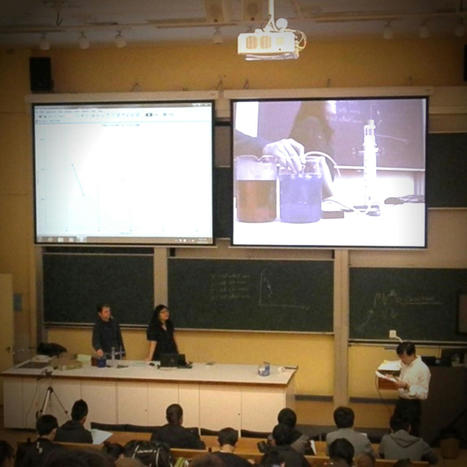
PHYSICS EDUCATION: PREPARING FOR THE FUTURE Join us online for engaging discussions and presentations about the future of physics education. The sudden changes to education brought on by the COVID-19 pandemic and their implications for the future will be forefront.
|
|
|
Scooped by
Gilbert C FAURE
October 23, 7:57 AM
|
|
|
Scooped by
Gilbert C FAURE
October 21, 6:12 AM
|
Convened by the International Science Council (ISC) and the China Association for Science and Technology (CAST), the Declaration sets out 18 commitments, from defending scientific freedom and establishing shared norms for AI in research, to rebuilding public trust and securing a stronger role for science in the next global sustainability agenda.
|
|
Scooped by
Gilbert C FAURE
October 15, 11:09 AM
|
|
|
Scooped by
Gilbert C FAURE
October 2, 10:58 AM
|
|
|
Scooped by
Gilbert C FAURE
June 17, 10:29 AM
|
This past week, being part of Reimagining Global Health left me reflecting on something I consider fundamental: global health cannot truly move forward if we continue reproducing the same structures of power that have historically shaped inequities, exclusion, and whose voices are allowed to define health agendas.
For those of us working in territories where many realities remain invisible, this experience was a reminder that transforming global health requires much more than technical solutions. It demands questioning how partnerships are built, recognizing the value of local and ancestral knowledge, and understanding that communities themselves hold essential wisdom for shaping healthier and more just futures.
This image brings together many of the reflections that accompanied me throughout this week and that continue challenging the way I think about research, collaboration, and our collective responsibility in global health.
Reimagining partnerships to advance global health equity.
Deeply grateful to Madhukar Pai, MD, PhD this learning opportunity, and to McGill University for creating spaces that encourage us to question, listen, learn, and imagine different ways of building a more equitable future.
🌍 The future of global health depends on the choices we are willing to transform today.
#GlobalHealth
#GlobalHealthEquity
#SocialJustice
#ScientificDiplomacy
https://lnkd.in/edV5PrZB
|
|
Scooped by
Gilbert C FAURE
April 9, 4:59 AM
|
|
|
Scooped by
Gilbert C FAURE
December 14, 2025 5:19 AM
|
🦩🐃 Incroyable, cette modélisation.
Les grandes migrations animales sur une année.
Un des modèles de la Movebank à Munich, la base de données mondiale de suivi des animaux sauvages du Max Planck Institutepour le comportement animal.
Cette animation montre les mouvements d'animaux à travers le monde sur la base des données de suivi GPS et Argos Doppler partagées publiquement, hébergée en Allemagne mais alimentée par des recherches américaines, européennes et chinoises.
Découvrez leur site incroyable movebank.org
Depuis 2012,
4,8 milliards de trajets ont été collectés
7.807 études conduites sur des populations animales soignées et accompagnées
3 781 équipes de recherche mobilisées dans le monde
Les objectifs de Movebank sont multiples
- archiver les données sur les mouvements des animaux sauvages pour des utilisations scientifiques futures
- permettre des collaborations entre les chercheurs, les étudiants, les organismes de conservation et les gouvernements intéressés par le mouvement des animaux.
- aider les scientifiques à répondre à de nouvelles questions en combinant des ensembles de données pour tester des idées liées aux modèles écologiques, aux processus évolutifs et à la propagation des maladies.
- promouvoir le libre accès aux données sur les mouvements d’animaux, en particulier lorsque la collecte de données est financée par des fonds publics.
- permettre au public d'explorer les étonnants mouvements d'animaux enregistrés par les pisteurs d'animaux.
Les données du site movebank.org sont accessibles, complètement ouvertes.
Elles permettent à de grandes études d'être menées et les chercheurs peuvent choisir de rendre visibles une partie ou la totalité de leur recherche, pour le public.
Ca donne des vidéos incroyables comme celle-ci
https://buff.ly/4b6q441
Ou des dossiers médias sur les oiseaux migrateurs comme ici avec le National Geographic
https://buff.ly/3y5y7et
Un bel usage de nos progrès technologiques.
Une attention merveilleuse portée à ceux qui vivent ici depuis longtemps, parfois depuis plus longtemps que nous, et qui subissent nos démesures.
Nous ne sommes pas seuls au monde.
#animal #planète #wild #tech #ia #data #bio #science
—
📮 Abonnez vous à ma newsletter Cosmorama pour recevoir chaque semaine une carte ou une photo dans votre boite mail ! C'est gratuit et c'est ici: https://buff.ly/gAMRazF | 13 comments on LinkedIn
|
|
Scooped by
Gilbert C FAURE
November 27, 2025 8:44 AM
|
Today on One Health Day, we celebrate the vital connection between human, animal, and environmental health — and the crucial role of health literacy in bringing them together.
🔹Health literacy empowers individuals, organizations, and communities to access, understand , appraise and act on information that affects health across all systems. It’s not just about reading or understanding — it’s about making informed choices that protect people, animals, and the planet.
🔹Organizational health literacy matters too: when healthcare, veterinary, and environmental agencies communicate clearly, coordinate effectively, and provide accessible information, they create the foundation for a truly One Health–literate system.
🔹 Planetary & One Health Literacy makes a difference, so on this One Health Day, join our interest group and let’s commit to building health-literate societies that foster collaboration for a healthier, more sustainable world. 🌱💙🍀
#OneHealthDay #HealthLiteracy #GlobalHealth #Sustainability #OneHealth #Lancet #IHLA #PlanetaryHealth #WellbeingEconomy
The Case for 'One Health': Navigating the Interconnected Challenges of Global Health
The 20th century saw remarkable advancements in the fight against infectious diseases, with breakthroughs that contained deadly pathogens such as yellow fever, plague, and cholera. These successes reinforced a medical paradigm focusing on treating specific microbes, a model that served public health for decades. Yet, as we moved through the latter half of the century, new and resurgent threats like HIV/AIDS, antimicrobial resistance (AMR), avian influenza, Ebola, and SARS began to challenge these very foundations.
The Emergence of One Health
The realisation that tackling modern health threats required more than a pathogen-focused approach. In 2005, the World Health Organization (WHO) revised the International Health Regulations (IHR) to strengthen global surveillance and response capacities for any Public Health Emergency of International Concern (PHEIC), urging 193 member states to rapidly detect and report signs of novel or resurgent diseases.
Simultaneously, the One Health concept was crystallised at a pivotal 2004 symposium in New York, leading to the creation of the Manhattan Principles. These principles, now globally endorsed, advocate for a holistic and interdisciplinary approach to health
Why “One Health” Matters?
The resurgence of diseases at the human-animal-environment interface, many of which are zoonotic, demonstrates the urgent need for this integrated framework. For example, the COVID-19 pandemic's devastating toll underscored how environmental disruptions and wildlife trade can fuel pandemics, with human health impacts resulting in millions of deaths and trillions in economic losses.
Equally alarming is the silent pandemic of antimicrobial resistance. The misuse and overuse of antimicrobials in medicine, agriculture, and livestock not only drive the evolution of drug-resistant pathogens but also threaten the very foundation of modern healthcare. In 2019 alone, bacterial AMR was directly responsible for an estimated 1.27 million deaths globally. AMR could cost the world up to $100 trillion in lost economic output by 2050.
One World, One Solution
One Health approach is recognised internationally as essential, for addressing pandemics, tackling climate change, food safety, and sustainable development. WHO, FAO, OIE, and UNEP have all called for cross-sector collaboration at all levels of society to strengthen surveillance, invest in health systems, and develop policies that account for the complex links between humans, animals, and the environment.
A resilient future depends on our ability to break down silos and think beyond narrow boundaries. The 'One Health' approach is a blueprint for safeguarding life on Earth in an increasingly complex and interconnected world.
#OneHealth #ManhattanPrinciples #AMR #PublicHealth #Zoonoses #OneWorldOneHealth #FAO #RajivDuaWrites #CSR, UN Environment Programme, World Organisation for Animal Health
|
|
Scooped by
Gilbert C FAURE
July 26, 2023 3:09 AM
|
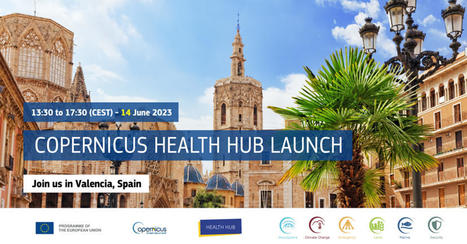
The new Copernicus Health Hub offers an extensive array of benefits to users in the health sector. For example, in the realm of allergies, health care providers and scientists may use Copernicus data to better understand how pollen and pollutants affect the symptoms experienced by allergy sufferers.
|
|
Scooped by
Gilbert C FAURE
June 1, 2023 10:26 AM
|
This OA book offers innovative solutions in technology, policy, governance, and finance, that could help to a more sustainable relationship with the ocean.
|
|
Scooped by
Gilbert C FAURE
December 7, 2022 4:57 AM
|
|
|
Scooped by
Gilbert C FAURE
August 18, 2022 5:21 AM
|
|