Your new post is loading...

|
Scooped by
Gilbert C FAURE
August 18, 2022 5:20 AM
|
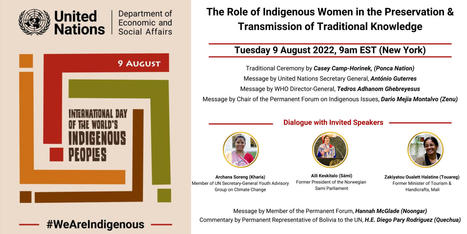
International Day of the World’s Indigenous Peoples 2022 Virtual commemoration on 9 August 2022 (09-11 am EST/New York Time) Link to Join: https://us02web.zoom.us/j/81206090975 Interpretation is available in English and Spanish and vice versa. The International Day of the World’s Indigenous Peoples is celebrated globally on 9 August. It marks the date of the inaugural session of the Working Group on Indigenous Populations in 1982. The Department of Economic and Social Affairs (DESA) is organizing a virtual commemoration of the International Day from 9 am to 11am (EST) on Tuesday, 9 August 2022, focusing on this year’s theme: “The Role of Indigenous Women in the Preservation and Transmission of Traditional Knowledge”. Indigenous Peoples, Member States, UN entities, civil society, and the public are all invited. Background Indigenous women are the backbone of indigenous peoples’ communities and play a crucial role in the preservation and transmission of traditional ancestral knowledge. They have an integral collective and community role as carers of natural resources and keepers of scientific knowledge. Many indigenous women are also taking the lead in the defence of lands and territories and advocating for indigenous peoples’ collective rights worldwide. The significance of indigenous peoples’ traditional knowledge is widely acknowledged: “Long before the development of modern science, which is quite young, indigenous peoples have developed their ways of knowing how to survive and also of ideas about meanings, purposes and values.” As noted by the Special Rapporteur on Indigenous Peoples, the term “scientific knowledge” is also used to underscore that traditional knowledge is contemporary and dynamic, and of equal value to other kinds of knowledge. International consultations jointly facilitated by UNESCO and the Internal Council of Science (ICSU) states that “Traditional knowledge is a cumulative body of knowledge, know-how, practices and representations maintained and developed by peoples with extended histories of interaction with the natural environment. These sophisticated sets of understandings, interpretations and meanings are part and parcel of a cultural complex that encompasses language, naming and classification systems, resource use practices, ritual, spirituality and worldviews.” However, despite the crucial role that indigenous women play in their communities as breadwinners, caretakers, knowledge keepers, leaders and human rights defenders, they often suffer from intersecting levels of discrimination on the basis of gender, class, ethnicity and socioeconomic status. Their right to self-determination, self-governance and control of resources and ancestral lands have been violated over centuries. Small but significant progress has been made by indigenous women in decision-making processes in some communities. They are leaders at local and national levels, and stand at the frontlines of defending their lands, their cultures, and their communities. The reality, however, remains that indigenous women are widely under-represented, disproportionately negatively affected by decisions made on their behalf, and are too frequently the victims of multiple expressions of discrimination and violence. The Committee of the Convention on the Elimination of all Forms of Discrimination Against Women (CEDAW) highlighted some of the major issues encountered by indigenous women, particularly noting the high levels of poverty; low levels of education and illiteracy; limitations in access to health, basic sanitation, credit and employment; limited participation in political life; and the prevalence of domestic and sexual violence. Format and invited speakers The virtual commemoration will include an interactive dialogue segment with invited speakers, moderated by Ms Rosemary Lane, Acting Chief of the Indigenous Peoples Development Branch – Secretariat of the Permanent Forum on Indigenous Issues. Speakers will share their expertise and experience from their indigenous communities in preserving, reviving, retaining, and transmitting the traditional ancestral knowledge in various fields of communal activities, including but not limited to effective and sustainable climate solutions, use of natural resources, protection of biodiversity, ensuring food security, promoting indigenous languages and culture, and managing indigenous science and medicine. Some of the questions to be discussed are: What is the unique position of indigenous women in the preservation and transmission of traditional knowledge?What are some of the brightest examples of indigenous women-led processes in solving contemporary global issues through the effective application of traditional scientific knowledge?How are indigenous languages crucial to the development, preservation, and transmission of indigenous cultural and knowledge systems? How are women leading the way in maintaining indigenous languages?What was the effect of applying indigenous scientific knowledge and medicine in alleviating the consequences of the COVID-19 epidemiologic crisis? Programme for the Day 2022 | EN | High-level Segment video messages Secretary-General’s message on the International Day of the World’s Indigenous Peoples | AR | EN | ES | FR | RU | ZH | 📹 video message |World Health Organization, Director General’s video message, Tedros Adhanom Ghebreyesus, on the International Day of the World’s Indigenous Peoples | EN|Permanent Forum on Indigenous Issues Chairperson’s video message, Dario Mejia Montalvo | ES| Panel Speakers Archana Soreng (Kharia) – Member of UN Secretary-General’s Youth Advisory Group on Climate Change Aili Keskitalo (Sámi) – Former President of the Sámi Parliament of Norway Zakiyatou Oualet Halatine (Touareg) – Former Minister of Tourism & Handicrafts, Mali Hannah McGlade (Noongar) – Member of the UN Permanent Forum on Indigenous Issues Commentary Commentary on Panel Discussion by His Excellency Ambassador Diego Pary Rodriguez (Quechua), Permanent Representative of Bolivia to the United Nations. Participate in Mentimeter by responding to two questions that will be asked at the end of the event, here are the details to join us! Link: www.menti.com and enter the code: 2022 4574. You can also join by clicking the link in the Chat box: [ https://www.menti.com/8q4mv7dgp2 ] Messages on the occasion of the International Day Written Statement of the Group of Friends of Indigenous Peoples | EN | CBD Executive Secretary’s message Ms. Elizabeth Maruma Mrema | EN | 📹 video message EN IFAD President’s video message Mr. Gilbert F. Houngbo | 📹 EN FAO Director-General’s video message Mr. QU Dongyu | 📹 EN UNESCO Director-General’s statement Ms. Audrey Azoulay | AR | EN | ES | FR | RU | ZH | UN Women’s Statement EN WIPO Director General’s video message Mr. Daren Tang | 📹 EN WFP Deputy Executive Director’s video message Ms. Valerie Guarnieri | 📹 EN Mensaje del Presidente del FILAC, Sr. Freddy Mamani Machaca | ES | Outreach and Media News items CBD – The Role of Indigenous Women in the Transmission of Traditional Knowledge EN UNDP’s blog. 5 Indigenous women climate activists you should know about EN DPPA’s article: Seeds of Change: How Indigenous Women’s Ancestral Knowledge Can Bolster Climate Security EN UNDP’s article: Women. Tradition. Culture. From looms to lutes, the importance of women in the preservation and transmission of traditional knowledge in China cannot be overstated EN The World Bank article: Indigenous Women Leaders Persevere Amid a Changing Climate EN Inter-American Development Bank article: La triple barrera para reducir brechas digitales para pueblos indígenas ES Social media accounts Facebook: https://www.facebook.com/unpfii/ Facebook: photo album on the Day Twitter: https://twitter.com/UN4Indigenous Twitter emoji Twitter activated an emoji for the 2022 International Day of the World’s Indigenous Peoples. The following ten hashtags will trigger the emoji – please use them! #WeAreIndigenous | #IndigenousDay | #IndigenousPeoplesDay | #UNDRIP | #SomosIndígenas | #PueblosIndígenas | #DíaPueblosIndígenas | #SoyIndígena | #DIPI2018 | #autochtones | International day hashtags English: #WeAreIndigenous #IndigenousDay #IndigenousPeoplesDay #UNDRIP French: #autochtones Spanish: #SomosIndígenas #PueblosIndígenas #DíaPueblosIndígenas #SoyIndígena International day logo (in languages) | English | French | Spanish | Russian | Chinese | Arabic | Portuguese | Kiswahili | For all UN outreach and social media materials related to indigenous peoples, visit our trello board here: http://bit.ly/1W8YMB5
|
|
Scooped by
Gilbert C FAURE
May 23, 2021 5:08 AM
|
Fewer babies’ cries. More abandoned homes. Toward the middle of this century, as deaths start to exceed births, changes will come that are hard to fathom.
|
|
Scooped by
Gilbert C FAURE
January 28, 2021 4:19 AM
|
Town Planning Review, the first academic journal devoted to Planning as a discipline, is a leading urban planning and regional planning journal providing a principal forum for communication between researchers and students, policy analysts and practitioners. The first three issues of Town Planning Review Volume 92 (2021) are special viewpoint issues which provide a snapshot of thought, critique and scholarship about the world condition in which we found ourselves in 2020 due to the COVID-19 pandemic.
|
|
Scooped by
Gilbert C FAURE
January 19, 2021 4:41 AM
|
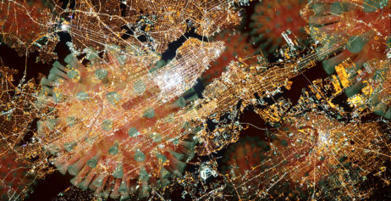
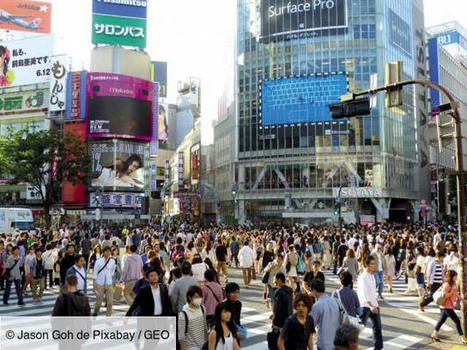
As the world is being hit by the Covid-19 epidemic and people are asked to stay home, the way we use the city grid, urban spaces and constructed areas is changing. New flows and rhythms are adopted, new ways of experiencing spaces are born.
|
|
Rescooped by
Gilbert C FAURE
from veille territoriale
January 15, 2021 11:06 AM
|
Avec l’accélération de la numérisation de l’économie et de la société, de plus en plus de données sont créées dans les territoires. Elle proviennent de sources diverses (système d’information de la collectivités ou d’un délégataires, objets connectés, relevés GPS…) et sont produites par une multitude d’acteurs (les collectivités, les acteurs privés, les citoyens…). Tous les secteurs de l’économie et toutes les compétences des collectivités sont concernés : de l’éclairage public à l’arrosage automatique, des services scolaires à l’eau potable, de la vidéoprotection au transport…
De plus en plus abondantes, ces données représentent ainsi une source d’information essentielle et incontournable pour la connaissance des territoires et le pilotage des politiques publiques.
Via @veilleScalen

|
Suggested by
LIGHTING
January 12, 2021 5:26 AM
|
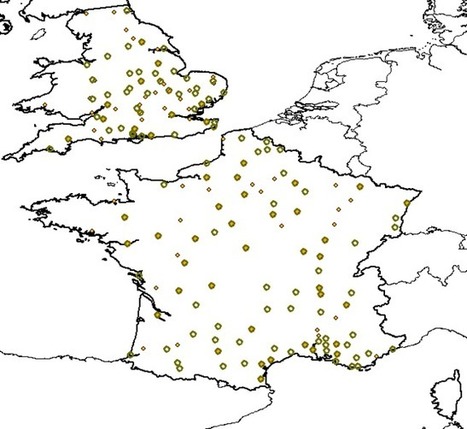
The world is urbanising quickly but many cities are poorly located. Such misplacement is associated with bad access to the world markets and frequent natural disasters. This column explores historical evidence of French and English towns during the Roman Empire and in the Middle Ages.
|
|
Scooped by
Gilbert C FAURE
December 22, 2020 12:52 PM
|
Ce 63e numéro de la Lettre d’information sur les risques et crises est placé sous le double signe de la prospective et de la rétrospective. La partie prospective a pour…
|
|
Scooped by
Gilbert C FAURE
December 16, 2020 2:29 PM
|
The UNDP Human Development Report 2020 explores how human activity, environmental change, and inequality are changing how we work, live and cooperate.
|
|
Scooped by
Gilbert C FAURE
December 9, 2020 1:40 PM
|
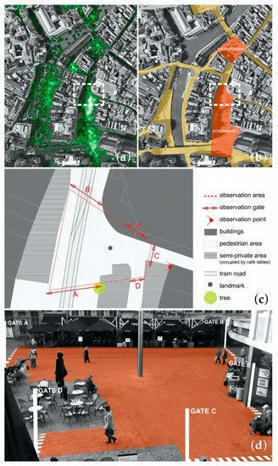
The extensive use of smartphones in our everyday lives has created new modes of appropriation and behavior in public spaces. Recognition of these are essential for urban design and planning practices which help us to improve the relationship between humans, technologies, and urban environment. This study aims to research smartphone users in public space by observing their altering visual attention and walking behavior, and, in this way, to reveal the emergent “new figures”. For this purpose, Korenmarkt square in Ghent, Belgium, was observed for seven days in 10-min time intervals. The gaze and walking behavior of smartphone users were encoded as geo-located and temporal data, analyzed and mapped using statistical and spatial analysis methods. Developing and implementing new methods for identifying the characteristics of smartphone users, this study resulted in a nuanced characterization of novel spatial appropriations. The findings led to a better understanding and knowledge of the different behavior patterns of emergent figures such as “post-flâneurs” and “smartphone zombies” while uncovering their altering visual interactions with and movements in the public space. The results evoked questions on how researchers and designers can make use of spatial analysis methods and rethink the public space of the future as a hybrid construct integrating the virtual and the physical.
|
|
Scooped by
Gilbert C FAURE
December 5, 2020 6:09 AM
|
Wuhan, Delhi, São Paulo, New York, Montréal… La COVID-19 a pris d’assaut les grandes villes du monde, dévoilant du même coup leurs failles. Des chercheurs et des acteurs municipaux ont profité du confinement pour penser la ville de demain.
|
|
Scooped by
Gilbert C FAURE
November 16, 2020 6:31 AM
|
In 'Metropolis,' historian Ben Wilson writes about the damage we've done to our city centers.
|
|
Suggested by
LIGHTING
October 29, 2020 12:44 PM
|
BRIGHT LIGHTS, DISEASED CITIES estatements talks to leading Berlin architect, Tobias Nöfer, about how the current global pandemic may change our future cities. Paris’s famed city skyline is legacy of Baron Haussmann who, at the orders of Emperor Napoléon III, demolished medieval neighbourhoods between 1853 and 1870. Deemed overcrowded and unhealthy, they were replaced by wide avenues, parks and squares, fountains, aqueducts and, importantly, sewers. But was the primary driver health concerns of ones of military concern? As the immediate shock of the COVID-19 crisis subsides, the real estate industry is gradually turning its thoughts towards the future. What will the post COVID-19 urban landscape look like? How will the pandemic shape tomorrow’s cities? And what are the repercussions for building design? Tobias Nöfer, managing partner of Berlin architect firm, Nöfer Architekten, is better qualified than most to answer these questions. Nöfer was head of the “Planwerk Innenstadt” project for the redesign of Berlin’s historical centre. After studying architecture at the RWTH in Aachen and the ETH in Zurich, he worked in the offices of famous architects, such as Oswald Mathias Ungers and Hans Kollhof before starting his own firm in 1998 to work on urban design, architecture concepts and projects. Tobis is also the chairman of the board of the Architects and Engineers Association of Berlin (AIV). Here he talks to estatements about how he foresees COVID-19’s impact on our cities’ future. Hobrecht plans for Berlin also gave rise to crowded Mietkaserne, tenement blocks with backyard courtyards where little sunlight penetrated and where the scene of much of the city’s industry until the 1920s. Today, such courtyards are often the scene of trendy cafes, galleries and startups, such as at the Hackesche Hofe. Q: Disease and fear of disease have long since influenced the shape our cities. Famous examples include the changes Baron Haussmann made to Paris in the 1880s that remoulded its skyline and introduced sewers underneath its streets in response to cholera outbreaks. Similarly, London’s Victoria Embankment, the quintessential English promenade, was created by Sir Joseph William Bazalgette as part of a new and ambitious sanitation system after successive waves of dysentery, typhoid, and cholera had stricken the city, including one that claimed 10,000 lives. Do similar examples of cities that have been shaped by disease exist in Germany? James Hobrecht (1825-1902) remodeled Berlin based on a plan of 1862. Introducing sewerage to improve public health, his plans also saw vast sections of the city redeveloped to accommodate a projected size of 1.5 to 2 million inhabitants. Nöfer: It can’t be said that cities have been significantly shaped by disease – there have always been other major factors moulding cities. For example, during the Baroque period in Berlin, military issues were the main motivation behind building large city squares, such as Pariser Platz, Leipziger Platz, and Mehringplatz on the edge of the last tariff wall. But of course, the desire for a healthy city has always played a major role and led to innovation. In the second half of the 19th century, Berlin was significantly shaped by the plans of James Hobrecht, who, like Bazalgette in London, was primarily a hydraulic engineer focused on urban technology. The side effect of his efforts was the network of streets, squares and parks, which we still appreciate as part of a well-functioning city today. Hobrecht’s development also resulted in massive densification that led to the problem of dark rear courtyards, and as a result the modernity of the 1920s had to bid farewell to the centuries-old tradition of separating public from private spheres. Light, air and sun became the central themes of the modern city, although nowadays we find this anti-urban character problematic. “IT CAN’T BE SAID THAT CITIES HAVE BEEN SIGNIFICANTLY SHAPED BY DISEASE – THERE HAVE ALWAYS BEEN OTHER MAJOR FACTORS MOULDING CITIES.” Q: How is COVID-19 likely to change our cities? One would assume that the changes will not be as dramatic as a reshaping of the city skyline à la Haussmann or Bazalgette, but they could still be significant. How do you expect our cities to change in response? Nöfer: Historically, cities have only ever undergone slow change. The corona crisis may be prominent today, but it may only take two years before a vaccine is discovered, and that isn’t a long time. The backyard misery of the 19th century transformed our concept of cities far more than the Spanish flu in the 1920s. The spread of that virus had far less influence on urban planning than, for example, the rampant cases of rickets in 19th century Berlin caused by a lack of sunlight. Of course, the lockdown is changing our way of life in the short term because it makes us focus on our direct surroundings, which increases our awareness of our immediate living conditions. This is possibly a positive side effect of this collective hiatus, as urban space deserves more attention. This closer look at specific living conditions could have a significant impact on our approach to mobility, for example, which I find positive as all this flying back and forth couldn’t continue anyhow. In view of climate change, we can almost view this as a welcome moment – society certainly needed a kick in the pants to shake its apathy towards the looming climate catastrophe. “THE BACKYARD MISERY OF THE 19TH CENTURY TRANSFORMED OUR CONCEPT OF CITIES FAR MORE THAN THE SPANISH FLU IN THE 1920S.” Q. What challenges do architects face as a result of COVID-19, and how are they responding, if at all, at this point? I have seen that new design theories are emerging, and, according to Architectural Digest, many designers and architects anticipate the broad implementation of technologies such as voice-activated elevators, hands-free light switches, and entry to hotel rooms by means of mobile phones. Nöfer: Architects are obsessed by anything new and come up with a new theory for every event. The widespread introduction of new technology was already in full swing, irrespective of COVID-19. As I said, architecture and urban planning can’t undergo fundamental change within a few months or even years. Their development is based on human physiognomy and basic human behaviour, which only changes at an evolutionary rate – in other words, very slowly. On the other hand, fashion and design, for example, can change far faster. New items of clothing, such as masks, or social distancing requirements against the spread of COVID-19 will also trigger change. Q: What impact will COVID-19 and social distancing – as far as it is possible to tell at this point – have on the open-plan offices? What are the ramifications for building design, particularly in terms of building heights and skyscrapers? Nöfer: Even before the crisis, there were differing needs for office workplaces. Some employees needed separate offices to concentrate on their work and make confidential telephone calls, some needed group workspaces to collaborate as a team, while call centres and the like needed small cubicles with minimal space requirements. After two months of crisis, normality has mostly returned to the former two in Berlin because people are respecting social distancing and masks minimise the virus’s transmission. There has been a big shift towards working from home, although I think this is only a short-term trend. Many inner-city dwellers’ living rooms simply aren’t designed to be turned into an office. And many employees are getting cabin fever and want to return to their sociable workplaces. Despite all the digital possibilities on offer, misunderstandings arise all too easily, and many people still miss having a face-to-face conversation in the same room as someone else. The short-term nature of the current emergency and the contradictory trends we’re now seeing makes it impossible to predict the concrete impact on architecture and urban planning – anything else would be pure speculation. “SOCIETY CERTAINLY NEEDED A KICK IN THE PANTS TO SHAKE ITS APATHY TOWARDS THE LOOMING CLIMATE CATASTROPHE.” Q: The nature of work itself could undergo radical transformation. With the arrival of COVID-19 and enforced stay-at-home rules, companies have realised that it is possible for employees to work away from the office and remain productive for long periods of time. Is this likely to cause a huge shift, or will it be business as usual once restrictions are eased? Nöfer: COVID-19 significantly accelerated flexibility in the world of work. This change is not just a casual result of the crisis, but an acceleration of a process that was already underway. Even before the crisis, our employees were able to work from home, which helped us a lot when almost everyone was at home anyway. We’ve learned how to deal with constant video conferencing, but also recognised the advantages and the disadvantages of face-to-face conversation. By the time the crisis is over, we’ll have learned a lot that we would have otherwise only recognised later. Q: Would this be a good time to initiate a shift to second-tier cities, given that they have all the amenities of larger urban conglomerations without the density and hassle, and modern communications can enable professionals to work from home and quickly travel to office centres should this prove necessary? Nöfer: You could assume that is indeed the case. It’s also a nice idea, and the resulting decentralization and decrease in physical mobility would certainly be very welcome. But I don’t believe it will happen. Smaller cities can’t compete with the lure of big cities and their inordinately large number of attractions. It’s important to note that urban living has lost none of its appeal. The question of living in the “place to be” will remain an important factor. Back to Contents
|
|
Scooped by
Gilbert C FAURE
October 3, 2020 7:53 AM
|
La crise actuelle de la COVID-19 dans le monde suscite de nombreux changements dans les sociétés du XXIème siècle. Comment pouvait-on imaginer qu'une maladie issue du marché de Wuhan, en Chine, puisse devenir une réelle pandémie mondiale, menaçant les populations, quelque soit leur revenus ou...
|
|
|
Scooped by
Gilbert C FAURE
June 30, 2021 3:10 AM
|
|
|
Scooped by
Gilbert C FAURE
February 1, 2021 4:55 AM
|
The significance of ‘21st century skills’ pales in comparison to another milestone reached by humanity, the Anthropocene, an existential threa
|
|
Scooped by
Gilbert C FAURE
January 26, 2021 9:09 AM
|
Dangereuses quand un virus est dans l'air, inutiles si chacun travaille chez soi... La crise sanitaire a plombé l'image des grandes villes au point que certains annoncent leur mort. Mais pour...
|
|
Scooped by
Gilbert C FAURE
January 15, 2021 1:59 PM
|
Urban sketchers show the world, one drawing at a time.
|
|
Scooped by
Gilbert C FAURE
January 13, 2021 9:46 AM
|
| Thriving life in buildings & urban places
|
|
Scooped by
Gilbert C FAURE
December 28, 2020 2:48 AM
|
A la suite du confinement, beaucoup de citadins ont ressenti le besoin de fuir la ville pour retrouver un peu de campagne. Ce film explore ce besoin à travers le portrait de ceux qui tentent de se reconnecter avec la nature. A Saint-Etienne comme dans se
|
|
Scooped by
Gilbert C FAURE
December 21, 2020 6:13 AM
|
Avec cette période de confinement et de télétravail, la ville dense n’a plus la cote. Les gens rêvent de jardin, d’espaces, de se mettre au vert… Le Tour du monde des idées | Vivre dans les mégapoles, trop densément peuplées et aux loyers prohibitifs, n'attire plus ni les seniors, ni les...
|
|
Scooped by
Gilbert C FAURE
December 10, 2020 3:44 AM
|
À partir d'un travail pionner sur les réponses apportées à la crise du SRAS dans trois villes globales (Toronto, Hong Kong et Singapour), S.Harris...
|
|
Scooped by
Gilbert C FAURE
December 8, 2020 11:09 AM
|
La fête des lumières à Lyon, annulée cette année à cause de la crise sanitaire, nous interroge sur la place des traditions dans nos villes.
|
|
Scooped by
Gilbert C FAURE
November 29, 2020 4:04 AM
|
Cet atlas est l’œuvre du géographe Eric Verdeil, et de L’Atelier de cartographie de Sciences Po.Eric Verfeil est professeur des universités, chercheur au CERI (Centre de recherches internationales…...
|
|
Scooped by
Gilbert C FAURE
November 3, 2020 3:55 AM
|
Malgré le reconfinement, j’ai le grand plaisir d’annoncer la parution de l’Atlas des mondes urbains, aux Presses de Sciences Po. Il s’agit du deuxième opus de cette collection entamée par l’Atlas de l’Anthropocène.
|
|
Scooped by
Gilbert C FAURE
October 15, 2020 2:49 AM
|
|