Your new post is loading...

|
Scooped by
I2BC Paris-Saclay
July 19, 2023 10:24 AM
|
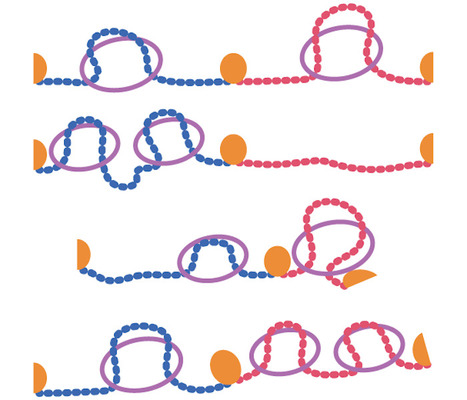
The formation of structural domains in chromosomes: a highly dynamic process to create stable regulatory functions
Our chromosomes are divided into strucrural domains that focus biological activity. In this literature review, researchers from the I2BC summarize recent insights into the dynamic nature of this process, and how this nonetheless can create stable regulation. Mammalian chromosomes are organized at different length scales within the cell nucleus. Topologically Associating Domains (TADs) are structural units of 3D genome organization that compartmentalize chromosomes into separated domains. Within these domains, biological functions are focused, thereby restricting the “spread” of gene regulation, DNA replication, recombination and repair. In this review, published in Current Opinion in Structural Biology, scientists from the Chromatin Dynamics team at the I2BC discuss recent insights into the structure and function of TADs. Whereas TADs were initially interpreted as insulated domains, recent studies are revealing that these domains should be interpreted as dynamic collections of actively extruding loops. This process of loop extrusion is subsequently blocked at dedicated TAD boundaries, thereby promoting intra-domain interactions over their surroundings. The authors discuss how mammalian TAD structure can emerge from this dynamic process and they discuss recent evidence that boundaries between TADs can have regulatory functions. More information: https://www.sciencedirect.com/science/article/abs/pii/S0959440X23000969 Contact: Daan Noordermeer <dann.noordermeer@i2bc.paris-saclay.fr>
|
|
Scooped by
I2BC Paris-Saclay
July 19, 2023 10:17 AM
|
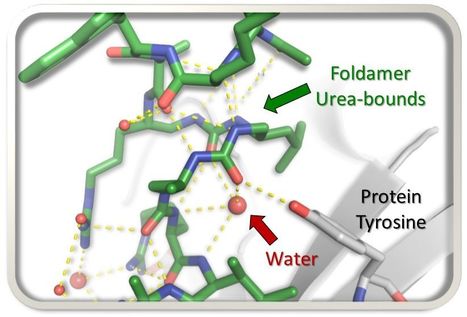
Unexpected binding modes of ureabased foldamers to a protein surface
Exploring uncharted territory, peptide-urea chimeras display surprising binding modes to the histone chaperone ASF1, rewriting the rules of interaction. In the search for foldamer inhibitors of the histone chaperone ASF1, the AMIG team of I2BC in collaboration with a team of Bordeaux University, explored the possibility of substituting four α-residues (≈ one helix turn) by 3-urea segments and scanned the sequence of a short α-helical peptide known to bind ASF1. By analysing the impact of the different foldamer replacements within the peptide chain, new binding modes of the peptide-urea chimeras to a protein target were discovered. More information: https://doi.org/10.1039/D3CC01891A Contact: Françoise Ochsenbein <francoise.ochsenbein@i2bc.paris-saclay.fr>
|
|
Scooped by
I2BC Paris-Saclay
June 16, 2023 9:41 AM
|
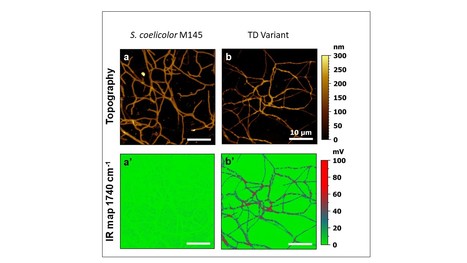
Genome analysis of a variant of Streptomyces coelicolor M145 with high lipid content and poor ability to synthetize antibiotic
The analysis of the genome of a variant of S. coelicolor M145 that does not produce antibiotics anymore and has a high total lipid content led to the identification of several genes whose deletion likely contributes in these unexpected features. Streptomyces coelicolor M145 is a model strain extensively studied to elucidate the regulation of antibiotic biosynthesis in Streptomyces species. This strain produces abundantly the blue polyketide antibiotic actinorhodin (ACT) and has a low total lipid content. Since both processes require acetylCoA availability and as the glyoxylate cycle is known to play a role in the assimilation of acetylCoA resulting from the degradation of fatty acids, we attempted to delete the gene encoding the isocitrate lyase (sco0982), an enzyme of the glyoxylate cycle. During this process, authentic deletion mutants of sco0982 were obtained as well as a variant of S. coelicolor, called TD, which produces 7 to 15 fold less ACT and has triacylglycerol and phosphatidylethanolamine content 3 fold higher than that of the original strain. The genome of the TD variant was sequenced and the analysis of its genomic sequence revealed the existence of deletions of different sizes accompanied by the massive loss of 60 of the 90 insertion sequences detected in this strain and by the disappearance of 704 genes (9% of the total number of genes). Some deletions include genes whose absence could contribute to the high total lipid content of this variant that requires high acetylCoA availability. Among these, one can mention genes encoding enzymes of the TCA and glyoxylate cycles, enzymes involved in the assimilation of nitrogen as well as enzymes belonging to some pathways directing the biosynthesis of antibiotics of the polyketide family as well as of trehalose. The generation of the TD variant is due to an high genetic instability that is thought to result from high oxidative stress. The plausible initial cause(s) of the existence of a high oxidative stress are discussed. In any case, the characteristics of this S. coelicolor variant are consistent with the previously reported negative correlation existing between total lipid content and antibiotic production in Streptomyces species. More information: https://www.mdpi.com/2076-2607/11/6/1470 Contact: Marie-Joëlle Virolle <marie-joelle.virolle@i2bc.paris-saclay.fr>
|
|
Scooped by
I2BC Paris-Saclay
June 16, 2023 9:31 AM
|
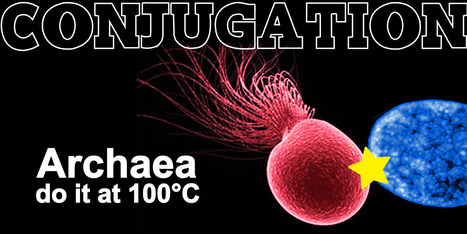
Archaeal conjugation at 100°C
Double world record: first experimental report of archaeal conjugation & first experimental evidence of conjugation at 100°C. Conjugative plasmids are self-transmissible mobile genetic elements which transfer DNA between host cells via Type IV Secretion Systems (T4SS). While T4SS-mediated conjugation has been well-studied in diderm bacteria, information from monoderm bacteria remains sparse, and even less is known for the Archaea, largely due to their limited genetic accessibility. To date, only one family of conjugative plasmids has been described in Archaea, with all representatives coming from the Sulfolobales order of Crenarchaeota. Here we present the first self-transmissible plasmid identified in a Euryarchaeon, Thermococcus sp. 33-3. The 103 kbp plasmid, pT33-3, has left evidence of its past transfer in CRISPR-spacers throughout the Thermococcales order, and encodes virB4/trbE and virD4/traG homologues characteristic of T4SS. Using genetic techniques, we demonstrate that pT33-3 is a bona fide conjugative plasmid, with transmissibility being plasmid-encoded, requiring cell-to-cell contact, and dependent upon proteins constituting canonical T4SS. pT33-3 transfers under laboratory conditions to various Thermococcales, and transconjugants propagate at 100°C. Using pT33-3, we developed a genetic toolkit which allows modification of phylogenetically diverse Archaeal genomes. We demonstrate pT33-3–mediated plasmid mobilization and subsequent targeted genome modification in previously untransformable Thermococcales species, and extend this process to interphylum transfer to a Crenarchaeon. More information: https://www.nature.com/articles/s41564-023-01387-x Contact: Jacques Oberto <jacques.oberto@i2bc.paris-saclay.fr>
|
|
Scooped by
I2BC Paris-Saclay
June 16, 2023 9:26 AM
|
Self assembling structures from artificial proteins, or how to design protein origamis
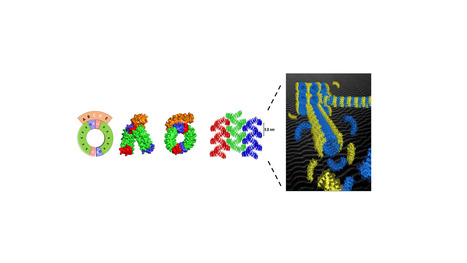
Organized superstructures made from proteins such as microtubules, cilia or flagella are ubiquitous in living cells. How to design such highly organized superstructure from artificial protein components ? We describe a versatile strategy to create inducible protein assembly with predefined geometry. The assembly is mediated by a binding protein that staples identical protein bricks together in a predictable geometry. The first step was to select, among the alphaRep protein library, a protein able to interact with a specific area (the “back” surface) of another repeat protein used as a Bait. The structure of the “Bait”/”Back-binder” complex was then solved by the I2BC protein crystallography facility. Based on this structure, we designed a new protein, named the “Brick”, in which the surface elements of the Bait protein interacting with the “Back-binder” were split in two parts and appended at the two extremities of the “Brick” protein. This is made possible due to the extremely stable and modular organization of repeats proteins, such as alphaRep. In presence of the Brick protein, the Back-binder reconstitutes its cognate binding surface by joining the C end of one Brick protein to the N end of another Brick protein, in such a way that the surface elements of the two linked bricks adopt the same relative orientation as in the bait protein. Due to the twisted solenoid shape of the brick protein, the concatenation of many brick proteins leads to the formation of micrometer long super-helical filaments with a highly regular geometry. A very detailed structural characterization of the resulting assembly was conducted together with the Group of Erik Dujardin (CEMES Toulouse) using Negative stain electron microscopy (I2BC electron microscopy facility) , Small angle X ray scattering (F. Artzner, CNRS Rennes) , Cryoelectron Microscopy and Tomography (Integrative electron microscopy , Université de Toulouse). These efforts result in a detailed experimental description of the molecular organization and explain the higher order organization of the filaments by interdigitation of the back binders from neighboring filaments. The principles demonstrated here are potentially general and can be transferred to other types of affinity protein pairs derived either from natural or from computationally designed protein pairs and open routes toward the design and fabrication of multiscale protein origami with arbitrarily programmed shapes and chemical functions… More information: https://www.pnas.org/doi/10.1073/pnas.2218428120 Contact: Philippe Minard <philippe.minard@i2bc.paris-saclay.fr>
|
|
Scooped by
I2BC Paris-Saclay
May 17, 2023 11:59 AM
|
A "coarse" solution to the mystery of crossover interference?
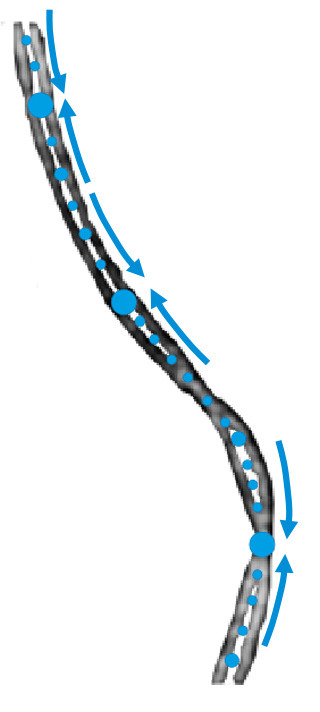
For over a century, the mystery of crossover interference has been puzzling: how do meiotic crossovers communicate with each others to establish their unique distribution along chromosomes? In this review, we discuss a new model that could explain it: the coarsening model. Meiotic crossovers, which are exchanges of genetic material between homologous chromosomes, are more evenly and distantly spaced along chromosomes than expected by chance. This is because the occurrence of one crossover reduces the likelihood of nearby crossover events – a conserved and intriguing phenomenon called crossover interference. Although crossover interference was first described over a century ago, the mechanism allowing coordination of the fate of potential crossover sites half a chromosome away remains elusive. In this review, we discuss the recently published evidence supporting a new model for crossover patterning, coined the coarsening model, and point out the missing pieces that are still needed to complete this fascinating puzzle. More information: here Contact: Chloé Girard <chloe.girard@i2bc.paris-saclay.fr>
|
|
Scooped by
I2BC Paris-Saclay
May 17, 2023 11:50 AM
|
Two essential complexes--Mediator and RSC chromatin remodeler--work together for chromatin organization at promoters
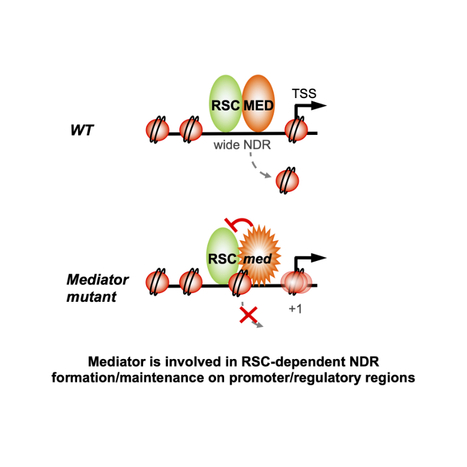
Physical interaction and functional interplay between essential co-regulators in transcription and chromatin organization, Mediator and RSC chromatin remodeler, contributes to nucleosome-depleted region formation at promoters and +1 nucleosome positioning. Eukaryotic DNA is compactly structured through chromatin organization which governs and influences all DNA transactions. Regulation of transcription is a key phenomenon of gene expression whose alterations lead to severe human pathologies. Multisubunit coregulator complexes can act on chromatin structure as chromatin modifiers or remodelers, or stimulate the assembly of the transcriptional machinery. Mediator is an essential and conserved coactivator thought to act in concert with chromatin regulators. However, it remains largely unknown how their functions are coordinated. The team of J. Soutourina (Genome biology/I2BC and Institute Joliot, CEA/CNRS/Paris-Saclay) provides evidence in the budding yeast that Mediator establishes physical contact with RSC (Remodels the Structure of Chromatin), a conserved and essential chromatin remodeling complex that is crucial for nucleosome-depleted region (NDR) formation. The role of Mediator-RSC interaction in their chromatin binding, nucleosome occupancy and transcription was determined on a genomic scale. Mediator and RSC co-localize on wide NDRs of promoter regions, and specific Mediator mutations affect nucleosome eviction and stability of +1 nucleosome associated with transcription-start site. This work shows that Mediator contributes to RSC remodeling function to shape NDRs and maintain chromatin organization on promoter regions. It will help in our understanding of transcriptional regulation in the chromatin context relevant for severe diseases. More information: doi.org/10.1016/j.celrep.2023.112465 Contact: Julie Soutourina <julie.soutourina@i2bc.paris-saclay.fr>
|
|
Scooped by
I2BC Paris-Saclay
May 5, 2023 10:10 AM
|
4th meeting of the GdR MéDynA, October 3-6, 2023
Registration open until May 15, 2023: https://www.azur-colloque.fr/DR04/inscription/inscription/258 Self-assembled molecular systems are studied in various fields ranging from physics to biology, including chemistry, mathematics and materials science. While the properties (mechanical, biological) of complex molecular assemblies are already the subject of well-established scientific fields, the study of the dynamic phenomena leading to their formation and evolution over time remains a field in genesis. However, this is not only a field of fundamental scientific interest, but also of practical interest, such as for pathological assemblies or assemblies with therapeutic or (bio)technological purposes. For more details on MéDynA : https://medyna.cnrs.fr/ More information: here
|
|
Scooped by
I2BC Paris-Saclay
March 17, 2023 12:20 PM
|
An image-based high-content screening for compounds targeting Toxoplasma gondii repurposed inhibitors effective against the malaria parasite Plasmodium falciparum
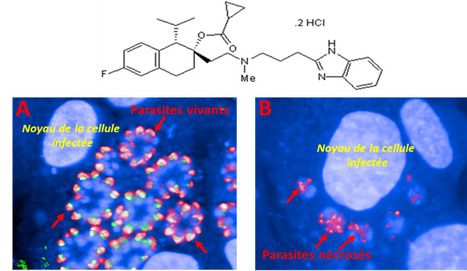
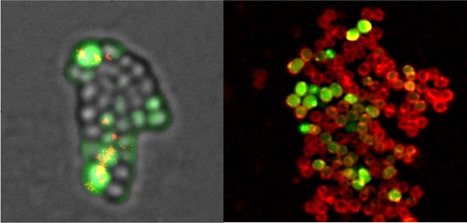
Apicomplexan parasites contain specific secretory organelles called rhoptries and micronemes, whose biogenesis depends on the unique receptor sortilin TgSORT. In the present study, we took advantage of the subcellular polarity of the parasite to engineer a clonal transgenic Toxoplasma line that expresses simultaneously the green fluorescent protein TgSORT-GFP in the post-Golgi-endosome-like compartment and the red fluorescent protein rhoptry ROP1-mCherry near the apical end. We utilized this fluorescent transgenic T. gondii to develop a miniaturized image-based phenotype assay coupled to an automated image analysis. By applying this methodology to 1,120 compounds, we identified 12 that are capable of disrupting the T. gondii morphology and inhibiting intracellular replication. Analysis of the selected compounds confirmed that all 12 are kinase inhibitors and intramembrane pumps, with some exhibiting potent activity against Plasmodium falciparum. Our findings highlight the advantage of comparative and targeted phenotypic analysis involving two related parasite species as a means of identifying molecules with a conserved mode of action. More: https://doi.org/10.3389/fcimb.2023.1102551 Contact: Stanislas Tomavo <stanislas.tomavo@i2bc.paris-saclay.fr>
|
|
Scooped by
I2BC Paris-Saclay
March 17, 2023 12:11 PM
|
Manganese concentration affects chloroplast structure and the photosynthetic apparatus in Marchantia polymorpha.
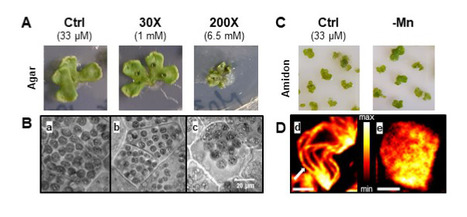
Non-optimal manganese concentration affects photosynthetic electron transport and changes the ultrastructure of the chloroplast as revealed by super-resolution fluorescence microscopy. Manganese (Mn) is an essential metal for plant growth. It plays a major role in the chloroplast at the level of Photosystem II of the photosynthetic electron transport chain where it forms the Mn4CaO5 cluster, the site of water oxidation. Mn deficiency affects specifically photosynthesis while Mn excess is toxic for the plant. We studied Mn homeostasis in the liverwort Marchantia polymorpha whose simple morphology (absence of cuticle and archaic root system) allows a rapid and uncontrolled absorption. The determination of Mn in thalli and chloroplasts showed a high capacity of uptake (beyond even some metal hyperaccumulating plants) and resistance to stress, in particular thanks to some essential metabolites as shown by GC-MS analyses. In vivo super-resolution fluorescence microscopy (SRM) and transmission electron microscopy showed a change in chloroplast size and a disorganization of the thylakoid membranes. Mn deficiency increased the ratio of photosystem I compared to photosystem II. This alteration seems to favour cyclic electron flow around photosystem I and helps to protect the photosynthetic electron transport chain against photodamage. In conclusion, Marchantia polymorpha is an interesting model plant to study metal homeostasis and to be used by new analytical methods (MRS). In this organism, Mn plays an important role in thylakoid organization and photosynthetic electron transport. More: doi: 10.1093/plphys/kiad052 Contact: Anja Kieger-Liszkay <anja.liszkay@i2bc.paris-saclay.fr>
|
|
Scooped by
I2BC Paris-Saclay
March 17, 2023 11:54 AM
|
The luminal domain of Toxoplasma gondii sortilin adopts a ring-shaped structure exhibiting motifs specific to apicomplexan parasites
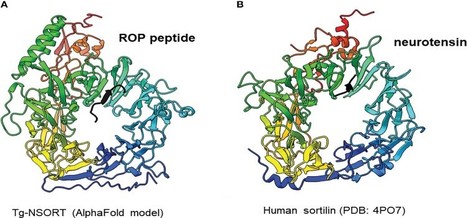
Rhoptries and micronemes are essential for host cell invasion and survival of all apicomplexan parasites, which are composed of protozoan pathogens including Plasmodium falciparum (malaria) and Toxoplasma gondii (toxoplasmosis) that infect humans and animals causing severe diseases. We identifiedToxoplasma gondii TgSORT as an essential cargo receptor, which drives the transport of rhoptry and microneme proteins to ensure the biogenesis of these secretory organelles. Here, we present an optimized protocol for expression of the entire luminal N-terminus of TgSORT (Tg-NSORT) in the yeast Pichia pastoris. Optimization of its coding sequence, cloning and transformation of the yeast P. pastoris allowed the secretion of Tg-NSORT. The protein was purified and further analyzed by negative staining electron microscopy. In addition, molecular modeling using AlphaFold identified key differences between the human and theT gondii sortilin. The structural features that are only present inT. gondii and other apicomplexan parasites were highlighted. Elucidating the roles of these specific structural features may be useful for designing new therapeutic agents against apicomplexan parasites. More: https://doi.org/10.3389/fpara.2023.1103772 Contact: Stanislas Tomavo <stanislas.tomavo@i2bc.paris-saclay.fr>
|
|
Scooped by
I2BC Paris-Saclay
March 17, 2023 11:10 AM
|
Biolistic Transformation of Chlamydomonas reinhardtii and Saccharomyces cerevisiae Mitochondria
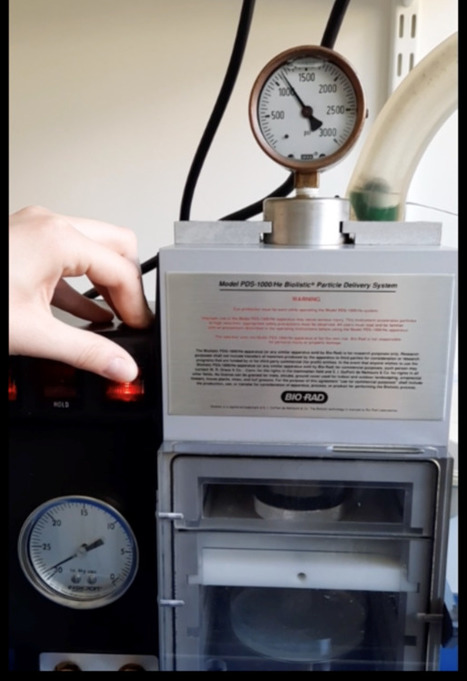
This review summarizes principles, historical and practical aspects as well as achievements of microalga and budding yeast mitochondrial DNA manipulation using the biolistic technique, and includes a video protocol. Chlamydomonas reinhardtii and Saccharomyces cerevisiae are currently the two micro-organisms in which genetic transformation of mitochondria is routinely performed. The generation of a large variety of defined alterations as well as the insertion of ectopic genes in the mitochondrial genome (mtDNA) are possible, especially in yeast. Biolistic transformation of mitochondria is achieved through the bombardment of microprojectiles coated with DNA, which can be incorporated into mtDNA thanks to the highly efficient homologous recombination machinery present in S. cerevisiae and C. reinhardtii organelles. Despite a low frequency of transformation, the isolation of transformants in yeast is relatively quick and easy, since several natural or artificial selectable markers are available, while the selection in C. reinhardtii remains long and awaits new markers. Here, we describe the materials and techniques used to perform biolistic transformation, in order to mutagenize endogenous mitochondrial genes or insert novel markers into mtDNA. Although alternative strategies to edit mtDNA are being set up, so far, insertion of ectopic genes relies on the biolistic transformation techniques. This reviews is Chapter 24 of a 2023 volume from Springer Protocols devoted to mitochondrial DNA. More: Methods Mol Biol 2023;2615:345-364. Contcat: Nathalie Bonnefoy <nathalie.bonnefoy@i2bc.paris-saclay.fr>
|
|
Scooped by
I2BC Paris-Saclay
February 17, 2023 5:50 AM
|
A paralog of Pcc1 is the fifth core subunit of the KEOPS tRNA modifying complex in Archaea
Discovery of the fifth subunit of the archaeal KEOPS complex involved in the synthesis of a key tRNA modification in Archaea. In Archaea and Eukaryotes, the synthesis of a universal tRNA modification, N6-threonyl-carbamoyl adenosine (t6A), is catalyzed by the KEOPS complex composed of Kae1, Bud32, Cgi121 and Pcc1. A fifth subunit, Gon7, is found only in Fungi and Metazoa. Here, we identify and characterize a fifth KEOPS subunit in Archaea. This protein, dubbed Pcc2, is a paralog of Pcc1 and is widely conserved in Archaea. Pcc1 and Pcc2 form a heterodimer in solution, and show modest sequence conservation but very high structural similarity. The five-subunit archaeal KEOPS does not form dimers but retains robust tRNA binding and t6A synthetic activity. Pcc2 can substitute for Pcc1 but the resulting KEOPS complex is inactive, suggesting a distinct function for the two paralogs. Comparative sequence and structure analyses point to a possible evolutionary link between archaeal Pcc2 and eukaryotic Gon7. Our work indicates that Pcc2 regulates the oligomeric state of the KEOPS complex, a feature that seems to be conserved from Archaea to Eukaryotes. More information: https://rdcu.be/c4BFl Contact: Tamara Basta <tamara.basta@i2bc.paris-saclay.fr>
|
|
|
Scooped by
I2BC Paris-Saclay
July 19, 2023 10:22 AM
|
Phosphatidylserine transport in cell life and death
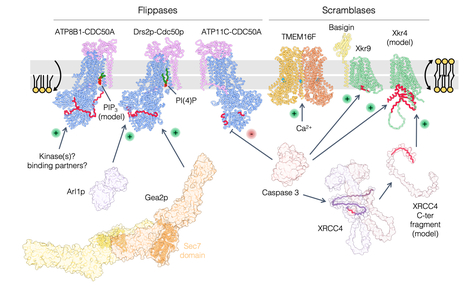
Lipids beyond membrane building blocks: recent advances in our understanding of phosphatidylserine distribution in eukaryotic cells and its role in infectious diseases. A prominent feature of cell membranes is the non-uniform distribution of the lipids they are made of. This is particularly true for the negatively charged glycerophospholipid phosphatidylserine (PS) which is enriched in the plasma membrane and in late secretory/endocytic compartments. In addition to the uneven distribution of PS between membranes, the transbilayer distribution (the enrichment of a given lipid in one membrane leaflet over the other) of PS is tightly regulated, as it is largely confined to the cytosolic leaflet of membranes, where it can mediate the recruitment of a diverse set of proteins. As such, PS controls a myriad of cell signaling pathways as well as membrane trafficking events. In some specific conditions, PS may however be ‘flipped’ toward the external leaflet of the plasma membrane, where it can act as an ‘eat-me’ signal for engulfment of apoptotic cells by macrophages or to promote synaptic pruning, which consists in the removal of synapses to establish proper connections during brain development. The exquisitely tailored transbilayer PS distribution is also crucial in host-pathogen interactions, as it is exploited by various intracellular pathogens to infect cells. In this review, we highlight recent findings on nonvesicular PS transport between membranes by lipid-transfer proteins at membrane contact sites, on PS flip-flop between membrane leaflets by lipid flippases and scramblases, and we discuss how perturbation of PS distribution can lead to disease and the role of PS in viral infection. More information: https://www.sciencedirect.com/science/article/pii/S0955067423000418?via%3Dihub Contact: Guillaume Lenoir <guillaume.lenoir@i2bc.paris-saclay.fr>
Portrait Jeune Chercheur - Frédéric Frottin, chercheur en biochimie des protéines
Chargé de recherche au CNRS depuis 2020, Frédéric Frottin est biochimiste cellulaire. Ses travaux de recherche se déroulent à l'I2BC (Institut de Biologie Intégrative de la Cellule, UMR 9198 CEA/CNRS/UPSaclay, Gif-sur-Yvette) au sein de l’équipe Maturation, Destinée cellulaire des protéines et Thérapeutiques. Frédéric s’intéresse aux mécanismes cellulaires assurant l’homéostasie des protéines et leur contrôle qualité. En particulier, il étudie d’une part le rôle des modifications protéiques sur ces aspects ainsi que celui des organites sans membrane. Ses travaux ont des implications pour de nombreuses maladies notamment des maladies neurodégénératives telles que les maladies d’Alzheimer et de Parkinson. Frédéric a obtenu son doctorat en 2011 après un travail qui déjà portait sur les modifications protéiques. En particulier, il a amélioré notre compréhension des bases moléculaires de l’excision de la méthionine N-terminale, qui est un mécanisme essentiel à la survie de tout organismes. De plus, il a révélé son rôle dans le maintien de l’homéostasie du glutathion et des protéines. Ces travaux ont été réalisé avec de nombreux organismes incluant la plante modèle Arabidopsis thaliana, des cellules humaines cultivées, la levure ainsi que des archéobactéries. Ayant développé un intérêt pour l’homéostasie des protéines durant sa thèse, fin 2011 Frédéric rejoint le département du Prof. F.U. Hartl à l’Institut Max Planck de biochimie à Munich. Durant son postdoc, il a étudié les mécanismes de secours qui sont engagés lorsque le protéome subit des dommages. En 2012, il obtient une bourse EMBO pour mener ses recherches. Notamment, il a travaillé sur des voies cellulaires importantes pour le contrôle de l’homéostasie des protéines qui aide à notre compréhension des mécanismes associés aux maladies neurodégénératives. Il a participé à l’amélioration de notre compréhension de la toxicité induite par les agrégats. Ces agrégats, qui sont des espèces protéiques aberrantes, sont retrouvés dans ces maladies mais aussi dans certains cancers. Ses travaux ont montré que les agrégats endommageaient des fonctions essentielles telles que la dégradation, la synthèse, et le transport des protéines. De plus, il a découvert un nouveau mécanisme de contrôle qualité des protéines dans le noyau cellulaire. Ce mécanisme est l’accumulation transitoire d’espèces protéiques aberrantes au sein du nucléole lors d’un stress. Le nucléole est un sous compartiment du noyau. Ce compartiment est sans membrane et de type liquide. Dans le nucléole, ces protéines aberrantes sont moins toxiques et ne forment pas d’agrégats irréversibles. En 2020, il est recruté au CNRS pour poursuivre ces recherches sur cette voie nouvellement découverte. “If you are not part of the solution, you are part of the precipitate” – Chemistry joke, attribué à Scott Trahan. Contact : frederic.frottin@i2bc.paris-saclay.fr
Via Life Sciences UPSaclay
|
|
Scooped by
I2BC Paris-Saclay
June 16, 2023 9:37 AM
|
How PAXX keeps DNA in check
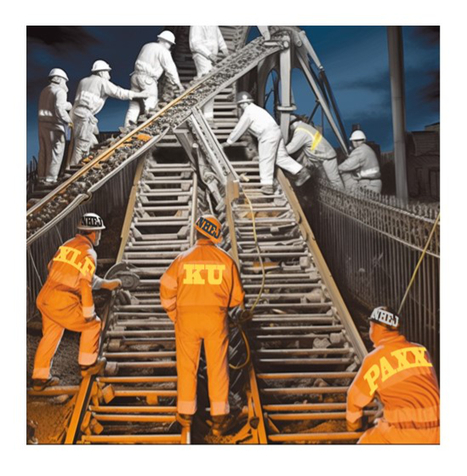
We visualized the crucial steps of the molecular assembly allowing cells to repair breaks in their DNA, in particular those involving the PAXX protein. « It’s in my DNA » fine, but the information has to stay there without too much change, at the risk of losing our identity! Monitoring the health of DNA is the job of the many repair systems in our cells, each specialized in detecting and correcting a specific anomaly. A particularly serious threat is the breakage of the DNA double chain. For the cell, this is like a train whose tracks are suddenly interrupted: serious damage ahead! But the DNA is a fragile molecule that breaks easily, for example during flight under the effect of cosmic radiation, or upon exposure with radioactivity or X-rays, or simply because cells grow under reactive oxygen. The rail maintenance department in human cells is called the NHEJ, which coordinates many agents to detect breaks, protect them by a safety cord and finally weld them together. Of all the agents involved, the PAXX protein was the latest identified in 2015 but its role was not fully known. A B3S team in collaboration with a IPBS team in Toulouse (P Calsou) and a UK team in Bristol (A Chaplin) succeeded in reconstructing how PAXX functions in NHEJ. When the DNA is broken, repair begins with the ring-like Ku protein that very quickly encircles the ends of the break, serving as a mooring platform for the other proteins. Using two techniques that allow proteins to be visualized at the atomic scale (X-rays crystallography and cryo-electron microscopy), we captured a snapshot of the moment when PAXX docks with Ku and precisely identified their contact zones. They showed that PAXX works in tandem with XLF attached to the other side of Ku. When the binding sites are disrupted by mutations, the whole machinery is blocked, the break is no longer repaired, the train derails and the cell dies! In hyperactive cancer cells, the train travels at high-speed, explaining their special sensitivity to DNA breaks induced by radiotherapy ; molecules that would block the assembly of PAXX and/or XLF on DNA breaks could make it possible to increase the vulnerability of cancer cells and thus open up new therapeutic perspectives. The results of this research are therefore very promising and could lead to more effective therapies for cancer patients, although there is still work to be done to find and test these molecules. More information: https://pubmed.ncbi.nlm.nih.gov/37256950/ Contact: Jean-Baptiste Charbonnier <jb.charbonnier@i2bc.paris-saclay.fr> – Virginie Ropars <virginie.ropars@i2bc.paris-saclay.fr>
|
|
Scooped by
I2BC Paris-Saclay
June 16, 2023 9:29 AM
|
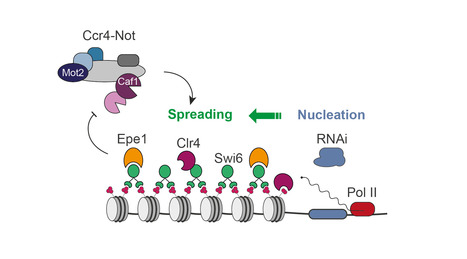
The Ccr4-Not complex is a major regulator of gene silencing and heterochromatin spreading
The fission yeast Ccr4-Not complex promotes propagation of the repressive H3K9me3 histone mark to mediate heterochromatic gene silencing. Eukaryotic genomes are partitioned into relaxed, gene-rich regions and condensed, gene-poor domains called heterochromatin. The maintenance of heterochromatin is crucial for proper genome expression and integrity, and requires multiple factors regulating histone modifications and/or the levels of RNA molecules produced from these regions. Such effectors not only promote heterochromatin assembly but also ensure its propagation from specific nucleation sites to defined domain boundaries. However, while the mechanisms involved in initiation of heterochromatin formation have been well documented, the molecular and biochemical properties underlying its spreading remain largely elusive. By combining genetic and single-cell approaches, we report here that the fission yeast Ccr4-Not complex, a multisubunit complex conserved throughout eukaryotes, is essential for efficient heterochromatin spreading to repress expression of nucleation-distal RNAs. The two catalytic activities of the complex, RNA deadenylation and protein ubiquitinylation, are each critical, thereby defining a dual enzymatic requirement in the process. More information: https://academic.oup.com/genetics/advance-article/doi/10.1093/genetics/iyad108/7190671?login=false Contact: Mathieu Rougemaille <mathieu.rougemaille@i2bc.paris-saclay.fr>
|
|
Scooped by
I2BC Paris-Saclay
June 16, 2023 9:23 AM
|
The complex regulation of competence in Staphylococcus aureus under microaerobic conditions
Where, when and how does Staphylococcus aureus acquire new antibiotic resistance genes ? According to the World Health Organization (WHO), antimicrobial resistance (AMR) is one of the top 10 global public health threats facing humanity. In Europe, the health burden of antibiotic resistant bacteria is comparable to that of influenza, tuberculosis and HIV/AIDS combined and can be considered as a “hidden pandemic”.
Horizontal Gene Transfer (HGT), which can be defined as the transfer of genetic sequences between organisms with no parent-offspring relationship, is essential for the acquisition of new antibiotic resistance genes. Natural Transformation, one of the three main HGT mechanisms in bacteria, ensures the binding, internalization and homologous recombination within the host chromosome of exogenous sequences present in the environment. Importantly, in order to perform natural transformation, bacteria need to enter a differentiated state, called Genetic Competence. Many human pathogenic bacteria have the ability to induce genetic competence for natural transformation. Importantly, the human pathogen Staphylococcus aureus ability to induce competence have recently been characterized.
In this study, we designed a new protocol proving S. aureus ability to very efficiently induce competence and transformation. Taking advantage of this protocol, we characterized the three central competence regulators, all essential but playing different roles. Finally, we demonstrated that oxygen rarefaction was an important environmental stress for the induction of competence. This last result is not trivial considering that S. aureus encounters such microaerobic conditions during infection. More information: https://www.nature.com/articles/s42003-023-04892-1 Contact: Nicolas Mirouze <nicolas.mirouze@i2bc.paris-saclay.fr>
|
|
Scooped by
I2BC Paris-Saclay
May 17, 2023 11:54 AM
|
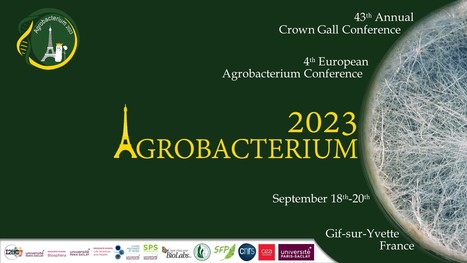
4th European Agrobacterium conference 2023 - I2BC - Gif-sur-Yvette Registration open
|
|
Scooped by
I2BC Paris-Saclay
May 17, 2023 11:47 AM
|
Dissimilar gene repertoires of Dickeya solani involved in the colonization of lesions and roots of Solanum tuberosum
High Throughput Screening Reveals genes involved in pre-symptomatic colonization of potato roots by a bacterial pathogen. Dickeya and Pectobacterium species are necrotrophic pathogens that macerate stems (blackleg disease) and tubers (soft rot disease) of Solanum tuberosum. They proliferate by exploiting plant cell remains. They also colonize roots, even if no symptoms are observed. The genes involved in pre-symptomatic root colonization are poorly understood. Here, transposon-sequencing (Tn-seq) analysis of Dickeya solani living in macerated tissues revealed 126 genes important for competitive colonization of tuber lesions and 207 for stem lesions, including 96 genes common to both conditions. In root colonization, Tn-seq highlighted 83 genes, all different from those in stem and tuber lesion conditions. This work revealed novel traits and pathways important for understanding how the D. solani pathogen efficiently survives on roots, persists in the environment, and colonizes progeny tubers. More information: https://doi.org/10.3389/fpls.2023.1154110 Contact: Denis Faure <denis.faure@i2bc.paris-saclay.fr>
|
|
Scooped by
I2BC Paris-Saclay
May 5, 2023 10:09 AM
|
Symposium "Environment and Host Microbiomes - Functional Interactions"
Bringing together researchers working on fundamental, translational and clinical research in the field of “Microbiota”. The symposium is organized by the GS LSH and the OI MICROBES on Wednesday, May 31, 2023 at Henri Moissan, and aims to bring together researchers from different fields (basic research, translational and clinical research) working on the topic of “Microbiota”. The objective of the symposium is to provide the opportunity to the different communities to know each other and to initiate collaborations in the future. Registration is free but mandatory: https://www.universite-paris-saclay.fr/actualites/environment-and-host-microbiomes-functional-interactions Young researchers (PhD students and Post-Doc) are invited to present their research as a poster (abstract to be submitted before May 5, 2023 online: https://cirrus.universite-paris-saclay.fr/s/58tPW6HpnS2Fbz8) Contact: Peter MERGAERT <peter.mergaert@i2bc.paris-saclay.fr>
|
|
Scooped by
I2BC Paris-Saclay
March 17, 2023 12:17 PM
|
Dual-uptake mode of the antibiotic phazolicin by Gram-negative bacteria prevents resistance acquisition
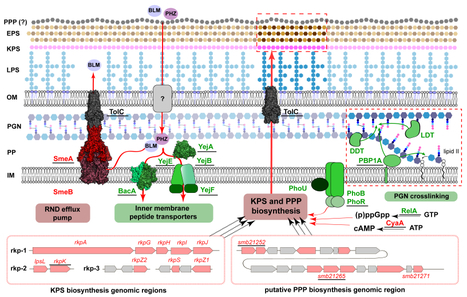
Genetic screens and transposon sequencing have revealed multiple bacterial envelope functions in Sinorhizobium meliloti that contribute to the uptake efficiency of the ribosome-inhibiting antimicrobial peptide phazolicin, explaining why resistance to this molecule is improbable. Many bacteria produce antimicrobial peptides to eliminate competitors and create an exclusive niche. These peptides act by either membrane disruption or by inhibiting essential intracellular processes. The Achilles heel of the latter type of antimicrobials is their dependence on transporters to enter the susceptible cells because transporter inactivation is sufficient to obtain resistance. Here, we show that a rhizobial ribosome-targeting peptide phazolicin (PHZ) uses two different transporters, BacA and YejABEF, to get into the cells of a symbiotic bacterium Sinorhizobium meliloti. This dual entry mode dramatically reduces the probability of the appearance of PHZ-resistant mutants. Since these transporters are also crucial for S. meliloti symbiotic association with host plants, their inactivation in natural settings is strongly disfavoured, making PHZ an attractive lead for the development of biocontrol agents for agriculture. More: https://journals.asm.org/doi/10.1128/mbio.00217-23 Contact: Peter Mergaert <peter.mergaert@i2bc.paris-saclay.fr>
|
|
Scooped by
I2BC Paris-Saclay
March 17, 2023 11:59 AM
|
Metabolic Adjustments in Response to ATP Spilling by the synthetic protein DX in a Streptomyces strain
The small synthetic protein DX constitutes an efficient biotechnological tool to enhance antibiotic production in some Streptomyces species. Since in Streptomyces species antibiotic production is known to be triggered in condition of phosphate limitation, condition that is correlated with a low ATP content, we assessed the effects of a systematic ATP degradation on specialized and primary metabolisms of various Streptomyces species. To do so the gene encoding the small synthetic protein DX, that has high affinity for ATP and dephosphorylates ATP into ADP, was cloned in an integrative vector under the control of a strong promoter. This construct and the empty vector were introduced into Streptomyces albogriseolus / viridodiastaticus yielding A37 and A36, respectively. A37 yielded higher biomass than A36 indicating that the DX-mediated ATP degradation resulted into a stimulation of the metabolism. The comparative analysis of the metabolomes of A36 and A37 revealed that A37 had a lower content in glycolytic and Tricarboxylic Acid Cycle intermediates as well as in amino acids than A36, these metabolites being consumed for biomass generation in A37. In contrast, the abundance of other molecules indicative either of energetic stress (ADP, AMP, UMP, ornithine and thymine), of activation (NAD and threonic acid) or inhibition (citramalic acid, fatty acids, TAG and L-alanine) of the oxidative metabolism, was higher in A37 than in A36. Furthermore, polycyclic aromatic polyketide antibiotics belonging to the angucycline family and thought to have a negative impact on respiration were also more abundantly produced by A37 than by A36. This comparative analysis thus revealed the occurrence in A37 of antagonistic metabolic strategies, namely activation and slowing down of oxidative metabolism and respiration, to maintain the cellular energetic homeostasis. This study thus demonstrated that DX constitutes an efficient biotechnological tool to enhance the expression of the specialized metabolic pathways present in the Streptomyces genomes that may include cryptic pathways. More: https://www.frontiersin.org/articles/10.3389/fcell.2023.1129009/full Contact: Marie-Joëlle Virolle <marie-joelle.virolle@i2bc.paris-saclay.fr>
|
|
Scooped by
I2BC Paris-Saclay
March 17, 2023 11:49 AM
|
First heliX installed in France
Studying molecular interactions of nucleic acid binders, affinity vs. avidity, and ternary complexes with the heliX+ biosensor. The I2BC PIM platform proposed the swithSENSE technology since 2017 that uses nanolevers bound on a gold surface to measure protein interactions in an approach highly complementary to other surface methods like BioLayer Interferometry and Surface Plasmon Resonance also available on PIM platform (https://www.i2bc.paris-saclay.fr/structural-biology/protein-interaction/). In January 2023, the new generation switchSENSE instrument, heliX+ was installed in place of the first generation DRX2. This is the first instrument implemented in France. It has unique features in particular for DNA/RNA Binding Proteins. It can resolve the fastest kinetics with confidence using advanced microfluidics and 10 ms data collection (Nemoz, 2018, NSMB, Velours, 2021, Eur Bioph Journal). Molecular interactions can be detected with femto-molar sensitivity. It allows screening and ranking of small molecule induced conformational changes (96 and 384 well plates). It allows to follow enzymatic activities including polymerases, ligases and nucleases.
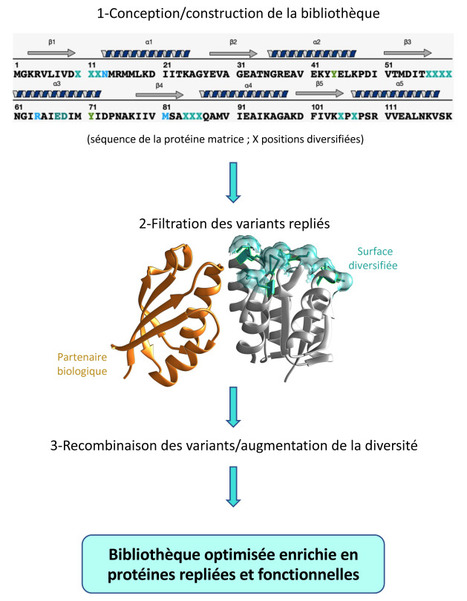
Les bibliothèques de protéines artificielles sont des outils remarquables pour identifier efficacement des protéines nouvelles interagissant spécifiquement avec n’importe quelle autre protéine cible choisie. Ces bibliothèques sont construites à partir d’une ossature protéique dont une partie de la surface est aléatoirement substituée. Plus cette surface est diversifiée, plus la bibliothèque peut être efficace. Cependant cette règle comporte une restriction majeure : la diversification tend généralement à augmenter la proportion de protéines de la bibliothèque devenues instables. Dans une étude publiée dans Scientific Reports, Marie Valerio-Lepiniec et ses collaborateurs de l’I2BC (CNRS/CEA/UPSaclay, Gif-sur-Yvette) ont donc développé une approche originale pour construire des bibliothèques qui soient à la fois très diverses et très stables. L’idée est de construire une bibliothèque diverse, puis de sélectionner au sein de celle-ci le sous-ensemble des protéines repliées et donc potentiellement stables et enfin de recombiner entre elles uniquement les séquences correspondantes. Les auteurs ont ainsi construit une bibliothèque en rendant hypervariable quatre boucles de la protéine utilisée comme ossature (CheY). Un partenaire protéique naturel de CheY interagissant avec une surface distincte de la surface diversifiée a été utilisé pour extraire de la bibliothèque initiale le sous-ensemble des variants repliés. Ensuite, une approche simple de recombinaison des séquences d'ADN codant ces variants « filtrés » a permis de restaurer une grande diversité. De cette façon, les chercheurs ont obtenu des protéines dont la stabilité moyenne est bien plus élevée que celle de la bibliothèque initiale. Cette bibliothèque améliorée a d’ores et déjà été utilisée avec succès pour sélectionner un inhibiteur spécifique de la Kaz-luciférase capable d'inhiber son activité de luminescence. Cet inhibiteur sera très utile pour concevoir de nouvelles familles de biosenseurs. Contact : marielle.valerio@i2bc.paris-saclay.fr
Via Life Sciences UPSaclay
|