Your new post is loading...
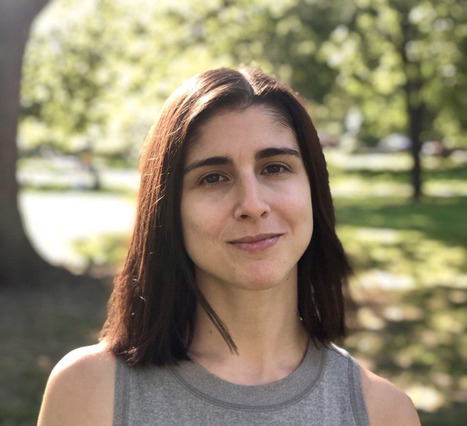
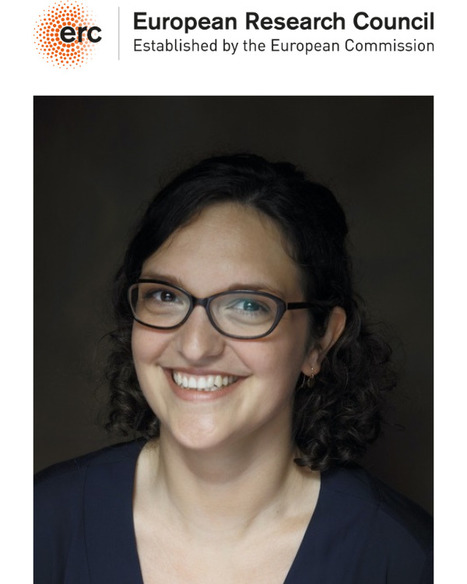
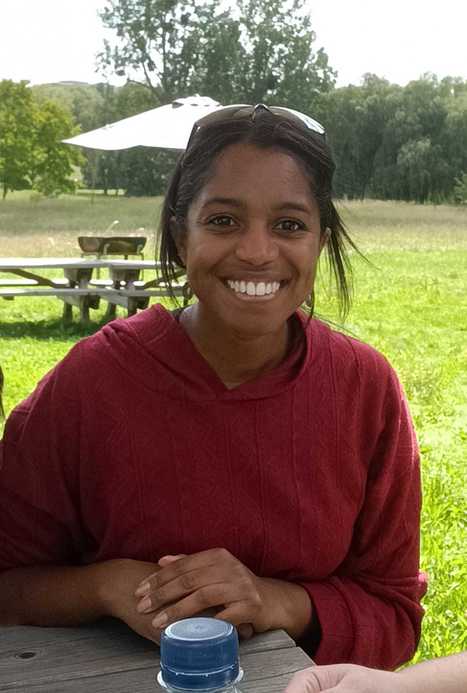
Portrait Jeune Chercheuse - Ambre Sala, chercheuse en biologie cellulaire
Chargée de recherche au CNRS, Ambre Sala a rejoint le département de biologie cellulaire de l’I2BC en février 2023, ou elle dirige l’équipe « Homéostasie des protéines dans le développement et le vieillissement ». Elle s’intéresse aux mécanismes qui régulent l'homéostasie des protéines (protéostasie), qui sont essentiels pour maintenir un protéome correctement replié et fonctionnel dans toutes les cellules. Ses recherches dans ce domaine se concentrent sur les chaperons moléculaires, qui assistent le repliement et le trafic des protéines et empêchent leur agrégation, ainsi que les voies de réponse au stress qui régulent le niveau d’expression des chaperons pour rétablir la protéostasie lors de de l’accumulation de protéines mal repliées. Pendant son doctorat dans le laboratoire de Pierre Genevaux à l'Université de Toulouse, elle a étudié l'évolution du chaperon bactérien SecB depuis son rôle canonique dans l'exportation des protéines via le translocon Sec vers le contrôle spécifique de systèmes toxine-antitoxine (TA) qui régulent la croissance bactérienne. Ces travaux ont apporté des connaissances fondamentales sur la remarquable plasticité du système chaperon SecB, et le processus d’évolution d’un chaperon générique vers le contrôle spécifique d'un système TA pour coupler la protéostasie à la croissance bactérienne. Pour ses études postdoctorales, Ambre a rejoint le laboratoire de Richard Morimoto à Northwestern University pour se concentrer sur la protéostasie et la réponse au stress dans le contexte du vieillissement. En utilisant le modèle Caenorhabditis elegans, elle a développé des approches de génétique, d'imagerie et de transcriptomique pour identifier et caractériser une nouvelle voie transcellulaire qui relie l'intégrité de l'embryon dans l'utérus à la protéostasie maternelle et à la résilience au stress. Ces travaux ont éclairé des stratégies systémiques qui coordonnent la reproduction, la protéostasie et le métabolisme pour déterminer la robustesse de l'organisme pendant le vieillissement. Ambre a rejoint l’I2BC après avoir obtenu une position de chercheur CNRS ainsi qu’un financement ATIP-Avenir en 2022 pour étudier les mécanismes qui protègent le protéome des cellules de la lignée germinale pour assurer la reproduction. L’équipe développe des approches génétiques, biochimiques et d'imagerie qui exploitent les avantages du modèle C. elegans, pour identifier les rôles cellulaires et la composition des réseaux de chaperons qui soutiennent la fonction des cellules germinales et leur résilience face au stress protéotoxique. « You can‘t always get what you want, but if you try sometimes, you just might find, you get what you need. » - Linda Randall, quoting the Rolling stones to describe chaperones overlapping functions. Contact : ambre.sala@i2bc.paris-saclay.fr
Via Life Sciences UPSaclay

|
Scooped by
I2BC Paris-Saclay
October 23, 2023 5:12 AM
|
Clustered binding of the CTCF protein creates functional domains in the human and mouse genome with improved structure.
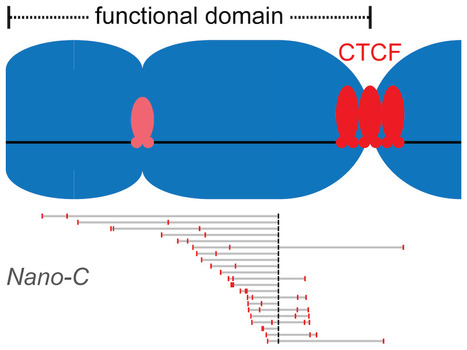
Clusters of binding sites for the CTCF protein create boundaries between functional domains in the mouse and human genomes. Scientists at the I2BC have determined the characteristics of these clusters and how individual sites contribute to domain separation. Topologically Associating Domains (TADs) regionalize the human and mouse genome into domains that are essential for processes like gene regulation and DNA repair. Most boundaries between TADs bind the CTCF insulator protein, which is responsible for the blocking of interactions between neighboring TADs. CTCF is thereby directly responsible for improved functional precision and reduced regulatory interference between domains in the genome. Although a clustering of CTCF binding sites had previously been observed at TAD boundaries, its structural impact remained to be determined.
Scientists in the Chromatin Dynamics group at the I2BC, in collaboration with groups at the Ecole Normale Supérieure (Paris) and the University of Pennsylvania (USA), found that three features of CTCF binding are enriched at TAD boundaries, including the presence of closely-spaced copies of its DNA binding motifs, a reduced distance between clusters of motifs and an enrichment of clusters with improved binding affinity. Using Nano-C technology, a new approach to measure the blocking of DNA interactions, they subsequently determined the blocking capacity of individual sites of CTCF binding. These studies reveal that these sites individually contribute to the blocking of interactions between domains, but in an incomplete manner. Grouping of multiple sites of CTCF binding in the genome thus creates a stepwise insulation between neighboring TADs, thereby improving the focus of genomic functions. More information: https://doi.org/10.1038/s41467-023-41265-y Contact: Daan NOORDERMEER <daan.noordermeer@i2bc.paris-saclay.fr>
|
|
Scooped by
I2BC Paris-Saclay
October 23, 2023 4:58 AM
|
Functional and structural insights into the multi-step activation and catalytic mechanism of bacterial ExoY nucleotidyl cyclase toxins bound to actin-profilin
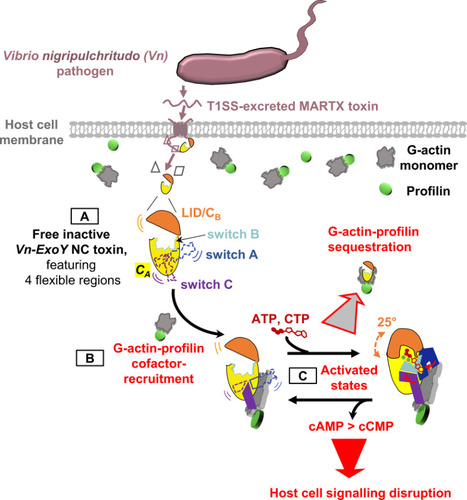
We reveal unprecedented mechanistic structural details of how the active site of bacterial Nucleotidyl Cyclase toxins is sequentially remodeled by cofactor and substrate binding and how they can accommodate both purine or pyrimidine nucleotides as substrate. Nucleotidyl cyclase (NC) enzymes are important ubiquitous enzymes that catalyze the production of cyclic nucleotides, crucial second messengers involved in numerous signaling pathways. ExoY-like toxins are bacterial virulence factors produced by Gram-negative γ- and β-proteobacteria. They belong to a broader family of bacterial NC toxins. When delivered into eukaryotic cells, NC toxins alter host cell signalling by overproducing both cyclic purine (cAMP, cGMP) and pyrimidine (cCMP, cUMP) nucleotides. To become potent NC enzymes inside host cells, they bind to specific host cofactors. The molecular and mechanistic details underlying the activation and catalytic specificities of NC toxins are only partially understood. ExoY NC toxins utilize either polymerized or monomeric (G-actin) actin as cofactor.
Here, we (a team at I2BC collaborating with scientists at ICSN, CNRS, UPS, Gif-Sur-Yvette, and at Institute Pasteur, Paris) investigated ExoY-like NCs that are selective for G-actin. Our in vitro investigations first revealed the physiological cofactor at work within host eukaryotic cells. These ExoYs activate by capturing and sequestering the cytoskeletal G-actin-profilin complex, disrupting its regulatory functions in the dynamic assembly of actin (Fig. 1, steps B-C).
Using X-ray crystallography at SOLEIL synchrotron, we have intercepted several structural snapshots along the ExoY activation pathway by G-actin-profilin. These structural data reveal unprecedented mechanistic details of how the active site of all NC toxins undergoes progressive remodeling upon cofactor and substrate binding (Fig. 1, step C). They reveal how NC toxins can accommodate purine or pyrimidine nucleotides as substrates and clarify crucial aspects of their catalytic purinyl and pyrimidinyl cyclase reaction. These structural insights into the multi-step activation of NC toxins may open new avenues to inhibit specifically this class of toxic bacterial NCs. More information: https://journals.plos.org/plospathogens/article?id=10.1371/journal.ppat.1011654 Contact: Louis RENAULT <louis.renault@i2bc.paris-saclay.fr>
|
|
Scooped by
I2BC Paris-Saclay
October 23, 2023 4:50 AM
|
100 ug of kinase are now enough for its residue-scale NMR characterization
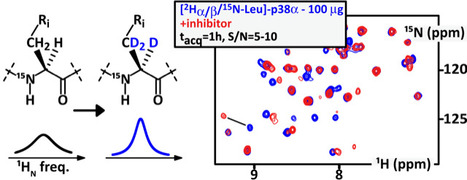
Kinases are exquisite drug targets, but usually too large for any NMR characterization at decent concentrations; we combined a number of innovative strategies enabling S/N~10 in 1h using less than 100 ug of protein. We aimed at designing and testing affordable strategies for improving NMR sensitivity on common-size drug targets, e.g. kinases of 40 kDa. This goes notably via novel isotope labeling schemes, which we sought to be as versatile as possible in terms of recombinant expression organism.
We evaluated the benefits of the deuteration on alpha- and beta-positions of amino acids for a typical middle size protein domain, namely the model 40 kDa-large kinase p38α.
We used cystathionine gamma-synthase (and new high-performance mutants thereof) to execute position-specific deuteration of free amino acids by H/D exchange. Then, we employed cell-free expression in bacterial extracts to avoid any scrambling and back-protonation of the tested isotopically labelled amino acids (Ala, Leu, Lys, Ser, Asp, Glu, Gly).
Altogether, these combined strategies yielded a ten-fold sensitivity increase, as compared to the former classical NMR approaches. It can be applied using recombinant expression in cell-free systems and in eukaryotic cells. This allows recording residue-resolved solution 1H-15N NMR spectra of 100 μg of purified p38α in one hour with S/N∼10, and a residue-specific characterization of drug binding.
We want to apply this approach for in-cell NMR studies in the future. More information: https://www.sciencedirect.com/science/article/pii/S2666441023000341?via%3Dihub Contact: Theillet Francois-Xavier <francois-xavier.theillet@i2bc.paris-saclay.fr>
|
|
Scooped by
I2BC Paris-Saclay
October 23, 2023 4:29 AM
|
On Saturday 7 and Sunday 8 October 2023, the Department of Microbiology of I2BC participated to the Fête de la Science in the Village des Sciences in Gif sur Yvette and the Faculté des Sciences in Orsay.
Various workshops and games enabled the public to discover that bacteria appeared long before the dinosaurs, that they are everywhere, and that they provide many beneficial services. They were able to learn that there are bacteria even in the clouds, that they help us to produce our everyday food and that some even help plants to grow.
|
|
Scooped by
I2BC Paris-Saclay
October 23, 2023 4:12 AM
|
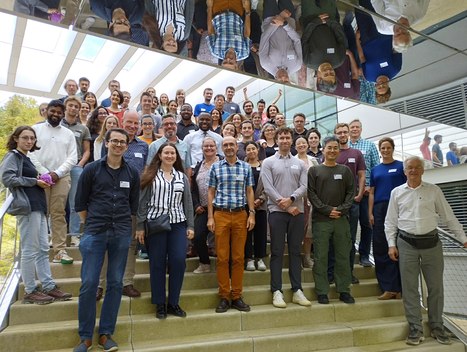
I2BC hosted Agrobacterium2023 from the 18th to the 20th of September. Agrobacterium2023 is a joint event of the 43rd American Crown Gall Meeting and the 4th European Agrobacterium Conference. This meeting brought together scientists from Europe, the USA, and China working in all aspects of Agrobacterium biology, from basic science to applied fields in agronomy and genome editing technologies. The meeting also welcomed students from the Master Plant Sciences program at the University Paris-Saclay.
|
|
Scooped by
I2BC Paris-Saclay
September 20, 2023 8:58 AM
|
ERC Starting Grant, Congratulations to Chloé Girard
Congratulations to Chloé Girard from the Meiotic Recombination and Pairing team, who has been awarded a ERC Starting Grant for her innovative project, DYNACO. This project focuses on the phenomenon of crossover interference during meiosis, a widely conserved mechanism first observed more than a century ago. The DYNACO project will advance our understanding of the genetic mechanisms underlying meiotic crossover formation and interference. It also offers potential applications for the manipulation of genetic recombination in plant breeding.
|
|
Scooped by
I2BC Paris-Saclay
September 20, 2023 5:31 AM
|
New arrivals on PIM facility
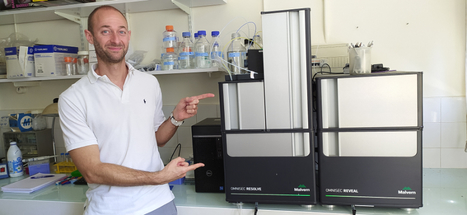
We are very pleased to welcome our colleague Stéphane Plancqueel (I2BC, crystallization platform) who joined the PIM team as a part time (20%) to help us with our growing activity. This arrival coincides with the launch of a new technology, a OMNISEC. This instrument is dedicated to the study of oligomerization states of proteins or complexes. Stéphane Plancqueel is an active member of Crystallisation facility and has recently joined the PIM facility to support the team with its growing activity. Stephane will complete his expertise on proteins by characterizing their oligomerization states and complexes, thanks to the different techniques present on PIM facility. He joined the PIM platform this summer as part time (20%) to strengthen the team and to work with Magali Aumont-Nicaise, Magali Noiray and Lia Maurin (M1 trainee).
In parallel, the OMNISEC was acquired thanks to supports from FRISBI and IBISA. It replaces the old SEC-MALS. Based on 2 different angles (RALS/LALS), the fully integrated OMNISEC system is a multi-detection, label-free, real-time analysis instrument. It is ideal for studying oligomerization states of proteins or to demonstrate their interactions. The OMNISEC system can be used for a wide range of analyses thanks to our Superdex chromatography columns from Cytiva. System provides up to 4 detections (UV, RI, RALS, LALS) in order to determine molecular sizes and cooling for temperature control down to 5°C in autosampler.
|
|
Scooped by
I2BC Paris-Saclay
September 20, 2023 5:11 AM
|
Workshop of Electron Microscopy
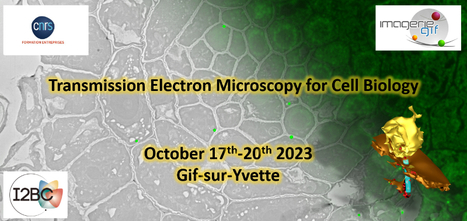
Annual workshop of electron microscopy at Imagerie-Gif 17-20 October 2023 Subscriptions are open for the annual workshop of electron microscopy at Imagerie-Gif on 17-20 October 2023. This workshop covers all sample preparation techniques for cell biology in electron microscopy. It mixes theorical courses and large practical sessions. Beginners are welcome.
For more information link or please contact: claire.boulogne@i2bc.paris-saclay.fr
|
|
Scooped by
I2BC Paris-Saclay
September 19, 2023 10:52 AM
|
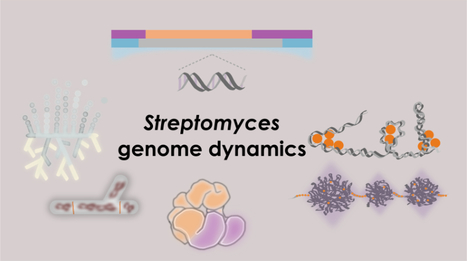
Dynamics of the Streptomyces chromosome: chance and necessity
Review in Trends in Genetics: Towards an integrated view of Streptomyces chromosome dynamics in space and time Streptomyces are prolific producers of specialized metabolites with applications in medicine and agriculture. Remarkably, these bacteria possess a large linear chromosome that is genetically compartmentalized: core genes are grouped in the central part, while the ends are populated by poorly conserved genes including antibiotic biosynthetic gene clusters. The genome is highly unstable and exhibits distinct evolutionary rates along the chromosome. Recent chromosome conformation capture (3C) and comparative genomics studies have shed new light on the interplay between genome dynamics in space and time. Here, we review insights that illustrate how the balance between chance (random genome variations) and necessity (structural and functional constraints) may have led to the emergence of spatial structuring of the Streptomyces chromosome. More information: https://www.cell.com/trends/genetics/fulltext/S0168-9525(23)00166-X Contact: Stéphanie BURY-MONE <stephanie.bury-mone@i2bc.paris-saclay.fr>
|
|
Scooped by
I2BC Paris-Saclay
September 19, 2023 10:31 AM
|
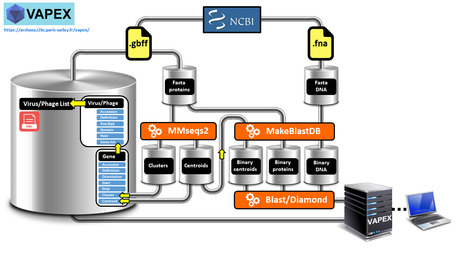
New virus/phage synteny web server: https://archaea.i2bc.paris-saclay.fr/vapex/
VAPEX creates fully resolved synteny maps of all natural and user-submitted virus and phage genomes. Studying the genetic makeup of viruses and phages through genome analysis is crucial for comprehending their function in causing diseases, progressing medicine, tracing their evolutionary history, monitoring the environment, and creating innovative biotechnologies. However, accessing the necessary data can be challenging due to a lack of dedicated comparative genomic tools and viral and phage databases, which are often outdated. Moreover, many wet bench experimentalists may not have the computational proficiency required to manipulate large amounts of genomic data.We have developed VAPEX (Virus And Phage EXplorer), a web server which is supported by a database and features a user-friendly web interface. This tool enables users to easily perform various genomic analysis queries on all natural viruses and phages that have been fully sequenced and are listed in the NCBI compendium. VAPEX therefore excels in producing visual depictions of fully resolved synteny maps, which is one of its key strengths. VAPEX has the ability to exhibit a vast array of orthologous gene classes simultaneously through the use of symbolic representation. Additionally, VAPEX can fully analyze user-submitted viral and phage genomes, including those that have not yet been annotated. More information: https://doi.org/10.1093/bioinformatics/btad528 Contact: Jacques OBERTO <jacques.oberto@i2bc.paris-saclay.fr>
|
|
Scooped by
I2BC Paris-Saclay
September 19, 2023 8:58 AM
|
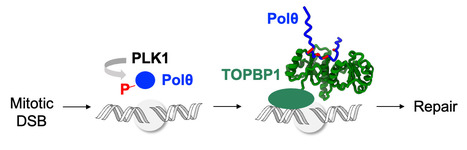
Phosphorylation of polymerase theta by PLK1 is essential for the repair of double-strand breaks in mitosis through a novel DNA repair pathway.
The DNA polymerase theta is phosphorylated by PLK1 in mitosis, binds to TOPBP1 and is recruited to double-strand breaks, in order to trigger repair through a novel DNA repair pathway, thus becoming a new target for the treatment of breast and ovarian cancers. DNA double-strand breaks (DSBs) are deleterious lesions that challenge genome integrity. In interphase, DSBs are mainly repaired by non-homologous end joining and homologous recombination. In mitosis, specific kinases inhibit these pathways through phosphorylation of essential DNA repair proteins. Here we show that one of these mitotic kinases, Polo-like kinase 1 (PLK1), activates the DNA polymerase theta (Polθ), which is then recruited through an interaction with TOPBP1 to mitotic DSBs. NMR analyses demonstrate that PLK1 phosphorylates a cluster of four serines in the central disordered region of Polθ, and that the phosphorylated motif directly interacts with the C-terminal domains of TOPBP1. The Artificial Intelligence based program AlphaFold consistently predicts that the Polθ region containing the cluster of four serines binds in a groove at the surface of the C-terminal domains of TOPBP1. Mutating these serines impairs recruitment of Polθ to mitotic DSBs and joining of the broken DNA ends. Polθ is essential for the repair of mitotic DSBs. Its role is even more crucial in cells that are deficient in homologous recombination, because these cells accumulate DSBs at the entry of mitosis, and loss of mitotic DSB repair by Polθ results in cell death. Our data explains why Polθ is synthetic lethal with homologous recombination deficiency, and reveals the critical importance of mitotic DSB repair in the maintenance of genome integrity. More information: https://www.nature.com/articles/s41586-023-06506-6 Contact: Sophie ZINN JUSTIN <sophie.zinn@i2bc.paris-saclay.fr>
|
|
Scooped by
I2BC Paris-Saclay
July 19, 2023 10:26 AM
|
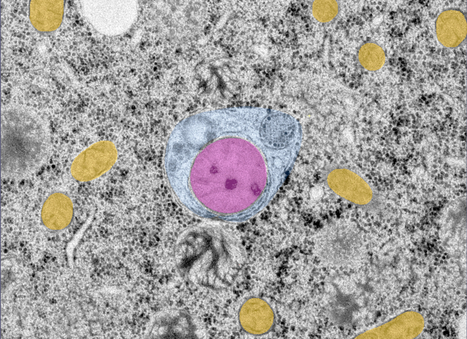
LGG-1/GABARAP lipidation is not required for autophagy and development in Caenorhabditis elegans
Using a CRISPR approach in C. elegans, this study shows that the ubiquitin-like ATG8 homolog LGG-1 possesses lipidation-independent function in autophagy, and provides a novel insight into the role of ATG family during animal development. The ubiquitin-like proteins Atg8/LC3/GABARAP are required for multiple steps of autophagy, such as initiation, cargo recognition and engulfment, vesicle closure and degradation. Most of LC3/GABARAP functions are considered dependent on their post-translational modifications and their association with the autophagosome membrane through a conjugation to a lipid, the phosphatidyl-ethanolamine. Contrarily to mammals, C. elegans possesses single homologs of LC3 and GABARAP families, named LGG-2 and LGG-1. Using site-directed mutagenesis, we inhibited the conjugation of LGG-1 to the autophagosome membrane and generated mutants that express only cytosolic forms, either the precursor or the cleaved protein. LGG-1 is an essential gene for autophagy and development in C. elegans, but we discovered that its functions could be fully achieved independently of its localization to the membrane. This study reveals an essential role for the cleaved form of LGG-1 in autophagy but also in an autophagy-independent embryonic function. Our data question the use of lipidated GABARAP/LC3 as the main marker of autophagic flux and highlight the high plasticity of autophagy. More information: https://elifesciences.org/articles/85748 Contact: Renaud Legouis <renaud.legouis@i2bc.paris-saclay.fr>
|
|
|
Scooped by
I2BC Paris-Saclay
October 23, 2023 7:12 AM
|
New arrival at the BIOI2 bioinformatics plateform
Fadwa EL KHADDAR is working with us part time at the BIOI2 plateform since the beginning of October 2023 and has brought with her leading-edge experience in omics data analysis that will greatly enrich the range of services offered by the plateform. We welcome Fadwa EL KHADDAR, an engineer in bioinformatics who will be helping out part time (20%) at the BIOI2 plateform, as well as integrating two research teams of the I2BC (BIM and SSFA of the Genomes department) to which she will be lending her expertise in Omics data analysis. Fadwa first discovered bioinformatics during her Master's degree in Medical biotechnology of Rabat, Morocco, where she worked on phylogeny, synteny et pangenome analysis of L. monocytogenes bacteria as an intern in the Biotechnology & bioresource valorisation laboratory (Meknes, Morocco). She more recently followed a Master's degree in Bioinformatics in Montpellier, where she integrated the AGAP Institute (CIRAD, Montpellier) as a trainee and developed an identification pipeline for gene resistance families (NBS-LRR) in common grape vine, V. vinifera. She then completed her Master thesis in the IRD (Montpellier) working on raw long-read nanopore sequencing data to detect whole genome cytosine methylation in model and orphan plant species. With her know-how, Fadwa will be nicely completing the range of expertise offered by the BIOI2 plateform. BIOI2 provides access to bioinformatics resources and activities developed and of use at the I2BC, organises focused training session on bioinformatics tools, and is an official contributing plateform of the nationwide French Institute of Bioinformatics (IFB).
|
|
Scooped by
I2BC Paris-Saclay
October 23, 2023 5:08 AM
|
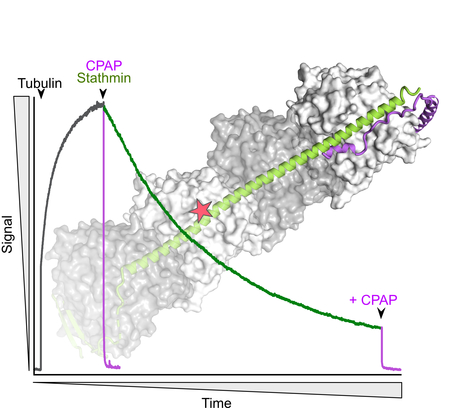
The C-terminus of stathmin-like proteins governs the stability of their complexes with tubulin
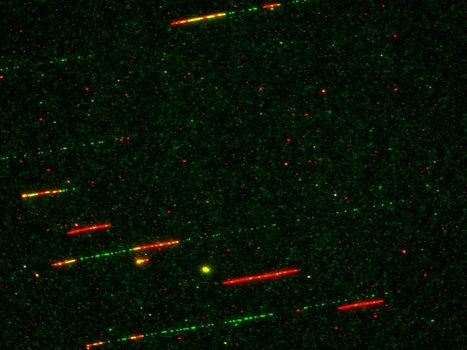
Identification of a novel mechanism for the regulation of the stathmin:tubulin interaction. Microtubule dynamics is modulated by many cellular factors including stathmin family proteins. Vertebrate stathmins sequester two ab-tubulin heterodimers into a tight complex that cannot be incorporated in microtubules. Stathmins are regulated at the expression level during development and among tissues; they are also regulated by phosphorylation. We have studied the dissociation kinetics of tubulin:stathmin assemblies in presence of different tubulin-binding proteins and identified a critical role of the C-terminus of the stathmin partner. Destabilizing this C-terminal region may represent an additional regulatory mechanism of the interaction with tubulin of stathmin proteins. More information: https://doi.org/10.1016/j.bbrc.2023.10.023 Contact: Benoît GIGANT <benoit.gigant@i2bc.paris-saclay.fr>
|
|
Scooped by
I2BC Paris-Saclay
October 23, 2023 4:53 AM
|
Alicia Nevers: new assistant professor in the Genome Biology Department
Meet Alicia Nevers, an assistant professor of Paris-Saclay University, that just joined the Genome Biology Department of the I2BC. Alicia began her undergraduate studies with a DUT in Biological Engineering, which she obtained in 2011. She then went on to complete a Bachelor's degree in Life Sciences, followed by a Master's degree in Molecular and Cellular Biology, with a specialization in RNA Molecular Biology. From 2013 to 2017, she did her thesis with the Université Paris Sorbonne and in Alain Jacquier's laboratory at the Institut Pasteur. Under the supervision of Alain Jacquier and Gwenaël Badis-Bréard she studied, in the budding yeast Saccharomyces cerevisiae, the mechanisms of control of gene expression by transcriptional interference and the functionality of pervasive antisense transcription. Alicia then joined Mathieu Rougemaille's laboratory at I2BC as a research engineer between 2018 and 2020. She contributed to the discovery and characterization of a novel non-coding RNA involved in the control of meiosis in the fissiparous yeast Schizosaccharomyces pombe. After that, Alicia was hosted in Micalis Unit of Inrae as a post-doctoral researcher. Here, under the supervision of Didier Lereclus, Michel Gohar and Vincent Sanchis-Borja, she studied the role megaplasmids in new pathogens emergence. More particularly she studied pCER270 megaplasmid, representative of emetic strains of Bacillus cereus group. She particularly analyzed in natural and artificial hosts, the consequences of pCER270 presence for gene expression and biofilm formation ability. Now that she joined Frédéric Boccard’s laboratory as a senior lecturer, she’ll work under the supervision of Vicky Lioy and Stéphany Bury-Moné to describe a link between gene expression, chromosome conformation and bacterial lifestyle, in particular biofilm formation, in the pathogen Pseudomonas aeruginosa.
|
|
Scooped by
I2BC Paris-Saclay
October 23, 2023 4:31 AM
|
Visites Insolites du CNRS
As part of the 4th edition of the Visites Insolites du CNRS, the "Molecular Microbiology of Actinobacteria" team (I2BC, Microbiology Department) welcomed members of the public to its laboratory on 11 and 12 october.
Using five interactive workshops, participants were able to find out how experiments are done in a microbiology lab, observe different species of bacteria under the microscope and carry out a DNA extraction. They also learned how new antibiotics are discovered and what mechanisms bacteria develop to become resistant to antibiotics. Finally, they were able to learn about synthetic biology and invent the antibiotics of tomorrow using Duplo bricks!
|
|
Scooped by
I2BC Paris-Saclay
October 23, 2023 4:20 AM
|
Cyclope conference "Proteins are everywhere"
This conference is postponed to a later date. The next Cyclope conference organized by the CEA will be presented by Marie-Hélène Le DU at the INSTN at 8 p.m on the 24th of October 2023. The headline: “Proteins are everywhere". They are found in animals as well as plants, bacteria or viruses. They allow the regular beating of your heart, the digestion of your last meal, maintain your body at a constant temperature, participate in the fight against infections that threaten you and much more...
Proteins are everywhere life exists and science has studied them for decades, but they are so numerous and so diverse that their world has yet to be explored. We invite you to discover this exciting research in the company of Marie-Hélène Le Du, CEA researcher at the Institute of Integrative Cell Biology (DRF/Joliot/I2BC), with the participation of Rémi Ruedas, a doctoral student at I2BC.
Portrait Jeune Chercheuse - Emmanuelle Quemin, chercheuse en virologie
Emmanuelle Quemin est chargée de recherche (CRCN) au CNRS et cheffe de l’équipe "Réplication et assemblage des poxvirus" à l’Institut de Biologie Intégrative de la Cellule - I2BC (UMR 9198 CNRS/CEA/UPSaclay) à Gif-sur-Yvette depuis décembre 2021. Après avoir suivi le magistère européen de Génétique conjointement à l’Université Paris Diderot et à l’Université Paris Descartes, c’est lors de sa thèse à l’Institut Pasteur (Paris) sous la direction de Mart Krupovic et de David Prangishvili, qu’Emmanuelle se spécialise en Virologie. Elle obtient sa thèse en 2015 intitulée "Viruses of hyperthermophilic archaea : entry into and egress from the host cell" à l’Université Pierre et Marie Curie. Elle s’intéresse depuis à la diversité des virus, à leur capacité à prendre le contrôle et à remodeler la cellule hôte. Lors de sa thèse, elle découvre aussi la microscopie électronique (ME) et l’intérêt de différentes techniques de ME en 3D et en cryo pour étudier les interactions virus-hôte au niveau cellulaire et moléculaire. Durant ses années de post-doc, Emmanuelle développe son expertise en virologie et en microscopie électronique en travaillant dans les laboratoires de Jacomine Krijnse-Locker à l’Institut Pasteur (Paris, France) et de Kay Grünewald au Centre for Structural Systems Biology (Hambourg, Allemagne). Dans le cadre de l’appel pour de nouveaux chefs d’équipe en 2021, Emmanuelle a été recrutée à l’I2BC dans le Département de Virologie. Elle a obtenu un financement ATIP-Avenir en Janvier 2023 pour développer une nouvelle thématique de recherche sur un modèle d’étude d’actualité : les poxvirus. Son équipe combine une expertise en virologie, en biologie moléculaire et en biochimie avec des approches innovantes d’imagerie intégrative et corrélative. Notamment la cryo tomographie aux électrons et des approches d’imagerie corrélative de pointe appliquées à l’étude des mécanismes moléculaires régulant les étapes clés de l’infection virale. L’équipe s’intègre parfaitement aux recherches menées dans le département de Virologie qui s’intéressent de manière globale aux mécanismes d’infection, à la formation d’usines virales ainsi qu’aux défenses antivirales. De plus, elle contribue au développement de la biologie cellulaire et structurale in situ à l’I2BC de par des interactions fortes avec les plateformes d’Imagerie-Gif et d’autres équipes de l’I2BC dans plusieurs programmes internes de recherche transverse. Plus largement, l’équipe participe à de nombreuses collaborations au niveau local, national et international. « Les folies sont les seules choses qu’on ne regrette jamais. » - Oscar Wilde Contact : emmanuelle.quemin@i2bc.paris-saclay.fr
Via Life Sciences UPSaclay
|
|
Scooped by
I2BC Paris-Saclay
September 20, 2023 8:48 AM
|
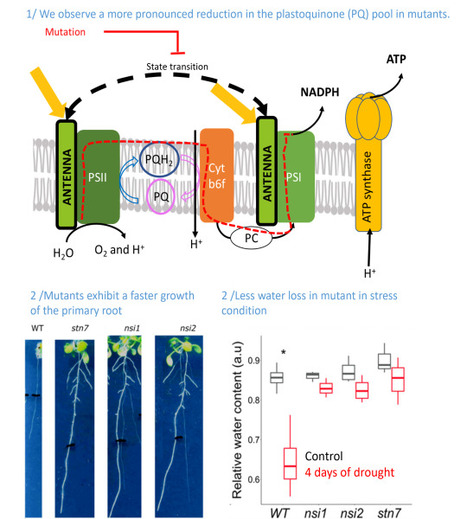
Identification of a new pathway potentially involved in plant resistance to drought
Light capture by the chlorophyll containing antenna and the reduction state of the photosynthetic electron transport chain affect root development. Identifying traits that exhibit improved drought resistance is highly important to cope with the challenges of predicted climate change. We investigated the response of state transition mutants to drought. Compared with the wild type, state transition mutants were less affected by drought. Photosynthetic parameters in leaves probed by chlorophyll fluorescence confirmed that mutants possess a more reduced plastoquinone (PQ) pool, as expected due to the absence of state transitions. Seedlings of the mutants showed an enhanced growth of the primary root and more lateral root formation. The photosystem II inhibitor 3-(3,4-dichlorophenyl)-1,1-dimethylurea, leading to an oxidised PQ pool, inhibited primary root growth in wild type and mutants, while the cytochrome b6 f complex inhibitor 2,5-dibromo-3-methyl-6-isopropylbenzoquinone, leading to a reduced PQ pool, stimulated root growth. A more reduced state of the PQ pool was associated with a slight but significant increase in singlet oxygen production. Singlet oxygen may trigger a, yet unknown, signalling cascade promoting root growth. We propose that photosynthetic mutants with a deregulated ratio of photosystem II to photosystem I activity can provide a novel path for improving crop drought resistance. More information: https://pubmed.ncbi.nlm.nih.gov/37614199/ Contact: Anja KRIEGER-LISZKAY <anja.krieger-liszkay@i2bc.paris-saclay.fr>
|
|
Scooped by
I2BC Paris-Saclay
September 20, 2023 5:17 AM
|
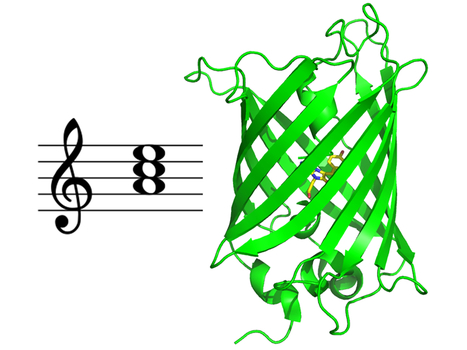
Multiscale Transient Absorption Study of the Fluorescent Protein Dreiklang and Two Point Variants Provides Insight into Photoswitching and Nonproductive Reaction Pathways
Photoswitching and non-productive reaction pathways of the fluorescent protein 'Dreiklang' deciphered in a comprehensive time-resolved spectroscopic study. Dreiklang is a reversibly photoswitchable fluorescent protein used as a probe in advanced fluorescence imaging. It undergoes a unique and still poorly understood photoswitching mechanism based on the reversible addition of a water molecule to the chromophore. We report the first comprehensive study of the dynamics of this reaction by transient absorption spectroscopy from 100 fs to seconds in the original Dreiklang protein and its two point variants. The picture that emerges from our work is that of a competition between photoswitching and nonproductive reaction pathways. We found that photoswitching had a low quantum yield of 0.4%. It involves electron transfer from a tyrosine residue (Tyr203) to the chromophore and is completed in 33 ns. Nonproductive deactivation pathways comprise recombination of a charge transfer intermediate, excited-state proton transfer from the chromophore to a histidine residue (His145), and decay to the ground state via micro-/millisecond-lived intermediates. More information: https://pubs.acs.org/doi/10.1021/acs.jpclett.3c00431 Contact: Pavel MULLER <pavel.muller@i2bc.paris-saclay.fr>
|
|
Scooped by
I2BC Paris-Saclay
September 20, 2023 5:08 AM
|
Workshop of Confocal microscopy
Annual workshop of confocal microscopy at Imagerie-Gif 9-13 October Subscriptions are open for the annual workshop of confocal microscopy at Imagerie-Gif on 9-13 October 2023. This workshop covers a large field of fluorescence imaging : from widefiled microscopy to super-resolution. It mixes theorical courses and large practical sessions. Beginners are welcome. For more information, link or please contact: romain.lebars@i2bc.paris-saclay.fr
|
|
Scooped by
I2BC Paris-Saclay
September 19, 2023 10:40 AM
|
How Rif1 bridles rapid genome replication during early developmental stages in vertebrae
Combined experimental and in-sillico approaches show that the Rif1 protein restricts the activation of replication origins of chromatin domains and the recruitment of initiation factors during the first embryonic divisions. In multicellular eukaryotic organisms, genomic DNA replicates in a time-controlled manner by ordering early, intermediate, or late replication regions according to a spatio-temporal replication program. How this program is orchestrated is poorly understood, but its dysregulation leads to genomic instability often observed in cancer. The Rif1 protein is a key regulator of this program in eukaryotes; however, its role during the first embryonic cell cycles, when DNA replication is very rapid and replication factors are abundant, remained poorly characterized. Researchers from I2BC, NeuroPSI, ENS Paris, and CalTech (USA) have clarified these mechanisms using the high-performance in vitro system of Xenopus egg extracts by combining the analysis of DNA fibers by molecular combing with an in-sillico model. This study, published in Communications Biology, reveals that in the absence of Rif1, the temporal program of replication is greatly accelerated at the level of groups of origins. This acceleration is accompanied by increased chromatin recruitment of an S phase kinase (Cdc7/Drf1) and several other key factors implicated in the replication initiation (Treslin/MTBP, RecQL4). The model proposed in this study is that Rif1 simultaneously restricts access to DNA or the activity of several factors to fine-tune the exceptionally rapid DNA synthesis observed during embryonic development. A better understanding of the role of Rif1 during these stages opens a way to elucidating the molecular mechanisms involved in certain diseases resulting from Rif1 mutations or variants in humans.
Read on to find out more in Nature Portfolio: https://cellmolbiocommunity.springernature.com/posts/how-rif1-bridles-rapid-embryonic-dna-synthesis Contact: Kathrin MARHEINEKE <kathrin.marheineke@i2bc.paris-saclay.fr>
|
|
Scooped by
I2BC Paris-Saclay
September 19, 2023 10:23 AM
|
Discriminating Susceptibility of Xanthine Oxidoreductase Family to Metals
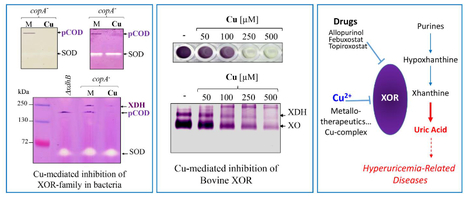
Copper as an inhibitor of the Xanthine Oxidoreductase family in purple bacteria and mammals, highlighting its potential use in metal-based therapeutics against hyperuricemia and gout arthritis. The xanthine oxidoreductases (XORs) family are metal-containing enzymes that use the molybdenum cofactor (Moco), 2Fe-2S clusters, and Flavin adenine dinucleotide (FAD) for their catalytic activity. This large molybdoenzymes family includes xanthine, aldehyde and CO-dehydrogenases. XORs are widely distributed from bacteria to humans due to their key roles in the catabolism of purines, aldehydes, drugs, and xenobiotics, as well as interconversions between CO and CO2. Assessing the effect of excess metals on Rubrivivax gelatinosus bacterium, we found that exposure to copper (Cu) or cadmium (Cd) caused a dramatic decrease in the activity of a high molecular weight soluble complex exhibiting nitroblue-tetrazolium reductase activity. Mass spectrometry and genetic analyses showed that the complex corresponds to a putative CO-dehydrogenase (pCOD). Using mutants that accumulate either Cu+ or Cd2+ in the cytoplasm, we show that Cu+ or Cd2+ are potent inhibitors of XORs (pCOD and the xanthine dehydrogenase) in vivo. This is the first in vivo demonstration that Cu+ affects Moco containing enzymes. The specific inhibitory effect of these compounds on the XORs activity is further supported in vitro by direct addition of competing metals to protein extracts. Moreover, emphasis is given on the inhibiting effect of Cu on Bovine XOR, showing that the XORs family could be a common target of Cu. Given the conservation of XORs structure and function across the tree of life, we anticipate that our findings could be transferable to other XORs and organisms. More information: https://doi.org/10.1128/spectrum.04814-22 Contact: Soufian OUCHANE <soufian.ouchane@i2bc.paris-saclay.fr>
|
|
Scooped by
I2BC Paris-Saclay
August 9, 2023 4:06 AM
|
The universal Sua5/TsaC family evolved different mechanisms for the synthesis of a key tRNA modification
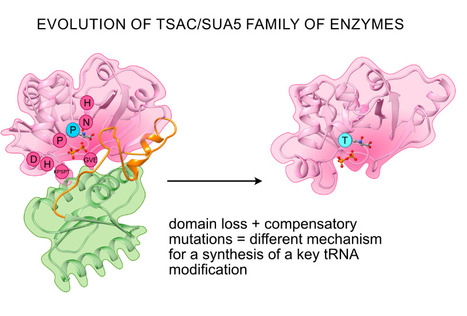
TsaC/Sua5 family of enzymes catalyzes the first step in the synthesis of N6-threonylcarbamoyl adenosine (t6A) one of few truly ubiquitous tRNA modifications important for translation accuracy. TsaC is a single domain protein while Sua5 proteins contains a TsaC-like domain and an additional SUA5 domain of unknown function. The emergence of these two proteins and their respective mechanisms for t6A synthesis remain poorly understood. Here, we performed phylogenetic and comparative sequence and structure analysis of TsaC and Sua5 proteins. We confirm that this family is ubiquitous but the co-occurrence of both variants in the same organism is rare and unstable. We further find that obligate symbionts are the only organisms lacking sua5 or tsaC genes. The data suggest that Sua5 was the ancestral version of the enzyme while TsaC arose via loss of the SUA5 domain that occurred multiple times in course of evolution. Multiple losses of one of the two variants in combination with horizontal gene transfers along a large range of phylogenetic distances explains the present day patchy distribution of Sua5 and TsaC. The loss of the SUA5 domain triggered adaptive mutations affecting the substrate binding in TsaC proteins. Finally, we identified atypical Sua5 proteins in Archaeoglobi archaea that seem to be in the process of losing the SUA5 domain through progressive gene erosion. Together, our study uncovers the evolutionary path for emergence of these homologous isofunctional enzymes and lays the groundwork for future experimental studies on the function of TsaC/Sua5 proteins in maintaining faithful translation. More information: https://www.frontiersin.org/articles/10.3389/fmicb.2023.1204045/full Contact: Tamara Basta-Le Berre <tamara.basta@i2bc.paris-saclay.fr>
|