


Employee engagement ranks high on the list of human resource challenges, yet fewer than half the companies in a SHRM survey said they track it.

 Your new post is loading...
 Scoop.it! Employee engagement ranks high on the list of human resource challenges, yet fewer than half the companies in a SHRM survey said they track it. 
No comment yet.
Sign up to comment
Scoop.it!

I had a hard time getting through attorney William Nolan’s TLNT post yesterday about how it isn’t ridiculous to ask applicants for social media passwords. It’s not that it wasn’t well written.
Scoop.it!

It seems like everywhere you look these days, people are aspiring to be rock stars. Can you give a killer slide presentation? Then you’re a PowerPoint rock star! Are you especially gifted in dealing with people?
Scoop.it!
Always interesting "numbers" from Human Resource Executive
Scoop.it!

Hiring based on personality rather than competency and accomplishment may not bring about the desired performance results without a blended, outcomes-based learning approach. If an organization hires great people, but doesn’t get the business results it needs, there may be a good reason.
Scoop.it!

Employers aren't the only ones scrambling to craft and implement policies governing the use of social media these days. Countries are paying close attention to developments in this area and, in some cases, taking action. The dilemma for HR leaders is that social media raises too many questions -- and too few answers.
Scoop.it!

Recruiting, retaining, and inspiring top talent is every company’s secret weapon to business success.
Scoop.it!

Many employers fail to adequately follow up with job applicants, leaving them frustrated and angry. This lack of communication hurts the candidate experience — and potentially the bottom line.
Scoop.it!
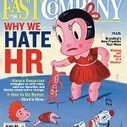
Something snapped the other day when I read the TLNT post on HR’s “first official standard” on cost-per-hire – after two years of work by a 42-member committee.
Scoop.it!

Do we really need annual performance reviews? I’ve written before that there is a balance between ongoing feedback from multiple sources and annual feedback from one source.
Scoop.it!

I’ve recently been writing about business leadership and strategy, and I began thinking about something one of my mentors taught me about being an executive.
|
Scoop.it!

By Eric B. Meyer And the first state to ban asking for employee Facebook passwords is … Maryland. (Now if only they would do something about this).
Scoop.it!

By William A. Nolan Let’s get two easy points out of the way. First of all, we all agree – few employers are asking applicants for their Facebook or other social media passwords.
Scoop.it!

Globally, one in three employers struggle to find employees with the skills and experience necessary to meet their needs, and almost one-third cite a lack of experience as a key barrier to filling their open jobs.
Scoop.it!

Talent managers should emphasize the importance of employees receiving social feedback from co-workers, coaches, mentors and others to uncover hidden talents.
Scoop.it!

Organizations that know their cultural identity can create an authentic and congruent employment experience. While organizational culture has been touted since the early 1990s as essential for business success, there has been little connection between culture, individual employee fit and employment branding.
Scoop.it!
In our second edition of the "What's Keeping HR Leaders Up at Night?" survey, 74 percent of HR executives say their level of job stress has increased in the past 18 months. Almost one-third -- 32 percent -- blame that on the difficulty they encounter in retaining key talent.
Scoop.it!

By Tillman Coffey Did your DUI lawyer draft your Employee Handbook? Of course not. I just wanted to get your attention.
Scoop.it!

How does HR spend its time? Would you be surprised if I told you that it hasn’t changed much in the past 15 years?
Scoop.it!

Question: What if all the best employees you ever had never left? Answer: Your business would be extraordinarily successful! Still, most experienced managers believe that, at some time, some of those great people are going to go elsewhere.
Scoop.it!

Do you help people get to where they want to go? And will they go out of their way to help you get where you want to go?
|




