From the Cold War to the Russian Revolution-bits and pieces from the Net that you might find useful, brought to you courtesy of the Rondebosch Boys' High School Library (If you would like to receive a weekly newsletter of the latest items in this Scoop just mail me at library@rondebosch.com)
War is dominating the news right now. But that makes it easy to miss that, relatively, there is a lot less of it today. The 21st century has been the most peaceful one in modern history to date. Zack Beauchamp explains three of the biggest reasons why in two and a half minutes.
Whilst living in Beijing Thomas Ketchell experienced the dreadful air quality and decided to re-enact the Great Smog of London of 1952 using social media. This led to the founding of Hstry, which relives historical events through a first-person perspective to bring history to life. Hstry is now providing interactive storylines of historical events for both schools across the globe in line with their vision to become the leading digital learning platform for history.
The current crisis in Iraq explained in under 5 minutes. There is war in Iraq? Again? And the US and Iran are talking about working together? And who is this ISIS Terrorist group that is all over the news? And Religion? Oh Dear....When exactly has the world gone mad again?
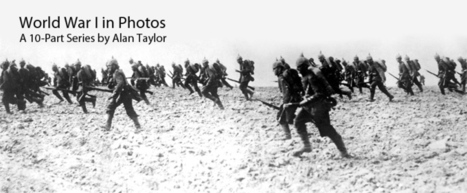
It is almost 100 years since the single event that sparked the First World War. On the eve of the Archduke's murder, no one could have imagined the horrors that lay ahead, or the way the conflict would influence events for at least another hundred years to come
Nearly four years of deadly stalemate on the Western Front slowly came to an end in 1918, as Allied armies pushed into Germany at enormous cost, leading the Central Powers to finally seek an armistice.
2014 is the 50th anniversary of the Rivonia Trial. On 11th July 1963 the police raided Liliesleaf farm and arrested eighteen people amongst whom were leaders of the liberation movement. Today, Liliesleaf is one of South Africa's most important heritage sites, and is seen as a place of liberation and this story is not complete without it. The CEO of Liliesleaf, Nicholas Wolpe has more on Liliesleaf.
Interesting historical images can prompt good conversations which in turn lead to good questions for my students to research the answers to. One of the ways is by having students look through digital archives of images and then sharing their favorite images. Here are three good places to find historical images.
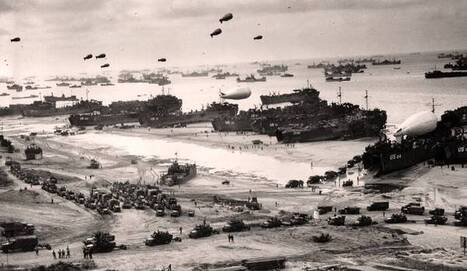
Peter Macdiarmid has taken photographs of locations in France and England to match with archive images taken before, during and after the D-day landings. Photography then and now lets you move through time by clicking on a historic image to reveal the modern view.
Published on Jun 3, 2014 With modern technology, a global exchange of goods and ideas can happen at the click of a button. But what about 2,000 years ago? Shannon Harris Castelo unfolds the history of the 5,000-mile Silk Road, a network of multiple routes that used the common language of commerce to connect the world's major settlements, thread by thread.
The Nazis used Colditz Castle as a detention facility for Allied soldiers. A group of Dutch officers devised a clever plan to escape the camp. Their plot, which led four men to freedom, involved only a manhole, life-like dummies, and a game of rugby.
International cartoonist and political satirist, Zapiro (Jonathan Shapiro) talks about lightness and darkness in South African politics. In his heartfelt talk to the Westerford High School teenagers, on what true leaders look like, he encourages them to be the leaders of tomorrow who bring light and not darkness to South Africa.
From almost the opening shot, the Great War has been fought over by historians wishing to interpret and understand what happened and why. Their conflict is not over yet.
Michael journeys down the river to visit the abandoned remains of Fordlandia in the middle of the rainforest. Once an ambitious attempt to build a rubber factory out in the amazon jungle, now the ill-fated project's only inhabitants are the local population of bats.
Bob Bain is an associate professor at the University of Michigan. He is also faculty lead for the Big History Project, an international research and design group that has developed an online curriculum, assessments and professional development to enable high school students to study 13.82 billion years of cosmic history -- from the Big Bang to the Future.
Lara Pawson’s In the Name of the People: Angola’s Forgotten Massacre, is probably not designed as an antidote to Theroux, but serves as one nonetheless. In every way that the former book is lacking, this one is a towering success. Stuffed with death, it nonetheless brims with life, with a curiosity that is both moral and unwavering, bearing the courage to ask: if this is indeed a mess—and boy, is it, why might that be?
I know, it's shameless-but I thought some history teachers might want to use Mr Cumberbatch's popularity to sell their subject to their female students :) Just a suggestion...
Historypin is probably my favorite service for locating geo-located historical imagery. After writing my post about Views of Venice I explored Historypin for the first time in a few months and enjoyed exploring some of the Historypin channels and tours of geolocated imagery.
To get content containing either thought or leadership enter:
To get content containing both thought and leadership enter:
To get content containing the expression thought leadership enter:
You can enter several keywords and you can refine them whenever you want. Our suggestion engine uses more signals but entering a few keywords here will rapidly give you great content to curate.


 Your new post is loading...