


Widows' associations, which sprung up after the 1994 massacre, are bucking Rwandan tradition by setting up retirement homes, writes Alexandra Toppping


 Your new post is loading...
 Scoop.it! Widows' associations, which sprung up after the 1994 massacre, are bucking Rwandan tradition by setting up retirement homes, writes Alexandra Toppping 
No comment yet.
Sign up to comment
Scoop.it!
Published on Apr 6, 2014 Almost 100 days ago, a torch was lit to commemorate the genocide. Since then , it has been travelling across Rwanda. It has now made it to a very special venue in the capital Kigali. CCTV's Jane Kiyo reports
Scoop.it!
Published on Apr 5, 2014 Sunday marks 20 years since the start of the Rwanda's genocide, one of the worst atrocities in history. Almost one million people, mostly belonging to the Tutsi minority, were massacred during the 1994 genocide, and one survivor is determined to keep the victims' legacy alive. Al Jazeera's Mohammed Adow reports from Kigali, Rwanda.
Scoop.it!
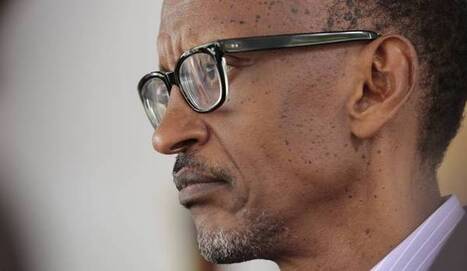
7 April 1994 marks the start of the Rwandan genocide. Over a period of just 100 days, more than 800,000 Rwandans were slaughtered by their compatriots. Twenty years later, Rwanda remembers the killings, and ponders its future. By KIM HARRISBERG.
Scoop.it!

This month's Africa in Fact: the journal of good governance Africa looks at migration and displacement. Every year, millions of Africans pack their belongings and leave behind families and friends. A hostile environment-war, persecution, insecurity-pushes some to seek refuge. Others leave searching for a job, better education or adventure. Government performance underlies most migration stories.
Reeler Centre's insight:
If you want to get the real, complex story behind the ongoing news of refugees and dysfunctional governments, this is the journal to read. This issue covers topics such as Somalis in Kenya's Dadaab refugee camp; how thousands of Africans drown every year as they sail to Europe in search of jobs, South Sudan: how a deadly conflict has sent thousands fleeing across Africa's newest border…and much more.

Reeler Centre's curator insight,
April 7, 2014 1:42 AM
If you want to get the real, complex story behind the ongoing news of refugees and dysfunctional governments, this is the journal to read. This issue covers topics such as Somalis in Kenya's Dadaab refugee camp; how thousands of Africans drown every year as they sail to Europe in search of jobs, South Sudan: how a deadly conflict has sent thousands fleeing across Africa's newest border…and much more.
Scoop.it!

Stockholm's Medelhavsmuseet museum is offering museum visitors a means to unwrap the Egyptian priest Neswaiu, virtually. Amidst an embalming room filled with your standard sarcophagi sits a touch-screen monitor. And via the swipe of a finger, people can delve into Neswaiu’s remains, layer by layer, as captured by 360-degree camera rigs and a CT scan.
Scoop.it!
Published on Mar 22, 2014 France will hold something of a landmark auction this weekend - when Napoleon Bonaparte's belongings go under the hammer. Items include the shirt the French emperor wore on his death bed, and even a lock of his hair - all of which are expected to fetch thousands.
Scoop.it!

James Cameron’s Titanic appeared in 1997 as the most expensive film ever made. Werner Klingler and Herbert Selpin’s Titanic appeared in 1943 as the most expensive German film ever made. Both endured troubled productions and both set out to make strong statements indeed. The later, American Titanic has much to say about the cinematic triumph of late-20th-century visual effects, whereas the German Titanic takes a more negative tack, mounting an indictment of the supposedly savage avarice and thorough corruption of that country’s bitter wartime enemy, Great Britain. But things worked out no better for this Titanic than for the actual Titanic.
Scoop.it!
Published on Mar 17, 2014 Following the Crimea referendum, Inter-ethic tensions remain a concern for a Tatar regional leader.
Scoop.it!

Looking for a way to pay tribute to the courage of protesters in Kiev, who refused to be dislodged from Independence Square over the past three months despite violent attacks from the security forces, a Ukrainian video blogger found the words he needed in dubbed versions of two Hollywood action movies.
Reeler Centre's insight:
This is a unique piece of media in that
Reeler Centre's curator insight,
March 12, 2014 9:34 AM
This is a really stirring production which might be interesting to look at from the perspective of propaganda and the use of various images and inspirational films to achieve that effect. The New York Times article includes links to lots of the resources used. Topical and useful, methinks?
Scoop.it!
Reeler Centre's insight:
If you are interested in teaching around the Ukraine crisis then you will certainly want to take a look at educator Larry Ferlazzo's excellent collection of resources-mainly from news media sources-on the subject. Maps, articles, video and more...
Scoop.it!
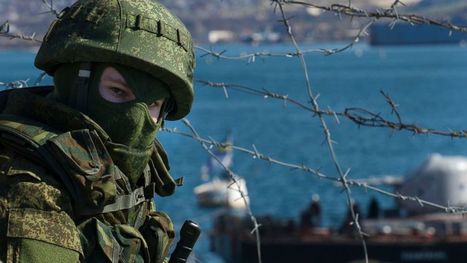
An up-to-date guide on what's happening in Ukraine for Thursday, March 6, 2014.
Reeler Centre's insight:
This seems to be a fairly clear and current summary of the situation in the Ukraine with video.
Scoop.it!

Ukraine and Russia have been in the headlines for weeks now. Still, many Americans are confused by the political crisis brewing in Ukraine and how Russia is involved. Thankfully, Internet nerd fighter John Green of the Vlog Brothers has stepped forward to explain the situation in simple terms.
|
Scoop.it!
Published on Apr 6, 2014 Twenty years ago today the country was on the eve of one of the bloodiest chapters in African history. Up to one in five of the entire population would die in the genocide. The impact spread well beyond Rwanda's borders and continues to this day.CCTV's Kofa Mrenje reports
Scoop.it!
Published on Apr 6, 2014 Twenty years ago today Rwandan President Juvenal Habyarimana was shot down over Rwanda's capital Kigali which triggered the Rwanda genocide. The genocide and civil war prompted a regional refugee crisis. Today, over 200,000 Rwandan refugees remain in the Democratic Republic of Congo.
Scoop.it!
Published on Apr 5, 2014 Rwanda -- Twenty years since the 1994 genocide, Rwanda continues on a path towards reconciliation and nation building.
Scoop.it!

There will, of course, be no celebrations because hardly anybody wants to commemorate any aspect of our 'colonial' past. The predominant attitude is the South African version of Malcolm X's famous comment, "Our ancestors weren't pilgrims. They didn't land on Plymouth Rock. Plymouth Rock was landed on them."
However, all this is based on a one-sided and deeply flawed interpretation of history. The fact is that 6 April 1652 - for better or worse - signalled the beginning of South Africa's integration into the broader world. It started the process of development that has made us the richest and most advanced country on the continent.
Reeler Centre's insight:
A short but interesting and "anti-establishment" view of history which might make for some interesting discussion in a history class!
Scoop.it!
Published on Apr 1, 2014 NATO members are meeting for the first time since Russia's annexation of Crimea. The meeting in Brussels comes as Russia raised the price of gas it supplies to Ukraine by 40 percent. The 28 member organisation is expected to discuss its response to the events in Ukraine and some analysts say the crisis highlights why the alliance is still relevant
Scoop.it!

Understanding the differences between primary and secondary sources can be a challenge to students. Understanding the value of each in the research process can help students become better researchers. Common Craft has a video in which the differences and relationships between these sources are explained in a two minute story.
Scoop.it!

Fuelled by the First World War's centenary, there are growing rumbles that Crimea could be the newest version of the events that unleashed World War I. J. BROOKS SPECTOR takes a long look backwards to see if the metaphor misleads more than it clarifies.
Scoop.it!

It is the issue of Russian identity, rather than strategic or economic importance, that lies at the heart of the Crimean crisis, argues Alexander Lee
Scoop.it!

Not surprisingly, the name of Noam Chomsky surfaced in response to my recent reference to Pol Pot. Chomsky is an infamous skeptic of atrocities by anyone other than Western imperialists. Many younger polemicists of the left, like Michael Moore and Naomi Klein, emulate him. Are they “great intellectuals”, or intellectual frauds? Are they intellectual at all? by Ivo Vegter
Scoop.it!
Published on Mar 7, 2014 The Tatars are one of the oldest ethnic groups in Crimea. And they're warning President Putin not to underestimate resistance to any Russian bid to take over the semi-autonomous region. Their historic ally Turkey, is closely watching events on the peninsula. Al Jazeera's Anita McNaught reports from Istanbul.
Scoop.it!
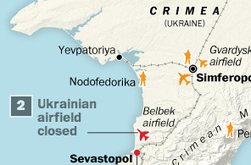
Some detailed maps with accompanying stories from the Washington Post on the Ukrainian crisis.
Scoop.it!

Interested in understanding how homefront American culture reflected fighting in World War II and Korea, and the anxieties of the Cold War? This comics archive is full of titles like “Fighting Yank” (or “Wartime”) that trade on true stories of past combat and present-day engagements. Many, like these “Atomic Attack” books from the early 1950s, have a distinctive Cold War flavor, with science-fictional imaginings of futuristic combat. (“See how the war of 1972 will be fought! The war that YOU, yourself, might have to take part in…”)
Reeler Centre's insight:
If you are looking for something funky to jazz up your classroom walls you may want to take a look at these comics. The Atomic Attack comics from the Fifties are particularly good at imparting the paranoia and tension of the Cold War. Why not put the images into Word documents and print them out for your classroom?
|





