Hematology
14.9K views | +8 today
 
Scooped by Gilbert C FAURE
onto Hematology
September 2, 2021 8:36 AM
Scoop.it!

Iron-Deficiency Anemia - an overview | ScienceDirect Topics

Iron-Deficiency Anemia IDA is classically a microcytic and hypochromic anemia, reflected as a decreased MCV and mean corpuscular Hb concentration (MCHC), respectively. From: Hematopathology (Second Edition), 2012 Related terms: FerritinIron Storage View all Topics Iron Deficiency Anemia In Diagnostic Pathology: Blood and Bone Marrow (Second Edition), 2018 Clinical Issues • Iron deficiency anemia is most common anemia worldwide; estimated global anemia prevalence is 24.8%, affecting > 1.62 billion people • Insidious onset, chronic, often asymptomatic • Symptoms may include fatigue, pallor, weakness, tachycardia, dyspnea on exertion • Diagnosis of iron deficiency anemia should be based on panel of tests, not on any single test • Low serum ferritin is pathognomonic of iron deficiency anemia • Serum transferrin saturation < 16% supports diagnosis of iron deficiency • Oral ferrous iron salt (ferrous sulfate) supplementation to all patients with iron deficiency • Parenteral iron should be given to patients who cannot take or are refractory to oral iron supplement • Red blood cell transfusion should be given to patients with symptomatic severe iron deficiency anemia to rapidly correct hypoxia and iron deficiency • Excellent prognosis except in patients with underlying disease Hematology and hemostasis in the pediatric, geriatric, and pregnant populations Linda H. Goossen, in Rodak's Hematology (Sixth Edition), 2020 Iron deficiency anemia. Iron deficiency anemia is the most common pediatric hematologic disorder and the most common cause of anemia in childhood.22,23 Iron deficiency anemia is more prevalent in premature infant because the majority of the placental transfer of maternal iron occurs late in the third trimester.4 The occurrence of iron deficiency anemia in infants has decreased in the United States because of iron fortification of infant formula and increased rates of breastfeeding.24 However, the prevalence is still 2% in toddlers 1 to 2 years of age and 3% in children 3 to 5 years of age25 and is related to early introduction and excessive intake of whole cow’s milk.20,25 Chapter 17 provides an in-depth discussion of iron deficiency anemia. Circulatory, Reticuloendothelial, and Hematopoietic Disorders Anne L. Grauer, in Ortner's Identification of Pathological Conditions in Human Skeletal Remains (Third Edition), 2019 Iron-Deficiency Anemia IDA, or acquired anemia, is the most common type of anemia found globally. It is associated with the presence of microcytic and hypochromic RBC, along with depressed levels of total body iron (Camaschella, 2015). Bone changes in IDA tend to be clinically mild. Changes in the skull vault resemble those described for other anemias, i.e., radiographically recognizable enlargement of the diploë with vertical orientation of the trabeculae. Aksoy et al. (1966) report that generalized granular osteoporosis of the skull and long bones might also appear in some patients. IDA has received the greatest attention as a diagnostic option for porous hypertrophic lesions of the skull in the paleopathological record. However, the tendency for this anemia to produce only limited skeletal involvement has raised questions about the legitimacy of the diagnosis. Importantly, a wide range of conditions invoke an anemic response by the body, rendering the isolation of the cause of hypertrophic lesions extremely difficult (Table 14.2). Table 14.2. Causes of Iron Deficiency and Iron-Deficiency Anemia Environmental Insufficient dietary intake Dietary restrictions or predilection (grain intensive, vegetarian, vegan, etc.) Genetic Iron-refractory iron-deficiency anemia Pathologic Decreased absorption Atrophic gastritis Celiac sprue Helicobacter pylori infection Inflammatory bowel diseases Parasitic infestation Chronic blood loss Gastrointestinal tract Benign and malignant tumors Diverticulitis Erosive gastritis Esophagitis Hookworm infestation Peptic ulcer Genitourinary system Intravascular hemolysis Heavy mensis or menorrhagia Systemic bleeding Chronic schistosomiasis Hemorrhagic telangiectasia Physiologic Increased demand for iron Infancy Rapid growth (adolescence) Menstruation Pregnancy Source: After Camaschella (2015). Pediatric Transfusion in Developing Countries Kenneth A. Clark MD, MPH, in Handbook of Pediatric Transfusion Medicine, 2004 Nutritional Anemia Iron deficiency anemia is highly prevalent in many developing countries. The WHO estimates that as many as 50% of children in developing countries have iron-deficiency anemia (WHO 2001). Rural populations with more restricted resources and lower educational levels may be more severely affected than urban populations. Infants who have been breast-fed for more than 4 to 6 months are particularly susceptible if their diets are not supplemented with foods rich in iron or dietary supplements. In some areas, the use of iron supplements is limited by resources. Inadequate dietary intake of vitamin B12 or folate also contributes to pediatric anemia. Dietary insufficiencies are often compounded by additional illnesses such as diarrheal diseases that further impair intestinal absorption. Disorders of Red Blood Cells James W. Little DMD, MS, ... Nelson L. Rhodus DMD, MPH, in Little and Falace's Dental Management of the Medically Compromised Patient (Eighth Edition), 2013 Iron Deficiency Anemia Iron deficiency anemia is a microcytic anemia (Figure 22-2) that can be caused by excessive blood loss, poor iron intake, poor iron absorption, or increased demand for iron. Blood loss may occur with menstruation or be caused by bleeding from the gastrointestinal tract. Poor intake is more common in children who live in developing countries, where cereals and formula fortified with iron are not readily available. Malabsorption of iron can result from gastrectomy or intestinal disease that reduces absorption of iron from the duodenum and the jejunum. Increased demand is associated with chronic inflammation (autoimmune disease). In women, menstruation and pregnancy contribute to the development of iron deficiency anemia. The repeated loss of blood associated with menses can lead to depletion of iron, resulting in a mild state of anemia. During pregnancy, the expectant mother experiences an increased demand for additional iron and vitamins to support the growth of her fetus, and unless sufficient amounts of these nutrients have been provided in some form, she may become anemic. Approximately 20% of pregnant women have iron deficiency anemia.11 Also, 30% to 60% of persons with rheumatoid arthritis (who more commonly are women) have this type of anemia.12 By contrast, mild anemia in men usually indicates the presence of a serious underlying medical problem (e.g., gastrointestinal bleeding, malignancy). Under normal physiologic conditions, men lose little iron, and because iron can be stored for months, iron deficiency anemia is rare in men. Therefore, any man who is found to be anemic should be promptly referred for medical evaluation. Red-Blue Lesions In Oral Pathology (Sixth Edition), 2012 Iron Deficiency Anemia Etiology Iron deficiency anemia is a rather common anemia caused by iron deficiency. This deficiency may be due to inadequate dietary intake; impaired absorption caused by a gastrointestinal malady; chronic blood loss caused by such problems as excessive menstrual flow, gastrointestinal bleeding, or aspirin ingestion; and increased demand as experienced during childhood and pregnancy. Clinical Features This relatively prevalent form of anemia predominantly affects women. In addition to the clinical signs and symptoms associated with anemias in general, iron deficiency anemia may result in brittle nails and hair and koilonychia (spoon-shaped nails). The tongue may become red, painful, and smooth. Angular cheilitis may also be seen. In addition to iron deficiency, the Plummer-Vinson (Paterson-Kelly) syndrome includes dysphagia, atrophy of the upper alimentary tract, and a predisposition to the development of oral cancer. Diagnosis Laboratory blood studies show slightly to moderately reduced hematocrit and reduced hemoglobin level. The RBCs are microcytic and hypochromic. The serum iron level is also low, but the total iron-binding capacity (TIBC) is elevated. Treatment Recognition of the underlying cause of iron deficiency anemia is necessary to treat this condition effectively. Dietary iron supplements are required to elevate hemoglobin levels and replenish iron stores once an underlying cause has been defined and treated. Sports Medicine and Adaptive Sports Christopher W. Mcmullen, ... Mark A. Harrast, in Braddom's Physical Medicine and Rehabilitation (Sixth Edition), 2021 Anemia The three most common causes of anemia in the athlete are iron deficiency anemia (IDA), physiologic anemia (pseudoanemia), and foot-strike hemolysis. IDA is most common in menstruating women, and female athletes can be more prone to developing it. The etiology is either blood loss or poor iron intake. Many athletes consume restrictive diets that can have too little iron to meet daily needs. However, a complete history and physical examination are still important to evaluate for “nonathletic” causes such as significant gastrointestinal or genitourinary blood losses. Usually a serologic work-up is diagnostic and includes complete blood count (CBC), serum ferritin, and total iron binding capacity (TIBC). The CBC will show a microcytic anemia.130 Serum ferritin levels that are less than 30 ng/mL in athletes are considered suggestive of IDA.74 The TIBC will be elevated. If IDA is diagnosed, a trial of oral iron supplementation (typically ferrous sulfate or ferrous gluconate, 325 mg three times daily) is undertaken.45 Iron is best absorbed in an acidic environment, so it is concomitantly administered with vitamin C, usually for a 2- to 3-month course. Physiologic anemia is considered a pseudoanemia seen commonly in endurance athletes. Endurance athletes tend to have a lower hemoglobin concentration than the general population because of plasma volume expansion with a dilutional effect. It is an adaptation to exercise and is not considered to inhibit athletic performance. It generally normalizes with training cessation of 3 to 5 days. If IDA is ruled out, there is no necessary treatment. Foot-strike hemolysis refers to red blood cell destruction in the feet from running impact. However, intravascular hemolysis is seen in swimmers, cyclists, and runners, but whether or not actual mechanical red blood cell trauma is the source is questionable. Possible reasons are intramuscular destruction, osmotic stress, and membrane lipid peroxidation caused by free radicals released by activated leukocytes. Intravascular hemolysis can even be regarded as a physiologic means to provide heme and proteins for muscle growth in athletes.213 In general, the hemolysis is mild, and treatment is rarely required. Volume 2 Gerard E. Mullin MD, in Textbook of Natural Medicine (Fifth Edition), 2020 Iron Iron deficiency anemia is very common in IBD, largely because of chronic blood loss through the gut.60 Serum ferritin levels are the most useful indices of iron status. A serum ferritin concentration of greater than 55 ng/mL indicates adequate iron reserves in bone marrow, whereas a concentration of less than 18 ng/mL is highly predictive of iron deficiency (see Chapter 23 for further discussion). The clinician should attempt to increase the patient’s iron stores by improving absorption, as with supplemental vitamin C, rather than through direct iron supplementation, which promotes intestinal infection.71 Red Blood Cell/Hemoglobin Disorders Steven H. Kroft MD, Sara A. Monaghan MD, in Hematopathology (Second Edition), 2012 Clinical Features IDA ranges from mild to profound, with Hb levels as low as 2 g/dL in the most severe cases. IDA is classically a microcytic and hypochromic anemia, reflected as a decreased MCV and mean corpuscular Hb concentration (MCHC), respectively. However, the MCV may be normal in early iron deficiency; the degree of microcytosis roughly correlates with the degree of anemia. Likewise, the MCHC may be normal in early iron deficiency when only a minority of cells are hypochromic. Iron Deficiency Anemia—Fact Sheet Definition ▪ Anemia owing to inadequate iron supply Incidence and Location ▪ Most common cause of anemia worldwide Morbidity and Mortality ▪ Reduced quality of life and reduced productivity ▪ Probably increased maternal and fetal–neonatal morbidity and mortality ▪ Probably reduced cognitive development in children Gender, Race, and Age Distribution ▪ Increased incidence in infants, children, women of childbearing age, and impoverished populations, particularly in underdeveloped countries ▪ Increased incidence in some minorities compared with white population in the United States Clinical Features ▪ General signs and symptoms of chronic anemia ▪ Angular cheilitis, glossitis, pica, koilonychia, and esophageal webs Prognosis and Therapy ▪ Oral iron supplementation ▪ Parenteral iron in patients with uncontrolled blood loss, intolerance to oral iron, or intestinal malabsorption Most signs and symptoms are those seen in any form of anemia, such as fatigue, dyspnea, and pallor of skin and mucous membranes. Because the anemia develops over a protracted period and compensatory mechanisms have ample time to develop, anemia resulting from iron deficiency is surprisingly well tolerated, even when extremely severe. Pica, koilonychia (i.e., spoon-shaped nails), and esophageal webs are rare but have a strong association with IDA. Angular cheilitis and atrophic glossitis are also seen with IDA but are not specific. Pathologic Features The characteristic findings on the peripheral blood film are small (microcytic), underhemoglobinized (hypochromic) RBCs with variability in size (anisocytosis) and abnormal shapes (poikilocytosis; Figure 1-10). Elliptocytes are prominent poikilocytes in IDA; often they are long and narrow (pencil cells). Prekeratocytes are usually evident and are recognized as red cells with sharp-edged, submembranous vacuoles and preserved central pallor (see Figure 1-10). Target cells, teardrop cells, very small hypochromic microcytes, and various nonspecific poikilocytes are also common. Occasional red cell fragments may be observed, but they are not prominent. Thrombocytosis is common, but platelet counts may also be normal or reduced. Variations from the typical findings occur when there has been recent partial repletion of iron or when additional factors, such as Cbl or folate deficiency, are also contributing to anemia. Iron Deficiency Anemia—Pathologic Features Peripheral Blood ▪ Hypochromic, microcytic red blood cells ▪ Anisocytosis ▪ Lack of polychromasia ▪ Poikilocytosis, including elliptocytes, prekeratocytes, and target cells Bone Marrow ▪ Mild erythroid hyperplasia ▪ Absent stainable iron on a Prussian blue stain on an aspirate smear Differential Diagnosis ▪ Thalassemia trait or thalassemia-like hemoglobinopathy ▪ Anemia of chronic disease The bone marrow in IDA may demonstrate erythroid hyperplasia, but this is generally of only a mild degree. Erythroid precursors may have scant cytoplasm with frayed cytoplasmic borders. Ancillary Studies Serum ferritin measurement is the most useful single laboratory test for iron deficiency. Serum ferritin below the lower limit of the reference range (about 12 mg/dL) is essentially diagnostic of iron deficiency. However, ferritin is an acute-phase reactant, and normal levels may be seen when iron deficiency coexists with infection, inflammation, or malignancy. However, when this occurs, the ferritin level will usually be low-normal; therefore low-normal values in an individual with an active inflammatory process support a diagnosis of iron deficiency in the appropriate setting. Ferritin levels may even be higher in patients with acute liver injury, despite iron deficiency. Measurement of serum iron alone is not useful because of diurnal fluctuations of serum iron levels and the rapid changes that may occur with dietary intake, inflammation, and blood loss. Transferrin, measured either directly or indirectly as the total iron binding capacity, is typically increased in IDA, but this response can be blunted in the presence of hypoproteinemia. The transferrin saturation (the ratio of serum iron to total iron binding capacity) is typically less than 15% in iron deficiency, but saturation levels in this range may also be seen in ACD. Increased serum soluble transferrin receptor (sTfR) is a sensitive marker of iron deficiency, reflecting increased expression of this receptor on RBC precursors as a response to depleted tissue iron. This parameter is elevated during iron-deficient erythropoiesis before the development of overt anemia. Furthermore, inflammation does not raise sTfR levels substantially. However, states with an increased mass of RBC precursors such as hemolytic anemias and ineffective erythropoiesis (e.g., megaloblastic anemia) will manifest elevated sTfR; therefore this finding is not specific for iron deficiency. When biochemical tests are equivocal, the absence of stainable iron with a Prussian blue stain performed on well-prepared marrow aspirate smear is considered to be the gold standard for the diagnosis of IDA. An iron stain performed on a bone marrow core biopsy may also be helpful, but iron can be leached out during decalcification of the bone marrow biopsy and result in the false interpretation of absent iron stores. Differential Diagnosis Other common causes of hypochromic, microcytic anemia are thalassemia and ACD. Sideroblastic anemia with microcytosis is rarer. The hematologic and biochemical tests that are useful to differentiate the major causes of microcytic anemia are listed in Table 1-3. In addition, mild anemia associated with thalassemia trait or a thalassemia-like hemoglobinopathy (e.g., Hb E) characteristically exhibits a red blood cell count greater than 5 × 10¹² cells/L, which is unusual for IDA. Hb electrophoresis would help establish the diagnosis of most β-thalassemias and thalassemia-like hemoglobinopathies. Under circumstances that render the interpretation of biochemical studies for iron status particularly difficult, such as inflammation, monitoring the response of Hb or the reticulocyte count to a therapeutic trial of iron supplementation may be sufficient to confirm iron deficiency. Otherwise, any uncertainty about iron status usually can be resolved by an iron stain performed on a bone marrow aspirate smear. Pathological Conditions Efthymia Nikita, in Osteoarchaeology, 2017 8.5.4 Iron-Deficiency Anemia Iron-deficiency anemia results from reduced iron availability in the red blood cells (Box 8.5.3). Iron is an integral component of the hemoglobin molecule and its main function is the transport of oxygen to various bodily tissues. Iron-deficient red blood cells are generally small (microcytic), are pale (hypochromic), have a short life span, and are incapable of transporting oxygen efficiently (Kozłowski and Witas, 2011). The factors that may reduce iron availability include malnutrition, parasitic infestations that inhibit iron absorption, infection that makes the body withhold iron, profuse hemorrhage, or increased iron demands during growth or pregnancy (Holland & O'Brian, 1997; Stuart-Macadam, 1989; Sullivan, 2005). Box 8.5.3 Skeletal Manifestations of Iron-Deficiency Anemia (Stuart-Macadam, 1992; Sullivan, 2005) • Skull • Enlarged diploë, thinned cortical bone layer, thickened vault (PH) • Porosity of the orbital roof (CO) • Long bones • Osteoporosis With regard to diet, heme iron is found primarily in meat and it is easily absorbed through the intestine, whereas nonheme iron may be obtained through consumption of cereals, legumes, fruits, and vegetables but it is less bioavailable. Moreover, phytates, tannins, and other food compounds can bind iron into complex formations that cannot be absorbed by the intestine. Finally, calcium consumed together with iron-providing foodstuff inhibits iron absorption, whereas vitamins A and C improve it (Lynch, 1997). With respect to the role of infectious agents, it has been supported that iron-deficiency anemia results from an immune response that binds iron to prevent its use by infectious agents (Stuart-Macadam, 1992). However, although iron withholding may decrease the incidence and intensity of many infections, beyond a certain limit it actually increases host susceptibility to invading organisms (Weinberg, 1992; see also Hadley and DeCaro, 2015 for a lack of association between iron-deficiency anemia and low likelihood of infection). Regarding parasitic infections and their role in iron absorption, infection by whipworms and hookworms causes iron loss through intestinal bleeding, whereas parasites such as giardia and roundworm diminish the intestinal absorption of iron (Brooker et al., 2007; Stoltzfus et al., 1997). Finally, regarding the role of growth, infants require more iron than other age groups because of their high growth rate. As a result, maternal anemia during pregnancy increases the possibility of the offspring becoming anemic too (Allen, 1997).
No comment yet.
Hematology
Diagnosis, Therapy, Follow-up
Your new post is loading...
Scooped by Gilbert C FAURE
December 15, 2013 11:46 AM
Scoop.it!

Hematology, or Haematology

...... was a major interest for our lab, during many years in the context of the GEIL still thriving, then EGIL, then European Leukemia Net.


Gilbert C FAURE's insight:

Hospital choices did not allow to pursue the efforts locally...

but to stay informed and allow others to surf the information wave, this topic is maintained 


Much information is available in the cloud, focusing on immunophenotyping of leukemias, and also on other haematology topics.

Blood cells being also circulating immunocompetent cells, other topics curated should be of interest to visitors

http://www.scoop.it/t/immunology

http://www.scoop.it/t/from-flow-cytometry-to-cytomics

http://www.scoop.it/t/immunology-and-biotherapies

Feel free to Browse


Search tags have to be cleaned up and organizes, but searching in free language is working


No comment yet.
Scooped by Gilbert C FAURE
April 19, 4:00 AM
Scoop.it!

Allogeneic CAR-T Revolutionizes Cell Therapy in Lymphoma | Andre Choulika Ph.D. posted on the topic

Allogeneic CAR-T Revolutionizes Cell Therapy in Lymphoma | Andre Choulika Ph.D. posted on the topic | Hematology | Scoop.it
A new order in cell therapy

The interim futility analysis for cema-cel, just gave the lymphoma field something to think about. A 41.6% absolute difference in MRD negativity at Day 45 versus observation, with clean tolerability, availability in community hospitals and most patients managed as outpatients. It is a meaningful signal that allogeneic CAR-T can work in first-line consolidation post R-CHOP.

What about the patients who relapse after cema-cel? Go back to CD19 with an autologous product: Yescarta, Breyanzi? They all target the same CD19 as cema-cel. Would a second CD19 CAR-T be reimbursed? If cema-cel moves towards commercialization in LBCL, patients who relapse will need a subsequent differentiated option. The commercial case for CD19-targeted autologous therapies in this setting will need rethinking.

This is where eti-cel becomes relevant. A highly differentiated product also developed at Cellectis, on the same backbone as cema-cel (originated from Cellectis platform), eti-cel targets both CD20×CD22 simultaneously. Data at the current dose show 88% ORR and 63% CR in heavily pretreated patients, a strong signal for a dual allogeneic approach.

Fifteen years ago, CAR-T emerged as a revolution. The real breakthrough, the bona fide pharmaceutical product, is allogeneic. Off-the-shelf, scalable, standardized. It will establish a new order in cell therapy. Autologous therapies are a process and will, in time, disappear.

On in vivo CAR-T: the science is early, the toxicity profile remains unfavorable today, and the regulatory path for a therapy where the vector is the product is, at best, unclear.

Cellectis Allogene Therapeutics Kite Pharma Bristol Myers Squibb Novartis Johnson & Johnson Gilead Sciences
#dlcl #CART #celltherapy #allogeneic | 14 comments on LinkedIn
No comment yet.
Scooped by Gilbert C FAURE
April 18, 5:27 AM
Scoop.it!

ISLH 2026 | Edinburgh

ISLH 2026 | Edinburgh | Hematology | Scoop.it
On behalf of the International Society for Laboratory Hematology (ISLH), we cordially invite you to attend the International Symposium on Technological Innovations in Laboratory Hematology.
No comment yet.
Scooped by Gilbert C FAURE
March 30, 3:40 AM
Scoop.it!

White Blood Cell Disorders Made Easy | Leukemia & Lymphoma (USMLE Step 1) | Part 7/9

White Blood Cell Disorders | Leukemia & Lymphoma | USMLE Step 1

Welcome to USMLE with Varun — your go-to platform for mastering USMLE Step 1 with high-yield, concept-based learning.

In this video, we cover White Blood Cell Disorders (Part 7/9) — one of the most exam-tested and clinically important topics in hematology.

---

📌 What you will learn in this video:

🔴 Leukemia vs Lymphoma (VERY HIGH-YIELD)
• Key differences
• Clinical patterns
• Exam-based comparisons

🔴 Acute Leukemias
• Acute Lymphoblastic Leukemia (ALL)
• Acute Myeloid Leukemia (AML)
• Auer rods & myeloperoxidase
• APL (t15;17) + DIC + ATRA

🔴 Chronic Leukemias
• Chronic Myeloid Leukemia (CML)
→ Philadelphia chromosome (t9;22), BCR-ABL
• Chronic Lymphocytic Leukemia (CLL)
→ Smudge cells, CD markers

🔴 Lymphomas
• Hodgkin lymphoma
→ Reed-Sternberg cells (CD15⁺, CD30⁺)
• Non-Hodgkin lymphomas
→ Burkitt (t8;14), Follicular (t14;18), Mantle cell

🔴 HIGH-YIELD CONCEPTS
• Tumor lysis syndrome
• Blast crisis
• Pattern recognition for USMLE

---

🎯 Why this video is important:

This topic is heavily tested in:
• Clinical vignettes
• Pathology-based questions
• Rapid recall scenarios

Mastering this will help you:
👉 Quickly identify leukemia types
👉 Differentiate lymphoma patterns
👉 Score easy marks in exams

---

⏭️ Next Video:
Principles of Oncology (Part 8/9)

---

💡 Support the Channel (Optional):
👉 razorpay.me/@USMLEwithVarun

---

📩 Contact / Notes / Collaboration:
👉 usmlewithvarun@gmail.com

---

🔔 Subscribe for high-yield USMLE content
USMLE with Varun
---

#️⃣ Hashtags
#USMLE #USMLEStep1 #Leukemia #Lymphoma #WBCDisorders #Hematology #MedicalStudents #FirstAidUSMLE #UWorld #BoardsAndBeyond #NEET
No comment yet.
Scooped by Gilbert C FAURE
February 17, 4:24 AM
Scoop.it!

ASH Publishes Guidelines on Management of ALL in AYAs - Hematology.org

ASH Publishes Guidelines on Management of ALL in AYAs
No comment yet.
Scooped by Gilbert C FAURE
January 5, 6:06 AM
Scoop.it!

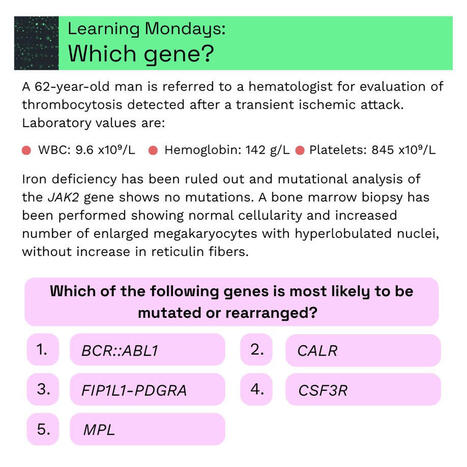
#learningmondays | European Hematology Association (EHA)

#learningmondays | European Hematology Association (EHA) | Hematology | Scoop.it
𝐖𝐞𝐥𝐜𝐨𝐦𝐞 𝐭𝐨 𝐭𝐡𝐞 𝐟𝐢𝐫𝐬𝐭 #𝐋𝐞𝐚𝐫𝐧𝐢𝐧𝐠𝐌𝐨𝐧𝐝𝐚𝐲𝐬 𝐜𝐡𝐚𝐥𝐥𝐞𝐧𝐠𝐞 𝐨𝐟 𝟐𝟎𝟐𝟔! 𝐀𝐫𝐞 𝐲𝐨𝐮 𝐫𝐞𝐚𝐝𝐲 𝐭𝐨 𝐭𝐞𝐬𝐭 𝐲𝐨𝐮𝐫 𝐤𝐧𝐨𝐰𝐥𝐞𝐝𝐠𝐞?

✏️Submit your answer and receive immediate feedback in our form: https://lnkd.in/eyAMqPn2

🙏 Thank you Dr Tomás Navarro from Institut Català d'Oncologia, Spain 🇪🇸

📨Would you like to contribute to LearningMondays? Email us your Q&A at education.sml@ehaweb.org
No comment yet.
Scooped by Gilbert C FAURE
November 24, 2025 5:00 AM
Scoop.it!

🩸 We can now make blood in real time!... - Hashem Al-Ghaili

🩸 We can now make blood in real time!... - Hashem Al-Ghaili | Hematology | Scoop.it
No comment yet.
Scooped by Gilbert C FAURE
October 9, 2025 5:13 AM
Scoop.it!

College endorses the British Society for Haematology’s report – “The Haematology Workforce, a comprehensive view” | Royal College of Pathologists (RCPath)

College endorses the British Society for Haematology’s report – “The Haematology Workforce, a comprehensive view” | Royal College of Pathologists (RCPath) | Hematology | Scoop.it
The College is pleased to have endorsed the British Society for Haematology report “The Haematology Workforce: A Comprehensive View.”

This report highlights the vital role of clinical pathology and laboratory services in the rapid diagnosis and management of haematological diseases.

The report reveals the growing pressure on haematology professionals, as the gap between workforce capacity and clinical demand continues to widen.

Supporting these findings, the College’s 2025 Workforce Census finds that 82% of haematologists believe current staffing levels are insufficient to ensure the long-term sustainability of services.

The College agrees that robust workforce planning is essential to align haematology services with local and regional needs – factoring in population growth, diagnostic demand, evolving working patterns, and succession planning.

Action and investment are urgently needed to future-proof the haematology workforce and ensure equitable access to high-quality care for all affected by blood diseases.

Read more here: https://ow.ly/ptGN50X6bZL

#Pathology #HealthcareWorkforce #RCPath #Haematology
No comment yet.
Scooped by Gilbert C FAURE
February 10, 2025 5:52 AM
Scoop.it!

NEJM Group on LinkedIn: #oncology #medicalresearch

NEJM Group on LinkedIn: #oncology #medicalresearch | Hematology | Scoop.it
Hemophagocytic lymphohistiocytosis (HLH) is a severe and life-threatening syndrome characterized by overwhelming inflammation that often leads to multiorgan…
No comment yet.
Scooped by Gilbert C FAURE
December 24, 2024 3:54 AM
Scoop.it!

John Gordon on LinkedIn: #epsteinbarrvirus #bcell #metabolism #pathogenesis #immunology #lymphoma…

John Gordon on LinkedIn: #epsteinbarrvirus #bcell #metabolism #pathogenesis #immunology #lymphoma… | Hematology | Scoop.it
#EpsteinBarrVirus hijacks #Bcell #Metabolism to establish persistent infection and drive #Pathogenesis | Open Access Review by Bojana Müller et al breaking at…
No comment yet.
Scooped by Gilbert C FAURE
December 24, 2024 1:42 AM
Scoop.it!

ASH Annual Meeting Abstracts - Hematology.org

ASH Annual Meeting Abstracts - Hematology.org | Hematology | Scoop.it
ASH Annual Meeting Abstracts Latest Announcements Late-Breaking Abstracts Now Available Late-breaking abstracts feature substantive, novel, and groundbreaking data that were not available by the general abstract submission deadline and would otherwise not be presented at the ASH annual meeting. View the 2024 Late-Breaking Abstracts 2024 ASH Annual Meeting Abstracts Abstracts for the 2024 ASH Annual Meeting and Exposition, including late-breaking abstracts, are now available. A record-breaking number of abstracts were submitted and more than 7,950 were accepted. View the accepted abstracts representing the most cutting-edge science in hematology. View the 2024 Abstracts About ASH Annual Meeting Abstracts Abstracts submitted for oral and poster presentation at the ASH annual meeting represent important, novel research in the field and are considered the best of the thousands of abstracts submitted. Typically, more than 7,000 scientific abstracts are submitted each year, and more than 5,000 abstracts are accepted for oral and poster presentations through an extensive peer review process. Abstract categories are reviewed and updated annually to respond to trends and cover new areas. This year, updates include The renumbering of categories (particularly those in the 600 and 900 groupings) The discontinuation of two categories (731. Autologous Transplantation, and 705. Cellular Immunotherapies: Commercial and Late Stage) The addition of several new categories (909. Education, Communication, and Workforce, 628. Aggressive Lymphomas: Cellular Therapies, and 655. Multiple Myeloma: Cellular therapies) The splitting of several categories (including several in thrombosis and homeostasis, clinical lymphomas, and health services, quality improvement and outcomes research). View the full list of abstract categories. The Plenary Scientific Session, which includes the top six abstracts as selected by the Program Committee, is traditionally a highlight of the annual meeting program. View the 2024 Abstracts Key Dates and Deadlines Abstract submission site opens May 30, 2024 Abstract submission deadline August 1, 2024, 11:59 p.m. Pacific time Abstract withdrawal deadline September 18, 2024 Call for late-breaking abstract submissions October 16-28, 2024 Abstracts available online November 5, 2024, 9:00 a.m. Eastern time Abstract poster presentation materials due November 12, 2024 Late-breaking abstracts available online November 25, 2024, 9:00 a.m. Eastern time Related Content Call for Late-Breaking Abstracts Late-breaking abstract submissions for the 2024 ASH Annual Meeting and Exposition are open from October 16, 2024, through October 28, 2024, at 11:59 p.m. Pacific time. No submissions will be accepted after this deadline. Learn More > Call for Abstracts Abstract submissions for the 2024 ASH Annual Meeting and Exposition are open from May 30, 2024, through August 1, 2024, at 11:59 p.m. Pacific time. No submissions will be accepted after this deadline. Learn More > Poster Walks Poster Walks highlight abstracts submitted to the annual meeting that showcase emerging science in hematology. Learn More > Copyright and Reuse Policy Material presented at the annual meeting is subject to copyright or other reuse restrictions. Learn More > Abstract Achievement Awards Merit-based awards are provided to trainees with high-scoring annual meeting abstracts of which they are the first or senior author and presenter. Learn More > 66th ASH Annual Meeting and exposition Registration for ASH members, non-members, groups, exhibitors, and media is now open! View Additional Information Explore the Annual Meeting Schedule and Program Hotel and Travel Information Abstracts Meeting and Presenter Resources CME and MOC Information Code of Conduct
No comment yet.
Scooped by Gilbert C FAURE
December 23, 2024 4:12 AM
Scoop.it!

Surprising New Role for Lungs: Making Blood | UC San Francisco

Surprising New Role for Lungs: Making Blood | UC San Francisco | Hematology | Scoop.it
Using video microscopy in the living mouse lung, UC San Francisco scientists have revealed that the lungs play a previously unrecognized role in blood production.
No comment yet.
Scooped by Gilbert C FAURE
April 19, 4:07 AM
Scoop.it!

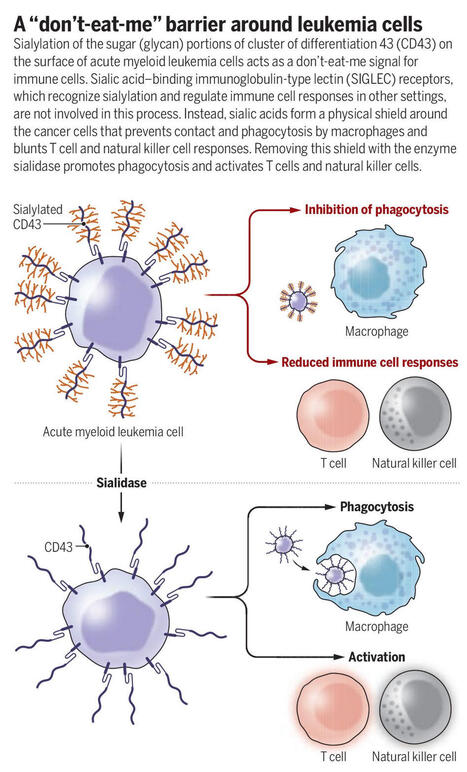
#scienceperspective | Science Magazine

#scienceperspective | Science Magazine | Hematology | Scoop.it
Immune cells continually detect, engulf, and destroy invasive microbes and cancer cells.

This process, called phagocytosis, is carried out by macrophages that must distinguish between proengulfment signals and inhibitory (“don’t-eat-me”) warnings. Cluster of differentiation 47 (CD47), a cell-surface receptor, is the archetypal don’t-eat-me signal. Many cancers upregulate CD47 expression to escape phagocytosis, and CD47 blockade promotes phagocytosis of cancer cells in mice.

However, CD47 blockers have not shown clinical benefits in patients with acute myeloid leukemia (AML), an aggressive cancer of blood immune cells. This discrepancy has raised the possibility that the molecular programs that inhibit phagocytosis differ between mice and humans.

In a new Science study, researchers report that the mechanisms that control macrophage function in human and mouse cells are indeed different. They also identify cluster of differentiation 43 (CD43) as a potential target for human AML treatment.

Learn more in a new #SciencePerspective: https://scim.ag/3QAYlUs
No comment yet.
Scooped by Gilbert C FAURE
April 18, 9:10 AM
Scoop.it!

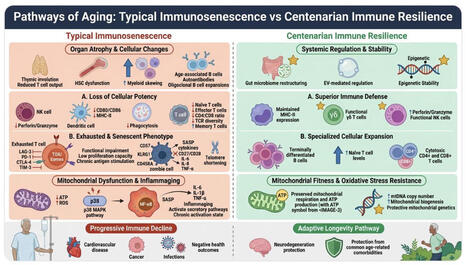
𝗜𝗺𝗺𝘂𝗻𝗼𝘀𝗲𝗻𝗲𝘀𝗰𝗲𝗻𝗰𝗲 is a multimodal immune system remodeling process that includes inflammation, cellular senescence, T-cell fatigue, and thymic involution, all of which raise the risk...

𝗜𝗺𝗺𝘂𝗻𝗼𝘀𝗲𝗻𝗲𝘀𝗰𝗲𝗻𝗰𝗲 is a multimodal immune system remodeling process that includes inflammation, cellular senescence, T-cell fatigue, and thymic involution, all of which raise the risk... | Hematology | Scoop.it
𝗜𝗺𝗺𝘂𝗻𝗼𝘀𝗲𝗻𝗲𝘀𝗰𝗲𝗻𝗰𝗲 is a multimodal immune system remodeling process that includes inflammation, cellular senescence, T-cell fatigue, and thymic involution, all of which raise the risk of infection and disease as we age. 
Our review published in Current Opinion in Immunology  https://lnkd.in/efRp3D4M highlights that centenarians often exhibit adaptive remodeling and maintained immune balance rather than a uniform decline. This includes retention of naïve T cells, expansion of cytotoxic T cell subsets, and regulated inflammatory signaling.

➡️ Immunosenescence should be viewed as a trajectory-dependent process in which balanced immune function determines resilience and healthy aging.

➡️ Progress in understanding immunosenescence is dependent on integrating longitudinal multi-omics data to generate biological-age biomarkers and inform immunometabolic or senotherapeutic techniques for extending healthspan. 
Thanks to coauthors Ivan David Lozada Martinez, MD, MSc Yeny Acosta Ampudia Gabriel Tobón
No comment yet.
Scooped by Gilbert C FAURE
April 9, 6:31 AM
Scoop.it!

Your Body Makes 2 Million Red Blood Cells Every Second Then Kills Them

Every second, your body creates 2 million brand new red blood cells. Did you know they all die in exactly 120 days and your spleen processes 200 billion dead cells daily? Follow for more mind-blowing health facts! #health #bloodcells #humanbody #biology #shorts
No comment yet.
Scooped by Gilbert C FAURE
March 16, 6:43 AM
Scoop.it!

Sickle cell disease

Gilbert C FAURE's insight:

Seminar

No comment yet.
Scooped by Gilbert C FAURE
January 6, 11:41 AM
Scoop.it!

Risk Stratification Guides Early Treatment in Smoldering Myeloma: Peter Voorhees, MD | AJMC

Risk Stratification Guides Early Treatment in Smoldering Myeloma: Peter Voorhees, MD | AJMC | Hematology | Scoop.it
Peter Voorhees, MD, emphasizes the importance of carefully determined early regimens for smoldering myeloma and involving patients in treatment decisions.
No comment yet.
Scooped by Gilbert C FAURE
January 4, 5:29 AM
Scoop.it!

CAR-T in Multiple Myeloma: Early vs Late Infusion | Michel Frank Ferrazo posted on the topic | LinkedIn

CAR-T in Multiple Myeloma: Early vs Late Infusion | Michel Frank Ferrazo posted on the topic | LinkedIn | Hematology | Scoop.it
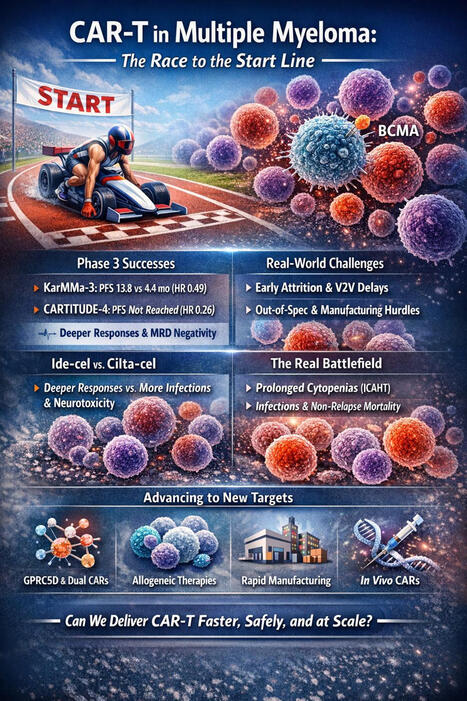
🧬🏁 CAR-T in Multiple Myeloma is no longer just a response-rate story — it’s a race to the “start line.”
BCMA CAR-T has reset expectations in relapsed/refractory MM… and now the field is pushing earlier. But this review makes one point crystal clear: randomized medians don’t tell you who actually reaches infusion or who survives the logistics.
s41409-025-02787-9
🔥 What the phase 3 data proved (earlier lines)
📌 KarMMa-3: ide-cel beat standard regimens with PFS 13.8 vs 4.4 months (HR 0.49), deeper responses, and higher MRD negativity.
📌 CARTITUDE-4: cilta-cel delivered even stronger separation: PFS not reached vs 11.8 months (HR 0.26), plus improved MRD and an OS advantage in later analysis (HR 0.55).
s41409-025-02787-9
⚠️ What trials don’t capture (and practice can’t ignore)
⏳ Attrition before infusion is real early deaths often occur in patients who never receive CAR-T while waiting through bridging + manufacturing windows.
🏭 Vein-to-vein (V2V) and “brain-to-vein” delays shape outcomes as much as biology.
🧪 Out-of-spec (OOS) products and manufacturing variability are not edge cases in the real world.
s41409-025-02787-9
🧠 Product-specific reality: ide-cel vs cilta-cel
✅ The review highlights a consistent signal: cilta-cel tends to deliver deeper and more durable responses, but with more infections and distinct delayed neurotoxicity patterns that require long-horizon vigilance.
s41409-025-02787-9
🛡️ The real battlefield: cytopenias + infections
After the acute CRS/ICANS window, the dominant risks become:
🩸 prolonged cytopenias (ICAHT) + 🦠 infections, driving non-relapse mortality in routine care and strongly influenced by bridging intensity and baseline inflammatory/hematologic risk tools (e.g., CAR-HEMATOTOX; albumin+CRP).
s41409-025-02787-9
🚀 What could move the start line forward
🎯 Beyond-BCMA targets (GPRC5D)
🧬 dual/multi-antigen CARs to curb escape (especially in EMD / post-BCMA)
🏭 next-day / point-of-care manufacturing
🧊 allogeneic off-the-shelf strategies
🧫 even in vivo CAR concepts designed to bypass apheresis and ex vivo manufacturing
s41409-025-02787-9
💬 If CAR-T is moving earlier, the key question isn’t only “Can it beat SOC?” it’s “Can we deliver it fast, safely, and at scale?”
#MultipleMyeloma #CarT #CiltaCel #IdeCel #CellTherapy #Immunotherapy #Hematology #Oncology #BCMA #GPRC5D
No comment yet.
Scooped by Gilbert C FAURE
November 21, 2025 10:46 AM
Scoop.it!

Merci à l'Université de Lorraine, Fanny Lienhardt, Vincent Bellais pour la mise en lumière de SUPER HEMO ! ☺️ | Julien PERRIN

Merci à l'Université de Lorraine, Fanny Lienhardt, Vincent Bellais pour la mise en lumière de SUPER HEMO ! ☺️ | Julien PERRIN | Hematology | Scoop.it
Merci à l'Université de Lorraine, Fanny Lienhardt, Vincent Bellais pour la mise en lumière de SUPER HEMO !
☺️
No comment yet.
Scooped by Gilbert C FAURE
July 8, 2025 7:30 AM
Scoop.it!

The genomic landscape of acute myeloid leukemia: Redefining classifications, ontogeny, and therapeutic strategies - ScienceDirect

Over the past decades, the progressive identification of chromosomal abnormalities and gene mutations has transformed acute myeloid leukemia (AML) fro…
No comment yet.
Scooped by Gilbert C FAURE
March 23, 2025 1:43 AM
Scoop.it!

https://jamanetwork.com/journals/jama/fullarticle/2831659?guestAccessKey=64af4543-1898-444d-a162-7bab5aa13e81&utm_source=linkedin_company&utm_medium=social_jama&utm_term=16415011294&utm_campaign=ar...

No comment yet.
Scooped by Gilbert C FAURE
January 7, 2025 1:07 PM
Scoop.it!

https://rupress.org/jem/article/222/2/e20240592/277198/Spatiotemporal-dynamics-of-fetal-liver?utm_content=321134407&utm_medium=social&utm_source=twitter&hss_channel=tw-75302402

No comment yet.
Scooped by Gilbert C FAURE
December 24, 2024 1:43 AM
Scoop.it!

Defining and Developing Education for Systems-Based Hematology With Richard Godby, MD

Discover the emerging field of systems-based hematology and efforts to creating a standardized curriculum for implementation: https://oncdata.com/systems-based-hematology-richard-godby

0:00 Introduction
0:45 What Is Systems-Based Hematology?
1:30 Gaps in the Field
2:05 ASH Study and Results
6:40 Designing a Curriculum
8:56 How This Affects Patients

In this episode, Dr. Richard Godby shares more about his team’s ASH presentation on creating a standardized curriculum for systems-based hematology, including gaps, challenges, and future directions in this emerging discipline.

Learn about:
- What systems-based hematology means
- His team’s study interviewing experts in the field
- Themes that the interviews revealed
- How these results can be used to inform the development of educational resources and training programs for systems-based hematology
- Next steps for the research
- How this research might affect patient care
- And more!

#Hematology #SystemsBasedHematology #ASH2024 #Oncology #PatientCare #OncologyResearch #HematologyResearch #CancerCare #CancerTreatment
No comment yet.
Scooped by Gilbert C FAURE
December 23, 2024 12:57 PM
Scoop.it!

Sam Gibbons on LinkedIn: #cgt #advancedtherapies #atmp #celltherapy #approval

Sam Gibbons on LinkedIn: #cgt #advancedtherapies #atmp #celltherapy #approval | Hematology | Scoop.it
🦠 𝐓𝐡𝐞 𝐅𝐢𝐫𝐬𝐭 𝐌𝐒𝐂 𝐓𝐡𝐞𝐫𝐚𝐩𝐲 𝐀𝐩𝐩𝐫𝐨𝐯𝐞𝐝 𝐁𝐲 𝐓𝐡𝐞 𝐅𝐃𝐀! 🦠

The FDA has granted approval to Mesoblast Limited’s remestemcel-L, marketed…
No comment yet.
Scooped by Gilbert C FAURE
December 19, 2024 7:00 AM
Scoop.it!

Paul Deschamps on LinkedIn: CXCL8 secreted by immature granulocytes inhibits WT hematopoiesis in…

Paul Deschamps on LinkedIn: CXCL8 secreted by immature granulocytes inhibits WT hematopoiesis in… | Hematology | Scoop.it
📝Publié ! 6 ans après le début de ce projet qui s’inscrit dans la continuité de la recherche de l’équipe du Pr Eric Solary à Gustave Roussy, les résultats de…
No comment yet.