Your new post is loading...
GA/10864 26 September 2009 Small Island States Warn Ecosystems Already Threatened by Climate Change Effects, Urge Drastic Reduction in Greenhouse Gases, as Assembly Continues Debate 26 September 2009 General AssemblyGA/10864 Department of Public Information • News and Media Division • New York Sixty-fourth General Assembly Plenary 9th & 10th Meetings (AM & PM)
Small Island States Warn Ecosystems Already Threatened by Climate Change Effects,
Urge Drastic Reduction in Greenhouse Gases, as Assembly Continues Debate
Say Impact - Sea Level Rise, Dying Marine Life - Shock Wave to Fragile Economies; Major Emitters Must Ensure Resources in Place to Meet Adaptation, Mitigation Goals
Still reeling in the aftermath of a global economic crisis begun far beyond their shores, leaders of small island nations, among others addressing the General Assembly today, exhorted large economies to drastically reduce greenhouse gases that were threatening their ecosystems and sending shock waves through the very markets and industries on which their fragile economies depended.
“Global warming and climate change -- and their effects -- do not discriminate”, declared Denzil L. Douglas, Prime Minister of Saint Kitts and Nevis, as he described the massive blow that climate change had dealt to his country. Marine life on which his people depended was fast disappearing, creating long-term and “dire” implications for food production. Sea levels were rising, coastlines were being eroded and coral reefs were suffering.
In the interest of advancing global stability, he urged major greenhouse gas emitters to take the lead in ensuring that resources were in place for small island developing States to meet adaptation, mitigation, technology transfer and capacity-building goals, and to compensate those countries for losses stemming from climate change. Noting that some industrialized nations had recently committed to do more to address their emissions, he expressed hope that such efforts would translate into concrete results at the upcoming United Nations Climate Change Conference in Copenhagen.
Indeed, a new climate deal was a must, said the Prime Minister of Samoa, Tuila’epa Lupesoliai Sailele Malielegaoi, and seeing it through would require a new brand of cooperation and a broad outlook. Fighting climate change was everyone’s job --- it posed a test for multilateral solidarity and, with its effects worsening daily, the “blame game” was no longer an option. States’ interests, no matter how divergent, were inextricably linked, a fact laid bare by the global economic crisis.
Undeterred by that prospect, his Government, along with its international partners, was bolstering its resilience by addressing plantation access roads, he said. But, the overall costs of adapting to climate change and mitigating its effects were prohibitive, especially with a narrowed revenue base following the financial crisis and the high cost of relocating those who lived near vulnerable coastlines.
The same was true for Bangladesh, said the country’s Prime Minister, Sheikh Hasina, who explained that myriad natural disasters had interrupted agriculture and challenged water resources, health, energy and urban planning. Countless lives had been lost and families uprooted by the thousands year round, creating millions of climate refugees. An estimated 1 in 7 Bangladeshis would fall victim to climate change by 2050. While some 14,000 cyclone shelters had been built and a climate change trust fund established, international resources were needed.
On a global level, she said, affected communities not only might lose their homes, they stood to lose their identity, nationality and very existence. It was critical that the outcome of the Copenhagen Conference ensure adequate and easily accessible funding for adaptation and eco-friendly technology transfer.
India’s Minister of External Affairs, S.M. Krishna, agreed on the need for a focus on adaptation, which was crucial for developing countries. India was engaged in ongoing climate negotiations, including the upcoming Copenhagen conference, and would work for an outcome that recognized the development imperatives of developing nations, and was rooted in the principle of common but differentiated responsibilities and respective capabilities.
Offering a way forward, Jan Peter Balkennende, Prime Minister and Minister for General Affairs of the Netherlands, said his country had set aside half a billion euros to promote renewable energy use in developing countries. During the Copenhagen Conference, the Netherlands would call for halving worldwide carbon dioxide emissions by 2050 from 1990 levels. Indeed, the world was smaller and more complex than ever before, and solutions to such issues started with recognizing mutual dependence and responsibility. “Don’t fear difficult moments”, he urged delegates. “The best comes from them”.
Taking that spirit to heart on a different issue, Madhav Kumar Nepal, Prime Minister of Nepal, said landlocked countries were among the most vulnerable to the multiple crises facing an increasingly interconnected world. As one of several leaders from those nations to address the Assembly, he said Nepal’s situation was made even more unique by its ongoing political transition after years of civil unrest. Its Constituent Assembly of 601 members, elected through a mixed-proportional system, was writing a new, democratic republican Constitution.
While determined to reach the goal of a peaceful, prosperous and stable Nepal, he also cautioned that, just as freedom rang hollow where there was no development, development lost its soul if unaccompanied by freedom. Aware that failure to provide peace held unintended consequences, he requested special support from Nepal’s development partners in addressing its post-conflict challenges.
On that point, Burundi’s Second Vice-President, Gabriel Ntisezerana, said that the last rebel movement in his country had laid down their arms and were being integrated into the social and Governmental structures. With the return of peace and democratically elected institutions, a sense of trust was being regained. He thanked the United Nations for helping to create that environment.
Also speaking today were the Prime Ministers of Thailand, Kyrgyzstan, Tuvalu, Trinidad and Tobago, Lesotho, Tonga, Albania, Fiji, Guinea-Bissau and Sri Lanka.
The Deputy Prime Ministers of Lao People’s Democratic Republic, Cambodia and Jamaica also spoke.
Also addressing the Assembly were the foreign affairs ministers of Egypt, Jordan, Slovakia, Morocco, Austria, United Arab Emirates, Belgium, Bulgaria, Iceland, Belarus, Ethiopia, Romania, Brunei Darussalam, Liechtenstein, Canada and Andorra.
Speaking in exercise of the right of reply were the representatives of Iran, Serbia, United Arab Emirates and Albania.
The General Assembly will reconvene at 9 a.m. Monday, 28 September, to resume its general debate.
Background
The General Assembly reconvened today to continue its general debate.
Statements
GABRIEL NTISEZERANA, Second Vice-President of Burundi, thanked the international community and the United Nations for supporting and restoring peace, which had returned to his country. He requested that consultative status be granted by the United Nations to the International Conference of the Great Lakes Region, which was working to maintain dialogue and cooperation and to ensure political stability and development in the region.
Noting that Burundi’s last rebel movement had laid down their arms and were being integrated into the social and governmental structure, he said that, with the return of peace and democratically elected institutions, a sense of trust was being regained among the country’s citizens. Internally displaced persons were returning. Former combatants were being reintegrated. However, that process was not without constraints, particularly given limited resources and land. Support from the international community was still needed to ensure reintegration efforts.
He said that the Government had also set up a commission aimed at encouraging Burundians to hand in their weapons. It was further clamping down on crimes linked to the use of firearms. A decree to these ends had just been made. The Government also welcomed support for its national reconciliation efforts. It was essential that Burundi find success in this transitional justice step.
Farther afield, Burundi was working to ensure peace throughout Africa by participating in peacekeeping missions in the Central African Republic, Darfur and Somalia. Tragically, 25 Burundians had been killed and more than 30 had been wounded in suicide attacks against African Union troops in Somalia. Public outcry in Burundi calling for the return of troops had followed that carnage, and the Government believed that the United Nations Mission’s mandate must be modified to allow contingents to take the offensive, pursuing aggressors where necessary and in accordance with Chapter VII of the United Nations Charter. Among other things, air-strike capacity should be granted, additional troops deployed without delay and the sanctions that had been long promised against Governments and groups supporting Islamist extremist groups should be enacted.
He said that, in the run-up to local and national elections, Burundi’s Government was resolved that an environment of calm should prevail. Towards that goal, electoral structures were being strengthened. The Government planned to grant $7 million to the Independent Electoral Commission, but would need further support from the international community. It saluted the changed already made to the mandate of the United Nations Integrated Office in Burundi (BINUB) in the electoral context. A positive outcome in the elections would allow Burundi to further redefine, in cooperation with the Secretary-General, the United Nations Mission there. His Government also hoped that electoral success would shore up prospects for economic development.
To improve aid effectiveness, Burundi had set up a partnership framework to foster consultation and dialogue among the Government and donors, and a truly active dialogue was now visible from planning to delivery stages, he said. The Government understood an environment of good governance was required, and had enacted a new Investment Code, as well as a series of reforms in its public finance sector. Burundi also intended to meet the planetary challenge of achieving the Millennium Development Goals. Towards that goal, the number of women giving birth in hospitals had risen substantially. Malaria was being treated gratis and bednets had been supplied to the entire population. In pursuit of education for all, 700 schools and health centres had been built in 2008. Unfortunately, financial means were limiting the ability to supply safe drinking water and pay the staff, and Burundi appealed to its aid partners for more support.
Turning to the financial crisis, he said Burundi had not escaped. Despite enacting economic policy measures to counteract the crisis, developing countries required additional assistance. He invited the developed countries, particularly the Group of Eight (G-8), to honour the promises made at the Gleneagles Summit in 2005. On climate change, courageous measures were also needed to limit carbon emissions and protect the environment. Burundi endorsed the common African Union position in that regard.
ABHISIT VEJJAJIVA, Prime Minister of Thailand, enumerated the many challenges facing the international community and noted that they could only be resolved through international cooperation. Thailand was prepared to share the lessons it had learned from its own financial crisis in 1997. Peace and security, development, and human rights were intertwined and must reinforce each other so that all three pillars would be sustainable. Moderation was the key to sustainability. Excessive greed had caused the economic crisis. Economic development and modernization must be better balanced and should take into account the economic, social, political and environmental needs of the people for the country to be resilient and protected from both external and internal shocks.
He said that the philosophy of a “sufficiency economy”, initiated and pursued by the King of Thailand, was being emulated in many parts of the world. A more prudent investment approach, entailing rational decision-making and careful risk management, had allowed most of Thailand’s financial institutions to escape the direct impact of the current crisis. As development was about the quality of growth, and not just the quantity, Thailand had boosted Government spending and investments to jumpstart the economy and had also cast social safety nets, making education reform a priority and upgrading health and welfare services. Investments were directed at providing greater economic opportunities for people at the grass-roots level. Thailand’s growth was people-centred.
As Chair of the Association of Southeast Asian Nations (ASEAN), Thailand had led regional efforts to address the financial crisis and was expediting the Chang Mai Initiative under the framework of ASEAN + 3, with the aim of building regional financial stability through a regional self-help substantive reserve pooling arrangement, which would soon come into effect, he said. The region was also liberalizing trade and rejected all forms of protectionism.
Today’s financial woes also exacerbated poverty, hunger and energy shortages, felt most strongly in the developing world, he continued. Although Thailand had already attained its Millennium Development Goals in hunger and poverty elimination, more remained to be done. Thailand was ready to share its experiences in managing and overcoming the challenges facing developing countries. As a major agricultural economy, with strong experience and capability in developing alternative energy, it was ready to contribute to the solution of the world food and energy crises.
On climate change, he said that the United Nations Framework Convention on Climate Change provided the core for international negotiations and cooperation, guided by the principles of common but differentiated responsibilities. Thailand would spare no efforts to ensure that the upcoming climate change talks in Bangkok next week would make tangible progress towards a successful Copenhagen Conference in December. He further welcomed the commitments expressed by the major economies during the Secretary-General’s Summit on Climate Change, particularly with regard to setting clear goals and targets for their actions. Thailand vigorously pursued environmentally friendly growth and had made significant investments in producing energy crops.
It was equally important to see that the people’s political needs were met through sowing the seeds of democracy and supporting human rights and freedoms. Democracy entailed ensuring the rights of minorities in addition to majority rule. At the regional level, human rights were at the forefront of ASEAN’s agenda. The ASEAN Intergovernmental Commission on Human Rights would begin its activity in October. Promotion of gender equality and women’s empowerment were important to Thailand. ASEAN was also in the process of establishing a commission on the promotion and protection of the rights of women and children which would strengthen the ASEAN human rights framework overall.
Internationally, Thailand was committed to rendering humanitarian assistance to those in need, he said. He noted that Thailand had become the hub for the massive international relief effort for Myanmar following Cyclone Nargis. Sustainable economic, political and social developments would ultimately ensure long-lasting peace and security. For that reason, ASEAN was moving towards becoming both a political-security community and an economic and sociocultural one by 2015. Its regional efforts would contribute to peace and security regionally and internationally.
Thailand itself played a significant role in peacekeeping operations worldwide, having provided 20,000 military troops, police officers and civilian staff to peacekeeping missions around the world. It was also a member of the United Nations Peacebuilding Commission and, as such, believed in building the right socio-economic and political conditions for sustainable peace in countries emerging from conflict and internal strife. For that reason, Thailand had put itself forward as a candidate for a non-permanent seat on the Security Council from 2017-2018. As a medium-sized developing country, it could represent the interests and concerns of developing countries worldwide.
JAN PETER BALKENENDE, Prime Minister and Minister for General Affairs of the Netherlands, opened by focusing on the “harsh reality of a financial and economic system on the brink”, saying that courage and resolve were needed more than ever, especially because the crisis had been so severe and so rapid.
He stressed that it was necessary to place shared interests above narrow self-interest, to adapt existing global governance structures to the new reality, and to make decisive choices that considered all interests, especially the world’s weakest and poorest people. Vital to that process was a strong, decisive and efficient United Nations, one that would deliver stability, solidarity and sustainability. The last few days at the General Assembly and the Group of 20 (G‑20) meeting in Pittsburgh had shown that there was a clear realization that the world had changed. “Our interdependency gives us a shared responsibility. We can now see that the problems we face are too big for any single nation,” he added.
He continued by addressing a few underlying themes: stability; solidarity; and sustainability. With regard to stability, he said that the current crisis was “clear proof that in a globalized world, instability anywhere is a threat to stability everywhere”. The international policy response had shown that that was widely understood in the financial and economic context. “We cannot allow the greed of a few to endanger the jobs of many,” he noted, pointing to the Pittsburgh agreement on compensation, which should end “a bonus culture that has grown out of control”.
The real danger, he said, was that those who had no part in causing the crisis would suffer most deeply. In rich countries, that meant a loss of jobs and assets; in developing countries, it meant rising child mortality and rising hunger. “In poor countries it is a matter of life and death,” he said, urging countries to renew their old promise to set aside 0.7 per cent of national income every year for development aid. However, development budgets were not enough; the private sector should reform, and there was a greater need for corporate social responsibility. Reform also needed to expand to global governance issues that could effectively address climate change, the food and energy crisis, and the pressing issues of peace, security, poverty and human rights.
On the issue of human rights, specifically, he mentioned a concern for the worsening human rights situation and the violent crackdown on popular protests in Iran. He was concerned about the Iranian nuclear issue, which represented a major challenge to international security, regional stability and non-proliferation. He called for a strong reaction by the international community and for total transparency by Iran, stressing that it was imperative for Iran to regain the international community’s trust.
Concerning climate change, he declared the importance of reaching an ambitious, fair, concrete and comprehensive agreement, one that ensured every country contributed according to its means. Those countries that needed help in designing and implementing sound adaptation policies must receive it, which is why the Netherlands had set aside half a billion euros to promote the use of renewable energy in developing countries. In Copenhagen, the Netherlands would call for worldwide CO2 emissions to be half what they were in 1990, by 2050.
He concluded by saying the world was smaller and more complex than ever, and that solutions to the issues he had outlined began with “recognizing our mutual dependence and responsibility”. That would require courage. Echoing the words of Nobel Laureate and Senator for Life Rita Levi-Montalcini, he said: “Don’t fear difficult moments. The best comes from them.”
IGOR CHUDINOV, Prime Minister of Kyrgyzstan, said his country supported broader representation in the Security Council and had nominated itself as a candidate for a non-permanent seat for 2012-2013. Located in the heart of Central Asia, Kyrgyzstan was actively maintaining peace, security and environmental stability in the region and had been elected to the Human Rights Council in 2009.
He said that the outlook for the complicated situation in Central Asia hinged on developments in Afghanistan, which required new approaches to the humanitarian, political and socio-economic sectors. In March, Kyrgyzstan’s President Kurmanbek Bakiev had unveiled the “Bishkek initiative”, which would create a centre for hosting international conferences on security and stability in Afghanistan and Central Asia in Bishkek, Kyrgyzstan’s capital. The initiative could become a forum of practical cooperation in the area of security, as the region fought terrorism, extremism, illegal drug trafficking and transboundary organized crime.
As a landlocked, mountainous developing nation, Kyrgyzstan believed that the world community, under United Nations leadership, should use the foreign debt swap for sustainable development, he continued. For example, it could swap its debt in turn for aid for Afghanistan’s socio-economic development, a swap of debt for sustainable development of poor mountainous countries and rehabilitation of uranium tailing ponds. He urged Afghanistan’s neighbours with specific scientific, industrial and agricultural expertise to help in Afghanistan’s recovery.
He noted that the Assembly had adopted several resolutions concerning mountainous countries, which contained an analysis of their socio-economic situation, as well as recommendations for assistance to help those nations develop in a sustainable manner. As an initiator of the resolution “Sustainable mountain development”, Kyrgyzstan would appreciate support for it at the current session.
Regarding the environment, he said the numerous uranium tailing dumps, loaded with large volumes of toxic waste from uranium production and processes, were of great concern in the region. Those dumps were dangerous to health and the cleanliness of transboundary river basins and land. Kyrgyzstan constantly worked with other countries in the region to process international legal documents, which could curtail radiation pollution in the region. The Treaty on a Nuclear-Weapon-Free Zone in Central Asia, for example, entered into force on 21 March. He asked the nuclear Powers to support that initiative of the Central Asian countries and sign the protocol on negative security assurances. He noted that the high-level International Forum “Uranium Tailings in Central Asia: Local Problems, Regional Consequences, Global Solution”, held in Geneva in June, had been an example of regional cooperation. He praised the wide range of assistance provided by different United Nations entities and noted the success of the United Nations Regional Centre on Preventive Diplomacy in Ashgabat, created in December 2007.
APISAI IELEMIA, Prime Minister and Minister of Foreign Affairs and Labour of Tuvalu, said the global financial and economic crisis loomed over the opening of the Assembly’s sixty-fourth session. Small island economies like his country’s relied on imports from overseas and had been severely impacted by the crisis. Indeed, the price of basic food items had risen dramatically. The people of Tuvalu were suffering from actions not of their making. This global crisis required the cooperation of all countries.
He said that globalization had left other marks on Tuvalu, particularly in the context of swine flue. His Government was thankful for the World Health Organization’s “Call to Action”, established to help poorer countries respond to the pandemic. Such outbreaks highlighted the need for trade reforms in access to medicine. Indeed, access to affordable medicine was not a right for rich nations only.
Noting that 12 Tuvaluan seafarers had been held captive aboard a German-registered ship off Somalia’s coast for four months, he stressed that the piracy scourge must end. Tuvalu strongly condemned that inhumane organized crime and urged the United Nations and the international community to bring those pirates to justice through the application of the Principle of Universal Jurisdiction. He further called on the United Nations to establish a special task force to address piracy.
As the leader of one of the world’s most vulnerable countries to climate change, he had great faith in the upcoming conference in Copenhagen. There, several milestones must be achieved. First, the international community must commit to a rapid course of action to reduce greenhouse gases to levels that would ensure that global temperatures did not rise above 1.5° Celsius. Second, the Kyoto Protocol must not be abandoned as the world worked towards a new agreement. Rather, it should remain a cornerstone of all action. Third, serious commitments were needed from key greenhouse-gas-emitting countries. The United States must take a leadership role and drastically reduce its emissions. Developing countries with rising economies must also reduce their emissions. Fourth, strong commitments for financial and other resources to support vulnerable countries were needed. Finally, it was necessary to reduce emissions from deforestation and forest degradation in developing countries (REDD) in a coherent way. Carbon markets would not deliver sufficient climate change outcomes, and new funds should be developed.
He went on to say that the various bodies and special events and summits of the United Nations did not sufficiently address the particular vulnerability of certain countries when considering the question of graduation from least developed country status. Like other least developed countries and small island developing States, Tuvalu’s economic and environmental vulnerability could not be totally ignored, particularly in light of the current economic crisis. Towards that end, Tuvalu welcomed the decision not to graduate it from the list for the next three years. But it continued to appeal to the Assembly, the Economic and Social Council and its development partners to reconsider and review the criteria for graduation. No least developed country that was recognized as highly vulnerable should be forced to lose its status.
He welcomed the progress made on the intergovernmental negotiations towards reforming the Security Council. Small island developing States should be allocated a seat. While Tuvalu welcomed the establishment of a long-overdue United Nations joint presence office in Tuvalu in May, it hoped that office would not create another layer of bureaucracy among the Organization’s implementing agencies, but would be more responsive to Tuvaluan needs. In that context, it was crucial that more concrete development projects be established. While the long-overdue courtesy of Assembly participation had been granted to Taiwan this year, that country also deserved to participate more fully as a member of the World Health Organization and other specialized United Nations agencies, he added.
PATRICK MANNING, Prime Minister of Trinidad and Tobago, said that, while the world was beginning to emerge from the global recession, unemployment continued to grow, credit remained contracted and consumer confidence remained very low. Further recessionary trends were also possible. Every country must be wary of the adventurous attitude of leading financial institutions, which had led all to the edge of the economic precipice. “In the globalized economy, we are all affected by policies or actions that direct the international financial system.” That was particularly true of the smaller countries and the developing world, especially in the Southern Hemisphere, where the prospects had grown for increased poverty, unemployment and backsliding in the development process.
He said that the world’s trust in totally unregulated markets had been misplaced. It was time to reform the international economic system to take in new realities, including new and emerging centres of economic power and the now indispensable need to deliberately generate growth in the developing world. He was heartened by new developments and decisions among the G-20 countries. There must be no reversal of that approach, which recognized that development everywhere translated into prosperity for all. Reform of international financial institutions must ensure greater sensitivity to the needs of countries at differing levels of development, as new voices representing more of humanity were made part of the decision-making process and resource flows for trade and investment were realized.
Turning to the Caribbean Community (CARICOM), he said that most of its States were experiencing economic contraction and rising unemployment levels. It was regrettable that some CARICOM middle-income countries might not be eligible for funding under some World Bank facilities for international development assistance. As highlighted at the 2008 Conference in Namibia, enhanced levels of international development assistance was necessary for those countries, but the current categorization did not accurately reflect their needs. He asked the General Assembly to take steps to advance the cause of middle-income countries in the matter.
He also spoke of the need for greater attention to promote peace and security in Haiti, and the need for all Western Hemisphere nations to contribute to the proposed Hemispheric Fund for Haiti, proposed by Trinidad and Tobago. He would be bringing the matter before the General Assembly for its support.
On security, he emphasized the problem of organized transnational crime, including terrorism, and illegal trafficking in drugs, arms and persons. Drug trafficking particularly afflicted the Caribbean as a transhipment route to North America and Europe. That had a corrosive effect on the region’s small societies. CARICOM was pooling resources to combat the problem, but it needed greater resources. He encouraged Member States to negotiate a legally binding arms trade treaty. The security situation in the region had been aggravated by the deteriorating economic situation, weakened by the loss of preferential markets for bananas and sugar and the failure of expected returns from both the tourism industry and the financial services sector, he added.
Concerning climate change, he rejected the per capita basis for determining levels of carbon emission, as unfair to small, energy-producing, developing countries, such as Trinidad and Tobago. Absolute emissions provided a more just method. Trinidad and Tobago had already embarked on emission reductions by pursuing renewable sources. Trinidad and Tobago would be hosting the last major summit before the Copenhagen summit in December, where it would attempt to forge a consensus between both high greenhouse gas emitters and some of the countries most threatened by climate change.
At the same time, greater attention must be paid to non-communicable diseases, as forecasts indicated that they would account for about 73 per cent of global deaths and 60 per cent of the global burden of disease. He called for indicators on those diseases to be integrated into the core monitoring of Millennium Development Goals progress and evaluation, and proposed a special session of the General Assembly on the issue. He regretted the lack of progress towards implementing the food security Goal by 2015, adding that a greater sense of urgency was needed. All countries must honour the commitments made at the 2008 World Summit on Food Security. Hopefully, the next such summit would bolster achievement of the revised target of 2025, set by the Food and Agriculture Organization (FAO).
On United Nations reform, he said that democracy and representation were key to achieving meaningful and effective multilateralism and, towards that goal, he expressed support for Security Council reform. The composition of that body must better reflect the global geopolitical realities in play since the end of the Second World War.
TUILAEPA SAILELE MALIELEGAOI, Prime Minister of Samoa, said recent crises highlighted the world’s interconnectedness and interdependency. Their effect, although caused by a few, had not differentiated between the rich and the poor, the developed and developing world. Yet the crises seemed imminently solvable and short-term in the shadow of the climate change challenge. The core message of the past week’s climate change summit was clear: it was a real phenomenon that was already occurring, and its stark reality could no longer be ignored.
He stressed that climate change was not a concern for small island developing States alone. Indeed, the countries most responsible ‑‑ the main carbon emitters ‑‑ could not be absolved of the burden of leadership. In that light, a Copenhagen climate pact was a must. It required a new brand of cooperation and a broad outlook. Indeed, climate change was everyone’s job. It posed a test for multilateral solidarity. With the effects worsening daily, the blame game was no longer an option. The divergent, yet inextricably linked interests of Member States demanded that they “seal the deal” in Copenhagen.
Samoa had found the cost of adaptation and mitigation at the national level to be prohibitive, specifically, the cost of relocating people living along the coastline, he said. But that had not deterred his Government. By partnering with the international community, it was bolstering its resilience to the impacts of climate change. He highlighted Samoa’s plantation access roads programme.
Turning to the financial crisis, he said the economies of small and vulnerable island economies had not been spared. Samoa’s small economy had contracted, narrowing the Government’s revenue base and making impossible the kind of stimulus package that would meaningfully mitigate the recession’s impacts. Thus, effective, short-term assistance in the form of direct budgetary support was needed now. The decision to graduate Samoa from the least developing countries list in December 2010 had not taken into account the ravages of the financial crisis. But given its impact, an extension of the transitional period was both necessary and justified.
He said that with the Millennium Development Goals set to be reviewed next year, Samoa regarded its scorecard with “guarded optimism”. Yet, its needs were not matched by its resources, and the lack of aid response from donor partners was justifiably alarming. If support for the relatively modest needs to achieve the Goals was not granted, the prospects for an effective global response to climate change all but vanished. Further, while the Pacific region remained relatively calm and stable, that tranquillity masked the acute economic vulnerability of small island developing States there. Given the nexus between economic stability and peace, it was expected that the world would be eager to assist development efforts in the region. But, that belief had not been borne out.
Concluding, he expressed hope that the United States’ effort to relaunch the stalled Middle East peace talks would forge a permanent solution to the Israeli-Palestinian conflict. The global menace of international terrorism should also be addressed through concerted multilateral action. Samoa hoped the Comprehensive Nuclear-Test-Ban Treaty would be ratified by the United States and would soon enter into force. The Security Council, as part of its reform, should be expanded, and countries like Japan should assume permanent member status.
SHEIKH HASINA, Prime Minister of Bangladesh, recounted the country’s history of assassination and dictatorship and hailed the internationally recognized elections that brought her home from exile and brought democracy back to Bangladesh. The resounding victory of her party, the Awami League, reflected the people’s preference for democratic ideals and secularism and a denial of all forms of extremism, she said, noting that the elections had witnessed record participation of young voters and women.
She said her country, despite all odds, was making strides in socio-economic development. As a Government priority, education, particularly for girls, was receiving the single largest share of the annual budget. The Government had pledged to ensure 100 per cent student enrolment at the primary level by 2010. Bangladesh had successfully removed gender disparity in net enrolment of boys and girls in primary education, in accordance with the Millennium Development Goals, and was now planning to provide free tuition for girls up to degree level. The Government was also providing food rations to poor primary school children in rural areas and aimed to achieve full literacy by 2014.
The Government also strove to make progress in the health sector, she said. During the party’s last tenure (1996-2001), a national health policy that would ensure basic health care without discrimination, had been formulated. A national strategy for maternal health had also been adopted, and there were also plans to reduce the infant mortality rate, to extend child immunizations and to reinstate an earlier programme to establish one community health-care centre for every 6,000 people. She enumerated the many social safety nets already in place in Bangladesh, added to which was a current initiative to provide employment to at least one member of every family. Over half of the budgetary resources were being allocated to reduce the poverty level from 45 per cent to 15 per cent by 2021.
Food security was of prime concern, she said. During her Government’s earlier tenure, agricultural programmes had made Bangladesh self-sufficient in food, although that achievement had subsequently been lost. Current Government food policy aimed to ensure sustained food security for all. Bangladesh would also be seeking a global agreement for agricultural development and the attainment of food self-sufficiency in developing countries at the upcoming World Summit on Food Security in Rome. Substantial contributions from developed countries, agreement on sustainable agricultural policies, technology transfer, equitable and fair trade rules for food and agricultural products with preferential treatment for least developed countries, and the removal of agricultural subsidies in the developed world would also be sought.
Bangladesh was one of the worst victims of climate change, although its contribution to the problem was negligible, she said. Myriad natural disasters were interrupting agriculture and challenging water resources, health, energy, and urban planning, among other areas. Countless lives had been lost and families uprooted by the thousands year-round, creating millions of climate change refugees. According to scientific estimates, one in every seven people in Bangladesh would be a victim of climate change by 2050. The dredging of all major rivers had been placed at the top of the adaptation agenda. Some 14,000 cyclone shelters had already been built and more were on the way. Although a Climate Change Trust Fund had been established domestically, international resources were needed to implement those projects.
Worldwide, the communities affected by climate change “would not only lose their homes, they would also stand to lose their identity, nationality, and their very existence and, in some cases, their countries”, she said. For that reason it was critical that the outcome of the Copenhagen Conference in December provide assured, adequate and easily accessible funding for adaptation, as well as affordable, eco-friendly technology transfer to developing countries and commitments to deeper cuts in greenhouse gas emissions. She welcomed Gordon Brown’s proposed fund to support adaptation and mitigation programmes in affected countries, as a potential start to the systematic flow of funds towards ameliorating adversely changing conditions around the globe.
She said that the economic recession came from years of negligence to economic equity and justice, including an unfair international financial structure that had not kept up with changing needs. It was imperative to immediately restructure the global financial system. The World Bank and the International Monetary Fund (IMF) must accommodate a stronger presence of developing countries, especially least developed countries. Liberal trade concessions by developed countries could rescue those countries. Early conclusion of the Doha Development Round also would be an important collective stimulus package for developing economies. She called on the Organisation for Economic Cooperation and Development (OECD) countries to fulfil their official development assistance (ODA) commitment to developing countries. Recovery measures should not adversely affect employment opportunities of immigrant workers from developing countries.
Noting that Bangladesh ranked second in providing personnel to peacekeeping operations and that the country had lost 84 peacekeepers, she said that it was not proportionately represented in the Department of Peacekeeping Operations and did not have a say in planning and strategies for peacekeeping missions. That situation could be rectified by proportional representation. She further noted that Bangladesh had been a founding member of the Peacebuilding Commission and had been contributing to peacebuilding activities ever since. She declared her opposition to terrorism, and “categorically rejected claims to those who cloak themselves in the rhetoric of Islam, or any faith to justify violence”.
DENZIL L. DOUGLAS, Prime Minister and Minister of Foreign Affairs of Saint Kitts and Nevis, urged the Assembly to view the world from the perspective of a small middle-income heavily-indebted country. The very real vulnerabilities of small States with a high per capita gross domestic product (GDP) should be more clearly reflected in multilateral policies, as the global economic system was restructured. He sought support for new debt forgiveness, as the international financial institutions were reformed. Small vulnerable economies usually paid a disproportionately high price when global crises occurred, and the voices of those countries should play a part in the creation of a new financial architecture.
He said that the Caribbean countries had repeatedly called on the international community to recognize the special circumstance of the small island developing States, as a practical way to address their complex issues. The interconnectedness of the planet was most obvious in the issue of climate change. While Saint Kitts and Nevis had tiny carbon footprints, the negative impact of climate change and global warming did not discriminate. The geography of the small islands was changing as sea levels rose and marine life diminished. Coastlines and reefs were adversely impacted and the long-term implications for food production were dire. He urged the major global emitters to lead in ensuring that the small island countries had the resources to meet their adaptation, mitigation, technology transfer and capacity-building goals. He urged the emitters to compensatethose countries for the risk and losses stemming from climate change. He also urged the United Nations to strengthen and finance the “SIDS Unit”. He welcomed the session’s work towards the five-year review of the Mauritius Strategy for the Sustainable Development of Small Island Developing States.
Concerning the emerging trend of crime and violence among youth, he said studies showed that victims and perpetrators of crime were increasingly young men. Youth alienation, rage and brutality were troubling global phenomena that demanded global analysis and action. With its unique capabilities, the United Nations should marshal all available resources to identify the factors behind that destabilizing trend and decide how to reverse it. The human, social and financial costs of violence were unacceptably high, and he called upon Member States to join Saint Kitts and Nevis in tabling a resolution to support a multisectoral response to violence and place the issue on the agenda of the Assembly’s sixty-fifth session. While commending the Organization’s assistance to Member States in crime-fighting efforts, he urged it to reopen the United Nations Office on Drugs and Crime (UNODC) in the Caribbean.
PAKALITHA B. MOSISILI, Prime Minister of Lesotho, opened by saying that the United Nations was meeting at a time of serious challenges that included the financial crisis, climate change, and threats to international security and peace. A multilateral and effective response was needed to deal with those issues.
Turning to the economic crisis, he said that the least developed and developing countries were hardest-hit and that it seemed “obvious that Governments can no longer abdicate to the financial institutions their responsibility of oversight and regulation of the global financial systems”. He pointed to the impact of the crisis on his country, as well as on all poorer countries, which faced a serious reduction in exports and a choking of capital flows. Lesotho’s textile exports had dropped dramatically, resulting in unprecedented loss of livelihoods and an erosion of the gains made towards poverty eradication. The impact was “felt in all aspects of life; be it the increase of unemployment, illiteracy or in the incidence of HIV and AIDS-related deaths due to the unavailability of drugs”.
He said he was heartened, however, by the efforts of the G-20, which had pledged a stimulus package of $1.1 trillion, much of which was slated to go to developing countries. But he was concerned that the initiative seemed to have stalled, and it was unclear how the funds would be distributed. He urged that the disbursement be free of quotas and conditionalities, and that it would be mindful of the needs of individual countries.
Regarding climate change, he said that was something “we are beyond the capacity of any individual country to deal with alone”. The response to its impacts must be a top priority for all, and it must never be forgotten that, at the forefront of those most affected, were the poor and innocent.
Turning to security issues, particularly the situation in Rwanda, he said that, while there had been healing, the “ Rwanda genocide is still fresh in our minds”. He reminded Governments of their obligation to protect their people from mass atrocities, including genocide, ethnic cleansing and war crimes, reaffirming support of the principle of the responsibility to protect. The resolve must be to never fail any population again. The responsibility to protect notion was closely linked to reform of the United Nations, and especially to that of the Security Council, which lacked legitimacy and did not truly reflect the current United Nations Membership. Therefore, its composition was “irrelevant and undemocratic”.
He meanwhile urged the international community to strive for a world free of nuclear weapons, expressing disappointment that some countries were still testing nuclear weapons. Their “continuing possession and development of nuclear weapons cast doubts on whether this objective can indeed be realized”. At the same time, however, he reiterated the right of every country to develop and use nuclear technology for peaceful purposes, which could benefit all humanity.
He touched on other several issues, and called for universal support of the International Criminal Court. There was also a need to tackle the problem of piracy off the Somali coast, which negatively affected maritime security overall.
He next turned to the plight of the peoples of Palestine, the Saharawi Arab Democratic Republic and Cuba. He called on Israel to cease settlement activities and for both sides in that conflict to halt the use of force; for the decolonization and right of self-determination of the Saharawi people; and an end to the United States embargo on Cuba.
MADHAV KUMAR NEPAL, Prime Minister of Nepal, said that, as recognized in the Millennium Declaration, the United Nations was “the indispensable common house of the entire human family”. As such, a more efficient and stronger Organization was obviously of common interest. Sovereign equality, territorial integrity, political independence, non-interference and peaceful settlement of international disputes were the bedrock of inter-State relations. As globalization increased the world’s interconnectedness, multilateralism offered the best means and opportunity to address the global problems of current times.
Emphasizing that Nepal was in the midst of a political transition, he said its Constituent Assembly of 601 members, who were elected through a mixed-proportional system, had been writing a new, democratic, republican constitution. One of the most inclusive and representative bodies in Nepal’s history, it was determined to build consensus among political parties and take the process to the positive conclusion envisaged in the Comprehensive Peace Accord. It was hoped that reconfiguring the State into federal units would be a significant step towards deepening the roots of democracy.
He said his Government had four major tasks: concluding the peace process; writing a new constitution through the Constituent Assembly; gearing up economic development; and managing the people’s rising expectations. It was determined to reach the destination of a peaceful, prosperous and stable Nepal, keeping in mind that freedom rang hollow where there was no development, and development lost its soul if it was not accompanied by freedom. Mindful that failure to provide peace dividends could cause unintended consequences, he requested special support from Nepal’s development partners in addressing its post-conflict development challenges.
Since the beginning of its peace process in 2006, Nepal’s human rights situation had improved significantly, he said, adding that the Government was determined to establish a truth and reconciliation commission, as well as a disappearance commission, as part of ensuring transitional justice. It also continued to support the United Nations through its Mission in Nepal. Convinced of the importance of peacebuilding in post-conflict countries, Nepal would contribute to the work of the Peacebuilding Commission as a new member of its Organizational Committee.
He stressed that the least developed and landlocked countries were the most vulnerable to the multiple crises facing an increasingly interconnected world. Their special needs called for more specific and enhanced levels of international support. Towards that goal, the outcome of the United Nations conference on the financial and economic crisis should be implemented along with the outcome of the financing for development conference, held last year in Doha. As recognized at the G-20 summit held in London earlier this year, the least developed countries needed their own international financial rescue, especially to ensure that they did not backtrack on prior progress towards achieving the Millennium Development Goals. In preparation for the fourth conference of least developed countries, serious consideration should be given to the implementation status of the Brussels Programme of Action, with a view to tackling all existing obstacles. Full implementation of the Almaty Programme of Action for the Landlocked Developing countries was also needed.
He called the continued lack of progress in the global disarmament agenda “worrying” and hoped that next year’s review of the Treaty on the Non-Proliferation of Nuclear Weapons would foster the necessary momentum towards nuclear non-proliferation and disarmament. Nepal regarded the growing menace of small arms proliferation with equal seriousness. Regional disarmament discourse could help to lay the groundwork for general and complete disarmament. In that context, he urged financial support for the United Nations Regional Centre for Peace and Disarmament, established in Kathmandu last year.
FELETI VAKA’UTA SEVELE, Prime Minister of Tonga, thanked United Nations Secretary-General Ban Ki-moon for his convening the Climate Change Summit, and noted the impact it had had on Tonga and other vulnerable small island developing States. Indeed, those countries needed to “reach beyond our narrow national interests and embrace our collective responsibility to each other as nation States and to those States most vulnerable and least able to address the vagaries of climate change”. That issue had taken its rightful place at the forefront of the debate this week, but those words must be matched by action. “Our understanding of the truth of climate change must be moved by the honest action to mitigate and change the wasteful energy habits of a lifetime into the productive energy habits of the future.”
Turning to other issues, he said he remained committed to making progress on the achievement of the Millennium Development Goals, which remained a core component of Tonga’s national development planning. “Much of that progress has been reliant on our own domestic efforts, but has been complemented by our own development partners,” he said, also expressing support for the Secretary-General’s convening of a special summit on the Goals in 2010.
He touched on some of Tonga’s other concerns, including preservation of the sea, saying that, as an island nation, the living and the potential of non-living marine resources of the country’s maritime zones remained critical to its future. Thus, the country remained in compliance with its obligations under the Law of the Sea, and had lodged a partial submission for consideration by the Commission on the Outer Limits of the Continental Shelf. Energy was another important issue to Tonga, especially since 100 per cent of its power generation was fuelled by imported fossil fuels. Thus, the country has been forced to investigate feasible renewable energy sources. “We have set a target to achieve 50 per cent of our electricity generation utilizing renewable energy sources by 2012,” he said.
Continuing, he said his country had reviewed donor funding to see how to achieve this goal; Tonga’s development partners had agreed to collaborate to assess the current infrastructure. At the conclusion of the regional Pacific Energy Ministers Meeting, the Tonga Renewable Energy Road Map had been borne. The blueprint would assess the most suitable renewable energy source utilizing the rapid advances in technology, assess the infrastructure in which the electricity could be generated and distributed, and provide models of systems that could be implemented throughout remote islands.
He noted that Tonga’s parliament had recently considered ratification of the Convention on the Elimination of All Forms of Discrimination against Women, but had voted against ratification because “to do so would cut across our cultural and social heritage that made up our unique Tongan way of life”. He added that “we did not want to ratify CEDAW [women’s Convention] as a matter of international convenience. We would rather be judged on our actions of empowerment of women”.
THONGLOUN SISOULITH, Deputy Prime Minister and Minister for Foreign Affairs of the Lao People’s Democratic Republic, said United Nations reform was crucial to ensure the Organization’s effective implementation of its mandate. Reform should be comprehensive, transparent and balanced, and consistent with the United Nations Charter. The revitalization of the Assembly, reform of the Council and strengthening of the Economic and Social Council and specialized agencies should help make the Organization truly representative of all Member States. His country welcomed the launch of intergovernmental negotiations on Security Council reform.
Turning to disarmament, he said the impasse in the multilateral disarmament machinery undermined global peace and security. States should adhere to their nuclear disarmament and non-proliferation obligations. The upcoming 2010 Review Conference would be an opportunity for the States parties to the Nuclear Non-Proliferation T
Marganilized Communities Benefit from the Spekboom Project in the Eastern Cape
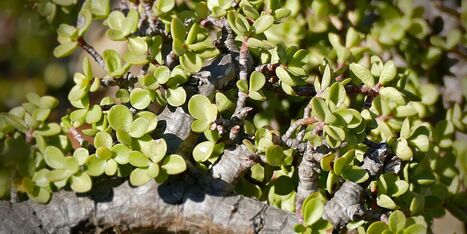
In the Eastern Cape, large-scale ecosystem interventions—most notably the multi-billion rand Spekboom Restoration Project driven by Imperative Global and backed by global financing—are actively transforming degraded land adjacent to rural and marginalized communities. These environmental interventions are designed to restore the Albany Thicket while functioning as a massive socio-economic catalyst for the Global South. Key elements of the initiative in your vicinity (the Kariega/Eastern Cape region) include: Ecosystem Engineering: The project relies on Portulacaria afra (Spekboom), a resilient native plant that captures large amounts of carbon while helping to regenerate soil properties and surrounding biodiversity. Job Creation: With the Eastern Cape experiencing some of the highest unemployment rates in South Africa (~40%), the project directly subcontracts planting, nursery, and harvesting to local SMMEs, channeling economic benefits directly into rural townships. Community Benefits: The initiative is designed to provide sustainable revenue streams for local farmers and landowners while providing on-the-job training in environmental restoration and land stewardship. For those looking to understand community resilience and the interplay between local culture and the environment, eco-cultural experiences such as the Motherwell Township Guided Tour are available, providing deep insight into the daily lives and resilience of residents in the broader Nelson Mandela Bay region. The Eastern Cape Spekboom Projects directly benefit marginalised and formerly unemployed rural communities by providing steady salaries, job training, and sustainable food security. Residents in economically depressed towns, such as Jansenville and Klipplaat, find employment as planters, field officers, nursery operators, and local educators. These environmental restoration initiatives—including major efforts backed by Amazon and the World Bank—provide crucial economic lifelines in areas where unemployment has historically exceeded 60%. Specifically, these communities benefit in the following ways: - Job Creation & Income: The labor-intensive nature of restoring the thicket involves collecting cuttings, planting by hand, and monitoring biodiversity, which creates thousands of seasonal and permanent green jobs.
- Local Enterprise Support: The projects foster the growth of small, medium, and micro enterprises (SMMEs) run by local residents who are contracted to facilitate the planting.
- Food Security: Supplementary community initiatives, such as establishing local greenhouses and chicken coops, help provide vulnerable workers and their families with predictable, nutritious food.
Spekboom Project Phase 1: Restoring 10,000 Hectares in South Africa’s Eastern Cape Launched in 2024, the Spekboom Restoration Project represents a landmark initiative to restore degraded thicket ecosystems in South Africa. Imperative South Africa Projects (Pty) Ltd (Imperative), together with NatCarbon Africa (Pty) Ltd (NatCarbon) as a strategic services provider, have formed an Integrated Project Team (IPT) to deliver one of the world’s most ambitious nature-based restoration efforts. Phase 1 has targeted 10,000 hectares of degraded land in the Jansenville region, planting Spekboom (Portulacaria afra) to restore native thicket ecosystems. This milestone lays the foundation for the broader vision: restoring 100,000 hectares over time through science-driven, technology-enabled, and community-empowered restoration. A Science-Based, Technology-Driven Approach The Project is designed and implemented with uncompromising scientific and technical rigor. Comprehensive aerial baseline surveys, carbon assessments, and biodiversity studies, including bioacoustics monitoring, inform where and how restoration takes place. Technologies such as drones and GIS mapping enable precise site selection, while continuous monitoring ensures transparency, scalability, and long-term ecological success. Skilled Teams Turning Plans into Action Within the IPT, NatCarbon Africa provides implementation expertise, combining ecological science, logistics, and on-the-ground operations. Multidisciplinary specialists work alongside local teams to ensure operations are carried out with accuracy, efficiency, and environmental integrity. Local Jobs and Empowerment At the heart of the Project is community participation. Field teams, drawn from local communities, play a central role in delivering restoration on the ground. Through training, steady employment, and skills development, the project is creating meaningful economic opportunities while fostering ownership and pride in restoring local landscapes. Ecological and Climate Benefits The reintroduction of spekboom enhances soil health, improves water retention, and supports biodiversity recovery. Over the long term, these ecological gains will strengthen climate resilience in a drought-prone region while contributing to global carbon sequestration efforts. Building Toward 100,000 Hectares As Phase 1 nears completion, the lessons learned are laying the groundwork for scaling up. Imperative and NatCarbon, through the IPT, are committed to delivering ecological restoration at a globally relevant scale, anchored in science, integrity, and long-term commitment to the landscape. This is just the beginning of a 100-year mission to restore degraded land, empower local communities, and create lasting environmental and social value. NatCarbon supports a safe and confidential way to report concerns about misconduct or unethical behavior. Whistleblower
Indigenous Biodiversity Amazon Linked Projects: Imparative Rural NBS Adjacent Interventions
Rural NBS Adjacent Interventions Decarbonizing the lives of Indigenous Marginalized Communities SDG heavy household devices, including: clean cookstoves, water filters, LED lighting, other high-quality household devices, typically as an adjacency to our NBS activities Rural Nature-based Solutions (NbS) alongside adjacent interventions represent climate and development programs that integrate environmental restoration with direct support for marginalized communities. By addressing both ecosystem health and basic household needs, these imperative strategies reduce greenhouse gas emissions and poverty simultaneously. These programs center around two main pillars: 1. Rural Nature-Based Solutions These are strategic actions that work with natural ecosystems to protect, restore, and manage landscapes. In rural environments, they typically include: Afforestation & Reforestation: Restoring native forests while involving local Indigenous Peoples and vulnerable communities in project design and land management. Agroforestry: Integrating trees and shrubs into crop and animal farming to make agriculture resilient to climate change, improve soil health, and boost food security. Wetland & Mangrove Restoration: Revitalizing coastal and wetland areas, which often includes sustainable, community-led fishing (silvofishery). 2. Adjacent Interventions Because environmental restoration takes time to yield economic dividends, adjacent interventions act as immediate support for the community. These strategies typically distribute Sustainable Development Goal (SDG)-heavy household devices and technologies. Examples include: Clean Cookstoves: Providing energy-efficient stoves to rural households to lower indoor air pollution, improve community health, and reduce reliance on cutting down local forests. Water Filters: Supplying household-level filtration systems to guarantee access to safe drinking water. Renewable Lighting: Introducing solar and LED lighting solutions to replace kerosene and reduce household carbon footprints. Why This is an Imperative By combining ecological restoration (which captures carbon) with adjacent household tools (which reduce household energy demand and emissions), these interventions directly decarbonize daily life. For marginalized or impoverished rural communities, this dual approach is an imperative that limits environmental disaster risks, creates green jobs, and diversifies sustainable income streams. Organizations like Imperative Global focus heavily on these integrated approaches, while global programs like the Africa Nature-Based Solutions Program center climate justice alongside environmental restoration. 8 sites Carbon Offset Projects - Imperative Global Imperative focuses on ecosystem restoration and management projects that have: The highest combined positive climate and sustainab... www.imperativeinc.com Nature-based Solutions (NbS) in African urban cities | CLARE ... 09 Jun 2026 — Nature-based solutions are more than just planting trees. They are strategic actions, ranging from protection and restoration to s... 5:47 CLARE programme·African Climate & Development Initiative UCT Four ways nature-based solutions benefit rural people ... - IFAD 10 Nov 2021 — Small-scale farmers cultivate 60–80 per cent of the food produced in developing countries. The ability of the poorest rural dwelle... IFAD Carbon Offset Projects - Imperative Global
imperativeinc.com https://www.imperativeinc.com › carbon-development-... rural NBS adjacent interventions Decarbonizing the lives of marginalized communities SDG heavy household devices, including: clean cookstoves, water filters, ... Nature-based Solutions (NbS) in African urban cities
CLARE - CLimate Adaptation & REsilience https://clareprogramme.org › Updates › Blog 09 Jun 2026 — It is imperative that nature-based solutions improve local biodiversity, including providing a habitat for naturally occurring plants and ...Read more Missing: rural adjacent Decarbonizing marginalized Nature-based solutions: typologies, ecological processes ...
ScienceDirect.com https://www.sciencedirect.com › science › article › pii by JE Lozano · 2025 · Cited by 6 — Nature-based Solutions (NbS) can generate multiple benefits to society through the protection, restoration and renaturing of ecosystems across landscapes.Read more NbS Guidelines
Nature-based Solutions Initiative https://www.naturebasedsolutionsinitiative.org › nbs-guid... NbS are explicitly designed to provide a range of benefits to local people, including supporting livelihoods, improving health, and reducing vulnerability to ...Read more Africa Nature-Based Solutions (NbS) Program
Nature For Justice https://nature4justice.earth › programs › africa-nature-b... Our team identifies, co-creates, and supports high-integrity nature-based solutions that protect rural livelihoods and generate sustainable income.Read more Four ways nature-based solutions benefit rural people and ...
IFAD https://www.ifad.org › explainers › four-ways-nature-b... 10 Nov 2021 — NbS help make food production resilient to climate change, enabling farmers to adapt effectively and to manage and improve the quality of the ...Read more Missing: adjacent interventions Decarbonizing Promoting Nature-based Solutions and Sustainable ...
UNECE https://unece.org › files › NbS 2515391E_WEB PDF 07 Nov 2025 — The training emphasized the accessibility of NbS to rural communities, highlighting their potential to restore degraded lands, enhance ... 186 pages Nature-based Solution to improve resilience
People in Need https://www.peopleinneed.net › ... The intervention is leveraging NbS to unlock the potential of conservation and ecosystems protection as livelihoods, working on floodplains, rangelands and ...Read more The Critical Role of Nature-based Solutions for Enhancing ...
UN-Habitat https://unhabitat.org › default › files › 2023/10 PDF This entails understanding the social, economic, and environmental dynamics to design NBS interventions that align with the needs of these communities. • ...Read more 68 pages People also search for Imperative group inc Jobs at imperative global group inc Imperative spekboom
An Imperative Project, developed in conjunction with NatCarbon Africa Restoring South Africa’s Albany thicket Spekboom is a landscape-scale keystone native species reforestation project in the Eastern and Western Cape of South Africa. Intensive goat pastoralism and unsustainable herbivorous browsing has resulted in the severe degradation of Albany thicket. This thicket will be restored by planting Spekboom, which will spur natural recruitment of indigenous shrubs and trees. Why Spekboom? 1.4 million hectares of the total 1.7 million Albany thicket has been severely degraded, and regeneration is unlikely without active restoration interventions. Spekboom (Portulacaria afra) is an “Ecosystem Engineer” and helps the natural recruitment of other species. It will restore biodiversity, vegetation structure and the broader ecosystem, as well as improving land productivity. - Phase 1 started in May 2024 and covers 10,000 hectares with 30 million spekboom plants.
- Phase 2 will expand the project by an additional 50,000 hectares and Phase 3 will see the project reach a total area of 100,000 hectares.
- Following the final phase, there is also potential to expand across 1 million hectares in the wider landscape.
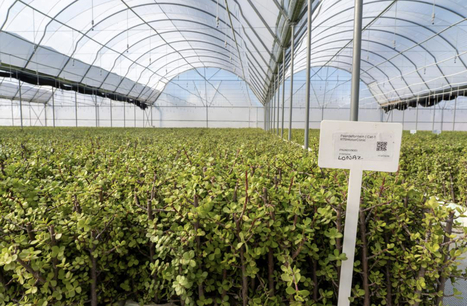
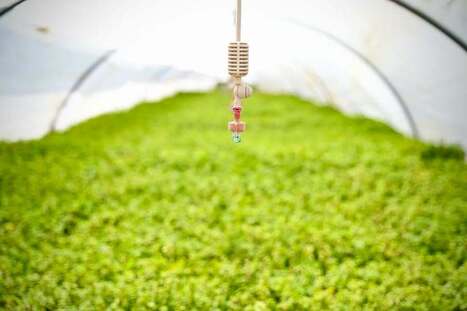
Spekboom is one of the largest ecosystem restoration efforts in South Africa. The project represents one of the most significant private sector commitments to nature-based restoration in the history of the Republic of South Africa. It transforms damaged farmland into thriving thicket, boosts biodiversity, removes carbon from the atmosphere, and creates significant local job opportunities. By combining international capital with infrastructure grade project delivery, robust scientific rigour and local knowledge we are delivering a truly landscape scale rural transformation. Project Information and Recognition The Project is an Afforestation, Reforestation, and Revegetation (ARR) initiative, (Verra project ID No.5027). The Project has received an ex-ante rating of ‘AApre with low execution risk’ (on a rating scale between AAApre and Dpre) from BeZero Carbon, a carbon ratings agency, putting the Project amongst the highest rated ARR projects for which BeZero has issued ex ante ratings (top 10% globally).” Testimonials: Imperative | BeZero Carbon In December 2025, spekboom restoration in South Africa was announced as one of the UN Environment Programme’s flagship World Restoration Projects. We are proud that our project is one of those featured here. South Africa’s native thicket awarded as a UN World Restoration Flagship – Watch this video to find out more. The Spekboom Field Restoration Nursery The Spekboom Field Restoration Nursery is one of the largest of its kind, spanning 7 hectares and capable of holding more than 20 million Spekboom plants at a time. Equipped with climate-controlled greenhouses, retractable shade nets, and Ellepot rooting technology, the nursery ensures plants are healthy and resilient. The nursery roof captures up to 4.8 million litres of rain water per year, ensuring a reliable and sustainable supply of water for the nursery in this arid landscape. Imperative Imperative South Africa Projects (Pty) Ltd is a subsidiary of Imperative Global Solutions Pte Ltd, a multi-jurisdictional ecosystem restoration company headquartered in Singapore. The organisation has significant experience in developing ARR carbon Projects and leverages its differentiated major Projects approach and a composite set of expertise and know-how, to deliver high-quality Projects at massive scale. Visit site Other Specialist Local Partners
On this day, we visited the Spekboom Project alongside partners from Imperative, Amazon and NatCarbon Africa.
#SpekboomRestorationProject #GrowingTheEasternCape #GreenEconomy
Mr. Wilton Le Grange, an owner of a local SMME working at the Spekboom Restoration Project shares his experience of the project thus far.
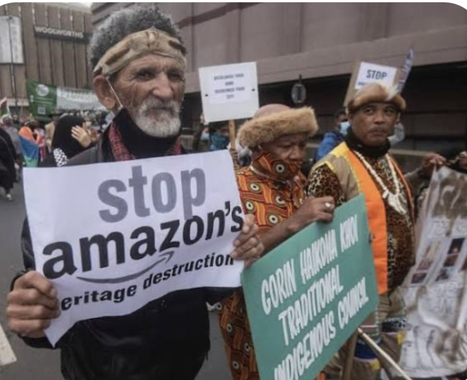
Goringhaiqua Goringhaicona Goraichouqua Indigenous Council - Albany Region Eastern Cape
The Spekboom restoration projects in the Eastern Cape, such as those led by Imperative and Natcarbon Africa, do not specifically recruit based on traditional or tribal affiliation. Instead, they participate by hiring, training, and employing scores of local, rural community members facing high unemployment in the region. These green-economy jobs provide sustainable livelihoods in an area experiencing between 60% and 80% unemployment. Key details regarding the community participants include: Locations: The projects are concentrated in impoverished districts, notably around Jansenville, Klipplaat, and the broader Sarah Baartman District and Dr. Beyers Naudé Local Municipality. Workforce Scale: As of mid-2026, over 1,000 local community members are involved in propagating, planting, and managing the spekboom shrubs. This number is expected to scale up to 11,000 jobs by 2030. Project Scope: Backed by companies like Amazon and the World Bank, the initiative aims to restore 50,000 hectares of degraded land in Phase 1, with a long-term goal of rehabilitating up to 100,000 hectares. By transforming environmental conservation into rural employment, the projects are aimed at economically uplifting local residents who call the Eastern Cape home. The Eastern Cape Spekboom restoration, driven by Imperative and NatCarbon Africa, is backed by a major R1.5-billion blended finance initiative. The effort combines World Bank outcome bonds, private capital streaming, and long-term offtake agreements to restore degraded Albany thicket. Developers & Operators - Imperative: An international ecosystem restoration and climate finance developer (operating locally as Imperative South Africa Projects). They design, develop, and lead the overarching restoration operations.
- NatCarbon Africa: A specialized carbon project execution organization that serves as the strategic services provider and local operator. Working alongside Imperative, they form the Integrated Project Team (IPT) that manages on-the-ground nurseries, fencing, and community hiring.
- Amazon: The strategic offtaker committed to purchasing 1.95-million tonnes of nature-based carbon credits over a decade, providing the essential revenue certainty needed to secure funding.
- World Bank (IBRD): Priced a landmark 14-year, $120-million Spekboom Restoration Outcome Bond, which leverages private capital for large-scale land restoration and rural job creation.
- Private Investors & Collaborators: Syndicated private funding is provided by impact investors and firms like GenZero, Mirova, Rubicon Carbon, Nuveen, and Impax Asset Management. BNP Paribas acted as the structurer for the bond hedge.
Other Notable Eastern Cape Projects While Imperative and NatCarbon Africa lead this large-scale bond effort, other independent entities are also restoring the Eastern Cape's thicket: - C4 EcoSolutions & AfriCarbone: Backed by Reforest'Action, these organizations direct large-scale spekboom restoration projects in areas like the Sundays River Valley.
- Spekboom Trading: A partnership between Inqo Investments and AfriCarbon, which leads the Kuzuko Thicket Restoration Project in the region.
CP Daily News Ticker: 30 June 2026 Published 01:01 on June 30, 2026 / Last updated at 01:01 on June 30, 2026 / Daily News Ticker
Carbon Pulse PremiumNet Zero Pulse Click on the coloured labels below to filter by region or topic -
California gasoline sales picked up year-on-year (YoY) in March for the first time in multiple years, while diesel dropped by a larger percentage, recently published state data showed. -
Stop the freeze - Four environmental non-profits filed a lawsuit in the North Carolina Superior Court against an order from state regulators on June 18, which had deferred utility Duke Energy’s solar and storage procurement process. The North Carolina Utilities Commission (NCUC) had approved a halt to Duke’s procurement of clean energy resources based on modifications of an existing procurement target. The Southern Alliance for Clean Energy, the Sierra Club, Vote Solar, and the Environmental Justice Community Action Network allege the investor-owned utility reduced its proposed solar and storage 2026 targets below what regulators required in the 2024 resource planning order, and that the NCUC’s deferral violated their right to due process per state law. The plaintiffs outlined that the NCUC’s order came less than two weeks after the utility updated its load forecast to show 2 GW of expected new demand in its service area for data centres and other large-load customers. -
Stakeholder support – A package of support letters from local governments and First Nations groups were submitted to Manitoba late last year to support carbon capture company Deep Sky's proposed DAC facility in the province, the Narwhal reported. With local governments and First Nations in support of the project, alongside the recent financial support indicated by the company being issued North America’s first certified carbon removal credits under long-term offtake agreements, Deep Sky is seeking government backing and the ability to integrate with Manitoba’s provincial energy grid to take the project to the next phase. -
Minnesota vs. US filings - The US had a request for a motion for leave to file rebuttal approved this week in its legal challenge to Minnesota's climate change deception lawsuit against oil majors, allowing federal litigators additional opportunity to submit legal arguments or evidence. This occurred as both state defenders and Trump administration challengers to Minnesota's effort submitted new filings outlining their cases. For example, federal officials from the State Department said Minnesota's lawsuit contradicts the US' stance against international climate liability efforts, while Minnesota's attorney general said the federal challenge is unripe, the cases cite by the US administration are irrelevant, and the challenge cannot be based on speculation about an adverse final adjustment, among other arguments. -
-
Carbon credits call – In Brazil, Mato Grosso do Sul expects to select a private partner by September to structure, certify, and sell carbon credits generated by the state, according to the State Secretary for Environment, Development, Science, Technology, and Innovation Artur Falcette. The timeline was announced on Tuesday during official appointments at the Mato Grosso do Sul Environment Institute (Imasul), Campo Grande News reported. The public call for partners was recently published. -
Cross-Atlantic carbon collaboration - The UK and Quebec have signed a MoU to strengthen collaboration on emissions trading policy and leadership on carbon markets, the former's Department of Energy Security and Net Zero announced Tuesday via a post on X. -
The Carbon to Value Initiative (C2V Initiative) has opened applications for the sixth cohort of its ‘carbontech’ accelerator, seeking startups developing carbon capture, utilisation, and removal technologies as well as AI-enabled tools designed to accelerate commercial deployment. -
The Supreme Court of Washington ruled in favour of the state’s Department of Ecology (ECY) regarding the agriculture fuel exemption for fuel suppliers within the carbon cap-and-invest programme, ending a dispute brought by an agricultural association. -
A planned clean energy project in Louisiana will not proceed after failing to meet internal financial return criteria, its developer announced Tuesday. -
An Oregon-based climate finance advisory firm has partnered with a Hawaiian nature restoration developer to support global reforestation projects, the companies announced on Tuesday. -
A Dutch direct ocean carbon capture (DOC) developer has filed for bankruptcy after failing to secure the funding needed to continue operations, despite having demonstrated its technology, secured public grants, and attracted investor interest. -
A Saudi state-backed company working to build out the voluntary carbon market domestically and internationally will add homegrown carbon credits to its platform before the year is out, it announced on Tuesday. -
Gabon carbon credits - Gabon’s Council of Ministers approved a decree last week formally setting up the Gabonese Agency for the Development of the Green Economy (AGADEV), a new public body tasked with supporting the country’s green economy and monetising carbon and biodiversity credits. The agency will also work on valuing other natural capital assets, developing a green economy centre of excellence, and mobilising green finance for the Central African nation. -
Latin America is creating opportunities for carbon project developers to generate credits, access finance, and commercialise issuances, developing national carbon markets, Carbon Pulse reported last week – although Global North funds retain their key role in the market, for now. -
EU carbon prices ended the first half of the year down by 8.3% despite gaining nearly €1.40 on Tuesday, as traders reversed Monday’s sell-off after a key European politician dismissed as "fake news" earlier media reports on potential ETS reform measures, with the rally bringing EUAs back above a key technical support level. -
-
Verra has concluded the safeguards component of its quality control review (QCR) of the Kariba REDD+ carbon project, with independent auditors finding no evidence that the project breached the standard's rules during the period covered by their original assessments. -
-
Insurance company QBE and seven businesses from its supply chain are partnering for a collective commitment of 50 years to fund rewilding and carbon credit generation in the United Kingdom, they announced on Tuesday. -
The EU risks exposing itself to legal challenges if it weakens or abandons binding targets for carbon removals from forestry and land use as part of its post-2030 climate framework, according to a new legal analysis commissioned by WWF and published on Tuesday. -
Amazon will buy 1.95 million carbon removal credits from a large-scale ecosystem restoration project in South Africa, Bloomberg reported on Tuesday, as part of a an initiative that has also secured innovative financing through a $120 mln World Bank outcome bond. -
Researchers from a carbon removal (CDR) initiative backed by around €33 million from the German government are advancing work into scaling up engineered and land-based removals, the programme has announced. -
Taiwan is targeting the launch of a pilot cap-and-trade emissions trading scheme as early as 2028, but key policy aspects like the role of power plants in the scheme remain under discussion, a forum heard Tuesday. -
A Benin-based improved cookstove project has secured €9 million from a new carbon investment platform backed by European development finance institutions, its developer announced Tuesday. -
The World Bank said it will scrap two headline climate financing targets, including its goal for 45% of financing to deliver climate benefits, as it shifts its focus from how much the bank spends on climate-related projects. -
The Philippines is edging closer to establishing legislature for a carbon pricing framework and itst architecture, but a new report has raised issues including the risks of interacting with international markets and unusually broad sectoral coverage and generous tax incentives. -
Renewable electricity generation marginally fell in 2025 year-on-year across the EU as a solar boom was unable to offset the rebound in gas-fired power and a hydroelectric collapse, data from Eurostat reveals. -
Trees at risk - London could lose most of its trees by 2090 due to climate change, according to the Kew Gardens tree collections and arboriculture team at Kew Gardens. In collaboration with the Greater London Authority, the researchers found that 72% of the capital's urban canopy could be at risk due to heat and drought driven by global warming. Some 62% of the city's 1.2 mln trees have low suitability to warmer urban environments, while 10% are already vulnerable. It follows last week's record heatwave in the capital where parts of the city reached 36C, and where the value of trees was especially evident in helping to cool streets and absorbing excess stormwater. Kew Gardens said it will work to choose more suitable urban trees with higher survival rates. Many British native trees such as the common beech, silver birch, holly, face highest risk of failure, with knock-on effects for other species such as fungi, lichens, and birds. ( the Standard) -
Atomic push - South Korea will explore ways to shorten nuclear power plant construction times as it seeks to expand electricity supply to support rising demand from artificial intelligence, the presidential office said, according to Bloomberg. The government plans to include the measures in its upcoming long-term electricity supply and demand plan. Nuclear power currently generates about one-third of South Korea's electricity, but Seoul expects additional capacity will be needed to support planned investments in semiconductor manufacturing and data centres. -
No end date - Japan and Mongolia have issued carbon credits to four solar power projects under their bilateral Joint Crediting Mechanism (JCM), covering emissions reductions generated between 2021-25, according to a meeting report published on Tuesday. The credits, split between the two countries, total more than 214,000 tCO2e across the projects. The two governments also signed authorisation letters allowing the transferred credits to be used as internationally transferred mitigation outcomes (ITMOs) under the Paris Agreement. Separately, the joint committee agreed to amend the bilateral JCM agreement to remove its end date. -
Nuclear pact - Singapore's National Environment Agency (NEA) and Indonesia's nuclear regulator BAPETEN have signed an MoU to deepen cooperation on radiation protection, nuclear safety, security, and safeguards, the agencies said on Tuesday. The agreement covers collaboration on nuclear regulatory policy, emergency preparedness, environmental radiation monitoring, joint training, research, and personnel exchanges. The move comes as Singapore studies the potential role of nuclear energy in its future energy mix and aims to strengthen regional cooperation on nuclear safety through ASEAN platforms. -
Racing to reduce - The Mercedes-AMG Petronas FT team has reduced its race team control emissions by 54% with sustainable aviation fuel certificates (SAFc) since 2022, according to its 2025 sustainability report. Some 30,688 tonnes of CO2e aviation emissions were reduced through use of SAFc between 2025 and 2022, with 11,504 tCO2e saved last year alone. The report also details its first climate transition action plan, outlining a path to full net zero across all scopes by 2040. On carbon removals, the team's committed to around 18,900 tCO2e across nature-based, hybrid, and engineered pathways, to be delivered from 2024-30, and in 2025, it launched the Blue Carbon Collective to fund mangrove conservation and restoration in Malaysia. Investments in new materials, efficiencies, and renewables allowed the team to last year achieve a 28% decrease in race team control emissions and a 15% reduction in overall emissions compared to 2024, said the press release. -
Countries have reaffirmed the importance of scaling up energy efficiency in a new action plan signed in Montreal this week at a conference hosted by the International Energy Agency (IEA), which includes reference to enhancing efficiency in data centres. -
Enhanced rock weathering (ERW) increased aboveground carbon storage in young native broadleaf woodland plots by up to 27% over four years, while soil microbiome enrichment delivered a smaller and less consistent early growth boost, a major UK study has found. -
A regenerative food and farming company has partnered with a UK-headquartered bank to launch a fund aimed at advancing the nature-positive transition in the agricultural sector. -
Moving fast - The Carbon Accelerator Programme for the Environment (CAPE) has opened applications for its second cohort, seeking high-integrity, nature-based carbon projects across Africa. Launched in 2024 by Finance Earth and the African Natural Capital Alliance, the programme supports landscape-scale projects where carbon revenue is the primary investment driver, while delivering biodiversity, community and ecosystem benefits. The initiative aims to improve project investment readiness and strengthen financing channels for nature-positive investments. Cohort 1 includes projects in Kenya, Zambia, Tanzania, Nigeria, and Ethiopia. Stage 0 applications for the second cohort close on July 17, 2026, with submissions reviewed on a rolling basis. -
-
China-Australia Synergy - Fortescue is collaborating with a roster of Chinese clean tech companies on mining decarbonisation initiatives, China Daily reported Monday. At the Iron Ore and Open Pit Operators Conference 2026 in Perth last week, Fortescue’s Director of Integrated Operations Katie Charuga said that Chinese partners have already helped the miner deploy electric excavators, electric drills, and battery energy storage systems. The technological demands of green steel on the iron ore value chain have created new opportunities for cross-border collaboration, with Chinese firms like LONGi Magnet Co supplying magnetic separation equipment and Shanghai Kminda Tech Co promoting ultra-fine screening machines to help Australian companies improve ore quality and resource utilisation. -
A Vilnius-based soil carbon firm has secured a €120 million senior secured credit facility to expand transition financing for European small and medium-sized agricultural businesses, it announced Tuesday. -
Virtually solar-powered – The Asian Development Bank (ADB) has approved a financing package worth $57.4 mln for a rooftop solar aggregation and virtual net metering project in Sri Lanka, including $5.5 mln from Japan’s Joint Crediting Mechanism fund. The balance of the cash comprises a concessional loan of $35 mln and an EU grant of $16.9 mln. Combined with counterpart financing, the total project cost is estimated at $80.5 mln, ADB said. The project is to support two of the island nation’s state-owned utilities to establish a scalable model which pools solar power from large rooftop systems and then virtually distribute credits to eligible consumers. It is aiming to help lower power bills for community organisations as well as micro-, small-, and medium-sized enterprises, which may not be able to install rooftop solar due to a lack of space. Sri Lanka and Japan signed an agreement to cooperate on the JCM in Oct. 2022. -
Accounting standardisation – The Chinese Ministry of Ecology and Environment has updated its enterprise carbon accounting and reporting guidelines for power generation facilities, it announced Monday. Key updates included the standardisation of the carbon oxidation rate used per facility type as per the national emission factor database, the exclusion of indirect emissions from purchased and used grid electricity, and a new requirement for facilities to report on-site energy conservation and carbon reduction measures. Power generation facilities are expected to apply the updated guidelines starting this year. -
-
Europe’s climate ambitions must go hand-in-hand with industrial competitiveness. The upcoming EU ETS reform should support decarbonisation while ensuring affordable energy, investment certainty, energy security, and a level playing field for European industry. -
The Malaysia Forest Fund (MFF), a federal government agency, has called for partners to pilot two new methodologies under its Forest Carbon Offset (FCO) Programme, with a focus on urban forestry and agroforestry, it announced. -
Soil MRV boost - Berlin-based digital monitoring, reporting, and verification (MRV) platform Seqana has raised €3.2 mln in funding to advance its soil MRV technology, the company announced on June 17. With the funding, Seqana will expand its platform’s coverage to a broader set of soil health indicators in addition to carbon measurement. The company co-authored the newest version of Verra’s VM0042 Methodology for Improved Agricultural Land Management, which completed its public consultation in March, as well as Gold Standard’s Soil Organic Carbon Model Guidelines for quantifying carbon stock changes in agricultural soils. -
Research development – New Zealand is allocating an additional NZ$40.7 mln ($23 mln) to help university researchers commercialise their output, the Beehive announced Tuesday. Universities will be required to co-invest in research supported by the enhanced Commercialisation Partner Network programme. The cash boost will help things such as low-emissions agtech solutions get to market sooner. It comes a few weeks after the government launched an accelerator to scale agricultural emissions reductions. Agriculture accounts for around half of New Zealand’s GHG emissions profile, and the country has a target to cut its biogenic methane emissions by 10% by 2030 – which it said in January would be missed – and a new target of 14-24% by 2050, compared with 2017 levels. -
The Journal of Economic and Financial Sciences promotes research in auditing, corporate finance, corporate governance, economics, econometrics, financial accounting, financial management, financial planning, investment management, management accounting and taxation in the emerging market field. Original Research Linking sustainable local economic development to a market-based carbon control regime: Carbon restoration projects in the Eastern Cape province of South Africa using Portulacaria afra James Polak, Jeanette Snowball About the author(s) James Polak, Department of Economics, Rhodes University, Grahamstown, South Africa
Jeanette Snowball, Department of Economics, Rhodes University, Grahamstown, South Africa Abstract Orientation: There is growing interest in how international climate change mitigation and adaptation programmes play out at the local level. Research purpose: The aim of this study was to investigate the link between land restoration and carbon sequestration projects in the Eastern Cape, using Portulacaria afra (Spekboom), and market-based approaches to address global climate change. Motivation for the study: The Eastern Cape is one of the poorest areas of the country, and there is great emphasis on the establishment of economically and environmentally sustainable, as well as socially just, local economic development (LED) initiatives. However, LED projects are often not sustainable in the long run. Research design, approach and method: A mixed methods design, using data on international carbon markets, and key stakeholder interviews with those involved in LED land restoration programmes, was used. Qualitative results were analysed using Connelly’s (2007) framework for sustainable development, which included indicators for environmental protection, economic growth and social justice. Main findings: Stakeholders perceive the long-term financial sustainability of such projects as resting on their ability to earn carbon credits, despite the current very low international carbon prices. Practical/managerial implications: The long-term success of carbon-based restoration projects may depend on the establishment of a local carbon market or continued public funding. Upfront costs of land restoration projects are high and return only starts years later. Contribution/value-add: The establishment of a South African carbon market that helps carbon sequestration LED projects to meet the technical and administrative requirements needed to sell carbon credits will be an important determinant of their sustainability. Keywords local economic development; climate change; sustainability; Spekboom; carbon control regimes Metrics Total abstract views: 4320
Total article views: 7267 Crossref Citations 1. Smallholder farms have and can store more carbon than previously estimated
Patrick M. Ewing, Xinyi Tu, Bryan C. Runck, Alison Nord, Regis Chikowo, Sieglinde S. Snapp
Global Change Biology vol: 29 issue: 6 first page: 1471 year: 2023
doi: 10.1111/gcb.16551 2. Herbivory and misidentification of target habitat constrain region-wide restoration success of spekboom (Portulacaria afra) in South African subtropical succulent thicket
Marius L. van der Vyver, Anthony J. Mills, Mark Difford, Richard M. Cowling
PeerJ vol: 9 first page: e11944 year: 2021
doi: 10.7717/peerj.11944 3. Landscape connectivity for biodiversity conservation: a mammal-based multi-species corridor approach for the Eden to Addo corridor initiative, South Africa
Daan Lichtenberg, Elina Kreuzberg, Katharina von Dürckheim, Brian Reeves, Rhian Berning, Stacey Klein Snakenborg, Frida Ruiz Mendoza, Otto Beukes, Maya Beukes
Biodiversity and Conservation vol: 34 issue: 11 first page: 3933 year: 2025
doi: 10.1007/s10531-025-03140-8
The Spekboom has amazing carbon-storing abilities, more than any other tree. Find out why you have to plant this amazing tree. Spekboom and Climate Change In association with the Wilderness Foundation Spec-Savers is making a difference in the battle on climate change. Each time you purchase Climate Eyes variable tinted lenses; we’ll plant a Spekboom tree in the Baviaanskloof area. We all know that climate change is a BIG deal, and we’d like to make a BIG impact, by planting more and more of these trees to help raise awareness. The Spec-Savers Spekboom project has already created enough carbon to counteract emissions for 7715 return flights from Cape Town to Johannesburg. That’s massive, but that’s not where we want to stop. Its Spring, and time to plant even more Spekboom trees, which is why we’re inviting you to help us reach even greater milestones and plant more trees this year! So what’s the deal with the Spekboom you might ask…? The Spekboom has amazing carbon-storing abilities, and can offset harmful carbon emissions. This helps mop up excessive levels of CO2, the bad guy responsible for climate change. It’s not only great for mopping up carbon emissions though. The Spekboom improves soil quality, reduces erosion and stimulates a return of biodiversity in its area due to its soil-binding and shading nature. Spekboom trees are naturally found in the Eastern Cape and can reach a height of 2.5 meters. Just because they are normally found in dry and rocky conditions, doesn’t mean they can’t flourish in watered flower beds, these guys will grow pretty much anywhere. With water becoming a real problem around the globe, it’s miraculous that the Spekboom can make due with as little as 250 to 350mm of annual rainfall. Make a change…help plant Spekboom tree The humble Spekboom is literally being replanted hectares at a time to help restore the natural ecosystem. It’s become somewhat of a symbol for Carbon Emission Reduction and Climate Change Awareness. By taking the equivalent of 26 cars off the road for a year, just one Spekboom can really help make a massive difference, and help South Africans tap into carbon trading markets worth billions of dollars. By participating in the Spec-Savers Spekboom Campaign, you’re helping the Wilderness Foundation deliver an amazing ecological service. This year, with the dawn of Spring, we’d like to invite individuals to help us create a brighter and greener tomorrow, reduce our carbon footprint and help leave a lasting legacy behind. Participate in the Spec-Savers Spekboom Project and you could be well on your way towards helping the world become once again, a greener and healthier place to live. One tree at a time, we can start reducing the damage and building a greener tomorrow. Date Published: 03 September 2015
Oscar Mabuyane is in Jansenville. Spekboom is one of South Africa’s most remarkable indigenous plants. It stores significant amounts of carbon, requires very little water and helps restore degraded land. This is more than an environmental project but about creating jobs, restoring our natural landscapes and growing opportunities for communities across the Eastern Cape. As we build the Eastern Cape economy, projects like these show that protecting our environment and creating jobs can happen at the same time. #GrowingTheEasternCape #GreenEconomy #ClimateAction
Spekboom (Portulacaria afra) is a native South African tree known as the "environmental miracle worker" — with the potential to reduce carbon emissions like Spekboom: South Africa’s Environmental Miracle Worker Spekboom (Portulacaria afra) is a native South African tree known as the “environmental miracle worker” — with the potential to reduce carbon emissions like no other plant can. Indigenous to the Western Cape and Eastern Cape, it’s the country’s very own solution to tackling climate change and restoring the natural balance. Spekboom has the ability to offset more CO2 out of the atmosphere than the Amazon rainforest. This incredible plant has enormous carbon storing capabilities, also unique in that it stores solar energy to perform photosynthesis at night. This makes the Spekboom thickets 10 times more effective per hectare at carbon fixing than a tropical rainforest. A Powerful Carbon Offsetter ARC (Aquila’s Animal Rescue Centre) has a dedicated Spekboom tree nursery and thriving greenhouse, which forms part of the award-winning Eco Synergy Centre. Established as part of the reserve’s environmental sustainability mission, growing and planting Spekboom trees has become a vital component in Aquila’s mission to restore the Karoo’s natural habitat and combat climate change. Spekboom thrives in the Karoo’s unique semi-arid landscapes. The mountainous region provides the ideal environment for this resilient tree, which thrives in hot, dry conditions with minimal rainfall. Spekboom’s deep taproot system allows it to access water stored deep underground, further ensuring its survival in harsh conditions. Many plants in this region have adapted to these harsh conditions. From the vast grasslands that sweep across the Great Karoo, to the beautiful and intricate Fynbos flowers that bloom from Table Mountain to the Garden Route, to the rare renosterveld shrublands teeming with wildlife, the Karoo is home to one of the world’s most impressive and resilient biomes. The ability of Spekboom to thrive in the Karoo, where not many trees can, is a statement to it’s incredible contribution towards environmental sustainability. Spekboom has the ability to offset more carbon dioxide from the atmosphere than the Amazon rainforest. This remarkable succulent has enormous carbon storing capabilities. And, unlike most plants which emit more CO2 at night, Spekboom has the ability to store solar energy during the day to perform photosynthesis at night. This makes the Spekboom thickets 10 times more effective (per hectare) at carbon fixing than a tropical rainforest. Why is Spekboom More Effective Than the Amazon Rainforest? The Amazon rainforest is undeniably crucial for regulating global CO2 levels. While the Amazon rainforest boasts a vast and complex ecosystem with an irreplaceable role in regulating global climate, Spekboom offers a unique advantage in terms of carbon sequestration efficiency per unit of land area. Several factors contribute to Spekboom’s exceptional efficiency in carbon capture: CAM Photosynthesis: Spekboom’s night-time CO2 intake through CAM (Crassulacean Acid Metabolism) allows it to capture carbon for a longer duration compared to trees reliant solely on daytime photosynthesis. This extends its carbon-fixing window by a significant margin. Leaf to Stem Ratio: Spekboom possesses a high leaf-to-stem ratio. Leaves are the primary sites of photosynthesis, and a greater number of leaves translates to increased carbon capture potential. Fast Growth Rate: Spekboom exhibits a relatively rapid growth rate, especially in its early years. This rapid growth translates to faster biomass accumulation, further accelerating the rate at which CO2 is removed from the atmosphere and stored within the plant’s tissues. Fire Resilience: Spekboom’s succulent nature makes it somewhat fire-resistant. Compared to rainforest trees that are highly vulnerable to wildfires, Spekboom stands a better chance of surviving fires and continuing to store captured carbon over longer timescales. The Scientific Properties of Spekboom Spekboom thrives in the Karoo’s semi-dessert landscapes. Belonging to the Didiereaceae family, these succulents are known for their ability to store water in their thick and fleshy leaves, making them well-adapted to arid environments. Spekboom’s small, round leaves minimise water loss through transpiration, further contributing to its drought tolerance. However, Spekboom’s true power lies in its Crassulacean Acid Metabolism (CAM) pathway. This unique photosynthetic process allows the plant to take in CO2 at night, when temperatures are cooler and water loss is minimised. The CO2 is then stored as a temporary organic compound, malate, which is converted back into sugars during the day through photosynthesis. This CAM pathway not only conserves water but also allows Spekboom to maximise carbon capture throughout the day and night cycle. Updates from the Rescue Centre Help us save Africa’s wildlife heritage! Make a donation of your choice to support our conservation initiatives and rehabilitation projects. © Copyright ARC (Animal Rescue Centre, Aquila Collection).
|
Poverty Eradication, Climate Change, International Financial System among Key Agenda Items as Second Committee Approves Organization of Work 17 September 2009 General AssemblyGA/EF/3237 Department of Public Information • News and Media Division • New York Sixty-fourth General Assembly Second Committee 1st Meeting (AM)
Poverty Eradication, Climate Change, International Financial System among Key
Agenda Items as Second Committee Approves Organization of Work
Poverty eradication, climate change, the international financial system and development were among key topics approved for consideration by the Second Committee (Economic and Financial) this morning as it approved its organization of work for the sixty-fourth session of the General Assembly.
The Committee also adopted its programme of work (document A/C.2/64/L.1) as Chair Park In-kook ( Republic of Korea) welcomed other members of its new Bureau: Vice-Chairpersons Mohamed Cherif Diallo ( Guinea), Carlos Enrique García González ( El Salvador), Dragan Mićić ( Serbia) and Rapporteur Denise McQuade ( Ireland).
Issues slated for review included macroeconomic policy questions, including international trade and development, the international financial system, external debt and commodities; operational activities for development, including United Nations activities and South-South cooperation; and follow-up to, and implementation of, the outcome of the 2002 International Conference on Financing for Development and the 2008 Review Conference.
Other topics to be considered were: groups of countries in special situations, including the Third United Nations Conference on the Least Developed Countries, and the outcome of the International Ministerial Conference of Landlocked and Transit Developing Countries; globalization and interdependence, including the role of the United Nations in promoting development in that context, preventing and combating corrupt practices, and science and technology; poverty eradication, including implementation of the Second United Nations Decade for the Eradication of Poverty (2008-2017), women in development, and human resources development; and agriculture development and food security.
The Committee was also expected to take up permanent sovereignty of the Palestinian people in the Occupied Palestinian Territory, including East Jerusalem, and of the Arab population in the occupied Syrian Golan over their natural resources; information and communications technology for development; sustainable development, including implementation of Agenda 21, the Programme for the Further implementation of Agenda 21 and the outcomes of the World Summit on Sustainable Development, and follow-up to, and implementation of, the Mauritius Strategy for the Further Implementation of the Programme of Action for the Sustainable Development of small island developing States.
Also under sustainable development, the Committee was expected to consider the International Strategy for Disaster Reduction, protection of global climate for present and future generations, implementation of the United Nations to Combat Desertification, the Convention on Biological Diversity, the report on the twenty-fifth session of the United Nations Environment Programme (UNEP) Governing Council, sustainable mountain development, and the promotion of new and renewable sources of energy.
Others items on the Committee’s agenda were implementation of the outcome of the United Nations Conference on Human Settlements (Habitat II) and strengthening of the United Nations Human Settlements Programme (UN-Habitat), global partnerships, and programme planning.
The Second Committee will meet again at 10 a.m. on Monday, 5 October, to begin its general debate.
Following the successful rollout of Phase 1, Imperative South Africa Projects (Pty) Ltd (Imperative), together with NatCarbon Africa (Pty) Ltd (NatCarbon) as strategic services provider, have formed an Integrated Project Team (IPT) to plan Phase 2 of the Spekboom Restoration Project. This next phase represents a significant scale-up.
Meet The Team From project design to implementation, we’re a team of dedicated professionals passionate about turning complex challenges into scalable, climate-positive solutions. Get to know the minds driving meaningful change across Africa’s sustainability landscape. About Us NatCarbon Africa is a specialised carbon project execution organisation. We focus on implementing high quality nature-based carbon projects across Africa. About NatCarbon Africa NatCarbon Africa is a specialised carbon project execution company focused on nature-based solutions across the African continent. We design and implement high-integrity carbon projects that restore ecosystems, empower communities, and contribute to global climate goals. With deep local knowledge and technical expertise, we turn climate ambition into measurable impact. Our Core Values Our core values are rooted in integrity, impact, collaboration, innovation, and respect for people and nature. Our Purpose To restore Africa’s landscapes and empower communities by delivering climate impact with integrity and scale. Our Vision To be Africa’s most trusted and innovative carbon project implementer, setting the benchmark for excellence, integrity, and transformative impact. Our Mission To design and implement scalable, nature-based carbon solutions that restore Africa’s landscapes, empower communities, protect biodiversity, and generate lasting value for climate and investors. Meet The Team From project design to implementation, we’re a team of dedicated professionals passionate about turning complex challenges into scalable, climate-positive solutions. Get to know the minds driving meaningful change across Africa’s sustainability landscape. - Management
- Team
- Specialists
Jaco Venter Chief Executive Officer Gail Cleaver Operations and Project Director Jonathan Konz Technical and Carbon Director Loraine Carstens Finance Manager Clarise Steenkamp Business Director Integrated Technology for Optimum results We harness advanced technologies to enhance project accuracy, efficiency, and transparency. By integrating data-driven tools across every stage of the project lifecycle, we ensure reliable measurement, real-time progress tracking, and compliance with industry standards. Our tech-first approach drives smarter decisions and stronger outcomes. Isometrix The integrated platform is used to streamline environmental, social, and governance (ESG) data across our projects. It enables efficient monitoring, reporting, and compliance management—ensuring transparency, traceability, and alignment with standards. Wingtra Technology We leverage cutting-edge tools like the Wingtra drones to enhance the accuracy and efficiency of our work. It’s high-resolution aerial mapping allows us to capture detailed landscape data – supporting precise project design, monitoring, and reporting across diverse terrains. ArcGIS We use ArcGIS to map, analyze, and monitor project landscapes with precision. The platform supports land-use planning, carbon stock estimation, and real-time tracking of planting activities—data-driven decision-making and effective project implementation. We seek to create impact Everything we do is guided by the desire to make a measurable difference—for people, communities, and the world. For The Environment Our projects are designed to restore degraded ecosystems and protect biodiversity. From thicket restoration onwards, we focus on nature-based solutions that deliver measurable environmental benefits—building climate resilience while preserving Africa’s rich ecological heritage. For Communitues We prioritise inclusive, community-centered project design that delivers lasting social benefits. Through job creation and skills development our projects empower local communities, support sustainable livelihoods, and strengthen resilience to climate change. Community engagement is central to how we create results. For Our Clients We help our clients achieve their climate goals through high-integrity, nature-based carbon projects. Our work delivers not just verified carbon credits, but lasting value—through transparency, credibility, and measurable environmental and social impact. For Our People We invest in the growth, well-being, capacity building and purpose of our team. By fostering a culture of integrity, collaboration, and continuous learning, we empower our people to lead, innovate, and drive meaningful change—across Africa and beyond. For Our Shareholders We build trust through transparency, accountability, and data-driven results. By aligning our projects with the interests of all stakeholders—communities, governments, investors, and partners—we create shared value and long-term impact that extends beyond carbon. Our Partners Collaboration is at the heart of everything we do. We believe in the power of working with trusted partners. From consultants to service experts, each plays a critical role in helping us achieve high-impact, high-integrity outcomes. Together, we deliver quality carbon projects built on trust, expertise, and shared goals. Testimonials & Endorsements “What a positive experience to work with the people from NatCarbon Africa. From the moment I engaged with their team, I was impressed by their dedication to deliver results in the spekboom rehabilitation project. I am really satisfied with the end result.” – Renier Smith, Driekoppen Farm PreviousNext Contact Us For inquiries, support, or business-related matters, please contact us using the information below. A member of our team will respond promptly to assist you. NatCarbon supports a safe and confidential way to report concerns about misconduct or unethical behavior. Whistleblower
An expert team of Carbon project developers, designing, developing, operating & optimizing the best carbon offset projects in the world. https://www.imperativeinc.com/contact-locations/?_gl=1*7r9bqv*_up*MQ..*_ga*MjE0NDI5OTY5Mi4xNzgzMTM0Nzc4*_ga_Q41DBJQ1KB*czE3ODMxMzQ3NzckbzEkZzAkdDE3ODMxMzQ3NzckajYwJGwwJGgw The Nature Infrastructure Company ecosystem restoration & management we are a multi-jurisdictional ecosystem restoration & management company design development operation optimization FIND OUT MORE https://www.imperativeinc.com/projects-overview/?_gl=1*1u12kkq*_up*MQ..*_ga*MjE0NDI5OTY5Mi4xNzgzMTM0Nzc4*_ga_Q41DBJQ1KB*czE3ODMxMzQ3NzckbzEkZzAkdDE3ODMxMzQ3NzckajYwJGwwJGgw infrastructure-grade ecosystem restoration Our cutting edge approach we combine major projects EPC expertise with leading-edge ecosystem restoration and carbon asset development capabilities to deliver best-in-class projects As an infrastructure-grade nature restoration company, we apply best-in-class major projects know-how from mature markets, combined with leading in-house ecosystem restoration and technical carbon expertise and to deliver the highest quality projects with maximum biodiversity and sustainable development co-benefits FIND OUT MORE https://www.imperativeinc.com/carbon-development-projects/?_gl=1*y7edxg*_up*MQ..*_ga*MjE0NDI5OTY5Mi4xNzgzMTM0Nzc4*_ga_Q41DBJQ1KB*czE3ODMxMzQ3NzckbzEkZzAkdDE3ODMxMzQ3NzckajYwJGwwJGgw Our story The Imperative Story Imperative is a group of industry leaders from diverse backgrounds drawn together by a common passion to revolutionize ecosystem restoration projects globally, using cutting edge technology and unparalleled execution capability FIND OUT MORE https://www.imperativeinc.com/our-story-and-mission/?_gl=1*1m0y6fx*_up*MQ..*_ga*MjE0NDI5OTY5Mi4xNzgzMTM0Nzc4*_ga_Q41DBJQ1KB*czE3ODMxMzQ3NzckbzEkZzAkdDE3ODMxMzQ3NzckajYwJGwwJGgw our name Imperative reflects the urgency with which we need to act to prevent the most devastating consequences of climate change WHY US https://www.imperativeinc.com/sector-defining-quality/?_gl=1*1fnacte*_up*MQ..*_ga*MjE0NDI5OTY5Mi4xNzgzMTM0Nzc4*_ga_Q41DBJQ1KB*czE3ODMxMzQ3NzckbzEkZzAkdDE3ODMxMzQ3NzckajYwJGwwJGgw WHAT WE DO 1. Project Design & Carbon Asset Development https://www.imperativeinc.com/design-carbon-asset-developers/?_gl=1*11wgln4*_up*MQ..*_ga*MjE0NDI5OTY5Mi4xNzgzMTM0Nzc4*_ga_Q41DBJQ1KB*czE3ODMxMzQ3NzckbzEkZzAkdDE3ODMxMzQ3NzckajYwJGwwJGgw 2. Structuring & Project Financing https://www.imperativeinc.com/financial-structuring-project-financing/?_gl=1*1sf3cpv*_up*MQ..*_ga*MjE0NDI5OTY5Mi4xNzgzMTM0Nzc4*_ga_Q41DBJQ1KB*czE3ODMxMzQ3NzckbzEkZzAkdDE3ODMxMzQ3NzckajYwJGwwJGgw https://www.imperativeinc.com/carbon-project-delivery/?_gl=1*z4e5cd*_up*MQ..*_ga*MjE0NDI5OTY5Mi4xNzgzMTM0Nzc4*_ga_Q41DBJQ1KB*czE3ODMxMzQ3NzckbzEkZzAkdDE3ODMxMzQ3NzckajYwJGwwJGgw 4. Asset Operation & Optimization https://www.imperativeinc.com/asset-optimization/?_gl=1*z4e5cd*_up*MQ..*_ga*MjE0NDI5OTY5Mi4xNzgzMTM0Nzc4*_ga_Q41DBJQ1KB*czE3ODMxMzQ3NzckbzEkZzAkdDE3ODMxMzQ3NzckajYwJGwwJGgw Global Locations -
Australia -
Brazil -
Canada -
France -
India -
Mexico -
Netherlands -
Peru -
The Philippines -
Portugal -
Singapore -
South Africa -
Spain -
United Kingdom -
United States of America -
Perth Australia Perth
Australian Western Standard Time 11:13 © 2026 Imperative Global Solutions Pte Ltd.
The future of climate restoration and rural economic development was celebrated today as government leaders, international partners and stakeholders gathered in the Dr Beyers Naude Local Municipality for an official site visit to the Spekboom Restoration Project. Led by Imperative and implemented by NatCarbon Africa, the project aims to restore 100 000 hectares of degraded land through the planting of spekboom, one of the world's most effective natural carbon-sequestering plants. The visit also marked the celebration of Amazon's landmark 10-year partnership with Imperial, reinforcing a shared commitment to climate action and sustainable development. The event was attended by Eastern Cape Premier Hon. Lubabalo Oscar Mabuyane, the MEC for Economic Development, Environmental Affairs and Tourism, the MEC for Rural Development and Agrarian Reform, the Mayor of Dr Beyers Naude Municipality, representatives from Sarah Baartman District Municipality, including the Portfolio Councillor for Infrastructure Development and Community Services, and Municipal Manager, as well as international partners and investors. Imperial CEO, Scobie Mackay, highlighted the project's vision of creating a restoration economy that benefits both people and the environment. Since its launch in 2024, the initiative has established the largest spekboom nursery of its kind, restored over 10,000 hectares, created more than 1,000 jobs, and attracted global interest from investors looking to replicate the model elsewhere. The long-term goal is to restore 100,000 hectares by 2030, creating lasting economic opportunities while generating carbon credits over a projected 100-year lifecycle. Speaking at the event, Premier Mabuyane thanked Amazon for investing in the Eastern Cape and for supporting a project that protects the province's natural resources while creating meaningful opportunities for local communities. Amazon Chief Sustainability Officer, Kara Hurst, said land restoration is central to the company's journey towards net-zero carbon emissions. She noted that spekboom is one of nature's most powerful carbon capture plants and that the decade-long partnership is expected to create approximately 11,000 jobs and attract an estimated R8 billion in investment. Community Enterprise Manager at NatCarbon Africa, Zukiswa Masele, emphasised the project's strong community focus, with residents from Jansenville, Klipplaat and surrounding areas already benefiting through employment opportunities, and business opportunities for local SMME's. The Sarah Baartman District Municipality welcomes initiatives such as the Spekboom Restoration Project, which demonstrate how environmental conservation, investment and community development can work hand in hand to build a more sustainable and prosperous future for the district.
Spekboom initiative backed by US tech giant set to create jobs and boost Eastern Cape rural economy
Bhisho hails Amazon’s R1.5bn investment in EC Spekboom project 01 Jul 2026 | Shadley Nash Supplied The Eastern Cape Provincial Government has welcomed Amazon's R1.5 billion investment in the province's Spekboom restoration project in the Jansenville area. Bhisho described it as a transformative investment to rehabilitate degraded land, which has already created 1,600 jobs and is projected to create more than 11,000 sustainable, long-term jobs over the next decade. In a statement on Wednesday following the project launch, the provincial government said the big investment will also strengthen the Eastern Cape's position as a leader in South Africa's green economy. Bhisho said the investment forms part of Amazon's broader commitment to South Africa, where the company has invested more than R42 billion over the past two decades in projects ranging from data centres and logistics facilities to renewable energy and cloud computing skills development for over 100,000 South Africans. It said the project is being implemented by Imperative in partnership with NatCarbon Africa, with the restoration project expected to restore 100 000 hectares of degraded indigenous vegetation across the Eastern Cape. “Through Amazon's agreement to procure 1.95 million tonnes of carbon credits, the project unlocks R1.5 billion in direct investment, supported through a collaboration with the World Bank and private capital partners including GenZero, Rubicon Carbon, Mirova and Bregal Sphere Nature.” Speaking at the official ribbon-cutting ceremony in Jansenville, Premier Lubabalo Oscar Mabuyane said the investment demonstrates that environmental restoration can serve as a powerful catalyst for inclusive economic growth. "This project is about much more than the opening of a nursery or the planting of Spekboom. It is about jobs. It is about investment. It is about creating opportunities for our people, particularly in rural communities where those opportunities are often scarce," he said. Confidence in SA The Premier also welcomed Amazon's continued confidence in South Africa and thanked the company for selecting the Eastern Cape for its latest investment. "This landmark investment not only restores our natural landscapes but also creates sustainable employment, strengthens rural economies and positions the Eastern Cape as a destination for global climate finance and green investment," the Premier added. According to Amazon News, the Eastern Cape project will help transform an area twice the size of Seattle. The US giant said the project will create 11,000 jobs and generate more than $500 million in local economic value, adding that it would purchase 1.95 million tonnes of high-quality nature-based carbon removal credits generated by the project. “That long-term commitment enabled the World Bank to launch an innovative Spekboom Outcome Bond, giving investors the confidence that there would already be a buyer for the project's future carbon credits,” the company said, adding that other companies that qualify can purchase carbon credits through their carbon credit service. Imperative Tiaan Burger, a director at Imperative, which is implementing the project, said the Spekboom project aims to restore over 100,000 hectares of degraded thicket in the Eastern Cape. He said they plan to plant 3,000 Spekboom plants per hectare, highlighting the scale of the project. Burger said their Singapore-based company is bringing “dollar-based” investments from Europe, Asia and Singapore, adding that they use local people and local companies to execute the project.
As the global pushback against flying gains momentum because of air travel’s impact on the climate crisis, the South African travel industry has come up with an innovative offset mechanism — planting carbon-sucking spekboom to combat ‘flygskam’. Fear of flying? Plant a spekboom to offset your carbon footprint As the global pushback against flying gains momentum because of air travel’s impact on the climate crisis, the South African travel industry has come up with an innovative offset mechanism — planting carbon-sucking spekboom to combat ‘flygskam’. Some of the 600 spekboom handed to delegates at the SATSA conference to get the carbon offset programme rolling. (Photo: SATSA) - Dive Deeper
- Speed Read
- Listen
Flygskam — the word coined in Sweden to describe the shame of flying because of the high amount of climate-changing carbon that air travel generates — is gaining traction in Europe with increasing numbers turning to rail instead. While the flygskam movement can help cut carbon emissions, if the trend grows substantially it could have a negative impact on tourism in countries that Europeans cannot reach by hopping on a train — such as South Africa. The South African tourism industry is alert to that and has come up with a scheme it hopes will ensure European tourists don’t ditch plans to fly here on holiday because of the embarrassment of clocking up carbon emissions. The idea takes the form of a carbon-offsetting project launched a few weeks ago at the Southern African Tourism Services Association’s (SATSA) annual conference in the Eastern Cape. SATSA hopes that the project will grow to such a level that tourist flights to and from South Africa will eventually become carbon-neutral. There is nothing hi-tech about it, nor anything involving complex finance or carbon markets. It simply entails planting succulents. Not just any succulents, but the humble spekboom — many millions of them — as a carbon-offsetting mechanism. The Southern African Tourism Services Association is pinning its hopes on spekboom to drive a carbon offset venture to promote tourism to the region. (Photo: Bernard Dupont / Flickr) Chief operating officer of SATSA Hannelie du Toit acknowledges that it is a tough goal to reach, but believes the industry needed to take the first step. Du Toit believes South Africa is the first country to put a mechanism in place to counter flygskam specifically. “The trend around flight shame started in Sweden and it appears to be getting louder and louder. We want to be prepared because if it gets loud enough it could have an impact on tourism here, and tourism is one of South Africa’s economic pillars.” Flygskam — literally translated it means “flying shame” — began in mid-2017 when Swedish singer Staffan Lindberg wrote an article on the subject and persuaded some friends to sign the article as a commitment to stop flying. They included Olympic medallist Björn Ferry and opera singer Malena Ernman, mother of teenage climate activist Greta Thunberg. The anti-flying movement has spread from Sweden to other European countries and has made enough impact for the International Air Transport Association (IATA) to sit up and take note. It was reported that flygskam was a major topic at the IATA conference in Seoul in June, where IATA head Alexandre de Juniac said that if left “unchallenged”, the sentiment would spread. Global tourism as a whole accounts for about 8% of carbon emissions. Commercial flights are responsible for about 2.5% of carbon emissions today. International flights account for about 65% of these emissions. Aviation emissions have increased by 26% since 2013. The UK-based online publication Carbon Brief, which specialises in covering developments in climate science and policy, says if aviation were a country, it would be the sixth-largest carbon emitter in the world, sitting between Japan and Germany. The aviation industry is in a bit of a tight spot. It has said it has plans to reduce its carbon footprint, but there does not appear to be any quick way to do so. One of the most effective ways would be to use a sustainable fuel that could cut emissions by 80% on each flight. However, there is a short supply of this fuel and it is expensive. The UN’s aviation agency has a scheme agreed to by 192 countries in 2016 that aims to offset carbon emissions from international flights. It is known as Corsia: Carbon Offsetting and Reduction Scheme for International Aviation. All airlines that take part will have to buy offsets, or “pollution credits”, for any growth in emissions above 2020 levels. It is a long process that will happen in a series of steps, the first of which began in January when airlines taking part began to monitor and report on their emissions. Corsia has met with a fair amount of criticism, not least because offsetting means that airlines will not have to cut their carbon emissions, but instead will pay other parties to reduce theirs. As the effects of climate change bite deeper, this may no longer be politically acceptable. Another problem lies in enforcing and monitoring the offset projects that airlines buy into. Some critics say experience has shown that there are some dodgy offset schemes that have a slim chance of ever delivering reductions in emissions. The SATSA spekboom project is in its infancy and SATSA will have to develop ways of monitoring the project if it takes off. Like many projects, the spekboom offsetting project was the idea of just one individual: Aidan Lawrence, SATSA Eastern Cape deputy chair. Aidan Lawrence. (Photo: SATSA) Lawrence launched the project at the SATSA conference in June 2019 where he handed out 600 spekboom cuttings to delegates. “The enthusiasm was amazing. The table was empty.” Lawrence has been planting spekboom for years at his backpackers on the Wild Coast where he also runs a small nursery, but it was not until he heard about flygskam at a tourism workshop in Cape Town in 2018 that he came up with the idea of spekboom as a carbon-offsetting project. “A lady came up to me and asked if I had ever heard of ‘flight shame’ and I had not. She told me about it and that triggered the idea about spekboom to offset carbon from flights. I decided to approach SATSA and they immediately took to the idea.” Lawrence says one hectare of spekboom can absorb more than four tons of carbon dioxide a year — “making it more effective than the Amazon rainforest at removing carbon dioxide from the atmosphere”. SATSA will plant another 5,000 over the next few months and there will be enough “mother plant stock” to roll out millions of new plants. Lawrence says it takes six people about 25 minutes to plant 300 spekboom in pots, filling them with soil, and less time to plant them directly in the ground. Each plant lives for 200 years. Lawrence believes any tourism outfit in South Africa, no matter how big or small, should take responsibility for the spekboom carbon offset project. What he fears is that industry players will “dump” the project on him. “That tends to happen, that the person who started the project ends up having it all dumped on them. It won’t work like that. Every tourist outfit must get involved. Spekboom can grow anywhere, even in snow, so there is no reason why tourism outlets all over the country can’t start planting.” SATSA’s head David Frost echoes this: “Globally, the tourism industry accounts for 8% of the world’s greenhouse gas emissions. Each business must take responsibility for its carbon footprint.” What makes spekboom (Portulacaria afra) better than most other plants at sucking up carbon? According to the SA National Biodiversity Institute (Sanbi), it is because the spekboom has two photosynthetic pathways: one that most plants use, plus a second pathway that it uses when conditions are unfavourable. If there is not enough rain, for instance, other plants shut down and wait for conditions to improve, but the spekboom just switches pathways and carries on photosynthesising and “slurping up huge amounts of carbon despite adverse climatic conditions”. Sanbi says a stand of spekboom can remove more carbon from the atmosphere than an equal amount of deciduous forest. The Intergovernmental Panel on Climate Change (IPCC) issued a report in 2018 that said the worst effects of climate change could be avoided if we kept the global average temperature increase to 1.5°C. Achieving this would entail radical changes in the way we do things in order to get carbon out of the atmosphere, both by cutting emissions and by removing what is already there as a result of historic emissions. Planting trees and restoring damaged forests is one way to go, so the spekboom project fits right in there. Globally, forests store almost a third of the world’s emissions. Experts say restoring forests destroyed in the Amazon would pull about 1.5 billion tons of carbon out of the air. But planting trees alone won’t the world below the 1.5°C limit. The IPCC report says we need to tackle emissions on several fronts. Kate Gordon, a fellow at the Columbia Centre on Global Energy Policy, is quoted in a Columbia University publication saying exactly that. “If there’s one thing the IPCC report underscores it is that we need a portfolio. We need to reduce emissions dramatically, we need to come up with more renewable energy options to replace fossil fuels, we need to electrify a lot of things that are currently run on petroleum and then we need to do an enormous amount of carbon removal.” The South African spekboom project has a long way to go before it will be big enough to suck up the equivalent amount of carbon from air flights to this country. And there is a lot of work ahead in gathering data, for instance calculating the amount of carbon flights to South Africa emit, which Lawrence has begun working on. “It is going to be lot of work and I would welcome help on any side. But you have to start somewhere, and that’s what we’re doing.” DM
Meet the quiet hero of the Eastern cape, spekboom. 💚
If you decided not to scroll past this video, I’m very glad. Plants rarely get any attention on safari but this little wonder deserves the spotlight. So cheers for giving it some of your time.
A huge shout out to @kuzukolodge , who’ve successfully planted over 30 million spekboom plants to restore the native Albany thicket. It’s one of the largest ecosystem restoration projects ever, creating more than 400 local jobs and aiming to remove 1.7million tonnes of Co2 over a 30 year period, all while drastically regenerating the landscape and restoring biodiversity. Now there’s a reason for hope.
Eternally grateful to the kindest souls, @nikkitotts and @jimtanphoto , for showing me the incredible conservation work they’re doing around their beautiful lodge. Kuzuko is a true haven I stayed at while adventuring with the marvellous @freewalker_african_travel . ❤️🔥
Big potential benefits from restoring spekboom thicket ecosystems in South Africa When the goats on his farm had nothing more to eat, the soil had eroded and most of the vegetation had been destroyed, South African farmer Pieter Kruger had to make one of the toughest decisions of his life. “I have always been a farmer,” he says, “but that moment in 2007, I knew that I could not go on. There was no more water. Zandvlakte is the last farm in our valley in the Bavianskloof, and the river had run dry before it reached my farm.” Pieter reluctantly gave up goat farming, and embarked on the Working for Water programme, a government pilot effort to restore degraded watersheds. Over the next three years, he and a team of over 100 workers planted 1,500 hectares of his farm with millions of cuttings of an indigenous succulent tree, the spekboom (Portulacaria afra) which can grow well even in dry conditions. “I have never regretted that decision,” says Pieter Kruger, “the trees are now well established, and in the big flood this year, we managed to keep runoff of water to penetrate the soil… instead of washing away our topsoil into the river.” In mountainous areas, spekboom trees can grow even on steep slopes. They suck up the moisture quickly and can store it for months. Spekboom forests can serve as grazing and browsing areas of last resort for wildlife and livestock, even when all else has withered in a drought. Spekboom (Portulacaria afra) is a small, succulent tree that is native to the Eastern Cape region of South Africa. It can easily be grown from cuttings, which can survive even in dry conditions. Photo by Tim Christophersen/Florian Fussstetter/UN Environment Need to reduce grazing pressure from goats Spekboom, which absorbs carbon dioxide from the atmosphere faster than most other trees in dry conditions, is the dominant tree of the thicket ecosystem that used to cover up to 5 million hectares across the dry areas of the Eastern Cape, until about 200 years ago, when massive overgrazing by goats and sheep started. “Spekboom is an amazing plant. It can take root and regrow, just from simple cuttings from existing trees. It can quickly reform the soil because it continuously sheds a lot of leaves, which help to build up soil organic carbon,” explains ecologist Anthony Mills, who has published extensively on the sub-tropical thicket ecosystem of South Africa, one of the country’s lesser known plant biomes. The South African Government sees thicket restoration as one of the low-hanging fruits for the achievement of national climate and biodiversity goals and recognizes that private investments are key. In 2007 it started what is arguably the largest ecological experiment in the world. “We have studied this thoroughly, and we believe there are big opportunities for ecosystem restoration investments across South Africa,” says Christo Marais, Chief Director at the Department of Environmental Affairs, which runs the programme. The goal is to restore an area of thicket of over one million hectares, almost 200 times the size of Manhattan, providing work and income for thousands of people, for several years. Photo by Tim Christophersen/Florian Fussstetter/UN Environment One of the next steps in scaling up the restoration could be to establish carbon markets—where governments, businesses or individuals purchase carbon credits in exchange for growing plants and trees—and livestock farms, where several thousand hectares can be replanted with spekboom, and where income from carbon credits can be combined with other income streams. “Farmers like to look over the fence, and see what their neighbour is doing,” says Pieter Kruger. “Having big demonstration plots on existing farms is important to spread the word that becoming a carbon farmer can pay off, both for restoring the land, and for making a decent return from the land,” he adds. In the foreground, one of the 330 demonstration plots for thicket replanting with spekboom across the Eastern Cape. In the background, the few remaining jacket plum trees (Pappea capensis) on degraded land are an indicator of the former spekboom thicket ecosystem, which could be replanted. Photo by Florian Fussstetter/UN Environment “We are running out of time for climate and biodiversity action, and large-scale opportunities like thicket restoration in South Africa must be urgently explored,” says Tim Christophersen, head of UN Environment’s Freshwater, Land and Climate Branch, and Chair of the Global Partnership on Forest and Landscape Restoration. “We would like to support the Government of South Africa and other partners, like Living Lands and Commonland, to realize the potential of the Eastern Cape thicket restoration, as we move into the UN Decade on Ecosystem Restoration 2021–2030.” The UN Climate Action Summit will take place in New York City on 23 September 2019 to increase ambition and accelerate action on the global climate emergency and support the rapid implementation of the Paris Climate Change Agreement. The 2019 UN Climate Action Summit is hosted by UN Secretary-General António Guterres. The World Day to Combat Desertification on 17 June, led by the United Nations Convention to Combat Desertification, highlights the urgent need for, and benefits of, land restoration. With the right fiscal incentives, land restoration—and “land degradation neutrality” as a stepping stone towards true land-based sustainable development beyond 2030—can make a huge difference to the lives and livelihoods of millions of people across the world. For further information, please contact Tim Christophersen
Spekboom is one of South Africa’s most remarkable indigenous plants. It stores significant amounts of carbon, requires very little water and helps restore degraded land. This is more than an environmental project but about creating jobs, restoring our natural landscapes and growing opportunities for communities across the Eastern Cape. As we build the Eastern Cape economy, projects like these show that protecting our environment and creating jobs can happen at the same time.
I love the Eastern Cape – I grew up there and have so many fond memories of its beautiful beaches, winding rivers and rolling uplands clothed in impenetrable thicket vegetation. The hills and rivers and beaches are still there, but sadly only patches of thicket remain, a great deal of it lost to changing land use, mostly farming. By PETER BORCHERT for UNTOLD AFRICA. South Africa Travelling the Eastern Cape: Spekboom, windmills and hope I love the Eastern Cape – I grew up there and have so many fond memories of its beautiful beaches, winding rivers and rolling uplands clothed in impenetrable thicket vegetation. The hills and rivers and beaches are still there, but sadly only patches of thicket remain, a great deal of it lost to changing land use, mostly farming. By PETER BORCHERT for UNTOLD AFRICA. - Dive Deeper
- Speed Read
- Listen
First Published by Untold Africa. Serious harm to natural systems is a common thread throughout Africa and a world in which the oceans, sky, forests and grasslands are being compromised well beyond their ability to regulate our climate. Where have all the flowers gone? I was thinking on these things during a recent drive up to the Addo Elephant National Park, which lies an hour or so to the east of Port Elizabeth. The land through which the R335 winds its way to the main gate is now depressingly devoid of thicket plants – euphorbias, plumbago shrubs with their sky-blue flowers and the characteristic spekboom, a succulent proven to have remarkable carbon sequestration properties. Here and there citrus fields hint at some agricultural affluence, but in the towns the roads have more potholes than tarmac and people hang about dilapidated doorways in clumps of jobless dejection. Scenes like these repeat themselves in so many parts of rural Africa. Large pockets of well-conserved land surrounded by abject poverty. The contrasting biological richness and personal wealth across the divide between parks and neighbouring communities is marked. And although the tourism industry that thrives around the continent’s great conservation areas does provide critically needed employment, it is not nearly enough to offset the general lack of opportunity. Beacons of hope … These are significant social challenges, but what have they to do with climate change? Well, everything, actually, for it is the millions upon millions of rural poor who bear the brunt of climate vagaries. Already at survival’s edge they are vulnerable to even the smallest added hardship let alone the devastation of prolonged drought, flooding, scorching heat and sometimes (even in Africa) bitter cold. Such extreme events, which enmesh so many parts of Africa in the nexus of need between energy, food security and access to clean water, are ever more common. Gloomy thoughts, but perhaps not. One of the other notable changes to the Eastern Cape landscape are tall, gleaming white columns, lots of them, at the top of which turn equally gleaming giant blades. Wind farms have come to the Eastern Cape. I know that wind energy has its critics, particularly regarding birdlife and bats, but innovation and experience are lessening that danger to some extent. I think they are beautiful beacons of hope, a promise that the energy we all need does not have to come from coal-fired plants belching greenhouse carbon into our already challenged atmosphere. Nor does it have to come from potentially deadly nuclear plants. Wind, water, sun and fire – paths to prosperity Africa, as it happens, is particularly blessed with renewable energy. For example the great Africa rift that runs up the eastern part of the continent through to the Red Sea has hardly tapped geothermal potential. Hydroelectricity barely features, but a great network of decentralised power could come from micro plants along Africa’s great rivers. There are the winds that blow consistently around Africa’s 26,000-kilometre coastline, and ocean currents that push vast columns of water against its shore. But the single greatest and most abundant source of energy, which alone could meet all the needs of Africa, is the sun. There is hardly a village that with a modicum of appropriate technology would not have enough sunlight to power its path to greater prosperity. The gainsayers when it comes to renewables (and why are we not surprised) come almost exclusively from the massively powerful fossil fuel lobby. Their cry is the cost of renewables and their inability to reliably meet global demands. Both are poor arguments as experience around the world is showing. Here in South Africa where ineptitude and poor planning have seen an electricity crisis of considerable note, our nascent renewable energy sector has already saved the country many millions. A study by the Council for Scientific and Industrial Research shows that from January to June, wind and solar power generation saved $310-million in diesel and coal-fuel costs. Gaining the edge over coal On a global scale studies are showing that, dollar for dollar, the costs of new renewable plants are decreasing while those for coal and gas infrastructure are rocketing. Renewables by every measure are showing the way, and there is no lack of investment enthusiasm for the roll-out that is vital in the race to limit the worst consequences of global warming. According to the WWF: “It’s nearly impossible to overstate the threat of climate change. Greenhouse gas emissions are rising more rapidly than predicted and the world is warming more quickly in response. Despite compelling scientific evidence, governments and businesses have responded with painful slowness. Even if countries fulfil all current mitigation pledges, the world will still face between 2.6°C and 4°C of warming.” The science is so overwhelming that it is extraordinary that there are still those who challenge the human contribution, either dismissing it outright or suggesting that it is vastly overstated. Somehow these disproportionally powerful voices manage to suggest that taking action to halt or even reverse the worst effects of “supposed” human-induced global warming would be morally reprehensible – that it would place a huge inconvenience on developed world lifestyles and an unwarranted burden on the global economy. The power of science … There are few who demolish such thinking with such simple and devastating logic as George Monbiot who, in his masterpiece Heat: How to Stop the Planet Burning, challenges naysayers to ask themselves the following four questions: “Does the atmosphere contain carbon dioxide? Does atmospheric carbon dioxide raise the average global temperature? Will this influence be enhanced by the addition of more carbon dioxide? Have human activities led to a net emission of carbon dioxide? If you are able to say ‘no’ to any one of them, you should put yourself forward for a Nobel Prize. You will have just turned science on its head.” The great strength of science is that it is an open system of knowledge: the very core of scientific endeavour is to question as there is always some degree of uncertainty. But when the 3,000-odd scientists who make up the International Panel on Climate Change tell us that the state of the planet is not good, it is perhaps unwise to quibble while earth burns. The conclusions of this august body have been painstakingly distilled from thousands upon thousands of peer-reviewed academic papers. Is not such scientific “opinion” worth taking seriously? … and the power of opinion After all we allow far less certain opinions to inform almost every aspect of our lives. We send our children to schools because opinion holds that they are good. We weigh up risk and investment in homes, companies and new business ventures because we believe they will deliver returns, not because they are guaranteed. We are warned to change our eating habits based on medical opinion. Good grief we don’t even need solid scientific findings upon which to base the decision to go to war – how morally reprehensible is that? So if we do take the urgent and drastic measures required to curb global warming, what would we have lost if, in 100 years or so, history shows that it was a non-event? Precisely nothing. What could possibly be the downside of kicking our fossil fuel habit and having healing oceans, regenerating forests, cleaner air and less burden on the lives of those least able to shrug it off? And hopefully when my great-grandchildren take the R335 to Addo, the wind farms will still be there, tons upon tons of carbon will be held in great swathes of pristine thicket and humans and nature will be prospering on both sides of the divide. DM Peter Borchert has a career in publishing and conservation spanning more than four decades. His most recent project has been the development of Untold Africa, a meeting place for intelligent, engrossing and entertaining dialogue for a global community of like-minded people – people who share a common passion for the wild places of Africa, the creatures that inhabit them, and the breadth of African culture. Main photo: Klipfontein Farm, just outside Graaf Reinet. (Photo: Daily Maverick)
|


 Scoop.it!