

|
Scooped by
KRII-KROTOASA RESEARCH-INTENSIVE INSTITUTE
February 23, 2019 2:54 PM
|


No comment yet.
Sign up to comment


 Your new post is loading... Your new post is loading...
 Scoop.it!
No comment yet.
Sign up to comment
Scoop.it!
The UNECE region covers more than 47 million square kilometres. Its member States include the countries of Europe, but also countries in North America (Canada and United States), Central Asia (Kazakhstan, Kyrgyzstan, Tajikistan, Turkmenistan and Uzbekistan) and Western Asia (Israel) (see map).
The UNECE had a membership of 34 States in 1991; less than four years later membership had risen significantly as a result of the disintegration of the Soviet bloc (see dates of membership). Today, UNECE has 56 member States.
The diverse nature of the Commission’s membership has its source in history. When it was set up, UNECE included all participants in the reconstruction of post-war Europe: all European countries, from east and west, and North America. Israel was added to the list in 1991, following an Economic and Social Council (ECOSOC) decision. 
Scoop.it!
UNECE as a multilateral platform facilitates greater economic integration and cooperation among its fifty-six member States and promotes sustainable development and economic prosperity through:
The UNECE contributes to enhancing the effectiveness of the UN through the regional implementation of outcomes of global UN Conferences and Summits. Its terms of reference have been defined by ECOSOC. Terms of Reference and Rules of Procedure |
|
|
Scooped by
KRII-KROTOASA RESEARCH-INTENSIVE INSTITUTE
February 23, 2019 2:39 PM
|
Scoop.it!
The United Nations Economic Commission for Europe (UNECE) was set up in 1947 by ECOSOC. It is one of five regional commissions of the United Nations. The others are the :
UNECE's major aim is to promote pan-European economic integration. UNECE includes 56 member States in Europe, North America and Asia. However, all interested United Nations member States may participate in the work of UNECE. Over 70 international professional organizations and other non-governmental organizations take part in UNECE activities.
UNECE's terms of reference have been defined by ECOSOC.
Terms of Reference and Rules of Procedure of the Economic Commission for Europe ENG FRE RUS Fifth revised edition (2009) PDF PDF PDF
As a multilateral platform, UNECE facilitates greater economic integration and cooperation among its member countries and promotes sustainable development and economic prosperity through:
UNECE contributes to enhancing the effectiveness of the United Nations through the regional implementation of outcomes of global United Nations Conferences and Summits. It gives focus to the United Nations global mandates in the economic field, in cooperation with other global players and key stakeholders, notably the business community.
UNECE also sets out norms, standards and conventions to facilitate international cooperation within and outside the region.

|
Suggested by
Africa Diamonds
February 23, 2019 2:35 PM
|
Scoop.it!
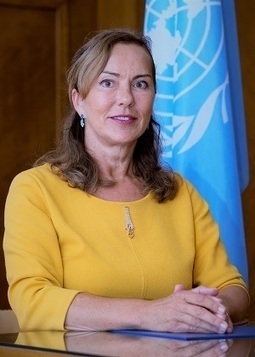
On 13 April 2017, the Secretary-General appointed Ms Olga Algayerova of Slovakia as the next Executive Secretary of the UNECE. She took office on 1 June 2017.
Ms. Algayerova brings to the position a combination of leadership and diplomatic skills with deep knowledge of the region with its challenges and opportunities and a strong focus on building and nurturing partnerships among key stakeholders with the United Nations. Prior to her appointment, she served as Permanent Representative of Slovakia to the International Organizations in Vienna, Austria (since 2012). She was previously President, Slovak Millennium Development Goals (2010-2012); State Secretary, Ministry of Foreign Affairs (2006-2010) and Corporate Export Manager, Zentiva International, a.s. (2004-2006).
Born in 1959, Ms. Algayerova holds a Master in Contemporary Diplomacy from Malta University, a Master in Business Administration from The Open University Business School, United Kingdom and a Dipl. in Engineer of Economy from the University of Economics Business Faculty, Bratislava.
On 12 July 2017, Ms. Olga Algayerova was sworn-in by the Secretary-General of the United Nations, Mr. António Guterres.
|
|
Scooped by
KRII-KROTOASA RESEARCH-INTENSIVE INSTITUTE
January 30, 2019 10:20 AM
|
Scoop.it!
The establishment of an Economic Commission for Europe was recommended by the "Temporary Sub-Commission on the Economic Reconstruction of Devastated Areas", wh…
|
|
Scooped by
KRII-KROTOASA RESEARCH-INTENSIVE INSTITUTE
February 23, 2019 2:54 PM
|
Scoop.it!
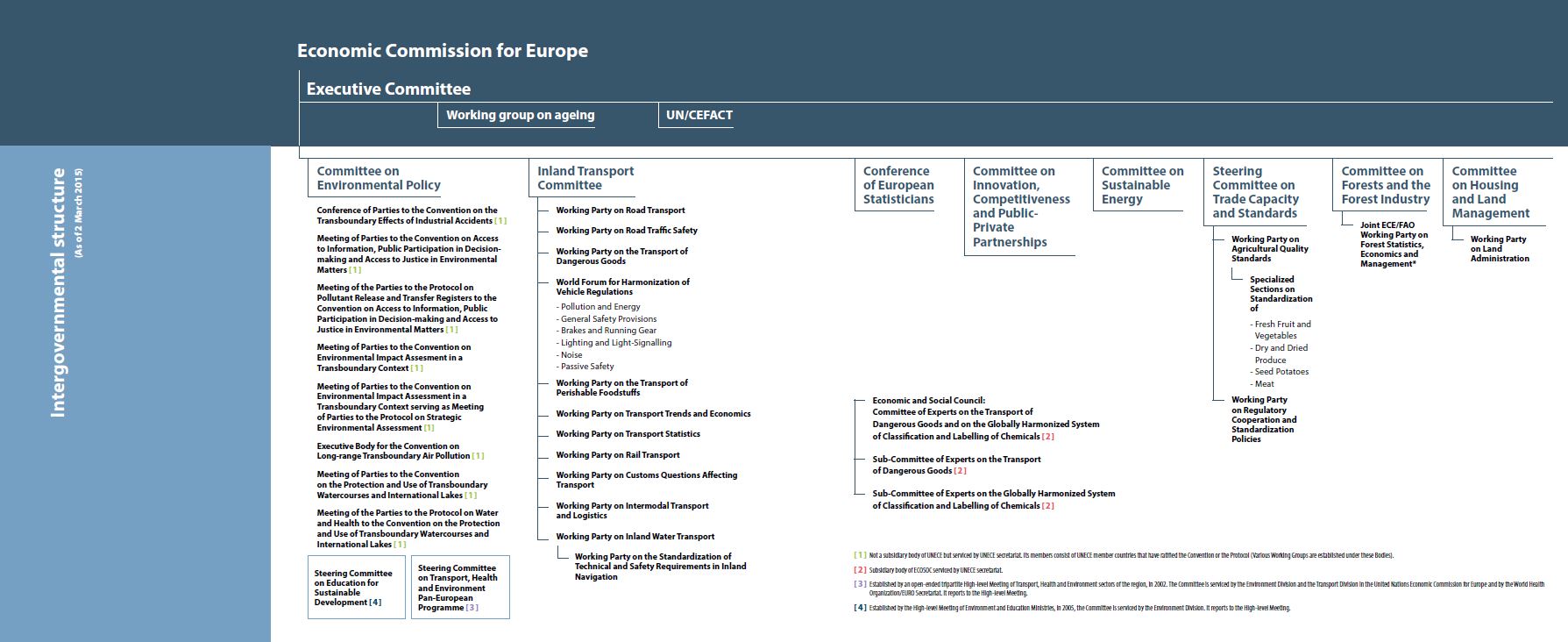
Governing Bodies
United Nations Economic Commission for Europe and Executive Committee
Chairperson:
H.E. Mr. Janis KARKLINS, Ambassador (Latvia)
Vice-Chairpersons:
H.E. Mr. Didier CHAMBOVEY, Ambassador (Switzerland)
H.E. Mr. Yury AMBRAZEVICH, Ambassador (Belarus)
Sectoral Committees
Committee on Environmental Policy
Chairperson:
Ms. Elisabete QUINTAS DA SILVA (Cohesion and Development Agency, Portugal)
Vice-Chairpersons:
Ms. Marina PHILIPYUK (Ministry of Natural Resources and Environmental Protection, Belarus)
Ms. Marie-Charlotte DELVAUX (Public Service of Wallonia, Belgium)
Mr. Lukáš POKORNÝ (Ministry of Environment, Czech Republic)
Mr. Nicolas FAIRISE (Ministry of Environment, Energy and Sea, France)
Ms. Nino TKHILAVA (Ministry of Environment and Natural Resources Protection, Georgia)
Ms. Aliya L. SHALABEKOVA (Ministry of Energy, Kazakhstan)
Ms. Maria NAGORNII (Ministry of Environment, Republic of Moldova)
Mr. Vladimir IVLEV (Ministry of Natural Resources and Environment, Russian Federation)
Ms. Gordana PETKOVIC (Ministry of Agriculture and Environmental Protection, Serbia)
Ms. Martine ROHN-BROSSARD (Swiss Federal Office for the Environment, Switzerland)
Mr. Alexander MAYER (the United States Mission to the United Nations and other International Organisation in Geneva, United States of America)
Inland Transport Committee
Chairperson:
Mr. Kristof SCHOCKAERT (Belgium)
Vice- Chairpersons:
Ms. Marie-Pierre MEGANCK (France)
Mr. Jerzy KLENIEWSKI (Poland)
Ms. Maria Magdalena GRIGORE (Romania)
Mr. Sergey ANDREEV (Russian Federation)
Members:
Mr. Ravil ISGANDAROV (Azerbaijan)
Mr. Sergei DUBINA (Belarus)
Ms. Ingeborg Annette DETTBARN (Germany)
Mr. Antonio ERARIO (Italy)
Mr. Hans Gerard SCHOLTEN (Netherlands)
Ms. Carmen GIRON (Spain)
Mr. Jean-Claude SCHNEUWLY (Switzerland)
Mr. Atageldi HALJANOV (Turkmenistan)
Mr. Roman SYMONENKO (Ukraine)
Conference of European Statisticians
Chairperson:
Ms. Marjo BRUUN (Statistics Finland)
Vice-Chairpersons:
Mr. Stepan MNATSAKANYAN (National Statistical Service of the Republic of Armenia)
Mr. Anil ARORA (Statistics Canada)
Mr. Konrad PESENDORFER (Statistics Austria)
Mr. Julio SANTAELLA (National Institute of Statistics and Geography, Mexico)
Mr. John PULLINGER (United Kingdom Statistics Authority)
Ms. Liz MACPHERSON (Statistics New Zealand)
Observers to the CES Bureau:
Ms. Mariana KOTZEVA (EUROSTAT)
Mr. Louis Marc DUCHARME (IMF Statistics Department)
Mr. Vladimir SOKOLIN (Interstate Statistical Committee of the Commonwealth of Independent States)
Ms. Martine DURAND (OECD Statistics Directorate)
Mr. Stefan SCHWEINFEST (United Nations Statistics Division)
Ms. Haishan FU (World Bank)
Committee on Sustainable Energy
Chairperson:
Mr. Jürgen KEINHORST (Director, Federal Ministry for the Environment, Nature Conservation, Building and Nuclear Safety, Germany)
Vice-Chairpersons:
Mr. Nazir RAMAZANOV (Adviser to the Chairman, The State Agency on Alternative and Renewable Energy Sources, Republic of Azerbaijan)
Mr. Admir SOFTIC (Assistant Minister for Energy Sector, Ministry of Foreign Trade and Economic Relations, Bosnia and Herzegovina)
Mr. Ron ADAM (Special Envoy for Energy and OECD Coordinator, Israel)
Mr. Sergio GARRIBBA (Advisor on Energy Policy to the Minister of Economic Development, Italy)
Mr. Ramazan ZHAMPIISOV (Executive Director, KazEnergy Association, Kazakhstan)
Mr. Hubert SCHWARZ (Director, Raw Materials Policy and Analysis, Ministry of the Environment, Poland)
Mr. Talyat ALIEV (Deputy Director, Department for International Cooperation, Ministry of Energy, Russian Federation)
Mr. Jean-Christophe FÜEG (Head, International Energy Affairs, Swiss Federal Office of Energy, Switzerland)
Ms. Nataliya BOYKO (Deputy Minister, Energy and Coal Industry for European Integration, Ministry of Energy and Coal Industry, Ukraine)
Mr. Jarad DANIELS (Director, Planning and Environmental Analysis, Office of Fossil Energy, United States Department of Energy, United States)
Observer:
(Nominated for election at the 27th session)
Ms. Jelena SIMOVIC (Assistant Minister for the Sector for European Integration International Cooperation and Project Management, Ministry of Mining and Energy, Republic of Serbia)
Bureau Members ex officio (Chairpersons of the Subsidiary Bodies):
Experts Group on Resource Classification
Mr. David MACDONALD (Vice-President, Segment Reserves, BP Exploration Operating Co. Ltd)
Group of Experts on Cleaner Electricity Production from Fossil Fuels
Mr. Barry WORTHINGTON (Executive Director, The United States Energy Association)
Group of Experts on Coal Mine Methane
Mr. Raymond C. PILCHER (President, Raven Ridge Resources, Inc.)
Group of Experts on Energy Efficiency
Mr. Aleksandar DUKOVSKI (Director, Energy Agency, Republic of Macedonia)
Group of Experts on Gas
Mr. Francisco DE LA FLOR GARCIA (Director de Regulación, ENAGAS S.A., Spain)
Group of Experts on Renewable Energy
Mr. Nazir RAMAZANOV (Adviser to the Chairman, The State Agency on Alternative and Renewable Energy Sources, Azerbaijan)
Steering Committee on Trade Capacity and Standards
Chairperson:
H.E. Mr. Tudor ULIANOVSCHI, Minister of Foreign Affairs and European Integration (Republic of Moldova)
Vice-Chairpersons:
Mr. Dimitri FOMCHENKO (Belarus)
Mr. Daniiar MUKASHEV (Kyrgyzstan)
Committee on Forests and the Forest Industry
Chairperson:
Ms. Marta GAWORSKA (Poland)
Vice-Chairpersons:
Mr. Christoph DUERR (Switzerland)
Mr. Guy ROBERTSON (USA)
Ms. Maria SOKOLENKO (Russian Federation)
Committee on Housing and Land Management
Chairperson:
Ms. Elena SZOLGAYOVÁ (Slovakia)
Vice-Chairperson:
Ms. Daniela GRABMÜLLEROVA (Czech Republic)
Members:
Mr. Elshad KHANALIBAYLI (Azerbaijan)
Ms. Alena RAKAVA (Belarus)
Ms. Borka BOBOVEC (Croatia)
Ms. Lise NIELSEN (Denmark)
Ms. Nino GVENTSADZE (Georgia)
Mr. Stefano SCALERA (Italy)
Ms. Vilma VAICIUNIENE (Lithuania)
Mr. Andrey CHIBIS (Russian Federation)
Ms. Aša ROGELJ (Slovenia)
Ms. Nuria RAGA SASTRE (Spain)
Ms. Maria ULFVARSON ÖSTLUND (Sweden)
Ms. Emma VINCENT (United Kingdom)
Mr. Frederik ZETTERQUIST (Sweden) as an ex officio (WPLA)
Committee on Innovation, Competitiveness and Public-Private Partnerships (CICPPP)
Chairperson:
Mr. Sharon KEDMI (Israel)
Vice-Chairpersons:
Mr. Piotr BALTRUKOVICH (Belarus)
Mr. Arthur L. SMITH (United States of America)
Ms. Maria YARMALCHUK (Russian Federation)
Mr. Salvatore ZECCHINI (Italy)
Other Bodies
Working Group on Ageing
Chairperson:
Mr. Edmundo MARTINHO (Portugal)
Vice-Chairperson:
Ms. Aina STRAND (Norway)
Bureau Members:
Ms. Hanna ZAKREUSKAYA (Belarus)
Ms. Kateřina KŇAPOVÁ (Czech Republic)
Mr. Alexis RINCKENBACH (France)
Ms. Galit MEVORACH (Israel)
Mr. Pietro Checcucci (Italy)
Mr. Aleš KENDA (Slovenia)
Observers:
Ms. Gertraud DAYE (Civil Society)
Mr. Kai LEICHSENRING (Research/Academia)
United Nations Centre for Trade Facilitation and Electronic Business (UN/CEFACT)
Chairperson:
Ms. Sue PROBERT (United Kingdom)
Vice-Chairpersons:
Mr. Ian WATT (Australia)
Mr. Tahseen KHAN (India)
Mr. Raffaele FANTETTI (Italy)
Mr. Harm Jan VAN BURG (Netherlands)
Ms. Estelle IGWE (Nigeria)
Mr. Anders GRANGARD (Sweden)
Chairpersons of the Subsidiary Bodies:
Advisory Group on the United Nations Location Codes for Trade and Transport (UN/LOCODE)
Ms. Sue Probert (United Kingdom)
Team of Specialists on Sustainable Fisheries
Mr. Frans VAN DIEPEN (Netherlands)
(As of 21 December 2018)
|
|
Scooped by
KRII-KROTOASA RESEARCH-INTENSIVE INSTITUTE
February 23, 2019 2:52 PM
|
Scoop.it!
E/ECE/778/Rev.5 Terms of Reference and Rules of Procedure of the Economic Commission for Europe Fifth revised edition UNITED NATIONS
|
|
Scooped by
KRII-KROTOASA RESEARCH-INTENSIVE INSTITUTE
February 23, 2019 2:49 PM
|
Scoop.it!
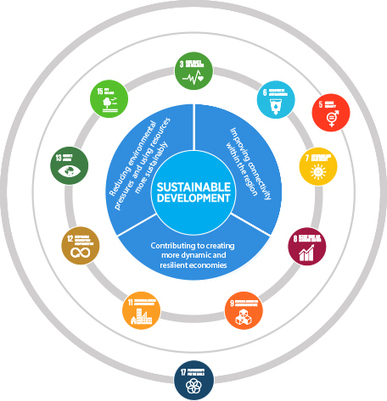
UNECE supports countries in the implementation of the 2030 Agenda and the Sustainable Development Goals (SDGs) thanks to its:
Partnerships (SDG 17) between stakeholders including governments, international and regional organizations, businesses, academia and civil society are a driving force of UNECE’s work. This covers three main strategic areas:
UNECE works for member countries by:
UNECE promotes women’s economic empowerment and mainstreaming of gender equality in all its activities (SDG 5)
UNECE supports concrete cooperation between countries to ensure that good health and well-being remain at the heart of sustainable development.
Tackling air pollution
Air pollution kills 7 million people worldwide every year, making it more deadly than malaria, tuberculosis and AIDS combined. Under UNECE’s Air Convention, 51 countries in Europe and North America are cooperating to reduce deadly air pollution, achieving major reductions in emissions of harmful substances.
Bridging gaps in access to clean water and sanitation
140 million people in the pan-European region still do not have access to clean water. The UNECE/WHO Europe Protocol on Water and Health helps countries design and implement policies to increase access to drinking water and sanitation for all citizens, especially for the most vulnerable members of society. It also links sustainable water management and the prevention, control and reduction of water-related diseases in Europe.
Reducing harmful vehicle emissions
By driving progress in UN vehicle regulations on emissions and by supporting the development of cleaner fuel technologies, UNECE achieves significant reductions in dangerous emissions from transport (World Forum for Harmonization of Vehicle Regulations).
Improving road safety
Every year 1.25 million people are killed and around 50 million are injured in road traffic crashes, making it one of the most pressing health emergencies of our time. As host to the UN conventions and agreements on road safety, UNECE supports cooperation for safer transport and works with countries to build capacities for road safety plans that save lives. UNECE also hosts the secretariat and supports the work of the Secretary General’s Special Envoy for Road Safety.
Reducing health risks of hazardous materials
UNECE supports the safe handling, storage and transport of hazardous materials through standards, technical assistance and by promoting cooperation between countries, reducing risks to health and the environment.
Promoting access to healthy housing
Access to decent housing has a direct impact on people’s health. UNECE helps countries improve access to healthy housing through reviews, recommendations and policy advice on housing sector policy (Country Profiles on Housing and Land Management), together with standards and capacity-building for housing design, maintenance and retrofitting of existing housing stock.
Supporting healthy and sustainable mobility
Together with WHO/Europe, UNECE supports countries in the development of integrated policies connecting transport, health and environment. This includes initiatives to promote walking and cycling.
Ensuring ageing with dignity and reducing gender gaps in older age
Close to 195 million people in the region are 65 or older today and the proportion of persons aged 80+ is growing fast. Promoting health and well-being across the life course is a fundamental part of policy responses to population ageing. UNECE supports countries in their commitment to ensure ageing with dignity and reducing gender gaps in older age through the implementation of the UN policy framework on ageing in the region. This helps to ensure access to quality health and care services and the creation of an enabling, non-discriminatory environment that fosters participation and well-being for women and men at all ages.
The sustainable management of water resources is fundamental to achieving the 2030 Agenda for Sustainable Development. UNECE provides an effective platform to strengthen cooperation and works with countries to build capacities and address key water policy challenges and their integration in other policy areas.
Facilitating cooperation on shared water resources
UNECE’s Water Convention enables effective cooperation between countries for the sustainable management of shared water resources that is essential for environmental protection, drinking water and sanitation, agriculture, industry and energy production.
Improving access to clean water
The UNECE/WHO Europe Protocol on Water and Health is the only international treaty spelling out countries’ obligations arising from the human right to water and sanitation. It helps countries design policies to increase access to drinking water and sanitation for all citizens, especially for the most vulnerable members of society.
Improving water management in cities
UNECE works with countries to integrate Improved water and sanitation management as a core component of all urban and housing strategies and policies (Country Profiles on Housing and Land Management and Smart Sustainable Cities Profiles).
Safeguarding forest ecosystems for water generation and purification
UNECE works to protect forests so they may continue to provide vital ecosystem services such as water generation and purification. In particular, UNECE supports the valuation of forest-water-related ecosystem services through payment schemes.
Ensuring environmentally friendly inland water navigation
UNECE promotes the use of inland waterways as a sustainable complement to the transport of goods by road and rail and works to reduce the environmental impact of vessels travelling on them.
Sustainable energy underpins attainment of the 2030 Agenda for Sustainable Development. UNECE works with countries and stakeholders to attain sustainable and clean energy for all and reduce the greenhouse gas emissions and carbon footprint of the energy sector.
Supporting sustainable future energy systems
UNECE assists countries in developing sustainable energy systems, national action plans and green economy policies that embrace the energy transition holistically. Through development of appropriate indicators and improving the quality of energy statistics, UNECE also supports enhanced measurement and decision-making for improved energy system management.
Advancing energy efficiency
UNECE helps countries improve energy efficiency and reduce greenhouse gas emissions.
Performance guidance developed by UNECE supports enhanced energy efficiency of buildings, which in developed countries account for over 70% of electrical power generated and 40% of primary energy.
Enhancing interconnected energy systems
UNECE is assisting countries in providing energy services sustainably through enhanced electric system integration and interconnection with distributed generation sources and smart energy distribution and use.
UNECE is engaged with governments and the gas industry to enhance the emergence of a global gas market and the uptake of natural gas in transport while reducing methane emissions.
Reducing the ecological footprint of fossil fuels
UNECE is working with countries and industry to reduce the ecological footprint of fossil fuels: disseminating best practices for deploying high efficiency, low emissions fossil technology with carbon capture and storage; developing standards, technologies and best practices for reporting and reducing methane emissions; and modernizing classification systems to support sustainable resource management.
Supporting green and renewable energy
UNECE provides a platform for policy makers, financial institutions and technology developers to increase investment in renewable energy technology in the region based on improved data and policy dialogues.
UNECE supports countries in increasing their use of green and renewable energy through the development of classification systems to improve the international management and coordination of alternative energy resources, including solar, geothermal, wind, bioenergy and energy from waste.
UNECE supports the use of hydropower by facilitating international cooperation on shared water resources (Water Convention) and by advancing integrated and sustainable water management as part of the water-food-energy-ecosystem nexus.
UNECE also supports the sustainable use of forests for wood energy, which is the region’s primary renewable energy source representing 50% of renewable energy use. This includes monitoring, policy advice and review in addition to reporting on current and emerging market trends.
Promoting energy efficient transport
UNECE promotes energy efficient transport through UN vehicle regulations on improved fuel efficiency and by ensuring that more sustainable fuel technologies including electric, hybrid and hydrogen, become widely available.
UNECE also promotes the shift to more energy efficient modes of transport such as rail and inland waterways for long distance haulage.
By simplifying and standardizing business processes and fostering the environmental and social sustainability of international trade, UNECE helps countries and companies ensure that economic growth is a catalyst for sustainable development.
Accelerating growth through simplified international trade
As host to UN Conventions on border crossing, UNECE helps over 70 countries in Europe, the Middle-East and Asia to develop sustainable and resilient cross-border infrastructure to drive economic growth and open new trade routes (TIR Convention).
This is complemented by over 480 standards and recommendations on trade facilitation and electronic business (UN/CEFACT, UN/EDIFACT, Single Window) which help countries and companies cut trading costs, reduce bureaucracy and implement the WTO Trade Facilitation Agreement.
Removing non-tariff barriers to trade
UNECE conducts evidence-based studies to help countries identify and remove regulatory barriers to trade, develop action plans for generating efficiency gains throughout supply chains, and diversify exports.
Cutting costs and opening access to markets
UNECE norms and standards ranging from agriculture to vehicle regulations help to reduce costs through economies of scale, eliminating technical barriers to trade and enabling countries to access new export markets.
UNECE acts as a convening platform to support partnerships among standards bodies, and between standards bodies and decision-makers in businesses, administrations, donor agencies and local communities. This helps bring innovative technological solutions to scale, reducing fragmentation in regulatory requirements and the duplication of standards. It supports coherent regulatory frameworks for sustainable economic growth and competitiveness that limit environmental and social risks (Working Party on Regulatory Cooperation and Standardization Policies).
Enhancing agricultural production
Food production is increasingly threatened by air pollution, which affects soil quality and crop yields. UNECE supports countries with guidance on reducing ammonia emissions from agriculture.
Recommendations and training on the use and implementation of UNECE’s international agricultural quality standards and best practice also help producers, traders and national authorities to increase quality production and yields. This in turn fosters the development of sustainable domestic and international markets.
Nurturing the green economy
UNECE fosters the development of the green economy by mobilizing public and private stakeholders to develop, commit to and deliver on concrete actions ranging from investment in green technologies to promoting sustainable production and consumption (Batumi Initiative on Green Economy (BIG-E), to which 40 countries and organisations have submitted more than 120 commitments).
UNECE also helps strengthen the forest sector’s contribution to the green economy in the region through the implementation of the Rovaniemi Action Plan. The holistic plan promotes sustainable production and consumption of forest products, a low-carbon forest sector, decent green jobs, the long-term provision of forest ecosystem services and policy development and monitoring.
Supporting green jobs
Through the Transport, Health and Environment Pan European Project in partnership with WHO/Europe, UNECE is working with a range of stakeholders to identify and promote green jobs in the transport sector.
Sustainable forest management and green jobs go hand in hand. UNECE works on identifying and promoting green jobs in the forests sector, supporting the implementation of the Rovaniemi Action Plan
Promoting sustainable growth of real estate markets
UNECE supports sustainable growth in the real estate sector through guidelines and capacity building on land registration, by promoting the use of e-governance, land tenure, spatial information and cadastres, and through recommendations on improving market sustainability.
Supporting economic growth through statistics
Through statistical work on economic growth and employment, UNECE provides countries with internationally harmonized tools to strengthen knowledge-based decision-making on economic issues, labour market dynamics, gender equality and business processes.
Supporting the development of gender statistics and gender equality indicators
UNECE conducts methodological work to ensure appropriate measurement of gender issues in official statistics, builds related capacities in national statistical systems, and facilitates the exchange of knowledge and experience between countries. The UNECE Gender Statistics Database highlights key issues and trends in gender equality in the region helping to inform targeted action.
Monitoring progress towards achieving gender equality in the region
UNECE leads the 5-yearly regional review of progress in the implementation of the Beijing Platform for Action, helping countries and other stakeholders to assess trends in gender equality in the region, identify current challenges, highlight good practices and commit to concrete actions in a range of key areas.
Making economies inclusive for all ages
Population ageing is a both a major challenge and opportunity for countries of the UNECE region. As part of wide-ranging support to help countries realize the potential of living longer, UNECE tracks progress, shares best practices and develops recommendations for inclusive and flexible employment for older persons and the elimination of all forms of discrimination. Promoting gender-responsiveness is a consideration throughout this work.
UNECE supports countries’ to ensure that industry, innovation and infrastructure provide robust foundations for sustainable development.
Fostering innovation & entrepreneurship
Innovation Performance Reviews enable countries to identify needs and opportunities to build knowledge-based economies. Through policy advice on how to boost investment in technology and R&D, this helps countries to diversify their economies and upgrade technological capabilities across various sectors, helping to create the conditions where entrepreneurship and innovation can thrive.
Developing sustainable transport systems
Through its 58 international Transport legal instruments, UNECE provides a framework for the development of infrastructure and operations to ensure safe and sustainable transport systems, by road, rail, and inland waterways, facilitating mobility of people and movement of goods. UNECE also helps countries to harness the potential of new technologies through the integration of Intelligent Transport Systems in all modes of transport.
Facilitating investment in infrastructure
Through international standards and guidance on “People first Public Private Partnerships”, UNECE helps to bring governments and businesses together for the sustainable financing of key infrastructure developments, including in transport, energy and water management.
Supporting the sustainable planning of infrastructure & industry
UNECE supports cleaner and safer industry and infrastructure through frameworks for assessment and effective planning to ensure their economic, social and environmental sustainability (Convention on the Transboundary Effects of Industrial Accidents, Protocol on Strategic Environmental Assessment, Country Profiles on Housing and Land Management).
Promoting gender-responsive standards
UNECE supports the development of standards that respond to the needs of women and promotes their participation in the development of such norms in all contexts.
Supporting women’s economic advancement and entrepreneurship
UNECE supports countries in the promotion of women’s economic advancement, including entrepreneurship, by building skills and knowledge, and fostering professional networks. In South-East Europe, the Caucasus and Central Asia, activities include assessing the business environment for women entrepreneurs and tackling key issues, such as the lack of networking opportunities, difficult access to credit and skills gaps.
UNECE helps countries to implement the SDGs at the local level through the development of holistic sustainable urban development strategies.
Promoting sustainable housing and land use planning
UNECE supports sustainable urban planning though review processes, policy advice and technical assistance to countries. This includes Country Profiles, the development of international guidelines and National Action Plans on different aspects of housing, urban development and land management.
UNECE and its 56 member States are committed to the provision of decent, adequate, affordable and healthy housing for all. The right to adequate and affordable housing is enshrined in the Geneva United Nations Charter on Sustainable Housing. Through a network of Geneva UN Charter Centres, analytical studies, and national and regional capacity building activities, UNECE supports countries’ implementation of the Charter at the national and local levels.
Harnessing new technologies for Smart Cities
UNECE promotes the use of ICTs in city planning and service provision, helping to capitalize on the potential of connectivity for sustainable urban development, including through the use of Key Performance Indicators (United for Smart Sustainable Cities, in cooperation with ITU). UNECE also provides recommendations and policy advice on smart sustainable cities financing and management through Smart Sustainable Cities Profiles.
Improving urban air quality
Urban air pollution is a growing health risk, with many cities in the UNECE region exceeding WHO limits. UNECE helps countries reduce urban air pollution through measures to reduce harmful emissions from vehicles, through more stringent ceilings on emissions of pollutants (Air Convention) and access to information on pollutant sources (Protocol on Pollutant Release and Transfer Registers).
Fostering sustainable mobility in cities
UNECE supports sustainable mobility in cities by integrating health and environmental transport objectives into urban and spatial planning. This includes support to the development of urban transport infrastructure, building capacities for urban road safety and UN vehicle regulations on pedestrian protection and public transport vehicles.
Encouraging green building
Through country reviews and policy recommendations as well as dissemination of good practices on energy efficient housing, UNECE promotes green building in the region. UNECE reports on trends in wooden building construction and promotes the use of wood in housing as a sustainable choice of the future.
UNECE supports countries’ progress towards more sustainable systems of consumption and production through a range of complementary approaches.
Reducing negative environmental and social impact
UNECE’s Environmental Performance Reviews offer a comprehensive tool to help countries identify key environmental challenges and establish concrete recommendations to improve environmental sustainability across all sectors.
UNECE’s Protocol on Strategic Environmental Assessment provides a framework for countries to evaluate the environmental consequences of development plans and programmes, while Environmental Impact Assessment under the Espoo Convention facilitates the review and improvement of the environmental performance of future projects.
By mobilizing multi-sectoral partnerships and harnessing new technologies for electronic business, UNECE is leading international efforts to advance the traceability and transparency of supply chains for more sustainable production and consumption systems (UN/CEFACT, Sustainable Textiles).
UNECE works with countries to reduce the health and environmental risks of industry and infrastructure by strengthening cooperation and capacities for accident prevention, preparedness and response (Convention on the Transboundary Effects of Industrial Accidents, Globally Harmonized System of Classification and Labelling of Chemicals, and action improving coal mine and dam safety).
UNECE’s Protocol on Pollutant Release and Transfer Registers promotes transparency, serving as a powerful incentive to achieve further reductions in the release of hazardous chemical substances to air, water and soil.
UNECE promotes the integration of standards in regulatory frameworks and the use of standards by policy-makers and business to reduce their impact on ecosystems and facilitate the transition to sustainable modes of production and consumption
Facilitating sustainable resource management
The United Nations Framework Classification for Resources (UNFC) enables international coordination and reporting on all energy and mineral resources, helping to monitor their sustainable use and stimulating the expansion of renewable and green energy resource use, including energy recovery from waste.
UNECE supports the sustainable management of the region’s forest resources and the use of wood as a renewable material of the future. This ranges from sustainability roadmaps (Rovaniemi Action Plan for the Forest Sector in a Green Economy) to the promotion of sustainable forest management certification, and the production of go-to outlook resources for the sector.
Promoting sustainable food production and consumption
UNECE works with countries to increase the sustainability of food production and consumption and the prevention of food loss, including through the development of international agricultural standards and recommendations.
Its International Conventions on Border crossing and the transport of perishable foodstuffs help countries reduce food waste and loss during transport.
UNECE’s climate change mitigation work targets cross-cutting areas that help to achieve greenhouse gas reductions.
Integrating climate change measures into national policies, strategies and planning
UNECE’s Environmental Performance Reviews provide concrete cross-sectoral recommendations for the integration of effective climate change measures within national policy frameworks.
Strategic Environmental Assessment offers a tool to ensure that climate change mitigation is addressed within countries’ development plans and strategies.
Reducing emissions
Reducing air pollution also has benefits for our climate. International cooperation and national commitments under UNECE’s Air Convention have helped to significantly cut air pollutants in 51 countries across Europe and North America. The Gothenburg Protocol is the only international legally-binding instrument with obligations to reduce emissions of short-lived climate pollutants, helping to limit ground-level ozone and black carbon emissions.
UNECE helps countries achieve significant reductions in greenhouse gas emissions from transport through more stringent UN Regulations on vehicle emissions and by facilitating the availability of greener fuel sources.
Promoting the development of Intelligent Transport Systems and the use of rail and inland waterwayshelps to further limit emissions by reducing traffic congestion.
UNECE helps to reduce greenhouse gas emissions from the energy sector via best practices for methane management, through technologies and investments for cleaner energy from fossil fuels, and recommendations on Carbon Capture and Storage.
UNECE also promotes the use of innovative wooden-based construction materials, which require between five and twenty-four time less energy than concrete and steel, and contribute to carbon storage. UNECE carries out projects to restore forests and degraded land, helping to increase the potential of forests as carbon sinks in the region.
Advancing energy efficiency and renewables
Through a comprehensive approach promoting energy efficiency from source to use, UNECE supports countries’ transition to low carbon energy systems.
UNECE’s Framework Guidelines for the energy performance of buildings – which represent 40% of combustion-related CO2 emissions in developed countries – help to promote energy efficiency in buildings.
UNECE is working with countries to accelerate the uptake of renewable energy across the region.
This is supported by the United Nations Framework Classification for Fossil Energy and Mineral Reserves and Resources (UNFC) which has been expanded to allow for the improved management of renewable energy sources and helps identify sustainable energy investments.
Strengthening resilience and adaptive capacity
By promoting strengthened cooperation and providing practical tools and policy advice, UNECE assists countries in mitigating risks and adapting to the effects of climate change – including to the increasing frequency and severity of extreme weather events.
UNECE supports the development and implementation of standards that help prevent and reduce disaster risks and ensure better preparedness and management of crises, including those related to climate change.
UNECE’s Water Convention enables effective cooperation between countries to prevent and adapt to the effects of droughts and floods.
UNECE’s Convention on the Transboundary Effects of Industrial Accidents provides a framework to reduce environmental and health risks from industrial facilities in the event of extreme weather-related accidents. This includes the promotion of appropriate land-use planning together with measures to enhance preparedness through emergency exercises and effective contingency plans.
As part of holistic support to countries in the development of sustainable transport systems, UNECE provides policy advice and develops best practices on transport resilience to climate change.
Providing tools to measure and adapt to climate change
Quality statistics provide the basis for effective decision-making for climate action. UNECE plays a leading role in global efforts to advance climate change statistics, producing the first ever Recommendations on Climate Change-Related Statistics. UNECE’s Expert Forum on Climate Change Statistics provides a key international platform to support this work.
UNECE has developed a modelling tool to help governments develop transport policies that minimize CO2 emissions (ForFITS).
UNECE also monitors the role of forests in the region in climate change mitigation and adaptation, and supports ongoing assessment of the role of forests as carbon sinks.
UNECE helps countries to reduce environmental pressures and protect the environment for present and future generations.
Promoting the sustainable use and preservation of ecosystems
UNECE’s Environmental Performance Reviews provide holistic policy advice enabling countries to sustainably manage their ecosystems and halt the loss of biodiversity. This is done through assessment and recommendations on national biodiversity conservation policies, on the integration of nature conservation and biodiversity considerations in sectoral policies, and on meeting their international treaty commitments.
UNECE promotes cross-sectoral measures to reduce pollution. These include measures to improve the conservation and sustainable use of inland freshwater ecosystems (Water Convention), enhancing cooperation for the effects of air pollution on ecosystems & biodiversity (Air Convention), and strengthened management of land resources through integrated urban planning that considers urban-rural linkages.
Environmental protection is a collective responsibility. UNECE’s Aarhus Convention promotes access to information and public participation in environmental matters, making it easier for governments to involve citizens, non-governmental organizations and other groups in shaping their environment, from the design and planning of new developments, to public consultations on how to face the challenges of climate change.
UNECE helps to strengthen the sustainable management of the region’s forests. As part of a holistic approach, UNECE assists countries in addressing deforestation and land degradation by building capacities for the protection, restoration and management of forest ecosystems.
Strengthening environmental monitoring
UNECE helps to build countries’ capacities to improve statistics for the System of Environmental-Economic Accounting (SEEA), which provides a basis for the analysis of the sustainable use of natural resources.
The Shared Environmental Information System enables countries across the pan-European region to connect databases and make environmental data more accessible, so facilitating regular environmental assessments and reporting.
UNECE works with countries and stakeholders in the forest sector to develop and use criteria and indicators for sustainable forest management at local, national and regional level.
UNECE’s Water Convention supports cooperation between countries to monitor the status and quality of water resources, bringing together experts and stakeholders.
UNECE’s Air Convention supports countries in monitoring air quality thanks to a network of over 150 sites providing data to assess the environmental and health impacts of air pollution.
|
|
Scooped by
KRII-KROTOASA RESEARCH-INTENSIVE INSTITUTE
February 23, 2019 2:42 PM
|
Scoop.it!
E/ECE/778/Rev.5 Terms of Reference and Rules of Procedure of the Economic Commission for Europe Fifth revised edition UNITED NATIONS
|
|
Suggested by
Africa Diamonds
February 23, 2019 2:35 PM
|
Scoop.it!
IV. The Economic and Social Council A. THE CHARTER AND THE ECONOMIC AND SOCIAL COUNCIL1 The Charter establishes an Economic and Social Council as a principal o…
|
|
Scooped by
KRII-KROTOASA RESEARCH-INTENSIVE INSTITUTE
January 30, 2019 12:38 PM
|
Scoop.it!
EXHIBITION ON THE OCCASION OF THE 60TH ANNIVERSARY OF THE UNITED NATIONS ECONOMIC COMMISSION FOR EUROPE GunnarGunnar Myrdal
|
|
Scooped by
KRII-KROTOASA RESEARCH-INTENSIVE INSTITUTE
January 30, 2019 9:46 AM
|
Scoop.it!
History
Inception
Cold War period
Post Cold War
Inception
The establishment of an Economic Commission for Europe was recommended by the "Temporary Sub-Commission on the Economic Reconstruction of Devastated Areas", which convened in London on 29 July 1946 and reported to the Economic and Social Council on 13 September 1946.
On 11 December 1946, the General Assembly of the United Nations, at its fifty-fifth plenary meeting, unanimously recommended "in order to give effective aid to the countries devastated by the war, the Economic and Social Council, at its next session, give prompt and favourable consideration to the establishment of an Economic Commission for Europe".
The Council, at its fourth session, complied with the General Assembly's wishes by adopting, on 28 March 1947, resolution 36 (IV) setting up ECE and giving it its terms of reference. The Economic Commission for Europe was thus, together with the Economic Commission for Asia and the Far East (ECAFE), which was established on the same date, one of the first two regional economic commissions to be established by the Council. Subsequently the Council established the Economic Commission for Latin America (ECLA) in March 1948, the Economic Commission for Africa (ECA) in April 1958 and the Economic Commission for Western Asia (ECWA) in August 1973.
During the first four years after its founding, ECE functioned on a provisional basis: the Council expressly provided for a special review of the Commission's work, to be undertaken not later than 1951, "with a view to determining whether the Commission should be terminated or continued, and if continued, what modifications, if any, should be made in its terms of reference".
According to article 1(a) of its terms of reference, the Commission's prime objective is to "initiate and participate in measures for facilitating concerted action for the economic reconstruction of Europe, for raising the level of European economic activity, and for maintaining and strengthening the economic relations of the European countries, both among themselves and with other countries of the world".
To this major aim was added that of making or sponsoring investigations and studies of economic and technological problems and developments as well as the collection, evaluation and dissemination of economic, technological and statistical information (article 1(b) and (c)). In view of the special concern of the General Assembly and the Council for the problem of repairing war damage, and in the light of the winding up of the United Nations Relief and Rehabilitation Agency (UNRRA) in the spring of 1947, ECE was also called upon to "give prior consideration, during its initial stages, to measures facilitating the economic reconstruction of devastated countries of Europe which are Members of the United Nations" (article 2).
The Commission is empowered to make recommendations on any matter within its competence directly to the participating Governments of the region, subject to two qualifications: (a) the activity of the Commission, which functions within the framework of the policies of the United Nations and under the general supervision of the Council, is subject to the provision that the Commission "takes no action in respect to any country without the agreement of the government of that country" (article 1); and (b) the Commission is required to "submit for the Council's prior consideration any of its proposals for activities that would have important effects on the economy of the world as a whole" (article 4).
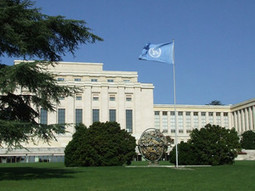
Acting upon the instruction contained in article 19 of the ECE terms of reference, the Secretary-General of the United Nations convened the first session of the Commission in Geneva in May 1947 at the seat of the European Office of the United Nations which, under article 18 of the ECE terms of reference, is also the location of the Commission's headquarters. Subsequent sessions of the Commission have taken place in the Palais des Nations in Geneva, except for the twenty-ninth session, which was held in Bucharest in 1974, at the invitation of the Government of Romania.
At its sixth session (May/June 1951) the Commission unanimously adopted resolution 1 (VI) on its future, in which it considered that constructive economic co-operation was essential to the maintenance of peace, reaffirmed its faith in the possibility of such co-operation within the framework of the Commission, and recommended that it should continue its work in this direction.
Earlier (December 1950), the General Assembly, in resolution 409 A (V) taking note "with satisfaction of the Economic and Social Council's decision to undertake in the near future a complete review ... of its commissions", had expressed the opinion "that the regional economic commissions should be maintained". This review was carried out by the Council's ad hoc Committee on the Organization and Operation of the Council and its Commissions in April and May 1951.
As a result of that Committee's recommendations the Council, in its resolution 414 C (XIII), expressed unanimous appreciation of the work of the regional commissions and decided to continue them indefinitely. By virtue of this decision the ECE became a permanent body of the United Nations.
Cold War period
When it was established in 1947, ECE was given the mandate of helping to rebuild post-war Europe, develop economic activity and strengthen economic relations between European countries and between them and the other countries of the world. However, the Iron Curtain which separated East and West shortly after ECE's establishment forced it to deal only with questions that were of common interest to East and West, despite their different economic systems and their political and ideological confrontation.
For more than 40 years, ECE was the only instrument of economic dialogue and cooperation between these two radically different systems, and it may legitimately be proud of the results achieved in such a difficult context including the network of ``E'' roads linking all European countries, the harmonization of road signs and signals, safety and anti-pollution standards for motor vehicles, standards for the transport of dangerous goods by road, the agreement for the development of combined transport, standards for perishable agricultural produce, agreements on customs procedures and various trade regulations, standards for the electronic exchange of trade and transport data and conventions on transboundary air pollution, the protection of watercourses and the transboundary effects of industrial accidents. At the same time, its analyses and statistics on regional economic development are considered authoritative.
Post Cold War
With the end of the Cold War, the transition from a centrally planned economy system to market economy and the integration of the so-called countries in transition into the global economy became the major concern. ECE was able to adapt by focusing its analytical capacities on the transition process and by using its experience of harmonization to facilitate the integration of the central and east European countries. In order to meet the needs of the economies in transition and, in particular, those of the Newly Independent Countries resulting from the dissolution of the Soviet Union and the Yugoslav Federation, as well as from the separation of the Czech and Slovak Republics, the number of ECE members increased from 34 to 55 within four years. ECE developed an entirely new form of assistance activity, consisting of seminars and workshops on aspects of the operation of the market economy and of advice provided by a team of specialists set up to help countries implement ECE recommendations, standards and conventions.
At the end of the Cold War ECE, along with others, extended its activities to central and east European countries and to the central Asian republics which desired to be members of both ECE and ESACAP. Since then, ECE has continued to adapt to the changing geopolitical landscape in Europe and has undergone two major reforms, one in 1997 and one in 2005 to better tailor its activities to the current needs of its now 56 member States – good proof that it is possible to effect meaningful reforms within the United Nations.




