Your new post is loading...
Spekboom Project: Phase 1 Restoring 10,000 Hectares in South Africa’s Eastern Cape
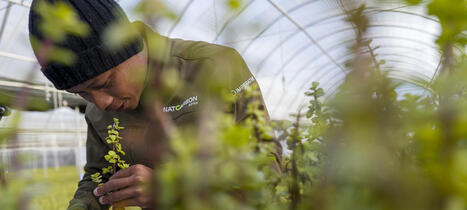
Spekboom Project: Phase 1 NatCarbon Africa is a specialised carbon project execution organisation. We focus on implementing high quality nature-based carbon projects across Africa. Spekboom Project Phase 1: Restoring 10,000 Hectares in South Africa’s Eastern Cape Launched in 2024, the Spekboom Restoration Project represents a landmark initiative to restore degraded thicket ecosystems in South Africa. Imperative South Africa Projects (Pty) Ltd (Imperative), together with NatCarbon Africa (Pty) Ltd (NatCarbon) as a strategic services provider, have formed an Integrated Project Team (IPT) to deliver one of the world’s most ambitious nature-based restoration efforts. Phase 1 has targeted 10,000 hectares of degraded land in the Jansenville region, planting Spekboom (Portulacaria afra) to restore native thicket ecosystems. This milestone lays the foundation for the broader vision: restoring 100,000 hectares over time through science-driven, technology-enabled, and community-empowered restoration. A Science-Based, Technology-Driven Approach The Project is designed and implemented with uncompromising scientific and technical rigor. Comprehensive aerial baseline surveys, carbon assessments, and biodiversity studies, including bioacoustics monitoring, inform where and how restoration takes place. Technologies such as drones and GIS mapping enable precise site selection, while continuous monitoring ensures transparency, scalability, and long-term ecological success. Skilled Teams Turning Plans into Action Within the IPT, NatCarbon Africa provides implementation expertise, combining ecological science, logistics, and on-the-ground operations. Multidisciplinary specialists work alongside local teams to ensure operations are carried out with accuracy, efficiency, and environmental integrity. Local Jobs and Empowerment At the heart of the Project is community participation. Field teams, drawn from local communities, play a central role in delivering restoration on the ground. Through training, steady employment, and skills development, the project is creating meaningful economic opportunities while fostering ownership and pride in restoring local landscapes. Ecological and Climate Benefits The reintroduction of spekboom enhances soil health, improves water retention, and supports biodiversity recovery. Over the long term, these ecological gains will strengthen climate resilience in a drought-prone region while contributing to global carbon sequestration efforts. Building Toward 100,000 Hectares As Phase 1 nears completion, the lessons learned are laying the groundwork for scaling up. Imperative and NatCarbon, through the IPT, are committed to delivering ecological restoration at a globally relevant scale, anchored in science, integrity, and long-term commitment to the landscape. This is just the beginning of a 100-year mission to restore degraded land, empower local communities, and create lasting environmental and social value. NatCarbon supports a safe and confidential way to report concerns about misconduct or unethical behavior. Whistleblower
Thorny, wild and a carbon sink: How South Africa is reviving its thicket ecosystems Thorny, wild and a carbon sink: How South Africa is reviving its thicket ecosystems Thicket Restoration in South Africa shows how degraded subtropical thicket is being revived at scale. The initiative (with over 60 partners) aims to restore thicket ecosystems through spekboom planting and science-based methods, improving biodiversity, carbon storage, climate resilience and rural livelihoods, with a goal of restoring 800,000 hectares by 2030. The project has been recognised as a World Restoration Flagship under the UN Decade on Ecosystem Restoration led by UNEP and FAO. Related Publications Further publications related to the International Climate Initiative and its projects can be found in the publications section of our website. The International Climate Initiative is one of the key instruments of the German Federal Government to support international climate action and biodiversity. The IKI supports solution strategies in developing and emerging countries that seek to achieve sustainable change.
Spekboom to the rescue Caroline Edey van Wyk | Digital content specialist Have you heard of South Africa’s much-touted miracle plant, Spekboom? Until recently, if you lived outside of the Eastern Cape, where it flourishes, you might have been forgiven for being ignorant of this succulent. But this year Spekboom’s reputation has grown as quickly as ecologists claim it does! And there’s good reason for this hardy plant’s fame. Receive Focus insights straight to your inbox Sign up 1. It’s a carbon sponge According to the Spekboom Foundation one hectare of Spekboom is ten times more effective at processing carbon dioxide than one hectare of the Amazon forest. With climate change showing its true devastation all around us- from floods to droughts to heatwaves- it’s no surprise that a plant with such high “carbon-cred” would reach the press! According to Samantha Mooi, part of Investec’s Sustainability team, the average person in South Africa produces 10.06 tonnes* of carbon dioxide per year. And they’ve worked out that on average, an Investec employee will emit 7.19 tonnes of carbon dioxide per year while at work. To offset some of that Investec is bringing Spekboom to the rescue. “We are going to give 5,200 of our South African based staff one Spekboom and tell them to ‘pay it forward.’” She goes on to explain the incredible impact that can be achieved if each employee plants their plant and gives a cutting to another person. “Through this little action, in two years, one Spekboom plant can promulgate to cover one hectare of ground. That one plant can absorb ten tonnes of carbon. With that in mind, the 5,200 Spekboom handed out to staff, will sequester 52,000 tonnes of carbon, over two years.” * Worked out on SA total emissions and population in 2019. 2. You don’t need a green finger to grow the bacon tree Spekboom is indigenous to the Eastern Cape but it can grow anywhere where it gets sun. It doesn’t require “formal” planting- simply break off a piece and stick it in the ground and it should grow. It will benefit from some compost and fertilizer- but doesn’t need it. The best time to plant and promulgate Spekboom is in spring through autumn. It has beautiful pink flowers when in bloom and can grow up to four to five metres tall. Samantha Mooi, Investec Sustainability One plant can live up to 200 years, and be split thousands of times, so it’s the gift that keeps on giving. 3. It’s a water-wise nurse plant Spekboom isn’t a thirsty plant, which is excellent news given that South Africa is a water-scarce country and is in the midst of a water crisis. Dr Ayanda Sigwelwa, a restoration ecologist based in the Eastern Cape, was quoted in local media saying the plant had the ability to switch from a rainy plant to a desert plant. Its ability to switch its “photosynthetic mechanism" from a plant suited to rain or desert means it can be planted to restore a multitude of areas. The Grocott’s article went on to say, “The Spekboom’s umbrella shape creates shade, which keeps the soil beneath it moist. This soil can be used to grow other plants, thus making it a nurse plant. It can grow up to 5m high." 4. It’s highly nutritious and a firm favourite of bees and animals Spekboom flowers are rich in nectar and provide food for many insects including the all-important bee. While South Africa has not suffered a decline in the bee population as in the US and other parts of the world, our bees are being threatened by a growing number of plundered hives and unregistered bee removals. So feed them what they love and attract them to your garden. Larger animals that you might not want to attract to your backdoor- like elephants, black rhino and kudu are also very partial to a bit of “bacon tree.” Spekboom is packed full of basic nutrients, especially vitamin C. It’s been known to assist with the treatment of dehydration and exhaustion too. A handy tip should you be hiking in a spekboom rich area. 5. ‘Tis the season to be drinking GnT’s… with Spekboom! Spekboom is not only edible but apparently has a delicious lemony flavor that goes well with a gin and tonic. Cheers to Spekboom infused gin this festive season! So, in summary- it’s a highly effective carbon dioxide sponge, that tastes delicious, is good for insects, animals and humans alike. It’s easy to grow and promulgate. It’s water-wise, drought-tolerant and adaptive. It stimulates a return of biodiversity in the area because it binds the soil and it’s a “nurse plant”. It’s got lovely pink blooms. Oh, and it will go well in a cool GnT this summer. It seems a no brainer to me. Go forth and plant! About the author Caroline Edey-van Wyk Brand Editor Colloquially known as Investec’s “storyteller,” Caroline curates and produces all the content that underpins Investec's Out of the Ordinary brand promise. She works across the business but specialises in the areas of Sustainability, CSI, Sponsorships and HR. Caroline holds a Bachelor of Journalism degree in Political Science and Broadcasting - cum laude. Before she joined Investec she was a broadcast journalist at Sky News and eNCA. SA’s energy trading market gridlocked by structural challenges Grid constraints and regulatory delays are holding back South Africa's energy trading market and renewable energy growth. Capital meets reform: Is South Africa investable again? South Africa’s reform story is shifting from intent to delivery. Progress is real, but execution will determine whether capital stays. Bridging the trust gap Increasingly people feel economies and policy doesn't serve them. The final podcast in the What Next? series explores how to rebuild trust. Making the transition investable: Policy certainty, capital and coordination Leaders discuss how to accelerate clean growth by overcoming execution barriers, using policy certainty, coordination and carbon markets. Investing in ideas: how philanthropy can fuel economic transformation A podcast on how philanthropy could play a crucial role in funding high-risk projects that lead to systemic change. The meaning deficit A podcast that explores society's “meaning deficit” and how authenticity, empathy, and connection can rebuild purpose amid fragmentation. The value of values How can leaders align values with action amid polarisation and short-term markets? Experts explore purpose, profit, and trade-offs. Young, divided and under pressure In the seventh episode of our series What next? Leadership conversations for a better future, we explore what we can do to help our future leaders. Changing Minds, Changing Markets Rory Sutherland and Michael Liebreich discuss winning support for sustainability, busting myths and focusing on action realities. You may also be interested in: Our Communities Investec’s Corporate Social Investments are central to the group’s philosophy of making an unselfish contribution to society. Our Environment Investec recognises that a clean, resource-rich natural environment supports the growth of business and the economy and is vital for healthy communities. Our sponsorships We sponsor a wide range of international sport, art and cultural initiatives that share our focus on energy, ambition and outstanding talent. Browse further in Economy Investing Innovation My money Business growth Beyond wealth Podcasts
A wave of spekboom planting across the Karoo promises restored land and new jobs. A wave of spekboom planting across the Karoo promises restored land and new jobs. [Image: Plantaku] “Spekboom is everywhere, it’s all anyone talks about … what used to be an Angora goat farming town is now a spekboom town,” says field ecologist Rae Attridge. Her employer, Nat Carbon, has planted 10 000 hectares of spekboom in the Klein Karoo as part of a plan to restore 100 000 hectares of degraded land near Jansenville in the Eastern Cape. More than 60 organisations are working on similar projects across 800 000 hectares under the UN-backed Thicket Restoration Movement. The programme builds on South African government efforts dating back to 2004, after decades of overgrazing, especially by Angora goats, stripped about 80% of the natural thicket biome, per Mongabay. Research showed that thicker stems improved survival, while fencing and protection from animals were critical. “It’s ramping up quite quickly, the sky’s the limit,” said Robbert Duker, spekboom scientist and project director at climate consultancy C4 EcoSolutions, noting restoration areas have expanded rapidly, with UNEP recognition expected to attract more investment. That pace is set to accelerate further after the United Nations Environment Programme (UNEP) recognised thicket restoration as a World Restoration Flagship under the U.N. Decade on Ecosystem Restoration. “One of the things was just how special it is, how unique it is … the potential also for restoration activities to go forward and the impetus that’s already behind it,” said Salman Hussain, coordinator of The Economics of Ecosystems and Biodiversity initiative at UNEP. “The biodiversity benefits of thicket restoration are extremely high as well.” Funding comes from carbon markets, private investors and companies like Volkswagen, though past controversies over overstated carbon credits have raised concerns. Camille Rebelo said some projects aim for permanent conservation rather than selling credits: “We have a requirement with our buyers to put these lands into permanent conservation areas, because otherwise if carbon markets drop, there’s nothing to stop sheep and goats coming back.” Debate continues over planting methods, with Jan Vlok warning that dense planting harms biodiversity: “That’s not restoration, that’s forestation. That’s a very bad thing.” Others argue standards like Verra’s CCB guidelines protect ecosystems. Beyond climate benefits, projects are creating seasonal jobs in struggling Karoo towns where unemployment can reach 80%, with planting teams, nurseries and community initiatives providing income. Attridge said workers earn at least the minimum wage, higher than some government programmes, and restoration funds have supported schools and local enterprises. For farmers facing drought, stock theft and failing mohair markets, leasing land for spekboom offers a lifeline, even though balancing profits, biodiversity and community benefits remains an ongoing challenge. [Source: Mongabay] 2oceansvibe is the biggest solely-owned online news platform in South Africa, publishing up to 30 stories a day since 2001. Our audiences enjoy a mix of business, tech, entertainment, politics and hot viral content.
Large parts of this region were previously covered in spekboom. AfriCarbon wants to use the sale of carbon credits to fund the restoration of the thickets. Image courtesy of Anna Majavu. - Botanists are working on an ambitious project to restore 1 million hectares (2.5 million acres) of degraded land in South Africa that were previously covered by thickets of the indigenous succulent spekboom (Portulacaria afra).
- Farmers have stripped the land of its native thicket over decades of commercial agriculture and livestock keeping, and following extended droughts, it’s now turning to desert.
- Spekboom, much praised for its ability to sequester carbon, is not only a resilient native plant, but its growth naturally promotes the recovery of other species.
- Carbon credits are one promising source of funding for restoration that could prove profitable for landowners and workers. However, some critics say planting spekboom as an offset lacks a scientific basis.
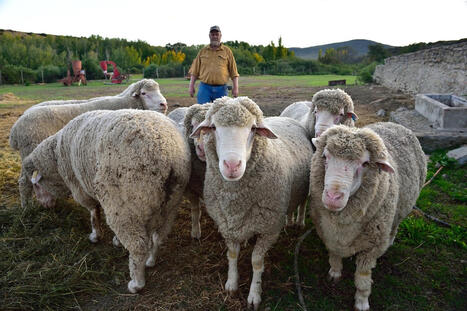
By ANNA MAJAVU, Mongabay.com About 80 km inland from the coastal city of Gqeberha, a brilliant patch of green stands out against a landscape recovering from six years of drought. The rudimentary fence of wooden poles and chicken wire surrounding it has been knocked over in places by kudu, steenbok and other local antelope species, as well as neighbouring farmer’s goats, all eager to get at the dense stands of an indigenous succulent: spekboom. This fenced-off area on the Steenbok Vlakte game farm is one of 300 similar plots of spekboom (Portulacaria afra) scattered along 800 km of South Africa’s Eastern and Western Cape provinces in a million-hectare band that was once dominated by mixed thickets of this remarkable plant. In a restoration project launched in 2009, botanists from Gqeberha’s Nelson Mandela University tried out 13 different methods of planting spekboom in plots measuring 50 by 50 meters (164 by 164 feet), intended to assess how to restore the entire strip. Underneath each of the now-12-year-old plants in the test plot, the branches that grow laterally along the ground have sprung roots wherever the plant’s leaves touch the ground, birthing hundreds of new spekboom, what the botanists fondly call the skirt of the plant. The plot is so successful that the farm’s owner, Johannes de Lange, has planted another 9 hectares (22 acres) of his land with cuttings he and his workers took from the plants on the trial plot. Botanist and postdoctoral research fellow Robbert Duker examines soil in a thicket. Photo: Anna Majavu for Mongabay. Botanist and postdoctoral research fellow Robbert Duker works full-time for the Spekboom Restoration Research Group, which carried out the thicket-wide plot experiment. Spekboom is often dubbed a climate change “wonder plant” for its ability to sequester large amounts of carbon. For decades, it has been cleared away by farmers and overgrazed by livestock and wild game, and only 200,000 hectares (494,000 acres) of the indigenous thicket remain in the Eastern Cape. Duker says overgrazing by sheep, cows and goats has led to soil erosion and the degradation of indigenous plants in the area. Many farmers saw antelope as an alternative, able to thrive on sparser grazing. But they soon realized that “game still trashes the plants,” Duker says. “When land is bare soil, with less than 20% vegetation cover and receives less than 300mm of rain a year, by definition, it becomes a desert,” he says. To continue carrying herds of goat or antelope, much of the veld (land) must now be rested for 11 months. This means that large farms must fence off sections of land to allow it to restore itself anyway, meaning they may as well use that time to restore the spekboom thicket. Spekboom regeneration is also vital to preventing soil erosion. The soil in the region is prone to developing a hard and impermeable “cap,” which means that when rain does fall, it can’t soak into the ground. Instead, it runs off, washing soil away along suddenly bursting channels. “Everyone is pleased when the dams are overflowing, but this is very often a product of the soil being so capped in the catchment. If there were proper infiltration, there would be a steady water supply, and you wouldn’t get boom and bust on the dams,” Duker says. At Steenbok Vlakte, Duker sinks his hands into the ground beneath one of the plants and pulls out a handful of rich soil filled with worms, snail shells and insect carcasses. “The key to spekboom’s soil-restoring properties is in the skirt. It creates a nice cool little microclimate underneath it, enabling a spontaneous return of biodiversity,” he says, explaining that droppings from birds containing native tree seeds germinate and grow in the moist microclimate. “So just by putting one species — spekboom — in, you get a whole bunch of animal species returning and other tree and shrub species that are indigenous to the thicket. You can get 100 species coming back and restore the whole ecosystem,” he says. The government has planted 50 million cuttings on 2,000 hectares (4,900 acres), but Dukker estimates 5 billion spekboom cuttings will be needed to restore the thicket across its former range. Duker and fellow botanist Keith Steunenberg also work for AfriCarbon, a South African company that generates carbon credits from restoring degraded thicket, mainly with spekboom. Neither can see where funding for restoration of spekboom across its historical range could come from other than carbon credits. The project they’re working on now received some philanthropic funding to set up the test sites, but Steunenberg says that’s not enough. “You need to attract outside investment where people get a return, and the carbon market opens up that opportunity. It speeds up restoration of ecosystems.” The botanists estimate that ten years after planting, a hectare of restored spekboom will sequester between 5 and 10 metric tons of carbon dioxide per hectare per year. Current prices would earn the landowner $100 per hectare (R1550). Wide-scale restoration of spekboom could also create thousands of jobs in the Eastern Cape’s rural areas, where the unemployment rate is estimated to be as high as 85%. Spekboom thrives in the Eastern Cape’s Klein Karoo, a strip of semi-desert running 290 km long by 60 km wide (180 by 37 mi). Spekboom thickets once dominated large stretches of the semi-arid landscape of the Klein Karoo. Image by richie rocket via Flickr (CC BY-NC-ND 2.0). Doing much less well across this region are isolated towns such as Klipplaat, population 9,000, surrounded by commercial farms and little else. Severe drought — and, more recently, the COVID-19-related lockdowns — has seen employment on these farms dry up and unemployment and hunger escalate so much that residents depend on food aid from charities. With no public recreation areas, shops, banks or government offices, and the nearest town is 35 km away and only accessible by expensive private transport, “Klipplaat is a sad town,” Duker says. “Yet there are farms that were covered in spekboom years ago that could be planted again. If you scaled up to 5,000 hectares [12,400 acres] in that area, that’s 500 people being employed — pretty much all of the unemployment in Klipplaat would be ended for at least the two-year duration of the project,” Duker says. Because the planting can’t be mechanized, Duker says he’s confident that this work would pay above the minimum wage, and there would be at least some permanent employment in jobs monitoring the success of the thicket growth. There are high rates of unemployment and poverty in Klein Karoo towns like Klipplaat. Image courtesy of Anna Majavu. The Eastern Cape Water Caucus, an umbrella group of small-scale farmers and environmental activist organizations in the province, agrees that there’s potential for jobs planting spekboom to help revive prospects for residents of rural areas. The caucus coordinator, Ntsika Mateta, says rural communities could also benefit from growing spekboom in villages and on communal land in the province, not for carbon credits, but for their own use. In many villages across the Klein Karoo, families own small herds of livestock that bring in a vital income when sold at the end of the year. Spekboom could be grown as a drought-resistant fodder and also help protect other vegetation from being overgrazed, Mateta tells Mongabay. And people could also eat spekboom themselves. “Our society is faced with multiple chronic illnesses due to all the unnatural food dumped on us by commercial farmers, retail corporates and pharmaceutical industries who are greedy for profit at the expense of people’s lives. This plant comes with many benefits and is already used in many Southern African communities as a source of food in salads, as a raw vegetable, and in juice,” Mateta says. Researcher David Hallowes from the nonprofit environmental justice organization groundWork says that rewilding, soil restoration and land conservation must be kept separate from “selling credits for some polluter somewhere else.” While emissions are certain, measurable, and occurring now, spekboom rethicketing as an offset measure is “highly uncertain since the spekboom may easily be cleared or lost again,” Hallowes says. He points out, too, that the assumed carbon sink in spekboom farms would be delayed over the years of the plant’s growth. Long decades of livestock rearing and commercial agriculture, and a recent run of extended drought, has badly degraded large parts of South Africa’s Eastern Cape Province. Image by South African Tourism via Flickr (CC BY 2.0). Restoring thickets to offset greenhouse gas emissions doesn’t have a solid basis in science, Hallowes tells Mongabay, explaining that “living” carbon, which circulates between land, air and ocean in a fast carbon cycle, isn’t exchangeable with “dead” carbon from the much, much slower geological cycle of carbon circulation. “Land restoration can compensate for past damage and carbon loss on that land. It does not compensate for — or offset — emissions from burning fossil fuels,” he says. Duker and Steunenberg say the carbon market is about to take off. They would rather see barren land restored with spekboom thickets than attempts to establish monoculture plantations of other potential carbon-sucking vegetation. Near the test plot on Steenbok Vlakte is a lonely jacket plum tree (Pappea capensis). These slow-growing trees also form part of the Eastern Cape’s indigenous thicket. Jacket plums can live for several hundred years, but they, too, have been overgrazed. This tree’s seedlings only germinate and survive under spekboom’s protective skirt, Duker says. “If you take spekboom out, these trees start to die, and they cannot come back without spekboom in the landscape. So these are the last remnant trees of the thicket, gradually dying out. If we don’t plant spekboom, most of these trees will go and eventually, you will have a completely barren landscape.” As the land goes, so do the people. Erosion and desertification caused by almost a century of commercial agriculture and increasingly frequent drought mean that many of the farms in South Africa’s Klein Karoo may have few better options than to restore spekboom thickets if they are ever going to be able to carry herds of livestock or wild antelope again.
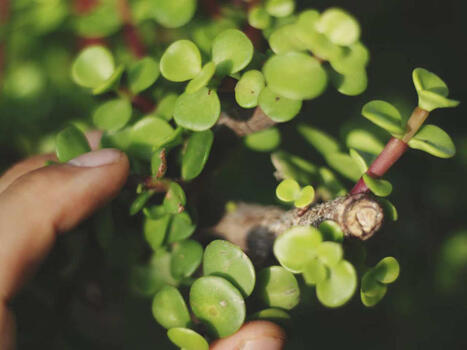
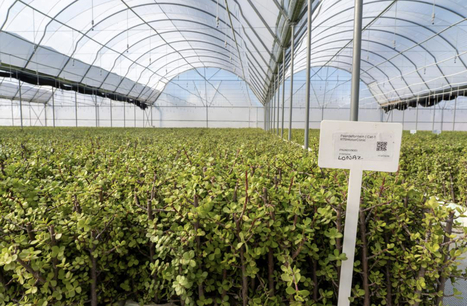
Innovative project is reintroducing a unique plant in a vast area in South Africa Imperative is restoring 100,000 hectares of land through active replanting of native thicket across a vast area in the Eastern and Western Cape. Imperative is a large-scale ecosystem restoration company, focusing on infrastructure-grade nature-based solutions projects in the Global South. It designs, develops, and operates ecosystem restoration and management projects worldwide using the latest technology. The company is committed to driving a just climate transition by addressing overlooked communities in emerging markets and ‘least developed countries’. It operates in the carbon and biodiversity markets by developing carbon projects to produce carbon credits. “Environmental markets have become increasingly fundamental to achieving net-zero greenhouse gas emissions and averting biodiversity loss,” the company said. One of Imperative’s latest projects is the restoration of 100,000 hectares of land in the Eastern and Western Cape provinces of South Africa. Two years ago, the company secured funding for the first phase to replant Portulacaria afra, better known as Spekboom, across 10,000 hectares. This phase is funded by Mirova, along with GenZero, a Temasek-owned decarbonisation investment platform company, and Rubicon Carbon. Imperative has established a subsidiary for the project, staffed by South Africans, with local leadership and multi-decade experience in major projects. It has also partnered with NatCarbon Africa, a South African restoration specialist with deep local conservation and restoration expertise. The project is now in full swing, with agents visiting farms in the Eastern and Western Cape to partner with farmers. Apart from receiving financial benefits, the farmers also get their farms, which are often in poor condition, restored for free. The Imperative project explained The Imperative project has been designed to restore the natural habitat, enhance local biodiversity, and remove a substantial amount of carbon dioxide from the atmosphere. At full scale, the project is estimated to remove over 30 million tons of carbon dioxide equivalent over its life. Replanting Spekboom across 10,000 hectares during the first phase is a core part of achieving the project’s goals. Spekboom is a well-known native succulent plant prevalent in the subtropical thicket biome in South Africa. It is resilient in semi-arid environments and acts as an ecosystem engineer, helping restore the functionality and biodiversity of its habitat. This project aligns with the United Nations initiative, announced late last year, to restore South Africa’s thicket as a World Restoration Flagship. This initiative aims to restore 800,000 hectares of degraded land by 2030 and involves a coalition of over 60 organisations. Restored thicket acts like a green sponge, allowing rain to penetrate the soil rather than washing away. This helps keep rivers flowing even during dry seasons. A dense spekboom canopy also lowers ground temperatures significantly, allowing other indigenous seeds to germinate. These projects are highly labour-intensive because spekboom must be planted by hand from cuttings. It, therefore, creates thousands of jobs. The Imperative project will attract significant foreign direct investment into South Africa as part of the restoration. This money will create training and employment opportunities in an area of South Africa with some of the highest unemployment rates in the country. Carbon removal credits from the project, which will be Verra ARR-verified carbon units (VCUs), are in demand in the international voluntary carbon market. It can also be delivered into the domestic South African carbon tax scheme, providing an interesting optionality for the Project and the Project Funders. NatCarbon Africa Spekboom growing project photos Netafirm South Africa has posted details about the Spekboom growing project, which uses the latest technology. The project is based on a farm near Jansenville in the Eastern Cape at the Botterblom Nursery. In this nursery, Spekboom plants are propagated with precision for planting on degraded land as part of the Imperative and NatCarbon Africa project. The technical advisor for this project is Byron La Trobe, the horticultural specialist is Colin Rand, and the nursery director is Nico Olivier. The system was designed by Michael Bothma and Jaco van Niekerk, and the IT Manager is Dale van Blerk. Don't miss the latest news Which streaming service do you use most often? - DStv Stream
- Netflix
- Amazon Prime Video
- Disney+
- YouTube
- Apple TV+
- SABC+
- Freevision Play
- AfreeTV
- E-tv eVOD
- VIU
- Other
View Results
Amazon backs massive carbon removal project in S. Africa Amazon announced on Tuesday it is funding one of the world's largest projects to remove carbon by planting 180 million spekboom shrubs in South Africa's Eastern Cape. This native succulent is considered a climate hero, absorbing carbon like a young forest. The investment will revive an area double the size of Seattle, restoring lost habitats. More importantly, this initiative creates 11,000 local jobs and is expected to inject over $500 million into surrounding communities. The company has committed to buying nearly 2 million tonnes of carbon credits from the project. "As the plants mature, they gradually cool the landscape, improve depleted soils, and create conditions for entire ecosystems to recover naturally," the company stressed. Related News a day ago The United Nations is launching the AI for Good Global Commission aimed at strengthening the dialogue between... 30 June Amazon Web Services (AWS) announced on Tuesday that it plans to invest $1 billion in a dedicated AWS Forward... 30 June The Australian Competition and Consumer Commission (ACCC) has sued Amazon's local arm, alleging that the... 29 June Anthropic PLC renegotiated its agreement with Amazon.com, Inc. to make it more expensive for the... About Contact Us Please observe our Terms of Use. The price information is time delayed to varying extents, but as a rule by 15 minutes or more, according to the regulations of the selected stock exchange and/or licensors and the type of securities.
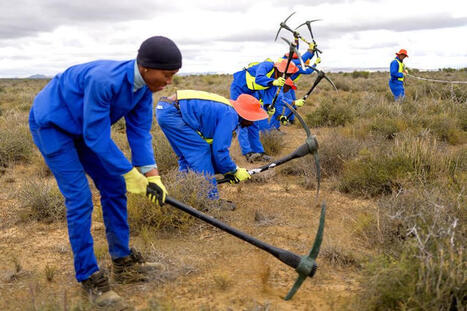
How “miracle plant” spekboom is helping revive South Africa’s Eastern Cape Photo by Todd Brown / UNEP Oops, something went wrong. Check your browser's developer console for more details. Doc Ndyawe is always on alert in case poachers target the black rhinos that browse the thickets along the Great Fish River in South Africa’s Eastern Cape province. But he worries more about another lurking danger: drought. “It's wet here now, Kwandwe is looking beautiful,” says Ndyawe, a ranger at the 30,000-hectare Kwandwe Private Game Reserve. “But not even long ago, it was very dry here. Five years back it was almost like dust.” The Eastern Cape still boasts the rhinos, elephants and big cats that draw international tourists, partly thanks to a growing drive to restore the dense thickets that once blanketed its valleys and plains. At the heart of this push is spekboom (Portulacaria afra), a shrub or small tree that experts consider key to reviving vast areas extensively degraded by overgrazing, invasive species and drought, making both ecosystems and communities more resilient in the face of climate pressures. This World Wildlife Day, which highlights the vital role of medicinal and aromatic plants in sustaining human health, cultural heritage and local livelihoods, South Africa’s thicket restoration movement shows how restoring native vegetation can deliver benefits for both human health and wildlife. A rhino among spekboom at the Kwandwe Game Reserve in South Africa’s Eastern Cape. Todd Brown / UNEP The thicket restoration initiative, which is creating hundreds of jobs in a region marked by poverty, unemployment and inequality, has been recognized by the United Nations as a World Restoration Flagship, an award given to outstanding efforts to restore nature and the critical benefits it provides to people. “The thickets of the Eastern Cape are vital wildlife habitat, and they also underpin water security, food systems, sustainable livelihoods and climate resilience,” said Salman Hussain of the UN Environment Programme (UNEP). “Restoring them is one of the most powerful ecosystem-based approaches available to us. With sustained investment, we can protect biodiversity while strengthening communities and local economies.” A plant with superpowers South Africa’s thicket restoration movement brings together more than 60 initiatives with the goal of reviving an estimated 800,000 hectares of degraded land across the Eastern Cape by 2030. In 2025, it was named a flagship of the UN Decade of Ecosystem Restoration. Some existing and largely small-scale efforts focus on the removal of invasive alien plant species and the introduction of more sustainable management regimes in degraded areas. Other initiatives, such as the Restoring Landscapes in South Africa project (ReLISA) funded by the German government and led by UNEP, are working to create the enabling conditions for restoration on a much larger scale, for instance by closing data gaps and leveraging significant public and private finance. What many of these initiatives have in common is their reliance on spekboom, which has been dubbed a “miracle plant” for the many benefits it provides. Spekboom’s ability to soak up and store water make it drought and fire resistant and a reliable source of fodder for both livestock and wildlife when other vegetation withers. Humans have also historically relied on the plant, sucking the moisture from its leaves to relieve thirst and avoid dehydration and using it to boost mothers’ milk and treat skin ailments. Professor of ecology Alastair Potts, who considers spekboom an “ecosystem engineer.”Todd Brown / UNEP As it grows, spekboom’s lower branches spread close to the ground, trapping leaf litter that enriches the soil and prevents erosion during downpours. Its roots let precious rain percolate into the ground. As if that wasn’t enough, it also boasts an outsized capacity to sequester carbon. “It's considered an ecosystem engineer,” says Alastair Potts, a Professor of Ecology at Nelson Mandela University. “It fundamentally changes the nature of the soil in the thicket.” According to Potts, generations of farmers let their livestock feed too heavily on the spekboom’s succulent leaves during times of need, unaware of its crucial ecological role in the landscape. As a result, only about 10 per cent of the thicket ecosystem remains intact. Building financial muscle So far, at least 10,000 hectares have been restored, “which is a fantastic number, but given the size of the problem, there's a lot more to do,” Potts said. “The great thing to see is that we're gaining momentum. There's a whole lot more buy-in across the landscape. There's a lot more investment going into the landscape, and we're seeing restoration efforts ballooning.” Some of the financial muscle needed is coming from nature-based finance, such as a project in the Eastern Cape restoring another 10,000 hectares near the town of Jansenville. At a nursery in the village of Klipplaat, Imperative, an international ecosystem restoration project developer working with its local partner, NatCarbon, has hired and trained scores of local community members to nurture the required spekboom cuttings. NatCarbon employees preparing crates of spekboom to go out for restoration. Credit: Todd Brown / UNEP During a recent planting mission, employees in blue overalls and hi-vis vests used pickaxes to break the hard dry soil so that co-workers could plant the young shrubs. Team leader Stephane Molomba said the project was welcome in a place where jobs are hard to come by. “Month by month – or whenever people are paid – then you see life returning to our village,” said Molomba. Thousands more jobs are set to follow as ambitious projects unfold. Imperative and NatCarbon, for example, hope to expand their project to restore a total of 100,000 hectares, sequestering the equivalent of an estimated 30 million tons of carbon. The ReLISA project, which launched in 2025, has already longlisted 11 landscapes in pursuit of its goal to restore a similar-sized area across South Africa, including subtropical thickets in two locations in the Eastern Cape, as well as areas in the grassland and savanna biomes. Dreams for the future Smaller-scale efforts are also making a difference. Johannes de Lange said he began experimenting with spekboom more than 20 years ago after droughts made it nearly impossible to keep livestock on his farm near the town of Nqweba. Three years after planting, he said, restored plots were established enough to regularly provide fodder for cattle. “But you mustn’t overgraze it,” he cautioned, explaining how he had learned to manage both the soil and the vegetation more carefully. “If you don't listen to nature you're going to damage the plants.” De Lange said he wanted to leave his children with a farm in better condition than when he inherited it. “You must give back. And my way is to put as much spekboom into the soil as possible.” The NatCarbon team uses a drone to survey land for new spekboom restoration possibilities. Todd Brown / UNEP Millions of spekboom cuttings are also being planted in and around the Kwandwe Private Game Reserve, which charges a levy from guests staying in its luxury cabins to fund both local development projects and the hard work of land restoration. Potts, the ecologist, said he hoped that the growing restoration drive could ultimately reconnect fragments of intact habitat, allowing wildlife – including rhinos, elephants and big cats – to migrate more freely across the country. “It might seem like an impossible dream, but it's an amazing thing to aim for because we're going to benefit from even just trying,” he said. About the UN Decade on Ecosystem Restoration The UN General Assembly has declared 2021–2030 a UN Decade on Ecosystem Restoration. Led by the UN Environment Programme and the Food and Agriculture Organization of the UN, together with the support of partners, it is designed to prevent, halt, and reverse the loss and degradation of ecosystems worldwide. It aims at reviving billions of hectares, covering terrestrial as well as aquatic ecosystems. A global call to action, the UN Decade draws together political support, scientific research, and financial muscle to massively scale up restoration. Governance & Leadership Funding & Partners Structure Advocacy Media Work with us
A bit of backstory about our partnership with C4 EcoSolutions and replanting spekboom to rehabilitate the land and reduce our carbon footprint. Spekboom, C4 EcoSolutions and us There is a saying in South Africa that "[a]s long as your spekboom is growing and prospering, so will your finances." Well, we want our spekboom growing for many reasons, not just financial ones! So we've started up a project dedicated specifically to propogating and replanting this incredible plant. Spekboom (Portulacaria afra) is an indigenous succulent plant that occurs all over the Eastern Cape of South Africa. Given that it grows in a dry, less-forgiving climate, it's no surprise that the plant is particuarly drought resistent. It's one of nature's super plants, offering plenty of reasons why it is so valuable – replanting it helps with erosion sites, it chows carbon (no joke, one hectare of spekboom can capture four TONS of carbon a year!), it has various medicinal properties, and it's edible (and not just for elephants – though they do love it, and are the reason behind two of its nicknames, elephant's food or elephant bush). The variety of uses for spekboom is enough of a reason to not only protect it, but ensure it flourishes in the areas where it belongs. Luckily for us, that's in our backyard. As part of our conservation work we are planting spekboom to help combat erosion issues caused by prior unsustainable farming practices, to restore the land's original ecosystem and biodiversity, and to offset our carbon footprint. We are also planning on eventually going into the local communities and educating our neighbours about the values of spekboom, while also helping them to cultivate their own spekboom plants. We've partnered in this endeavour with C4 EcoSolutions, a Cape Town-based consulting company that specialises in the areas of ecosystem restoration, biodiversity, climate change and scientific research. Mount Camdeboo Private Nature Reserve Graaff-Reinet Eastern Cape, South Africa © 2023 by YOLO. Proudly created with Wix.com
Explore Realm Biome Functional Group TTerrestrial The Terrestrial realm includes all dry land, its vegetation cover, proximate atmosphere and substrate (soils, rocks) to the rooting depth of plants, and associated animals and microbes. Water and nutrients are the principal resource drivers, with energy, oxygen and carbon rarely limiting. Temperature and its variability on interannual, seasonal and diurnal time scales, is a major ambient environmental driver, with ecosystem function and structure responding to global latitudinal and altitudinal climatic gradients. Fire is a major ecosystem driver, essentially unique to the terrestrial realm, although it may occur rarely in the subterranean realm. Gradients in these key resources, ambient environmental factors and disturbance regimes influence biotic interactions, with the strength of competition, predation and pathogenicity varying greatly across the realm. Human activity is a key driver through structural manipulations associated with land use, but also through movement of biota and anthropogenic climate change. The complexity of trophic webs is similarly variable, with vegetation a key feature in the expression of different ecosystem types within the realm. The terrestrial realm transitions to palustrine wetlands, shoreline and supralittoral and brackish tidal systems. The 7 biomes of the Terrestrial realm Select a biome to learn more T1Tropical-subtropical forests biome T2Temperate-boreal forests and woodlands biome T3Shrublands and shrubby woodlands biome T4Savannas and grasslands biome T5Deserts and semi-deserts biome T6Polar/alpine (cryogenic) biome T7Intensive land-use biome Also see the 6 transitional realms for related biomes Analyse Terrestrial realm by area Identify realm's functional groups by area
Restoring Landscapes in South Africa Nature-based solutions for climate, biodiversity and people Who We Are Meet the ReLISA consortium partners driving restoration. What We Do Learn about our focus areas and restoration approach. ReLISA Restoring Landscapes in South Africa
for a Sustainable Future. South Africa’s vital biomes; thicket, grassland, and savanna, are under threat from degradation. The ReLISA Project (Restoring Landscapes in South Africa) is a groundbreaking, multi-partner initiative dedicated to healing these ecosystems using nature-based solutions that address environmental, social, and economic challenges at the landscape level. At ReLISA, we believe in a South Africa where thriving landscapes and empowered communities go hand in hand. Our mission is to drive sustainable development and environmental innovation through practical, scalable projects that protect natural resources, enhance livelihoods, and build long-term resilience. ReLISA represents a long-term commitment to transforming South Africa’s biomes and communities for decades to come. ReLISA bridges science, policy, and finance to drive a just, transformative restoration journey. Our Project Sites Restoring South Africa’s Biomes South Africa’s landscapes sustain people, wildlife, and water security. Through restoration in savanna, grassland, and thicket ecosystems, ReLISA is protecting biodiversity, strengthening resilience, and supporting communities. Savanna Covering nearly a third of the country, savannas support wildlife and rural livelihoods but face threats from overgrazing, mining, and agriculture. Restoration tackles bush encroachment, protects biodiversity, and sustains water and soil resources. Project sites: Western Soutpansberg · Waterberg Strategic Water Source Area & Biosphere · Kruger to Canyons Biosphere Reserve · Magaliesberg Biosphere Reserve Grassland South Africa’s grasslands are vital “water factories” yet degraded by farming, forestry, and urban growth. Efforts focus on alien plant removal, soil recovery, and sustainable grazing to secure clean water and livelihoods.
Project sites: Northern Drakensberg SWSA · Southern Drakensberg Source Area · Mountain Zebra Camdeboo Protected Environment · Amathole SWSA · Wild Coast
Thicket Though limited in extent, subtropical thicket is globally important for carbon storage and biodiversity. Restoration re-establishes native vegetation like spekboom, heals soils, and creates green jobs. Project sites: Addo Elephant National Park · Greater Addo-Amathole Node Copyright © 2025 - ReLISA Projects
Urban areas Urban areas occupy less than 1 per cent of the Earth’s land surface but house more than half of its people. Despite their steel and concrete, crowds and traffic, cities and towns are still ecosystems whose condition profoundly marks the quality of our lives. Functioning urban ecosystems help clean our air and water, cool urban heat islands, and support our well-being by shielding us from hazards and providing opportunities for rest and play. They can also host a surprising amount of biodiversity. Urban ecosystems represent a radical transformation of the natural areas they have replaced and are often highly degraded. Poor planning seals soils and leaves little space for vegetation amid the houses, roads and factories. Waste and emissions from industry, traffic and homes pollutes waterways, soils and the air. Unchecked urban sprawl gobbles up more and more natural habitat and fertile farmland. Restoring urban ecosystems requires awareness and commitment from both citizens and decision makers. Green spaces need to be placed at the heart of urban planning. Civic groups and municipal authorities can clean up waterways, plant trees and create urban woodland and other wildlife habitat in parks, schools and other public spaces. Permeable sidewalks and urban wetlands can protect against flooding and pollution. Contaminated industrial areas can be rehabilitated and turned into urban nature reserves and places for recreation and relaxation. To learn more: https://www.decadeonrestoration.org//publications/international-principles-standards-practice-ecological-restoration https://www.decadeonrestoration.org//publications/value-urban-natural-assets-when-planning-resilient-african-cities
Global Peatlands Initiative Fourth Meeting of the Partners Published by:Cisca Devereuxon February 11, 2026 Global Peatlands Initiative Fourth Meeting of the Partners Co-hosted by the UN Environment Programme and Peru’s Ministry of the Environment, the Global Peatlands Initiative members and partners will meet in Peru from 30 June – 4 July 2026. The 67-member strong GPI gathers in Latin America for the first time ever as a South South collaboration and exchange meeting to shine the spotlight on the work of Peru through the years in the GPI partnership to protect, restore and sustain their critical peatland water-towers in the Andes, the water source for Lima and the Amazon River that builds through the lowland peatland forests and stretches across the Amazon Basin. Globally, peatlands cover just 3% of the planet's land surface, yet they hold twice as much carbon than all the world's forest biomass combined, and sustain biodiversity, livelihoods, water security and climate stability. Peatlands are diverse, from the “aguajales’ of the Peruvian Amazon to the “bofedales” of the high Andes, from Colombia to the rainforests of the Congo Basin, Indonesia and South-East Asia, from the Mongolian steppe and the Far North tundra to Patagonia, peatlands are found in almost every country and across every major climate zone on Earth. But today, peatlands are under unprecedented pressure and degrading in 177 countries, putting one of the planet's overlooked yet globally vital ecosystems at risk. Under the theme “Peatlands as livelihoods and the conditions for their conservation and sustainable management", the meeting will showcase the latest in peatland science, practice, policy and finance. This meeting will serve as a key platform to deepen the science-policy interface, advance South-South and Triangular Cooperation, and step up action towards the conservation, restoration and sustainable management of peatlands worldwide. Key info -
Agenda: please find here (y aquí está en español) -
Dates: Technical sessions: Lima, Peru from 30 June – 2 July 2026, Field Trips: National Reserve (3-4 July by invitation-only), and Wetland (3 July for GPI meeting participants) -
Format: In-person, with online participation for GPI members What to expect Three days of technical sessions in Lima, followed by south south and triangular exchange-focused field visits. The programme is organised around the four GPI intervention areas: Science / Knowledge: The latest on tropical peatlands; global mapping and monitoring, ecology and hydrology, climate change and emission pathways, and the role of Indigenous knowledge alongside scientific research. Policy: Peatlands in NDCs, NBSAPs and Land Degradation Neutrality targets, and collaboration across the Multilateral Environmental Agreements; UNFCCC, CBD, UNCCD, Ramsar Convention on Wetlands and CMS. Practice: South–South and Triangular Cooperation, the International Tropical Peatlands Centre, regional peatland initiatives, and the practical work of conservation, restoration and rewetting. Finance: Resource mobilisation for peatland action; public finance instruments, blended finance, and innovative private mechanisms including carbon markets, payments for ecosystem services, and green bonds. Who will be there Representatives from many of our 67 GPI members, our valued partners, and country beneficiaries countries which include: Peru, Colombia, Democratic Republic of the Congo, the Republic of the Congo, Mongolia and Indonesia alongside a number of our supporting partner countries of Chile, Uganda, Japan, Brazil and Germany. Stay connected Follow #PeatlandsMatter and #GlobalPeatlandsInitiative for live coverage and post-event outcomes across Instagram and LinkedIn. Share Find a bank of communications resources - including visuals, text, hashtags, suggested posts - all here. Coordination of the 4th Meeting of the GPI Members is supported by the International Climate Initiative (IKI) of the German Federal Ministry for the Environment, Nature Conservation, Nuclear Safety and Consumer Protection (BMUKN). Event information calendar_month Date energy_savings_leaf Organizers - Government of Peru (MINAM) and UNEP
place Venue - TBC, Lima & Iquitos, Peru
Biodiversity Climate change Paludiculture Restoration Sustainable management Sport for Nature: From Awareness to Investment Sport for Nature: From Awareness to Investment Sport for Nature: From Awareness to Investment ForPeat training: Influencing policy
|
An Eastern Cape farming project is set on planting a million hectares of spekboom and, in the process, create better working conditions for farmworkers. Organisers say the project has the powerful potential to also address climate change. Climate change: Spekboom project aids farmworkers It is imperative not to forget the people behind the restoration process, fair treatment, and the capacity-building potential to restore livelihoods through the spekboom projects in the Eastern Cape. Photo: Supplied/Food For Mzansi One million hectares of spekboom. This is the mission of three Eastern Cape companies who joined forces to combat climate change through the rehabilitation of ecosystems which, they believe, will also restore the dignity and hope of farmworkers. The partnership between Ncedisa Agriculture Solutions and Dr Anthony Mills, chief executive of C4 EcoSolutions and AfriCarbon, is set to drive environmental solutions and biodiversity by planting spekboom, a drought-resistant succulent native to Mzansi. Spekboom is a succulent plant with small leaves indigenous to the Eastern Cape. Photo: Supplied/Food For Mzansi The pilot project, that commenced at the beginning of February on a farm just outside of Port Elizabeth, has seen a specially trained team of 19 farmworkers plant 5.5 hectares of 45 831 cuttings of Spekboom in the first ten days. As production systems improved the next five days yielded an increase to planting around 12 000 cuttings across 4.5 hectares per day. In the first 15 days alone more than 105 000 spekboom cuttings were planted. Improved systems now capacitate a team to cover around 4-6 hectares of rough, dry, and mountainous terrain to hand-plant around 12 000 stems of spekboom per day. Capturing carbon Spekboom, which has the scientific name Portulacaria afra, has small leaves indigenous to the Eastern Cape. Because of its fast-growing capabilities, research has highlighted that spekboom is the best option available for restoring degraded land and has a high efficacy for sequestering carbon dioxide. In essence, the humble spekboom is the earth’s amazing natural solution to restore degraded thicket, create jobs and capture carbon. Chief operating director of Ncedisa Agriculture Solutions, Mkonto Mntwini, says, “Being on the forefront of a pilot project that provides worldwide benefits and garners global recognition with the support of the United Nations, it is important to value and recognise the farmworkers who put boots to the ground to make it all possible, and that is where Ncedisa Agriculture Solutions plays a vital role.” Mntwini adds, “Ncedisa is dedicated to providing solutions to the agricultural sector that optimise sustainable income for farmers while creating rewarding experiences for the workforce. Therefore, it is imperative not to forget the people behind the restoration process, fair treatment, and the capacity- building potential to restore livelihoods.” Since the initiative commenced, productivity has increased by implementing an effective team structure consisting of 19 members with designated tasks. The process starts with two cutters who harvest spekboom cuttings from bushes where there is already vigorous growth, then three groups of five members implement piece work that includes striking holes and planting who are all supported by a runner, driver and supervisor. In addition to improving cost-effective production systems for the project, the organisation strongly advocates for social sustainability in terms of fair wages, working conditions as well as training and upskilling opportunities for all farmworkers. Being a pilot project, there are plenty of learning opportunities and adjustments to implement as discovered with the improved team structure and payment systems. Data collected during the first 10-days alongside discussions with farmworkers revealed that the challenging environmental conditions to work in required an alternative remuneration structure for workers. The change in team structure and amending a per day rate per farmworker to paying on a per piece work concept was a more dignified and rewarding system. The farmworkers now get compensated per piece of spekboom cutting planted, and this has not only had a financial reward per worker but motivated planting from 4 000 to 12 000 cuttings per day. The initial phase created 19 new direct jobs, and as the project expands to plant one million hectares of spekboom across the Eastern Cape progresses, more teams will be employed. Ncedisa farmworkers aim to plant one million hectares of spekboom across the rough and rugged terrain of the Eastern Cape. Photo: Supplied/Food For Mzansi Tackling social ills Spekboom planting further generates hope for future employment opportunities in the agriculture sector through restoring land that has been degraded by inappropriate farming methods, drought and overgrazing that in recent years lead to massive job losses within the sector. An increase in opportunities for farmworkers can potentially decrease economic inequalities related to unemployment, poverty, and helplessness within the industry. Social ills within the struggling agriculture communities include the rise in alcoholism, drug abuse, violence and theft by demoralised community members. Mntwini believes spekboom initiatives have the powerful potential to address climate change, but in South Africa and the Eastern Cape, equally, to capacitate workers to reclaim their dignity with access to resources and employment that offer fair and proper compensation. ALSO READ: Climate change: 2025 food security targets at risk Get Stories of Change: Inspirational stories from the people that feed Mzansi. Ivor Price is a multi-award-winning journalist and co-founder of Food For Mzansi.
The World Bank Group ( through the International Bank for Reconstruction and Development) has priced a $120 million Spekboom Restoration Outcome Bond, its longest-dated outcome bond to date, maturing in November 2040. The issuance aims to support large-scale ecosystem restoration and job creation in South Africa’s Eastern Cape province through the planting and management of spekboom, a native succulent plant known for its drought resilience and exceptional carbon sequestration capabilities.
Spekboom restoration is expected to improve soil quality, enhance water retention, boost climate resilience, and help revive biodiverse ecosystems that support other plant and animal species. The bond structure mobilizes $25 million in private capital to scale up a 50,000-hectare restoration project designed, developed, and operated by Imperative, a specialist in ecosystem restoration. The initiative targets the rehabilitation of degraded land while creating approximately 11,000 local jobs, including opportunities through small and medium-sized enterprises involved in planting, harvesting, monitoring, and ongoing land management.
Investors benefit from full principal protection backed by the World Bank’s AAA credit rating. The $120 million in proceeds will support the World Bank’s sustainable development lending activities worldwide. Bondholders will receive a fixed coupon of 2.410% per annum (with a short first coupon), which is lower than the yield on comparable standard World Bank bonds. The difference is directed—via a hedge transaction with BNP Paribas—as upfront financing for the spekboom project.
Additional returns are linked to project outcomes. Amazon has entered a fixed-price offtake agreement to purchase a large share of the carbon removal units (CRUs) generated by the project over more than a decade. A pre-determined percentage of the revenue from these CRU sales will be channeled back to investors through BNP Paribas as CRU Linked Interest, with potential further upside from performance-based payments. This structure offers investors the possibility of higher overall returns compared to a standard World Bank bond of similar maturity if the restoration project meets or exceeds expectations.
BNP Paribas acted as the sole Lead Manager and Bookrunner for the transaction. The bond is listed on the Luxembourg Stock Exchange.
Trade date was April 23, 2026, with settlement scheduled for April 30, 2026. The interest structure includes a fixed component plus potential CRU-linked interest (starting from November 2, 2031), shortfall catch-up, planting success, and outperformance payments. Redemption is at par.
When the goats on his farm had nothing more to eat, because the soil had been eroded and most of the vegetation destroyed, South African farmer Pieter by #ThinkLandscape Spekboom trees have proven well-suited for the dry and mountainous landscapes of South Africa. Florian Fussstetter, UN Environment South Africa’s first carbon farm When the goats on his farm had nothing more to eat, because the soil had been eroded and most of the vegetation destroyed, South African farmer Pieter Kruger had to make one of the toughest decisions of his life. “I had always been a farmer,” he says, “but at that moment in 2007, I knew that I could not go on. There was no more water. Zandvlakte is the last farm in our valley in the Bavianskloof, and our river had run dry before it reached my farm.” Kruger reluctantly gave up goat farming and embarked on the Working for Water program, a government pilot effort to restore degraded watersheds. Over the next three years, he and a team of over 100 workers planted 1,500 hectares of his farm with millions of cuttings of an indigenous succulent tree, the spekboom (Portulacaria afra), which can grow well even in dry conditions. “I have never regretted that decision,” says Kruger. “The trees are now well established, and in the big flood this year, we managed to prevent water runoff from penetrating the soil, improving ground water levels, instead of washing our topsoil into the river.” Spekboom forests can act as ‘natural water dams’: in mountainous areas, the trees can grow even on steep slopes, and when rare rainfall occurs in the semi-arid regions of the Eastern Cape, they suck up all of the moisture quickly and can store it for months. They can serve as grazing and browsing areas of last resort for wildlife and livestock, even when all else has withered in a drought. They also absorb carbon dioxide from the atmosphere more quickly than most other trees in dry conditions. Spekboom (Portulacaria afra) is a small, succulent tree that is native to the Eastern Cape region of South Africa. It can easily be grown from cuttings, which can survive even in dry conditions. Florian Fussstetter, UN Environment However, farmers are usually not paid for carbon storage, water security and other essential ecosystem services that well-managed land provides for downstream water users and for the global community. That could change, though, if governments and the global community set the right conditions. “Spekboom is an amazing plant. It can take root and regrow, just from simple cuttings from existing trees. It can quickly reform the soil because it continuously sheds a lot of leaves, which help to build up soil organic carbon,” explains ecologist Anthony Mills, who has written extensively on the sub-tropical thicket ecosystem of South Africa, one of the country’s lesser known plant biomes. Spekboom is the dominant tree of the thicket ecosystem, a complex forest that creates its own microclimate. Thicket forests used to cover up to 5 million hectares across the dry areas of the Eastern Cape, until about 200 years ago, when massive overgrazing by goats and sheep started and turned much of this ecosystem into a mere shadow of its former biodiversity and natural splendor. “You can drive for four hours across degraded areas, which look like a savannah woodland, because all you see are some of the surviving jacket plum trees (Pappea capensis), which were originally part of the thicket ecosystem. The richness of this ecosystem is almost all gone today, but we could bring it back,” says Mills. “Today, more than 1.3 million hectares of severely degraded thicket landscapes in the Eastern Cape Province are ready to be restored to their former ecological functionality, which can also increase their productive use for livestock,” he adds. Scientists from Stellenbosch University came upon the remarkable ability of spekboom to regrow in degraded areas almost by chance. In 1976, a farmer in the Kromport area of the Eastern Cape had planted cuttings of the sturdy tree on a steep slope of about 200 by 100 meters behind a barn on his farm, because he was trying to find a way to stop annual floods that were threatening his livestock. He soon discovered that spekboom not only rapidly established itself in the degraded soil but also stopped the floods very quickly after it had been planted. “Some of the plants in this area are now over 40 years old, and we can see some of the original thicket ecosystem reforming. Other plants are joining, and birds and wildlife are returning,” says Mills. Although the area is rather small, it has yielded valuable scientific information, including on the amount of carbon stored below ground, in the roots of the spekboom plant and in the soil. The discovery prompted the South African government to carry out one of the largest ecological experiments in the world: in 2007, they planted 330 plots of spekboom, each half a hectare (50 by 50 meters), across the entire degraded area, which spanned almost 1,000 kilometers. More than a decade on, the plots have yielded promising results. In almost all of the plots that had been planted in degraded thicket and whose fences had been maintained, replanting with cuttings from spekboom has been successful, under a variety of conditions and planting techniques. The most important factor, according to scientists from Stellenbosch University and Nelson Mandela University, is that grazing pressure from goats must be reduced for at least five years through fencing, and the cuttings need to be planted well and deep enough in the soil. “By finding a way to boost agricultural productivity, restore a lost ecosystem and store carbon quickly and at scale, we would have a real win-win for farmers and for the global community,” says Tim Christophersen, Coordinator of the Freshwater, Land and Climate Branch at UN Environment. In the foreground, one of the 330 demonstration plots for thicket replanting with spekboom (Portulacaria afra) across the Eastern Cape. In the background, the few remaining jacket plum trees (Pappea capensis) on degraded land are an indicator of the former spekboom thicket ecosystem, which could be replanted. Photo by Florian Fussstetter, UN Environment The goal is to restore an area of thicket of over one million hectares, almost 200 times the size of Manhattan. There is potential to plant more than 2 billion tree cuttings across this immense landscape, providing work and income for thousands of people for several years. “This might sound daunting, but given the opportunities for combining the real, long-term restoration of these degraded lands with diversified economic benefits to the local economy, the potential is amazing,” says Christophersen. The South African government sees thicket restoration as one of the low-hanging fruits for the achievement of national climate and biodiversity goals and recognizes that private investments are key. “We planted the pilot plots back in 2007 to attract private investors by demonstrating that this can work,” says Dr. Christo Marais, Chief Director at the Department of Environmental Affairs, which runs the Working for Water program. “We have studied this thoroughly, and we believe there are big opportunities for ecosystem restoration investments across South Africa.” One of the next steps in scaling up the restoration could be to establish carbon and livestock farms, where several thousand hectares could be replanted with spekboom, to combine income from carbon with other income streams and economic activity. “Farmers like to look over the fence and see what their neighbor is doing,” says Pieter Kruger. “Having big demonstration plots on existing farms is important to spread the word that becoming a carbon farmer can pay off, both for restoring the land and for making a decent return from it,” he adds. Even though Kruger has not yet received any compensation for the carbon he has sequestered on his farm, he remains optimistic. “We never give up,” he says. His Zandvlakte farm lies in the Bavianskloof, a UNESCO World Natural Heritage Site, one of the most remote and beautiful areas of South Africa. Kruger and his family have also branched out into ecotourism, allowing visitors to experience the success of their shift from conventional farming to land restoration first-hand. “The global carbon market, including carbon offsets, for example from the aviation industry, is starting to boom again after several years of uncertainty. If current trends persist, carbon credits might provide some income for farmers like Pieter Kruger,” says Mills. Carbon credits are compensations that nations, companies, or individuals can buy to offset part of their emissions that cannot be otherwise reduced. Offsets are not a replacement for ambitious climate mitigation action across all sectors – they can only provide a temporary solution while we deeply de-carbonize our economies. Ecosystem carbon credits often also have many other benefits beyond carbon, such as biodiversity, water, or better income options for farmers. The carbon market is highly complex and volatile, and farmers should not only rely on carbon for their income. “We must try to blend different income streams for farmers so that carbon credits are only one of several revenue streams. At the same time, the restoration of degraded lands will increase the value of the farmland in the long run and improve resilience and ecosystem services for local communities and for entire nations,” says Tim Christophersen. “We are running out of time for climate and biodiversity action, and large-scale opportunities like thicket restoration in South Africa must be urgently explored. We would like to support the government of South Africa and other partners, like Living Lands and Commonland, to realize the potential of the Eastern Cape thicket restoration, as we move into the UN Decade on Ecosystem Restoration.” FURTHER READING South Africa Working for Water Programme UN Decade on Ecosystem Restoration 2021-2030 South African Government studies on ecosystem carbon sequestration: - https://www.environment.gov.za/sites/default/files/reports/unlockingbarriers_land-usebasedclimatechangemitigation.pdf
- https://www.environment.gov.za/sites/default/files/docs/carbonsinks_southafricanatlas2017.pdf
- https://www.environment.gov.za/sites/default/files/reports/indigenousbushencroachment_policybrief.pdf
- https://www.environment.gov.za/sites/default/files/reports/identificationandmapping_soilsrich_organiccarboninsouthafrica.pdf
- https://www.environment.gov.za/sites/default/files/reports/biocharreport2015.pdf
- https://www.environment.gov.za/sites/default/files/reports/nationalterrestrial_carbonsinks_synopsisreport.pdf
For more information, contact Head of Freshwater, Land and Climate Branch of UN Environment Tim Christophersen, Tim.Christophersen@un.org. Subscribe to our email newsletters Want to get the latest climate and environmental stories in your inbox? Sign up here to stay in the loop. Weekly feature Every week, we’ll send you our top feature story. Discover green innovations, social justice issues, environmental history and more. + TalkLandscape Tune into our live monthly podcast with the world’s unsung environmental heroes. Sign up to find out when the next episode drops. + News digest Once a month, get informed with our 5-minute round-up of the latest environmental headlines from around the world.
Today we are celebrating the International Day of Biological Diversity, as proclaimed by the United Nations. This day aims to raise awareness of the world’s biodiversity and environmental issues. It was first created by the Second Committee of the United Nations General Assembly in late 1993 when the Convention on Biological Diversity first came into effect. This year for the first time the celebration of the International Day of Biological Diversity will be taking place primarily online, with this year’s theme being ‘Our solutions are in nature’. More information about the day can be found here. The slogan ‘our solutions are in nature’ speaks to the fact that the COVID 19 crisis has called upon people to re-evaluate our relationship with nature, with the acknowledgement that we are completely dependent on healthy ecosystems for our wellbeing. It emphasises the importance of hope, solidarity and working together to build a life that it in harmony with the natural world. In this blog we are going to take a closer look at the spekboom, a South African shrub that has very much been in the spotlight this year. This rather unassuming South African shrub has hit the news of late. The spekboom bandwagon has rolled into town and everyone is climbing on board, from travel magazines to municipalities, homeowners to game reserves. This shrub is appearing in almost every suburban garden, often jostling for position in the driveway with multiple 4x4s. So what is all the fuss about? Can one shrub save the world? Or is the spekboom trend all a lot of hot air? So what is spekboom? Let’s take a closer look. Also known as Porkbush, the scientific name of the spekboom is Portulacaria afra. It is an evergreen succulent shrub or small tree that in the wild grows on rocky slopes in bushveld, thicket and Karoo scrub from the Eastern Cape northwards into Kwa-Zulu Natal, Mpumalanga and Limpopo, as well as being found in eSwatini and Mozambique. It is a highly favoured food for game including elephants and domestic livestock. It is edible to humans too, packed with Vitamin C and with a relatively tart flavour. Spekboom can be used in salads, preserves and chutneys and as an ingredient in traditional South African tomato bredie. As the scale of the climate change crisis has hit home, the world has been looking for solutions. Research has shown that spekboom, as part of its indigenous ecosystems and in the climate to which it is adapted, is a superbly adapted indigenous species that is highly effective at sequestering carbon. When conditions are favourable, spekboom undertakes C3 photosynthesis. During drought conditions it switches to CAM photosynthesis (Crassulean Acid Metabolism), where the plant closes it pores (stoma) during the day to save loss of water. As the scale of the climate change crisis has hit home, the world has been looking for solutions. Research has shown that spekboom, as part of its indigenous ecosystems and in the climate to which it is adapted, is highly effective at sequestering carbon. When conditions are favourable, spekboom undertakes C3 photosynthesis. During drought conditions it switches to CAM photosynthesis (Crassulean Acid Metabolism), where the plant closes it pores (stoma) during the day to save loss of water. Despite this, the plant is still able to photosynthesise. This is made possible through the acid that has accumulated during the night which is stored as carbon dioxide. Through these processes spekboom is highly effective at capturing carbon. Spekboom is also highly drought tolerant and easy to propagate, rooting with little effort from cuttings. It has thus been cited by researchers as an important plant for use in carbon sequestering thicket restoration within its natural range. We spoke to Mike Powell from the Rhodes Restoration Research Group, Department of Environmental Sciences, Rhodes University and he had the following to say: “Spekboom (aka Portulacaria afra) is indeed a wonder plant, an ecosystem engineer and a significant part of the ecology of the Albany Thicket Biome. It has a pivotal role to play in the carbon sequestration strategies and restoration plans for the semi-arid and xeric thickets in the Eastern Cape and eastern parts of the Western Cape (NB – where thicket used to occur and has been lost due to poor management). Unfortunately the popularisation of spekboom as a symbol of carbon capture in South Africa has led to the false belief that planting this lovely species in your garden or in urban areas will make a significant difference towards mitigation of climate change. This is pure tokenism. Planting the species in natural areas (e.g fynbos) where it never occurred before or planting it in super saturated densities in thicket is a mild form of ecological terrorism..”. Fast forward in time and much of the popular media have jumped into publicising the story of the spekboom, without letting the facts get in the way of a good story. This shrub has captured the imagination of South Africans, with promises that this ‘wonder plant’ will help save the earth from the climate change crisis. Many false and over-exaggerated claims about spekboom are flying around and being reproduced without fact checks, confusing the green and eco-minded public even further. It has been widely publicised that spekboom is a ‘wonder plant’ because it absorbs carbon dioxide and uses it to produce plant tissue. In fact, this is something that almost all plants on earth do. Spekboom is making its way en masse into domestic gardens across the country, and even into nature reserves outside its natural range thanks to well-meaning people thinking they are ‘doing the right thing’. This has been further fuelled in 2020 as a result of the launch of the Spekboom Challenge. This social media movement has called upon people to plant ten or more spekboom in 2020 and post to social media about their efforts under the hashtag #SpekboomChallenge. Many organisations and individuals have joined in, thinking they are contributing to addressing the climate crisis. The reality is that spekboom is not the ‘silver bullet’ it is purported to be for fighting against climate change, particularly when it is planted outside of its natural range. Also it contributes little for wildlife as a part of the indigenous garden when grown outside its natural range due to its intermittent flowering providing little for pollinators. If we really want to save the world from the climate crisis then we need to face some uncomfortable truths: We need to cut back on emissions and conserve those of our natural ecosystems that remain to best ensure their resilience and survival. Even grasslands have been shown to be highly effective carbon sinks. There are no shortcuts or easy fixes here. We instead encourage you to garden your outdoor space with locally indigenous plants: Many of these are most effective carbon sinks when grown within their natural range. Within urban areas indigenous gardens provide an oasis for wildlife, supporting pollinators such as insects and birds. As diverse a range of plant species as possible offers interest from flowers and foliage throughout the year, providing blooms during differing flowering seasons to the benefit of people and wildlife. We would like to wish you happy gardening! -
Submit a Comment Your email address will not be published. Required fields are marked * Save my name, email, and website in this browser for the next time I comment. Submit Comment In addition to this botanical bonanza, the event also served as an expo for various organisations. Experts from the Custodians of Rare and Endangered Wildflowers (CREW) In our final webinar for 2023, we take a look at South Africa’s indigenous crops: at how to choose them, grow them, and also how to eat them! It’s easier than you might think to grow a Protea in your outdoor space, rewarding you with stunning flowers and attracting a range of wildlife to the garden. Water chestnuts are an incredibly productive crop, particularly given the minimal input needed for growth. JOIN BOTSOC Know, grow, protect and enjoy South Africa’s indigenous plants.
SPEKBOOM EXECUTIVE SUMMARY Spekboom Net Zero (SNZ) is a large-scale carbon capture project in South Africa based on planting Portulacaria Afra (Spekboom) on selected available farmland. First phase of this project is on the order of 7,000 Ha with the potential of capturing over 100,000 tones CO2 per year for decades to come. This succulent plant captures CO2 from 15 to 29 tones/Ha/yr. using CAM Photosynthesis which can operate day or night with no CO2 “leakage” back into the atmosphere. SNZ’s mission is to offer an opportunity for Spekboom restoration supported and financed through the carbon markets. Voluntary carbon market is where verifiable voluntary carbon credits are traded. According to Bloomberg Webinar (2021) the demand for Carbon Capture Carbon Credits is now much greater than supply. South African farmers are acutely aware of the devastation caused over the years by over grazing, soil erosion and very low rain amounts. Eligible farms may plant Spekboom truncheons in areas where Spekboom once flourished before animal grazing rates overtook Spekboom growth rates. These areas will be protected with a fence to keep animal grazing away during primary years of the plant’s growth. Spekboom in South Africa is typically found in Mediterranean and Arid-Subtropical biomes that overlap USDA hardness zones 10 to 13. This is a grouped project where additional landowners and farmers may participate over time in and ever-increasing amount. Spekboom Net Zero social and economic objectives begin with promoting decent work and increasing income of local workers and their families. Besides helping sequester CO2, as Spekboom grows it provides a pathway to improved biodiversity in the biome. This is the right thing to do for South Africa. Carbon Farming will increase employment in Eastern Cape where unemployment is near 50%. Success of this project will spurn similar projects thus spreading these social and economic benefits throughout South Africa. The project is also expected to attract ecotourism. Estimated income to farmers at full growth may be around R 1.8 million per year per 1000 hectare of carbon capture land, for next 20 years, at least. Actual income to farmers depends upon many factors such as truncheon survival rate, plant growth rate and market price for carbon credits.
SA’s award-winning thicket project on track to create 100,000 jobs and revive 800,000 hectares With a miracle plant, an 800,000-hectare challenge and the promise of 100,000 green jobs, South Africa’s thicket restoration has been named a UNEP World Restoration Flagship. This overlooked ecosystem is becoming a global model for climate resilience and community revival. Workers prepare spekboom seedlings for planting, a key step in restoring 800,000 hectares of damaged thicket in SA. (Photo: Todd Brown / UNEP) - Dive Deeper
- Speed Read
- Summary
- Listen
South Africa’s thicket biome, once a dense, green tapestry of plant life and thriving wildlife, has been degraded so extensively over the past century that most people alive today have never seen it in full. More than 80% of this ecosystem has been lost, much of it cleared for agriculture or overgrazed during the wool boom of the late 20th century. What remains is a patchwork of fragmented thicket, bare earth and exposed rock stretching across the Eastern and Western Cape. However, this neglected yet biodiverse landscape and the people working tirelessly to restore it were thrust into the spotlight on Thursday, 4 December, when the United Nations Environment Programme (UNEP) named South Africa’s thicket restoration as one of its World Restoration Flagships. The award recognises the country’s multidecade effort to revive 800,000 hectares of degraded land by 2030. The initiative involves more than 60 organisations, including conservation NGOs, carbon developers, scientific institutions and community-led programmes. A team of restorers stand in the middle of a spekboom cluster thriving in formerly degraded land, an indicator of successful thicket restoration. (Photo: Todd Brown / UNEP) The World Restoration Flagships are UNEP’s highest recognition for large-scale, long-term ecosystem restoration efforts. They are the centrepiece of the UN Decade on Ecosystem Restoration (2021–2030) — a global movement mobilising countries, communities, scientists and civil society to revive the natural systems that sustain life. Each flagship is chosen not only for its ecological importance but for its social impact, its grounding in local and indigenous knowledge, and its potential to act as a model for restoration worldwide. While the award brings international visibility, to the people leading restoration efforts on the ground, it represents something far more urgent: an opportunity to bring life back to the land while creating green jobs for communities that desperately need them. Read more: A tale of two dams — Grasslands restoration is as important as engineering solutions to ensure SA’s future water security A landscape forgotten, reimagined When driving through the Karoo or the semi-arid valleys of the Eastern Cape, the landscape appears sparse: low shrubs, vast dry plains and little shade. But according to Nick Hamp-Adams, the landscape is a far cry from the ecosystem it once was. A patchwork of restored and degraded thicket in South Africa. (Photo: Todd Brown / UNEP) Hamp-Adams is a programme manager at Return to Thicket, one of the 60 organisations leading the restoration in the Eastern Cape. “People don’t understand what has been lost because most of it disappeared generations ago. It used to be a closed canopy — a micro forest of unique plant species supporting birds, insects and small mammals,” he explained. Hamp-Adams said that few living memory accounts remain of what the thicket looked like before it was transformed for livestock production. Much of the degradation predates satellite imagery, leaving conservationists to piece together its historical richness through scattered records and remnant patches. But even in its fragmented state, the thicket still holds a powerful ecosystem booster in one plant: the spekboom. The power of spekboom Spekboom is a hardy, drought-resistant succulent tree with a multiplicity of abilities. Hamp-Adams described it as “an ecosystem engineer” capable of reshaping the land around it. Its functions are significant, including: - Heat regulation: By forming a dense canopy, spekboom keeps soil temperatures low, a crucial function in regions where exposed soil can reach 50–60°C in summer.
- Soil protection: Its complex roots anchor fragile, sandy soils, reducing erosion and retaining moisture.
- Carbon storage: A single hectare can sequester roughly six tonnes of CO₂ a year.
- Biodiversity revival: Its shade, leaf litter and microclimate give other plants a chance to germinate, while providing food and habitat for wildlife.
- Cultural and practical value: Spekboom is edible, medicinal and deeply embedded in indigenous knowledge and heritage.
The irony is that its value also contributed to its decline. “It’s highly palatable. Goats love it, and hence, they ate it all. When spekboom disappears, there’s nothing else in the veld to support animals. The whole system collapses,” said Hamp-Adams. Bringing it back requires far more than planting a few cuttings. It calls for large-scale, labour-intensive restoration rooted in community engagement and sustainable land use. Read more: Limpopo reserve wants something no one else in SA wants — elephants Restoration drives green jobs While the ecological benefits of restoring 800,000 hectares of thicket are profound, the initiative’s social dimension is equally significant. Both UNEP and South African partners have emphasised that the restoration is not just an environmental project — it is an economic lifeline. “The Eastern Cape struggles economically. Unemployment in some districts is over 60%. On our first farm, every single person we hired was previously unemployed,” said Hamp-Adams. The restoration of the thicket is labour-intensive. From teams collecting cuttings, planting them by hand, monitoring survival, mapping biodiversity recovery and tracking carbon sequestration, the opportunities for employment are extensive. Hamp-Adams also noted that the work was expected to stretch across decades: some projects have 60-year lifespans. “It’s creating green jobs, jobs that are sustainable and that can last many, many years,” he says. Community restoration teams prepare the soil to plant spekboom seedlings as part of South Africa’s new UNEP World Restoration Flagship. (Photo: Todd Brown / UNEP) These jobs cut across skill levels: - General labourers for planting and land preparation;
- Field officers, who manage restoration blocks;
- Scientific teams that monitor carbon, soil quality and biodiversity;
- Community educators who lead awareness campaigns; and
- Small-scale nursery entrepreneurs supplying cuttings.
For many young scientists from local universities, this is the first time meaningful environmental employment has existed in their home province. “The fact that we can now create well-paying professional jobs in the Eastern Cape is exciting,” said Hamp-Adams. UNEP’s target is even more ambitious. According to Doreen Robinson, the Deputy Director of UNEP’s Ecosystems Division, the flagship aims to create 100,000 jobs and train 80,000 people in sustainable land management over the next 10 years “We invest in the environment not just for the environment’s sake. It’s because of people and sustainable development. This flagship isn’t only about restoring thicket — it touches all facets of life,” Robinson told Daily Maverick. Restoring ecosystems, reviving knowledge A key part of UNEP’s restoration philosophy is bringing together modern science with indigenous and community knowledge. In the case of South Africa’s thicket, that knowledge is both vital and endangered. “The history of spekboom removal is directly tied to colonialism,” said Robinson. “Much of the thicket was cleared because settlers didn’t see the landscape’s value or understand how it functioned.” Today, many landowners do not realise the extent of the damage that was caused by overgrazing generations ago. Hamp-Adams said community education was a central pillar of Return to Thicket’s work. “We partner with schools, farmer associations, municipalities and local leaders. We raise awareness about what’s happened to the thicket, how spekboom works, and why sustainable grazing is essential,” he said. This is critical not just for restoration, but for preventing future degradation. After all, if people don’t know what was lost, they cannot protect what is being rebuilt. Robinson emphasised that indigenous knowledge was also a source of solutions. “It’s not an exploitative consulting process,” he said, “it’s a real engagement to understand where that know-how sits and how it can be married with modern science.” In other restoration flagships around the world, this has produced dramatic improvements. In Canada, salmon survival rates soared when scientists incorporated First Nations’ knowledge about sacred release sites. In Australia, rebuilding shellfish reefs has drawn on indigenous coastal stewardship traditions. South Africa’s thicket restoration is part of this global rebalancing, an acknowledgement that local communities are not passive beneficiaries but co-restorers. A carbon sink with social benefit The scale of South Africa’s restoration target, 800,000 hectares, is enormous. But so too is its climate potential. Using modest averages, Hamp-Adams estimated that restored spekboom thicket could lock away around eight million tonnes of CO₂ per year. “That’s equivalent to the annual emissions of 800,000 average South Africans,” he explains. “Every hectare can offset one person’s emissions.” While he is quick to caution that restoration is not a substitute for emissions reduction — “we have to reduce, we have to decarbonise our energy grid,” he stressed — thicket revival offers a powerful adaptation measure that brings tangible benefits to communities. And as carbon markets gain traction, spekboom restoration may eventually generate revenue through high-integrity carbon credits. “That’s where the economics can really kick in. It can make these long-term projects financially viable and scalable,” he said. For communities in the Eastern Cape, this could unlock an entirely new green economy — one rooted in ecological recovery rather than extractive agriculture. Recognition, hope and the road to 2030 For both UNEP and restoration leaders on the ground, the flagship designation is more than a badge of honour. “It’s really exciting. There’s huge potential here to showcase South Africa’s beautiful landscapes, to leverage carbon markets and to bring international support to where it’s most needed,” said Hamp-Adams. Robinson agreed that the flagship is intended to accelerate momentum. UNEP’s goal is not only to support individual projects but to cultivate a global Generation Restoration, a movement in which ordinary people, policymakers, scientists and communities all participate. “We’re not on track to meet our climate or biodiversity goals. We need to accelerate action. But initiatives like this show what’s possible when sectors work together,” Robinson said. DM Loyal Readership They say if you want loyalty, get a dog. So we did. This is Biscuit, the Daily Maverick dog. She gets a treat every time one of our most loyal readers signs up to Maverick Insider.
Turns out YOU are one of Daily Maverick’s most frequent visitors which isn’t the same as the ‘lick your face’ variety of loyalty but we still appreciate it. You know by now the kind of journalism you’ll find at DM (fearless, impactful, corruption-busting). We’ve never hidden it behind a paywall because it’s a public service and you should have access to it whether you support us financially or not.
But think of Biscuit. If you’d like to give her a treat (AND help Daily Maverick continue its work AND receive a host of membership benefits) then sign up to Maverick Insider for whatever amount you choose. Biscuit The Daily Maverick Dog You might also be interested in GREEN GROWTH Why biodiversity is becoming a core economic and investment issue By Ntakadzeni Tshidada CLIMATE CHAOS OP-ED Franschhoek’s floods are not only about an abnormal rainfall event, they are compound disasters By Kevin Winter Opinionistas To truly recover, SA must trade GDP statistics for inclusive growth By Nhlanhla Hadebe POWER PUSH Mission 300 flips the switch for 50 million Africans, but harder work lies ahead By Neesa Moodley TARGET TRAJECTORY SA is on track to meet its climate promises — for now (Part 1) By Linda Pretorius and Karen Harkema STORY ARK Gut feeling: Wild Coast’s food heritage holds solution to ‘lifestyle’ diseases By Leonie Joubert Comments Dennis5 December 2025 06:10 AM Says l must remove url to comment and didn’t include one Dennis5 December 2025 06:10 AM Colleen5 December 2025 08:53 AM Omigosh, I love this story - thank you! Tim Spring5 December 2025 11:32 AM Bonzo Gibbon7 December 2025 11:28 AM It's worth mentioning Kuzuko private reserve on the northern border of Addo Elephant Park, where 22 degraded farms were bought and planted with 26 million Spekbooms, and which has been rewilded with animals that hadn't been there for 150 years. 500 jobs have been created in the local community, one of the poorest in the country. A brilliant and profitable ecotourism project. Jill Schlachter8 December 2025 01:50 PM This is indeed a wonderful good news story. I am curious about where the money comes from/will come from to pay the wages of jobs created?
FEATURE STORYApril 23, 2026 Restoring Land, Building Livelihoods: Supporting Spekboom Restoration in South Africa Photo credit: ImperativeInc. STORY HIGHLIGHTS - A new World Bank outcome bond aims to help close that gap, mobilizing private capital to support the restoration of degraded land using spekboom, a succulent plant native to South African known for its resilience and exceptional carbon sequestration properties that can grow to the height of several meters.
- Large scale restoration projects create local employment in fencing, harvesting, nursery operations, planting, monitoring, and ongoing land management.
- By aligning investors, project developers, and corporate partners, the outcome bond structure helps bridge the timing gap between when projects need funding and when outcomes and revenues are realized.
Struggle to Access Upfront Financing Across South Africa’s Eastern Cape, decades of overgrazing and land degradation have stripped once‑fertile landscapes of their biodiversity. Widespread soil erosion and vegetation loss undermine rural natural capital and heighten exposure to both drought and flooding as upstream soils have disappeared. To restore this degraded land requires long‑term investment, yet projects that deliver environmental benefits often struggle to access upfront financing. A new World Bank outcome bond aims to help close that gap, mobilizing private capital to support the restoration of degraded land using spekboom, a succulent plant native to South African known for its resilience and exceptional carbon‑sequestration properties that can grow to the height of several meters. photo credit: ImperativeInc. Photo credit: ImperativeInc. Spekboom Restoration Spekboom restoration offers more than environmental benefits. Large‑scale restoration projects create local employment in fencing, harvesting, nursery operations, planting, monitoring, and ongoing land management. It also boosts biodiversity, creating microclimates for native species to thrive by improving water retention and strengthening the entire ecosystem’s resilience to drought (spekboom has been an important source of nourishment for some of Africa’s largest species for millennia earning its nickname as elephant’s food). For people and communities in the Eastern Cape, restored spekboom habitat means restored land and a pathway toward more resilient local economies. The spekboom restoration project supported by this outcome bond is designed, developed and operated by Imperative, a private company specializing in large‑scale ecosystem restoration. By restoring degraded land, the project aims to remove carbon from the atmosphere and generate long‑term ecological benefits while creating jobs and income opportunities for local communities in the Eastern Cape. Phase 1 of the project (10,000 hectares) has been in execution since 2024, and the outcome bond will help enable financing for a 50,000-hectare expansion. Collaboration Amazon committed to purchase a large share of carbon removal units (“CRUs”) generated by Imperative’s spekboom project at fixed prices under a contractual agreement for more than a decade. Amazon’s commitment to purchase CRUs at fixed prices offered the visibility into cash flows necessary to attract institutional bond investors to support the project. The project also benefits from capital commitments from GenZero, Mirova, Rubicon Carbon, and Bregal Sphere. This collaboration between the World Bank Group, Amazon, and impact investors helps bridge the financing gap for ecosystem restoration. “We are very pleased to have been able to place this outcome bond, working hand in hand with the World Bank and BNP Paribas and with Amazon as our strategic offtaker,” said Scobie Mackay, CEO of Imperative. “In this case, the bond and Amazon offtake work seamlessly with the private sector carbon streaming funding that we have received from GenZero, Mirova, Rubicon Carbon and Bregal Sphere. This blended syndicated stream plus bond model is a pioneering example of how outcome bonds and private sector capital can be co-leveraged to scale up nature restoration efforts globally.” About Outcome Bonds Outcome bonds channel amounts that would otherwise have been paid as part of the bond’s coupon to finance a specific development project. Investors earn a smaller fixed coupon compared to an ordinary World Bank bond of similar maturity, but have the potential to earn a higher overall return through additional variable coupon components that are linked to restoration outcomes and carbon credit revenue generated by the project. Independent verification of the carbon removal units helps ensure transparency and accountability in measuring results. “This Spekboom Restoration Outcome Bond shows how we can mobilize private capital with a principal‑protected structure that links investor returns to independently verified outcomes,” said Jorge Familiar, Vice President and Treasurer, World Bank Group. “It builds on the World Bank’s outcome bond platform to support jobs, resilience, and sustainable growth where they are needed most.” The entirety of the bond’s principal supports the sustainable development lending activities of the World Bank and will be repaid to investors at maturity based on the triple-A credit strength of the World Bank. Corporate demand for high‑quality carbon removal credits play a key role in supporting restoration projects. Long‑term carbon offtake arrangements help create predictable revenue streams which can then be used to attract and secure institutional capital that can help projects launch or scale. By aligning investors, project developers, and corporate partners, the outcome bond structure helps bridge the timing gap between when projects need funding and when outcomes and revenues are realized. Mobilizing Capital Markets To Support Projects The Spekboom Restoration Outcome Bond builds on earlier World Bank outcome bonds structured around carbon revenue streams from projects such as Amazon reforestation, clean cooking solutions, and water purification. Together, these transactions demonstrate how capital markets can be mobilized to support projects with measurable climate and development impact. “South Africa has a clear opportunity to turn land restoration into jobs,” said Satu Kahkonen, the World Bank’s Division Director for South Africa. “Spekboom restoration can support growth, strengthen resilience, and help rebuild productive land while creating jobs and supporting rural livelihoods.” Blogs -
-
Georgina Marin,Minita Varghese,Ambrose WongMar 15, 2024 -
Asmeen Khan,Sibongile MazibukoMar 15, 2024 -
Ngao Mubanga,Valerie HickeyMar 15, 2024 WHAT'S NEW -
Press ReleaseJul 02, 2026 -
Feature StoryJul 01, 2026 -
Press ReleaseJul 01, 2026 -
Press ReleaseJul 01, 2026
Participate in spekboom planting at Samara - a hands-on conservation experience restoring one of the Karoo's most remarkable ecosystems. Enquire Now. Spekboom Planting Every guest receives a Spekboom to be planted on the reserve, actively contributing to Samara’s land restoration efforts. Spekboom (Portulacaria afra) is an indigenous evergreen plant with succulent leaves, also known as Pork Bush or Elephant’s Food. Found predominantly in South Africa’s Eastern Cape region, Spekboom is a favoured plant for land restoration projects in appropriate habitats. The plant’s roots bind the soil, preventing erosion, and in ideal conditions intact Spekboom thicket is said to rival the carbon sequestration potential of the Amazon rainforest. At Samara, one of the key vegetation biomes is sub-tropical thicket. Before the expansion of small stock farming in the region, this biome would have been home to almost impenetrable Spekboom thicket – a matted carpet of light green leaves that a grown human could walk across. Today, overgrazing by goats has denuded the landscape of much of its Spekboom, leaving only pockets of the plant surviving amidst expanses of bare red earth. Starting in 2010, Samara has planted Spekboom in previously overgrazed and degraded landscapes, alongside other land restoration measures. The benefits have included slowing water run-off, encouraging conditions conducive to the growth of indigenous grasses, improving forage for wildlife and ultimately contributing to climate change mitigation. Our approach to Spekboom planting has evolved over time, guided by scientists at the University of Stellenbosch, to develop a Spekboom planting model that ensures the highest rate of success and plant survival. One recent fascinating insight takes its cue directly from Nature – we have started to plant some Spekboom horizontally rather than upright, mimicking the way in which a cutting might root after having been broken off and chewed by an elephant! Environmental miracle worker Planting Spekboom in appropriate areas can contribute to soil erosion control and carbon sequestration. Get involved in our conservation efforts Petersburg Road, off the R63 to Pearston, Graaff-Reinet, Eastern Cape, 6280 South Africa newsletter Stay updated on our news, offers and travel tips I am a Guest Member of the travel trade All rights reserved © 2026
About The content for this website has been drawn from the IUCN Global Ecosystem Typology (v2.1). Citation For version 2.1: Keith, D. A., J. R. Ferrer-Paris, E. Nicholson, M. Bishop, B. A, Polidoro, E. Ramirez-Llodra, M. G. Tozer, J. L. Nel, R. Mac Nally, E. J. Gregr, K. E. Watermeyer, F. Essl, D. Faber-Langendoen, J. Franklin, C. E. R. Lehmann, A. Etter, D. J. Roux, J. S. Stark, J. A. Rowland, N. A. Brummitt, U. C. Fernandez-Arcaya, I. M. Suthers, S. K. Wiser, I. Donohue, L. J. Jackson, R. T. Pennington, N. Pettorelli, A. Andrade, A. Lindgaard, T. Tahvanainen, A. Terauds, M. A. Chadwick, N. J. Murray, J. Moat, P. Pliscoff, I. Zager, and R. T. Kingsford (2022) A function-based typology for Earth’s ecosystems Nature 610, 513–518. DOI:10.1038/s41586-022-05318-4. For previous versions: David A. Keith, José R. Ferrer-Paris, Emily Nicholson and Richard T. Kingsford (eds.) (2020) The IUCN Global Ecosystem Typology 2.0: Descriptive profiles for biomes and ecosystem functional groups. Gland, Switzerland: IUCN. ISBN: 978-2-8317-2077-7. DOI:10.2305/IUCN.CH.2020.13.en. Design & development Interactive designed and developed by dumpark information design Development of the typology This typology was developed over more than two years, with an extensive development and review process initiated and co-ordinated by the IUCN Commission on Ecosystem Management. The initial structure of the typology was developed at a forum attended by 48 specialists in marine, freshwater and terrestrial ecosystems at Kings College London in May 2017, funded by the PLuS Alliance. Lead contributors then drafted descriptive profiles for each Ecosystem Functional Group, in consultation with other experts. Review of the definition and arrangement of units within the typological hierarchy was co-ordinated by the lead author (David Keith, University of New South Wales). This consultation and review process was an extensive community effort, with “ecosystem leaders” engaged for all realms and biomes in the world, representing the collective views of global research networks, numbering hundreds of people. In all, some 30 specialists formally reviewed 1-14 ecosystem functional types each, with less formal comment and input received through a much larger group of experts at international conferences, workshops and meetings during 2017- 2019. Workshops arranged by IUCN Commission on Ecosystem Management and international conference symposia (20-100 participants) formed part of a broad consultation process, held at the following locations and dates: - London, UK May 2017– IUCN workshop/meeting
- Cartagena, Colombia July 2017 – IUCN workshop/meeting
- Cartagena, Colombia July 2017 – ICCB symposium
- Naypyidaw, Myanmar, Sept 2017 – IUCN workshop/meeting
- Newcastle, Australia, November 2017 – ESA symposium
- Canberra, Australia, May 2018 – Boden conference
- Davos Switzerland, June 2018 – Polar2018 symposium
- Gland Switzerland June 2018 – IUCN workshop/meeting
- Amman, Jordan, Sept 2018 – IUCN workshop/meeting
- Dubai, UAE, Oct 2018 – Eye ON Earth symposium
- Kuala Lumpur, Malaysia July 2019 – ICCB symposium
- Maputo, Mozambique, Mar 2019 – IUCN workshop/meeting
- Mombasa, Kenya Mar 2019 – IUCN workshop/meeting
- New York, USA, June 2019 – UN SEEA-EEA forum of experts
- Jurmala, Latvia, Sept 2019 – IUCN workshop/meeting
- Helsinki, Finland, Oct 2019 – IUCN workshop/meeting
- Sydney, Australia, Nov 2019 – Ocean Ecosystems Accounting symposium
Based on input from working group members and from the participants in consultation meetings, v1.0 of the Global Ecosystem Typology was completed in October 2019, with descriptions and indicative maps for 102 Ecosystem Functional Groups arranged within 25 biomes and five realms. In February 2020, v1.01 of the typology with one additional functional group, was published in a report made available through the IUCN Red List of ecosystems website. The second phase was an intensive peer review of the descriptive profiles and maps by leading ecosystem scientists whose expertise spanned all biomes in the typology. The peer review process was managed by Associate Professor Emily Nicholson (Deakin University). A total of 48 specialists undertook 235 reviews of profiles. Their contributions represent the collective views of global research networks numbering hundreds of experts. A comprehensive revision v1.01 of the typology and the descriptive profiles was undertaken in response to reviewer comments. The revisions included the addition of five Ecosystem Functional Groups to the typology to encompass variation that was not well unaccounted for in v1.01, major revisions to profiles of four existing Ecosystem Functional Groups and a large numbers of fine adjustments to the text, diagrams and maps across all remaining Ecosystem Functional Groups. In addition, a global review of map data sets available for ecosystems enabled the coarse-scale indicative maps of EFGs to be replaced with maps of greater spatial resolution, which were standardised to a 30 arc-second latitudinal and longitudinal grid. The third phase involved testing the typology by developing cross-walks with established national classifications of ecological units. The majority of these classifications were for terrestrial environments based on features of surface vegetation, some were for freshwater environments and a few covered marine environments. The cross-walks were based on expert elicitation. Information on uncertain membership relationships was used to resolve ambiguities in the description of Ecosystem Functional Groups and develop a description for one additional group. The fourth phase was a further peer review to conform with IUCN’s publication policy. Two experts, one terrestrial specialist and one marine specialist, were engaged to review the entire report including descriptive profiles for Ecosystem Functional Groups within their respective areas of expertise. The process outlined above involved up to six iterations of review and revision for each descriptive profile, and sometimes involved significant addition of content, revision of group definitions or recognition of additional groups. All profiles were reviewed and edited for conceptual consistency by the lead author, and subject to a final production edit by Dr Lucie Bland. The IUCN Global Ecosystem Typology (v2.0) is available at the IUCN publications website. Indicative distribution maps Separate distribution maps were developed for each Ecosystem Functional Group, largely independently of one another. This multilayer format to the spatial data enabled us to incorporate more spatial information on EFG distributions than is possible in a single composite map. It also enabled us to accommodate different levels of data quality and uncertainty, different degrees of spatial dynamism over relatively short time scales, and spatial juxtapositions with other EFGs. The multi-layered format allows occurrences of two or more EFGs to be represented within the same spatial unit (i.e. grid cells). The maps show areas of the world containing major or minor occurrences of each EFG. Minor occurrences are areas where an EFG is scattered in patches within matrices of others or where they occur in substantial areas but only within a segment of a larger region. The maps were designed to be indicative of global distribution patterns and are not intended to represent fine-scale patterns. The spatial grain of map rasters varies from 10 minutes to 1 degree of latitude and longitude, depending on the resolution of available base layers. Given bounds of resolution and accuracy of source data, the maps should be used to query which EFG are likely to occur within areas, rather than which occur at particular point locations. Initially, existing spatial data were first searched on map units that aligned with the concept of individual EFGs by comparing descriptions in metadata or associated publications to the EFG descriptive profiles. Matching data sets were found for 27 EFGs comprising either polygons or rasters (e.g. MT1.2, T7.4, M1.3) or point records (i.e. MFT1.1). For eight of those EFGs, direct maps were supplemented with biogeographic regions likely to contain minor occurrences (i.e. TF1.1). In some cases, maps were found to align with key features of EFGs, but applied them over a broader range of environments or locations. In those cases (12 EFGs), environmental spatial data or biogeographic regions were used to clip the broader mapped extent to achieve closer alignment with the EFG concept (e.g. F1.1, T1.1). For 34 EFGs that had no direct mapping, maps were assembled from simple combinations of remote sensing and/or environmental proxies, clipped by biogeographic regions where necessary. For the remaining 33 EFGs that had no suitable environmental proxies or remote sensing, indicative maps were developed based on biogeographic regions, informed by a variety of non-spatial and spatial sources to create envelopes plausibly containing the EFG distribution (i.e. T4.5). One EFG (S1.2) was not mapped due to its distribution throughout the Earth’s crust. Although ecoregions (Spalding et al., 2007; Abell et al., 2008; Dinerstein et al., 2017) are one of numerous spatial data sets used in the construction of some of the maps, it must be emphasised that EFGs are conceptually different entities to ecoregions. We used ecoregions in mapping as a template to constrain the extent mapped from remote sensing and environmental proxies. Consequently, when EFGs are aggregated into functional biomes (Level 2 of the Global Ecosystem Typology), spatial patterns may differ from those of biogeographic biomes as mapped and described in respective ecoregion classifications (provinces of Spalding et al., 2007; major habitat types of Abell et al., 2008; biomes of Olson et al., 2001; and Dinerstein et al., 2017). Differences reflect distinctions between functional and biogeographic interpretations of the term ‘biome’ (Mucina, 2019). Global policy impact Recognition that ecosystems play an essential role in sustaining biodiversity and the ecosystem services that support human well-being and the economy has generated international demand for scientific support to adapt monitoring and reporting systems to ecosystems. Since development in 2020, the Global Ecosystem Typology (GET) has rapidly gained status as a global policy instrument for monitoring and reporting on ecosystems. It provides the reference classification for assets in ecosystem accounts based on the UN System for Environmental Economic Accounts – Ecosystem Accounts (SEEA-EA), and is used for reporting on targets and goals of the UN Convention on Biological Diversity as a Headline Indicator of the Kunming-Montreal Global Biodiversity Framework (GBF). Kunming-Montreal Global Biodiversity Framework (GBF) At a national to regional level, the GET has been adopted into policy by Kunming-Montreal Global Biodiversity Framework (GBF). The Global Ecosystem Typology has been adopted in the agreed targets and monitoring framework of the UN Kunming-Montreal Global Biodiversity Framework by signatories to the Convention on Biological Diversity. The Kunming-Montreal Global Biodiversity Framework was adopted during the fifteenth meeting of the Conference of the Parties (COP 15)following a four-year consultation and negotiation process. This historic Framework, which supports the achievement of the Sustainable Development Goals and builds on the Convention’s previous Strategic Plans, sets out an ambitious pathway to reach the global vision of a world living in harmony with nature by 2050. Among the Framework’s key elements are 4 goals for 2050 and 23 targets for 2030. In February 2025, The IUCN Global Ecosystem Typology was adopted for reporting and disaggregation of ecosystem-related headline indicators as part of the Global Biodiversity Framework. After lengthy discussions, the final text “invites parties to make use of the Global Ecosystem Typology, or an equivalent methodology, and cross-reference their national ecosystem data with levels 2 and 3 of that typology.” The typology is listed in the recommended disaggregations for several headline indicators, including A.1 (Red List of Ecosystems), A.2 (Extent of Natural Ecosystems), and 2.1 (Area Under Restoration). This will support consistent reporting on ecosystems across indicators and countries, allowing for more effective measurement of progress in conservation actions and outcomes for ecosystem The Convention on Biological Diversity have also released detailed guidance on using the indicators of the Kunming-Montreal Global Biodiversity Framework , prepared by the COP Ad Hoc Technical Expert Group (AHTEG) working group. In particular, Section 2b - Using a consistent ecosystem classification to support the monitoring framework of the Kunming-Montreal Global Biodiversity Framework based on the IUCN Global Ecosystem Typology. This guidance is primarily aimed at use in national implementation of the monitoring framework. Documentation Convention on Biological Diversity (2024) Revised guidance on using the indicators of the monitoring framework of the Kunming-Montreal Global Biodiversity Framework (CBD/COP/16/INF/3/Rev.1) Convention on Biological Diversity (2025) Monitoring framework for the Kunming-Montreal Global Biodiversity Framework - Draft decision submitted by the Chair of Working Group I (CBD/COP/16/L.26/Rev.1) Global standard for UN Statistical Classifications The System of Environmental-Economic Accounting – Ecosystem Accounting (SEEA EA) was adopted by the United Nations Statistical Commission in March 2021 as an international statistical standard for the ecosystem accounting framework and physical ecosystem accounts. It presents internationally recognized statistical principles and recommendations for the valuation of ecosystem services and assets. The IUCN Global Ecosystem Typology (GET) was formally endorsed for adoption into the International Family of Statistical Classifications as a reference classification for assets in ecosystem accounts, in a significant decision by the United Nations Committee of Experts on International Statistical Classifications during its meeting held in New York in 2023. The adoption of SEEA EA and integration of the GET, is a historic step forward towards transforming how nature is viewed and valued. Importantly, environmental degradation will be reflected in balance sheets and can be recognized as a cost in the measurement of economic growth. Documentation United Nations Committee of Experts on International Statistical Classifications (UNCEISC) (2023) United Nations Committee of Experts on International Statistical Classifications (UNCEISC)Summary Report 24-27 October 2023 United Nations (2024) System of Environmental-Economic Accounting: Ecosystem Accounting. New York: United Nations. License: CC BY-NC-ND 3.0 IGO. Resources International frameworks Ecosystems in the Global Biodiversity Framework Ecosystems are vital for life and are a prominent aspect of the Global Biodiversity Framework, which aims to protect and restore biodiversity. Read this policy brief to learn more about the role of the IUCN Global Ecosystem Typology. IUCN Knowledge products The IUCN Red List of Ecosystems official site includes news, media coverage and events, and you can read more about the context of the Global Ecosystem Typology. IUCN Global Ecosystems Typology Reports and documents Version 2.1 was published as Supplementary Material to the following research article: Keith, D. A., J. R. Ferrer-Paris, E. Nicholson, M. Bishop, B. A, Polidoro, E. Ramirez-Llodra, M. G. Tozer, J. L. Nel, R. Mac Nally, E. J. Gregr, K. E. Watermeyer, F. Essl, D. Faber-Langendoen, J. Franklin, C. E. R. Lehmann, A. Etter, D. J. Roux, J. S. Stark, J. A. Rowland, N. A. Brummitt, U. C. Fernandez-Arcaya, I. M. Suthers, S. K. Wiser, I. Donohue, L. J. Jackson, R. T. Pennington, N. Pettorelli, A. Andrade, A. Lindgaard, T. Tahvanainen, A. Terauds, M. A. Chadwick, N. J. Murray, J. Moat, P. Pliscoff, I. Zager, and R. T. Kingsford (2022) A function-based typology for Earth’s ecosystems Nature 610, 513–518. DOI:10.1038/s41586-022-05318-4. Version 2.0 was published as a IUCN report: David A. Keith, José R. Ferrer-Paris, Emily Nicholson and Richard T. Kingsford (eds.) (2020) The IUCN Global Ecosystem Typology 2.0: Descriptive profiles for biomes and ecosystem functional groups. Gland, Switzerland: IUCN. ISBN: 978-2-8317-2077-7. DOI:10.2305/IUCN.CH.2020.13.en. Translation of version 2.1 into Spanish has been completed in December 2024 and is under review for publication. Translations in other languages are under preparation. Crossreferencing / lower levels IUCN (2025). Standards, methods and guidelines for cross-referencing ecosystem classifications and maps to the IUCN Global Ecosystem Typology. Version 1.0. Keith, D. A., Dayaram, A., Driver, A., Ferrer-Paris, J. R., Francis, R., Hay, S., Murray, N. J., Nicholson, E., Santos, J., Skowno, A. L. & Tozer, M. G. (Eds.). Gland, Switzerland: IUCN. ISBN: 978-2-8317-2348-8. DOI:10.2305/CPPC6126. Data and vocabularies A workbook with the text of the functional group profiles is available for download from: Workbook with profile content for Ecosystem Functional Groups of the IUCN Global Ecosystem Typology (Level 3 units) available at https://osf.io/4dcea Translations and machine readable controlled vocabularies are under preparation. Geospatial data / Indicative distribution maps Geospatial layers in vector (geojson) and raster (geotiff) formats are available for download: Keith, David A., Ferrer-Paris, Jose R., Nicholson, Emily, & Kingsford, Richard T. (eds.) (2020). Indicative distribution maps for Ecosystem Functional Groups - Level 3 of IUCN Global Ecosystem Typology (Version 2.1.1) [Data set]. Zenodo. DOI: 10.5281/zenodo.3546513 Additional information on maps and other related resources are available at this info site. Geospatial features ready to use in Earth Engine are available in the Earth Engine Data Catalog. The Global Ecosystem Atlas was created by compiling existing spatial data products developed to represent ecosystems. These maps come from high-quality national, regional, and global repositories. Each dataset has been subjected to a rigorous evaluation process, including validation and harmonization with the IUCN Global Ecosystem Typology. The atlas will provide a comprehensive harmonised open resource on the extent, change, condition and risk of all the world’s ecosystems. Proposed changes under consultation Six adjustments proposals were considered by the Scientific Committee on 8 September 2025 and approved for public consultation on draft update. You can read more about the Scientific committee below. The register of proposed changes is currently hosted externally, please use this link. The affected ecosystem functional groups are: T7.1, T7.2, T7.3, F3.3 and T4.4. Scientific committee The IUCN Global Ecosystem Typology (GET) was developed by Red List of Ecosystems (RLE) Thematic Group of the Commission on Ecosystem Management (CEM) and led to IUCN Publication, dedicated web app, and scientific articles. IUCN is committed to maintaining the Global Ecosystem Typology as the global knowledge base on ecosystems continually grows. The Global Ecosystem Typology Scientific Committee (GET-SC) was established in 2024 to advise on scientific and technical aspects of the maintenance and update of the GET to ensure high standards of scientific excellence and its fitness for purpose across diverse applications. Updates may include revisions to ecosystem descriptions or maps, how lower levels of the typology will be populated and, where essential, changes to upper levels of classification, given the need for overall stability of the framework to serve its purposes effectively. The Committee will comprise a small core group of global experts and young professionals, with provisions for invited topic experts, where required to resolve specific update issues. The committee meets virtually at least twice per year. Terms of reference for the committee are available upon request.
Image by Shifaaz Shamoon on Unsplash A Global Typology for Earth's Ecosystems The IUCN Global Ecosystem Typology is a comprehensive classification framework for Earth’s ecosystems that integrates their functional and compositional features. As an accepted international standard under several United Nations Conventions, this typology is helping to identify the ecosystems that are most critical for biodiversity conservation, research, management and human wellbeing into the future. Explore the Global Ecosystem Typology Start by selecting a Realm of interest, then drill down to learn more about its Biomes and Ecosystem Functional Groups 6 Transitional realms Marine-Freshwater-Terrestrial Analyse functional groups by area Identify occurrence of functional groups by country or custom area About This site is an introduction to the IUCN Global Ecosystem Typology Learn more about the methodsLearn more about this site
Thicket Restoration in South Africa Description Vast areas of Subtropical Thicket are degraded in South Africa. Restoration interventions are underway in many regions, with progress made through Portulacaria afra (Spekboom) planting initiatives, invasive plant clearing, and training programs. Many initiatives have been successful but hamstrung by scale, conflicting research synergies, and lack of private sector involvement and financing. Efforts have only begun at the scale of thousands, not millions of hectares. Rural communities in agroecological systems depend on well-functioning ecosystems, and currently have low climate change resilience. This flagship, therefore, aims to unite ongoing initiatives, research efforts, and stakeholders in a broader movement, building on best practices, connecting the public and private sectors to bolster restoration at a larger, more transformational, and unified scale, creating a replicable model for restoration. Large-scale efforts would benefit rural communities by providing employment opportunities, serving as carbon sinks and increasing game and livestock carrying capacity during droughts. The movement aims to encapsulate multiple restoration initiatives, boosting the nation’s inclusive green economy and environmental targets, aligning with international commitments on land degradation neutrality, climate change, and biodiversity conservation. Social fairness, inclusivity, and gender-sensitivity will be prioritized, promoting equal participation and benefits for women in restoration efforts. Women would be empowered through the provision of targeted trainings and access to resources, ensuring they play a central role in projects while benefitting from economic gains. The flagship aims to show it is possible to restore large areas of Subtropical Thicket, and that people in South Africa are already working on making it happen. Timeframe2024 – 2029 Restoration statusIn progress Restoration typesEcological restoration, Rehabilitation Tenure statusesGovernment, Private Keywordsnative specie planting, invasive plant control, Thicket, degradation , restoration , carbon sequestration, soil carbon storage, ecosystem resilience, climate change mitigation, green jobs, nature-based solutions, community-based restoration, sustainable land management, biodiversity hotspots, rural resilience, water security, sustainable development, women in restoration, climate action, Portulacaria afra (Spekboom), employment opportunities Restoration Activities Biophysical Control of invasive species Restoration of vegetation cover Soil and water management Species control measures (physical/chemical/biological) Tree planting Wetland construction or rehabilitation Enabling Capacity-building, skills and knowledge development Development of guidance and course materials On-site trainings Training of trainers Climate Biomass & Carbon Sequestration: Increase - Estimated Sequestered GHG Emissions (forest carbon calculator methods) [Tonnes of Co2eq] Biomass & Carbon Sequestration: Increase - Soil Organic Carbon [%] Soil Soil Health: Maintain - Nutrient Concentrations (nitrogen, phosphorus, potassium) [%] Soil Health: Increase - Microbial Community Richness [%] Soil Compaction & Permeability: Reduce - Reported Levels of Erosion [kg / ha] Use of Soil & Water Conservation Practices: Increase - Proportion of Farmers Using Best Practices [%] Use of Soil & Water Conservation Practices: Increase - Proportion of Livestock Managers Using Best Practices [%] Use of Soil & Water Conservation Practices: Increase - Proportion of Plantation Managers Using Best Practices [%] Water Water Balance: Reduce - Runoff [%] Water Balance: Increase - Groundwater Recharge Rate [%] Water Balance: Reduce - Water Stress - Proportion of Water Withdrawn Compared to Available Water Resources [%] Use of Soil & Water Conservation Practices: Increase - Proportion of Farmers Using Practices [%] Use of Soil & Water Conservation Practices: Increase - Proportion of Livestock Managers Using Practices [%] Use of Soil & Water Conservation Practices: Increase - Proportion of Plantation Managers Using Practices [%] Biodiversity Community Composition: Increase - Species richness (professional methods) [%] Community Composition: Increase - Abundance of Indicator Species (professional methods) [%] Community Composition: Increase - Species Diversity Indices [%] Connection Between Habitats: Increase - Genetic Diversity of Vegetation [%] Culture Perception of Restoration: Increase - Percentage of Population Engaging in Restoration Activities [%] Perception of Restoration: Increase - Percentage of Population that Values Native Species [%] Community Economic Benefits From Restoration: Increase - Percentage Income from Restoration Related Activities [%] Economic Benefits From Restoration: Increase - Number of Households Participating in Restoration Related Activities [households] Restoration Benefits for Women & Minorities: Increase - Yield of NTFPs [kg / ha] Kuzuko plots IndicatorEconomic Benefits From Restoration MetricPercentage Income from Restoration Related Activities [%] ActionIncrease Year Value Value % Good Practices No good practices available for this project
The Peatland Breakthrough Peatlands Matter Peatlands are unique and rare ecosystems that, despite only covering around 3-4% of the planet’s land surface, contain up to one-third of the world’s soil carbon - twice the amount of carbon as in the world’s forest biomass. However, peatlands are being drained and degraded, contributing to 4-5% of annual global human-induced emissions, equivalent to the combined emissions from the aviation and shipping industry. Keeping this carbon locked away is absolutely critical to achieving the Paris Agreement. That’s why we must act now; to stop the loss of peatland, and restore degraded peatland - safeguarding them as vital ecosystems for the climate, biodiversity, water and nutrient regulation, and sustainable livelihoods. By 2050, the global peatland area should reach net zero emissions and preferably be a net greenhouse gas sink, sustaining resilient ecosystems and communities. What is the Peatland Breakthrough? The Peatland Breakthrough is a collaborative effort to mobilize action to conserve, rewet and restore, and enable the sustainable, wise use of the world’s peatlands in ways that maintain their essential functions to support climate goals, water security, biodiversity, and people’s livelihoods. The Peatland Breakthrough, a 2030 Climate Solution under the Marrakech Partnership, aims to accelerate finance, knowledge and partnerships to enable large-scale action around the world. This is an urgent call to act on shared, science-based global targets through coordinated action. Effective peatland stewardship requires not only technical solutions, but also shared values, strong partnerships, and long-term commitments. The breakthrough provides a common platform to align investments and strategies, accelerate progress, and create lasting impact. The Peatland Breakthrough guides collective ambition and action towards three core targets: - Halt the anthropogenic loss of undrained peatlands by 2030.
- By 2030, at least 30 million hectares of peatlands are being rewetted and restored.
- By 2030, enabling conditions for sustainable, wise use are developed, and by 2050, it is implemented on all peatland.
To catalyse transformative changes, actions should safeguard peatlands and biodiversity, be grounded in science and practice-driven innovations, foster shared responsibility and governance, adopt a landscape approach, and commit to long-term sustainability. All actions must advance equity and inclusion, particularly for Indigenous Peoples, local communities, farmers, women, youth, and other vulnerable groups. To read more - check out the full report or information brief on the Science-based Framework for Global Peatland Targets and Guiding Principles (links below) Who is involved? The Peatland Breakthrough is a global call to action led by Wetlands International, the United Nations Environment Programme, the Food and Agriculture Organization of the United Nations, the Greifswald Mire Centre, developed in close alignment with the Global Peatlands Initiative, and in collaboration with the Convention on Wetlands and the Marrakech Partnership. Our growing list of partners includes: the Global Environment Centre, Landscape Finance Lab,, RE-PEAT, and The Nature Conservancy Call-to-Action To meet the Global Peatland Targets, we need to mobilize at least 100 billion USD by 2030 in just, transparent and accessible finance for peatlands, and for every peatland country to act now to map, monitor and manage them before they’re irreversibly damaged. Join the Peatland Breakthrough to act now for peatlands as nature’s Climate Champions. Science-based Framework for Global Peatland Targets & Guiding Principles Full Report│Science-based Framework for Global Peatland Targets & Guiding Principles Info Brief│Science-based Framework for Global Peatland Targets & Guiding Principles 4 search results Building Resilience in the Wetlands of Datem del Marañon Province, Peru calendar_month2017 - 2022 placeLatin America and the Caribbean , Peru GEF project coastal Wetlands of south-central Chile calendar_month2019 - 2024 placeLatin America and the Caribbean , Chile The Global Peatlands Initiative: Assessing, Measuring and Preserving Peat Carbon calendar_month2018 - 2023 placeGlobal , Congo Democratic Republic of Congo Indonesia Peru © 2026 Global Peatlands Initiative
|