
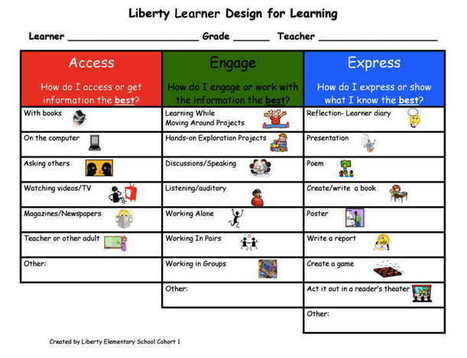
Guest post by Liberty Elementary Personalized Learning Team how they build relationships with learners based on Riverside USD's 5 elements of Personalized Learning.
Via Kathleen McClaskey, Alfonso Gonzalez


|
Rescooped by
michel verstrepen
from PBL
onto gpmt March 10, 2016 4:08 PM
|
 Scoop.it!
Guest post by Liberty Elementary Personalized Learning Team how they build relationships with learners based on Riverside USD's 5 elements of Personalized Learning.
Discover how LIberty Elementary School in Riverside, CA is helping every learner tell their story and how they learn best.
 Your new post is loading...
 Your new post is loading...
Your new post is loading...
Scoop.it!

This guide breaks down the 13 essential AI skills and a strategic training plan to help your workforce thrive in an AI-powered world. Via EDTECH@UTRGV 
EDTECH@UTRGV's curator insight,
April 13, 12:25 PM
"What was cutting-edge yesterday feels like standard practice today and will be outdated tomorrow."
Scoop.it!

This reflection is part of a broader journey through #ReverseTHINKing—where we move from awareness to responsibility, from reaction to understanding. Image created by ChatGPT, click please to enlarge. Introduction As we learned already that we are living together now with two different worlds, the #RealWorld and the #VirtualWorld… What happens when the world we create…
Learn more / En savoir plus / Mehr erfahren:
https://www.scoop.it/topic/21st-century-learning-and-teaching?tag=Gust-MEES
https://gustmees.wordpress.com/
Via Gust MEES 
Gust MEES's curator insight,
April 12, 1:32 PM
This reflection is part of a broader journey through #ReverseTHINKing—where we move from awareness to responsibility, from reaction to understanding. Image created by ChatGPT, click please to enlarge. Introduction As we learned already that we are living together now with two different worlds, the #RealWorld and the #VirtualWorld… What happens when the world we create…
Learn more / En savoir plus / Mehr erfahren:
https://www.scoop.it/topic/21st-century-learning-and-teaching?tag=Gust-MEES
https://gustmees.wordpress.com/
Scoop.it!

GenAI can be a useful tool in assessment – if used intentionally. Find out what an intelligent dashboard can do for your students’ relationship to GenAI Via Vladimir Kukharenko, juandoming
Scoop.it!

Community grounded.Action oriented. Technology — especially AI — is rapidly reshaping how young people connect. Our research arm is dedicated to staying on top of these shifts and forecasting emerging trends, creating an evolving picture of what connection looks like today and where it is... Via Dr. Tom D'Amico (@TDOttawa) 
Valle Fernández's curator insight,
April 12, 6:31 AM
¿La IA acerca o aísla a los jóvenes?
The Rithm Project ha publicado una investigación imprescindible: "Youth, AI, and the Relationships That Shape Them", con datos de 2.400 jóvenes de 13 a 24 años. No buscan demonizar ni idealizar la IA, sino entender qué está pasando realmente con sus relaciones sociales y bienestar emocional. Además del estudio principal, encontrarás: – 5 principios prosociales para diseñar IA que conecte. – Entrevistas sobre apps de compañía emocional ("¿vitamina o vicodín?"). – Herramientas prácticas para conversar en clase, en casa o en equipo. Ideal para educadores, diseñadores de tecnología, familias y cualquier persona que quiera construir un futuro digital con más conexión humana.
Scoop.it!

In an AI-rich classroom where ideas are abundant and answers are cheap, the scarce resource is not information--it is ownership. Via EDTECH@UTRGV
EDTECH@UTRGV's curator insight,
April 10, 12:12 PM
"While the Need to Know list is a classic for identifying knowledge gaps, AI can act as a Socratic mirror, reflecting a student’s latent interests back to them until they recognize a personal connection to the driving question."
Scoop.it!

"L’association Tiers-Lieux Edu se positionne comme un réseau francophone d’acteurs éducatifs au sens large, engagé dans le soutien au au développement de ce qu’elle appelle des tiers-lieux éducatifs : des espaces hybrides (physiques et sociaux) favorisant l’apprentissage par le faire (MakerEd), et rapprochant le monde de l’éducation du monde des fablab. Cela conduit à divers projets, des évènements, de la formation, de l’accompagnement de projets, à l’échelle de la francophonie." Via Laurence
Scoop.it!

Learn what real interactivity in learning actually means—and how to move beyond clicks and quizzes to design meaningful learning experiences. Via EDTECH@UTRGV
EDTECH@UTRGV's curator insight,
April 9, 3:52 PM
"[A] lot of what we label as "interactive" in eLearning is really just reactive. Click. Reveal. Next. That's not interaction. That's polite participation."
Scoop.it!

New workforce research shows decision education is one of the most sought-after skills in an AI-driven economy. Via EDTECH@UTRGV
EDTECH@UTRGV's curator insight,
April 8, 11:40 AM
"[W]hile technology can generate information and automate tasks, people still need to evaluate options, weigh tradeoffs, and determine what to do next. These are decision-making skills–and demand for them is rising." 
jonesfree354@gmail.com's curator insight,
April 11, 7:32 AM
https://agrocoltd.com/product/buy-robusta-coffee-beans/ https://agrocoltd.com/product/arabica-coffee-beans-for-sale/ https://agrocoltd.com/product/white-maize/ https://agrocoltd.com/product/cashew-nuts/ https://agrocoltd.com/product/sunflower-seeds/ https://agrocoltd.com/product/green-cardamom/ https://agrocoltd.com/product/turmeric/ https://agrocoltd.com/product/cloves/ https://agrocoltd.com/product/chickpeas/ https://agrocoltd.com/product/organic-soybean/ https://havenkittykingdom.com/british-shorthair/ https://havenkittykingdom.com/ragdoll-kittens/ https://deutschesprachzertifikate.com.de/goethe-zertifikat/ https://deutschesprachzertifikate.com.de/testdaf-zertifikat/ https://deutschesprachzertifikate.com.de/osd-zertifikat/ https://deutschesprachzertifikate.com.de/telc-zertifikat/
Scoop.it!

As students engage with artificial intelligence companions, schools must develop guidelines that focus on education, monitoring and content moderation. Via EDTECH@UTRGV
EDTECH@UTRGV's curator insight,
April 8, 11:50 AM
"States are beginning to pass laws that address the mental health and safety risks posed by AI companions. Schools have a responsibility to be more proactive, with guidelines and support in place that focus on education, monitoring and content moderation rather than reactive discipline."
Scoop.it!

Student View: School AI policies directly affect students’ outcomes and futures. To exclude them from the conversation is simply undemocratic. Via EDTECH@UTRGV
EDTECH@UTRGV's curator insight,
April 7, 12:54 PM
"These AI policies directly affect students’ outcomes and futures. To exclude them from the conversation is simply undemocratic."
Scoop.it!

From
www

Responses from more than 94,000 students, faculty and staff reveal higher education’s promising yet complex relationship with AI. Via EDTECH@UTRGV
EDTECH@UTRGV's curator insight,
April 7, 1:02 PM
"Demand for training is real, and the students who need it most want it most."
Scoop.it!

Discover how to embed choice into learning in a clear, manageable and meaningful way Via Vladimir Kukharenko, juandoming
Scoop.it!

From
www
QUALITY OVER QUANTITY: A re-examination of digital tools was already underway in districts, as part of curriculum reviews and budget trimming afte Via EDTECH@UTRGV
EDTECH@UTRGV's curator insight,
April 6, 12:15 PM
“We’re trying to get much [clearer] about what this is going to address,” says Warden. “What do we need students to learn, and which tools will help us understand where they are?” |
Scoop.it!

"If you work in faculty development, you have probably heard the same concern on a loop for the past year: All my students are cheating using AI. At Geogia State University, our campus teaching and learning center gets more requests for workshops on how to prevent digital dishonesty than any other topic. Throughout the fall 2025 semester, I averaged one workshop, presentation or meeting about AI and academic integrity every four workdays." Via EDTECH@UTRGV
EDTECH@UTRGV's curator insight,
April 13, 12:28 PM
"By removing the space for safe experimentation and feedback, we have made the struggle to learn a liability. In that context, students are turning to AI not to avoid learning, but to avoid the risk of failure in a system that offers them no safety net."
Scoop.it!
This reflection is part of a broader journey through #ReverseTHINKing—where we move from awareness to responsibility, from reaction to understanding. Image created by ChatGPT, click please to enlarge. Introduction We are living in a time where technological progress is accelerating faster than our collective ability to reflect on its consequences. Artificial Intelligence now influences how…
Learn more / En savoir plus / Mehr erfahren:
https://www.scoop.it/topic/21st-century-learning-and-teaching?tag=Gust-MEES
https://gustmees.wordpress.com/
Via Gust MEES
Gust MEES's curator insight,
April 10, 7:12 PM
This reflection is part of a broader journey through #ReverseTHINKing—where we move from awareness to responsibility, from reaction to understanding. Image created by ChatGPT, click please to enlarge. Introduction We are living in a time where technological progress is accelerating faster than our collective ability to reflect on its consequences. Artificial Intelligence now influences how…
Learn more / En savoir plus / Mehr erfahren:
https://www.scoop.it/topic/21st-century-learning-and-teaching?tag=Gust-MEES
https://gustmees.wordpress.com/
Scoop.it!
Scoop.it!

More than 40% of bachelor’s degree students said generative AI has caused them to consider changing their major. Via EDTECH@UTRGV
EDTECH@UTRGV's curator insight,
April 10, 12:09 PM
"Workforce disruptions caused by generative AI have some students rethinking their majors with one analysis characterizing higher education’s relationship with AI as 'both promising and complex.'”
Scoop.it!

Ces espaces de sociabilité séduisent autant par leur convivialité que par leurs nombreuses activités. Explication avec les témoignages d’usagers et d’usagères de trois tiers-lieux en France. Via Laurence
Scoop.it!

"What constitutes general intelligence? What abilities do machines currently have (natural language, basic reasoning, some creativity) and what don’t they have (ability to apply learning from one domain to another, perceive, plan a response, respond, memory, long-term planning, common sense, empathy, resilience, sense of morality, sentience, consciousness, more)?" Via EDTECH@UTRGV
EDTECH@UTRGV's curator insight,
April 9, 4:02 PM
"[T]he most important skills students need in an AI world is keep learning, keep changing and how to keep a 'flexible mind'”
Scoop.it!

From
holospark
Holospark is an AI-powered study platform that turns any topic into structured notes, quizzes, flashcards, and an AI tutor. Study smarter and succeed in your exams. Via Nik Peachey 
Nik Peachey's curator insight,
April 9, 5:54 AM
This is another tool for creating a course from notes and documents https://holospark.ai/ Holospark turns your topic to study into a clear, structured course with summaries, tables, quizzes, and an AI tutor that helps you master the topic.
jonesfree354@gmail.com's curator insight,
April 11, 7:32 AM
https://agrocoltd.com/product/buy-robusta-coffee-beans/ https://agrocoltd.com/product/arabica-coffee-beans-for-sale/ https://agrocoltd.com/product/white-maize/ https://agrocoltd.com/product/cashew-nuts/ https://agrocoltd.com/product/sunflower-seeds/ https://agrocoltd.com/product/green-cardamom/ https://agrocoltd.com/product/turmeric/ https://agrocoltd.com/product/cloves/ https://agrocoltd.com/product/chickpeas/ https://agrocoltd.com/product/organic-soybean/ https://havenkittykingdom.com/british-shorthair/ https://havenkittykingdom.com/ragdoll-kittens/ https://deutschesprachzertifikate.com.de/goethe-zertifikat/ https://deutschesprachzertifikate.com.de/testdaf-zertifikat/ https://deutschesprachzertifikate.com.de/osd-zertifikat/ https://deutschesprachzertifikate.com.de/telc-zertifikat/
Scoop.it!

Learning from failure boosts skills 4x faster with 200% better retention via safe spaces, instant feedback, and gamification. Via EDTECH@UTRGV
EDTECH@UTRGV's curator insight,
April 8, 11:41 AM
"Top companies are now adopting "fail forward" philosophies, where failure is used to create explosive growth within their adaptive learning strategies."
jonesfree354@gmail.com's curator insight,
April 11, 7:33 AM
https://agrocoltd.com/product/buy-robusta-coffee-beans/ https://agrocoltd.com/product/arabica-coffee-beans-for-sale/ https://agrocoltd.com/product/white-maize/ https://agrocoltd.com/product/cashew-nuts/ https://agrocoltd.com/product/sunflower-seeds/ https://agrocoltd.com/product/green-cardamom/ https://agrocoltd.com/product/turmeric/ https://agrocoltd.com/product/cloves/ https://agrocoltd.com/product/chickpeas/ https://agrocoltd.com/product/organic-soybean/ https://havenkittykingdom.com/british-shorthair/ https://havenkittykingdom.com/ragdoll-kittens/ https://deutschesprachzertifikate.com.de/goethe-zertifikat/ https://deutschesprachzertifikate.com.de/testdaf-zertifikat/ https://deutschesprachzertifikate.com.de/osd-zertifikat/ https://deutschesprachzertifikate.com.de/telc-zertifikat/
Scoop.it!
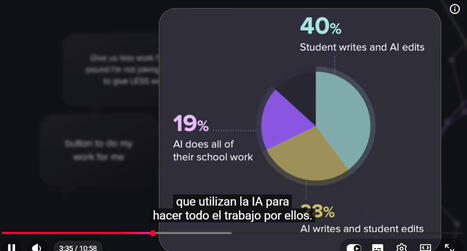
Por Paola Dellepiane "A medida que la Inteligencia Artificial (IA) se introduce rápidamente en las aulas, corremos el riesgo de confundir l... Via LGA
Scoop.it!

Riley: With AI literacy becoming part of PISA, are we ready for this level of embarrassment on the global stage for a technology we largely created? Via EDTECH@UTRGV
EDTECH@UTRGV's curator insight,
April 7, 12:59 PM
"What’s needed now is a shared national commitment to AI literacy that creates urgency around implementation and ensures that by 2029, students and educators alike are prepared, confident, and competitive on a global stage."
jonesfree354@gmail.com's curator insight,
April 11, 7:35 AM
https://agrocoltd.com/product/buy-robusta-coffee-beans/ https://agrocoltd.com/product/arabica-coffee-beans-for-sale/ https://agrocoltd.com/product/white-maize/ https://agrocoltd.com/product/cashew-nuts/ https://agrocoltd.com/product/sunflower-seeds/ https://agrocoltd.com/product/green-cardamom/ https://agrocoltd.com/product/turmeric/ https://agrocoltd.com/product/cloves/ https://agrocoltd.com/product/chickpeas/ https://agrocoltd.com/product/organic-soybean/ https://havenkittykingdom.com/british-shorthair/ https://havenkittykingdom.com/ragdoll-kittens/ https://deutschesprachzertifikate.com.de/goethe-zertifikat/ https://deutschesprachzertifikate.com.de/testdaf-zertifikat/ https://deutschesprachzertifikate.com.de/osd-zertifikat/ https://deutschesprachzertifikate.com.de/telc-zertifikat/
Scoop.it!
Scoop.it!

AI is transforming higher education with personalized learning, hybrid models, and smarter systems—while redefining quality, access, and future-ready skills. Via EDTECH@UTRGV
EDTECH@UTRGV's curator insight,
April 6, 12:10 PM
"As higher education stands at the crossroads of rapid technological transformation, Artificial Intelligence and digital learning are reshaping not just how knowledge is delivered, but how it is experienced."
jonesfree354@gmail.com's curator insight,
April 11, 7:37 AM
https://agrocoltd.com/product/buy-robusta-coffee-beans/ https://agrocoltd.com/product/arabica-coffee-beans-for-sale/ https://agrocoltd.com/product/white-maize/ https://agrocoltd.com/product/cashew-nuts/ https://agrocoltd.com/product/sunflower-seeds/ https://agrocoltd.com/product/green-cardamom/ https://agrocoltd.com/product/turmeric/ https://agrocoltd.com/product/cloves/ https://agrocoltd.com/product/chickpeas/ https://agrocoltd.com/product/organic-soybean/ https://havenkittykingdom.com/british-shorthair/ https://havenkittykingdom.com/ragdoll-kittens/ https://deutschesprachzertifikate.com.de/goethe-zertifikat/ https://deutschesprachzertifikate.com.de/testdaf-zertifikat/ https://deutschesprachzertifikate.com.de/osd-zertifikat/ https://deutschesprachzertifikate.com.de/telc-zertifikat/
|







Discover how LIberty Elementary School in Riverside, CA is helping every learner tell their story and how they learn best.
Discover how LIberty Elementary School in Riverside, CA is helping every learner tell their story and how they learn best.
Being validated in the are of education motivates and encourages the learner to want to learn even the more. Just think in reverse how much not being validated decreases the learners interest in learning. How many chdren/ students are counted as those just In class getting a free pass whether they are taught, learn or not? How can we tell which children are in just such a category of students/ children.