Your new post is loading...

|
Scooped by
Roland Schegg
April 29, 9:29 AM
|
Booking Holdings is positioning its artificial intelligence (AI) efforts as a moat against general AI models. The company reported early testing showed lifts in user conversion, reduced customer service interaction and other positive metrics across brands.
CEO Glenn Fogel shared a progress report on Booking Holdings’ AI endeavors ranging from Priceline's Penny and conversational shopping to Booking.com’s implementations in search and self-service and Agoda’s use to boost efficiency.
“In very early testing from a small sample set, we are seeing a noticeable uplift from users who engage with Penny compared to non-Penny users,” Fogel said.
|
|
Scooped by
Roland Schegg
April 29, 6:44 AM
|
Hotels are tired of paying “rent” on their own guests.The hospitality industry is experiencing a quiet but powerful shift. While Online Travel Agencies (OTAs) remain an important part of the distribution ecosystem, an increasing number of travelers who begin their journey on OTA platforms ultimately choose to book directly with the hotel online. This emerging behavior signals a booking renaissance: a chance for hotels to stop being passive participants in the guest journey and start owning the relationship. That presents a significant opportunity for hotels to reclaim revenue, strengthen guest relationships, and reduce OTA dependency without abandoning third-party channels altogether.
|
|
Scooped by
Roland Schegg
April 28, 12:13 AM
|
Today we’re expanding what you can connect to Claude. Alongside the work tools you already use, you can now connect the apps you use throughout your week, including AllTrails, Instacart, Audible, Tripadvisor, Intuit TurboTax, and more.
|
|
Scooped by
Roland Schegg
April 25, 4:53 AM
|
Payments and financial infrastructure may seem “behind the scenes,” but pretty much everyone can think of a time when a blocked transaction or confusing checkout stood in the way of a great travel experience. Elevating payments strategically at an organizational level can lead to better customer experiences, more efficient and cost-effective operations, and increased profitability.
|
|
Scooped by
Roland Schegg
April 25, 4:21 AM
|
Les 26 et 27 mai 2026, la conférence finale du projet de recherche Innosuisse « Resilient Tourism » réunira à Sierre les acteurs clés de la transformation du tourisme suisse. Porté par six hautes écoles — la HES-SO Valais-Wallis, l’EHL Hospitality Business School, la Haute Ecole de Lucerne (HSLU), la Haute Ecole des Grisons (FHGR), l’Université de St-Gall et l’institut ICARE— le projet a mobilisé plus de 30 partenaires touristiques, du niveau local au niveau national. Pendant quatre ans, ce consortium a travaillé à transformer la donnée et le numérique en véritables leviers de résilience, d’innovation et de compétitivité pour le secteur touristique suisse.
Le thème de cette conférence « Scaling Smart: How Digital Is Shaping the Future of Tourism » reflète parfaitement l’évolution en cours. Il ne s’agit plus simplement d’adopter des outils numériques, mais de comprendre comment structurer, intégrer et exploiter la donnée à grande échelle.
|
|
Scooped by
Roland Schegg
April 23, 6:59 AM
|
Users don’t behave differently in AI assistants than they do in traditional search (Google). In both cases, decisions follow the same pattern:
Discovery → consideration → transaction
These are simply stages of the same funnel, with one goal: make a decision and follow through. Technology doesn’t change this behavior. This is how users behave.
Discovery: AI’s greatest strength
Today, AI assistants excel in the discovery phase or planning phase (also known as awareness), when users are still exploring options without a clear decision. Assistants already capture around 30% of searches at this stage, and that will only increase. The value proposition of AI, led by Gemini and ChatGPT, is undeniable.
|
|
Scooped by
Roland Schegg
April 22, 6:29 AM
|
Speaking at an aviation event recently, Riccardo Vittoria raised an issue that has long been simmering within the travel industry: the hidden costs of artificial intelligence (AI).
AI is being sold to the travel industry as a near-universal solution to lower costs, improve efficiency and delight customers. But as more companies move beyond tests and pilots into deployment, a murkier picture is emerging.
Vittoria, co-founder and CEO of AI platform Acai, said onstage at the Airline Distribution 2026 conference in March: “In servicing, AI can be a disruptor; in bookings, we need to see. I say that because agentic AI has a lot of cognitive power, it can do so much, it can do things better than humans lightning fast, but it’s still expensive."
|
|
Scooped by
Roland Schegg
April 22, 4:44 AM
|
„Wir haben heute mehr Systeme im Hotel als je zuvor, aber oft trotzdem keine gemeinsame Sicht auf unsere Daten.“
Dieser Gedanke beschreibt ziemlich treffend, wo viele Häuser aktuell stehen. Die letzten Jahre haben gezeigt, wie konsequent die Branche in Technologie investiert hat. Kaum ein Hotel kommt heute ohne PMS, RMS, CRM, POS, Channel Manager oder spezialisierte Marketing Tools aus. Die Systemlandschaft ist moderner denn je und viele Häuser haben sich technologisch ein Setup aufgebaut, das vor wenigen Jahren noch undenkbar gewesen wäre.
Und trotzdem bleibt oft ein unterschwelliges Gefühl zurück, dass etwas nicht ganz rund läuft. Denn während die Systeme auf dem neuesten Stand sind, wirkt der Umgang mit Daten häufig erstaunlich fragmentiert. Man arbeitet mit modernen Tools, aber Entscheidungen basieren nicht selten auf unterschiedlichen Datenständen, eigenen Excel-Logiken oder individuellen Interpretationen von Kennzahlen.
|
|
Scooped by
Roland Schegg
April 18, 4:02 AM
|
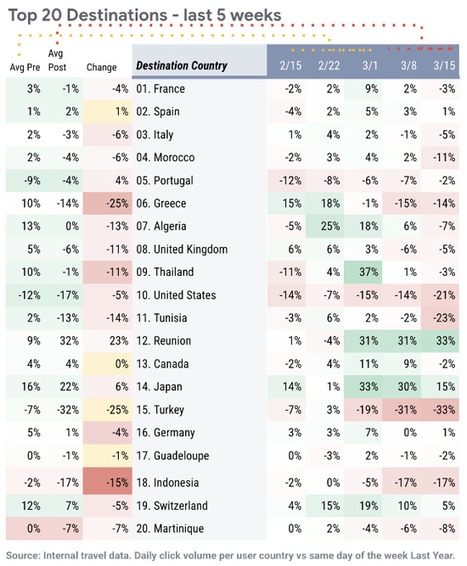
"Les données hebdomadaires de Google (février-mars 2026) permettent de mesurer précisément l’impact du conflit au Moyen-Orient sur les intentions de voyage des Français, toutes verticales confondues. Les signaux sont clairs : une redistribution massive des flux de recherche est en cours."
|
|
Scooped by
Roland Schegg
April 17, 1:13 AM
|
Artificial intelligence is transforming travel into a more human-centered experience, not a less personal one. For hoteliers, this means a fundamental shift from selling rooms to responding to guest intent, emotion, and expectations in real time. AI is reshaping every stage of the guest journey—from inspiration and booking to on-property service and post-stay engagement. Hotels that successfully combine AI capabilities with human hospitality will be best positioned to capture demand and build lasting guest relationships.
|
|
Scooped by
Roland Schegg
April 16, 2:36 AM
|
Die Bedrohung durch Cyberangriffe in der Hotellerie nimmt spürbar zu – und zwingt Betriebe in der DACH-Region zum Umdenken. Was lange als technisches Randthema galt, entwickelt sich zunehmend zu einer zentralen Managementaufgabe. Die zunehmende Digitalisierung, komplexe IT-Strukturen und der Umgang mit sensiblen Gästedaten machen Hotels zu attraktiven Zielen für Cyber-Kriminelle. Ein aktuelles White Paper der HSMA Deutschland zeigt, wie gross die Risiken sind – und warum Cybersicherheit zur strategischen Priorität werden muss.
|
|
Scooped by
Roland Schegg
April 15, 7:10 AM
|
Travel companies are increasingly adopting a hybrid service model that combines AI-powered agents with human support to deliver both efficiency and empathy. Executives from Navan and Expedia Group highlight that while AI can handle a growing share of customer interactions, it cannot fully replace the value of human connection. Instead, the industry is moving toward orchestrating both elements to create faster, more responsive, and more personalized service experiences. This shift reflects a broader recognition that technology enhances service delivery, but trust and reassurance still depend on human interaction.
Key takeaways
Hybrid service model: Travel companies are intentionally combining AI automation with human agents to balance efficiency with personalized support.
AI as the first line of service: AI agents increasingly handle routine inquiries, itinerary changes, and disruptions, reducing response times and operational costs.
|
|
Scooped by
Roland Schegg
April 15, 6:51 AM
|
Expedia Group’s latest research highlights a growing disconnect in the travel journey that directly impacts hotels. While guests are increasingly using AI tools to explore destinations, compare options, and shape their trips, they still turn to trusted brands and platforms to complete their bookings. This shift is fragmenting the path to purchase, with discovery moving into AI-driven environments while transactions remain anchored in established channels. For hotels, this creates both a visibility challenge and an opportunity to rethink how they engage travelers across the funnel.
Key takeaways
AI is reshaping the discovery phase: Travelers are increasingly using AI to explore destinations, build itineraries, and generate ideas, shifting early-stage demand away from traditional search channels.
Booking still happens in trusted ecosystems: Most guests prefer to complete hotel bookings through established brands such as OTAs or direct hotel channels rather than through AI interfaces.
|
|
|
Scooped by
Roland Schegg
April 29, 8:36 AM
|
L’IA donne des super-pouvoirs analytiques aux petits acteurs
Or je dois admettre que depuis 18 mois, quelque chose a changé. Pas dans les discours – ils restent globalement aussi grandiloquents qu’avant – mais dans ce que l’IA générative permet désormais de faire, dans le réel, à des organisations qui hier encore n’auraient jamais pu se le permettre. Et ce changement-là, contrairement aux QR codes et aux applis, mérite qu’on s’y arrête sérieusement.
Soyons clairs : je n’écris pas un énième billet pour faire l’apologie de l’IA. Trop de gens s’en chargent déjà et avec un enthousiasme souvent inversement proportionnel à leur compréhension de ce qu’elle fait vraiment. Mon constat est plus terre-à-terre. Un petit hôtelier de région, une attraction familiale, un petit OGD avec trois employés – ces acteurs représentent 90 % de notre industrie touristique. Pendant 25 ans, j’ai accompagné ces organisations et j’ai constaté la même chose : elles ont des données, parfois beaucoup, mais elles n’ont ni le temps, ni les compétences, ni les ressources pour les analyser. Sortir un tableau croisé dynamique propre à partir des fichiers de réservation, croiser ça avec la météo et les données de fréquentation locale, identifier des patterns de comportement utiles pour ajuster une grille tarifaire ou un calendrier de campagne… ça nécessitait jadis un analyste à temps plein ou une firme externe à 50 000 $ le mandat. Inaccessible.
|
|
Scooped by
Roland Schegg
April 28, 1:05 AM
|
Il y a deux ans, parler de GEO (Generative Engine Optimization) relevait encore de la curiosité professionnelle. Aujourd’hui, c’est devenu un réflexe stratégique. Les chiffres qui s’accumulent depuis le début de 2026 ne laissent plus aucun doute : la manière dont les consommateurs cherchent, comparent et choisissent des marques, des produits ou des destinations a basculé. Et si vous avez suivi mes articles sur le sujet au fil des deux dernières années, je vous propose une petite mise au point avec les données les plus récentes.
Petit rappel pour ceux qui débarquent : le GEO consiste à optimiser son contenu pour qu’il soit trouvé, compris, cité et recommandé par les moteurs de recherche générative tels que ChatGPT, Google Gemini, Perplexity, Claude, Microsoft Copilot et ainsi de suite. J’en parlais il y a maintenant deux ans dans C’est l’heure d’adapter votre SEO vers le GEO, et j’y suis revenu à plusieurs reprises, notamment dans GEO vs SEO : quelles différences et quels impacts sur la visibilité en ligne.
|
|
Scooped by
Roland Schegg
April 25, 6:20 AM
|
Avec GPT-5.5, OpenAI entend améliorer la capacité de son modèle à planifier, utiliser des outils et mener à bien des tâches complexes sans supervision détaillée.
|
|
Scooped by
Roland Schegg
April 25, 4:50 AM
|
"Per-click pricing is the advertising auction travel already competes in. ChatGPT just pulled up a chair.
OpenAI has turned on cost-per-click ads inside ChatGPT, according to Digiday. The shift moves ChatGPT ads off an impression-based model — where advertisers paid for views — and onto the pricing model that underpins search advertising.
Per-click pricing is how Google built its ad empire, and it’s the benchmark travel marketers already use to measure performance. OpenAI’s move puts ChatGPT into that same auction logic..."
|
|
Scooped by
Roland Schegg
April 23, 12:23 PM
|
Hotels are struggling to appear in artificial intelligence-generated travel recommendations as large language models (LLMs) change how travelers discover and compare lodging options.
With AI-driven travel planning growing in popularity, a hotel’s visibility increasingly is determined by how complete and consistent its information is across digital channels.
A report from HotelWorld AI, World’s Best at AI 2025 Index, found that only about 16% of global hotel supply is visible in search results on ChatGPT, Google's AI and Perplexity, leaving most properties absent from what are becoming key resources for trip planning.
The report, which analyzed 131,000 properties in 30 countries, ranked visibility in these platforms across the hotel landscape. The findings indicate that chain-affiliated properties are significantly more likely to be surfaced compared to independents, with seven parent chains accounting for the top 25 most-visible brands.
|
|
Scooped by
Roland Schegg
April 22, 8:51 AM
|
"Turns out you can probably find some entire-home short-term rental listings in New York City, after all, because hosts take lawfully registered listings and convert them into illegal ones. Airbnb isn't required to take any action to limit the practice — and apparently isn't doing so.
New York City's Office of Special Enforcement said it conducted a partial review of all approved short-term rental listings and found that 27% were offering illegal stays for entire homes and/or accommodations of more than two guests."
|
|
Scooped by
Roland Schegg
April 22, 4:46 AM
|
" „Wir haben heute mehr Systeme im Hotel als je zuvor, aber oft trotzdem keine gemeinsame Sicht auf unsere Daten.“
Dieser Gedanke beschreibt ziemlich treffend, wo viele Häuser aktuell stehen. Die letzten Jahre haben gezeigt, wie konsequent die Branche in Technologie investiert hat. Kaum ein Hotel kommt heute ohne PMS, RMS, CRM, POS, Channel Manager oder spezialisierte Marketing Tools aus. Die Systemlandschaft ist moderner denn je und viele Häuser haben sich technologisch ein Setup aufgebaut, das vor wenigen Jahren noch undenkbar gewesen wäre.
Und trotzdem bleibt oft ein unterschwelliges Gefühl zurück, dass etwas nicht ganz rund läuft. Denn während die Systeme auf dem neuesten Stand sind, wirkt der Umgang mit Daten häufig erstaunlich fragmentiert. Man arbeitet mit modernen Tools, aber Entscheidungen basieren nicht selten auf unterschiedlichen Datenständen, eigenen Excel-Logiken oder individuellen Interpretationen von Kennzahlen."
|
|
Scooped by
Roland Schegg
April 21, 5:04 AM
|
"AI as UI Throughout the conversation, Puorto offered a provocative perspective, avoiding easy enthusiasm and instead focusing on the deeper structural shifts already reshaping the sector. One of the central ideas he explored was the notion that AI is not simply a new tool, but is increasingly becoming a new interface. In his view, the real transformation lies less in the intelligence itself than in the way people will interact with systems. Rather than navigating fragmented software environments, for example, future hospitality professionals may simply converse with technology, asking questions in natural language and receiving actionable insights without needing to move through layers of dashboards, menus, and static reports. A “post-keyboard” industry, in the words of Puorto. From Interfaces to Industry Transformation This transition, he argued, has implications well beyond operational efficiency. It points to a broader reconfiguration of how hotels work, how staff engage with digital tools, and how guests will search, compare, and book travel experiences. If AI becomes the new user interface, then hospitality may gradually move from a browser-centric logic to an AI-centric one, both on the demand side and on the operational side."
|
|
Scooped by
Roland Schegg
April 17, 11:46 AM
|
AI performance depends on robust, integrated information on guest behaviors and facility operations, but many hotel companies still operate with a patchwork of systems that do not integrate well. Nearly half of hoteliers report difficulty accessing critical information, and many spend significant time stitching together reports to see a complete picture of the business.
The workforce challenge is also significant. Only 2.9% of full-time employees in travel and tourism possess AI skills, compared with 21% in tech and media, although AI-skilled hospitality roles are growing nearly 5% year over year.
|
|
Scooped by
Roland Schegg
April 16, 9:36 AM
|
CE QUE L’IA DEMANDE VRAIMENT
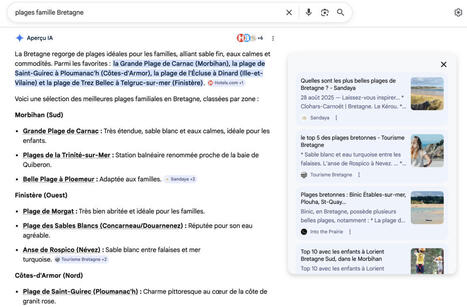
Pour comprendre le problème, il faut d’abord comprendre en quoi le search IA diffère fondamentalement du search classique. Et non, ce n’est pas juste « Google avec une couche d’IA par-dessus ».
Dans le monde d’avant (et encore aujourd’hui en France, tant que les AI Overviews n’y sont pas déployées), un moteur de recherche se contente de la question posée. Vous tapez « plages famille Bretagne », Google vous renvoie les pages qui répondent le mieux à cette requête. Point. L’IA Search fait tout autre chose : elle prend votre question et l’explore dans toutes les directions qu’elle juge pertinentes. Et elle le fait parce que son mécanisme de réponse l’exige, pas par curiosité.
|
|
Scooped by
Roland Schegg
April 15, 9:34 AM
|
Hoteliers are feeling the pressure to transform their businesses as technology evolves, according to Amadeus’ “Travel Dreams 2026” report.
The shift comes as travelers’ reliance on artificial intelligence (AI) is increasing. Travelers said AI was useful for planning (42%), inspiration (36%), booking (32%) and during travel (35%).
“Hoteliers are this year focused on becoming more efficient, digital and guest-centric, with rising costs, digital transformation and hyper-personalization cited as the main challenges,” Amadeus said in the report.
“They are investing heavily in artificial intelligence (AI) for revenue intelligence, forecasting and automation, while being careful to preserve the human touch in guest services.”
|
|
Scooped by
Roland Schegg
April 15, 7:03 AM
|
Expedia Group released The AI Trust Gap report, revealing a growing disconnect between how travelers use AI chatbots and agents and where they book. While AI is quickly becoming a go-to tool for trip planning and inspiration, travelers still overwhelmingly rely on trusted travel brands for booking and support.
Travelers don't have a technology problem with AI. They have a trust problem.
Share
The Expedia Group survey, which interviewed more than 5,700 adults across the U.S., U.K., and India, highlights a defining shift in travel: AI is reshaping discovery, but trust — not technology — is the deciding factor in where travelers transact.
Travelers embrace AI for discovery and planning
Expedia Group research shows that travelers are open to using AI chatbots and agents to help with planning a trip:
53% are comfortable letting AI suggest travel options
42% use or would use AI to monitor prices
40% use AI to help build itineraries
Nearly half (48%) say AI saves them time and helps them discover places they wouldn’t have found otherwise
|