Your new post is loading...

|
Scooped by
Roland Schegg
Today, 2:19 PM
|
Travel companies across the industry are investing heavily in AI-powered travel assistants designed to plan, compare, and eventually book trips automatically. The technology promises to transform travel planning into a conversational experience where AI agents handle research, itinerary building, and booking decisions. However, consumer adoption of fully automated travel planning remains limited, and many travelers still prefer to remain directly involved in the booking process. As a result, much of the current investment reflects a strategic bet on how travel discovery and booking may evolve rather than a response to existing customer demand.
|
|
Scooped by
Roland Schegg
Today, 7:05 AM
|
Payment systems have become an essential strategic priority for today’s hospitality and travel industry, shaping every stage of the customer journey and influencing all facets of a company’s financial operations.
However, modern payments in travel are often blocked by legacy booking systems and manual processes that weren’t designed for the real-time nature of today’s global travel ecosystem. Leading companies across hospitality and travel are replacing these fragmented payment processes with unified systems and seeking long-term partners that can support global scale.
This new report, based on a survey of 368 hospitality, travel, and leisure executives, reveals how modern payments in travel and related infrastructure directly impact profitability — driving conversion, guest satisfaction, operational agility, and long-term revenue growth.
|
|
Scooped by
Roland Schegg
March 3, 3:35 AM
|
Der deutsche Reisemarkt hat sich 2025 weiter strukturell verändert: bei 77 % aller Reisen wird inzwischen mindestens eine Reiseleistung online gebucht – 2024 lag dieser Anteil noch bei 74 %. Gleichzeitig hat bereits jede sechste Person in Deutschland (17 %) Künstliche Intelligenz für die Reiseplanung genutzt. Das zeigen die Auswertungen der diesjährigen Veröffentlichung der „VIR Daten & Fakten zum Online-Reisemarkt 2026“ des Verband Internet Reisevertrieb e. V. (VIR).
|
|
Scooped by
Roland Schegg
March 3, 3:30 AM
|
Phocuswright’s latest study, Budgets, Barriers and the Race to Agentic AI, finds that more than 60% of travel companies are already engaging with agentic AI, marking a decisive shift from experimentation to operational ambition. Presented ahead of discussions at ITB Berlin, the research suggests 2026 could be the year AI moves into the core of travel operations. Unlike earlier generative tools focused on content, agentic AI is designed to execute complex, real-world tasks across systems using real-time data. While enthusiasm and budgets are rising, many companies are still in early stages of scaling and organizational readiness.
|
|
Scooped by
Roland Schegg
March 3, 1:34 AM
|
"The moment an AI agent handles the complexity of travel, the intermediation layer will have to answer why it exists — or at least why it commands the margin it does.
Four weeks in February rattled financial markets — all because of the launch of … AI plugins. Roughly $1.5 trillion in market value evaporated.
Here’s the pattern: Anthropic, the AI company behind Claude, announces a new capability aimed at a specific sector. The tool itself is often modest — a plugin, a blog post, a research preview. Markets then reprice the entire sector before anyone has tested whether the product actually works."
|
|
Scooped by
Roland Schegg
March 2, 11:06 AM
|
L’Académie de la transformation numérique (ATN) de l’Université Laval vient de dévoiler son étude NETendances 2025 sur les réseaux sociaux et le divertissement en ligne au Québec. Pour les gestionnaires marketing qui cherchent à affiner leur stratégie numérique, les données sont éloquentes : l’attention des consommateurs québécois est plus que jamais captive et les fenêtres pour l’atteindre se précisent. Voici trois faits saillants qui ont retenu mon attention.
#1 PRÈS DE 4 HEURES / JOUR SUR LES RÉSEAUX SOCIAUX. ET ÇA AUGMENTE ENCORE!
C’est le chiffre qui devrait faire bondir tout gestionnaire marketing : les internautes québécois actifs sur les réseaux sociaux y consacrent désormais en moyenne 3 heures et 41 minutes par jour. En une seule année, ce temps a bondi de 51 minutes supplémentaires, une progression qui, loin de se concentrer uniquement chez les jeunes, s’observe dans tous les groupes d’âge.
|
|
Scooped by
Roland Schegg
March 2, 6:17 AM
|
Aujourd’hui, le voyageur tend de moins en moins à « Googler » son prochain itinéraire de voyage, optant plutôt pour les modèles populaires d’IA générative tels que ChatGPT, Perplexity, Claude, Google (Gemini ou AI Mode), DeepSeek ou encore Mistral. Un rapport de Booking paru à l’été 2025 estimait d’ailleurs à 40% la proportion de voyageurs français avait déjà fait appel à un modèle d’IA dans leur planification de séjour, chiffre appelé à monter jusqu’à 79% dans un proche futur. Constat similaire au Québec où un récent rapport du Réseau de Veille en Tourisme estime à 85% la proportion de voyageurs qui en fera usage d’ici l’été 2026!
|
|
Scooped by
Roland Schegg
March 2, 3:51 AM
|
Online travel agencies significantly increased their marketing investments in 2025, with the largest players spending a combined $20 billion on sales and marketing. Booking Holdings and Expedia Group accounted for more than three quarters of the total, reflecting sustained competition for traveler attention. Despite ongoing discussions around loyalty, direct channels and AI-driven efficiencies, overall spend continues to rise year over year. While direct bookings are growing for several players, they are not yet reducing dependence on performance marketing and brand advertising.
Key takeaways
Scale of investment: The leading OTAs collectively spent $20 billion on sales and marketing in 2025, marking another year of growth and highlighting the intensity of competition in the sector.
Booking Holdings’ balanced strategy: Booking increased marketing spend to $8.2 billion, with direct business in the mid-60% range and Genius loyalty members accounting for a high-50% share of room nights, yet higher performance and social media investment offset direct gains.
|
|
Scooped by
Roland Schegg
February 28, 2:27 PM
|
"The competition between online travel agencies (OTAs) to attract consumers to their platforms remains intense.
The largest players—Airbnb, Booking Holdings, Expedia Group and Trip.com Group—invested a combined $20 billion in sales and marketing in 2025. Booking and Expedia alone accounted for more than three quarters of the spend.
The figure represented a further year-over-year climb: OTAs have steadily increased sales and marketing spend over the past few years to $16.8 billion in 2023 and $17.8 billion in 2024."
|
|
Scooped by
Roland Schegg
February 27, 2:51 AM
|
OTAs reported double-digit gross bookings growth in the latest earnings cycle even as consumer travel spending declined. Credit-card data shows little correlation between overall travel spending and OTA performance over the past three years, confirming that OTA growth is increasingly decoupled from underlying demand trends. Instead of signaling a market-wide recovery, recent results point to share gains, B2B expansion, marketing efficiency, and monetization mechanics. The industry may need a new framework to interpret OTA results more accurately.
Key takeaways
Decorrelation confirmed: Credit-card data shows near-zero correlation between consumer travel spending and OTA gross bookings, indicating that OTA performance is no longer a reliable proxy for demand.
Strong growth despite soft spending: Booking Holdings, Airbnb, and Expedia posted double-digit or high single-digit gross bookings growth while overall travel spending declined year over year.
|
|
Scooped by
Roland Schegg
February 26, 4:45 AM
|
Google n’est pas mort. Le volume de recherches continue de progresser et les revenus Search continuent d’accélérer (+17% au Q4 2025). Le search est en expansion, pas en déclin.
L’IA ne remplace pas le search, elle s’y ajoute. L’usage de l’IA dans la préparation de voyages reste marginal (8-11% d’usage régulier en France). 99,8% des utilisateurs de ChatGPT utilisent aussi Google.
Le vrai danger, ce ne sont pas les chatbots mais les AI Overviews. Ces synthèses IA que Google affiche en haut de ses résultats, avec des baisses de clics de plus de 60% là où elles sont déployées.
En France, on ne les voit pas encore. Un contentieux sur les droits voisins bloque leur déploiement. On vit dans une bulle qui fausse notre perception, et nos diagnostics.
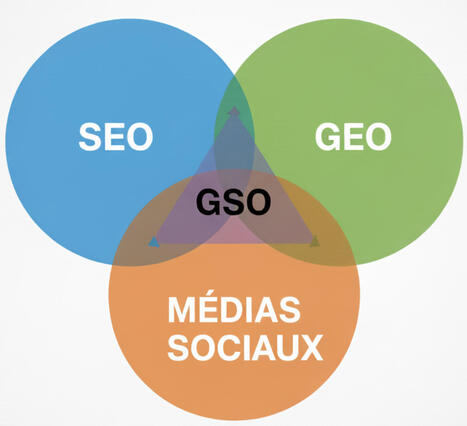
Le compteur change. On passe d’un clic à gagner à une citation à mériter. Et la bonne nouvelle, c’est que les fondamentaux SEO préparent déjà à ce monde-là.
|
|
Scooped by
Roland Schegg
February 26, 2:15 AM
|
Marriott, die grösste Hotelgruppe der Welt, investiert massiv in künstliche Intelligenz und digitale Kernsysteme. Mit einem milliardenschweren Modernisierungsprogramm will der Hotelkonzern Reservierungssysteme, Property-Management-Plattformen und Loyalitätsprogramme neu aufstellen. KI soll Effizienz steigern, Gästeerlebnisse personalisieren und die Wettbewerbsdynamik im Vertrieb neu ordnen.
|
|
Scooped by
Roland Schegg
February 25, 9:41 AM
|
AI is rapidly transforming travel fraud, making scams more sophisticated and harder to detect for travelers and travel providers alike. Advanced language models, deepfake technology, and AI-generated websites allow criminals to impersonate legitimate travel brands convincingly. Experts warn that traditional warning signs are fading, increasing financial risks and trust challenges across the travel ecosystem. At the same time, travel companies are deploying counter-technologies, creating an ongoing technological arms race.
|
|
|
Scooped by
Roland Schegg
Today, 1:59 PM
|
"In the face of the LLM threat, Booking Holdings thinks it can repeatedly grow its top line 8% annually over the "medium term" and earnings per share 15% over the same timespan.
Booking Holdings Chief Financial Officer Ewout Steenbergen said Tuesday the traffic that his company receives from the large language models "is very small" and "it's not growing."
|
|
Scooped by
Roland Schegg
March 3, 5:12 AM
|
"The European Commission has introduced a voluntary Code of Conduct on Online Ratings and Reviews for Tourism Accommodation to address fake and misleading hotel reviews. The initiative aims to improve transparency, strengthen consumer trust and support fair competition within the European hospitality market. Major booking platforms and industry associations have joined the framework, which sets common principles for review verification and clearer rating methodologies. While not legally binding, the code aligns with broader EU digital regulation and signals continued scrutiny of online platform accountability."
|
|
Scooped by
Roland Schegg
March 3, 3:32 AM
|
2026 veröffentlicht der Verband Internet Reisevertrieb e.V. (VIR) bereits die 21. Ausgabe der „VIR Daten & Fakten zum Online-Reisemarkt“. Teil der VIR Daten & Fakten zum Online-Reisemarkt sind wie jedes Jahr die Studienergebnisse der FUR-Reiseanalyse mit Kennzahlen zur Tourismusnachfrage im deutschen Gesamtreisemarkt. Ein besonderer Schwerpunkt liegt auf dem wachsenden Einsatz von Künstlicher Intelligenz im Tourismus. Ergänzt werden diese durch aktuelle Marktforschungsdaten von Travel Data + Analytics (TDA) zur Entwicklung des Veranstaltermarktes, zu Buchungsverhalten, Saisontrends und Umsatzentwicklungen.
Die Auswertungen zeigen ein klares Bild: Der deutsche Reisemarkt hat sich 2025 weiter strukturell verändert. Bei 77 % aller Reisen wird inzwischen mindestens eine Reiseleistung online gebucht – 2024 lag dieser Anteil noch bei 74 %. Gleichzeitig hat bereits jede sechste Person in Deutschland (17 %) Künstliche Intelligenz für die Reiseplanung genutzt. Trotz wirtschaftlicher Unsicherheiten bleibt Reisen für die Menschen in Deutschland ein fester Bestandteil ihres Lebens. Der deutsche Reisemarkt entwickelt sich damit nicht spektakulär, aber strukturell tiefgreifend: preisbewusster, digitaler und zunehmend KI-gestützt – bei gleichzeitig robuster Nachfrage.
|
|
Scooped by
Roland Schegg
March 3, 3:28 AM
|
In his recent Skift article, Rafat Ali uses the term “Claude Effect” to describe a new market pattern linked to Anthropic and its AI model Claude. The phrase does not refer to a specific travel product. Instead, it describes what happens when Anthropic announces a new AI capability: investors rapidly sell shares in the sector that could be affected, even if the tool is still early or unproven. Ali argues that travel — an industry built on managing complexity through intermediaries — could be next to experience this kind of market shock.
Key takeaways
The Claude effect is about anticipation, not replacement: Markets have reacted strongly to AI previews in legal, finance, and cybersecurity. The disruption is based on perceived future capability, not fully deployed products.
Travel’s business model is built on managing complexity: OTAs, GDSs, and TMCs earn margins by simplifying search, comparison, booking, policy enforcement, and pricing. If AI agents absorb that complexity, their role could be questioned.
Consumer booking is an obvious pressure point: An AI agent that can search, compare, and book trips through conversation — connected directly to airline and hotel systems — could challenge the traditional OTA interface model.
|
|
Scooped by
Roland Schegg
March 2, 11:15 AM
|
Avec Nano Banana 2, Google fusionne la puissance de Nano Banana Pro et la rapidité de Gemini Flash. Le modèle est notamment déployé gratuitement dans l’application Gemini
|
|
Scooped by
Roland Schegg
March 2, 11:02 AM
|
Die Zürcher Hotellerie verlangt strengere Brandschutzvorgaben für kommerzielle Airbnb-Anbieter. Hintergrund ist die unterschiedliche Regulierung: Während Hotels umfassende Sicherheitsauflagen erfüllen müssen, gelten für professionelle Kurzzeitvermietungen teilweise weniger strenge Regeln.
|
|
Scooped by
Roland Schegg
March 2, 3:53 AM
|
Across Europe, rising construction costs and mounting operational pressure are accelerating a wave of hotel-to-serviced-apartment conversions. Ageing, independently owned hotels are increasingly being repositioned into tech-enabled, service-light models that promise lower overheads and faster stabilisation. Investors are responding positively, attracted by stronger margins and predictable cash flows. For hoteliers, the trend signals both a competitive threat and a strategic opportunity to rethink operating models and asset positioning.
Key takeaways
Ageing inventory is under pressure: Many older, independent hotels face rising labour costs, deferred capex and succession challenges, making them vulnerable to repositioning or acquisition.
Service-light models reduce cost complexity: Tech-enabled serviced apartments eliminate traditional front desks, daily housekeeping and F&B operations, materially lowering fixed costs compared to classic hotel models.
|
|
Scooped by
Roland Schegg
March 2, 3:12 AM
|
Modern hotel technology platforms — call them hospitality operating systems, all-in-one suites, or simply the new PMS — have genuinely transformed what an independent hotel can do. Companies like Cloudbeds and Mews have made enterprise-grade distribution, revenue management, and guest experience tools accessible to properties that couldn't have dreamed of them a decade ago. The hospitality industry has spent the last five years celebrating this reinvention.
What it missed is that the corporate traveler was never part of the story.
|
|
Scooped by
Roland Schegg
February 28, 3:36 AM
|
"Die Hotellerie bewegt sich zwischen zwei Welten: Automatisierung und Gastfreundschaft. Dabei entscheidet sich ihre Zukunft nicht im Duell zwischen Mensch und Maschine, sondern dort, wo Intelligenz klug verteilt wird. Davon sind Robert Kneubühler, langjähriger Hotelier und Gründer von Nighty Nighty, sowie die Zukunftsforscherin Dr. Martina Kühne überzeugt. Sie zeigen auf, wie sich Technologie und Menschlichkeit sinnvoll ergänzen lassen.
Gäste buchen heute selbstverständlich per App und nutzen Self-Check-ins. Gleichzeitig wächst die Sehnsucht nach persönlicher Ansprache, nach jemandem, der zuhört und versteht, warum heute ein ruhigeres Zimmer wichtiger ist als gestern. Genau in diesem Spannungsfeld steht die Branche."
|
|
Scooped by
Roland Schegg
February 26, 10:24 AM
|
Artificial intelligence tools such as ChatGPT are reshaping how travellers begin planning their trips. Research shows that while AI excels at generating fast, personalised suggestions, satisfaction declines when it takes on the role of narrowing choices or making final recommendations. Travelers are more comfortable using AI as a source of inspiration rather than as a decisive authority. The findings highlight the importance of keeping humans actively involved in the final stages of travel decision-making.
Key takeaways
Strong at inspiration: AI performs best when generating an initial pool of destinations, activities, or itineraries that spark ideas and exploration.
Weaker at final selection: Satisfaction and visit intention decrease when AI independently narrows options, as travellers may question what was excluded.
|
|
Scooped by
Roland Schegg
February 26, 2:27 AM
|
Marriott, Hilton und andere globale Hotelkonzerne warnen in ihren Pflichtmitteilungen vor einem neuen Risiko: Künstliche Intelligenz (KI) könnte Markenloyalität untergraben, Direktbuchungen schwächen und die Vertriebskosten erhöhen. Tatsächlich stehen wir vor einer strukturellen Machtverschiebung im digitalen Vertrieb. Doch wer daraus eine existenzielle Bedrohung ableitet, greift zu kurz. Ja, KI wird den Markt verändern – aber nicht zwangsläufig zu Ungunsten derjenigen, die bereit sind, sich konsequent neu auszurichten.
|
|
Scooped by
Roland Schegg
February 25, 9:43 AM
|
"Artificial intelligence is rapidly moving to the center of hotel operations and distribution strategies, but industry leaders caution that its impact will depend on how proactively hotels embrace it. Speaking at the Hotel Industry Development Event in London, panelists warned that without urgency, third parties could once again dominate the landscape—much as online travel agencies did during the rise of internet-based distribution. Rather than viewing AI as a threat, experts argued it should function as an “invisible employee” focused on improving efficiency, personalization, and profitability. The consensus: AI will reshape the industry, and hotels must act now to remain in control of their data, distribution, and bottom line."
|


 Scoop.it!