Your new post is loading...

|
Scooped by
Roland Schegg
Today, 11:08 AM
|
Hotels must prepare for a marketing funnel that no longer ends at the booking, as consumers constantly look for inspiration, with high numbers now re-shopping after completing a transaction.
Most travelers enjoy researching and planning, according to a new report, and hotels are being urged to better engage with their guests during the post-booking window.
|
|
Scooped by
Roland Schegg
Today, 1:42 AM
|
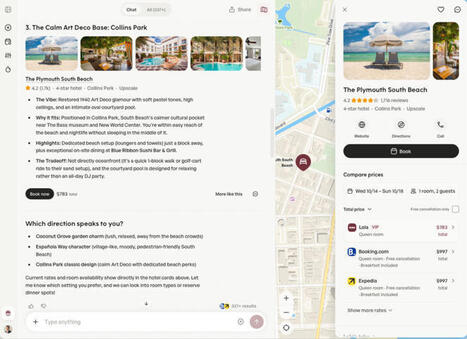
Ask ChatGPT what your hotel costs and it reads Booking.com and Expedia to find out. Google fills the price box under your hotel's name the same way, unless you send your own.
|
|
Scooped by
Roland Schegg
September 29, 10:14 AM
|
AI can recommend virtually anything to a traveler, including, apparently, things that don't exist. Roughly one in six people who had used or tried AI for travel said they'd been recommended a place, tour, or activity that wasn't real.
That's one of the more striking findings from the Greetwell AI Travel Report 2026, an August survey of 1,000 U.S. leisure travelers. Among the 485 respondents who had used or tried AI for travel, 55% encountered at least one recommendation that was inaccurate, unavailable, nonexistent, closed, or otherwise wrong.
The findings come as AI is quickly becoming part of travel planning. More than half of travelers surveyed had used or tried AI for travel, while 14% had used it both to research or plan a trip and book something.
|
|
Scooped by
Roland Schegg
September 29, 12:25 AM
|
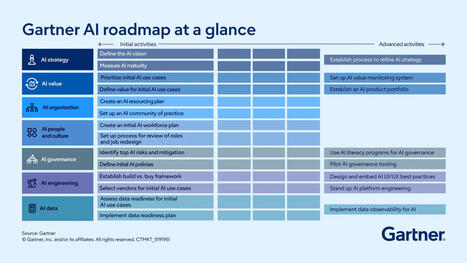
Invest in long-term foundations for scalable AI success
AI leaders often face challenges when managing and prioritizing the many activities required for a successful AI implementation. A flexible roadmap template helps organizations plan and sequence tasks to deliver AI at scale. Gartner Vice President Analyst Leinar Ramos stresses the importance of preparation and says, “AI is 30% technology and 70% something else. AI leaders who invest in long-term foundations — such as strategy, value management, organization, talent, governance, engineering and data — and not just tools will be the ones who drive business value at scale.”
|
|
Scooped by
Roland Schegg
September 28, 11:49 AM
|
Wer in diesen Tagen die Partner-Mails von Booking.com öffnet, reibt sich verwundert die Augen. „Important updates on pricing freedom, ranking and our programmes" lautet der Betreff, und was dann folgt, klingt über weite Strecken wie eine Zusammenfassung dessen, was der Hotelverband Deutschland (IHA) und seine europäischen Partnerverbände dem Portal seit Jahren ins Stammbuch schreiben. Flankiert wird das Ganze von einem Factsheet der Europäischen Kommission und einem eigenen Blogbeitrag des Portals unter der schönen Überschrift „Building trust through transparency".
|
|
Scooped by
Roland Schegg
September 25, 3:30 AM
|
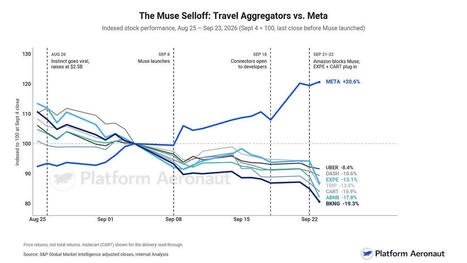
A bad week for Booking.com's owner. Shares of Booking Holdings fell 3.9% on Tuesday, September 22, after a Goldman Sachs trading desk put Booking Holdings and Expedia on a list of companies that make money because customers don't bother to shop around, and warned that AI agents are getting better at comparing prices and booking trips, Investing.com reported. The agent on everyone's mind was Muse, which Meta launched on September 8 to shop travel sites for the guest and book for her, and which had climbed to the top of Apple's App Store. On Wednesday, the day after Expedia said it's joining Muse, the shares fell about 5% more, to around $156. The Motley Fool's explanation of that drop is the thread this piece follows: the OTAs are middlemen that don't own the rooms they sell, and unlike Airbnb they have little that can only be found on their sites. By Thursday, Booking Holdings was trading about 29% below its August high.
|
|
Scooped by
Roland Schegg
September 25, 2:49 AM
|
The rise of AI agents is creating a new agentic distribution ecosystem that will coexist alongside the web. Just as hotels have spent decades building their online presence and direct channel for human use, they must now also prepare them to be used by AI agents. This transformation by no means implies the demise of the website, though it does pose significant challenges for the web ecosystem as we know it today.
The fundamental difference lies in who interacts with the technology. In the web ecosystem, the user searches, compares, browses, and personally performs the actions. In the agentic ecosystem, that same user will be able to progressively delegate these tasks to an assistant acting on their behalf.
This carries major technological implications. For decades we have built interfaces for humans: websites and booking engines that allow a person to discover a hotel, check availability, compare rooms and rates, and complete a booking.
|
|
Scooped by
Roland Schegg
September 24, 12:53 PM
|
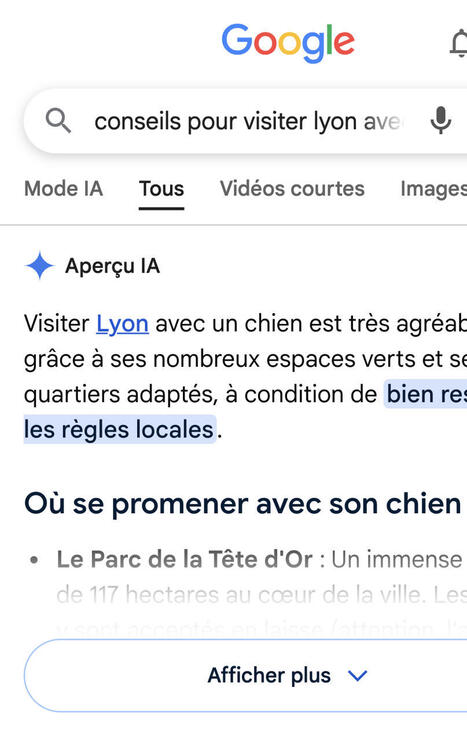
Cet été, Google a déployé ses AI Overviews en France, des réponses synthétiques rédigées par son IA, affichées directement dans sa page de résultats. Accusés de faire chuter l’audience des sites jusqu’à en questionner l’existence, notre secteur ne subit néanmoins pas le phénomène tout à fait comme ailleurs. Les sites de destination perdent ±18 % de leurs clics, une fois écartés les biais sectoriels. Plus d’une recherche sur deux affiche un aperçu, mais ce n’est qu’une moyenne qui cache de grandes disparités selon les angles d’analyse. Quelles requêtes sont les plus impactées ? Qui perd des clics ? Pourquoi ? Je vous partage ici les principaux enseignements de l’observatoire des AI-Overviews dans le tourisme institutionnel Français.
|
|
Scooped by
Roland Schegg
September 24, 10:14 AM
|
Expedia is enabling travelers to book hotels through Muse, the personal artificial intelligence (AI) assistant unveiled by Meta earlier this month.
Travelers in the U.S. will be able to describe what they’re looking for, including dates, destination and hotel preferences, be presented with options that fit their needs and make a booking.
Expedia remains the merchant of record for the bookings and payment is completed through Muse. No specific date has been given for when Expedia in Muse will be available.
The company is already working with Meta to test in-feed conversational ads on the platform. The initiative, revealed at its Explore event in May, enables travelers to start planning a trip or ask questions.
Expedia is also part of Google’s agentic booking launch alongside other partners, including Alaska Airlines, American Airlines, Booking.com and Marriott International.
|
|
Scooped by
Roland Schegg
September 21, 10:03 AM
|
The AI Hospitality Alliance + HEDNA AI Use Case Knowledge Base offers a useful snapshot of how AI is actually being applied across the hospitality technology stack. From 198 submitted examples, the initiative identified 109 unique use cases across 39 hotel systems, grouped into five core hotel functions—Guest Experience, Revenue & BI, Operations, Distribution & Commerce, and Marketing & Sales—plus three cross-cutting infrastructure layers. The densest areas today are operations and commercial decision-making, with common applications including labour scheduling, pricing optimisation, guest messaging, segmentation, and AI-supported hotel discovery. What stands out is that AI is increasingly framed not as a standalone tool, but as a connective layer across fragmented hotel systems—linking data, interpreting context and orchestrating workflows. The main expected benefits are efficiency and time savings, better guest service, stronger conversion and revenue performance, and improved decision support. At the same time, the knowledge base highlights a clear gap: governance, privacy, explainability and human oversight remain relatively underdeveloped compared with the enthusiasm around automation and agentic systems. For hoteliers, this makes the resource especially valuable as a practical map of where AI is gaining traction—and where more strategic thinking is still needed.
|
|
Scooped by
Roland Schegg
September 21, 2:04 AM
|
Booking.com's owner fought three years to buy Europe's biggest flight seller. The case against the deal was that a bigger Booking.com is bad for hotels. The court found no proof of that, and blocked the deal anyway.
|
|
Scooped by
Roland Schegg
September 20, 11:58 PM
|
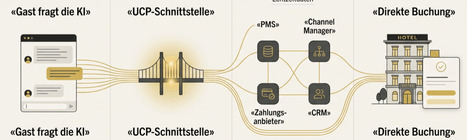
Google hat mit dem «Universal Commerce Protocol» (UCP) einen offenen Standard vorgestellt, der jetzt gezielt auf die Hotellerie ausgeweitet wird. Das Ziel: Nutzer sollen künftig direkt aus einer KI-Unterhaltung heraus ein Zimmer buchen können – ohne Umweg über eine Website oder ein Buchungsportal. Für Hotels, die sich bisher auf «Sichtbarkeit in der Google-Suche» konzentriert haben, entsteht damit eine neue, technisch anspruchsvollere Ebene: die Sichtbarkeit als buchbare Einheit innerhalb eines KI-Gesprächs. Wer das Prinzip früh versteht, kann sich rechtzeitig positionieren, statt später unter Zeitdruck nachzuziehen.
|
|
Scooped by
Roland Schegg
September 19, 11:57 AM
|
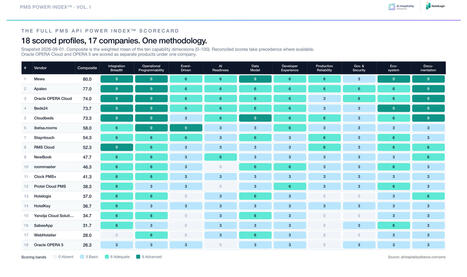
"A market that looks open, and mostly isn't.
A hotel's PMS increasingly functions as the operational core of a wider technology ecosystem — connected to revenue management, CRM, marketing, guest engagement, BI, point of sale, payments, and a fast-growing set of AI applications. Whether that ecosystem can be built at all depends on one prerequisite: whether the PMS exposes a public, documented API.
HotelLogic and the AI Hospitality Alliance examined the entire discoverable hotel PMS market to find out how many do. Of 343 vendors audited, only 24 (7%) publish fully self-serve API documentation. The remaining 93% are gated or undocumented by default."
|
|
|
Scooped by
Roland Schegg
Today, 1:44 AM
|
In Europe, a cheaper rate on your own website no longer gets your room discounted on Booking.com, and the "non-competitive" warning in your extranet is gone
|
|
Scooped by
Roland Schegg
Today, 1:22 AM
|
Kayak co-founders Steve Hafner and Paul English are developing Lola, a Booking Holdings-backed AI assistant for travel, dining, events and other experiences. It will offer a free tier alongside $5 and $25 monthly memberships. Lola aims to learn members’ preferences, access live offers through partner APIs and turn recommendations into reservations within the chat. Hafner says its search results will have no advertising or paid placement. The shift for tourism is the tighter link between discovery, recommendation and booking. With inventory from Booking Holdings brands and partners such as GetYourGuide, an assistant like Lola could influence which hotels and experiences travellers consider before they visit a provider’s website. For destinations and independent businesses, the question is how to make their offers visible and bookable in these systems. Whether a membership model can deliver recommendations that users perceive as independent remains to be seen.
|
|
Scooped by
Roland Schegg
September 29, 12:43 AM
|
Emily Zertuche argues that AI is becoming a routine part of travel discovery and planning faster than most destination management organizations (DMOs) can adapt. Drawing on 14 studies and industry reports, she highlights a growing measurement problem: a destination may be cited or recommended in an AI answer without receiving a website visit. Visibility, clicks and actual visitor decisions are therefore different outcomes. The evidence she assembles is suggestive rather than a single, comparable dataset; several figures come from commercial surveys or limited tests. Her practical recommendation is for DMOs to become reliable stewards of destination information: keep details about local businesses, attractions and events accurate, structured and accessible to AI systems; check how the destination appears across several assistants; and train staff to use these tools effectively. She also proposes measuring AI citations and referrals alongside visitor flows, accommodation demand and spending. For applied research, the key unresolved question is whether appearing in an AI answer changes where visitors go and which local partners benefit—a connection that citations alone cannot demonstrate.
|
|
Scooped by
Roland Schegg
September 28, 12:05 PM
|
This year’s World Tourism Day theme, "Digital Agenda and AI to Redesign Tourism," prompts the industry to reflect on how new technology can improve customer experience, efficiency and operations.
AI-driven technology is increasingly embedded in tourism and hospitality workplaces, from agents used for customer service to shift-scheduling software.
But as the industry races to adopt AI, are workers being given a say in how these tools change their jobs? And what’s the cost of them not being heard?
Our research at Futourwork, an EU-funded project examining worker voice and well-being at this time of digital transformation, aims to understand this gap and a way forward that benefits workers and businesses alike
|
|
Scooped by
Roland Schegg
September 28, 11:34 AM
|
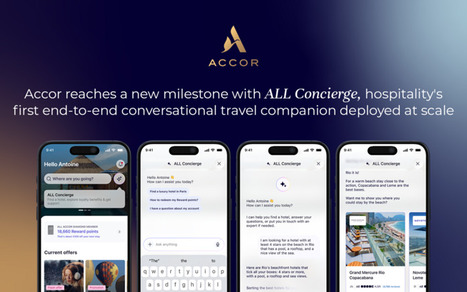
Die KI «All Concierge» unterstützt Gäste bei der Hotelsuche und Buchungsverwaltung sowie während und nach dem Aufenthalt. Parallel stellt die Hotelgruppe ihren Teams mit «The Butler» eine interne KI-Anwendung zur Verfügung.
|
|
Scooped by
Roland Schegg
September 25, 3:25 AM
|
Meta's agent books travel now. On September 8, Meta launched Muse, an AI agent that runs errands instead of explaining them, from sending an email to buying a plane ticket. US travelers reach it in its own app or on WhatsApp, it's free to start, and by September 23 it had been downloaded more than two million times, CNN reported. On September 22, Expedia said it's joining, which means the agent will be able to book Expedia's hotels. No hotel company has been named alongside it.
How it books. When a guest asks for a room, the agent can go about it in one of two ways. A short list of companies is plugged straight into it, so it books with them inside the chat, and Meta says it built each of those hookups together with the company before writing the agent its own notes on how to use them. Everyone else, it visits the way a person would, opening their website in a browser, reading the page and clicking through. At launch, the short list covered email, calendars, restaurant tables, music and concert tickets. None of them was a hotel.
|
|
Scooped by
Roland Schegg
September 24, 3:38 PM
|
AI Agents May Reshape Travel Distribution Rather Than Eliminate OTAs The article argues that the rise of autonomous AI agents such as Meta’s Muse could fundamentally shift the entry point of travel distribution from search engines and OTA interfaces to conversational agents. The core disruption is not necessarily that OTAs disappear, but that they may lose control of the customer interface and part of the margin associated with search friction. Agents can compare prices, interpret complex offers, and potentially route travelers directly to hotel booking engines, reducing the value of traditional metasearch and some OTA functions. Yet the article stresses that OTAs still possess major structural advantages: huge inventories, contractual relationships with fragmented hotel supply, payment infrastructure, customer service, fraud management, and loyalty programs. For now, AI-driven bookings remain marginal, and agents often still rely on Booking or Expedia to complete transactions. (Platform Aeronaut) The more plausible medium-term scenario is therefore a redistribution of roles and margins across the distribution ecosystem. AI agents could become the new demand-side gatekeepers, replacing part of Google’s role, while OTAs increasingly operate as infrastructure providers supplying inventory, pricing, payments, and fulfilment. Expedia’s B2B and API strategy illustrates this possible evolution toward becoming the “rails” behind AI-mediated commerce. The most consequential scenario for hotels would arise if agents connect directly to hotel CRS/PMS and booking engines: this could shift bookings away from OTAs and reduce commissions, but only if hotels and their technology providers can expose reliable real-time rates, availability, payments, and service capabilities. The article therefore frames agentic AI less as immediate OTA disintermediation than as a distribution shock in which control of the customer interface—and potentially the economic rent attached to it—moves to a new generation of AI intermediaries. (Platform Aeronaut)
|
|
Scooped by
Roland Schegg
September 24, 10:39 AM
|
Booking a trip has never been easier. And it has never taken more work. It has also never been more complex. What could previously be described as a linear funnel now behaves more like a series of orbits, with travelers moving back and forth between multiple options.
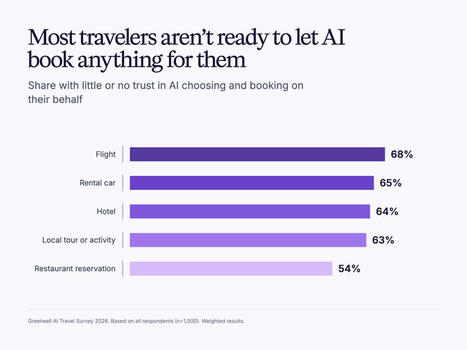
Inspiration now arrives before intent, delivered continuously through social feeds, streaming, articles & reviews, and AI. Research is spread across more tools than any one of them can reconcile. And AI has become something travelers will readily consult but not yet trust to transact. Rather than narrowing steadily toward a decision, travelers orbit several possible trips at once, move inward toward a booking, fall back to earlier stages, and reopen choices that looked settled.
Travelers now move through roughly 65 touchpoints before a trip is booked, up from 45 in 2018 — and the booking confirmation is not the end of the story. Seventy-eight percent of travelers keep researching after they book, and half have changed a confirmed accommodation after seeing a better option online.
|
|
Scooped by
Roland Schegg
September 21, 10:23 AM
|
Much of the travel discussion in 2026 appears to arrive at the conclusion that artificial intelligence (AI) agents will play a growing role in how people research and book trips.
That conclusion is supported by the evidence, but it captures only part of the change underway. Phocuswright’s 2026 research found that 44% of travelers would book directly within an AI platform, while 40% would allow an AI assistant to handle flight and hotel bookings on their behalf.
The immediate response has been a race to build assistants, trip planners and conversational booking products. By 2030, however, these features are likely to be widely available, limiting the differentiation that access to an AI model can provide.
A more consequential question is whether the systems beneath those interfaces can support what the agent has been asked to do.
|
|
Scooped by
Roland Schegg
September 21, 9:09 AM
|
"Uber has frequency and Airbnb has travel intent; their expansion into hotels will show which advantage travels further. Dara Khosrowshahi has spent much of his career expanding platforms beyond their original center of gravity. When he took over Expedia in 2005, it was already a broad online travel business spanning hotels, flights, cars, and packages. Over the next decade, he helped push that model further across more products, markets, and brands, reinforcing the basic OTA logic: capture more of the trip inside one platform. A flight booking could lead to a hotel booking, which could lead to a car rental, with each category adding demand and revenue without necessarily replacing the others.
At Uber, Khosrowshahi has been running a version of the same playbook, except the starting point is a high-frequency consumer habit rather than an occasional trip. Rides led to Eats, grocery, and other services, and now Uber is pushing further into travel with hotels. What ties those products together is not really the physical infrastructure — hotels obviously do not use drivers — but the customers..."
|
|
Scooped by
Roland Schegg
September 21, 2:00 AM
|
AI may fundamentally change one of the long-standing mechanisms of hotel distribution: the “billboard effect.” In the OTA era, travelers typically visited several platforms, compared multiple hotels and were repeatedly exposed to hotel names, images and offers before booking. That visibility could later generate direct bookings. In an AI-mediated journey, much of this comparison happens invisibly inside the model: the traveler asks, receives a recommendation, and may proceed directly to booking. The hotel is no longer necessarily part of a conscious comparison process; it can simply become the option the traveler accepts. For hotels, the strategic implication goes beyond distribution costs. If AI assistants increasingly mediate discovery and booking, brand visibility, direct website traffic and even loyalty mechanisms may weaken, especially when AI systems rely more on OTAs, reviews and third-party sources than on hotel websites. This shifts attention from simply “winning the booking” toward ensuring that hotels are visible and understandable to AI systems — and toward using the actual stay to create a sufficiently distinctive relationship that guests actively remember and choose the hotel next time. The article is careful to note that agentic bookings are still small today, but it raises an important question for hotel strategy: what happens when the customer journey becomes less about comparison and more about acceptance?
|
|
Scooped by
Roland Schegg
September 19, 1:04 PM
|
Die Europäische Union (EU) will mit dem Digital Markets Act die Macht grosser Internetplattformen begrenzen und für faireren Wettbewerb sorgen. Nun muss Google seine Suche in Europa erneut umbauen. Ausgerechnet in der Hotelsuche könnte das aber eine Nebenwirkung haben, die dem politischen Ziel zu widersprechen scheint: Online-Vermittler wie Booking.com und Expedia erhalten mehr Sichtbarkeit, während einzelne Hotels in der Suche weniger prominent und mit weniger Buchungsinformationen erscheinen. Google warnt deshalb vor einem Schaden für lokale Unternehmen und den Direktvertrieb. Hotel Inside wollte wissen: Ist das nur Lobbying eines Konzerns, der seine privilegierte Stellung verteidigen will – oder trifft Google einen wunden Punkt der EU-Regulierung? Die Antwort lautet: beides. Die Gefahr für Hotels ist real. Aber die Geschichte ist komplizierter, als Google sie erzählt.
|