Your new post is loading...

|
Scooped by
Roland Schegg
Today, 3:33 AM
|
"Google is positioning deep personalization as its strongest competitive advantage in the AI race, arguing that its broad ecosystem allows its models to “know” users better than any rival. Executives say this data-driven approach enables more useful, subjective recommendations that adapt to a user’s preferences across Gmail, Search, Maps, Photos, and other services.
The strategy, however, blurs the line between assistance and surveillance, as more personal data flows into AI products like Gemini and Deep Research. The article highlights Google’s effort to make personalization transparent, even as questions grow about consent, data boundaries, and the future of privacy in an AI-centric environment."
|
|
Scooped by
Roland Schegg
Today, 3:31 AM
|
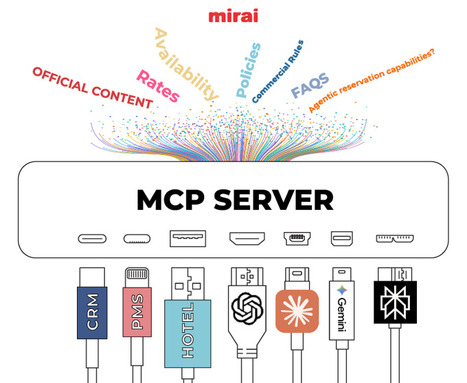
Hotels face a shifting landscape: more travel planning is starting via conversational AI assistants rather than traditional search engines, threatening to disrupt visibility and control over bookings. The article argues that a new standard — the Model Context Protocol (MCP) — can act as a “bridge,” enabling hotels to supply verified data and even allow AI-assistants to make bookings on their behalf. By adopting MCP and organizing their content and rates into a central, structured database, hotels can position themselves to thrive in a future where guest conversations, not searches, drive bookings.
|
|
Scooped by
Roland Schegg
Today, 2:12 AM
|
Entre panique du “Zéro Clic” et buzzword marketing, on va essayer de faire le tri !
On en parle depuis des mois, on l’a vu arriver aux États-Unis… Ça y est, AI Overview et ses résumés générés par IA directement dans Google est à nos portes. Mais pour comprendre ce qui se joue, il faut d’abord prendre un peu de hauteur.
C’est depuis l’arrivée de ChatGPT, Perplexity ou Bing Copilot que la manière de chercher a fondamentalement changé. L’utilisateur n’explore plus le web, il converse avec lui. On ne tape plus des mots-clés mais on pose des questions.
On est passé du “moteur de recherche” au “moteur de réponse”. Mais si ces challengers ont ouvert la voie, le vrai séisme arrive maintenant. Pourquoi ? Parce que le patron entre dans la danse…
|
|
Scooped by
Roland Schegg
December 2, 2:52 PM
|
Museum leaders and AI developers gathered at UNESCO General Conference to imagine how artificial intelligence can transform the way we experience our shared heritage at an event held by UNESCO in partnership with the Uzbekistan Arts and Culture Development Foundation (ACDF) and with support from the Guimet National Museum of Asian Arts and the French Ministry of Culture.
|
|
Scooped by
Roland Schegg
December 1, 10:30 AM
|
Disponible uniquement sur la version desktop, la fonctionnalité, propulsée par l’IA, reprend le même principe que celle dédiée aux podcasts, qui a largement contribué au succès de NotebookLM ces derniers mois.
D’abord conçue pour les étudiants, les chercheurs et les professionnels, Audio Overviews est capable d’ingérer des sources dans plusieurs formats (PDF, texte, graphiques, extraits audio, enregistrements vocaux, vidéos YouTube, etc.) pour les convertir en une vidéo explicative, « composée de diapositives commentées par l’IA », précise Google dans une page d’aide, et dont le sujet et la trame sont définis dans le prompt. En plus de condenser et synthétiser les informations pour pondre un contenu « clair et digeste », Audio Overviews peut extraire des images, des diagrammes, des citations ou des chiffres provenant de vos sources pour illustrer la vidéo. « Cela fait [des Video Overviews] un outil particulièrement efficace pour expliquer des données, démontrer des processus et rendre des concepts abstraits plus concrets », soulignait Google lors du lancement.
|
|
Scooped by
Roland Schegg
November 30, 7:43 AM
|
The travel industry stands at an inflection point. Artificial intelligence is fundamentally reshaping how people discover, plan, and book their journeys, and destination marketing organisations find themselves caught between two futures: one where they become irrelevant intermediaries, and another where they evolve into essential architects of the places they represent.
|
|
Scooped by
Roland Schegg
November 27, 2:26 AM
|
Künstliche Intelligenz verändert das Reiseverhalten radikal: Gäste stellen heute Fragen, statt zu suchen. Answer Engines wie ChatGPT, Gemini oder Perplexity liefern innert Sekunden maßgeschneiderte Hotellisten – und entscheiden damit über Sichtbarkeit, Umsatz und Wettbewerbsvorteile. Das White Paper von «MARA» zeigt, wie Hotels in diesem neuen Suchökosystem überleben und gewinnen können.
|
|
Scooped by
Roland Schegg
November 26, 8:06 AM
|
Google has started testing ads directly inside its AI Mode search responses, placing sponsored results at the bottom of AI-generated answer cards. Ads, which closely resemble organic AI link cards, have been spotted both inside and outside Google’s Labs interface. The move highlights Google’s growing emphasis on monetizing AI-driven search as consumer behavior rapidly shifts toward AI-assisted product discovery. It also sets the stage for a competitive landscape in 2026 as OpenAI prepares its own ad-supported rollout.
|
|
Scooped by
Roland Schegg
November 25, 4:34 AM
|
Google emphasizes maintaining an open ecosystem, minimizing commercial barriers for partners, and ensuring users are connected to the right options at the right time. While the technical experience can be refined quickly, Google expects to spend 2026 learning how travelers actually want to use agentic booking. The company is already building out the experience with major hotel and OTA partners as it prepares for a broader rollout.
Key takeaways
Continuity in commercial model: Google expects agentic booking in AI Mode to follow a model similar to today’s, avoiding major structural changes for partners.
Focus on an open ecosystem: The company aims to minimize commercial friction, ensuring all partners can participate in agentic booking.
Broad industry collaboration: Google is developing the feature with major players including Booking.com, Expedia and several global hotel groups.
|
|
Scooped by
Roland Schegg
November 24, 2:15 PM
|
OTAs gain leverage: With Booking.com and Expedia as ChatGPT’s launch partners, hotel visibility flows almost entirely through intermediaries.
Hotels can’t connect directly (yet): AI-driven query loads and fragmented room data make direct integrations unrealistic for most hotel systems.
Distribution economics shift: Rising acquisition costs and future AI platform monetisation could add new layers of expense for hotels.
AI discovery accelerates faster than booking: Hotels have a short window to modernise data and strategy before conversational platforms solidify as gatekeepers.
|
|
Scooped by
Roland Schegg
November 24, 2:04 PM
|
Hotels are experiencing rising customer acquisition costs as new privacy, consent and price transparency rules weaken the visibility and effectiveness of digital marketing. A recent Cendyn report highlights that declining tracking signals, higher media prices and heavier compliance obligations are limiting how accurately hotels can measure and optimise their campaigns. As third-party cookies fade and regulations demand clearer disclosures, hotels struggle to assess true performance and allocate budgets efficiently. The result is a more regulated digital landscape in which demand remains strong but is increasingly difficult to track and convert profitably.
|
|
Scooped by
Roland Schegg
November 24, 12:48 PM
|
Longtemps focalisés sur Google, les professionnels du SEO ont récemment dû élargir leur champ d’application pour s’adapter aux évolutions actuelles et futures du moteur de recherche, et aux nouvelles manières de chercher l’information via les outils d’IA générative. Si le GEO (Generative Engine Optimization) risque de particulièrement bousculer les thématiques les plus larges et généralistes (sujets evergreen, commerce en ligne, actualités), qu’en est-il du référencement local ?
Pour Geolid, plateforme de marketing local, les IA génératives ont d’ores et déjà commencé à transformer le référencement de proximité, mais avec quelques nuances. À travers son dernier guide intitulé GEO local : le nouveau SEO local ?, la structure revient sur ce nouveau paradigme.
|
|
Scooped by
Roland Schegg
November 21, 8:09 AM
|
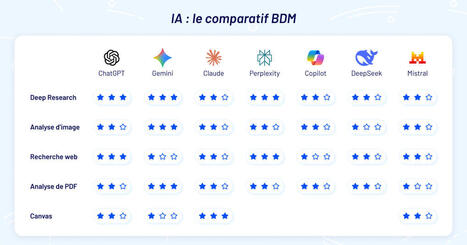
"Depuis 2023, ChatGPT, Gemini, Claude et consorts ont tous implémenté des fonctionnalités proches, voire identiques : intégration de la recherche web, de la lecture de documents et d’images, généralisation de modèles « chain-of-thought »… Certes, les outils font toujours valoir une certaine singularité – Gemini bénéficie de l’intégration dans l’écosystème Google, Claude s’adresse principalement aux professionnels, Perplexity se spécialise dans la recherche – mais, de manière générale, les principales IA du marché s’influencent entre elles et avancent dans la même direction."
|
|
|
Scooped by
Roland Schegg
Today, 3:32 AM
|
Travelers in the United States are increasingly turning to generative AI tools like ChatGPT and Google’s AI-powered search features to plan their trips. According to new research from Phocuswright, nearly four in 10 travelers used AI for trip research in the past year — an 11-point rise that signals a meaningful shift away from traditional search. Younger, higher-spending travelers are leading this transition, using AI not only for inspiration but also to make concrete travel decisions. While trust in peer reviews and personal recommendations remains strong, AI has now reached parity with long-standing travel content sources.
|
|
Scooped by
Roland Schegg
Today, 3:30 AM
|
Hotels are facing a distribution landscape where regulation, technology, and consumer behaviour are no longer aligned. The HSMAI Europe roundtable highlights how rate parity tensions, uneven regulatory enforcement, AI-driven commoditisation, and the rise of social commerce are reshaping competitive dynamics. Despite regulatory changes, OTAs still exert implicit power through algorithms, while AI platforms threaten to reduce hotels to price-driven listings. Hoteliers must rethink control, focusing on disciplined channel management, stronger direct booking foundations, and active management of price integrity across a fragmented ecosystem.
Key takeaways
The persistence of implicit parity: Even without formal parity clauses, OTA ranking algorithms pressure hotels to maintain aligned rates, limiting their ability to compete directly.
Uneven DMA enforcement: Booking.com faces gatekeeper obligations while Expedia does not, creating an imbalance rooted in quantitative thresholds rather than business practices.
Professionalised B2B distribution: Wholesalers like Hotelbeds now use strict rate controls, segmentation tools, and credential management to curb misuse and protect rate integrity.
AI-driven commoditisation risk: AI assistants may prioritise low price over brand value, weakening direct relationships and limiting hotels’ ability to differentiate.
|
|
Scooped by
Roland Schegg
Today, 12:25 AM
|
The global OTA landscape is far larger and more uneven than most of the industry conversation suggests. At 10 Minutes Hotel, we have been conducting an extensive research project mapping every OTA we can identify and comparing them through one simple metric that offers a surprisingly clear signal. Estimated organic traffic. Although far from perfect, it provides an objective way to understand who actually drives demand at scale.
The early findings are eye opening. The public narrative about which platforms dominate is not aligned with the data. Airbnb generates a constant stream of headlines, yet it does not even break into the global top five OTAs by organic traffic. Expedia has long been considered the closest rival to Booking, but when looking only at the Expedia.com domain, its organic reach sits at about 41 million monthly visits. Booking.com, by contrast, reaches around 274 million.
|
|
Scooped by
Roland Schegg
December 2, 7:23 AM
|
"The arrival of artificial intelligence is introducing three profound disruptions in hotel distribution and the direct channel:
Conversational language. Many guests now prefer asking questions and receiving precise, multichannel answers instead of navigating long pages. Offering a fully conversational AI agent is increasingly important. Our AI agent Sarai meets this need.
Visibility in AI assistants powered by LLMs. Unlike Google Search, LLMs such as GPT, Gemini and Perplexity have not published official criteria for appearing organically in their results. Concepts like GEO or AIO are often mentioned, but the reality is that there is no clear or scientific methodology—everything comes from experimentation.
Official content and agentic capabilities. The strategic challenge for hotels is twofold: delivering official, verified and structured content to the AI assistants operating on these LLMs, and enabling agentic capabilities so assistants can take actions on behalf of the guest, such as completing a booking. Both objectives converge in a new component of the hotel tech stack: an MCP server."
|
|
Scooped by
Roland Schegg
December 1, 8:47 AM
|
Generative AI is transforming how travellers search, plan and book accommodation, and Booking.com is integrating these capabilities across its platform to improve both guest experiences and partner visibility. The company now supports nearly every step of the trip-planning process with AI tools, from conversational trip planning to auto-generated property responses and smarter search filters. Booking.com argues that GenAI is especially valuable for small and independent properties because it enables better matching between guest preferences and unique property attributes. To benefit from these systems, partners are encouraged to focus on rich content and authentic, review-worthy guest experiences.
Key takeaways
GenAI is now central to travel planning: Nearly half of all travellers use generative AI to plan trips, from basic recommendations to complex itinerary and safety considerations.
Booking.com has launched multiple AI-powered tools: Features such as the AI Trip Planner, Smart Filters, AI review summaries, and Property Q&A aim to streamline planning for travellers and responses for partners.
|
|
Scooped by
Roland Schegg
November 28, 9:07 AM
|
"Standing at a hotel reception desk, tired from travel, only to be told the system won’t let us into our room? In hospitality, technology is meant to streamline and elevate the guest experience, but what happens when it does the opposite? This article dives into the hidden emotional cost of tech failures in hotels, revealing how even the sleekest systems can backfire and why the human touch still matters more than ever.
Tech Trouble – Who’s to Blame?
For several decades, hotels and restaurants have been investing heavily in digitalizing their service to enhance guest experiences. Property Management Systems (PMS), mobile check-in, digital keys, and ordering apps now play a vital role at multiple touchpoints of the customer journey. Yet, technology remains a paradox: it can be both a source of efficiency and a source of frustration."
|
|
Scooped by
Roland Schegg
November 26, 8:07 AM
|
"Modern property management systems have shifted from basic operational tools to central intelligence platforms within hotel technology. The 2025 IDC MarketScape shows a sector where cloud is assumed, AI is embedded, and automation shapes daily operations. PMS platforms now unify operational, guest, and financial data in ways that strengthen connected systems such as revenue management, CRM, payments, and distribution tools. This evolution re-establishes the PMS as the foundational system for how hotels operate, adapt, and understand both performance and guest behaviour.
Key takeaways
Shift from cloud to intelligence: Cloud is no longer a differentiator, and PMS value now centres on transforming operational data into actionable insights.
PMS as a hospitality platform: Systems must support varied models—from extended stay to hybrid concepts—rather than focusing solely on traditional room operations.
Composable and API-driven architectures: Interoperability has become strategic, with hotels expecting modular systems, stable APIs, and rapid integration capabilities."
|
|
Scooped by
Roland Schegg
November 26, 8:01 AM
|
Agentic AI promises a future where travel bots can monitor prices, manage criteria and eventually book trips on behalf of travelers — but consumer trust remains the defining barrier to adoption. While major platforms like Google, Expedia, Priceline and Kayak are investing heavily in autonomous AI tools, most travelers are still hesitant to hand over control, especially when credit card details and booking authority are involved. Surveys consistently show a gap between travelers’ high trust in AI-generated information and their reluctance to let AI make decisions independently. The next five years may bring rapid technological progress, but consumer readiness will determine how quickly fully autonomous booking becomes mainstream.
|
|
Scooped by
Roland Schegg
November 25, 12:34 AM
|
Agentic AI is the buzziest new tech tool on the scene, and it offers thrilling capabilities. While gen AI mostly functions as an adviser by providing well-informed counsel, agentic AI can function more as a direct report by accomplishing tasks. It has the agency to make decisions and then autonomously act on them. It can identify problems, find fixes, and apply solutions all on its own. It’s smart and tireless, a self-starter and go-getter, requiring only limited human oversight. Perhaps most important: Agentic AI can serve as an interface that could help companies harness the full power of AI.
Given the tremendous potential of agentic AI, travel and hospitality companies are beginning to experiment with it. But to realize the technology’s full impact, organizations will need to create new AI strategies, governance, and infrastructure—altering core business processes and ways of working. Companies will have to shift from scattered pilots to enterprise-scale transformations architected by cross-functional teams and championed by deeply engaged C-suite leaders.
|
|
Scooped by
Roland Schegg
November 24, 2:12 PM
|
"Artificial intelligence is accelerating a fundamental shift in hotel distribution, moving the battleground from channels to the data and systems that control guest discovery and decisions. Hotel leaders at the HICAP conference in Singapore argued that conversational AI will soon guide travellers more than search engines or OTAs, raising urgent questions about who influences recommendations. Brands, loyalty platforms, and independent hotels alike must prepare for an era in which customer data density, algorithmic training, and seamless engagement determine visibility. The next phase of competition will hinge not on inventory placement, but on how effectively hotels feed, shape, and interact with AI-driven discovery."
|
|
Scooped by
Roland Schegg
November 24, 1:35 PM
|
Google has said it expects the commercial model of agentic booking in AI Mode for travel to follow a similar model as it has today.
The company announced last week that it plans to bring agentic booking in AI Mode to travel two weeks after announcing a similar move for restaurant, events and beauty treatments.
Speaking at The Phocuswright Conference in San Diego last week, James Byers, group product manager of Google, said that “bedrock” for the company is “helping our users and connecting them to the right partner, the right price, the right time.”
|
|
Scooped by
Roland Schegg
November 21, 9:22 AM
|
While the travel landscape is shifting as artificial intelligence (AI) advances, Barry Diller, chairman and senior executive of IAC and Expedia Group, isn’t overly concerned.
“One thing I guarantee you, travel cannot be disintermediated,” Diller said during an executive interview at The Phocuswright Conference.
He further asserted that AI is disrupting Google's search dominance.
“We have all lived a generation where we have lived in the monopoly of Google. They are a complete monopoly in search. They have been, to almost this day,” he said.
“Now that AI has a chance, that search monopoly experience of Google is going to end. What its consequences are to Google, I can't say. They're a giant company. They've got all sorts of other things they do,” he said, noting that YouTube is becoming “internet television.”
|