Your new post is loading...
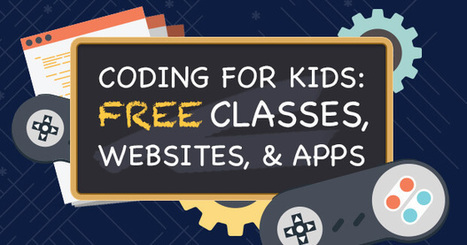
It’s easy to imagine a kid learning coding being stuck in front of a computer for the rest of their lives. However, that doesn’t have to be the case! In fact, coding experience can open up many opportunities and make your child more marketable when they start applying for awards, scholarships, and even jobs! In the digital age, there are plenty of ways for kids to learn coding, free.
Coding also allows your kid to creatively express him or herself. Your child has an idea for a game? They should make it! Your child has an idea for a website? They should design it! The possibilities are endless when it comes to coding and there are FREE apps, websites, and activities available to kids of all ages.
Via John Evans

|
Scooped by
PIRatE Lab
March 12, 2020 8:48 PM
|
Twelve of the 15 public research universities in our study made more out-of-state than in-state visits. Seven made more than twice as many out-of-state visits.
|
|
Scooped by
PIRatE Lab
March 11, 2020 9:59 PM
|
Dylan and Jordan Sidoo — sons of Vancouver businessman, philanthropist and former CFL player David Sidoo — grew up with many advantages.
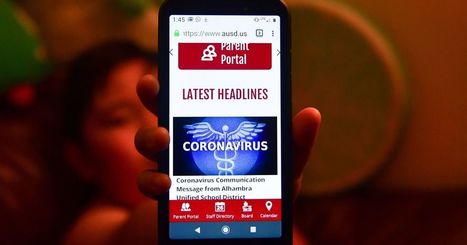
As the coronavirus continues to spread across the country, students are coming into class with misconceptions about the outbreak—and teachers are trying to figure out how best to explain the facts and debunk rumors.
Some teachers have made COVID-19 a focus of their lessons.
Discussing the origin and effects of a new virus easily lends itself to science class. But teachers in other subjects—like algebra, statistics, and media literacy—have found ways to address the topic, too.
Designing a lesson around the outbreak could be a helpful way to answer students' questions and calm fears, said Stephen Brock, a professor and coordinator of the school psychology program at California State University, Sacramento.
And if students have misconceptions about the virus or how it spreads, providing more information could help kids more accurately gauge threat, he said.
Via John Evans
David Peña-Guzmán starts off his Friday class at San Francisco State University like any other professor might: students file in and pull out thei
Via Peter Mellow
In our law school, lecture attendance averaged just 38% of total enrolments across the semester.
Via Peter Mellow
|
|
Scooped by
PIRatE Lab
February 8, 2020 8:07 PM
|
With so much false information circulating about the coronavirus outbreak, health officials are trying to set the record straight. Here's why that can backfire.
|
|
Scooped by
PIRatE Lab
January 31, 2020 3:59 PM
|
Here’s what early research says about how the pathogen behaves and the factors that will determine whether it can be contained.
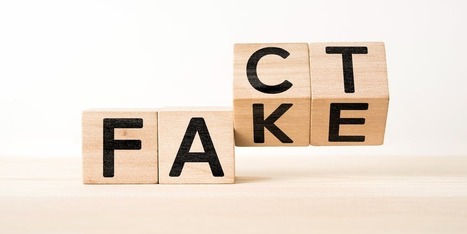
PISA scores were recently released, and results of the international test revealed that only 14 percent of U.S. students were able to reliably distinguish between fact and opinion.
This is particularly alarming because we live in an era when, according to Pew Research Center, 68 percent of American adults get their news from social media—platforms where opinion is often presented as fact. While Facebook and other social media outlets have pledged to tackle fake news, the results are lackluster.
Even on seemingly-serious websites, credibility is not a given. When I was in middle and high school, we were taught that we could trust .org websites. Now, with the practice of astroturfing, responsible consumers of information must dig deeper and go further to verify the legitimacy of information.
As a former middle and high school classroom teacher, my first thought is: What can I do to fix this? With social media so tightly woven into the fabric of society, it is unrealistic to think that I can get people to stop using it to obtain information. And, frankly, I’m part of that 68 percent.
So, if we won’t stop getting information from these sources, what is the next best option? We, as educators and parents, must consider how to make a difference.
We can take on the task of educating our students how to distinguish fact from opinion and how to identify false or biased information
Via John Evans
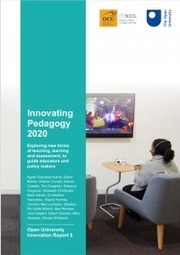
This is the latest report in our annual series exploring new forms of teaching, learning and assessment for an interactive world, to guide teachers and policy makers in productive innovation.
Via Peter Mellow
|
|
Scooped by
PIRatE Lab
January 10, 2020 1:08 PM
|
Mapping the scale of destruction across Queensland, New South Wales and Victoria.
"The fastest way to learn something new — a language, a concept, or an instrument — hinges on how hard it is, according to a study published in November 2019. If a task is too easy or tough to tackle, learners become bored or frustrated, and outcomes suffer.
Optimal learning happens when learners make errors about 15 percent of the time, the study suggested."
Via John Evans
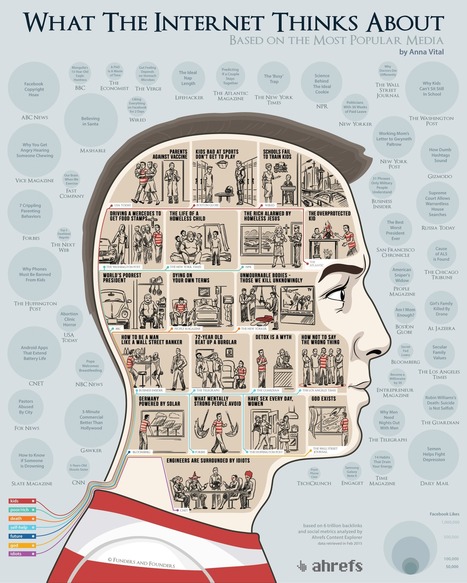
What if you saw the Internet's most-read stories all at once. This infographic shows what the internet thinks about based on the most popular media.
Via Ana Cristina Pratas, John Evans
|
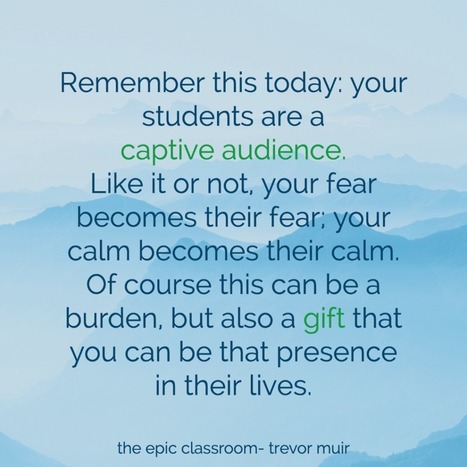
As educators, we hold a captive audience with our students. Our fear becomes our students’ fear, and our calm becomes their calm. Of course this is a burden that we have to carry. When most of us signed up to be teachers or administrators, we didn’t think that we would have to lead our students through events like 9/11, natural disasters, school shootings, and pandemics. But we do, and the reality is that this a burden we have to carry. We hold captive audiences whether we like it or not.
Via John Evans
|
|
Scooped by
PIRatE Lab
March 11, 2020 10:10 PM
|
One after the other, like dominoes, colleges announced that because of coronavirus fears, they were suspending classes and asking students to pack up and go.
|
|
Scooped by
PIRatE Lab
March 11, 2020 10:52 AM
|
A series of missed chances by the federal government to ensure more widespread testing came during the early days of the outbreak, when containment would have been easier.
|
|
Scooped by
PIRatE Lab
March 6, 2020 4:20 PM
|
Hand lettering has become an increasingly popular choice for branding and design because it brings a unique, personalized feel to the digital world. But, in order to make hand lettering as versatile as possible in branding and design, you’ll want to know how to turn your hand-lettered sketches into
Mixkit is a free gallery of extraordinary stock video clips, astounding stock music tracks and remarkable video templates.
Via John Evans
This is the age of misinformation and fake news. Here are the best unbiased fact-checking sites so that you can find the truth.
Via John Evans
The world's top communicators have stopped using PowerPoint. Why are you stuck in the 1980s?
Via Peter Mellow
|
|
Scooped by
PIRatE Lab
January 19, 2020 2:32 AM
|
Vulvas, psychics, and junk science, oh my. I watched so you don't have to.
Despite active learning being recognized as a superior method of instruction in the classroom, a major recent survey found that most college STEM instructors still choose traditional teaching methods. This article addresses the long-standing question of why students and faculty remain resistant to active learning. Comparing passive lectures with active learning using a randomized experimental approach and identical course materials, we find that students in the active classroom learn more, but they feel like they learn less. We show that this negative correlation is caused in part by the increased cognitive effort required during active learning. Faculty who adopt active learning are encouraged to intervene and address this misperception, and we describe a successful example of such an intervention.
Via Peter Mellow
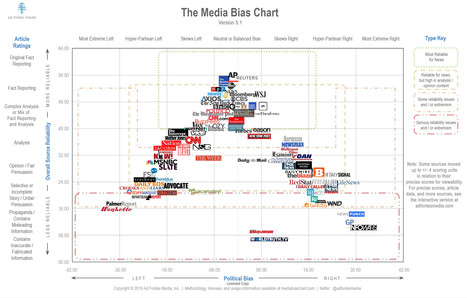
The public beta version of the Media Bias Chart (version 5.0) is now live. See where the news sources fall on the map of the media landscape.
Via John Evans
|
|
Scooped by
PIRatE Lab
December 21, 2019 11:02 AM
|
Rey is the first woman whose journey to becoming a Jedi has been central to a “Star Wars” trilogy. But our data shows she’s played a smaller part in her story than Luke and Anakin Skywalker did in theirs.
|