


In Chapter 9 of 20 in his 2012 interview, branding and design strategist Ross Floate answers "How Do You Establish Trust When Building Relationships?" .

Empathy in the Workplace
52.9K views |
+2 today
International News about Empathy in the Workplace - for more see CultureOfEmpathy.com
Curated by
Edwin Rutsch
 Your new post is loading...
 Scoop.it! 
Empathy is the ability to experience and relate to the thoughts, emotions or experience of others. Empathy is more than simple sympathy, which is being able to understand and support others with compassion or sensitivity.
Simply put, empathy is the ability to step into someone else’s shoes, be aware of their feelings and understand their needs.
In the workplace, empathy can show a deep respect for co-workers and show that you care, as opposed to just going by rules and regulations. An empathic leadership style can make everyone feel like a team and increase productivity, morale and loyalty. ============================ Empathy is a powerful tool in the leadership
DeLores Pressley

Scoop.it!
Slides from a half-day workshop I co-led at the 2013 Museum Computer Network conference in Seattle.
Design Thinking for Museums: From Empathy to Innovation
Scoop.it!

Joey Katona caught up with Dick Martin for a talk about his latest book and why empathy is essential to becoming a better business leader.
Earlier this month, I had the chance to interview Dick Martin, a telecommunications executive turned author whose fourth book for the American Management Association is OtherWise: The Wisdom You Need to Succeed in a Diverse and Divisive World (AMACOM, 2012). Through his work, Martin aims to steer readers – who inhabit a world of differences – toward common ground. Central to his vision is a global mastery of the skill of empathy.
Scoop.it!

As a sociatrist, I’m passionate about people in business developing greater ability to stand in each others’ shoes. It’s one of the cornerstones of the work we do at Quantum Shift and is central to nurturing greater health in organisations. This is often given the name “empathy”. I bristle a little, however, when I hear someone say, “I can have empathy for them, but…..” What’s that expression? Everything before the “but” is bulls**t. I go along with Professor Simon Baron Cohen’s idea that empathy sits along a spectrum.
by John Wenger
Scoop.it!

Knowing how to optimize business processes and technology only takes companies so far. Success in volatile environments requires learning how to apply data compassionately in response to new opportunities and risks.
AS BUSINESS ENVIRONMENTS become increasingly tumultuous and volatile, building a strategy entirely around business process optimization is often too rigid and inflexible. We have seen many established Western companies, including Wal-Mart, sometimes struggle to apply their optimized models in unfamiliar markets.10 We have also seen examples of younger companies (including startups and franchises) falling short in their efforts to scale into large, multisite corporations. We believe that in most unpredictable business environments, successful growth will hinge on the combination of optimization, emotion and empathic use of data.
Ritu Agarw
Scoop.it!

Empathy is the ability to identify and understand another's situation, feelings, and motives. Find out why this is so important in the workplace.
A few weeks ago, I came across a bumper sticker that said: "I am not good at empathy. Will you settle for sarcasm?" The humor in the bumper sticker led me to think of the slight unease or self-conscious discomfort that many people feel when a term such as "empathy" is introduced in a business environment. Notions of "touchy-feely," spring to mind.
================= At its core, empathy is the oil that keeps relationships running smoothly. ===========
Scoop.it!
The subject of my chat was “The Role of Empathy in Leadership” and I have to say I was gratified by both the level of participation and depth of contributions/insights which arose during the discussion (click here to download a PDF copy of the chat transcript).
Here are the ten questions I asked participants
1. What does empathy mean?.. 2. Why does it matter for us to understand the needs of others?.. 3. What traits/behaviours distinguish someone as empathetic?.. 4. Can we learn to be more empathetic or is this an innate trait?... 5. What can we do to become more empathetic?...
Scoop.it!

Avi: So Needfinding is a way of locking onto the critical problems because there are so many problems to solve.
David: You're absolutely right. The way to do it is to go out and figure out what humans actually value. Having 'empathy' for people was so exciting. You don't usually think of engineers as people people, so to speak, but my experience has been that when engineers really feel that something would be important to people, would have meaning in people's lives, that's highly motivating and it makes them work really hard.......
Avi: What are the characteristics of a designer?
David: The characteristics of a designer that I appreciate the most are this thing about having 'empathy' for people, that you expect to get your big ideas from talking to people and your own experiences, that you have a bias towards action, that you're not going to sit around and noodle strategy details for a long time, you're going to actually go out and build something and show it to people and iterate the feedback....
At some point by observing these people and building empathy for them you start to have insights about them. "Oh, they really do value this. It's not obvious at first that that's what they really value. ==================== At some point by observing these people and building empathy for them you start to have insights about them =============== By Avi Solomon
Scoop.it!

Empathy Pink also says that leaders in the new century must have empathy. He states that “the era of sharp-minded knowledge workers and briskly efficient high-tech companies that prized emotional distance and cool reason, and who could make a decision unimpeded by emotion” [2] may not be the answer.
American manufacturing is facing a situation where we don’t have the skilled workers we need and the baby boomers are retiring. To recruit and retain the bright, brave, and honest future manufacturing workers may take a different approach that requires the ability to understand the emotional makeup of other people. Pink implies that emotional abilities will become more important than intellectual abilities. Empathy is also an absolutely necessary part of interviewing, which every leader must do every day. It is important for building teams and it motivating employees. =========================== Empathy is also an absolutely necessary part of interviewing, which every leader must do every day. It is important for building teams and it motivating employees. Mike Collins
Scoop.it!

No matter your business, connecting with your customers is critical. These more abstruse lessons are meant to help Geniuses connect to their customers. “Everyone in the Apple Store is in the business of selling,” states the manual, and the result of empathetic and helpful staff is customers who are “satisfied enough to buy products in the future."
Scoop.it!
The only Academically Proven measurement tool for Customer Experience to correlate directly with Profit Recognising the needs of our Licensees and Clients, we have created 3 new categories of Licenses to choose from: Bronze, Silver or Gold.
The more senior options come with increasing benefits including inclusive consultancy days, client introductions and preferential rates. short video which explains the concept in a little more detail.
Scoop.it!

Apple's Genius training manual shows the importance of empathy and investing in staff.
One of Apple’s great successes has been in delivering services through its stores. Tech site Gizmodo managed to get a peak at Apple’s training manual for their in-store ‘Genius’ technicians. A word that keeps popping up in the manual is ‘empathy’ – as Gizmodo says; The term “empathy” is repeated ad nauseum in the Genius manual. It is the salesman sine qua non at the Apple Store, encouraging Geniuses to “walk a mile in somThe term “empathy” is repeated ad nauseum in the Genius manual.eone else’s shoes,” The term “empathy” is repeated ad nauseum in the Genius manual.
|
Scoop.it!

Now that the game is over, let not the larger lessons be lost amid the shouting. Obama won partly because he showed the electorate more empathy than did Mitt Romney.
For years, Obama has been referencing an American empathy gap. In September 2010, Kirsten Powers, a contributor to the Daily Beast, traced his focus to 2004, when he told Charlie Rose, “I see the empathy deficit that damages so much of our politics.” “I see the empathy deficit that damages so much of our politics.” In Obama’s 2006 “The Audacity of Hope: Thoughts on Reclaiming the American Dream,” he wrote, “(Empathy) is at the heart of my moral code, and it is how I understand the Golden Rule — not simply as a call to sympathy or charity, but as something more demanding, a call to stand in somebody else’s shoes and see through their eyes.”
But in Powers’ piece, “Obama’s empathy deficit,” she urged him “to feel their pain” because his “much ballyhooed coolness seems more icy than reassuring.”
BY STEVE SHAW
Scoop.it!

"We all understand the need to treat our customers well and differentiate our product and service offerings - and paradoxically here lies the problem - most organisations aim to do exactly the same thing to customers.
By Jamie Lywood
Scoop.it!

Have you taught your employees about the “Power of Empathy”? Do they make the difference between “empathy” and “sympathy”?
That prompted us to look at the differences and why people insist so much is empathy, not sympathy.
Scoop.it!

Of all the management principles I have adopted over the years, either through direct experience or learning from others, there is one I aspire to live by more than any other.
Of all the management principles I have adopted over the years, either through direct experience or learning from others, there is one I aspire to live by more than any other. I say "aspire" because as much as I'd like to do it consistently and without fail, given the natural ebb and flow of day-to-day operations and challenges, and the subsequent range of responses that follow, I find this particular principle harder to practice consistently than others. That principle is managing compassionately. =========================== I find this particular principle harder to Jeff Weiner
Scoop.it!

Search results page for the Center for Creative Leadership Website Empathy in the Workplace: A Tool for Effective
Expressing Empathy
Scoop.it!

Unilever SVP of Marketing Marc Mathieu says the key to successful marketing is knowing your consumer as a human being.
Scoop.it!
Oracle's first annual Customer Experience Summit featured plenty of advice like when to hire a chief customer officer and how to create empathy with customers.
It's Hard to Talk People into the Idea of CXM as being Important ========================== This is where the idea of empathy comes
Scoop.it!

International Journal of Work Organisation and Emotion
Enhancing empathic skills in clinical practice: a linguistic approach Abstract: It is widely acknowledged that clinical empathy in medical consultation practice is instrumental in delivering positive patient outcomes...clinicians' use of empathy may be enhanced through appropriate sensitisation...
Different strategies have been used to promote the use of empathy but studies indicate that physicians still perceive "a gap in communication skills training particularly in managing emotional and behavioural reactions to patients". Although some reference is made in current consultation skills manuals to the communicative dimensions of empathy, they do not provide a systematic overview of typical linguistic realisations and none of the existing rating scales focuses specifically and explicitly on verbal formulations.
The aim of this paper is to discuss how a linguistic framework may be used to reinforce the teaching of empathy within current consultation skills training and thereby improve clinical practice.
Scoop.it!

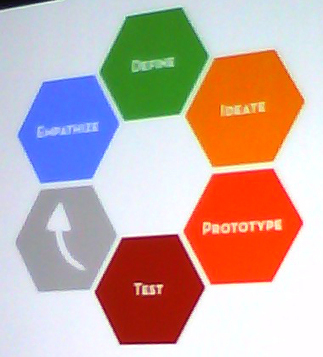
This year we will host an evening event at SAP TechEd LasVegas called: “The Role of Empathy in Design Thinking” When: Wednesday, October 17th, 7:30 p.m. SAP TechEd Las Vegas
Since Design Thinking starts with the ability to empathize, we will not only showcase what empathy means as part of the design thinking approach, we will also expose participants to the “how” of practicing empathy in the design process.
Scoop.it!
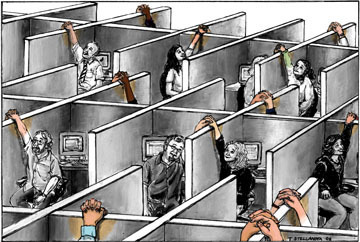
Dutton sees compassion as a natural response to people witnessing others in pain or distress—something we are hard-wired to do. The problem with bringing compassion into the workplace, she explains, is that people don’t know what’s acceptable to express in that setting. Many workers assume that they are supposed to check their personal problems at the door when they enter the office.
“Ever since organizations began moving toward more bureaucracy and measuring success by reliability and efficiency, the relational aspects of work have been de-emphasized,” said Dutton. But when stress at home inevitably spills into the workplace, Dutton added, it can contribute to lost productivity and higher health care costs, and compassion becomes a vital response.
“If compassion heals, as our research suggests, then people will be able to get back to work more quickly, to bounce back from life’s setbacks,” she said. “This has to be of interest to employers.”
By Jill Suttie
Scoop.it!

A client of mine is totally fed up with his boss. He has recently undergone quite a difficult, uncomfortable operation – the second in a series. Since then, there have been several interactions with his boss. Not once has he been asked how he is; worse, the task heat is full-on with a series of late night conference calls, led by the boss who always requires my client’s attendance. Amazed by the complete lack of empathy shown by his boss, my client is fast losing trust in him.
Empathy is right at the core of trusted relationships.
by Julian Powe,
Scoop.it!

The importance of developing deep connections with the people you serve.
A few years ago, my publisher asked me to write a book about innovation. They’d read some of the articles I’ve written on the subject over the years, and they wanted more. And although I was flattered, I had to tell them no. The world didn’t need another book on innovation — there are too many as it is. I instead made them a counter-offer: Maybe what the world needed was a book about empathy.
... That’s why I ended up writing Wired to Care, which shows how great companies around the world, from Nike to IBM, benefit from building a culture of widespread empathy for the people they serve.
By Dev Patnaik, Founder and Principal, Jump Associate
|




