I've long engaged in a hobby where, whenever I visit a tech company's website, I head straight to their "Team" page, and scan for the women. More often than not, I have to scroll past four or more men before I see a woman -- and very frequently, her title places her in one of the "people" roles: human resources, communications, project or client management, user experience, customer service, or office administration.
One could almost - if one were feeling cheeky - rename these roles employee empathy, customer empathy, team empathy, user empathy, and boss empathy:
all of them require deep skills in emotional intelligence, verbal and written communications, and putting oneself in the shoes of others.)
Most leaders have learned along the way that empathy is a critical leadership skill but few have an understanding of why.
Empathy is a form of attention that goes beyond the intellect and involves directly sensing what it is like to be in someone else's shoes. How do we do this?
We sense what other people are experiencing or feeling by sensations that arise in our own bodies. All of us are like walking antennas, receiving and registering the felt experience of those around us. Some of us are better at this than others.
While there are many private sector mentoring programmes in place, these are too often seen as 'nice-to-have', but not essential.
Successful mentoring relationships often transcend this as mentors gain an understanding of the world view of another generation and equally, mentees can help senior colleagues to see new perspectives and shifts in societal behaviour, for instance, the growing importance of social networks.
These partnerships, inevitably, bring a new level of empathy into the workplace as greater understanding between groups of people develops.
This empathy can increase mutual respect for co-workers and remind us of the nuances of an individual's needs, as opposed to just focusing on generic rules and regulations.
Empathy is one of the most important skills a UX Designer can possess. But if it's so important to be empathic, how should we go about improving?
In a previous post I wrote that empathy
was a core skill for becoming an effective
user experience designer.
Several people commented that the concept of empathy as being something you could learn (and therefore be taught) was new to them—surely this is a character trait that you either have, or you don’t?
At Artefact, increasing the sense of empathy between people is an outcome we always strive towards as designers. It is a key part of our pursuit of 21st Century design because we believe that more empathy in the world is good-ness.
It leads to a greater sense of understanding between people, better collaboration and more meaningful products overall. (For a more detailed discussion of empathy, see our paper).
==========================
But, as with any big idea, the questions remain:
How do we design for empathy in practice?
==============
Is there a process that can help us stay focused on empathy as one of our design goals?
For the past ten months, we’ve been investigating this at Artefact.
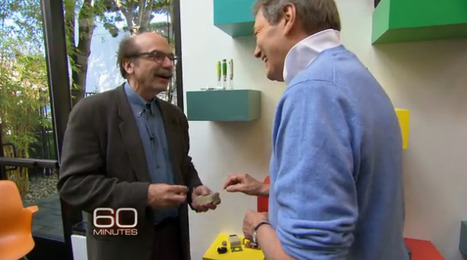
Global firm IDEO incorporates human behavior into product design -- an innovative approach being taught at Stanford
David Kelley: You got it. You got it. That's the hard part is the cultural thing of having a diverse group of people and having them be good at building on each other's ideas.
They encourage wild ideas and visualize solutions by making actual prototypes. But the main tenet is empathy for the consumer, figuring out what humans really want by watching them.
=======================
But the main tenet is empathy for the consumer,
figuring out what humans really want
by watching them.
==========
David Kelley: If you want to improve a piece of software, all's you have to do is watch people using it and see where they grimace and then correlate that to where they are in the software. And you could fix that, right? And so the thing is to really build empathy, try to understand people through observing them.
Charlie Rose: In other words, their experience will communicate what you need to focus on.
The difference between empathy and sympathy is one that's lost on many people. Empathy is just recognizing someone else's emotions. Sympathy is usually a reaction.
When it comes to management , that's a critical difference. Empathy is fine. Sympathy, according to Twitter CEO Dick Costolo, can be a problem, because it often means you're just trying to be liked.
=========================
Empathy is just recognizing someone else's emotions. Sympathy is usually a reaction. ==============
Gallaway thus tends to de-emphasize self-promotion and instead focus on empathy and organization to attract and keep clients. “Being able to listen is vital,” she says. “I’ve had prospects who have known me for years, talking about their spouse, their children, even their parents. By listening, I’ve learned what’s important, such as an income payout to an elderly mother. Some of those prospects have become good clients, trusting me to take care of themselves and their loved ones financially.”
By listening, I’ve learned what’s important,
Although Gallaway began her career in portfolio construction, this empathetic bent has led to her role as a financial advisor. “I like working with people,” Gallaway says, “having direct contact with clients. Every day brings new challenges and surprises, so you need to be flexible.”
Empathy is a really big word in design, specifically in the practice of “Design Thinking.” However, this article examines a different role for empathy in design, one that is very frequently overlooked.
In Design Thinking, empathy is what kicks off a project – it is the first step in understanding what the end user might need by being able to get hands-on experience understanding their problems and “pain points.”
The space in which empathy is quite absent from design, however, is in communication materials, a medium that is historically sympathetic. Sympathy, as opposed to empathy, does not foster a deep understanding or emotional connection. Empathy, as opposed to sympathy, is a way for us to develop our understanding by sharing an experience.
==========================
In Design Thinking, empathy is what kicks off a project – it is the first step in understanding what the end user
The new RSA animate video, The Power of Outrospection is quite thought provoking and has gotten me thinking about all kinds of links between empathy and creativity.
In the video, philosopher Roman Krznaric explores the idea that we live in a time that demands more empathic adventurers in all aspects of life. Empathy not just so we act better towards others, but also because it helps us create better innovations, services and quality of life.
Empathy not just so we act better towards others, but also because it helps us create better innovations, services and quality of life.
In a Word: Empathy "If there is any one secret of success, it lies in the ability to get the other person's point of view and see things from his angle as well as your own." Henry Ford
As UX professionals, it is our imperative to create valuable and engaging experiences for our users. We often have to play the role of “user advocate” on project teams where other requirements and constraints can push our recommendations for more user-centric designs to the bottom of the list of priorities. In this article, I will discuss not only why empathy is critical—offering a truly competitive advantage when designing experiences for users—but also why this same ability is key to managing your project teams, your department, and your entire organization.
=======================
In the past, being empathetic
in the professional world has
been marginalized as being
"too soft” or “too touchy-feely.” ==========
In the past, being empathetic in the professional world has been marginalized as being "too soft” or “too touchy-feely.” However, empathetic approaches should be implemented both internally and externally and do not fit into any pre-defined box.
A mediator can be very helpful in resolving difficult disputes. In their role as objective, disinterested third party, a mediator can speak separately to each side to gain an equal perspective on each party's position, and use that knowledge to broker a deal to satisfy all involved.
If you don't have the benefit of a mediator in your negotiation, you have the opportunity (and as a leader, the responsibility) to fill that role yourself.
When it comes to integrating Design Thinking into Product Concept Design, Empathy is the crux of the matter.
The goal of Design Thinking is framing Product Concept Development in terms of a ‘human-centered’ approach, and Empathy is how you relate the needs of people to your designs.
“Empathy is the ability to understand others. It’s a critical business tool.” were Carly Fiorina’s opening words at a recent panel discussion I attended.
Fiorina and her fellow panelist view empathy as an essential part of leadership, and vital for corporate success. This led me to wonder if, and where, there is a place for empathy in event management.
In part two of this brief four part video series from the Academy of Management Review, Prof. Jane Dutton discusses the future of care and compassion and how...
How can you develop more empathy and why should you want to? The answer in this week's post as well as a quick & effective exercise for instantly gaining more empathy.
Empathy the CEO gains when he or she goes undercover, performing roles employees do, and, subsequently, better understanding how decisions made in the boardroom affect those in the field.
I personally think every CEO should go undercover. Without fail, they come out different leaders than they went in.
Empathy, in the most basic of definitions, can be described as a noun: the ability to understand and share the feelings of another; or a synonym: sympathy.
So does social media foster the growth of showcasing authentic empathy from companies, or does it fuel an environment of false empathy that will soon backfire if users discover that companies really aren’t listening, but merely responding as they should?
Does social media foster the growth of showcasing authentic empathy from companies, or does it fuel an environment of false empathy that will soon backfire if users discover that companies really aren’t listening, but merely responding as they should?
Empathy has long been regarded as a trait not needed by leaders. We've been told to be strong and firm. Maybe it's time we lead with emotion
Why Empathy Is Important In Leadership
Great leaders need to be able to know what their followers are feeling. They need to be able to look around and get a sense of the state of others.
Leaders also need to be able to sense when programs and projects are going well. This can be done through empathy.
When you can begin to relate and feel what others are feeling, you’ll gain a sense of the state of your team. Whether your team is doing well or if they need encouragement.
If you’re leading with empathy, these trends will be easier to spot.
Learning is a result of listening, which in turn leads to even better listening and attentiveness to the other person. In other words, to learn from the child, we must have empathy, and empathy grows as we learn. – Alice Miller
Reaching this vision takes a little time, planning and empathy is at the center of the task. The most successful organizations engage a broad spectrum of constituents.
Reaching this vision takes a little time, planning and empathy is at the center of the task. The most successful organizations engage a broad spectrum of constituents. It’s important to think about all of the potential “users” of a healthcare facility. Not only are the administrators and clinical staff important, but also patients, family members and support staff. The next step is to bring these groups together. Firsthand knowledge sharing is powerful.
One of the principles of design thinking is that it requires empathy for users to inspire ideas. Normally we think about getting that from ethnographic style research.
Diving deep into the lives of a relatively small number of people, understanding the environment they live in, their social networks, seeing things first hand. We have lots of evidence that this works but I sometimes wonder if we aren’t also missing something. The problem with looking deeply at a few people is that you miss the opportunity for insights that might come connecting more broadly across cultures.
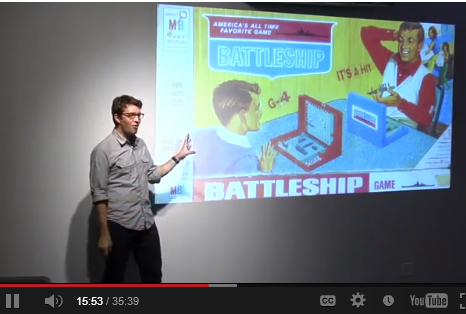
Here is a great presentation from Braden Kowitz on optimizing the design process. Lot of insights around empathy and the importance of testing often and early.
In this book, she focuses on qualities of empathy, trust, and understanding among all people in the workplace, from the CEO to the janitor, as key to a thriving and prosperous company.
Creating a workplace where these qualities are alive can turn a company from one that loses money and has discontented workers into one that is highly profitable with a committed workforce.
Empathy and Collaboration = Design thinking; Integrative Thinking: Designers harmonize seemingly conflicting ideas into a useful hole; - Experimentalism - questions about usefulness; Collaboration - variety of interdisciplinary ideas; Empathy - imagine the use by customers through a true understanding of how the customer interacts with their environment
Collaboration with target audience is key - hands on experience - managing the opinions of a focus group - meaningful insights into the benefits and flaws of current designs -- Self-Reflective -- feedback
To get content containing either thought or leadership enter:
To get content containing both thought and leadership enter:
To get content containing the expression thought leadership enter:
You can enter several keywords and you can refine them whenever you want. Our suggestion engine uses more signals but entering a few keywords here will rapidly give you great content to curate.


 Your new post is loading...