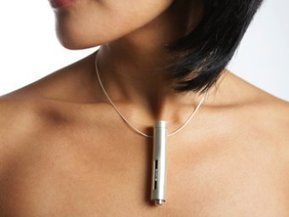
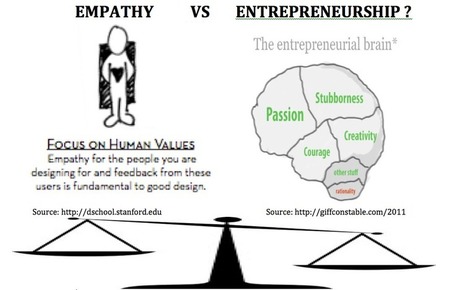
From Object Gallery in Sydney, and a lively conversation in tandem with the exhibition CUSP: Designing into the Next Decade.
The topic of the panel is The Heart of It, and it asks if design can humanise medical technologies? How to show empathy with patients through design; and how to remove or greatly reduce stigma that can often be attached to medical technologies.
Don’t look now, but all of a sudden the topic of compassionate management is becoming trendy.
A growing number of business conferences are focusing in on the topic of compassion at work. There’s the International Working Group on Compassionate Organizations. There’s the Changing Culture in the Workplace Conference.
========================
A growing number of business conferences
are focusing in on the topic
of compassion at work.
======
Then there’s Wisdom 2.0, dedicated to “exploring living with greater awareness, wisdom and compassion in the modern age.” The speakers are no slouches: eBay founder Pierre Omidyar, Bill Ford (yes, that Bill Ford), Karen May (VP of Talent at Google), and Linked In CEO Jeff Weiner top the bill. At TED, Karen Armstrong’s talk about reviving the Golden Rule won the TED prize in 2009 and has given rise to a Charter for Compassion signed by nearly 100,000 people.
Empathy can help businesses become truly customer-centric.
As a result, empathy with the customer, which is among the simplest of principles, can be among the most challenging to master, especially for employees managing communication with a community to which they've never actually belonged themselves.
At our agency, Peppercomm, this core philosophy of listening and empathy has transformed the way we work. We strive to see ourselves as beholden not just to the clients paying us for our consulting but equally so to the audiences they seek to reach, who give their time and who ultimately determine the success of our clients' businesses.
====================
this core philosophy of
listening and empathy has
transformed the way we work.
=======
We've largely accomplished this through putting a deeper focus on helping our clients see the world from the eyes of their various audiences. We make it a priority to think about the communications experience of various stakeholders at every step along the way.
New research shows that increased power in an organization diminishes capacity for empathy.
Several research studies have shown that increasing power in an organization (or in any kind of relationship) tends to diminish capacity for empathy, compassion, and seeing another person’s perspective. This is especially damaging to effective leadership of people subordinate to those in power. Studies have shown that increased power diminishes activity of your “mirror neurons,” which provide the sense of connection with another person’s experience, and fuels empathy. Here’s the latest study that sheds more light on what happens.
It shows the need for helping leaders develop and strengthen their capacity to connect with others’ reality and experience, which helps counter the tendency towards self-absorption in one’s own perspective, when one is in a higher-power status.
A manager plans team-building activities to increase a team's effectiveness. If team members develop better listening skills, such as empathy, they can become more attuned to group needs.
They can communicate more often in response to this emotional information. Showing concern for a speaker's needs makes the speaker feel that he is being heard.
Play a Listening Game
Team-building activities promote good listening. A manager can vary Dr. Carl Rogers' listening game by assigning employees to choose a partner and try this activity. The first partner speaks honestly for 30 seconds while the other partner listens.
The second partner must restate what his partner said. This process continues until the second partner can restate the first speaker's main point and the first speaker is satisfied. Then the partners switch roles and play the game again.
====================
Play a Listening Game
Team-building activities promote good listening.
A manager can vary Dr. Carl Rogers' listening game
by assigning employees to choose
a partner and try this activity.
==========
Teach Empathy's Relationship to Customer Service ...
Empathy is your tool for understanding how people think and feel. Schooling your thoughts to think and feel the way someone else does is a powerful way to do a lot of things, including design and guiding the direction of your work.
Conventional design methods begin with a solution already sketched out, then spend time, effort, and money trying to get this idea to be successful. Empathy looks at the background reasoning that motivates a person to do something. Using empathy you can see a broader landscape of possible solutions and opportunities for your organization.
====================
Using empathy you can see a broader
landscape of possible solutions
and opportunities for
your organization.
=========
Free yourself from existing solutions and current constraints.Clarify who you are solving the problems for.Simplify your way of looking at difficult problems.Decide with confidence what to create so that it will support what people intend to do.
Empathy is the ability to identify and understand another's situation, feelings, and motives. Find out why this is so important in the workplace.
Empathy is also particularly critical to leadership development in this age of young, independent, highly marketable and mobile workers. In a popular Harvard Business Review article entitled "What Makes a Leader?", Dr Daniel Goleman isolates three reasons why empathy is so important: the increasing use of teams, (which he refers to as "cauldrons of bubbling emotions"), the rapid pace of globalization (with cross cultural communication easily leading to misunderstandings) and the growing need to retain talent.
"Leaders with empathy," states Goleman, "do more than sympathize with people around them: they use their knowledge to improve their companies in subtle, but important ways." This doesn't mean that they agree with everyone's view or try to please everybody. Rather, they "thoughtfully consider employees' feelings – along with other factors – in the process of making intelligent decisions."
The ability to see the world through the eyes of others can help companies develop new products
Empathy is the ability to see the world through someone else’s eyes. It’s far more than just being a nice person. If properly developed, empathy can give you and your company a distinct competitive edge. Negotiating a contract, dealing with workplace conflicts, coming up with a marketing campaign, or dreaming up the next must-have consumer gadget all require the ability to see the world through eyes that aren’t your own.
Sadly, managers and human resource departments too often neglect the interpersonal skills that are so essential to achieving results.
Snowboarding giant Burton is able to innovate without focus groups because it couldn't possibly do otherwise. When every person on your team is steeped in sports and the outdoors, solving design problems becomes very personal. One of Ziba's creative directors worked for several years as a designer at Burton.
He recalls how one day a senior designer walked in with a photo of a snowboarder's calf, covered in bruises from a long day on the slopes. "Fix this!" he demanded, and both of them immediately knew that this was a problem worth solving
. They began to look for a solution. Empathy with the user is a powerful tool for innovation. It gives you insight into the problem, but even more important, it makes you care about the outcome.
The importance of developing deep connections with the people you serve.
A few years ago, my publisher asked me to write a book about innovation. They’d read some of the articles I’ve written on the subject over the years, and they wanted more. And although I was flattered, I had to tell them no. The world didn’t need another book on innovation — there are too many as it is. I instead made them a counter-offer: Maybe what the world needed was a book about empathy.
===========
Maybe what the world needed was
a book about empathy.
=====
At Jump Associates, my colleagues and I have had the chance to collaborate with some of the world’s most amazing companies. And if there’s one thing that we’ve learned in all that time, it’s that companies prosper when they’re able to create widespread empathy for the world around them.
That’s why I ended up writing Wired to Care, which shows how great companies around the world, from Nike to IBM, benefit from building a culture of widespread empathy for the people they serve.
Big Idea: "Developing Empathic Leaders Through Design"
Currently the Director of Operations for Design for America (DFA) and a lecturer at the Segal Design Institute at Northwestern University, Sami Nerenberg, a San Francisco native, is passionate about the intersection of design education and local/social impact.
Imagine interdisciplinary student teams and community members using design to create local, social impact. What about teaching human-centered design to young adults and collaborating community partners through extra-curricular, university-based, student-led design studios that tackle national challenges in education, health, economy and the environment?
Managers often mistakenly think that putting pressure on employees will increase performance. What it does increase is stress—and research has shown that high levels of stress carry a number of costs to employers and employees alike.
Stress brings high health care and turnover costs. In a study of employees from various organizations, health care expenditures for employees with high levels of stress were 46 percent greater than at similar organizations without high levels of stress. In particular, workplace stress has been linked to coronary heart disease in retrospective (observing past patterns) and prospective (predicting future patterns) studies.
Empathy must no longer be perceived as a soft overtly feminine skill but as a commercial tool that businesses ignore at their peril
Lack of empathy in the workplace is one of the reasons that women find it difficult to flourish in corporations. In the technology industry alone, 41% of women leave before 10 years. Must the companies that make our machines treat their staff as if they were machines too?
We can see the empathy deficit in the culture of business. Most corporations have become places where 'systemisers' flourish. According to professor Simon Baron-Cohen, these are individuals who excel at logic and analysis but tend to perform worse at empathy skills. Systemisers are more likely to be male.
Corporations place very little value on the other extreme: the empathisers: These are people who are good at reading emotions and understanding the dynamics of a situation and they tend to be female.
I have to agree and more to the point state that the best way to gain productive loyalty from employees is by showing empathy and practicing open and honest communication.
Empathy is a pivotal leadership tool in today's global market. The current business world is characterized by rapid globalization which has led to an increase in the growth and prominence of multinational organizations.
This trend towards globalization has increased the challenges faced by business organizations, which have to manage their employees across cultures, time zones, and organizational structures. Accordingly, the reality of a global market calls for business organizations to develop more effective leadership skills to enhance business survival and continuity.
This dissertation investigated the impact of empathy on leadership effectiveness by testing four hypotheses about the relationships among empathy, leadership effectiveness, and leaders' backgrounds in a sample of 216 business leaders located in the United States (51.9%) and Malaysia (48.1%) who completed an online survey in English. This study used a quantitative research design using Davis's Interpersonal Reactivity Index (IRI) to measure empathy and to test the impact of empathy on leadership effectiveness in the United States and Malaysia.
The results indicate that American business leaders have significantly higher empathy than Malaysian business leaders, and that leaders with higher empathy appear to be more effective. The clear implication of these results is that global organizations need to develop leaders with high empathy skills.
=================
The results indicate that American business
leaders have significantly higher empathy than
Malaysian business leaders
========
Wan Abdul Rahman, W. A. School of Distance Education, Universiti Sains Malaysia, Malaysia
Patricia Ann Castelli College of Management, Lawrence Technological University, USA
Empathy skills are clearly important because leaders must understand their followers; empathy is a key ingredient in engaging followers. Leaders must also provide direction and structure for activity so other communication skills are also needed. Understanding of context, constraints and circumstances of the enterprise being led places additional demands upon leaders; they must also have the capacity to assess these and see their relationship to aims and needs of those being led.
While social entrepreneurs like Ashoka’s Bill Drayton or Oxford Business School’s Pamela Hartigan are quite right that you cannot be truly profitable if you are not wired for empathy, this does not mean that it’s not hard. It’s not just technology and social media that’s to blame. Based on my own experience, there is something that happens from that “road to Damascus moment” (essential to the foundational tales of many social entrepreneurs from Jacqueline Novogratz’s moment of finding a boy in Africa wearing her old blue sweater to John Woods discovering the need for libraries in the Himalayas) in which a stubborn, passionate person is confronted with the immediate and direct experience of an obstacle that they are determined to remove, come hell or high water.
================
you cannot be truly profitable if
you are not wired for empathy,
========
But now as people strive to create the most social change and demonstrate the data of their impact, does something still get lost? One of our queen word smiths, Monika Smyczek, asked over a late-night “Launchathon” (our own version of hackathons where we dissected and championed one another’s businesses) the key question that anyone must ask as they try to retain empathy in the DNA of an organization: “How do you scale Gandhi?”
Quality-management programs can’t give you the kind of empathetic connection to consumers that increasingly is the key to opening up new business opportunities. All the B-school-educated managers you hire won’t automatically get you the outside-the-box thinking you need to build new brands — or create new experiences for old brands. The truth is we’re moving from a knowledge economy that was dominated by technology into an experience economy controlled by consumers and the corporations who empathize with them....
======================
Understanding, empathy, problem-solving —
these are the heuristic managerial skills
needed today, argues Martin,
who advises Procter & Gamble ..
========
Daniel Pink argues that left-brain linear, analytical, and computer-like thinking are being replaced by right-brain empathy, inventiveness, and understanding as skills most needed by business...
When I talk with people about Nonviolent Communication and about empathy and authenticity, I often hear skepticism in the form of “Yes, but what about_______.”
Frequent candidates for filling in the blank are teenagers that don’t respond to anything; Hitler; very angry people; and workplace situations. It seems many of us are habituated to thinking that empathy and authenticity belong only in some contexts and not others. Today I want to look at the workplace context, because so many of us are at work more of our awake time than anywhere else.
Can Connection and Effectiveness Coexist? On the surface, it appears that the time it would take to reach mutual understanding and collaboration would detract from task-oriented focus, thus taking away from productivity and efficient decision-making. On closer look, I see at least three ways in which connection could enhance effectiveness.
=============
I see at least three ways in which connection could enhance effectiveness.
======
First, people who are heard and understood, have more goodwill to contribute.
Second, people who are often operating within the fear and discomfort arising from conflict and mistrust literally have less of themselves available to produce.
Lastly, when decisions and agreements are based on true connection and mutual understanding, such that “yes” is really a “yes,” people are much less likely to back out of what they said they would do.
We, the design community, talk (and write and speak) a lot about empathy. We lament the empathy deficit in our companies and clients and cry "something must be done about this."
We tout personas, empathy maps, experience maps, and other methods as empathy deficit reducers that lead to better experiences (and profits). Some, at the extremes, position human-centered designers as Platonic figures releasing stakeholders from the shadows of opinion and faceless analytics into the reality of human emotions, needs, and desires.
=====================
We tout personas, empathy maps, experience maps, and other methods
as empathy deficit reducers that lead
to better experiences (and profits).
==========
We talk a lot about other people's empathy. But what about your own? What about mine?
Stories are a natural part of user experience. They help create connections between a design team and the people who will use the product. You've probably been telling stories all along - but haven't thought about how to use them effectively as part of your UX practice
“Journalists naturally need to be empathetic,” Leticia Britos Cavagnaro told Poynter via Skype. Britos Cavagnaro, adjunct faculty at Stanford School of Engineering’s Technology Ventures Program and associate director of National Center for Engineering Pathways to Innovation (Epicenter), co-teaches the d.school’s creativity and innovation class with Tina Seelig.
Most people come to a “story with an idea, a perspective or a hypothesis,” she said; being empathetic means having the “ability to talk to someone and really let go of those preconceptions.”
The goal of empathy is to gain insight or “put myself in the shoes of the other person or the many different stakeholders,” Britos Cavagnaro said.
Use empathy by asking open-ended questions and actively listening to uncover people’s needs and motivations.
This is the second post in a 6-part series from Ziba's Industrial Design Director, Paul Backett, on rethinking design education. Read the Introduction to the series,Teach Less, Integrate More here.
Great designers are great empathizers. It's what separates a design that has soul from one that's simply well-realized. In my experience as a design director and as a teacher, it's become painfully clear that the ability to connect with users is something design students must learn, as crucially as they need sketching and CAD.
Unfortunately, the most common student design project has students designing with themselves as the target user. Research becomes a box to be ticked, and certainly never integrated into the design process.
The real world, though, is full of unfamiliar design targets, and schools have a responsibility to teach the difficult skill of taking on their perspectives.
What students need to learn is not just empathy, but extreme empathy—the flexibility to inhabit the mind of someone dramatically unlike themselves.
Products, messaging, and services have the potential to contribute to a more empathic society, better able to face the scale of our shared problems. As an EPIC member and ethnographer, empathy is your livelihood. In this workshop, we seek to apply your expertise in a new way.
How can our research identify opportunities to create more empathy-rich experiences for our users? What can our designs incorporate to seize these opportunities? In this workshop, we will share examples and co-develop strategies with the goal of actualizing design for preferable outcomes, while also providing a novel approach to innovation.
Apart from that brief outburst, the faces of the participants in our Human-Centred Design (HCD) workshop are crinkled with concentration as they calculate the number of carbs they consumed in their last meal.
They're not trying the newest low-carb diet, but putting themselves in the shoes of someone with diabetes--feeling, first-hand, what it's like to count their blood glucose levels to ensure they adjust their insulin intake correctly.
That walk-a-mile-immersion exercise is just one example of the methods we use to build rapid empathy in which we (as researchers and designers) help our audience (students, clients) to quickly understand the challenges that people face with a product, service, or process. Interestingly, the rapid bit is where the audience actually makes a connection, experiencing empathy for others. As humans, we're wired to feel empathy, so all we need to do is tap into that innate capacity.
===========================
That walk-a-mile-immersion exercise is
just one example of the methods we
use to build rapid empathy
==============
Karsten Fischer
CEO, PDD, global product and service design and innovation consultancy
"You never really know a man until you understand things from his point of view, until you climb into his skin and walk around in it." Harper Lee, To Kill a Mockingbird.
Atticus Finch knew that the key to understanding people was building empathy for them. In this post we explore the role of empathy in innovation and our experiences with rapid empathy-building exercises. So, what is the role of empathy in design and innovation?
In business, or even in real life, conflict exists. Be it a disagreement on what product or service to offer first, to the way the toilet paper is oriented in the bathroom, we all get those occasional angry or irritated vibes against someone.
But once this turns into a daily occurrence, this becomes a real problem. If we put this inside an appointment setting set-up, the results could be nothing less than troublesome.
So, how do we best deal with this, once this happens in our workplace? How do we handle this so as not to hinder our ability to generate and nurture our sales leads?
Empathy is the ability to sense and understand the feelings of others. When you understand others’ frustrations, their needs, and the way they think, you increase your connection to them and you gain an understanding of many things that are important to your business.
Empathy allows us to gain competitive intelligence. By putting ourselves into the shoes of customers and listening to what they feel, we begin to gain an understanding of how to design products and services that better meet their needs.
To get content containing either thought or leadership enter:
To get content containing both thought and leadership enter:
To get content containing the expression thought leadership enter:
You can enter several keywords and you can refine them whenever you want. Our suggestion engine uses more signals but entering a few keywords here will rapidly give you great content to curate.


 Your new post is loading...