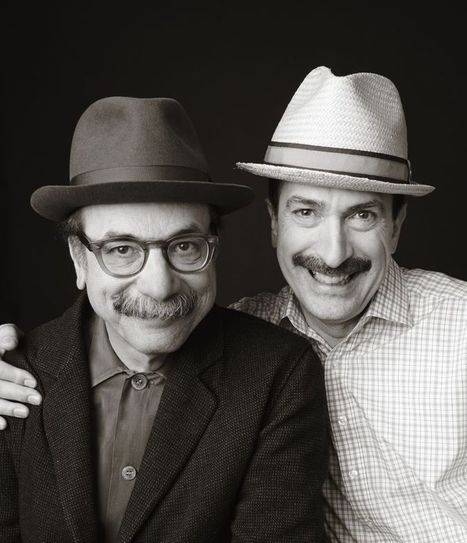
Tom and David Kelley of the award-winning Palo Alto-based global design firm IDEO have been helping private and public sector organizations innovate, grow and bring to market new ideas for 35 years...
The notion of empathy and human-centeredness is still not widely practiced in many corporations.
Business people rarely navigate their own websites or watch how people use their products in a real-world setting.
And if you do a word association with “business person,” the word “empathy” doesn't come up much.
What do we mean by empathy in terms of creativity and innovation? For us, it’s the ability to see an experience through another person’s eyes, to recognize why people do what they do. It’s when you go into the field and watch people interact with products and services in real time—what we sometimes refer to as “design research.” Gaining empathy can take some time and resourcefulness. But there is nothing like observing the person you’re creating something for to spark new insights.
And when you specifically set out to empathize with your end user, you get your own ego out of the way.
We’ve found that figuring out what other people actually need is what leads to the most significant innovations. In other words, empathy is a gateway to better and sometimes surprising insights that can help distinguish your idea or approach.
Increasingly, to create sustainable customer relationships, businesses must invest in the emotional needs of their customers, says Dr Mark Ingwer, Founder & Managing Partner, Insight Consulting Group
Businesses have long concentrated on Return on Investment (ROI) metrics to calculate marketing success. However, innovations in neuroscience and developments in social media have revealed that profitability can no longer simply be relegated to sales figures and profit margins.
Increasingly, to create sustainable customer relationships that enhance customer lifetime value, businesses must invest in the emotional needs of their customers
THE PROMISE OF EMPATHYIn 2008, Karina Encarnacion, an eight year-old girl from Missouri, wrote to President-elect Barack Obama with some advice about what kind of dog he should get for his daughters.
She also suggested that he enforce recycling and ban unnecessary wars.
Obama wrote to thank her, and offered some advice of his own:
“If you don’t already know what it means, I want you to look up the word ‘empathy’ in the dictionary. I believe we don’t have enough empathy in our world today, and it is up to your generation to change that.”
In realm of design, design-thinking is rooted in empathy, where you try to see from the perspective of a user of a given design or product. There is a lot more to design thinking than that, but in a nutshell it is about human centered design where empathy is king.
Empathy in Human Services
In the social services field I’ve been striving to lead new thinking in, there is also a focus on empathy when designing quality support services. For example, in the old days of social services, an institution or bunch of “experts” would often end up designing irrelevant services because the service model was not based on what the client needed and wanted but on what the system needed. In other words, there was a lack of empathy for the individual needs and wishes of the client.
Lori A. Gano-Overway is Associate Professor in Health and Exercise Science interested in the psychosocial aspects of physical activity. She teaches sport psychology, health and exercise psychology, motor behavior, research methods, and administration of sport and physical education programs
"By developing empathy, youth learn to attend to emotional cues, listen, become sensitive to others, understand another's perspective, and read the needs of others, which allows them to work and live with others in community and act with compassion toward others' needs."
Evidence is mounting that it might be so. The latest is the portrait of a man who many consider to be the best CEO today in America—if not the world—Jeff Bezos.
...Ronson argues that many of the psychopathic traits are conducive for success as a CEO. Besides lack of empathy, which is crucial, “other positive traits for psychopaths in business is need for stimulation, proneness to boredom.
...Rather, in such scenarios—which are all too common when the economy is not doing well—empathy and listening skills are more a hindrance than a necessity, no matter that self-styled management gurus like to play up such traits as critical leadership qualities.
...Clearly, stuff like empathy is of no consequence in the context of such stupendous achievement. In the prevailing business ethos, it is bound to be considered as a drawback diluting the CEO’s focus on maximizing shareholder value.
======================
Clearly, stuff like empathy is of no
consequence in the context of such stupendous achievement.
Empathy is not only one of the key abilities linked with great leadership, it is the new hit wonder for everybody.
4 ways to improve empathy:
Set yourself aside.
Try inhibiting your own beliefs and personality and adopt the view of the other
Ask questions.
The more knowledge you have about the background and situation of others, the better your ability to take their view.
Use your imagination.
Imagination is a power of the human mind to reckon with and a key stone in empathy. Use your capacity for imagination to understand what a situation feels like for the other without getting yourself caught up in the feelings as your own. Empathy is other-directed. It is about imagining being the other, not about how you would feel in that particular situation.
Practice. Practice. Practice.
Empathizing is harder than you think, so try as often as you can to deepen your empathic understanding of others. At meetings, dinners, everyday conversations try to set aside your own view of the world, and take a dive into the feelings of the other.
Behind every successful business, you are likely to find a leader who has mastered the skill of empathy.
One of the hallmarks of a successful business is its ability to harness creativity to constantly push into new territory. Without growth and innovation, businesses stagnate and eventually fade away. Those with staying power, however, have mastered an intangible, often overlooked factor that allows them to focus on the future with clarity: empathy. While that may surprise many, I am certain that the ability to connect with and relate to others—empathy in its purest form—is the force that moves businesses forward.
Though the concept of empathy might contradict the modern concept of a traditional workplace—competitive, cutthroat, and with employees climbing over each other to reach the top— the reality is that for business leaders to experience success, they need to not just see or hear the activity around them, but also relate to the people they serve.
=========================
the concept of empathy might contradict the modern concept of a traditional workplace — competitive, cutthroat,...
The powerhouse brother team, David Kelley and Tom Kelley, is coming out with a new book this month. Creative Confidence: Unleashing the Creative Potential Within us All...
The notion of empathy and human-centeredness is still not widely practiced in many corporations. Business people rarely navigate their own websites or watch how people use their products in a real-world setting. And if you do a word association with “business person,” the word “empathy” doesn’t come up much.
======================
What do we mean by empathy in terms of
creativity and innovation?
=========
What do we mean by empathy in terms of creativity and innovation? For us, it’s the ability to see an experience through another person’s eyes, to recognize why people do what they do. It’s when you go into the field and watch people interact with products and services in real time—what we sometimes refer to as “design research.” Gaining empathy can take some time and resourcefulness.
It’s hard to measure the effect that empathy has on the bottom line. However, my experience shows that the best kind of business happens when both parties feel they can be trusting, open and understood.
Theodore Roosevelt said, “No one cares how much you know, until they know how much you care.” Good business is built on good relationships, and empathy is the root of strong relationships. Yes, it’s important to be knowledgeable about product and process, but without empathy, “no one cares.”
What is “The Empathetic Museum”? A group of 10 colleagues stopped by to share their thoughts in room 311, “Unconference Room" at the Baltimore Convention Center during the recent meeting of the American Alliance of Museums (AAM).
A few days before the conference AAM announced that there would be a white board outside room 311, and the schedule for “Pop-Up Sessions” would be built on a first come first served basis. I got there in time to reserve Monday morning at 8:45, and met a group of museum colleagues- some familiar and some new- to examine this idea. ..
Empathy Is a Policy Decision Several things became clear during the exchange: Far from being a “soft,” emotion-laden stance, an empathetic response to any community concern begins at the level of museum policy and administration. It must be a clear-headed and unsentimental decision.
In today’s competitive and global marketplace it is becoming increasingly essential for companies and brands to understand why customers buy—or don’t buy—their products and services.
Only by understanding the whys can companies grow their business and develop loyal customers. In Empathetic Marketing, Dr. Mark Ingwer presents a groundbreaking approach to understanding consumers’ core emotional needs. This innovative book provides both the psychological theory underlying consumers’ emotional needs, as well as concrete business examples that demonstrate the incredible effectiveness of unleashing the power of deeper needs and emotions for success in the marketplace.
This is the presentation I gave at UX Brighton (2013). Behind every screen sits a user, waiting to be engaged. Whether you reach them or not will depend on how
Empathy and a true understanding of the other is critical to building flourishing startup communities.
Empathy is often looked down upon in the business world because it is seen as antithetical to the modern day corporate environment (competitive, cutthroat, ladder to the top, etc.). However, it is one of the most important values that an organization can adopt and promote as part of its company culture. Empathy at its basest form is that ability to connect with and relate to others. This means we have to adopt a stance that goes beyond just seeing and hearing what goes on around us and truly seek to understand the logical and emotional reasoning of the people around us.
The notion of empathy being critical to business is not new; Ashoka has deemed empathy as the force that drives business;
========================
Forbes called empathy invaluable to business; and the Guardian deemed it the last big business taboo that needs to be overcome.
Keiko Krahnke is Associate Professor of Management; Business Communications at University of Northern Colorado in the Montfort College of Business. Areas of research interests include spirituality and business, systems thinking, Appreciative Inquiry, and corporate citizenship.
Peter Michael Senge is an American scientist and director of the Center for Organizational Learning at the MIT Sloan School of Management.
"We suggest that empathy is something broader than knowing or feeling another's psychological or emotional state. The fundamental concept of empathy is to care about another as if you were in the shoes of the other. Our purpose here is to expand this caring to the larger living systems of which we are part.
=======================
We propose the notion of
"transcendent empathy"
as the ability to see these larger systems in
time and space, to move beyond mere
intellectual understanding to embrace
"system sensing" as a doorway to other
awareness of what exists now and
to future possibilities."
==========
* Introduction
* Need for Understanding A System:
* * * Towards Seeing Processes, Patterns and Wholes
* * * Reflection and Seeing the Real Issues Beyond the Symptoms
* Transcendent Empathy: Empathy As the ability to See the Larger System
* * * How Wide Can Out Circle of Compassion Spread - Empathy as Biosphere Consciousness
* * * Empathy as the Recognition That We Co create the World
* * * Empathy as the Ability to See Connections across Time
I'll be posting a series of interviews with contributors to a new business book titled 'Organizing through Empathy.' see http://j.mp/11X7OBd ; In this interview, editors Kathryn Pavlovich and Keiko Krahnke give a broad overview of the book and the individual chapters.
Organizing through Empathy. "This book challenges the existing paradigm of capitalism by providing scientific evidence and empirical data that empathy is the most important organizing mechanism....
Empathy dissolves the boundaries between self and others, and feelings of altruism towards others are activated. This process results in more compassionate and caring contexts, as well as helping others in times of suffering. This book provides evidence from neuroscience and quantum physics that it is empathy that connects humanity, and that this awareness can create a more just society.
=====================
Empathy dissolves the boundaries between self and others, and feelings of altruism towards others are activated. ========
Overview of the Book -------------------------------------- * Contemplative Approaches * Applied Empathy * * Empathy and Leadership * * Empathy and Decision Making * * Empathy in Context A Systems Approach.
At KDC, we think of ourselves as problem solvers. We know the right facility is good for our client's business, and not just in the strictest sense of the word. Having the right working environment leads to happier employees, better retention, and easier recruiting.
We are a people company, and although we develop buildings, we are always focused on the people working in and on the real estate we create.
I'll be offering a series of private weekly Empathy Circles via online Google Hangouts. Each Empathy Circle is limited to four people and is 1.5 hours. After years of; practicing and studying empathy, interviewing 100's of the world's top experts on empathy and compassion, holding hundreds of Empathy Circles, I have found these circles to be absolutely the most effective way to experience, practice and deepen the benefits of empathy. Many more benefits, see http://j.mp/1aqZuhI
How it Works and What to Expect ========================== Empathy Circles are a quiet space that gives you the time to be listened to through reflective dialog, where your conversation is uninterrupted and then reflected back to you until you feel that you have been fully heard, seen and validated to your satisfaction. We accompany each other in our personal journeys. These circles of equal peers serve as a platform for nurturing and developing deeper empathy. They are a foundational base and first step in a curriculum of empathy based processes, skills and way of life.
Learn how to apply foundational design-thinking techniques to a current project through case study, instruction, and real-time working activities.
In this free webinar, you will learn how design-thinking techniques can improve your work. The session will combine a case study, instruction, and real-time working activities to advance an active project in your work and/or life.
Stanford d.School instructors, Perry Klebahn and Jeremy Utley, are infamous for getting professionals and executives to step out of their comfort zone and take action. Their instruction has led to tide changes in thinking and approaching the development of new products and services. Join them for an hour to get a taste of their approach and what design thinking could offer you and your project.
We’ll start with an easy one. Research completed at Massachusetts General Hospital and published in the Journal of Internal Medicine in 2012, revealed that empathy in healthcare settings was essential to the formation of strong patient-physician relationships as well as positive patient outcomes and overall satisfaction with the experience.
As the study highlights, when healthcare providers take the initiative to ensure that one of their most important touchpoints—physician interactions with patients—takes empathy into account, they can make a stronger impression and receive higher overall scores from patients.
The ability to empathise is recognised as a crucial soft skill that web designers, writers and managers require. However, empathy needs more than an intellectual understanding.
If you spend anytime at all reading the plethora of articles on designing or running websites, it won’t take you long to encounter the word empathy.
The user centric movement obsesses (rightfully so) about understanding users. We create personas, customer journeys and empathy maps. We run focus groups, user test sessions and emotional response tests.
To get content containing either thought or leadership enter:
To get content containing both thought and leadership enter:
To get content containing the expression thought leadership enter:
You can enter several keywords and you can refine them whenever you want. Our suggestion engine uses more signals but entering a few keywords here will rapidly give you great content to curate.


 Your new post is loading...