There is a direct, scientific correlation between the level of empathy demonstrated by business leaders and the level of leadership effectiveness.
Is empathy the key to business effectiveness? According to several researchers, the answer is a certain yes.
A 2013 study published in the International Journal of Economics Business and Management Studies revealed a direct, scientific correlation between the level of empathy demonstrated by business leaders and the level of leadership effectiveness.
Harvard Business Review (HBR) published an article that named empathy as the first of four primary competencies identified in successful leaders. Need more proof? In her 2012 book “The Zen Leader,” author Ginny Whitelaw defined empathy as the most powerful leadership tool, and a Forbes.com contributor named empathy a foundational element for better business.
Empathy is the capacity to share or recognise emotions experienced by another. Join the movement that is changing the world from the inside out. Learn the practical skills that are part of 21st century leadership.
Create a culture of empathy in the workplace and you will:
Empower emotionally resilient staff
Increase staff retention
Build capacity to give and receive feedback
Increase willingness to deal with conflict constructively
Business leaders discuss why they believe empathy is an essential tool in the corporate world and how it can open the door to profit, wellbeing and a happier workplace
Empathy—that seven-letter word seems to be everywhere these days. It’s all over the pages of the WashingtonPost, it’s being “engineered” at developer boot camps, and it’s even coming out of the mouth of the President of the United States (not for the first time).
Barack Obama, reflecting on recent conflicts and crises and tragedies, asked “that we choose empathy over indifference, and that our empathy leads to action.”
Why is empathy garnering the attention of leaders and the business world? It turns out that empathy is a powerful motivator, but is often underutilized.
Perspective-taking sounds a lot like empathy, but the two qualities are siblings, not identical twins. Empathy — the ability to understand another’s emotional state — is an essential human quality. But research has shown that, in commercial settings such as negotiations, understanding the other side’s thoughts and interests, not simply their emotions and feelings, can be more effective in forging a deal.
So if you’re in a high-stakes leadership situation, definitely be emotionally intelligent. But use your head as much as your heart.
3. DON’T FORGET MIMICRY. Mimicking others’ posture, gesture, and expressions sounds like the sleazy tactics of a used car salesman....
McGrath proposes that we are at the dawn of a third era in management. The first era was machine-like to produce products, the second collaborative to provide advanced services, the third will be to create “complete and meaningful experiences.”
She says this is a new era of empathy.
A pull organizationwould be empathetic in the sense that customer desires rather directly drive the working of the organization.
Empathy is a key skill for effective leadership. Learn how to apply empathy in the workplace here.
The purpose of practicing empathy is like going to a driving range. Practicing your golf swing helps you to drive more naturally when you are in the game.
Empathy is not an easy skill for many. Learning how to use it in a low threat environment like coaching can make all the difference.
When you walk in another’s shoes first, it may seem uncomfortable, like you are losing control. However, you will discover that taking the time to empathize without scripting what you will say next will lead you and the employee to new levels of understanding and growth.
OK, confession time: I have become highly suspicious of the use of the term “empathy” in the workplace, especially with respect to leadership.
So, what are your thoughts about the role of empathy in the workplace and its relationship with women’s leadership and feminism?
I am interested to hear from you and hope that I am able to engage in a discussion around this topic that respects different points of view in an emotionally intelligent way. In other words, I intend to demonstrate empathy even in a discussion about my concerns about empathy.
It's a trait we rarely think about in a business setting, but Stacey Epstein argues that it's actually the most important leadership trait you can have.
Empathy is not just for managers. It’s an incredibly valuable trait in any role.
As a marketer, I need to understand how my buyers will respond to my programs. Does my website make visitors want to engage? Will my campaign compel them to make a buying decision? These are the questions my team is faced with every day. The more we can put ourselves in our buyers’ shoes and understand what makes them tick, the more we can deduce how they will respond, which helps us excel in our role.
Narcissists are missing that piece about valuing and caring in their relationships … they have poor relationship skills.
My challenge:
to build empathy and relationship skills in young men intensely focused on the self.
By the time a young person is in his late teens, this is a considerable challenge, but it can be done. We work through repeated visualization exercises, where the client imagines himself being treated as they treat others, to articulate the thoughts and feelings of the abused person. Sometimes we need to do this hundreds of times to see a shift. Just recently, I’ve begun to treat the whole family, initially excluding “problem child,” because I’ve found the young man’s alienation is built, in part, on systemic interactions. In this particular family, dad’s words, “his mum does so much for him,” were a red flag. Too many kids, especially in affluent families, don’t have to “do” for themselves. This can reinforce the adolescent’s belief that the world really does revolve around him.
Examining thousands of open-text comments about good leaders and great leaders, a new study identifies key themes of exceptional leadership; at the core is a relationship that engages and supports team members.
Lead author, Joshua Freedman, explains:
"In business, 'empathy' is often seen as 'soft,' but the research makes it clear that exceptional leaders are highly empathic – as well as hard-headed.
This blend of head+heart is key to performance today." Freedman is CEO of Six Seconds, a global organization working toward supporting one billion people to practice the skills of emotional intelligence.
Great presentation by Bruce Temkin during the VoC (voice of the customer) Fusion Conference. Bruce shared his path for organizations to achieve organizational empathy.
Organizational empathy is a commitment by companies that they will work towards developing a deeper understanding of their customers’ needs, and they will use this knowledge to serve those needs better.
Bruce proposes seven keys to unlock organizational empathy:
As we approach election day, I have been doing a lot of thinking about the links between empathy and effective leadership.
I must admit that I have a bias toward leaders who exhibit and express empathy, especially about the plight of people who have serious chronic medical conditions; people like us.
George Langelett is a professor of management and economics at South Dakota State University in Brookings. He teaches classes in management, small business management, human resource management, marketing research, and macroeconomics.
George is author of How Do I Keep My Employees Motivated? The Practice of Empathy-Based Management.
From the book description, "Every person in your organization desires to be understood and accepted. The purpose of this book is to teach you how to empathize with each of your employees, and create a better work environment. When work days become mundane, you will learn how to create a sense of connection with your employees. During stressful times, you can display empathy to calm and reassure each employee, so that they can think clearly and problem solve.
How Do I Keep My Employees Motivated? provides clear, specific techniques that teach you how to empathize and create an atmosphere where everyone working for you feels accepted and understood.
Today, we are in the midst of another fundamental rethinking of what organizations are and for what purpose they exist. If organizations existed in the execution era to create scale and in the expertise era to provide advanced services, today many are looking to organizations to create complete and meaningful experiences.
I would argue that management has entered
a new era of empathy.
This quest for empathy extends to customers, certainly, but also changes the nature of the employment contract, and the value proposition for new employees. We are also grappling with widespread dissatisfaction with the institutions that have been built to date, many of which were designed for the business-as-machine era. They are seen as promoting inequality, pursuing profit at the expense of employees and customers, and being run for the benefit of owners of capital, rather than for a broader set of stakeholders. At this level, too, the challenge to management is to act with greater empathy.
BY Rita Gunther McGrath, a Professor at Columbia Business School, is a globally recognized expert on strategy in uncertain and volatile environments. S
So, let's be proactive and teach empathy and other competencies of emotional intelligence to MBA students, med students, law school students (what a thought!), teacher candidates, educational leaders, and other professional in training. They, in turn, would be using these skills in their interactions with their students, or staffs, or clients going forward. What an impact that would have, not just corporations/customers but on all of society. That would be a new era indeed!
This ‘Reflective Listening’ (or Empathic Listening as it is sometimes called) has been a invaluable addition to my parenting toolkit and the approach works remarkably well with grown-ups and businesses too.
Far more than having a sympathetic ear, it’s about learning a specific way to respond to what you are seeing, hearing and sensing.
Because it comes from a non-judgmental position of respect, it builds trust and encourages open communication.
...The 6 reasons why putting empathy on the menu will grow your business
Customers feel safe. People don’t buy from you or hire you if they don’t feel safe with you or your brand. When people know you ‘get’ them they will feel safe around you. They’ll trust the brand.
You’ll produce better results. When people feel safe and understood they relax and will communicate openly and honestly with you. As a result, you’ll be able to tailor your offering accordingly and produce better results. They’ll recommend you to more people...
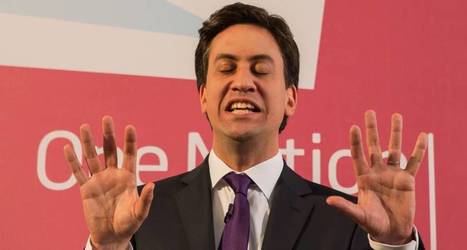
by ROSSA MINOGUE The Labour leader’s use of a neuroscientist to help him engage with the public is a mental approach to politics.
Labour Party leader Ed Miliband, it’s fair to say, is not the most popular of politicians, something many attribute to his incredible inability to connect with people. So, in a way, it came as little surprise when The Sunday Times revealed thatMiliband has been seeking advice on how to connect with the public from one of the UK’s leading experts on autism.
Neuroscientist Simon Baron-Cohen, who is professor of developmental psychopathology at the University of Cambridge, has written a number of books on autism and empathy and is now trying to apply his ideas to improve politics.
He has been advising Miliband for over a year now on improving his ‘political empathy’, and says that he is willing to offer similar advice to any other political figure who wants it.
OK, confession time: I have become highly suspicious of the use of the term “empathy” in the workplace, especially with respect to leadership.
So, what are your thoughts about the role of empathy in the workplace and its relationship with women’s leadership and feminism?
I am interested to hear from you and hope that I am able to engage in a discussion around this topic that respects different points of view in an emotionally intelligent way. In other words, I intend to demonstrate empathy even in a discussion about my concerns about empathy.
Study after study has shown that listening is critical to leadership effectiveness. So, why are so few leaders good at it?
Too often, leaders seek to take command, direct conversations, talk too much, or worry about what they will say next in defense or rebuttal.
The ability and willingness to listen with empathy is often what sets a leader apart. Hearing words is not adequate; the leader truly needs to work at understanding the position and perspective of the others involved in the conversation.
In a recent interview, Paul Bennett, Chief Creative Officer at IDEO, advises leaders to listen more and ask the right question. Bennett shared that “for most of my twenties I assumed that the world was more interested in me than I was in it, so I spent most of my time talking, usually in a quite uninformed way, about whatever I thought, rushing to be clever, thinking about what I was going to say to someone rather than listening to what they were saying to me.”
A nice article that discusses three behaviors in empathic listening. Each of these are areas that we should focus on to improve our connection through communications.
Recognize verbal and non-verbal cues.
Process what you hear/see
Respond thoughtfully
Be sure to link to the article for more in depth information. Well worth the time to read.
Coleman suggests 3 simple ways anyone can be a more effective listener. They seem self-evident but I wonder how often we actually do them? Why not try them for yourself. If you think you're already practicing them, check yourself to make sure you really are, not just thinking you are!
How Do I Keep My Employees Motivated? The Practice of Empathy Based Management, by author George Langelett
Empathize, and become a manager who can effectively influence each of your employee's attitudes, behavior, level of motivation, and professional growth.
Empathy becomes possible, not by identifying with another person, but rather when we understand what the other person is feeling, thinking, and experiencing; what the underlying problem is; and why the person is behaving a certain way. Often people confuse empathy with sympathy. In the simplest terms, the goal of sympathy is to comfort; the goal of empathy is to understand. Thus, empathy or understanding of another's perspective is required for effective management of employees.
Marco Iacoboni is one of the pioneers in a new area of neuroscience. A few years ago in Parma, Italy, scientists were researching how the brain controls our actions.
They accidentally discovered a whole new class of brain cells that seem to be the neural basis of empathy. They called them “mirror neurons” because these cells seemed to map one person’s actions into another’s brain—a kind of imprinting that explains why role models and mentors can be such powerful influences.
Since then, Iacoboni and others have found these special neurons in other areas of the brain, and their story has become even more fascinating.
Sure we're all thinking of our customers, but are we truly being empathetic? In this short video BMGI Chief Innovation Officer Dr. Phil Samuel shares how GE ...
When attention flows along power lines, empathy also takes a hit. When strangers told each other about divorces or other painful moments in their lives, there was more empathy expressed by the less powerful person.
Another measure of empathy – the accuracy with which we can tell a person’s feelings from clues like facial expression – also turns out to differ, with lower status people more skilled than those of higher positions.
To get content containing either thought or leadership enter:
To get content containing both thought and leadership enter:
To get content containing the expression thought leadership enter:
You can enter several keywords and you can refine them whenever you want. Our suggestion engine uses more signals but entering a few keywords here will rapidly give you great content to curate.


 Your new post is loading...