People talk about the art of medicine but doctors don't often go out and have a formal look at art and its connection to their work, said Michael Savatteri, a second year resident of family medicine at McMaster University.
Savatteri was one of eight family doctors in residence who participated in a two-day seminar recently at TAG Art Gallery in downtown St. Catharines. The Art of Seeing was designed to help doctors develop empathy and refine their examination techniques through visual arts.
Our guest, Dr. Kristin Neff from the University of Texas, Austin, has research to prove it but also a plethora of ideas of how to turn self-criticism into self-compassion, and enjoy the benefits of improved health, happiness as well as better relationships with ourselves and others. In her interview with Transforming Diabetes, Dr. Neff – author of “Self-Compassion” - defines self-compassion as:
1) Kindness to self 2) Connection with common humanity 3) Mindfulness
If going to the doctor and receiving bad news is hard, imagine how much tougher it can be if bad communication—where practitioners misstate, misread, and miscommunicate vital information to you—is thrown into the mix.
Buckman is making strides, however. When he started, people said empathy training was “useless,” and “fuzzy”. Now, a quarter of U.S. schools include empathy training in their curriculum, and many ask Buckman to speak about the paramount importance of good communications in the medical field.
That’s not news to the legions of us who have encountered a brusque nurse or an arrogant physician. But I was surprised to discover that nicer doctors have healthier patients. At Thomas Jefferson University in Philadelphia, researchers monitored 891 diabetic patients between 2006 and 2009 and found that those whose doctors scored highest on empathy tests were better at controlling their blood sugar and cholesterol levels and had fewer hospitalizations.
Two more studies, not yet published, involving 242 primary care physicians and more than 284,000 patients in Parma, Italy, are currently in the works. Preliminary results suggest that there, too, the more empathic doctors have better patient outcomes.
The importance of fostering the development of empathy in undergraduate students is continuously emphasized in international recommendations for medical education. Paradoxically, some studies in the North-American context using self-reported measures have found that empathy declines during undergraduate medical training.
Empathy is also known to be gender dependent- (highest for female medical students) and related to specialty preference - (higher in patient-oriented than technology-oriented specialties). This factor has not been studied in Portuguese medical schools.
Some health systems are cultivating physician leaders by encouraging empathy, beginning in medical school. This week, a program called, SELECT (Scholarly, Excellence, Leadership, Experiences Collaboration Training Program) was launched in Tampa, FL.
It focuses on leadership training and development for medical students, with a specific emphasis on compassion and patient-centered care, elements often missing from science-focused medical school programs.
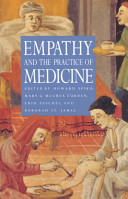
This important book seeks to restore empathy to medical practice: to demonstrate how important it is for doctors to listen to their patients and to experience and understand what their patients are feeling. The treatment of medical illness today depends much more on science and technology than on the physician's ability to listen, comfort, and prescribe.
Medicine is not only increasingly technical but also increasingly involved with legal, governmental, and insurance constraints on patient care, and this state of affairs has done much to distance physicians from their patients.
The book - which includes essays by physicians, philosophers, and a nurse - is divided into three parts: one deals with how empathy is weakened or lost during the course of medical education and suggests how to remedy this; another describes the historical and philosophical origins of empathy and provides arguments for and against it; and a third section offers compelling accounts of how physicians' empathy for their patients has affected their own lives and the lives of those in their car.
On August 10 - 12, 2011, the National Institute of Nursing Research presents The Science of Compassion: Future Directions in End-of-Life and Palliative Care, at the Hyatt Regency in Bethesda, Maryland. The entire program is free and open to the public.
Overall Summit objectives include:
* Examine the current status of end-of-life and palliative care research, practice and policy
* Propose strategies to overcome barriers and ensure scientific and methodological rigor in research
* Delineate new action items that galvanize progress in this vital area of science
* Envision and map pathways to ensure a future rich with scientific endeavor and achievements
Identify whether your feelings of frustration in nursing is just simple stress, burnout, or something more serious like compassion fatigue.
Nursing is hard emotional, physical, and spiritual work—it is also very rewarding and satisfying. Tension and turmoil come with the territory of being a nurse. Are your feelings of frustration simple stress or something more serious? Decide for yourself: is it stress, burnout, or compassion fatigue?
The perception of physician empathy helps patients fight colds faster, according to the final results of a study led by physicians Dave Rakel and Bruce Barrett.
A final study led by Department of Family Medicine (DFM) Associate Professors David Rakel, MD, and Bruce Barrett, MD, PhD, has shown that physician empathy really does help patients fight the common cold.
In fact, a therapeutic encounter based on empathy, compassion, and a willingness to listen not only helps patients feel better faster, it can also translate to actual changes in their immune response.
AMA Leader Commentary - A message to all physicians about current events in medical practice...
But what good is knowledge to the patient who has just been told he or she has inoperable cancer? For that patient, knowledge is not enough.
There must also be empathy. As doctors, we must balance knowledge with compassion. We must remember that patients come to us when they are feeling most vulnerable.
For a physician, sharing that vulnerability is a privilege and a sacred obligation. But our responsibility to the patient does not end there.
Sponsored by Stony Brook University's Center for Medical Humanities, Compassionate Care, and Bioethics
Several independent lines of scientific inquiry that suggest humans are compassionate by nature, and that those who are compassionate have better heath and live longer compared to those who do not help others. Some efforts to understand the health effects of compassion have turned to neurobiology for answers, as way to study and understand how compassionate behavior involves bodily processes that influence morbidity and mortality.
Our presenters consist of faculty and students who began their efforts to study the neuroscience of compassion at the University of Michigan, and who will discuss some of the key methodological and substantive issues surrounding this emerging new field, with an eye toward understanding the relevance to health and medical education.
Empathy is an elusive concept, espoused by many as an integral component of effective doctoring. In the medical literature, empathy is defined as a physician’s ability to recognize and validate a patient’s experiences and perspectives, and to convey this understanding back to the patient. A firm distinction is drawn between sympathy (an emotional attribute) and empathy (a cognitive skill that can be modeled, taught, and assessed).
Research indicates that physician empathy results in better patient compliance and outcomes, and even reduces medical malpractice suits.
Medical Student Salmaan tells his personal story on how compassion was his drive to get into healthcare, shares what happened to him as a medical student Next he unveils the Compassion for Care Charter and what this joined initiative of the IFMSA and the Radboud REshape & Innovation Center is about.
She is a graduate student in social work at the University of Maine, who has elected to spend 10 days at Lakewood in order to build empathy for her clients and enrich her clinical understanding of the long-term care environment. Her placement is coordinated and evaluated through the “Learning by Living” project at the College of Osteopathic Medicine at the University of New England, which has campuses in Portland and Biddeford.
Doctors in training at Gulf Coast Medical Center suddenly can't see straight and fumble with even basic tasks such as buttoning shirts, tying ties and removing earrings.The cardboard glasses they're wearing mimic the effects of macular degeneration, loss of peripheral vision and the inability to fully distinguish colors. Thick gloves approximate the ravages of arthritis.
Think of it as a course on empathy for 20- and 30-something physicians preparing to face a rapidly aging pool of patients
The first medical students enrolled in SELECT, a program designed to educate the physician leaders of the future, will arrive on the University of South Florida health campus this week.
The SELECT (Scholarly Excellence. Leadership Experiences. Collaborative Training.) program will give these students unique training in leadership development, intense coaching, and the scholarly tools they need to become empathetic, passionate physician leaders who will be catalysts for change...
During their first week on campus, instead of the old-style medical school tradition of heading to the gross anatomy lab, SELECT students will be learning how to coach their classmates and getting matched with their own faculty mentors. They will be immersed in leadership training and grounded in empathy and other core principles of patient-centered care...
In a new series of investigations, experts have revealed that healthcare professionals who exhibit small displays of empathy to the people they are treating are having a very positive effect on the outcome of the overall treatment.
It was found that patients who benefit from this type of treatment tend to report increased satisfaction with the medical act, as well as more motivation to adhere to long-term medication plans. Another result is that the number of malpractice complaints drop significantly.
Doctors are routinely missing or ignoring moments that beg for empathy and need more training in responding to human emotions, an article in Canada’s leading medical journal says.
Researchers from the University of Toronto and Duke University in Durham, N.C., say studies suggest doctors fail up to 90% of the time to respond to emotional cues from their patients.
“Empathy is the ability to understand another’s experience, to communicate and confirm that understanding with the other person and to then act in a helpful manner,” the authors write in the Canadian Medical Association Journal.
A few months ago a nurse contacted me with a very important question, “What do we do with the sadness we carry? And especially what do we do when it gets to be too heavy?”
Many of us work with people, support people and care for people who suffer with chronic conditions that just don’t get better. Week after week, month after month, sometimes even year after year we come and go, we care, we have compassion, we support with services but nothing ever gets better – there is only the steady and predictable decline.
Human beings are designed by evolution to form meaningful interpersonal relationships through verbal and nonverbal communication. This principle is the same whether the individual is male or female; an infant, a child, an adolescent, or an adu< or healthy or sick.
The theme that empathic human connections are beneficial to the body and mind underlies all 12 chapters of this book, in which empathy is viewed from a multidisciplinary perspective that includes evolution; neuropsychology; clinical, social, developmental, and educational psychology; and health care delivery and education.
Research studies have demonstrated the importance of doctor-patient communication in improving medical outcomes. In theory, perceived physician empathy significantly improves patient satisfaction and compliance. ..
In one family medicine class that Rabbi Karff taught with a clinician, medical students were asked to write a narrative where they tried to get under the skin of the patient, to be the patient. The rabbi critiqued each of the essays from the perspective of how to best connect to the patient, as well as the importance of compassion and empathy. “Patients can understand this empathy, and listening to their story is healing, even if you are not able to change the objective condition,”..
“Some students come to empathy naturally. For many who don’t, it’s that they feel comfortable only when talking about medical stuff. We tried to empower them to relate to patients in another way. For example, there’s an art to conveying news that is life-altering to a patient. Physicians must know how to convey that news without snuffing out hope.”
To get content containing either thought or leadership enter:
To get content containing both thought and leadership enter:
To get content containing the expression thought leadership enter:
You can enter several keywords and you can refine them whenever you want. Our suggestion engine uses more signals but entering a few keywords here will rapidly give you great content to curate.


 Your new post is loading...