Mimi Nicklin is a globally recognised millennial thought-leader, specialising in the power of empathy. She is host of the Empathy for Breakfast show, Secrets of The Gap podcast and author of new book Softening the Edge.
Empathising with those around us won’t only deepen the quality of our relationships but, after the pressures of being locked at home, it will improve our ability to heal and move forward with those we care for. So, perhaps we should ask ourselves dear reader, do we have any other choice
In this short video, listen to Dr. Gordon describe the origins of Active Listening. Working with Dr. Carl Rogers, Dr. Gordon and other graduate students learned that the most successful counselors listened more than they talked.
According to the age-old proverb from Plato’s Republic: necessity is the mother of invention, the main motivation for creating new discoveries is the need for them. However, as well as the necessity factor, we argue that a very important aspect that influences invention and creativity is the empathy factor.
Creativity and empathy possess similar traits where one is needed for the other to flourish. Such traits include unusual perceptual and personal openness, resistance to closure, non-judgmentality, egoless state of flexible ego-control, low defensiveness, and a desire to work beyond the boundaries of self. Words and phrases describing attributes of creativity such as ‘permeable boundaries’ (Carl Rogers), ‘bold and free perspicuity’ (Abraham Maslow), and ‘sensitivity’ (J.P. Guilford and E.P. Torrance), also resonate for empathy.
Helen Demetriou and Bill Nicholl. "Empathy Is the Mother of Invention: Emotion and Cognition for Creativity in the Classroom." Improving Schools (First published: January 25, 2021) DOI: 10.1177/1365480221989500
Helen Demetriou - University of Cambridge, UK Bill Nicholl - University of Cambridge, UK
According to the age-old proverb from Plato’s Republic: necessity is the mother of invention, the main motivation for creating new discoveries is the need for them. However, as well as the necessity factor, we argue that a very important aspect that influences invention and creativity is the empathy factor. This mixed methods research investigated the impact of empathy instruction on the social and emotional skills of creativity in the UK Design and Technology (D&T) classroom.
As Samsung Solve for Tomorrow embarks upon a new decade, equity and empathy are top-of-mind. This has sparked a heightened focus on “STEMpathy” – embedding human compassion and empathy into STEM education to further evolve both emotional intelligence and cognitive development.
Empathetic understanding leads to human-centered ways of solving problems and that conscious view also frames critical thinking, creativity, curiosity, decision making, leadership, entrepreneurship, and more.
It can be quite challenging to teach empathy to students, since the concept is quite abstract. The line between sympathy and empathy is quite blurred, and even explaining the subtle difference between the two to adults can be difficult.
The dictionary definition doesn’t help much, either, as it is rather vague, simply reading as ‘the ability to understand and share the feelings of another’.
We’re going to show you three ways that you can teach empathy to your students, whether they’re in kindergarten or in the 12th grade.
The paper explored how to promote constructive intergroup relations among children and young people in a context of protracted conflict. Across two studies, the Empathy–Attitudes–Action model was examined in middle childhood and adolescence. More specifically, we tested the relations among dispositional empathy, out‐group attitudes, and prosocial behaviors for youth born after the peace agreement in Northern Ireland.
In one correlational (Study 1: N = 132; 6–11 years old: M = 8.42 years, SD = 1.23) and one longitudinal design (Study 2: N = 466; 14–15 years old), bootstrapped mediation analyses revealed that empathy was associated with more positive attitudes toward the conflict‐related out‐group, which in turn, was related to higher out‐group prosocial behaviors, both self‐report and concrete actions.
Given that out‐group prosocial acts in a setting of intergroup conflict may serve as the antecedents for peacebuilding among children and adolescents, this study has intervention implications.
To summarise, the first step we must do is to make Social and Emotional Learning (SEL) — the formal process to make individuals empathic, compassion and kind — mandatory in schools.
Second, we must formalise SEL training and refresher courses for all teachers, principals and education related decision makers.
Third, we must formalise SEL training across all leadership programs. This systematic inculcation of SEL skills will trigger the mindset change we desperately need to build a peaceful and sustainable world. This wont happen overnight but a systematic start is necessary.
” Biden said. “We continue to be able to have our way [of life] even when we’re in quarantine, we’re able to be taken care of. I'm sorry but I just think this frustrates me so much because I'm so proud of what the American people are doing. The president, my impression is he doesn't have a whole lot of sense of empathy.”
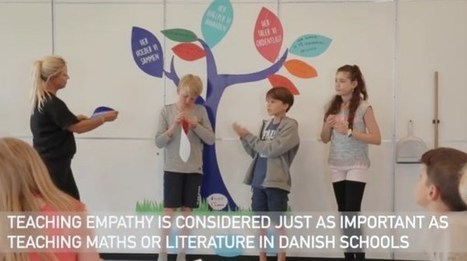
While most school children are educated in academic subjects such as math and English, there are other important life lessons that don’t always make it into the curriculum. Having empathy is a learned skill that comes with listening and understanding others. That’s why Danish schools decided to introduce mandatory empathy classes in 1993, as a way to teach children aged 6-16 how to be kind.
For one hour each week, during “Klassens tid,” students are invited to talk about problems they have been experiencing. During this time, the entire class works together to find a solution. This teaches children to respect the feelings of others without judgement. The empathy classes are believed to help them strengthen their relationships, sympathize with others’ problems, and even prevent bullying. They also allow each child to be heard, feel valued, and become part of a community.
There are a lot of values and skills that most schools fail to cover, some more important than even a lot of the subjects already covered in the program. One thing that’s consistently missing from most programs, however, even though it’s a value that’s crucial for a social species such as ours, is empathy.
As with many other things such as health care, the Happiness Index, education, and more, Denmark leads the rest of the world in this aspect as well. (1) In accordance with the country’s core values of peace, compassion, and empathy, the Danish are the first to introduce “Empathy” as a school subject. The reason why the Danish have incorporated empathy into their standard national curriculum is that they’ve realized the importance of teaching children what it means to understand and share feelings.
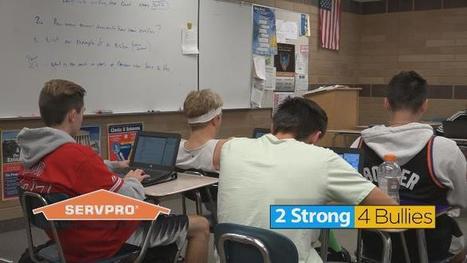
“You know how people say, someone can say ten nice things about you, but the one negative comment you’ll remember,” said Amber Hawkes, school counselor. “Go back to those ten positive comments because they’re gonna outweigh the one negative one that you heard.”
For school administrators, they try to focus on what is causing someone to act out towards others, or put someone down.
“A positive that can come out of it, is when you are working with that student, the antagonizer and in the end you are able to resolve what it is that is stemming from this,” said Sara Praegitzer, associate principal. “From them being able to get the help, whether it’s counselors here or the principal or myself or outside help. That is the best clarity that we can have because we know that we are getting them what they need and then they are happier with themselves.”
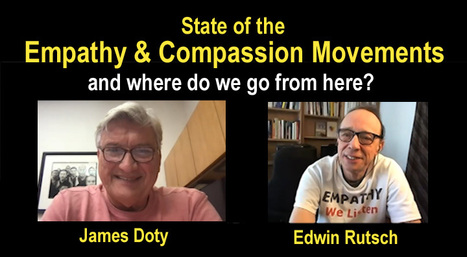
James Doty is Stanford Clinical Professor of Neurosurgery and founding director of the Center for the Study of Compassion and Altruism Research and Education (CCARE). CCARE is striving to create a community of scholars and researchers, including neuroscientists, psychologists, educators and philosophical and contemplative thinkers around the study of compassion.
Edwin Rutsch is director of the Center for Building a Culture of Empathy. The center has many projects to help raise the level of empathy in our global society and culture.
A discussion about the current state of the empathy and compassion movements and where they might be headed. We discuss the Empathy Circle process as a way to hold constructive dialogues. CCARE becomes a cosponsor of the project to hold Empathy Circles between Congressional Representatives from the political left, right and center.
Teaching children in a way that encourages them to empathise with others measurably improves their creativity, and could potentially lead to several other beneficial learning outcomes, new research suggests.
The findings are from a year-long University of Cambridge study with Design and Technology (D&T) year 9 pupils (ages 13 to 14) at two inner London schools. Pupils at one school spent the year following curriculum-prescribed lessons, while the other group's D&T lessons used a set of engineering design thinking tools which aim to foster students' ability to think creatively and to engender empathy, while solving real-world problems.
Both sets of pupils were assessed for creativity at both the start and end of the school year using the Torrance Test of Creative Thinking: a well-established psychometric test.
The results showed a statistically significant increase in creativity among pupils at the intervention school, where the thinking tools were used. At the start of the year, the creativity scores of pupils in the control school, which followed the standard curriculum, were 11% higher than those at the intervention school. By the end, however, the situation had completely changed: creativity scores among the intervention group were 78% higher than the control group
A new University of Cambridge study suggests that encouraging students in a classroom setting to engender empathy boosts their creativity. These findings (Demetriou & Nicholl, 2021) were published on January 25 in the peer-reviewed journal Improving Schools.
This study's title, "Empathy Is the Mother of Invention: Emotion and Cognition for Creativity in the Classroom," uses a play on words to reframe the age-old proverb, "necessity is the mother of invention," while highlighting the benefits of teaching students empathy.
by Christopher Bergland i
Helen Demetriou and Bill Nicholl. "Empathy Is the Mother of Invention: Emotion and Cognition for Creativity in the Classroom." Improving Schools (First published: January 25, 2021) DOI: 10.1177/1365480221989500
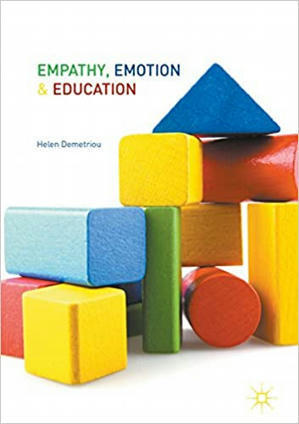
This book explores the construct of empathy and its connection with education. Charting literature on the origins and evolution of the concept of empathy, the author examines the multifaceted nature of empathy and the external and internal influences behind this concept.
The relationship between empathy and education is examined through the impact they have on each other for the development of social and emotional understanding, positive social behaviours and effective teaching and learning. In doing so, the author emphasises that empathy apparent in the early years of life is invaluable for enhancing the quality of teaching and learning in future, and should be elicited from pupils and teachers alike
. This book will be of interest to practitioners, educational psychologists, and researchers in empathy and its effect on education.
"I am very passionate about the empathy gap," Post said. "I have learned as much from my students as they have learned from me, and a lot of that has been centered around empathy and understanding them and what they need to learn, so I am incredibly excited to get to share that with ... the whole state of Arkansas, I guess."
From an evolutionary standpoint, empathy is a valuable impulse that helps humans survive in groups. The empathy lessons are believed to help them strengthen their relationships, succeed in work, and prevent bullying.
Empathy promotes the growth of leaders, entrepreneurs, and managers, and empathic teenagers are more successful as they are more oriented towards the goals compared to their more narcissistic peers.
This actually makes sense, as successful people don’t operate alone, and we all need the support of others to achieve positive results in life. Students talk about their problems during this hour, personal ones or problems related to school.
Lots of people are talking about empathy these days, and it’s not hard to see why.
Empathy is a key part of being a responsible and helpful community member at school and elsewhere. For example, young people who show empathy are less likely to bully. Empathy can also be a route to academic and career success, because it helps people understand and work with others. They are peaceful, productive, and positive places where all teachers can teach and all students can learn.
Empathy in the classroom can provide a lasting impression of an instructor. Professors’ care and concern for their students doesn’t go unnoticed either. Today’s students appreciate when instructors take the time to tailor their approach accordingly to help students manage their anxiety or uncertainty.
“Being mindful of the fact that other people right now are struggling to figure out how they’re going to eat really keeps me grounded,” Davis says. “I try to set the table so that my students can share their feelings and stories without feeling ashamed. I don’t say ‘we’re going to get through it.’ I say ‘we’re going to thrive through it.’”
The study of empathy is an ongoing area of major interest for psychologists and neuroscientists in many fields, with new research appearing regularly.
Empathy is a broad concept that refers to the cognitive and emotional reactions of an individual to the observed experiences of another. Having empathy increases the likelihood of helping others and showing compassion. “Empathy is a building block of morality—for people to follow the Golden Rule, it helps if they can put themselves in someone else’s shoes,” according to the Greater Good Science Center, a research institute that studies the psychology, sociology, and neuroscience of well-being. “It is also a key ingredient of successful relationships because it helps us understand the perspectives, needs, and intentions of others.”
Empathy is transformative. It can reduce the chance of a child being bullied. It can enable world leaders to find peaceful solutions. It can motivate nations to open their doors to families fleeing war and violence. It can inspire future generations of loving and compassionate global citizens. Empathy can change the world.
The educational arts nonprofit Children Mending Hearts has created “I Choose Empathy,” a free resource for those who have pledged to make their lives more empathetic. For over ten years CMH has been instilling empathy in students through after-school programs, in class curriculum, student, parent, and teacher workshops, and community service events. Now we want to help teachers and parents bring the empathy 360° even more effectively.
Ashoka’s Start Empathy Initiative is mobilizing Ashoka’s network of social entrepreneurs, educators, and concerned citizens who are working with young people to make empathy a priority skill for all children. Ashoka identifies and elects Ashoka Fellows whose ideas and initiatives are teaching us how to cultivate empathy across society. It collaborates with influential elementary schools and school networks — public, public charter, and private — to develop and showcase models of school environments that integrate empathy as a core learning objective and strategy.
Join me as I have an enlightening conversation with Barbara Gruener about empathy. We discuss the significance of teaching children empathy in schools and how we need to build empathy "like a muscle." Discover simple yet effective strategies for incorporating empathy activities into your classroom!
Barbara is a published author whose work has appeared in magazines such as Teaching Tolerance, Teaching K-8, and Daughters. She writes at The Corner on Character blog and guest posts over at the Character Educator every month. On May 30, 2014, her first book - What's Under Your Cape: SUPERHEROES of the Character Kind - was published by Ferne Press.
To get content containing either thought or leadership enter:
To get content containing both thought and leadership enter:
To get content containing the expression thought leadership enter:
You can enter several keywords and you can refine them whenever you want. Our suggestion engine uses more signals but entering a few keywords here will rapidly give you great content to curate.


 Your new post is loading...