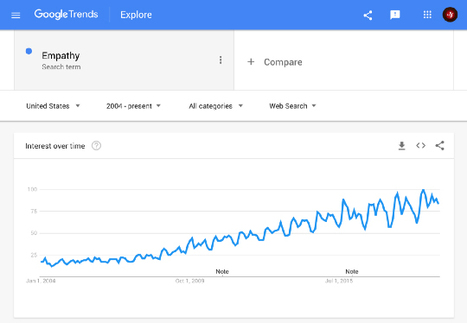
Claire Hall “I think it is fascinating to see that eliciting empathy has inherent value in maximizing creativity,” Herd says. “This is one of those areas of psychology that hasn’t been clearly disentangled yet for marketers: how does explicitly thinking of others’ feelings affect those who are creating new work?”
“We’ve shown that empathy can change the way in which you think,” she says. “We’ve looked at it in a somewhat narrow context of product design, but it appears that subtle things, such as imagining how someone else would feel, can have a huge impact on creativity in general.”
Consideration of an end-user’s feelings is a potent tool for developing innovative new products and solving problems that exist in the marketplace.— Kelly Herd
My friend Delos “Toby” Cosgrove is a fellow blogger for LinkedIn. He and his wonderful organization, the Cleveland Clinic, deserve a massive shout-out for their recent video entitled “Empathy.” I challenge you to watch it without a few tears forming.
Empathy is at the heart of design. Without the understanding of what others see, feel, and experience, design is a pointless task. When communicated as it is in this video, empathy can be truly inspirational. What the Cleveland Clinic movie reveals is the true scale and complexity of the challenge of understanding a complex social situation in order to design a system that supports many and various needs.
As a coach, my responsibility is to help clients move past roadblocks so that they can take actions that support their goals. That all comes down to making sure I first understand their priorities and preferences.
Similarly, empathy in any relationship requires that you listen non-judgmentally and leave your assumptions at the door. Instead, you want to use active listening skills to gain insight, including:
An Empathy Circle is a method for practicing, building and experiencing empathy in a small group setting. It is a sort of empathy building 'platform' on which various activities and processes can be added. The core practice is based on mutual empathic listening.
Edwin Rutsch Director: Center For Building a Culture of Empathy
Three Critical Design Thinking Mindsets These mindsets can help you solve problems through the lens of a design thinker, whether you’re using design thinking tools or not. The team at Highland has found these mindsets to be immensely valuable, and we encourage our teams to apply them to every project from CRM integration to OutSystems development.
1. Empathy When is the last time you spoke with a customer at length about their experience with your firm? About what they hoped to accomplish by hiring your product or service?
It’s surprising how many weeks and months can go by without a team really talking, face to face, with a customer. Focus groups and NPS scores and satisfaction surveys typically ask customers for an opinion on how you are performing, often putting some digital intermediary like a survey form between them and the customer.
Don’t let some “middle survey vendor” get in the way. Instead, go talk to customers! Watch them interact with your product or service or people. Interview them and ask them to tell their stories, starting from when they first realized they needed the kind of thing your company provides until the end of their journey with you.
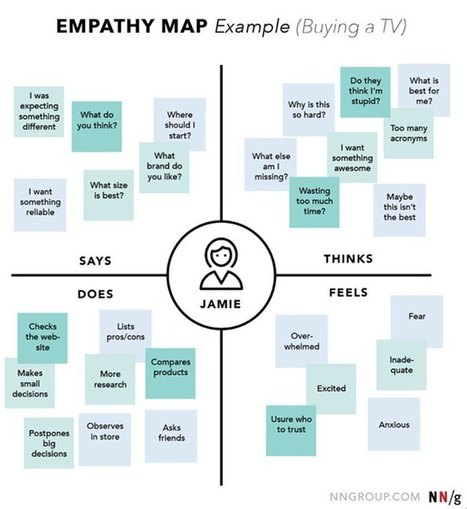
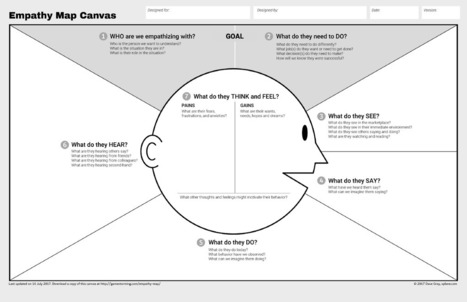
An empathy map is a tool that brings to light to your most likely customers. It teaches you how to connect with the people who will consume your content, products, or services.
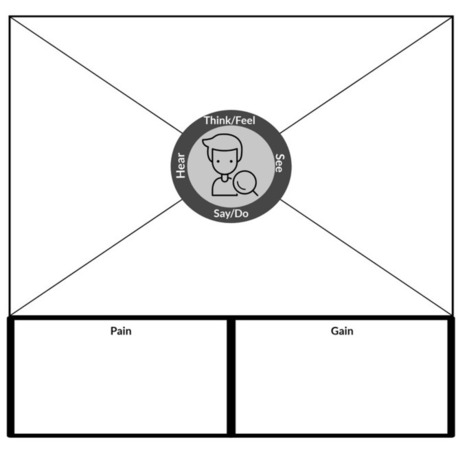
Typically divided into quadrants of say, think, do, and feel, the empathy map is intended to get into the head—and heart—of the customer. It helps you to visualize that what someone says doesn’t always align with what they do. That’s why it’s also important to understand what they think and feel.
Using empathy mapping can be a really powerful way to understand your customers or target audience.
This article provides information on the importance of empathy mapping, as well as providing some example questions from the empathy mapping framework.
What is empathy mapping? Empathy mapping was created by Dave Gray as a way of keeping the user or customer at the heart of market research.
A User Empathy Map is used to help determine the needs of a user. It allows you to focus on what was observed and what can be inferred about your different user groups’ beliefs and emotions.
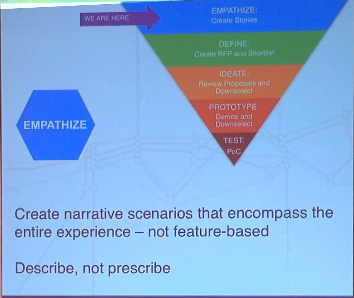
In his presentation at KMWorld 2018, Real Story Group's Jarrod Gingras discussed how to apply the five phases of design thinking—empathy, definition, ideation, prototyping, and testing in choosing the right technology, and started with the first phase: empathy.
Empathy and sympathy are radically different. When we embrace empathy we work better together; The solutions we design are more effective. Embracing empathy in design is not hard to do but it takes intentionality.
With a career that has spanned from Holland, Michigan to Johannesburg, South Africa, Jason has worked in a variety of contexts helping different organizations understand their users and solve complex problems. In his current role he works with a variety of businesses and organizations to help infuse design thinking and human-centered design methods to solve big problems and build effective teams.
Developed by IDEO & the Stanford d.school, design thinking is one of the most talked about processes for 21st century creative problem solving, and at its core lies empathy.
Empathy enables us to unlock creativity, innovation, and effective communication. Discover the power of empathy and its role in design thinking during our interactive lunch and learn facilitated by industry expert Jeremy Staples.
Not only does design thinking foster innovation, but it also strengthens teams by creating common vocabulary and artifacts, and a trust-based team culture.
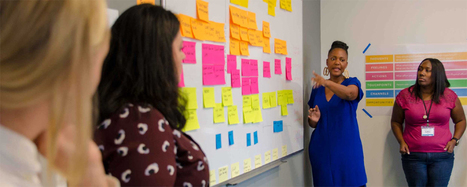
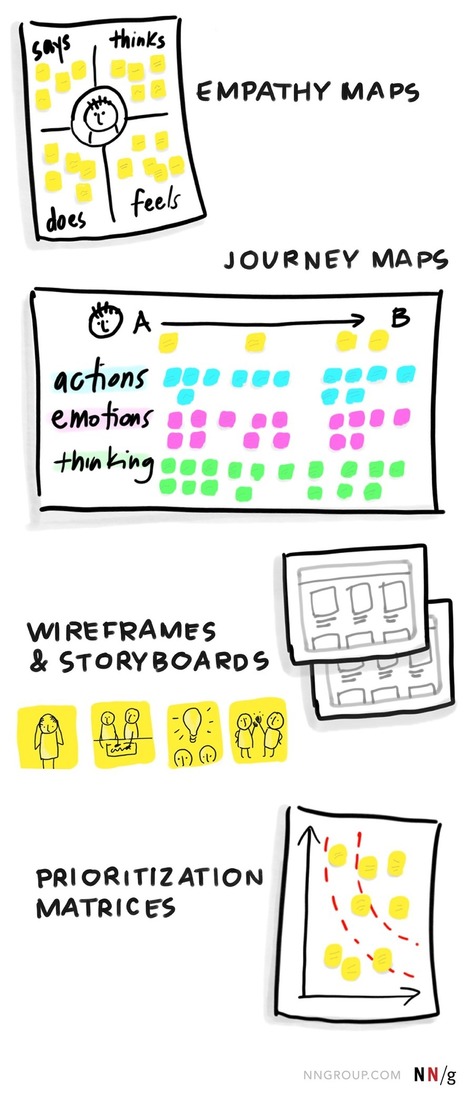
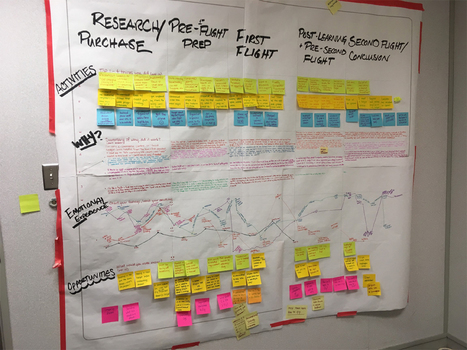
A key principle of design thinking is “show, don’t tell.” Throughout the design-thinking process, the team produces several tangible artifacts: empathy maps, journey maps, storyboards, and wireframes, to name a few.
They say the idea behind the experience is to apply that firsthand understanding to make their building designs more empathetic and accessible.
“One of the things that we really took away from the staff that ran through the scenarios is that having the hearing and the sight losses is really isolating,” Steiner tells Here & Now‘s Robin Young. “So even though I was at the airport [and] I did not have a flight to catch, I couldn’t understand half of the announcements. The losses that you have can be a little bit overwhelming.”
“The reason it works is because empathizing, or thinking about someone in an emotional way, leads to more cognitive flexibility,” says professor Kelly Herd.
Across trials and tasks, the empathetic designers were found to be measurably the most creative (the results were judged by various independent panels), and crucially, their ideas were no less practical than the logical group. In other words, their creative ideas didn’t come at the expense of realism.
For instance, when prompted to come up with potato chip flavors for pregnant women, the cognitive thinkers came up with flavors like “salt” and “BBQ.” But the empathetic thinkers thought up with flavors like pickles and ice cream, sushi with wasabi, and something called “margarita for mom.” Sushi and margaritas are not just surprising choices, they’re both foods that most pregnant women abstain from for nine months.
Empathy is a core principle of design-thinking and human-centered design. While it's difficult to walk a mile in another person's shoes there are steps we can take to bring ourselves closer to the people we design for.
In this workshop we will work through a series of exercises meant to broaden our understanding of how we listen to, understand and learn from people other than ourselves so that we may create innovative solutions to uncommon problems.
Effective collaboration is fueled by empathy—an awareness of others and an ability to detect their emotions and understand their perspective. To come up with truly innovative solutions requires new ideas. And to bring new ideas to light requires seeking a diversity of perspectives and creating a welcoming space for people to share their ideas without fear of judgment.
Leaders who are skilled at empathic collaboration know that voicing an opposing opinion can be a moment of tension for a member of their team, but that those tense moments are the greatest opportunity to unearth impactful ideas. They design ways to intentionally push their people beyond their comfort zones and guide them through the process of creative problem solving by providing support—asking questions instead of calling shots—at critical steps along the way.
For a lot of us, when we think of selling, the word “empathy” doesn’t come to mind. In fact, for many in the cause-focused space, particularly nonprofits, selling (just like marketing) is a bit of a bad word. However, it shouldn’t be.
If you have something that someone else needs or wants, isn’t that a good thing? That’s where it all begins.
Today, one of my spring interns, Rima Patel, is going to share how empathy intersects with the sales process, particularly the selling of products. I think this will not only be insightful, but good news for many of you.
You’re already leading a nonprofit, social enterprise, or other for-profit doing good, which means that empathy is at the core of what you do. This post will take it one step further, allowing you to see how empathy can be the glue that holds your triple bottom line together
During the first webinar of our four-part design thinking series, we will discuss how important it is to truly understand the problem your product or service is trying to solve. You will learn how to develop personas and empathy for the potential users, which can be incorporated into a more successful design. You will be exposed to tools that will help you to observe, engage, watch and listen to the potential user, to get a realistic understanding of the end user’s experiences.
I had never heard of “immersion” before this project. It came from a very specific need on our project that I predict is common in government regulation/service delivery. Now that we’ve completed it…
Empathy: the action of understanding, being aware of, being sensitive to, and vicariously experiencing the feelings, thoughts, and experience of another of either the past or present without having the feelings, thoughts, and experience fully communicated in an objectively explicit manner. source
Any seasoned UXer would be hard-pressed to argue that empathy isn’t central to strategic user experience design. My goal as a UX designer is to understand not only who the user is, but insofar as possible, put myself in her shoes and go for a short stroll in her world — learn her day-to-day workflows, discover her primary goals as well as her pain points.
I’ll learn that her work environment is too noisy and that the air conditioner is set too high (let’s be honest; it almost always is). On the surface, it’s easy to conclude that all of this is a simple data gathering activity, but there’s nothing simple about simulating the experience of another.
At the Cloud Foundry Summit, Denise Yu explains why human-centered design should now be core to software projects.
The classic definition of empathy means seeing the world through someone else's eyes," she relates. "In software, it has a lot more to do with how do you apply that empathy."
While Yu's remarks were directed at open source developers, she provides lessons for developers of all persuasions seeking to incorporate more human-centered design into their output. Empathy in software design means making a greater effort to understand the problems the user encounters, and overcome bias in all its forms. Conformation bias, of course, is well known, but Yu also cautions against "survivorship bias" as well -- addressing the requirements of only those users who stick with the product, instead of attempting to understand why users abandon a product.
Does the digitally enabled population -- that is, nearly everybody -- need interfaces that feel our pain, our joy or any other human emotion?
Not quite, said Danielle Krettek, founder of the Empathy Research Lab at Google. Empathy from a machine isn't actually possible, she said. But, with the right AI, she said digital assistants should be able to make the "empathic leap" that will make them feel more like a copilot at our side -- not human, but certainly more understanding than a sterile robot.
Why is empathy important in business? When we show empathy for our customers, we understand them from their perspective and, as business owners, we produce better services and products for them. Having empathy allows us to understand what needs our customers have (pains) and helps us estimate the value our products or services will create for our customers (gains).
Many small business owners get too focused on solving a particular problem that’s important to them, but maybe not to their customers. This is the why developing an Empathy Map is so critical when designing or launching a new venture. You will be able to identify insights about your potential customers that you did not know were there. You’ll be able to make products or services that stick by taking the time to understand your customer, and developing empathy for them.
To get content containing either thought or leadership enter:
To get content containing both thought and leadership enter:
To get content containing the expression thought leadership enter:
You can enter several keywords and you can refine them whenever you want. Our suggestion engine uses more signals but entering a few keywords here will rapidly give you great content to curate.


 Your new post is loading...