We are in the midst of the most sweeping education experiment in history. The coronavirus pandemic has forced the majority of the U.S.’s 3.6 million educators to find ways to teach without what most of them consider the core part of their craft—the daily face-to-face interactions that help them elicit a child’s burning desire to investigate something; detect confusion or a lack of engagement; and find the right approach, based on a student’s body language and participation in the classroom, to help students work through their challenges.
The good news is that this is happening at the end of the school year, after teachers have had opportunities to build relationships with their students. And in the past few decades, many educators have been experimenting with some promising technology-enabled approaches, sometimes called “hybrid,” or “personalized learning” models—essentially, a mix of in-person and online learning.
With schools closed, many students are transitioning to remote learning, with parents moonlighting as technical assistants and home-school instructors.
New York City’s 75,000 public school educators are facing a challenge unlike anything in their careers. For students to avoid permanent setbacks, the success of remote learning is critical.
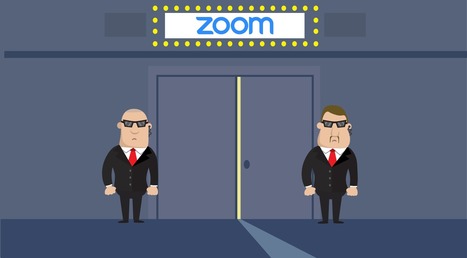
What is Zoombombing? A new form of trolling in which a participant uses Zoom’s screensharing feature to interrupt and disrupt meetings and classes.
Students, staff, and faculty who are impacted by protected class (like race, sex, gender, religion or national origin) misconduct during Zoom sessions should be referred to titleix@usc.edu (students) or oed@usc.edu (staff and faculty) for supportive resources and reporting options.
Dr Lee said 5000 TAFE teachers would be upskilled in online delivery of their courses by distance education. As many as 1200 courses offered through TAFE will be delivered online.
"We want to make sure we are doing everything we can to avoid transmission of the virus," Dr Lee said. "We need to upskill 6000 full-time equivalent staff in online course delivery."
The rushed transition to online instruction during the coronavirus pandemic can be wrought with anxiety, technical issues, concern for students and more. What's the best way to stay positive and support faculty?
All institutions want their faculty to have confidence going into a classroom to teach their subject, whether face to face classes, hybrid classes that are…
IntroductionDue to the coronavirus (COVID-19) pandemic, TEQSA is aware that many providers, particularly independent providers, have made the transition to online delivery with little support and few resources. This resource has been collated by TEQSA to assist the sector’s rapid transition to online learning during COVID-19. To date, the resources listed cover a range of
WASHINGTON, April 1, 2020 - Four leading organizations in higher education and digital learning today announced a partnership to establish the National Council for Online Education (NCOE), creating a formidable voice for online and digital education within higher education policy and thought leadership. This joint effort by the Online Learning Consortium (OLC), Quality Matters (QM), University Professional and Continuing Education Association (UPCEA), and WICHE Cooperative for Educational Technologies (WCET) brings diverse perspectives from across the field of online learning to address the rapid pace of disruption experienced in colleges and universities, along with associated threats and opportunities for the institutions and professionals served by the four organizations.
Well-planned online learning experiences are meaningfully different from courses offered online in response to a crisis or disaster. Colleges and universities working to maintain instruction during the COVID-19 pandemic should understand those differences when evaluating this emergency remote teaching.
We love that so many people are finding Zoom to be an easy way to stay connected in this time of social distancing, school closures, and work-from-home routines. All these virtual happy hours, coffee breaks, afternoon hangs, dance practices, yoga sessions, and so many other events over Zoom — your creativity and resilience in these …
Online Zoom classes were disrupted by individuals spewing racist, misogynistic or vulgar content. Experts say professors using Zoom should familiarize themselves with the program's settings.
Set up the meeting setting s before your first class and don't give your class room control without your permission. Common sense things. Use 256 encryption and a room password (keep it simple and relevant to the class, my anatomy class password was 'bicep') and ZOOM is fine.
While university instructors around the world scramble to implement delivery of their courses online — a medium with which they may have only limited experience — they can learn from the field notes of their counterparts at the largest international joint-venture university in China.
This report provides a synthesis of the outcomes from thirty eight Ako Aotearoa projects engaging with the diverse implications of technology for New Zealand tertiary education.
With the coronavirus pandemic closing college and university campuses everywhere, faculty are tasked with a quick move to online instruction. Here, education experts offer advice on how to make the transition.
Dr. Bethany Simunich, Director of Research and Innovation for Quality Matters, explains how the Higher Ed. and K-12 checklists can assist instructors as a job aid when moving to remote instruction in an emergency. Taking the student perspective is the cornerstone of creating a learning environment to support student success when changing modalities during a crisis.
To get content containing either thought or leadership enter:
To get content containing both thought and leadership enter:
To get content containing the expression thought leadership enter:
You can enter several keywords and you can refine them whenever you want. Our suggestion engine uses more signals but entering a few keywords here will rapidly give you great content to curate.


 Your new post is loading...