Your new post is loading...

|
Scooped by
Peter Mellow
April 12, 2022 4:33 PM
|
Video has supported education for many years, and in online courses instructional videos are often a key component.
|
|
Scooped by
Peter Mellow
April 7, 2022 5:15 AM
|
The tool I've been imagining for a while now is something bespoke for the development of courses. Something that would combine the features of previous work that I've done around single source publishing, pattern languages, metadata and the difference between authoring and presenting content. I've been asking myself a number of questions: Rather than the…
|
|
Scooped by
Peter Mellow
April 5, 2022 3:00 PM
|
We need to recognise the labour involved in these emerging practices; existing teams are great at making things happen, making it feel possible, and making it as simple as they can for those of us …
|
|
Scooped by
Peter Mellow
April 1, 2022 10:45 PM
|
These days, we hear a lot about the "new normal" in higher education. Remote and hybrid learning is here to stay, offering students more flexibility in their learning journeys. But what if the new normal is not enough? We spoke to Mark Milliron, senior vice president of Western Governors University and executive dean of the Teachers College, and Kim Round, academic programs director and associate dean of the Teachers College, about their vision for reimagining education and why learning experience design is essential to student success.
|
|
Scooped by
Peter Mellow
March 28, 2022 3:18 PM
|
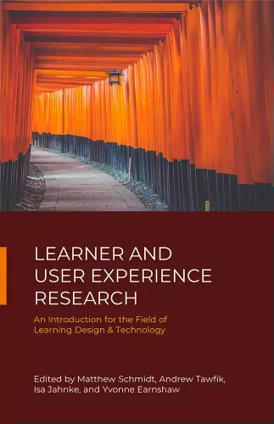
Researchers in the field of Learning/Instructional Design and Technology have been engaged in productive scholarly endeavors at the intersection of Learning Design, User Experience, Human-Computer Interaction, and associated disciplines for some time. This edited volume captures the collective voices of authors working in this area. This book focuses on explicating the ontological and epistemological underpinnings of user-centered design and user experience as applied in the field of Learning/Instructional Design and Technology with the goal of foregrounding the importance of learner experience as an emerging design paradigm for the field. This volume is comprised of 15 chapters and organized into three parts: (1) Methods and Paradigms (5 chapters), (2) Conceptual and Design Frameworks (6 chapters), and (3) LX Design-in-practice (4 chapters). This volume serves as a contribution to an emerging, transdisciplinary, and complex phenomenon that requires multiple literacies. LX is not only concerned with the effectiveness of designed learning interventions, but also with the interconnected and interdependent relationship between the learner- (or the teacher-/instructor-) as-user, the designed technology, novel pedagogical techniques or instructional strategies, and the learning context. The diversity and breadth of perspectives presented herein serve as a topographical sketch of the emerging focus area of learner experience and represent an opportunity to build upon this work in the future.
|
|
Scooped by
Peter Mellow
March 26, 2022 10:22 PM
|
The people who build and fund edtech tools occupy different professional worlds than the educators who use those tools. And those worlds can sometime
|
|
Scooped by
Peter Mellow
March 17, 2022 12:45 AM
|
A thoughtful and equitable approach to webcam use allows students and faculty alike to benefit from the sense of presence that webcams can provide during remote instruction while preserving student privacy.
|
|
Scooped by
Peter Mellow
March 6, 2022 4:46 AM
|
Enrollment in courses taught remotely in higher education has been on the rise, with a recent surge in response to a global pandemic. While adapting this form of teaching, instructors familiar with traditional face-to-face methods are now met with a new set of challenges, including students not turning on their cameras during synchronous class meetings held via videoconferencing. After transitioning to emergency remote instruction in response to the COVID-19 pandemic, our introductory biology course shifted all in-person laboratory sections into synchronous class meetings held via the Zoom videoconferencing program. Out of consideration for students, we established a policy that video camera use during class was optional, but encouraged. However, by the end of the semester, several of our instructors and students reported lower than desired camera use that diminished the educational experience. We surveyed students to better understand why they did not turn on their cameras. We confirmed several predicted reasons including the most frequently reported: being concerned about personal appearance. Other reasons included being concerned about other people and the physical location being seen in the background and having a weak internet connection, all of which our exploratory analyses suggest may disproportionately influence underrepresented minorities. Additionally, some students revealed to us that social norms also play a role in camera use. This information was used to develop strategies to encourage—without requiring—camera use while promoting equity and inclusion. Broadly, these strategies are to not require camera use, explicitly encourage usage while establishing norms, address potential distractions, engage students with active learning, and understand your students’ challenges through surveys. While the demographics and needs of students vary by course and institution, our recommendations will likely be directly helpful to many instructors and also serve as a model for gathering data to develop strategies more tailored for other student populations.
|
|
Scooped by
Peter Mellow
March 3, 2022 2:09 PM
|
H5P empowers everyone to create, share and reuse interactive content - all you need is a web browser and a web site that supports H5P.
|
|
Scooped by
Peter Mellow
March 1, 2022 1:19 AM
|
Higher education leaders must engage on new transcription requirements post-pandemic to ensure academics don’t have to choose between inclusion or increased workload
|
|
Scooped by
Peter Mellow
February 21, 2022 8:03 PM
|
Digital transformation is an organizational change process that demands a unique vision, perspective, and set of leadership skills.
|
|
Scooped by
Peter Mellow
February 10, 2022 5:51 PM
|
Blended and online learning continues to grow in popularity because of its benefits and accessibility. Applying these techniques in your classroom can keep students engaged.
|
|
Scooped by
Peter Mellow
February 5, 2022 5:47 PM
|
|
|
|
Scooped by
Peter Mellow
April 12, 2022 4:32 PM
|
Learn about new Zoom features to help educators connect and engage with students using Chromebooks, Breakout Rooms, and more.
|
|
Scooped by
Peter Mellow
April 5, 2022 3:01 PM
|
Question for you all: why are so many colleges and universities using Zoom, after two+ years of the pandemic? Let me explain my question, then share what I’ve learned from research and conver…
|
|
Scooped by
Peter Mellow
April 4, 2022 2:17 AM
|
For many students, participating in online class discussions feels like a chore—a box to check off for participation points rather than a livel
|
|
Scooped by
Peter Mellow
March 30, 2022 2:39 PM
|
The combination of short videos and the techniques of active learning can create rich, engaging educational experiences to maximize learning.
|
|
Scooped by
Peter Mellow
March 28, 2022 3:12 PM
|
As many of us know, virtual teaching can present a range of challenges for both students and teachers. Building community, communicating clearly, an
|
|
Scooped by
Peter Mellow
March 20, 2022 1:59 PM
|
Allowing for greater flexibility, a HyFlex teaching model enables higher student engagement and options as opposed to completely hybrid or in-person learning.
|
|
Scooped by
Peter Mellow
March 8, 2022 8:29 AM
|
If you want smooth smartphone video, we think the DJI OM5 is the best gimbal. But if you want finer-tuned control, the Zhiyun Smooth 5 could be a better choice.
|
|
Scooped by
Peter Mellow
March 3, 2022 11:57 PM
|
Harvard Physics Professor Eric Mazur is a teaching celebrity for his work to bring active learning into the lecture hall via his Peer Instruction program. So his comment during a Chronicle of Higher Education panel discussion (later reported in a Chronicle newsletter) that his online classes during the pandemic-impacted 2020-21 academic year were so successful…
|
|
Scooped by
Peter Mellow
March 3, 2022 1:07 AM
|
Foreign workers have botched the creation of updated TAFE course materials after the government spent millions of dollars outsourcing the job to external consultants, according to employees currently working at the organisation.
|
|
Scooped by
Peter Mellow
February 22, 2022 12:04 AM
|
Even before students at Morgan State University finish their degrees, they’ll soon have something official to let them show the world what they’v
|
|
Scooped by
Peter Mellow
February 17, 2022 7:08 PM
|
At Ohio State University, students developed a list of 10 ways that instructors can use the learning management system more effectively — common-sense guidelines that aim to make courses more consistent, predictable, easier to navigate and generally more student-friendly. We spoke with Sam Craighead, associate director of professional learning in Ohio State's Office of Technology and Digital Innovation, about understanding the student perspective, supporting faculty with research-based practices, and the impact of instructional design on student success.
1-Upload the course syllabus to the LMS and provide it as a downloadable file. 2-Upload assignments with instructions and clear due dates. 3-Enter grades into the LMS when grading is complete. 4-Use a consistent mode of communication and mention it in class. 5-Organize course materials into modules according to content matter. 6-Remove unused tabs or pages from the course navigation. 7-Organize the course homepage with instructor contact information. 8-Utilize clear and consistent naming conventions for assignments and files. 9-Use Open Educational Resources when feasible. 10-Leverage the resources and support that are available from the university.
|
|
Scooped by
Peter Mellow
February 5, 2022 8:40 PM
|
Salman Khan talks about how and why he created the remarkable Khan Academy, a carefully structured series of educational videos offering complete curricula in math and, now, other subjects. He shows the power of interactive exercises, and calls for teachers to consider flipping the traditional classroom script -- give students video lectures to watch at home, and do "homework" in the classroom with the teacher available to help.
|


 Scoop.it!