
"From a administrative and financial aspect BYOD makes sense. You don’t have to provide the students with either laptops, leases or access to machines the cost savings are brilliant."
From an educational aspect as well...
Via Kim Flintoff
Get Started for FREE
Sign up with Facebook Sign up with X
I don't have a Facebook or a X account


 Your new post is loading...
 Your new post is loading...
Your new post is loading...
 Scoop.it!
"From a administrative and financial aspect BYOD makes sense. You don’t have to provide the students with either laptops, leases or access to machines the cost savings are brilliant."
From an educational aspect as well... Via Kim Flintoff 
No comment yet.
Sign up to comment
Scoop.it!

Medical education is the science of teaching and learning in medicine related subjects or in other words in related specialties. Via Kim Flintoff
Scoop.it!

Thoughtful prognistication from Steve Wheeler about what Web 3.0 learning might look like. Basically, he expresses the ideas the 3.0 will be characterized by multi-touch 3D user access and richer collaboration affordances. Wheeler also offers links to several other writers' work that has influenced his thinking. -JL Via Jim Lerman, Kim Flintoff
Scoop.it!
http://nmc.org The NMC (New Media Consortium) is an international community of experts in educational technology — from the practitioners who work with new t... Via Kim Flintoff
Scoop.it!

Links to a number of well done videos and publications from the MacArthur Foundation regarding youth, media, schools, libraries, new media, and learning. -JL Via Jim Lerman, Kim Flintoff
Scoop.it!

New technologies are making it quicker and easier than ever to create digital portfolios of student work, a method of assessment experts say increases student engagement. Via Jim Lerman, Kim Flintoff
Scoop.it!
30.08.2010
ICT is becoming ever more ubiquitous within further and higher education, for e-learning, in research, e-administration and other ways. This creates many benefits, including ones of direct relevance to sustainable development such as improving accessibility for disadvantaged groups, and reducing environmental impacts by substituting virtual for physical activities (as when conferencing substitutes for face-to-face meetings). Via Kim Flintoff
Scoop.it!
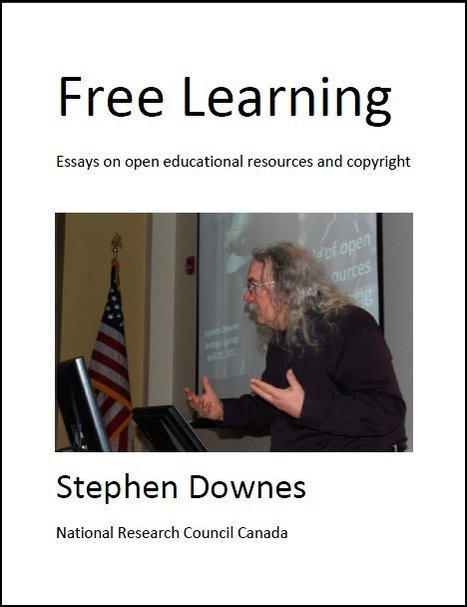
Stephen's Web, the home page of Stephen Downes, with news and information on e-learning, new media, instructional technology, educational design, and related subjects (RT @TwitClass: We don’t need no educator: The role of the teacher in today’s... Via Kim Flintoff
Scoop.it!

Free online tool to automatically summarize any text in a few clicks. Via Kathleen Cercone, Jim Lerman, Kim Flintoff
Scoop.it!
TED Talks Games like World of Warcraft give players the means to save worlds, and incentive to learn the habits of heroes. What if we could harness this gamer power to solve real-world problems? Jane McGonigal says we can, and explains how. Via JackieGerstein Ed.D., Kim Flintoff

Shadow Quill 's curator insight,
July 31, 2013 3:13 AM
Inspiring video about how gaming can inspire heroes |
Scoop.it!
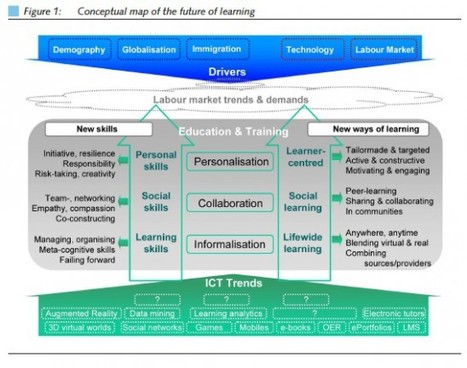
Personalisation, collaboration and informal learning will be at the core of learning in the future. The increased pace of change will bring new skills and competences to the fore, in particular generic, transversal and cross-cutting skills…. With the evolution of ICT, personalised learning and individual mentoring will become a reality and teachers/trainers will need to be trained to exploit the available resources and tools to support tailor-made learning pathways and experiences which are motivating and engaging, but also efficient, relevant and challenging… Most importantly, traditional E&T institutions – schools and universities, vocational and adult training providers – will need to reposition themselves in the emerging learning landscape . They will need to experiment with new formats and strategies for learning and teaching to be able to offer relevant, effective and high quality learning experiences in the future. Via GRIAL Univ Salamanca. Aprendoenred., Rogério Queirós, DAvid Cordina, michel verstrepen, Jim Lerman, Kim Flintoff
Scoop.it!
A range of articles and resources. especially interesting piece on self-directed learning programs in non traditonal university. Via Kim Flintoff
Scoop.it!

Lauren Wagner discusses the Self-Directed Learning Readiness Scale and how it may be used to both assess and build learner readiness to succeed in self-directed learning. -JL Via Jim Lerman, Kim Flintoff
Scoop.it!

Standing for journalism, strengthening democracy | Journalism training, media news & how to's...
More and more news sites have been using Storify to capture reaction and highlight interesting discussions taking place on social networks. And journalism educators have also started using it — to create multimedia course content, organize handouts and teach students how to curate social media. Via Kim Flintoff
Scoop.it!
![How Social Media is Changing the Education Industry [INFOGRAPHIC] | Tech in Asia | Digital Learning - beyond eLearning and Blended Learning | Scoop.it](https://img.scoop.it/LjsuRUmnQLzpMRBq98xVEjl72eJkfbmt4t8yenImKBVvK0kTmF0xjctABnaLJIm9)
From the layman users to businesses, almost everyone is part of the online social ecosystem. Now, the education industry seems to be picking pace as things are getting social in schools and universities. Via Kim Flintoff
Scoop.it!

One of the most comprehensive approaches to developing information fluency among students and teachers. Digital Information Fluency (DIF) is the ability to find, evaluate and use digital information effectively, efficiently and ethically. DIF involves Internet search skills that start with understanding how digital information is different from print information, knowing how to use specialized tools for finding digital information and strengthening the dispositions needed in the digital information environment. As teachers and librarians develop these skills and teach them to students, students will become better equipped to achieve their information needs. Originally started as a project of the Illinois Science and Math Academy. Via Jim Lerman, Kim Flintoff
Scoop.it!

Over the last few years I've done a lot of work developing writing and redeveloping online courses and course materials. In the initial rush to get learning online many organisations got themselves a Moodle platform and then attached a whole load of PDFs and .docs, added some forums and the odd video clip and called it an online course. It's no surprise then that drop out rates for online learning courses have been so high. Via Nik Peachey, Kim Flintoff
Scoop.it!

"For the first time in more than three centuries, Harvard and Yale will concurrently offer the same course — and its primary "text" won't be a book, but rather a video lecture series comprising the world's greatest thinkers and leading scholars."
"It's more important to learn how to ask the right questions than to find the right answers." Via k3hamilton, michel verstrepen, Jim Lerman, Kim Flintoff
Scoop.it!

Khan talks about what Khan Academy is learning about flipping classrooms, gamification and the end of higher education as we know it. Via Jim Lerman, Kim Flintoff
Scoop.it!

Doron Friedman of the Advanced Virtuality Lab (AVL), Israel, is leading a team of scientists developing the next generation of human-computer interfaces. Via Kim Flintoff
|