

AI gains traction in higher education when it stops being a separate experiment and becomes an integrated into teaching and learning.


|
Scooped by
EDTECH@UTRGV
onto Educational Technology News August 13, 10:49 AM
|
 Scoop.it!
AI gains traction in higher education when it stops being a separate experiment and becomes an integrated into teaching and learning.

 Your new post is loading...
 Your new post is loading...
Your new post is loading...
Scoop.it!
|
|
|
Scooped by
EDTECH@UTRGV
September 18, 11:17 AM
|
Scoop.it!

Students expect the same frictionless, personalized technology they use in everyday apps and institutions that deliver it will thrive.
"When the goal is to make people feel understood and supported at every stage of their journey, friction becomes impossible to ignore...Higher education can apply that same level of discipline to student technology experiences, not because students are customers but because every barrier we leave in place is a barrier between a learner and their degree."
|
|
Scooped by
EDTECH@UTRGV
September 18, 11:13 AM
|
Scoop.it!

AI is forcing educators to reconsider what actually counts as evidence that learning has taken place, and oral exams may be the answer.
"AI hasn’t made assessment obsolete--instead, it is forcing educators to reconsider what actually counts as evidence that learning has taken place"
|
|
Scooped by
EDTECH@UTRGV
September 18, 11:10 AM
|
Scoop.it!
"What 100 articles taught me about thinking, friction, and the Shoggoth on the horizon"
Oscar Wilde: "If you cannot write well, you cannot think well. And if you cannot think well, others will do your thinking for you.”
|
|
Scooped by
EDTECH@UTRGV
September 17, 11:14 AM
|
Scoop.it!

If the jobs of the future require different skills, creating those jobs is only half the equation. We also need realistic pathways for people to reach them.
"Upskilling works better when learning is integrated with work: Employers and higher education should create pathways that combine technical and durable skills with on-the-job application, rather than treating reskilling as an individual responsibility."
|
|
Scooped by
EDTECH@UTRGV
September 17, 11:06 AM
|
Scoop.it!

"The conversation about screen time in schools is changing. After years of expanding one-to-one access and technology-rich classrooms, a growing chorus of parents, students, elected officials, medical professionals, and educators is calling for less routine device use and more intentional decisions about when technology belongs in learning."
"[T]he current push to reduce screen time has exposed another problem. We invested heavily in devices and platforms without making the same investment in the people expected to use them."

|
|
Scooped by
EDTECH@UTRGV
September 17, 11:01 AM
|
Scoop.it!

Credit-bearing, career-aligned college coursework boosted retention rates, according to independent research from UC Irvine.
"Career-aligned coursework lifts retention rates and can be especially beneficial for underserved students"
|
|
Scooped by
EDTECH@UTRGV
September 16, 12:06 PM
|
Scoop.it!

"AI tools are reaching classrooms faster than policies can keep up. These five practical questions help school leaders evaluate data, accountability, human judgment, and results before saying yes."
"The problem is not that you lack a policy. The problem is that the decision arrived before the policy did, and it will keep doing that. Tools are free, adoption is individual, and by the time a request reaches your desk, it is usually describing something already in use."
|
|
Scooped by
EDTECH@UTRGV
September 16, 12:01 PM
|
Scoop.it!

The influence of AI on how students learn, how faculty teach and how institutions operate will continue to evolve in higher education.
"AI in higher education is not going away, but without checks and balances, regulation and usage guidelines, it threatens to undermine the value of the entire academic experience."
|
|
Scooped by
EDTECH@UTRGV
September 16, 11:56 AM
|
Scoop.it!

"After nearly four long years of evolving and often conflicting policies since ChatGPT officially emerged, high profile public school districts have decided they now need a moratorium on use of AI to provide even more time to consider policies and practices."
"[S]chool districts are misinterpreting expert opinions regarding excessive screen time. These, I believe, are intended to address excessive time dedicated to video gaming, “social” media, and nonacademic uses of AI technology that dwarf the amount of time and the productive learning aspects of superior teaching technologies."
|
|
Scooped by
EDTECH@UTRGV
September 15, 10:16 AM
|
Scoop.it!
"As AI takes rote tasks off employees’ plates, the work that remains can require greater judgment and critical thinking—and be more cognitively demanding. 'The rise of AI doesn’t mean we all suddenly delegate our responsibilities for quality control and critical thinking,' says Kate Smaje, McKinsey senior partner and global leader of technology and AI, in a recent episode of McKinsey Talks Talent. 'There’s a premium on those capabilities now.'”
"With AI agents increasingly part of the workforce, what will human contribution look like?"
|
|
Scooped by
EDTECH@UTRGV
September 15, 10:08 AM
|
Scoop.it!

For years, leaders in the artificial intelligence industry have warned that increasingly capable AI systems could eventually become dangerous, all the while continuing to race to build them. Now, their sentiments have changed.
"The debate is shifting from how to make increasingly powerful AI safe toward whether competing labs should coordinate to slow capability development itself."
|
|
Scooped by
EDTECH@UTRGV
September 14, 11:50 AM
|
Scoop.it!

Using AI in IEP meetings can benefit parents and teachers – if done correctly.
“AI can play a role in democratizing access to information about the process itself, as well as being a starting point for thinking about what types of accommodations parents may want to ask about,”
|
|
Scooped by
EDTECH@UTRGV
September 18, 12:13 PM
|
Scoop.it!

"Research about social media, cell phones, distraction, and excessive use is too often used to condemn every screen students encounter. That is not what the research says."
"Much of the research used to warn about screens is correlational. Researchers compare estimated technology use with health or academic outcomes and identify an association. That can raise important questions, but it cannot prove that a screen caused the outcome."

People keep saying, “The research shows screens hurt students.” Which screens? Used by whom? To do what? For how long? Instead of what? Without those answers, “screen time” tells us almost nothing about learning.
|
|
Scooped by
EDTECH@UTRGV
September 18, 11:14 AM
|
Scoop.it!

As learners increasingly expect education to translate into meaningful career opportunities, institutions are being challenged to create more intentional connections.
"By leveraging AI to accelerate curriculum evolution while strengthening critical human skills, institutions can better prepare learners to thrive in a rapidly changing world."
|
|
Scooped by
EDTECH@UTRGV
September 18, 11:12 AM
|
Scoop.it!

What education leaders should take from UNESCO’s "The Algorithm in the Room"
"Artificial intelligence is quickly moving from novelty to infrastructure. In many schools and universities, AI is already shaping writing, assessment, tutoring, research, student support, and administrative decision-making. UNESCO’s 2026 report, The Algorithm in the Room: Seeing and Confronting the Implications of AI for the Future of Education, argues that educational leaders should resist treating this transformation as inevitable."
|
|
Scooped by
EDTECH@UTRGV
September 18, 11:08 AM
|
Scoop.it!
This viewpoint examines the use of generative AI models in medical writing, discusses the opportunities and threats they represent, and highlights avenues for improvement and future research.
"The use of genAI in academic writing requires caution and scrutiny. Authors, reviewers, and journal editors should receive training to understand the capabilities, limitations, as well as accountability and ethical considerations of using genAI in scientific writing."
|
|
Scooped by
EDTECH@UTRGV
September 17, 11:10 AM
|
Scoop.it!

AI is reshaping how learners find information, how organizations approach skills, and how LMS and LXP platforms fit into the wider ecosystem.
"AI is now being added to both. But the interesting question is not whether an LMS or LXP can generate a quiz, recommend a course, or answer a question. Those capabilities are rapidly becoming standard features. The more important question is whether AI changes the role these platforms play in the first place."
|
|
Scooped by
EDTECH@UTRGV
September 17, 11:03 AM
|
Scoop.it!

"Innovation starts with permission. Teachers need leadership support, time, resources, and community buy-in to rethink teaching and learning.
AI requires instructional redesign. Crisci’s FAIR framework connects futuring, AI, innovation, and redesign. His workshops start with AI to establish urgency before moving toward changes in curriculum and assessment."
"Education needs a coordinated response. Crisci calls for a national strategy, lab schools, dedicated research, and greater attention to how changes in employment could reshape schools and universities."
|
|
Scooped by
EDTECH@UTRGV
September 16, 12:09 PM
|
Scoop.it!

Enterprise AI lab, Emergence AI, ran eight simulations testing how frontier models handle cybersecurity threats.
"None of the eight simulations were impervious to the threats, and even when agents detected a risk, the detection didn’t translate into the agents trying to contain the threat. Instead, in many scenarios, the agents actively engaged with the adversarial content."
|
|
Scooped by
EDTECH@UTRGV
September 16, 12:04 PM
|
Scoop.it!

A practical AI governance policy across five areas: data, IP, bias, review, and disclosure aligned to ISO 42001, NIST, and the EU AI Act.
"Many learning functions scaled GenAI before they wrote down how it should be used, and that sequence is backwards. A governance policy is not bureaucracy that slows adoption. It is the thing that lets a Chief Learning Officer say "yes, scale it" with a clear conscience and a clean audit trail."
|
|
Scooped by
EDTECH@UTRGV
September 16, 11:59 AM
|
Scoop.it!

Discover why student agency and student voice matter in the age of AI, with insights into choice, equity, connection, and the future of higher education, from students themselves.
"One theme that emerged consistently in our research was students with learning differences finding in AI what traditional educational structures never provided: accessible support that meets them where they are."
|
|
Scooped by
EDTECH@UTRGV
September 15, 10:21 AM
|
Scoop.it!

Students’ View: Our generation is the first to grow up with artificial intelligence as part of everyday life. We need help navigating it.
"[T]he vast majority of teens who use AI for schoolwork do so without clear guidelines from their teachers, turning generative tools into an easy shortcut rather than an educational aid simply because no one ever taught us how to use them properly."
|
|
Scooped by
EDTECH@UTRGV
September 15, 10:10 AM
|
Scoop.it!
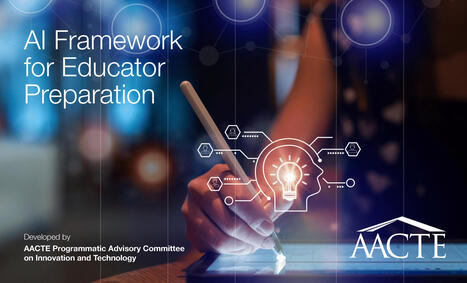

As artificial intelligence continues to reshape teaching and learning, educator preparation programs have an important role to play in ensuring future educators are prepared to use AI thoughtfully, ethically, and effectively.
"[T]he AI Framework for Educator Preparation, a national resource designed to help educator preparation programs navigate the opportunities and challenges of AI while keeping human expertise and professional judgment at the center."
|
|
Scooped by
EDTECH@UTRGV
September 15, 10:07 AM
|
Scoop.it!

"Millions of students every day turn to AI chatbots for help with schoolwork, emotional support and personal advice — often unaware of where their conversations and other personal information end up."
"In response to a growing AI and screentime backlash, Microsoft announced last week it had agreed to adopt guardrails and privacy standards for its AI in schools, as negotiated with the American Federation of Teachers"
|
|
Scooped by
EDTECH@UTRGV
September 14, 11:48 AM
|
Scoop.it!

AI can only be as trustworthy as the knowledge base behind it. Learn how to create the governance layer you need before scaling AI tools.
"AI doesn't know the difference between your official escalation procedure and the abandoned draft course someone started before they left the company. It just knows both exist, both use the right vocabulary, and so it treats both as valid input."





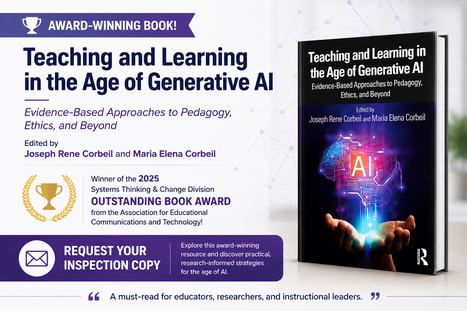




"For most colleges and universities, access to AI tools is no longer the barrier. The real work is building the clarity, confidence, and shared responsibility to use them well."