

"Why does some information stick, while other things seem to go in one ear and out the other?"


|
Scooped by
EDTECH@UTRGV
onto Educational Technology News July 21, 1:06 PM
|
 Scoop.it!
"Why does some information stick, while other things seem to go in one ear and out the other?"

 Your new post is loading...
 Your new post is loading...
Your new post is loading...
Scoop.it!
|
|
|
Scooped by
EDTECH@UTRGV
July 23, 10:50 AM
|
Scoop.it!
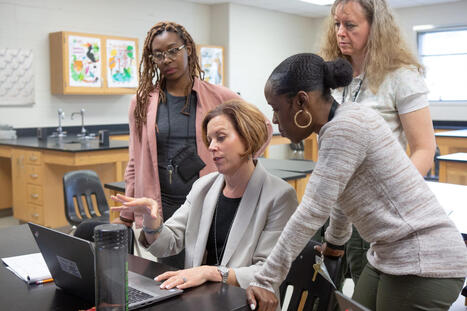
One of the first randomized controlled trials of AI in teaching found that it can undermine learning. Students felt less motivated to learn.
"Students say AI-assisted classes feel less interesting, less enjoyable and less important"
|
|
Scooped by
EDTECH@UTRGV
July 23, 10:26 AM
|
Scoop.it!

Writing is one of the most important critical thinking skills to help develop the mind and express creative thought, which AI cannot do
"The biggest mistake users make using AI to write is overlooking the visible lack of substance and eerie wording in LLM outputs...It is the personification a human adds that’s absent in AI outputs."
|
|
Scooped by
EDTECH@UTRGV
July 23, 10:22 AM
|
Scoop.it!

"Designers often say that UX isn’t really about screens. It’s a line I see in portfolios, I hear in interviews; that’s the line we use to signal that we’re thinking beyond just pixels. But honestly, for most of my career, that wasn’t true. In one way or another, the job was screens: building flows in Figma, mapping out states, writing specs, worrying about happy paths and edge cases, and handling handoff. We kept saying UX isn’t about screens, even as we kept making more of them."
"As AI products become more advanced, the interface is no longer the main focus. Now, the real question is which screens are still needed and which can serve as fallbacks."
|
|
Scooped by
EDTECH@UTRGV
July 23, 10:18 AM
|
Scoop.it!

Asynchronous course design has to work for the student logging in alone at 11pm, or it doesn’t work at all. Here’s how to design to make your presence felt, even in absence
"[W]hen students do not perceive teaching presence, their disengagement increases."
|
|
Scooped by
EDTECH@UTRGV
July 22, 12:11 PM
|
Scoop.it!

This Week with EdSurge podcast examines what holds up when artificial intelligence moves fast.
"[T]he value of a degree comes from something artificial intelligence cannot replicate."
|
|
Scooped by
EDTECH@UTRGV
July 22, 12:06 PM
|
Scoop.it!
A true digital campus experience requires leaders to think about how every technology decision contributes to the overall online journey.
"Students move between disconnected systems, receive endless communications from multiple sources and search across numerous applications to complete tasks that should feel seamless."
|
|
Scooped by
EDTECH@UTRGV
July 22, 12:04 PM
|
Scoop.it!

Gemini’s new learning mode is built on educational science, and that helps set it apart from some of the competition in our tests.
"While many other AI learning tools are prompted to support teaching, LearnLM was built from the ground up with teaching in mind"
|
|
Scooped by
EDTECH@UTRGV
July 22, 11:58 AM
|
Scoop.it!
"The artifact just became the cheapest thing in hiring. The room test is the live follow-up you can’t generate, and it’s where interviews actually get decided in 2026."
"The artifact survived and the conversation did not. And the reason this matters more now than it did in 2019 is simple: the artifact used to be expensive to make, it is not anymore."
|
|
Scooped by
EDTECH@UTRGV
July 21, 1:29 PM
|
Scoop.it!

What happens when a trillion-dollar capability is handed to everyone simultaneously, for free?
"Everything schools have done about AI assumes AI is a service. Services have accounts, age gates, district contracts, content filters, audit logs. Services can be blocked at the firewall. On July 27, frontier intelligence stops being a service and becomes a file. You cannot firewall a file."
|
|
Scooped by
EDTECH@UTRGV
July 21, 1:15 PM
|
Scoop.it!

Cohen: Transforming technology use in schools and classrooms is so hard that an intentional break may be the only way to truly adopt a better approach.
"The tendency in education policy to overcorrect is as constant as it is frustrating."
|
|
Scooped by
EDTECH@UTRGV
July 21, 1:06 PM
|
Scoop.it!
"Why does some information stick, while other things seem to go in one ear and out the other?"
"Decades of research have told us that things we selectively pay attention to are much more likely to be processed, because they enter into consciousness and memory...[T]he way that technology has evolved—including built-in advertising—has been about trying to capture that selective attention."
|
|
Scooped by
EDTECH@UTRGV
July 21, 12:55 PM
|
Scoop.it!

"I’ve been writing for a while about academic role-playing exercises and conversational simulations that are designed to push back. I call them friction bots. When I talk to other educators about their value, especially professors, I often get the question, 'Ok, but what does the research say?'”
"Role-playing has been proven time and time again to be good for learning. Rehearsal is good for the brain, too. LLM’s are really good at mimicking human beings."
|
|
Scooped by
EDTECH@UTRGV
July 23, 11:11 AM
|
Scoop.it!

I've come to believe that educational AI is a fundamentally different engineering discipline than the consumer AI most people read about.
"Most platforms today personalize within individual components, but the real opportunity lies in architectures that treat learning as a continuous feedback system. You can also anticipate that AI will move away from acting primarily as an answer engine and toward functioning more like a coach, proactively surfacing questions, guiding practice and helping learners connect concepts across domains."
|
|
Scooped by
EDTECH@UTRGV
July 23, 10:49 AM
|
Scoop.it!

This article explains why L&D's evaluation capabilities can finally measure behavior transfer and business impact.
"Measuring behavior transfer requires comparing what employees do on the job before and after training—which means pulling data from performance management systems, CRMs, operational dashboards, or direct manager observation records. None of that data lives in the LMS."
|
|
Scooped by
EDTECH@UTRGV
July 23, 10:24 AM
|
Scoop.it!

Discover how course design as an act of care strengthens faculty support, improves student engagement, and creates more inclusive learning experiences.
"Designing with care means anticipating needs, reducing barriers, and creating environments where both faculty and students feel seen and supported. When care is centered, design becomes relational"
|
|
Scooped by
EDTECH@UTRGV
July 23, 10:21 AM
|
Scoop.it!

Most compliance courses are completed, not learned. See why story is the most powerful tool in learning — and how SHIFT Meteora's SAGA fixes it.
"Five years ago, an ID was a learning architect — write the script, build the storyboard, hand off to media production. Today, the same ID is expected to also be the writer, the designer, the voice director, the video producer, and increasingly, the data analyst."
|
|
Scooped by
EDTECH@UTRGV
July 23, 10:16 AM
|
Scoop.it!

AI literacy, metacognitive frameworks, and reflection apparati have limited efficacy in the absence of systemic change, instructional redesign, disciplinary scaffolding, and ongoing measurement.
"Much of what now travels under the name AI literacy, though, looks like compliance in sheep’s clothing. It teaches students and teachers to name risks, follow rules, disclose use, and perform responsible language while leaving untouched the instructional conditions that make AI offloading attractive in the first place."
|
|
Scooped by
EDTECH@UTRGV
July 22, 12:09 PM
|
Scoop.it!

How AI deprived my students of the reading struggle they needed to succeed — and five better ways to use it.
"In our world of quick and snappy AI solutions, the leveled text shortcut is all too easy to take, but we should not give in to temptation."
|
|
Scooped by
EDTECH@UTRGV
July 22, 12:05 PM
|
Scoop.it!
Innovation in PD gives teachers autonomy to pursue PD that benefits their students and aligns with district priorities.
"[D]istricts spent about $18,000 per teacher each year on PD, yet only three in 10 teachers reported meaningful improvement over two to three years."
|
|
Scooped by
EDTECH@UTRGV
July 22, 12:01 PM
|
Scoop.it!
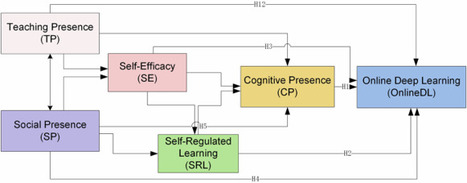
"In the context of global digital transformation in education and post-pandemic reforms, online teaching has evolved from an emergency response into an essential instructional mode in higher education. Enhancing the quality of university students’ online learning and fostering their capacity for online deep learning (OnlineDL) have thus become key concerns in the educational field."
"Although TP (teaching Presence) shows only a modest direct effect, it indirectly enhances OnlineDL through multiple mediation pathways involving CP (cognitive presence) and LP (learning presence)."
|
|
Scooped by
EDTECH@UTRGV
July 22, 11:55 AM
|
Scoop.it!
"AI is a powerful partner for UX reviews, not a replacement for the expert, and the accuracy comes from the expertise you feed it, not the model."
"[T]here were problems I hadn’t spotted myself, and that was useful. But there were more that the AI, in turn, didn’t catch."
|
|
Scooped by
EDTECH@UTRGV
July 21, 1:18 PM
|
Scoop.it!

"They are simple and transparent, eliminate inherent bias and can clearly show whether version A or B of a product works best for students."
"Randomized controlled trials are uniquely structured to determine whether a product’s impact is the result of the product itself or other factors."
|
|
Scooped by
EDTECH@UTRGV
July 21, 1:10 PM
|
Scoop.it!

Unlock new learning opportunities with an eLearning podcast. Discover how they help employees grow and develop in their careers.
"L&D leaders should also consider the balance between push and pull learning models. In a push model, podcast episodes are assigned as part of structured learning initiatives. In a pull model, learners choose content based on their interests and development goals."
|
|
Scooped by
EDTECH@UTRGV
July 21, 1:01 PM
|
Scoop.it!

Are frontier AI models beginning to write papers better than humans? I ran a comparison, and it's left me more uncertain than ever.
"[W]hile an LLM like Fable can study what it believes to be examples of good human writing, it cannot replicate faithfully a process that draws on our lived experience, our biological heritage, and our emotional and cognitive responses, as much as the technical meaning behind the words."
|
|
Scooped by
EDTECH@UTRGV
July 20, 11:58 AM
|
Scoop.it!

Learn what good AI governance looks like in instructional design teams, from human review and quality controls to role clarity and risk management.
"[T]he real question is not simply whether AI is allowed. The real question is whether AI is being used in ways that improve design quality, protect judgment, reduce avoidable risk, and build stronger professional practice over time."









"Decades of research have told us that things we selectively pay attention to are much more likely to be processed, because they enter into consciousness and memory...[T]he way that technology has evolved—including built-in advertising—has been about trying to capture that selective attention."