
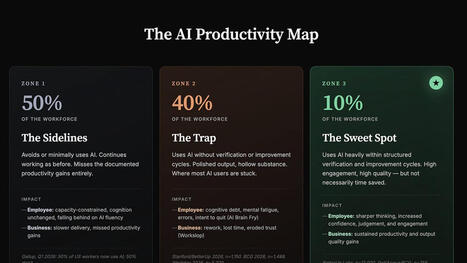
Why your AI tools aren't delivering the ROI you were promised — and what to do about it


|
Scooped by
EDTECH@UTRGV
onto Educational Technology News April 30, 12:49 PM
|
 Scoop.it!
Why your AI tools aren't delivering the ROI you were promised — and what to do about it

 Your new post is loading...
 Your new post is loading...
Your new post is loading...
Scoop.it!
|
|
|
Scooped by
EDTECH@UTRGV
Today, 11:05 AM
|
Scoop.it!

AI is associated with rising productivity expectations and changes to early career tasks, and is exposing gaps in workforce training.
"As organizations trade long-term talent development for short-term efficiency, they may risk weakening the talent pipeline that generates the on-the-job learning and experience needed for early career professionals to become future subject-matter experts and leaders."
|
|
Scooped by
EDTECH@UTRGV
Today, 11:01 AM
|
Scoop.it!


Personalization is a well-established driver of student engagement, yet delivering individualized instruction at scale remains a challenge in online education.
"Across analyses, students preferred personalized over non-personalized content, and human-recorded over AI-generated content. The magnitude of the personalization effect substantially exceeded the effect of human presence."
|
|
Scooped by
EDTECH@UTRGV
Today, 10:57 AM
|
Scoop.it!
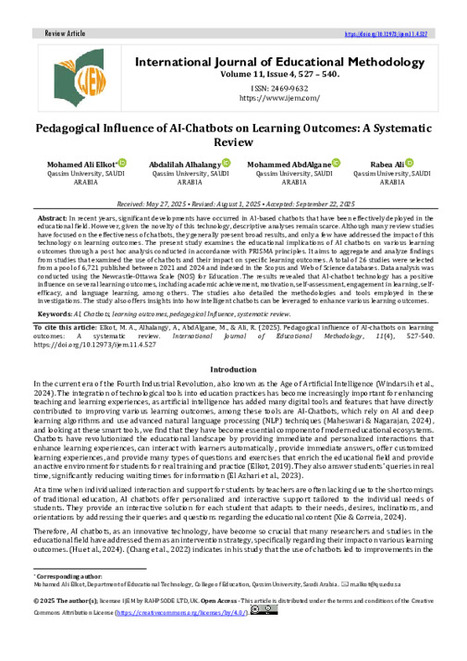
"In recent years, significant developments have occurred in AI-based chatbots that have been effectively deployed in the educational field. However, given the novelty of this technology, descriptive analyses remain scarce. Although many review studies have focused on the effectiveness of chatbots, they generally present broad results, and only a few have addressed the impact of this technology on learning outcomes."
"AI-chatbot technology has a positive influence on several learning outcomes, including academic achievement, motivation, self-assessment, engagement in learning, self-efficacy, and language learning, among others."
|
|
Scooped by
EDTECH@UTRGV
May 22, 11:10 AM
|
Scoop.it!

Discover practical ways educators can foster future-ready skills such as collaboration, emotional awareness, creativity, and time management.
"Future-ready skills are essential for shaping confident, capable, and compassionate individuals. While academic knowledge forms the foundation of education, these skills enable students to communicate effectively, solve problems, work collaboratively, and adapt to changing environments."
|
|
Scooped by
EDTECH@UTRGV
May 22, 11:03 AM
|
Scoop.it!

Some experts worry that less homework could be a problem for math achievement, at a time when test scores nationwide are already at a dismal low.
"The debate over homework has swung back and forth for more than a century, and the tide of public opinion has shifted every few years. It’s likely to continue changing for a simple reason: Researching homework is a challenge."
|
|
Scooped by
EDTECH@UTRGV
May 22, 10:56 AM
|
Scoop.it!
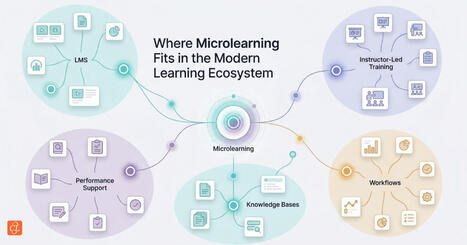
Discover how microlearning fits into blended learning, mobile learning, social learning, analytics, flow-of-work learning, and content conversion.
"Microlearning becomes far more valuable when it is treated as part of a learning ecosystem rather than as a standalone content format."
|
|
Scooped by
EDTECH@UTRGV
May 22, 10:50 AM
|
Scoop.it!

What this year’s viral commencement backlash reveals about fear, learning, and the institutional rush toward AI.
"At several campuses, graduates have interrupted speakers with stadium-wide boos when the topic turned to AI.”
|
|
Scooped by
EDTECH@UTRGV
May 21, 11:09 AM
|
Scoop.it!

"Simmering student fear and anxiety over how artificial intelligence is rapidly reshaping the job market—and humanity—came to a boiling point during some commencement ceremonies this month."
"Nearly one-third of colleges students feel “nervous” or “anxious” about AI’s impact on their future career."
|
|
Scooped by
EDTECH@UTRGV
May 21, 11:06 AM
|
Scoop.it!

Evidence from Florida, home of the first statewide mandate
"70 percent of school principals—and 81 percent of middle and high school principals—believe cellphone bans have a positive impact on school climate. However, bans are less popular with students."
|
|
Scooped by
EDTECH@UTRGV
May 21, 10:55 AM
|
Scoop.it!

As AI becomes a bigger part of the learning experience, institutions are challenged, not just to train students, but to develop learning systems around it.
"Much of higher education remains organized around assumptions that are increasingly misaligned with how learning occurs or capability is demonstrated."
|
|
Scooped by
EDTECH@UTRGV
May 21, 10:50 AM
|
Scoop.it!

This article explores the three roles in L&D, and why modern professionals need to think across all three to create meaningful impact.
"One of the biggest limitations in modern L&D is not a lack of tools or technology. It is the tendency to approach learning from only one perspective."
|
|
Scooped by
EDTECH@UTRGV
May 21, 10:46 AM
|
Scoop.it!

In this week’s Voices of Student Success episode, The Rithm Project’s Alison Lee explores whether AI is filling critical gaps in student support—or deepening isolation on college campuses. As institutions nationwide struggle to meet growing mental health needs, more students are turning to AI for comfort, connection and advice. Now, colleges and universities are being forced to confront a once-unthinkable question: What happens when students begin opening up to AI chatbots instead of people?
"[W]hen we asked about what we call the gateway moment—the moment they started talking to AI about emotional or relational support—every single time it was about an acute moment of need."
|
|
Scooped by
EDTECH@UTRGV
Today, 11:06 AM
|
Scoop.it!
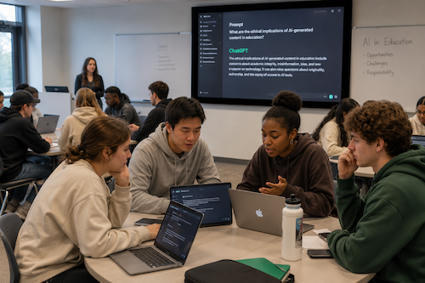
When AI is built to amplify human potential instead of replace it, classroom pedagogy doesn't shrink--it expands.
"The question isn’t adoption anymore. It’s alignment: making AI serve pedagogy, privacy, and outcomes–or it isn’t worth using at all."
|
|
Scooped by
EDTECH@UTRGV
Today, 11:03 AM
|
Scoop.it!

MacBook Neo conversations are only the beginning--what matters more is if surrounding IT teams are ready to support the change.
"At $599 retail and $499 through Apple’s education pricing,...Are Macs finally close enough to Chromebook territory to be considered for broader 1:1 deployments?"
|
|
Scooped by
EDTECH@UTRGV
Today, 10:59 AM
|
Scoop.it!
"Ask ten people in the industry what responsible AI design means and you will get ten different answers. Ethics frameworks, trustworthy AI principles, responsible innovation checklists: the vocabulary keeps growing. But underneath all of that sits a more practical question. When someone is actually sitting in front of an AI-powered product, what makes the experience good? And who, if anyone, has written that down in a way that’s actually useful?"
"Three of the world’s largest tech companies have published guidelines for responsible Human-AI Interaction. Here’s what they got right, and where the gaps are."
|
|
Scooped by
EDTECH@UTRGV
Today, 10:55 AM
|
Scoop.it!

Educators are not always aware of the implications of using the latest shiny AI tool. Laura Milne offers guidance on balancing educational value with institutional priorities
"Cost is a key factor to take into account when choosing an AI tool. When one is offered for free it is likely that your data you enter is the 'cost'. All major chat-based tools have settings that allow users to opt out of their data being used to train the model."
|
|
Scooped by
EDTECH@UTRGV
May 22, 11:07 AM
|
Scoop.it!

The AI models and chatbots that we interact with tend to affirm our feelings and viewpoints — more so than people do, with potentially worrisome consequences.
"AI models offer affirmations more often than people do, even for morally dubious or troubling scenarios."
|
|
Scooped by
EDTECH@UTRGV
May 22, 11:00 AM
|
Scoop.it!

Four states have recently passed legislation to limit teaching and assessments via screens for students. So has the United States' second-largest school district.
"[T]he school board of the Los Angeles Unified School District (LAUSD) voted unanimously to limit screen time for all grade levels, beginning in the fall, with a particular focus on eliminating it entirely for elementary-age students."
|
|
Scooped by
EDTECH@UTRGV
May 22, 10:55 AM
|
Scoop.it!
"The share of A’s in college classes heavy on writing and coding—in other words, work more prone to artificial-intelligence use—has grown more significantly than in other classes since ChatGPT’s debut, according to a paper from the University of California, Berkeley, released Wednesday. Professors teaching AI-exposed classes gave out about 30% more A’s and fewer A-minus and B plus grades. The results suggest that students have relied on generative AI to do better in their studies, not that these classes of students are learning more, says Igor Chirikov, a senior researcher at Berkeley’s Center for Studies in Higher Education and the author.
"AI is making “A” grades easier to come by, a new study shows—and making them less useful to employers trying to size up college graduates."
|
|
Scooped by
EDTECH@UTRGV
May 22, 10:49 AM
|
Scoop.it!

"What Is An Instructional Design Degree? An Instructional Design degree prepares professionals to create effective learning experiences for schools, businesses, and digital training environments. The field combines learning science, technology, and communication to help people gain knowledge and apply skills more effectively. For teachers transitioning into corporate learning or L&D, it offers a structured path into modern training and development roles."
"In 2026, Instructional Designers are needed beyond schools. Companies across industries hire them to support onboarding, skills training, compliance, leadership development, and digital transformation efforts."
|
|
Scooped by
EDTECH@UTRGV
May 21, 11:07 AM
|
Scoop.it!

"Teachers in the U.S. spend an average of seven hours per week on lesson planning alone, plus another three for students with diverse needs. That’s before grading, parent emails, IEP documentation, and the administrative overhead that has made teaching among the highest-burnout professions in the country."
"AI is saving teachers meaningful time. Whether that eases burnout depends on where the time goes."
|
|
Scooped by
EDTECH@UTRGV
May 21, 10:57 AM
|
Scoop.it!

The rise of artificial intelligence is prompting college students to second-guess their career paths
"College students are switching majors in due to AI concerns, with roughly 70% viewing the technology as a threat to their job prospects. Many are pivoting toward majors emphasizing critical thinking and interpersonal skills."
|
|
Scooped by
EDTECH@UTRGV
May 21, 10:53 AM
|
Scoop.it!

AI won't fix a broken L&D system. High-maturity teams succeed by fixing content architecture and operating models first.
"AI In Learning Is Not A Tool Upgrade But A System Shift...AI doesn't transform a broken system. It exposes and accelerates its limitations."
|
|
Scooped by
EDTECH@UTRGV
May 21, 10:49 AM
|
Scoop.it!

If we continue to prioritise memorisation in an age of wall-to-wall information, we send the wrong message to our students and employers. Michelle Seref offers advice on assessment that builds critical thinking skills
"The rapid rise of generative AI hasn’t made assessment obsolete, but it has made its misalignment impossible to ignore. The real question is no longer what students know, but how they think, decide, adapt and apply judgement. Yet many assessments still measure recall rather than application."
|
|
Scooped by
EDTECH@UTRGV
May 20, 11:25 AM
|
Scoop.it!

A comprehensive guide to online teaching strategies covering preparation, procedures, communication, and practices for effective online learning.
"By preparing to teach, and through planning and preparation, we can implement procedures and practices that build and strengthen online relationships and facilitate student success."









"[I]n some organisations, AI is driving unprecedented increases in productivity and with it employee growth and satisfaction. In others, AI is cited as the primary cause of reduced productivity and with it growing employee 'brain drain', frustration and attrition."