


How is the world changing? Technology is amplifying previously less visibile disparities between people & social 'systems.' This is how we can respond.
Via EDTECH@UTRGV, NextLearning

 Your new post is loading...
 Scoop.it! How is the world changing? Technology is amplifying previously less visibile disparities between people & social 'systems.' This is how we can respond. Via EDTECH@UTRGV, NextLearning 

rodrick rajive lal's curator insight,
September 13, 2017 5:23 AM
The picture tells it all! In a world that is becoming a "more connected world" (irony accepted), it has become an accepted fact that education also has to evolve. Move over Chalk and Green Board, move away pen and paper, enter the I-Pad, smartphone and laptop for online tests. Also, you might use Facebook to post your home tasks, or you might use Socratic to create online polls and surveys. 1
Sign up to comment
Scoop.it!

"Top schools now have record low admission rates, but only some students have to worry about what that means for their chances. Legacy admissions, at elite institutions especially, put a select few at a distinct advantage.
"Legacy students tend to be wealthy and white, students who, as a group, are already disproportionately represented at college. The New York Times found that, at five Ivy League schools, Dartmouth, Princeton, Yale, Penn and Brown, as well as 33 other colleges, there are more students from families in the top one percent than from the entire bottom 60 percent." Via Jim Lerman
Scoop.it!
Scoop.it!

In high schools of the performing and visual arts, race, sexual identity and ZIP code are beside the point. But not academics. Via Jim Lerman
Scoop.it!

Black students who attended a school in Kansas City last year were five times more likely to be suspended than their white classmates, a data analysis shows.
Dennis Swender's insight:
"Insignificant" suspensions?
Kansas City Public Schools Superintendent Mark "Bedell recalls a student who wore sagging pants to school every day when Bedell was an assistant principal at a Houston high school in 2007. "Bedell would get on the student’s case about pulling up his pants and finally, frustrated with his defiance, threatened to suspend him. "'He puts his hand on my shoulder. When I looked he had a tear in his eye,' Bedell recalled. 'He said, you know what, I’ve been kicked out. I’m homeless. You are here jumping on me about sagging pants and I don’t have a place to live. "'The truth is a lot of time they are just crying out for help. And we have to take the time. Not every student is going to show up to school the way we want them to on a daily basis. “'Putting a child out of school for three or four days, the more they fall behind ' Bedell said. 'The more they get behind, the more likely they are to drop out of school.'"
Scoop.it!

Sending your kids to school late pays off. Via Mel Riddile
Scoop.it!

During the twentieth and twenty-first centuries, political dictators were not only popular in their own countries, but were also admired by numerous highly educated and idealistic Western intellectuals. The objects of this political hero-worship included Benito Mussolini, Adolf Hitler, Joseph Stalin, Mao Zedong, Fidel Castro and more recently Hugo Chavez, among others. Hollander will discuss the sources of thes
Scoop.it!

Finding success in online learning is not always easy – between internal, external and contextual factors, learn what you can do to remain motivated.
Scoop.it!

Reinvention is not the exercise here. Instead, let’s hire skilled, fierce interpreters from outside of academia, and leave the scholars to study and teach.
Scoop.it!


Marie Schoeman's curator insight,
May 23, 2013 4:56 PM
What is of concern is that there is an alarming tendency in certain societies to pathologise certain aspects of normal childhood behaviour!
Scoop.it!

While the start of the school year differs by country, the first day back is normally a big day no matter where you're from. It's usually marked by excitement — or perhaps some dread if you don't want to give up your vacation — and a bit of fanfare. Via John Evans
Scoop.it!

A conversation with two math education leaders with decades of experience reveals that math is universal.
|
Scoop.it!
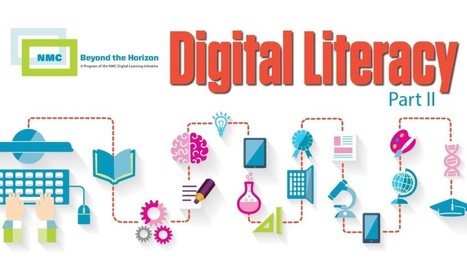
"The New Media Consortium first explored Digital Literacy in their 2016 report which ultimately provided some simple definitions of Digital Literacy. This year, in this just released “Part II” report, they took a deeper dive, sharing 11 different frameworks that have been developed by educational institutions and organizations, along with a couple dozen 'examples of programs and learning opportunities designed to facilitate content creation, increase technology fluency, and promote critical thinking.'” Via EDTECH@UTRGV, Volkmar Langer

DigCompOrg's curator insight,
September 26, 2017 5:18 AM
5 Selected Frameworks for Teaching and Promoting Digital Literacy
Scoop.it!

Being tall has been linked to higher risk for blood clots and cancer—but it may also protect against diabetes and heart disease. Via Peter Mellow
Scoop.it!

Last month I received my A-Level results. It was a moment of exhalation for thousands like me with futures anchored to a handful of letters on a page. Thankfully I secured my first choice place, however many of my peers did not, or failed to gain a place at all. I can’t begin to imagine the panic and disorientation this must have caused given the perception of education seems tethered to the rubric of the employment ladder. Via David M
Scoop.it!

MOPEDS emblazoned with Manchester United’s crest drone through the streets of Bangkok. Fans in Okene, Nigeria, dance in red and white kits on the town’s annual Arsenal Day. Official supporters’ groups exist in Macedonia, Mongolia and Mexico, some of the 180-plus countries to which matches are broadcast. Via Nevermore Sithole
Scoop.it!
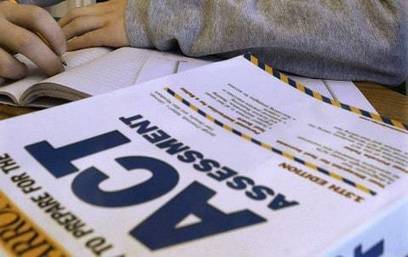
New results from the nation’s most widely used college admission test highlight in detailed fashion the persistent achievement gaps between students who face disadvantages and those who don’t. Via Mel Riddile
Scoop.it!

Thousands of Rohingya people from Myanmar have flooded into Bangladesh, attempting to escape the "deadliest outbreak of violence in the area for decades."
Dennis Swender's insight:
Article includes a statement from Malala, a 20-year-old Pakistani "advocate for girls’ education and women's equality [and] UN Messenger of Peace [and[ founder @MalalaFund
Scoop.it!

Scoop.it!

Explore cultural diversity in healthcare as America undergoes a health care reform and consider what “universal access” really means.
Scoop.it!

A very interesting perspective:
“I think that from very early ages we [in America] see struggle as an indicator that you’re just not very smart,” Stigler says. “It’s a sign of low ability — people who are smart don’t struggle, they just naturally get it, that’s our folk theory. Whereas in Asian cultures they tend to see struggle more as an opportunity.” In Eastern cultures, Stigler says, it’s just assumed that struggle is a predictable part of the learning process. Everyone is expected to struggle in the process of learning, and so struggling becomes a chance to show that you, the student, have what it takes emotionally to resolve the problem by persisting through that struggle." Via Maggie Rouman
Scoop.it!
Roger Kimball (Apr, 1991) comments on Dinesh D'Souza's "Illiberal Education" book.
Dennis Swender's insight:
Contrasting Kimball's 1991 comments with current issues in 2017
Scoop.it!

No seeds were lost but the ability of the rock vault to provide failsafe protection against all disasters is now threatened by climate change
|






