Everybody—a part animation, part live-action short film from Amnesty International UK—is a celebration of the 60th anniversary...
Via Global Education Project, Victoria

 Your new post is loading...
 Scoop.it! Everybody—a part animation, part live-action short film from Amnesty International UK—is a celebration of the 60th anniversary... Via Global Education Project, Victoria 
No comment yet.
Sign up to comment
Scoop.it!
Drinking from dirty water sources can lead to diseases such as diarrhoea and bilharzia, which kill 6,000 children every day. Compare the two people in this v... Via Global Education Project, Victoria
Scoop.it!
Almost a billion people on this planet lack access to clean water. That adds up to about in in every 8 people. Drop in the Bucket builds water wells and toil... Via Global Education Project, Victoria
Scoop.it!
Award-winning If the World Were a Village animation is available at http://www.cultureforkids.com. For more info visit http://www.master-comm.com for awards ... Via Global Education Project, Victoria

Global Education Project, Victoria's curator insight,
April 17, 2013 12:11 AM
Designed to help primary aged learners to gain a deeper understanding of identity, cultural diversity and population. 
cathysnowdon's comment,
May 21, 2013 9:00 PM
Access to understanding how to integrate Asian Literacies into the primary classroom.
Scoop.it!

From
qz

"In the 2016 edition of its World Development Indicators, the World Bank has made a big choice: It’s no longer distinguishing between 'developed' countries and “developing” ones in the presentation of its data. The change marks an evolution in thinking about the geographic distribution of poverty and prosperity. But it sounds less radical when you consider that nobody has ever agreed on a definition for these terms in the first place. The International Monetary Fund says its own distinction between advanced and emerging market economies “is not based on strict criteria, economic or otherwise.” The United Nations doesn’t have an official definition of a developing country, despite slapping the label on 159 nations. And the World Bank itself had previously simply lumped countries in the bottom two-thirds of gross national income (GNI) into the category, but even that comparatively strict cut-off wasn’t very useful."

James Piccolino's curator insight,
February 8, 2018 6:51 AM
I agree that it is important to categorize in order to learn and group things together. I understand some of the implications but it is nonetheless important to the way we learn about other areas. To do away with all labels of this kind will not make the topic and world view more inclusive, but instead make things so complicated that people will either not understand it or not bother with it's complexities. Things need to be distinguished between qualities and traits in order for proper analysis.

othni lindor's curator insight,
October 20, 2018 2:55 AM
This article explains how the World Bank is removing the term "developing country" from its data. This means that developed countries and developing countries all get lumped into one. This can change the way we view some countries compared to others. This can also help remove the stigma people have for certain countries. The downside to this is countries identify themselves differently from other countries and want to be identified as their own country. This can strip the identities of a country if it gets lumped together with another region or as one continent.
Scoop.it!

The Resource for Education Technology Leaders focusing on K-12 educators. Site contains a Software Reviews Database, articles from Technology & Learning Magazine, articles from Educators in Educators' eZine, Event and Contest listings, Reader suggested Web sites, and weekly news updates on education technology leaders." /> Via Dr. Tom D'Amico (@TDOttawa)

Dr. Theresa Kauffman's curator insight,
September 24, 2017 5:41 PM
Engage with students around the world. What a cool way to interact and learn about other cultures and true collaboration.
Scoop.it!

"Young Africans are honing their business leadership skills through online courses ..." Via Leona Ungerer
Scoop.it!

Those comforting calorie numbers? They're not reviewed by the FDA, wildly inconsistent and maybe off by 20 percent
Scoop.it!

From
hbr
The reasons for Trump’s win are obvious, if you know where to look.
Scoop.it!

There is a growing and disturbing trend of anti-intellectual elitism in American culture.
Scoop.it!

A group of 15 Ivy League professors wrote a letter to incoming college freshmen, challenging them to avoid conforming to dominant views. Via Marc Wachtfogel, Ph.D.
|
Scoop.it!
http://www.ted.com Josette Sheeran, the head of the UN's World Food Program, talks about why, in a world with enough food for everyone, people still go hungr... Via Global Education Project, Victoria
Scoop.it!
"All human beings are born free and equal in dignity and rights." This is what it says in the very first Article of the Universal Declaration of Human Rights... Via Global Education Project, Victoria
Scoop.it!

World Stories is a growing collection of stories from around the world. The collection includes retold traditional tales and new short stories in the languages most spoken by UK children. Story Collections:Adventure StoriesAnimal StoriesBedtime StoriesFolk StoriesLong StoriesShort Stories Via Global Education Project, Victoria
Scoop.it!
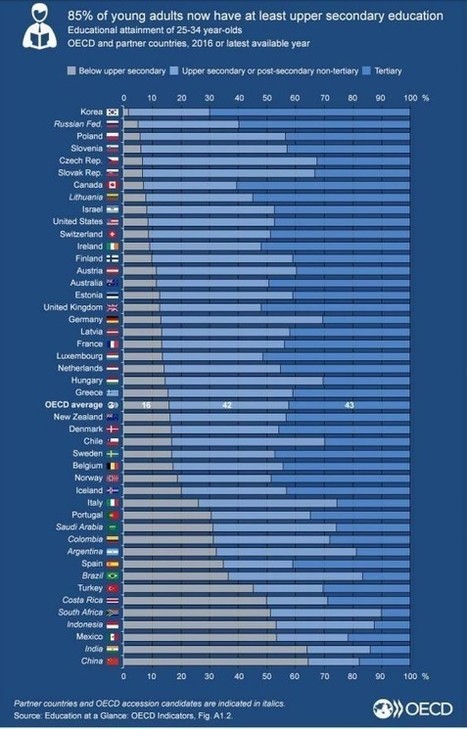
The OECD has examined the performance of education systems around the world. How does your country compare?
Via Gust MEES, Yashy Tohsaku, Miloš Bajčetić

Krumma Jonsdottir's curator insight,
September 30, 2017 4:56 PM
Still, a lot to do in my 2 beloved countries!
Scoop.it!
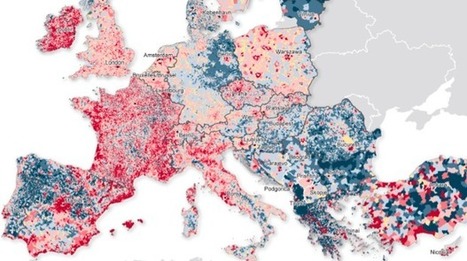
The map provides a level of detail previously unavailable. It is the first ever to collect data published by all of Europe’s municipalities.

Olivia Campanella's curator insight,
October 1, 2018 4:35 PM
Europe has been undergoing intense demographic change and this map is the first ever collect data published by Europe. How this map works:
The Dark Blue color shows average annual population fall of 2% or more The Medium Blue shows the average annual population fall of between 1 and 2% and Light Blue shows a fall of 1%. The areas in tan experienced no change at all. Areas in Deep Red show a rise of 2% or more in population, while in areas of Medium Red (1-2%) and Pale Pink (1%). 
K Rome's curator insight,
October 6, 2018 7:31 PM
Europe has been undergoing intense demographic change and this map is the first ever collect data published by Europe. How this map works:
The Dark Blue color shows average annual population fall of 2% or more The Medium Blue shows the average annual population fall of between 1 and 2% and Light Blue shows a fall of 1%. The areas in tan experienced no change at all. Areas in Deep Red show a rise of 2% or more in population, while in areas of Medium Red (1-2%) and Pale Pink (1%).
othni lindor's curator insight,
October 20, 2018 2:45 AM
This article shows the population patterns of Europe between 2001 and 2011. Many cities have had a high rise in average annual population of 2 percent or more. This map also shows that there has been more migration in northwest Europe. Citizens have left certain cities in search of better job opportunities. The population in Germany is sparse except in Berlin. Spain has had a big drop in population overall. Many people living in more rural regions have moved to cities and many others are moving to coasts for retiring or downsizing.
Scoop.it!

According to a new study, delaying start times until after 8:30am for all ages has major benefits – not only for our kid’s mental and physical well-being, but for the economy overall. Via Mel Riddile, Mark E. Deschaine, PhD
Scoop.it!

Perhaps it was only a matter of time before the TV-watchers... became the watched.
Scoop.it!

It's not just barbering, either. Many trade jobs require more hours of training than policing.
Scoop.it!
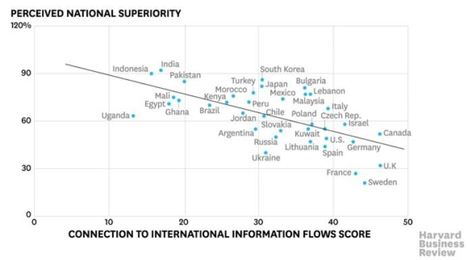
The less we know about the world, the less we want to interact with it.
Scoop.it!

Health care consumers are not all motivated by the same things, nor do they have the same barriers to positive behavior change. A “one size fits all” approach to health care consumers will be of limited success.
Scoop.it!

China, India and the United States are ahead of most other countries in artificial intelligence, top tech executive says. Via NextLearning
|