


Welcome to the Global Oneness Project. We believe that stories play a powerful role in education. Founded in 2006, as an initiative of Kalliopeia Foundation
Via Dr. Tom D'Amico (@TDOttawa)

 Your new post is loading...
 Scoop.it! Welcome to the Global Oneness Project. We believe that stories play a powerful role in education. Founded in 2006, as an initiative of Kalliopeia Foundation Via Dr. Tom D'Amico (@TDOttawa) 
No comment yet.
Sign up to comment
Scoop.it!
When it comes to education, Forbes’ 2018 “30 Under 30” list might be summed up best as the year of the founder. Via Jim Lerman
Scoop.it!

Many districts are adopting the transformative power of unconferences for their professional development days. Learn how you can, too. Via paul rayner
Scoop.it!

Economic Freedom of the World seeks to measure the consistency of the institutions and policies of various countries with voluntary exchange and the other dimensions of economic freedom. The report is co-published by the Cato Institute, the Fraser Institute in Canada and more than 70 think tanks around the world."
Scoop.it!

In Learning Transformed, Eric Sheninger and Tom Murray tell us, “Student agency must become the norm, not the exception.” And, I couldn’t agree with them more. In looking at the definition of learner agency, this is exactly how we learn as adults, and it is our duty to blur the lines between our schools and the real world. Via paul rayner
Scoop.it!
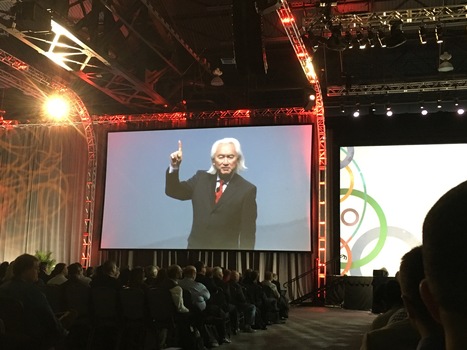
"Soft skills, ease with technologies are some of the most important skills undergrad students should be learning today for the future of tomorrow." Via EDTECH@UTRGV
Scoop.it!

I loved visiting the Château d’Amboise. What amazing architecture! The city of Amboise is lovely as well. It is the definition of quaint as you will see in some of the photos below. After doing some research, I learnt a few interesting facts about the area. The name Amboise comes from “Ambacia.” This Latin word …
Scoop.it!

After Chambord and Blois, let me introduce you to another major castle in the Loire Valley — Château d’Amboise. Located in the city of Amboise, the castle originally was a medieval fortress. It became a royal residence in the 15th century and the seat of the Court of King Charles VIII, who died there in …
Scoop.it!

Hollywood’s view of India can be insensitive – but Indian films present clichés about the West, and about Indian emigrants too, writes Laya Maheshwari.
Nostalgia for the colour and vivacity of India turns into a snobbish belief that ‘Indian culture’ is inherently more fun and cheerful than the drab and lifeless world in France, the US, or the UK. The rule-conforming nature of Western society is seen as antithetical to ‘living it up’, which our exuberant protagonists are wont to do. Western weddings cannot match up to Indian ones; nor is Western food anywhere as tasty as Indian food. People residing in Western societies are just not as street-smart as our Indian protagonists.
Tags: culture, India, South Asia, media.

Matt Manish's curator insight,
March 29, 2018 8:35 PM
I find it interesting how Hollywood tends to not particularly cater to audiences in India, even though I never really even had this thought cross my mind before. It is also interesting that Bollywood in India creates many films that don't really grab the attention of American or British audiences as well. As I was reading this article, I thought maybe it's alright that these two major film industries cater to their specific audiences, because that way everyone has something for them. But as I kept on reading, I realized that one major audience that is currently being overlooked are Indian-Americans and British Indians that live in Western countries and were raised there. Hollywood doesn't focus on Indian culture while Bollywood focuses on Indians retaining their heritage through their culture. These Indian-Americans and British Indians are often overlooked in much of today's film culture. I feel as though I have learned much more about this topic. This article has helped open my eyes a little bit more to this issue in the film industry.

Katie Kershaw's curator insight,
April 5, 2018 1:51 PM
Indians express in their films the disdain that they feel for other cultures and highlight their belief that Indian culture is superior. It is important to note that they do so specifically when talking about emigrants who settle in Western countries. I never really thought about attitudes of superiority that others have against the U.S., I usually hear the opinion being expressed of Americans believing they are superior. Bollywood films depict the West as having loose morals that are not compatible with the Indian way of life. So they show actors who are playing emigrants either adhering to their Indian culture or abandoning it and acting improperly like Westerners. The most popular characters are those who stand by their roots and chose to live how they want, not the way Western society wants them to. Although this article is highly critical of the attitudes of Bollywood towards the West, it also points out that it actually helped paint emigrants in a more positive light back in India. The most popular Bollywood movie called Dilwale Dulhaniya Le Jaayenge or "The Braveheart will take the Bride" changed the views that many Indians had towards emigrants. Instead of looking at them as traitors and ex-Indians, it presents the main characters as heroes for sticking by their roots. However, the film still had the problem of expressing only disdain for Western culture and making it seem evil.
The most interesting part of the article for me came at the very end, where it pointed out that racism is an issue in Bollywood. Oftentimes I have heard about racism in Hollywood films, but to the credit of film makers, cinema has become more inclusive lately-- especially compared to what I read about Bollywood. The depiction of black people is always negative. They are sometimes portrayed by Indian actors in blackface in the background of films, which is highly offensive. Other times they are portrayed as the dregs and lowlifes of society in the West. Overall, I think this article raised interesting points about the culture of India and the perception of Indians to the rest of the world.
Scoop.it!

Historically, the top ten most powerful passports in the world were mostly European, with Germany having the lead for the past two years. Since early 2017, Singapore has tied for number one position with Germany. For the first time ever an Asian country has the most powerful passport in the world. It is a testament of Singapore's inclusive diplomatic relations and effective foreign policy."
Tag: Singapore, SouthEastAsia, political, development.

David Stiger's curator insight,
November 27, 2018 1:22 PM
This articles highlights the logistics and technical minutia of globalization in real life. When people think about people traveling, it is easy to forget that there are barriers such as visas. Depending on the prestige and status of a country, a passport can allow a traveler to enter a foreign land visa free or at least hassle free. As the world becomes more interdependent and borders lose their strict nationalistic rigidity, this ability to traverse freely and more easily is important. One might not think that the small nation of Singapore now has the most capable passport out of 195 countries worldwide. Once tied with Germany to access 158 countries visa-free, Singapore pulled ahead when Paraguay reduced its visa restrictions for Singapore. This serves as another sign that Asia and the "global south" is truly catching up to the Western world. As these other nations catch up to the West's development, even surpassing the West's premier status, people's attitudes will eventually change towards these Asian, African, and Latin American nations. The positive associations will attract more business and more travel giving rise to new opportunities and stronger globalized connections. In the end, Singapore's win over Germany in international travel is a victory for globalization. Now whether one thinks globalization is good or bad is another matter entirely.

Kelvis Hernandez's curator insight,
December 14, 2018 4:37 PM
The Singaporean passport is the most powerful passport in the world, which is a great tagline but what does it mean? Well, passports are created for you to travel between borders and usually to create to another country you need to obtain a visa, but if you have a passport from Singapore you now have the most visa-less passport in the world. Allowing you to travel more freely and will allow many people better opportunities. 
Stevie-Rae Wood's curator insight,
December 17, 2018 11:26 AM
Singapore has become the holder of the most powerful passport in the world. This means that people from this country has free access to the most countries around the world. America thought they had the most powerful visa in the world however that's the farthest from the truth. Since Donald Trump has become president America's visa has gone down even more while Singapore has been quietly climbing the totem pole.
Scoop.it!
Wind is one of the cleanest energy sources available, and the US is sitting next to a gold mine. A new study has found that wind speeds over the oceans could allow offshore turbines to generate far more energy than a land-based wind farm – with the North Atlantic, in particular, theoretically able to provide enough energy for all of human civilization. Via Wildcat2030
Scoop.it!

Scientists have created a new pill that can halt type 2 diabetes in its tracks and help patients shed pounds from their waistlines, a major study has revealed. Via THE OFFICIAL ANDREASCY
Scoop.it!


EntreCulturas's curator insight,
October 13, 2017 12:09 PM
¿Sabes que es lo que ocurre en solo un minuto en Internet? Jeff Desjardins muestra como las redes sociales y la interactividad dominan nuestro día a día de manera permanente.

Shari Flynt Williamson's curator insight,
October 22, 2017 6:14 PM
This is just straigh up interesting and my mind is completely blown! How did we survive without the Internet??
|
Scoop.it!

In the wake of yet more car-ramming attacks—most recently in New York City—urban designers are considering how to make pedestrians safer without destroying their way of life
Scoop.it!

Harvard Business School professor Clayton Christensen, known for his theory of disruptive innovation, predicts that half of the 4,000-plus colleges in the U.S. will be bankrupt in 10 to 15 years, victims of a massive migration to online education, per CNBC. Via Carlos Fosca
Scoop.it!

To facilitate student growth within a global environment. Students will have the ability to acquire skills in research, critical thinking, teamwork and leadership while fostering partnerships with peers around the globe. Via Dr. Tom D'Amico (@TDOttawa)
Scoop.it!
"A dynamic knowledge tool to understand the issues and forces driving transformational change across economies, industries, global issues and the Forum’s system initiatives."
Scoop.it!

Scientists in Cuba face difficulties getting equipment and publishing results due to a U.S.-imposed trade embargo on their country.
Scoop.it!

"Dr. Martin Luther King, Jr. was one of the greatest civil rights activists of all time. He fought for equal access to opportunities for all Americans, regardless of race. One major issue of his time was equality in education. Though education looks very different than it did in Dr. King’s time, injustice and inequality still exist in schools." Via EDTECH@UTRGV
Scoop.it!

Students were writing about & for asylum seekers in a tumultuous political climate. A service learning initiative quickly became a matter of life or death. Via Ana Cristina Pratas
Scoop.it!
Pisa is the capital city of the Province of Pisa and is nested in the beautiful region of Tuscany. Once a Roman colony and then a Christian bishopric, it became a flourishing commercial center in the 11th century and a center of woolen manufacturing two centuries later.
While it is famous worldwide for its leaning tower, it also has many historic churches and medieval palaces, as well as a 14th-century university and a Square of Miracles. And scientist Galileo Galilei was born there.
The origins of the city's name remains a mystery until today. According to the Encyclopedia Britannica, "Pisa lay by the sea until the 15th century, by which time accumulated silt deposited by the Arno River had completely cut the city off from the receding shoreline."
Website: http://creativeramblings.com Prints: http://cendrinemedia.com Twitter: https://twitter.com/cendrinemedia Instagram: https://www.instagram.com/cendrinemedia/
Scoop.it!
Moderates, conservatives & liberals working for immigration numbers that serve America's finest goals The key factor in immigration policy is choosing the right number of authorized immigrants for future years. To choose a lower number does not imply anything negative about the immigrants who already are legally in this country. We're talking about the future number that is best for both U.S.-born and foreign-born citizens.
Scoop.it!

We all like to think that we're rational creatures able to make objective decisions, but our biases may be a lot stronger than we think. Via Wildcat2030

Dr Huey Allen's curator insight,
September 8, 2017 9:22 AM
Yes, personal biases do affect leadership decisions!
Scoop.it!

A recently released longitudinal study reveals that "an engaged student from a low socio-economic background will have better opportunities in life than a disengaged child from a more privileged background." Via Mel Riddile
Scoop.it!
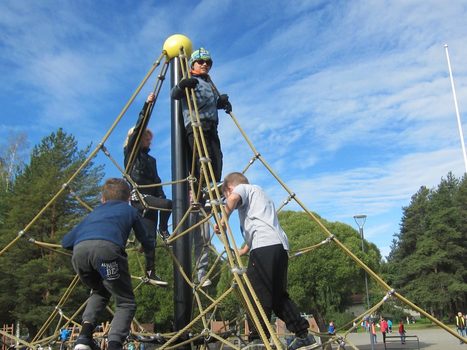
In Finland, teachers are trusted, appreciated and educated in advanced degree programs. Becoming and being a teacher starts with earning a placement at one of the country’s highly selective teacher education programs. I vividly recall the two educational books I was required to study for the first part of Finland’s initial classroom teacher education entrance … Via Mark E. Deschaine, PhD
Shari Flynt Williamson's curator insight,
October 22, 2017 5:51 PM
Honestly, I'm not concerned about the lack of difficulty in becoming a teacher. You still need a Bachelor's Degree and a Teacher Certification. I would, however appreciate it if it became more difficult to STAY a teacher. Some teachers just aren't any good, others get burned out and need to be removed from the classroom. Whether or not a student is successful can be directly related to whether or not they have good teachers-do we really want to leave our kids educational success up to the luck of the draw?
|






