 Your new post is loading...

|
Rescooped by
Dennis Swender
from Educator
May 23, 2018 1:38 PM
|
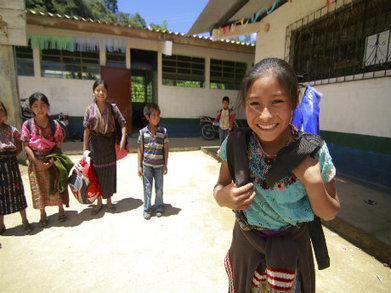
"Living on One Dollar is a full-length documentary made by four college students who traveled to rural Guatemala to live on just a dollar a day. Upon their return, they created Living On One, a nonprofit to raise awareness and inspire action around global issues like hunger and poverty -- and started by publishing the Change Series of video shorts. I found it so compelling I've dedicated this whole film fest to it. Each episode not only succinctly frames an issue faced by people in the developing world and makes it personal, but also offers resource links to learn more -- and even better -- to do something about it."
Via APS Instructional Technology, Jessica Kessel
Overcoming Poverty and Inequality in South Africa : An Assessment of Drivers, Constraints and Opportunities (English)
Via Igor Espanhol
The issue of mother tongue education has been fiercely but sporadically debated in South Africa since 1994. In the past two and a half years, student protests at universities across the country have breathed new life into the discussions. Proponents of mother tongue education tend to argue that children should be taught in th
Via Igor Espanhol
|
|
Rescooped by
Dennis Swender
from Edumorfosis.it
May 22, 2018 1:41 PM
|
http://www.w3.org/TR/xhtml1/DTD/xhtml1-strict.dtd">; School is just one spoke in the wheel of lifelong learning. The more that I engage in conversations about the future of education, and how to promote greater access and opportunity for life and work today, the more important this simple truth becomes to me. It is important for us to remember that most learning in life happens outside of school…without a formal teacher designing and directing the experiences. In our conversations about the future of education (or the present state of education for that matter), we sometimes lose sight of this important reality.
While sources report a range, almost all of them agree that the average person today and in the future will hold anywhere from five to fifteen different jobs before retirement. In a past study by the Bureau of Labor Statistics, researchers reported over 1/4th of people having more than 15 different jobs by the age of 48. Granted, many of these are jobs in the same or a similar line of work, but we are looking at the average person changing careers five or more times, and many more making partial career shifts (like a classroom teacher going into instructional design or corporate training, or moving into a management or leadership position within one’s field). Even when shifting between similar jobs, there is often a significant learning curve. Add to this the constant change of technology and we get a clear picture that work in the 21st and 22nd centuries includes ongoing learning, re-learning, and un-learning…and most of this without a classroom or a formal teacher coordinating the learning. Consider the many ways in which people learn what they need to stay current in a job, shift to a similar job, develop skills that transfer to work environments, move into leadership within one’s field, or make a full career shift.
Via Edumorfosis
|
|
Scooped by
Dennis Swender
May 21, 2018 1:43 PM
|
"The country is perhaps more aware of its own history than any other major society on earth. That remembering is certainly partial - events like Mao's Cultural Revolution are still very difficult to discuss within China itself. But it is striking how many echoes of the past can be found in its present."
|
|
Rescooped by
Dennis Swender
from Into the Driver's Seat
May 17, 2018 12:49 AM
|
First grade teacher, Luciana V. from Argentina wants to amplify her students’ learning. They are in the mids of talking and exploring the tradition around “Ratón Perez“, who her children eagerly await once they lose their first tooth.
Why not crowdsource other tooth traditions around the world? Why not use Flipgrid, an easy tool to quickly record children sharing the tradition from their own country? Imagine the amplified resource for all children to learn about different traditions of this very important milestone in their lives: Losing their first tooth!
There is no end date to this project of crowdsourcing contributions. If you are reading this post a few years down the road, you may still contribute with your children or students!
Via Jim Lerman
|
|
Scooped by
Dennis Swender
May 16, 2018 1:24 PM
|
"Previous work has consistently found that belief in a just world is strongly correlated with societal privilege. In the present study, we examined the influence of physical attractiveness on belief in a just world. We hypothesized that physically attractive individuals would be stronger endorsers of belief in a just world, whereas less attractive individuals would be less likely to endorse belief in a just world. Both self-rated attractiveness (experiment one) and attractiveness rated by other persons (experiment two) were found to predict endorsement of belief in a just world."
|
|
Scooped by
Dennis Swender
May 15, 2018 1:16 PM
|
|
|
Scooped by
Dennis Swender
May 14, 2018 11:12 PM
|
"Do you teach about global cultures or world events in your classroom? If so, Primary Source created this podcast for you. In every compact episode, What Teachers Need to Know offers vital insight for understanding world cultures and current events so that you can facilitate deeper learning about the world with your students."
|
|
Scooped by
Dennis Swender
May 14, 2018 1:40 PM
|
|
|
Rescooped by
Dennis Swender
from Positive futures
May 14, 2018 1:29 PM
|
Supporting Kids to Thrive: Are Kids Thriving Equally?
Six Seconds gathered this data by having kids age 7 to 18, all over the world, take the youth version of the SEI, the world’s leading emotional intelligence assessment. The good news is that youth wellbeing is on the rise: from 2015 to 2017, we saw a 4% increase in youth wellbeing scores. The bad news is that, on average, wellbeing scores seem to drop as kids enter their teenage years. Check out this graph of youth wellbeing scores, broken up into 3 age groups.
The particular challenges for teenagers are something that many of our Six Seconds team members have noticed in schools and in their own homes. Freedman says that “the level of anxiety and stress for teenagers is a pandemic, all over the world.”
Why would teenagers be struggling more?
Via David Hain
|
|
Rescooped by
Dennis Swender
from Positive futures
May 14, 2018 1:24 PM
|
We are each many things. Our identity is multifaceted and distinctly our own. It is a function of where we’ve come from, our vertical identity: our parents, race, gender, age, socioeconomic status and so on. Our identity is also shaped by what we’ve developed: those skills and interests into which we’ve poured our 10,000 hours, and often (but not always) shows up in our vocation. But it’s not just our past or our work that defines us, we can also have as our identity those things we dream as possible, what I sometimes label as horizontal identity because it is what pulls us into the future. And as we grow and adapt, that identity shifts also.
Via David Hain
|
|
Scooped by
Dennis Swender
May 14, 2018 12:47 PM
|
The mission of FIRE is to defend and sustain individual rights at America’s colleges and universities.
|
The role of water crises in conflicts in places like Syria, Nigeria and Iran often feature in media and policy outlets. Many believe that climate change could spark future conflicts. But research shows that most conflicts are driven by factors other than the effects of climate change. Some research suggests that droughts actually reduce
Via Igor Espanhol
By most standards, Ezekiel is living the middle-class Nigerian dream. At 41, he works as a senior manager at a Lagos-based media company where he earns a healthy salary. He also runs a successful side business importing and selling American used cars and has enough money to fund his wife and two children o
Via Igor Espanhol
|
|
Scooped by
Dennis Swender
May 22, 2018 2:39 PM
|
"The report Population Status of Children in China in 2015, published by UNICEF, shows this trend. Among 75 million adolescents between 15-19 years old, 1.2 million were married, and teenage women were married at twice the rate of young men. One in every 10 rural women aged 19 or below is married."
|
|
Scooped by
Dennis Swender
May 22, 2018 1:38 PM
|
Mostly, states are holding to a higher bar for student achievement than they did a decade ago. But Iowa, Texas, and Virginia continue to show large gaps between their state proficiency standards and NAEP's.
|
|
Rescooped by
Dennis Swender
from Leading Schools
May 17, 2018 12:50 AM
|
We believe in certified professionals as teachers just like we believe in licenses for medical professionals. Are some people natural teachers? We have seen a few but most become great teachers through a process of preparation and ongoing development and practice. Because this is our belief system, we have actually been advocates of renewable certification for teachers and leaders and accredited professional development. How can those who create safe learning environments for children and help them grow into responsible and productive citizens be less than the most qualified?
Via Mel Riddile
|
|
Scooped by
Dennis Swender
May 17, 2018 12:45 AM
|
Scientists just figured it out.
|
|
Rescooped by
Dennis Swender
from Reading Resources for ELT
May 15, 2018 1:17 PM
|
Private tuition is one the jobs I take to piece together a living, but I’m contributing to the widening attainment gap in our schools
Via Sue Lyon-Jones
End of Neihan Duanzi, which united strangers around funny memes, has driven users underground where they openly question controls over society
Via Sue Lyon-Jones
|
|
Rescooped by
Dennis Swender
from Collaborationweb
May 14, 2018 1:45 PM
|
If ever there was a time when one person could singlehandedly create the Next Big Thing, it's long gone. Now, collaboration and connection is king, which on the surface makes sense—the more ideas we can share with each other, the faster we'll arrive at something important. Except, new experiments suggest, that intuition is wrong: Having everyone's ideas on the table all at once can actually stifle innovation. At issue is how human beings learn from each other, or, rather, how many people we can learn from, write Arizona State University researchers Maxime Derex and Robert Boyd in Proceedings of the National Academy of Sciences. In principle, the more people we interact with, the more we know, and the better prepared we are to tackle difficult problems, like, say, finding a vaccine for a dangerous disease. It's certainly true that most technological innovation these days is the result of recycling and re-combining old ideas, hinting at the possibility that simply accumulating more ideas would help people innovate. But how does that work out in practice?
Via David Hain
|
|
Scooped by
Dennis Swender
May 14, 2018 1:33 PM
|
In a world of fake news, the only antidote is our ability to judge the reputation of the people supplying us with information.
|
|
Rescooped by
Dennis Swender
from Positive futures
May 14, 2018 1:28 PM
|
Today the world has about 7.6 billion inhabitants. Most demographers believe that by about 2050, that number will reach 10 billion or a bit less. Around this time, our population will probably begin to level off. As a species, we will be at about “replacement level”: On average, each couple will have just enough children to replace themselves. All the while, economists say, the world’s development should continue, however unevenly. The implication is that when my daughter is my age, a sizable percentage of the world’s 10 billion people will be middle-class.
Affluence is not our greatest achievement but our biggest problem.
Like other parents, I want my children to be comfortable in their adult lives. But in the hospital parking lot, this suddenly seemed unlikely. Ten billion mouths, I thought. Three billion more middle-class appetites. How can they possibly be satisfied? But that is only part of the question. The full question is: How can we provide for everyone without making the planet uninhabitable?
Via David Hain
|
|
Scooped by
Dennis Swender
May 14, 2018 1:09 PM
|
"The American Association for Public Opinion Research (AAPOR) is the leading professional organization of public opinion and survey research professionals in the U.S., with members from academia, media, government, the non-profit sector and private industry."
|












Thanks Seth Dixon!
Several character traits could be empasized using theses videos. The wheels in my mind are turning!