Your new post is loading...

|
Rescooped by
Dennis Swender
from The Arts & Education
June 2, 2020 1:01 AM
|
"Thanks to initiatives such as the Federal E-Rate program, which provides discounted Internet access and funding for schools and districts, most students now have the ability to get online while in school. However, once students head home, they may lack high speed Internet as well as a device other than a smartphone, resulting in what policymakers now term the homework gap."
Via EDTECH@UTRGV, Mrs Lord, Adrianna Alexander
|
|
Scooped by
Dennis Swender
June 1, 2020 3:01 PM
|
Workplace diversity improves corporate culture, lifts the bottom line, and drives engagement. Learn how diversity and inclusion affects a business.
|
|
Rescooped by
Dennis Swender
from Foreverkush.com
May 28, 2020 9:01 PM
|
Emanuele Del Fava, Jorge Cimentada, Daniela Perrotta, André Grow, Francesco Rampazzo, Sofia Gil-Clavel, Emilio Zagheni Physical distancing measures are intended to mitigate the spread of COVID-19. However, the impact these measures have on social contact and disease transmission patterns remains unclear. We ran the first comparative contact survey (N=53,708) across eight countries (Belgium, France, Germany, Italy, Netherlands, Spain, United Kingdom, United States) for the period March 13 - April 13, 2020. Our results show that social contact numbers mainly decreased after governments issued physical distancing guidelines rather than after announcing national lockdown measures. Compared to pre-COVID levels, social contact numbers decreased by 48% - 85% across countries. Except in Italy, these reductions were smaller than those observed in Wuhan (China). However, they sufficed to bring the R0 below one in almost every context considered. Finally, in all countries studied, the numbers of contacts decreased more rapidly among older people than among younger people, indicating higher levels of protection for groups at greater risk.
Via Complexity Digest, june holley, Davies Blake
|
|
Rescooped by
Dennis Swender
from Films, Arts & Otherness
May 28, 2020 8:44 PM
|
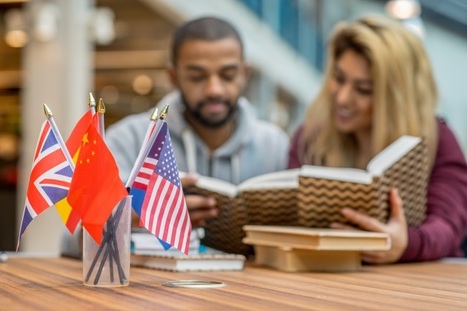
Cultural competence is an important key for success in today’s world. Language learning improves international understanding and tolerance.
Introduction
Learning languages enables people to develop their identities and allows them to be involved in multiple cultures. Speaking several languages makes people feel empowered and gives them choices and perspectives.
What appears very clearly in this research is how, in addition to identities connected to the different languages they speak, multilinguals can also develop an identity that transcends those that are language-specific (Henry, A., Fall 2017).
The Arabic proverb states “Every language is a person,” referring to L2s.
In learning more than one language, a person can develop self guides for each language, for example an ideal Lx self and an ideal Ly self (552).
Language learning involves culture as well. One can be fluent in L2, but cultural roadblocks can still interfere with communication.
Example of a cultural conflict
Students coming to the West to attend college want to focus on studying since many are on time-sensitive visas. Sometimes the native speakers they encounter have different priorities. Here is an example of an international student from Bangkok titled, “A cross-cultural problem: American university dorm life (Gebhard, J., 2009).
Siriporn arrived at her American university full of enthusiasm. She wanted to be an excellent student. Studying was the first thing on her mind.
She was surprised and dismayed by her roommate’s focus on partying and loud music. She tried hinting to her roommate, but the message did not get across. She told a friend within earshot of the roommate:“I wish my roommate would not have parties every night.” But nothing Siriporn said or did seemed to make a difference.
In most other countries, academics are more rigorous. Many countries impose a qualifying or comprehensive exam to get a BA or BS degree, and students can fail even if their grades are passing. When they go abroad to study, they may feel that the local students are not serious.
Cultural demands
College is more than reading a text and writing an essay. The demands faced by ESL learners include items that may not have been taught in ESL class.
These interactional skills are necessary for success and include the ability to comprehend and participate in the social demands of the classroom and the school; knowledge of the norms to initiate, sustain, and close communication with teachers, staff, and other students; knowledge of the norms of turn-taking; following the appropriate behavior; and demonstrating knowledge.
Turn-taking, for example, is a cultural skill that students may need to work on as they adjust to life in an English-speaking country. It involves a process of “alignment” where they acknowledge each other’s viewpoints and engage in meaningful discourse.
Alignment means that the speakers understand each other and know that they are being understood. They provide additional information in harmony with each other’s moves.
Taken together, these alignment moves index shred understanding along with the ability to adopt the other’s point of view and to speak in the other’s voice (Dings, Fall 2014).
As the perceptions of most human beings are shaped by culture, the most important contribution intercultural communication studies have made for second-language teaching is that they have increased instructors’ awareness of the intricacies of managing a multicultural or a monolingual classroom in a foreign learning context, improving teaching and classroom quality for second-language students (Akhbar, I., October 4, 2017).
Research shows that culture affects language and to reach higher levels of language, students need cultural competence.
Culture through language thus both reflects and affects one’s worldview, serving as a sort of road map to how one perceives, interprets, thinks about, and expresses one’s view of the world (Akhbar).
As they study L2, students gain more understanding of the culture connected to that new language.
Through L2 study, it is believed that students gain a knowledge and understanding of the cultures that use that language. However, intercultural communication studies show that in order to achieve higher developmental levels, students need to understand the sociocultural and pragmatic norms of a particular cultural way of thinking (Akhbar).
Everyday activities are often regulated by culture.
Studies have illustrated differences that exist in turn-taking, degree of directness, attitudes to the acceptability of disagreement and direct criticism, forms of address, verbal and nonverbal feedback, appropriateness of topics, and adjacency pairs such as in greetings, apologies, compliments, requests, leave taking, etc. Different conversational styles are generally culturally determined (Akhbar).
Native speakers may misinterpret the L2 students’ attempts at communication sinceparalinguistic items such as stress and intonation and gestures are not universal.
Instructors should make second-language students aware that native speakers may not always be prepared to accept the validity of differing styles of communication, which may result in communicative attempts being misunderstood or rejected. Students should be prepared for this possibility, being careful not to take such behavior personally or be discouraged by it (Akhbar).
Employers do not want people with just the technical skills. They also need workers who possess soft skills related to communication, innovation and collaboration. These skills presume knowledge of the surrounding culture and its values.
Students in ESL need to do more than master the language. The must also be familiar with the underlying culture. Yalcin Akin, executive director of Orlando Science Schools, stresses that adding arts education enhances problem-solving skills (Akin, Y., October 22, 2017).
These are all capabilities gained through a well-rounded education that includes the arts (Akin).
Most ESL programs include a cultural component as part of the core curriculum or as an elective or as part of the extracurricular activities. Students who are suddenly immersed into a new cultural environment face a sudden change in their cultural identities. The ESL classroom is a place that should ease this change.
The ESL classroom is often the only place where students can share their concerns about cross-cultural issues such as coping with culture shock and adjusting to U.S. culture (Maum, R., 2008).
Teaching hints
Religion and faith are important parts of the identities of both learners and instructors.
Language learners and teachers are so often asked to leave core parts of their identities at their classroom doors, including religion (Bigelow, M., Summer 2018).
Instructors need to be aware of some of the key facets of the various belief systems of their students and recognize some of the key words and identity markers (431).For example, words such as hijab, Ramadan (or Ramazan in Turkish) and Koran are associated with Islam, while salvation, apostle and Ichthys are associated with Christianity.
Religion is as complex as categories such as race, class, gender, and sexuality, but this complexity has yet to be thoroughly understood in our highly secularized mainstream research agendas (432).
Religion plays an indirect role in language teaching since the learners come from a variety of faiths. Teachers need to understand how people use language in different contexts including religious contexts.
Importantly, one might argue that the growth of secularization in many societies in the world may be a consequence for the need of “in-between” spaces wherein different collectives of people of the world may come into contact productively, even as they simultaneously engage with their own religious, cultural, and linguistic practices (Sarroub, L., Summer 2018).
Young people are socialized while learning the new language and they are encouraged to join the cultural, educational and religious practices of where they live (455).Churches, mosques and synagogues are becoming sponsors of refugees from many areas of the world, providing literacy training, ESOL, job training and aid (456).
Most people are religious, and higher education should include a discussion or faith while not endorsing a particular belief system.
Knowledge about religion has incredible value. Religion can impart wisdom, morality, civility and mutuality. If done correctly, it regulates human impulses and bad behavior (Green, D., November 28, 2018).
A comprehensive education includes learning about and discussing faith-related topics. Now such discussions are not possible because the rules that keep religion off school grounds are strictly enforced (Green).
A lot of effort these days is going toward diversity education as the society grows more and more complex. But is that enough? Writing forthe Chronicle of Higher Education, author Eboo Patel notes that faith is often left out.
After listening to the laudable plans of college administrators and faculty members for strengthening diversity education, I often inquire about how much time they are allotting to increasing their students’ understanding of religious identity and diversity. Answers range from "I’m not sure" to "Probably not enough," along with the occasionally surprised look that the question was even raised (Patel, E., October 29, 2018)
Most colleges offer comparative religion classes. Perhaps a “sheltered” ESL version can be offered. Such a class would help international students understand the diversity in the host nation and help them interact with fellow students who may be of different faiths.
Via Charles Tiayon, Rachel Gnagniko
|
|
Rescooped by
Dennis Swender
from Films, Arts & Otherness
May 28, 2020 8:38 PM
|
'Freedom and Creativity: defending art, defending diversity' is a new report from UNESCO, a special edition of the Global Report series, by Laurence Cuny. UNESCO sheds light on the current advances and challenges in the legal protection of artistic freedom, the protection of the...
Via Rachel Gnagniko
|
|
Rescooped by
Dennis Swender
from Films, Arts & Otherness
May 28, 2020 8:37 PM
|
Impractical Spaces –
Impractical Spaces is a USA based collaborative national project and anthology of publications that offers a historical look at artist-run projects.
Via Rachel Gnagniko
Scientists are hard at work recalibrating where and how the nation physically sits on the planet. It’s not shrinkage — it’s “height modernization.”
Via Peter Mellow
|
|
Rescooped by
Dennis Swender
from visual data
May 24, 2020 2:43 PM
|
Temple University researchers recently put together the world's largest tree of life visualized across time. The family tree of living and extinct organisms encompasses 50,000 species—only a fraction of the world's history of life—and would easily take up hundreds of pages if laid out linearly. To fit their work onto a printed page, the researchers, led by evolutionary biologist S. Blair Hedges, instead decided to visualize the data as a spiral.
Via Lauren Moss
|
|
Rescooped by
Dennis Swender
from visual data
May 24, 2020 2:34 PM
|
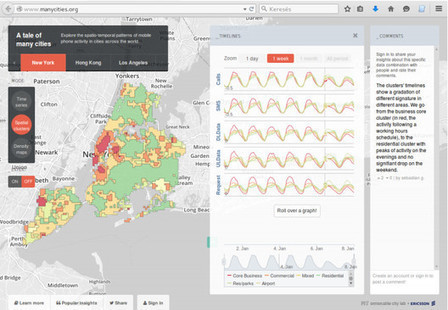
The SENSEable City Laboratory at MIT has developed a new tool with Ericsson to better understand human behavior. "ManyCities" is a new website that "explores the spatio-temporal patterns of mobile phone activity in cities across the world," including London, New York, Los Angeles and Hong Kong. Taking complex data and organizing it in a intuitive way, the application allows users to quickly visualize patterns of human movement within the urban context down to the neighborhood scale. You can imagine how useful a tool like this can be for urban planners or even daily commuters, especially once real time analytics come into play.
Via Lauren Moss
With the continuing rise of China as a global economic and trading power, there is no barrier to prevent Chinese from becoming a global language like English, according to new research.
Via Charles Tiayon
Google has a near-monopoly on online education, but its systems have gaps.
Via Peter Mellow
On this episode of Going Underground, we speak to Professor Gerd Gigerenzer, the director of the Harding Centre for Risk Literacy. He discusses how the lack of the ability of much of the global population to assess risk could lead to more deaths, making the coronavirus pandemic’s effects worse, how risk illiteracy led to more deaths on America’s roads after 9/11, whether world leaders such as Boris Johnson and Donald Trump are really ‘following the science’ in their policies to tackle Covid-19 and more!
Finally, we speak to Richard Lachmann, US sociologist and author of ‘First Class Passengers on a Sinking Ship: Elite Politics and the Decline of Great Powers’. He discusses how the US’ decline is similar to the imperial collapse of the Netherlands and Great Britain, how climate change could accelerate the decline, what a post-US hegemony world would look like, and why China nor India could achieve the power the US achieved, the possibility of mass social unrest and mass movements within the US as the country declines economically and geopolitically, and more!
Via ThePlanetaryArchives/BlackHorseMedia - San Francisco
|
|
|
Rescooped by
Dennis Swender
from Digital Pedagogy in History
June 2, 2020 12:57 AM
|
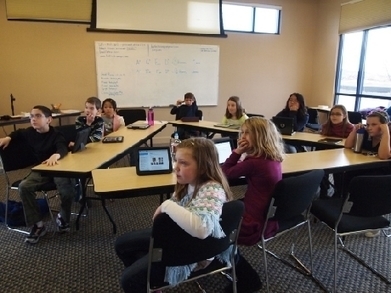
Promote global collaborations among classrooms of the world by involving students in creating their learning space and connecting physical and virtual learning spaces.
Via Dr. Tom D'Amico (@TDOttawa) , Shannon Coad
|
|
Rescooped by
Dennis Swender
from Learning with Technology
June 1, 2020 2:53 PM
|
Here are some of the best Google Earth virtual tours available. Travel to the world's most exotic places from your couch!
Via NextLearning
|
|
Rescooped by
Dennis Swender
from job
May 30, 2020 6:45 AM
|
Can the solutions being slapped together during the pandemic help create more permanent solutions during the recovery?
Via John Evans, buleboy
|
|
Scooped by
Dennis Swender
May 28, 2020 8:52 PM
|
IMPRACTICAL SPACES is a collaborative national project and groundbreaking anthology of publications that offers a historical look at defunct and active artist-run projects throughout the United States. This long term project will engage at least fifty cities in fifty states with the intent of assembling all publications for distribution in the form of a book charting the national significance of the artist-run scene. Impractical Spaces is the first project to comprehensively record the development of artist-run spaces on a national scale. The goal of this project is to produce documentation and a national network to demonstrate the breadth of artist-run initiatives.Click here to edit the content
|
|
Rescooped by
Dennis Swender
from Films, Arts & Otherness
May 28, 2020 8:40 PM
|
Join BIFA’s Unconscious Bias training to help voters recognise and mitigate against potential subliminal biases in their film watching and voting process.
Via Rachel Gnagniko
|
|
Rescooped by
Dennis Swender
from Films, Arts & Otherness
May 28, 2020 8:38 PM
|
After allegations of racism from black students last year, the Museum of Fine Arts in Boston said it will be establishing a $500,000 diversity fund.
Via Rachel Gnagniko
|
|
Rescooped by
Dennis Swender
from Learning with Technology
May 27, 2020 9:47 PM
|
Culturally responsive teaching is a powerful way to help students become independent learners, and it can be especially valuable during distance learning.
Via NextLearning
|
|
Rescooped by
Dennis Swender
from Hospitals and Healthcare
May 27, 2020 7:21 AM
|
Gisella Perl did not have the luxury of doing no harm. Instead, the Hungarian gynaecologist worked to save lives and minimise the harm she witnessed as a doctor in Auschwitz.
Via Peter Mellow
|
|
Rescooped by
Dennis Swender
from visual data
May 24, 2020 2:35 PM
|
London-based designer Michael Pecirno creates minimalist maps in an ongoing project to understand the landscape of the world. His work is exploratory, using a decidedly narrow set of data to see the unique patterns it creates across the land. In each case, the map is drawn with data points, leaving traditional physical and political borders to our imagination. Each map visualizes the lower 48 states of the US, using a wealth of information from the USDA to detail specific features like urbanization, fields planted with corn, the spread of grasslands, or bodies of water. The map reveals a new and insightful view of America’s composition.
Via Lauren Moss
|
|
Scooped by
Dennis Swender
May 20, 2020 2:32 PM
|
Sixteen-year-old twins Ana Fernanda and Ana Luisa begin their journey from Mexico in the early hours.
|
|
Scooped by
Dennis Swender
May 19, 2020 8:32 PM
|
With school closures due to the COVID-19 outbreak, the Museum is committed to serving students, teachers, and parents who are now conducting school online.
Via Dr. Tom D'Amico (@TDOttawa)
|