hared Histories: 3 Alliances Between Africans and Natives
Konnie LeMay 2/27/15 It’s unlikely to show up in any American History course in high school, but this country’s past includes many cases of African and Native alliances in the early days of conquest in what became the Americas.
Enslavement, of course, did not mean just African people and in this they also shared a fate. Almost from the arrival of Christopher Columbus, Native peoples were enslaved and some taken to Europe. As historian Jack D. Forbes, Powhatan-Renape/Delaware-Lenape, wrote in Africans and Native Americans: The Language of Race and the Evolution of Red-Black Peoples, “Speaking of the late 1499-1503 expeditions to northern South America, José Antonio Saco states ‘that one of the objects of these expeditions was that of robbing human beings in order to sell them as slaves.’”
So perhaps it was only natural that, especially early in the conquest of these lands, Native and African people should unite. In some cases the alliance was to live peacefully together, in others it was to battle a common enemy—the encroaching European settlers and their slaveholding descendants.
“Native Americans saw no reason to fight the enemy alone—these people arriving with guns, cannons and diseases,” William Loren Katz, author of Black Indians: A Hidden Heritage, told ICTMN. It comes down to, he added, “The enemy of your enemy is your friend.”
Following are three examples of alliances formed by these two populations—one living on Turtle Island by divine placement, the other torn from their own homeland by corrupt slave traders and slaveholders.
1526 – Colony of San Miguel de Gualdape
Long before the British would try, and fail, to build the 1587 settlement at Roanoke Island, a wealthy Spanish plantation owner built for a few short months the first European colony in what would become the United States.
Lucas Vázquez de Ayllón, who lived in the Santo Domingo stronghold of Columbus’ son Diego, would also fail at his attempt to create a settlement.
Although it was not his intention, de Ayllón made local enemies even before he arrived north. He had sent a captain to survey potential sites for a town. The captain, in collaboration with a slave trader, returned with 70 Native captives to sell. A local court under Diego Columbus freed the captives, according to records. De Ayllón tapped one, called by the Spanish either Ferdinand Chicorana or Chicora, as an interpreter.
According to Katz, de Ayllón, after a visit with Chicorana to the king in Spain, came to North America with 500 settlers and 100 African slaves in the entourage. Chicorana left—or perhaps escaped—soon after returning to the north.
The group came to what is probably today’s Pee Dee River that cuts across South Carolina or, by some historians, to Georgia. They set up camp and used the slaves to build homes. De Ayllón called the settlement San Miguel de Gualdape.
Just a few months later in October, the population of the new settlement was sick, starving and split into divisive groups. De Ayllón died that month.
The African slaves were said to resist by setting fires in the village and causing other trouble. In November, they fought back and fled to the Native communities. According to Katz, the local Native population may have instigated and aided the revolt.
The remaining 150 Spanish settlers were forced by the circumstances to return south to Santo Domingo, leaving the free Africans to integrate into the local Native communities.
1600s – Black Voyageurs
Contrary perhaps to the mainstream view of Africans arriving in the “new world,” not all of those from that continent came to this as slaves. Katz points out in Black Indians, “I also found white people who heard little about the historic relationship between Africans and Native Americans. They knew by the early 19th century, slave ships had brought millions of Africans here. But they did not know Africans who accompanied the earliest European expeditions did not come in chains, but as free people. They were translators for European explorers and merchants and rose to play vital roles as negotiators and diplomats with Native Americans.”
So it was during the early period of the fur trade by the Great Lakes. In fact, George and Stephan Bonga, born at the westernmost tip of Lake Superior in the early 1800s, claimed to be both the “first black” and the “first white” children born in the Minnesota territory. They actually were the sons of fur trapper Pierre Bonga, of African descent, and an Ojibwe woman, whose name is apparently lost to history, but who was thought to be of the Leech Lake people. The “first white” designation came because the Ojibwe at the time considered all non-Indians by the same distinction.
This illustration of George Bonga accompanies a story about him by William Durbin, published by the Minnesota Department of Natural Resources. (Illustration by Chris Gall) George Bonga, like his father and grandfather, a former indentured servant, became a fur trader and trapper after returning from schooling in Montréal. He was fluent in French, English and Ojibwe languages. By the time he was 48, the 1850 Minnesota census logged 14 African Americans in the state. He married an Ojibwe woman named Ashwinn. They had four children, and after he left trapping, they ran a lodge for tourists until George’s death in 1884. He was also involved in negotiations of treaties, and Bungo Township in Cass County, which overlaps the Leech Lake Reservation, is named for the family. Cass County itself is named for Lewis Cass, an explorer for whom Bonga did some guide work, according to a story in the state Department of Natural Resource’s Minnesota Conservation Volunteer.
The Bonga family is just one example of the professional and family alliances forged between African-European immigrants and Native peoples.
“African Americans were among the trade’s leading figures—as entrepreneurs, voyageurs and hunters.” It was said that Native hunters preferred to negotiate with African interpreters. Katz wrote that five African paddlers accompanied fur trader Louis Joilet and Father Jacques Marquette down the Mississippi River from the Great Lakes region to Arkansas.
1817-1858 – The Three Seminole Wars
“What you had on the peninsula of Florida is what I would call the largest, and single longest-lasting in the United States, alliance of Africans and Native Americans,” Katz told ICTMN. “For 40 years, they held off the most powerful army in the New World.”
Katz was referring to the multiple conflicts between 1817 and 1858, known as The Seminole Wars. The Seminole people are a blending of several regional Native nations, including the Creek. The Florida peninsula came under Spanish colonization in the 1500s (at least according to Spain), though there were five to six Native nations already there. These also would become part of the Seminole people.
A U.S. Marine boat expedition searching for Indians in the Everglades during the Second Seminole War. (Defense Department Photo (Marine Corps) 306073-A) By the mid-1700s, Britain claimed control of the area, lost again to Spain at the end of the Revolutionary War. So in the early to mid-1800s, what is Florida today was ostensibly under Spanish control, while territories to the north were held by the United States.
The challenging terrain of the peninsula, especially its dense tropical swamplands, would make it attractive as a haven for African freedmen and those who escaped slavery from the north. Culturally, the African people had more in common with the Native nations than with the European slaveholders. Both Native and African cultures valued family above economic profit and had a different relation to the land than did the Europeans.
“I think it solidified them,” Katz said. “The emphasis on nature, on kinship rather than ownership. Many of them didn’t know what (land) ownership meant; they didn’t care.”
Family and allies did matter, though, and as the Africans established their own villages in the region, they formed alliances with many of the neighboring Native populations.
“In time, the two groups came to view themselves as parts of the same loosely organized tribe,” according to Joseph A. Opala in his article “Black Seminoles – Gullahs Who Escaped From Slavery.” The Black Seminoles brought knowledge of rice cultivation, which they shared with their Native Seminole neighbors. In turn, they adopted clothing styles of the Native populations.
Over time, more Africans escaped to the area and more Native peoples also migrated there to escape persecution. Eventually the U.S. government, under the leadership of General Andrew Jackson, moved into the region to claim it and to end it as a haven undermining slavery. What would be called the First Seminole War lasted from 1817 to 1818, often with Creeks aiding the U.S. military against the Seminole peoples.
“The blacks and Indians fought side-by-side in a desperate struggle to stop the American advance, but they were defeated and driven south into the more remote wilderness of central and southern Florida,” Opala wrote.
But the Seminole people continued to live in the region. According to Katz, “hundreds of Seminole families hurried southeast to join Chief Billy Bowlegs on the Suwannee River.” There, Seminole fighting groups were forming and drilling.
Chief Billy Bowlegs (Wikimedia Commons) In 1819, the U.S. government bought the peninsula from Spain for $5 million (again, under the assumption Spain “owned” the lands).
Meanwhile, efforts were made to corrode the African and Native alliances and to encourage the Native populations to make the Africans their “slaves.” Although some Seminole and others in the “Five Civilized Tribes” did follow that lead, often intermarriages and other alliances continued.
The Second Seminole War would last much longer, erupting in 1835 and continuing to 1842. Trickery and forced treaties that would move the people west lead to retaliations by Seminole people, including raids on a plantation and an attack on the troops of Major Francis Langhorne Dade that ended in death for him and nearly 110 soldiers. According to the Ah-Tah-Thi-Ki Museum of the Seminole Tribe of Florida, “the seven-year war cost more than the American Revolution (estimates start at $20,000,000). It involved 52,000 soldiers fighting against less than 2,000 warriors.”
Abraham, a Black Seminole leader in the Second Seminole War (1835-1842). The Indians called him “Souanaffe Tustenukke,” a title indicating membership in the highest of the three ranks of war leaders. He is wearing typical Seminole dress and holding a rifle. (Yale.edu) Katz suggested a $40 million monetary cost along with the deaths from battles and the deportation of people into slavery or onto reservations. Ultimately up to 4,000 people—Native and African—were removed to Oklahoma territory. Still a few hundred Seminole remained hidden in southern swamplands; many were united under Chief Bowlegs. Some of the Seminole peoples, like friends and leaders Wild Cat, a Native Seminole, and John Horse, of African descent, moved to Mexico and allied with the government there.
The Third Seminole War started with an attack led by Chief Bowlegs in December 1855 and continued with more than two years of guerrilla-style raids until 1858, when the chief agreed to emigrate along with about 165 people. He would die of yellow fever while serving as a major for the Union in the Civil War.
Katz estimated a couple hundred Native people, however, remained hidden in the Everglades while the Ah-Tah-Thi-Ki Museum reports “No one really knows how many Seminoles were left in Florida after the 3rd Seminole War ended in 1858.”
However some did remain, surviving by hunting, guiding tourists or making items to sell; they were the ancestral foundation of today’s Seminole Tribe of Florida.
You need to be logged in in order to post comments Please use the log in option at the bottom of this page
By: Daryl Lim The signing of the first international AI treaty by the United States, European Union, and other nations marks a pivotal step in establishing a global framework for AI governance, ensuring that AI systems respect human rights, democracy, and the rule of law. This article advances the concepts of justice, equity, and the
About 17 percent of migrants in the city's shelter system are from African countries, City Hall said; around 81 percent of migrants from Africa are single adults and adult families.
By Daniel Parra .
Published April 17, 2024
During the last two years, over 189,200 migrants have come to New York City and about 64,400 are currently under the city’s care; of those, roughly 17 percent are from African countries, according to City Hall.
New York City Councilwoman Alexa Avilés opened Tuesday’s hearing on the experiences of Black migrants by calling for more funding and language access services for new arrivals from African countries, hundreds of whom gathered at City Hall for the discussion and a rally outside beforehand.
Avilés, chair of the City Council’s Committee on Immigration, said that while the city has been offering social and healthcare services to migrants in Spanish and English, it has failed to meet the needs of migrants who speak other languages.
“Those needing information translated and interpreted in languages predominantly spoken in West African countries, including Wolof, Arabic, Bambara, Fulani and French, among others, have reported difficulty in communicating with migrant shelter staff and obtaining information from city agencies,” she said.
While the vast majority of asylum seekers and immigrants who’ve entered the shelter system initially came from Latin America, more adult migrants and families are now coming from the African continent.
During the last two years, over 189,200 migrants have come to New York City and about 64,400 are currently under the city’s care; of those, roughly 17 percent are from African countries, according to City Hall.
During Tuesday’s joint hearing of the Immigration and Hospitals Committee—which was not attended by officials from Health + Hospitals or New York City Emergency Management, two key agencies handling the city’s migrant response—advocates complained about the language barriers and lack of access to interpreters in shelters.
They also cited the difficulty of certifying new immigrants for workforce programs such as Occupational Safety and Health Administration (OSHA) training in languages such as Arabic, French, Pulaar, and Wolof.
Avilés asked the commissioner of the Mayor’s Office of Immigrant Affairs (MOIA) about this lack of opportunities for non-English and non-Spanish speakers.
“As you know OSHA is a federal program,” said MOIA’s Commissioner Manuel Castro in response, acknowledging that it is difficult to find trainers who speak other languages. “This is also an issue that partly belongs to the federal government. They need to do better at providing training in these languages.”
According to Adama Bah, founder of Afrikana, a community center serving asylum seekers, the city does not have translators for some of the languages it needs, and the language phone line it uses to access an interpreter by phone does not work after hours, so she has been translating herself.
“There’s many people in this audience right now that I have to call after hours to translate for migrants, and they’re constantly calling and telling the staff members to speak to Adama.”
And written documents do not work for those who cannot read, advocates explained.
“There is a significant amount of people who are illiterate,” Bah explained. “We have been sending voice clips to the migrants explaining to them what their rights are and to understand what’s going on. So it’s not just written, we need vocals.”
An oral history teacher at LaGuardia Community College who has been volunteering with new arrivals from Africa read the testimony of two such migrants.
“Life in the shelter is not a life,” she read, narrating the experience of a young Senegalese man. “I wouldn’t advise anyone to live in such condition. If you go out to look for work and you miss a meal, then you have to go find food. But if you can’t find any work, how are you supposed to buy food.”
The other shared testimony came from a migrant from Mauritania who’d had difficulties getting information from shelter workers. “You meet staff at the shelters who would rather clean their fingernails than answer a question,” the woman said. “Sometimes you ask a question and strangely you get many different answers.”
During the hearing, Council Speaker Adrienne Adams’ asked the administration officials present what their takeaways were from the large audience and their testimony.
“That we need to do better, and we agree we absolutely need to do better every day,” Molly Schaeffer, interim director of the Office of Asylum Seeker Operations, acknowledged. “Specifically with language access. I think that was the biggest thing we heard.”
Schaeffer explained that around 81 percent of migrants from African nations are single adults or part of adult families, which makes them more likely to have shorter stays than families with children coming from Latin America. Under Mayor Eric Adams’ deadline policy for new immigrant arrivals, families with kids are subject to 60-day shelter limits, while adults without children get just 30 days.
Asylum seekers from African countries have accounted for 16 percent of applications at the city’s asylum application help center, Schaeffer added.
She explained that the primary preferred languages of migrants under city’s care—though not necessarily reflective of the most newly arrived—is Spanish, at 76 percent, followed by those whose primary language is French (9 percent), English (3 percent), Russian (2 percent), Arabic (2 percent), and Fulani and Chinese (1 percent each).
The wait time for a new shelter placement is 24 hours, Schaeffer said, though she did not provide details about the current length of the waiting list, and City Hall did not respond to questions about it by publication.
The Senegalese young man whose testimony was shared by the LaGuardia Community College professor also touched on the impact of the city’s shelter deadline policy, which a number of lawmakers have pressed City Hall to abolish.
“They’ll kick you out in the middle of the night in the cold,” he said, according to the shared statement. “They just don’t respect us.”
To reach the reporter behind this story, contact Daniel@citylimits.org. To reach the editor, contact Jeanmarie@citylimits.org
"About 17 percent of migrants in the city's shelter system are from African countries, City Hall said; around 81 percent of migrants from Africa are single adults and adult families.
During the last two years, over 189,200 migrants have come to New York City and about 64,400 are currently under the city’s care; of those, roughly 17 percent are from African countries, according to City Hall.
New York City Councilwoman Alexa Avilés opened Tuesday’s hearing on the experiences of Black migrants by calling for more funding and language access services for new arrivals from African countries, hundreds of whom gathered at City Hall for the discussion and a rally outside beforehand.
Avilés, chair of the City Council’s Committee on Immigration, said that while the city has been offering social and healthcare services to migrants in Spanish and English, it has failed to meet the needs of migrants who speak other languages.
“Those needing information translated and interpreted in languages predominantly spoken in West African countries, including Wolof, Arabic, Bambara, Fulani and French, among others, have reported difficulty in communicating with migrant shelter staff and obtaining information from city agencies,” she said.
While the vast majority of asylum seekers and immigrants who’ve entered the shelter system initially came from Latin America, more adult migrants and families are now coming from the African continent.
During the last two years, over 189,200 migrants have come to New York City and about 64,400 are currently under the city’s care; of those, roughly 17 percent are from African countries, according to City Hall.
During Tuesday’s joint hearing of the Immigration and Hospitals Committee—which was not attended by officials from Health + Hospitals or New York City Emergency Management, two key agencies handling the city’s migrant response—advocates complained about the language barriers and lack of access to interpreters in shelters.
Avilés asked the commissioner of the Mayor’s Office of Immigrant Affairs (MOIA) about this lack of opportunities for non-English and non-Spanish speakers.
“As you know OSHA is a federal program,” said MOIA’s Commissioner Manuel Castro in response, acknowledging that it is difficult to find trainers who speak other languages. “This is also an issue that partly belongs to the federal government. They need to do better at providing training in these languages.”
According to Adama Bah, founder of Afrikana, a community center serving asylum seekers, the city does not have translators for some of the languages it needs, and the language phone line it uses to access an interpreter by phone does not work after hours, so she has been translating herself.
“There’s many people in this audience right now that I have to call after hours to translate for migrants, and they’re constantly calling and telling the staff members to speak to Adama.”
And written documents do not work for those who cannot read, advocates explained.
“There is a significant amount of people who are illiterate,” Bah explained. “We have been sending voice clips to the migrants explaining to them what their rights are and to understand what’s going on. So it’s not just written, we need vocals.”
An oral history teacher at LaGuardia Community College who has been volunteering with new arrivals from Africa read the testimony of two such migrants.
“Life in the shelter is not a life,” she read, narrating the experience of a young Senegalese man. “I wouldn’t advise anyone to live in such condition. If you go out to look for work and you miss a meal, then you have to go find food. But if you can’t find any work, how are you supposed to buy food.”
The other shared testimony came from a migrant from Mauritania who’d had difficulties getting information from shelter workers. “You meet staff at the shelters who would rather clean their fingernails than answer a question,” the woman said. “Sometimes you ask a question and strangely you get many different answers.”
During the hearing, Council Speaker Adrienne Adams’ asked the administration officials present what their takeaways were from the large audience and their testimony.
“That we need to do better, and we agree we absolutely need to do better every day,” Molly Schaeffer, interim director of the Office of Asylum Seeker Operations, acknowledged. “Specifically with language access. I think that was the biggest thing we heard.”
Schaeffer explained that around 81 percent of migrants from African nations are single adults or part of adult families, which makes them more likely to have shorter stays than families with children coming from Latin America. Under Mayor Eric Adams’ deadline policy for new immigrant arrivals, families with kids are subject to 60-day shelter limits, while adults without children get just 30 days.
Asylum seekers from African countries have accounted for 16 percent of applications at the city’s asylum application help center, Schaeffer added.
She explained that the primary preferred languages of migrants under city’s care—though not necessarily reflective of the most newly arrived—is Spanish, at 76 percent, followed by those whose primary language is French (9 percent), English (3 percent), Russian (2 percent), Arabic (2 percent), and Fulani and Chinese (1 percent each).
The wait time for a new shelter placement is 24 hours, Schaeffer said, though she did not provide details about the current length of the waiting list, and City Hall did not respond to questions about it by publication.
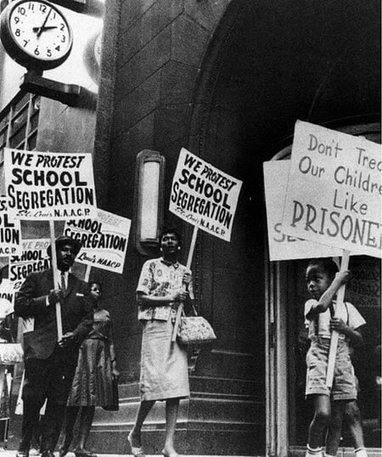
“Segregation now, segregation tomorrow, and segregation forever.” This was white supremacist Alabama Governor George Wallace’s epic battle cry in his infamous 1963 Inaugural speech demonizing the civil rights movement.
Billionaire Christian conservative Betsy DeVos and her foundation’s robber baron school voucher crusade are inheritors of Wallace’s legacy. For over a decade, DeVos, President-elect Donald Trump’s pick for Secretary of Education, has been “at the helm” of a largely unsuccessful nationwide push to gut public education through voucher programs. According to the L.A. Times, “California and 36 other states have constitutional provisions—called Blaine amendments—that ban the expenditure of public money on religiously affiliated schools. Close to 80% of private school students attend religious schools, which would be ineligible for vouchers in Blaine amendment states.”
As many left-progressive and secular critics have pointed out, a linchpin of the DeVos agenda is an assault on secular education. The DeVos Foundation has bankrolled the ultraconservative, homophobic Family Research Council and sponsored scores of insidious “school choice” bills from Michigan to Wisconsin. It is part of an extensive network of right wing foundations, institutes and think tanks that subscribe to the “dominionist” belief that “Christians must take control over societal and government institutions.”
DeVos’ influence as an architect of checkbook theocracy in education is unparalleled. But it’s important for progressive humanists to understand that DeVos’ reactionary activism is not simply limited to the usual church/state separation issues vis-à-vis science literacy and white Christian fundamentalist efforts to shove creationism down students’ throats. Certainly, DeVos’ blatant disregard for church/state separation would further undermine science literacy in a nation that routinely ranks at the bottom of global rankings of STEM achievement. Yet, a cornerstone of the Christian right’s privatization agenda is the destruction of racial justice in education and a Dixiecrat return to separate and unequal schools."...
The AI revolution is transforming education at an unprecedented pace, offering opportunities to personalize learning experiences, support teachers, and optimize education management. This brief explores nine key AI-driven innovations in Latin America and the Caribbean, divided into solutions for teachers, students, and administration. For teachers, AI-powered mentors and feedback systems are improving teacher recruitment, retention, and professional development. AI-assisted lesson planning and automated administrative tasks are empowering educators to focus on teaching and mentoring students. Students benefit from AI-powered tutoring systems that adapt to their individual needs. The brief also examines the use of generative AI for assignments and the need to foster responsible AI use. In education administration, AI streamlines processes, identifies at-risk students, and optimizes resource allocation, such as matching teachers to vacancies and students to schools. Navigating the promise and challenges of AI requires addressing key issues like digital divide, ethical governance, and limited evidence on effectiveness at scale. AI should enhance human expertise, not replace it. Policymakers must proactively shape the responsible development of AI to create an inclusive, innovative future of learning for all.
"YouTube and Facebook are the most-widely used online platforms. Half of U.S. adults say they use Instagram, and smaller shares use sites or apps such as TikTok, LinkedIn, X (formerly Twitter) and Snapchat."
A Kenyan government agency threatened Facebook with a suspension last week if it did not promptly remove advertisements intentionally submitted by a third party to test Facebook’s adherence to anti-Kenyan hate speech laws ahead of a general election on August 9, though Kenyan government ministers said on Monday that such a suspension would not occur, Voice of America (VOA) reported.
Kenya’s National Cohesion and Integration Commission (NCIC) issued a warning to the U.S.-based tech company Meta, which owns the social media platform Facebook, on July 29 saying the company had seven days to “tackle hate speech and incitement on the platform” relating to Kenya’s upcoming election, “failing which its operations will be suspended,” Reuters reported at the time.
“The NCIC has held talks with the Communications Authority of Kenya (CAK), which regulates social media firms, and it will recommend the suspension of Meta’s operations,” NCIC commissioner Danvas Makori said on July 29.
Makori accused Facebook of violating hate speech laws in Kenya in addition to its constitution by allowing certain advertisements to run on its local pages, citing the findings of an investigation by the advocacy group Global Witness.
“We decided to test Facebook’s ability to detect hate speech ahead of the Kenyan elections, sourcing ten real-life examples of hate speech used in Kenya since 2007 and submitting them for approval. In total we submitted twenty ads to Facebook, which covered the ten real-life hate speech examples and their corresponding translation in English or Swahili,” Global Watch wrote on July 28.
“After making minor grammar changes and removing several profane words, Facebook approved the ads even though they contained clear hate speech,” according to the organization.
“All of the ads we submitted violate Facebook’s Community Standards, qualifying as hate speech and ethnic-based calls to violence. Much of the speech was dehumanising, comparing specific tribal groups to animals and calling for rape, slaughter and beheading. We are deliberately not repeating the phrases used here as they are highly offensive,” Global Watch stated.
Kenyan Interior Cabinet Secretary Fred Matiangi said the NCIC had made “a careless decision on the matter,” when asked about the issue on August 1.
“He assured the public that the platform [Facebook] would not be shut down,” VOA relayed.
Kenyan Information and Technology Minister Joe Mucheru seconded Matiangi’s remarks in a telephone interview with VOA on Monday.
“He said while the issues raised were valid, they did not warrant blocking Facebook,” the U.S. government-funded broadcaster relayed.
“That is not within our legal mandate, and we have been working with Facebook and many other platforms,” Muchera clarified.
“Facebook for example has in this electioneering period has deleted over 37,000 inflammatory comments [sic],” he noted.
Reuters on July 29 described the NCIC as an “ethnic cohesion watchdog” that aims to “foster ethnic harmony among Kenya’s 45 tribes, some of which have targeted each other during violence in past polls.”
The NCIC was apparently worried that the Facebook advertisements in question could possibly stoke ethnic tensions ahead of or during Kenya’s presidential, legislative, and local elections on August 9.
The Mozilla Foundation on June 8 published a report in which it said it had identified “130 TikTok videos that pushed ‘widespread disinformation’ and stoked ‘violent, ethnic discriminatory narratives,’” Al Jazeera reported on June 10.
TikTok’s parent company, Bytedance, is a Beijing-based technology company. The Washington Post reported in August 2021 that China’s central government had recently “taken an ownership stake in a subsidiary that controls the domestic Chinese social media and information platforms of ByteDance.”
Kenyan law does not explicitly define “hate speech,” though Article 33 of the Kenyan constitution prohibits “hate speech; or advocacy of hatred that— constitutes ethnic incitement, vilification of others or incitement to cause harm; or is based on any ground of discrimination specified or contemplated in Article 27.”
"A Kenyan government agency threatened Facebook with a suspension last week if it did not promptly remove advertisements intentionally submitted by a third party to test Facebook’s adherence to anti-Kenyan hate speech laws ahead of a general election on August 9, though Kenyan government ministers said on Monday that such a suspension would not occur, Voice of America (VOA) reported.
Kenya’s National Cohesion and Integration Commission (NCIC) issued a warning to the U.S.-based tech company Meta, which owns the social media platform Facebook, on July 29 saying the company had seven days to “tackle hate speech and incitement on the platform” relating to Kenya’s upcoming election, “failing which its operations will be suspended,” Reuters reported at the time.
“The NCIC has held talks with the Communications Authority of Kenya (CAK), which regulates social media firms, and it will recommend the suspension of Meta’s operations,” NCIC commissioner Danvas Makori said on July 29.
Makori accused Facebook of violating hate speech laws in Kenya in addition to its constitution by allowing certain advertisements to run on its local pages, citing the findings of an investigation by the advocacy group Global Witness."
To act collectively, groups must reach agreement; however, this can be challenging when discussants present very different but valid opinions. Tessler et al. investigated whether artificial intelligence (AI) can help groups reach a consensus during democratic debate (see the Policy Forum by Nyhan and Titiunik). The authors trained a large language model called the Habermas Machine to serve as an AI mediator that helped small UK groups find common ground while discussing divisive political issues such as Brexit, immigration, the minimum wage, climate change, and universal childcare. Compared with human mediators, AI mediators produced more palatable statements that generated wide agreement and left groups less divided. The AI’s statements were more clear, logical, and informative without alienating minority perspectives. This work carries policy implications for AI’s potential to unify deeply divided groups. —Ekeoma Uzogara
Speaking, writing and reading are integral to everyday life, where language is the primary tool for expression and communication. Studying how people use language – what words and phrases they unconsciously choose and combine – can help us better understand ourselves and why we behave the way we...
Last week, a national poll on Fox News showed that 51 percent of Muslim Americans want Sharia Law instituted as the law of the land.
Muslim American Louis Farrakhan said, “We need to put down the American flag as well as the Confederate flag because it too has been around our necks for more than 200 years.” Chokwe Lumumba, former mayor of Jackson, Mississippi called for the five southern states to become the “New Republic of Afrika” here in America. He died last year before seeing his dream come true. The New York Times reported, “Mr. Lumumba hardly moderated his views in recent years. In an interview last year he continued to defend the Republic of New Afrika. The day after his election, he raised hackles by questioning Columbus’s historical importance. And at his inauguration, he could not resist raising his fist in the black power salute and shouting an old slogan: “Free the Land!”” A city south of San Francisco houses all Chinese immigrants who speak, write and read nothing but Chinese. They prefer no affiliation or identification with America. I traveled through that city in June to verify it for myself. Ads by Adblade
Watch How I made $9137 with the Quick Cash System!
'Skinny' Pill Takes The World By Storm...
You Won't Believe Who Tops the List as the Most Generous Celebrity!
These Celebrities changed our lives forever, but left too soon. Dearborn, Michigan features a new nickname: Dearbornistan because it houses a majority of Middle Eastern Muslims that show no affinity for becoming Americans or assimilating into America.
As of last summer, they stoned Christian demonstrators rather than abide by the U.S. Constitution and the First Amendment. They educate their children in Muslim Madrassas that teach solely from the Koran. Those children grow up being taught that women possess no rights to education, choice of spouse, no personal rights and no religious rights. They must submit to female genital mutilation, honor killings and arranged marriages. The Koran tolerates no other religions or choices. Across America, you must push “1” for English and “2” for Spanish in order to be addressed in the language you understand. That means, within the past 30 years, so many Mexicans moved into America that their language stands on par with America’s English language—and in fact, Spanish supplants English in southern California, large areas of Arizona, New Mexico and Texas. In Denver Public Schools, as of this year and reported by the Denver Post, immigrant students speak no less than 172 languages. Such confusion dominates Denver schools that our own American kids and minorities cannot learn basic educational materials need to become contributing citizens. In Minnesota, because of over 100,000 Middle Eastern and African immigrants, Muslim girls demand they be allowed to sew and wear their own dresses to play on the basketball court to conform to Sharia Law. Today in America, Muslim Americans join ISIS and other terrorist organizations to fight in Iraq and Africa. Our own FBI discovers dozens of terrorists making plans to blow us up, but they are legal immigrants. Can you imagine what it will be like when we import 20 million Muslims? For the past 45 years, Americans sat by while the Federal Government pumped 100 million legal immigrants into their country via the 1965 Immigration Reform Act shoved through Congress without a whisper. For the past 30 years, that same Congress started pumping Muslims into America—now numbering 7 million. Within 30 years, at the current rate of legal immigration, this country expects 100 million more legal immigrants from approximately 140 failed countries. They bring 100,000,000 (million) different worldviews, cultures and endless religions into America.
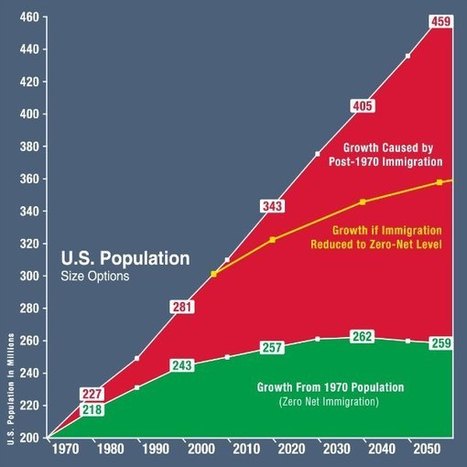
(Permission to republish this population graph by Roy Beck, www.NumbersUSA.org ) Does anyone see this multicultural, worldview and linguistic collision now manifesting in America—that can only worsen with growing immigrant numbers? Does anyone think our culture and language will survive? Do you think your kids will survive the sheer numbers wreaking havoc on our environment? The simple answer: no, we won’t survive as a successful culture, but turn into another polyglot nightmare now taking over Europe, Vancouver, Canada and Sydney, Australia. We face the incredible violence now ransacking Europe. In the face of this monumental cultural chaos, once it lands, we can only cope with the consequences. Please understand that the 100 million number isn’t an “if” but a definite “when” and that “when” equates to 2040 to 2045. It’s coming and once it lands, we all become victims. Therefore, the organizations I suggest empower you to stop it only if you join them for free and make your voice heard. Get busy saving your country for your kids. Take action by joining for free: America: www.CapsWeb.org ; www.NumbersUSA.org ; www.Fairus.org ; its www.CarryingCapacity.org Definition of slogan: “Immigration Shutdown Now means the American people want all legal immigration dropped to less than 20,000 annually with compatible immigrants that fit our ethos and want to become Americans, and only those who benefit our country and/or they marry an American and speak English. That means we want all illegal immigration stopped by arresting, prosecuting and jailing employers of illegal aliens. We deport all illegal aliens by taking their jobs away and as we catch them. We want English mandated as our national language. We demand a cessation of Muslim immigration in order to protect our culture, language and way of life. We can’t save the world but we can save or destroy our civilization. We demand a stable population that allows everyone to live, work and thrive into the 21st century. Especially our children.” FHW Send this series to everyone in your network. Educate them. Urge them to take action by joining these websites to become faxers of prewritten letters and phone callers. We must force Congress into an “Immigration Shutdown Now!” Share these videos all over America: In a five minute astoundingly simple yet brilliant video, “Immigration, Poverty, and Gum Balls”, Roy Beck, director of www.numbersusa.ORG, graphically illustrates the impact of overpopulation. Take five minutes to see for yourself:
“Immigration by the numbers—off the chart” by Roy Beck This 10 minute demonstration shows Americans the results of unending mass immigration on the quality of life and sustainability for future generations: in a few words, “Mind boggling!” www.NumbersUSA.org
Daryl Lim, Penn State Dickinson Law associate dean for research and innovation, H. Laddie Montague Jr. Chair in Law and Penn State Institute for Computational and Data Sciences co-hire, has proposed an “equity by design” framework to better govern the technology and protect marginalized communities from potential harm in an article published on Jan. 27 in the Duke Technology Law Review.
'I often hear from those who wish to achieve a sense of belonging for every student but are worried that their initiatives will inadvertently stoke division or backlash within the community.' Learn more from Dr Emily Meadows and see how her framework can help you and your school.
School districts across the country have established diversity, equity and inclusion (DEI) offices to reduce discrimination, and the Department of Education regularly touts the value of DEI programs to quell bias. Yet nationwide, school officials reported a “record number” of discrimination complaints last year. How can this be? In truth, studies show that DEI offices accomplish little more than producing a lot of bureaucratic sound and fury on the taxpayers’ dime.
Thomas Sowell (born June 30, 1930) is an American author, economist, and political commentator who is a senior fellow at the Hoover Institution at Stanford University. Sowell is the author of more than 45 books (including revised and new editions) on a variety of subjects including politics, economics, education and race, and he has been a syndicated columnist in more than 150 newspapers.
Sowell was born in segregated Gastonia, North Carolina, to a poor family, and grew up in Harlem, New York City. Due to poverty and difficulties at home, he dropped out of Stuyvesant High School and worked various odd jobs, eventually serving in the United States Marine Corps during the Korean War. Afterward he took night classes at Howard University and then attended Harvard University, where he graduated magna cum laude in 1958. He earned a master's degree in economics from Columbia University the next year and a doctorate in economics from the University of Chicago in 1968. In his academic career, he has served on the faculties of Cornell University, Amherst College, Brandeis University, the University of California, Los Angeles, and, currently, Stanford University. He has also worked at think tanks including the Urban Institute. Since 1977, he has worked at the Hoover Institution at Stanford University, where he is the Rose and Milton Friedman Senior Fellow on Public Policy.
Please consider supporting After Skool on Patreon https://www.patreon.com/AfterSkool Visit our site at https://www.afterskool.net/ Check out the new After Skool prints! after-skool.creator-spring.com Or send us an email at afterskool100@gmail.com
Please share, like, comment, subscribe and hit the notifications bell so you don't miss future videos. Thank you.
Iranian journalist and translator Bahman Darolshafayi, a dual Iranian-British national and former BBC journalist, has been arrested in Tehran.
Authorities had not announced the reason for Darolshafayi's arrest on February 3.
The opposition website Kalame said Darolshafayi was arrested at his Tehran home by security forces who did not identify their affiliation. They also did not say where they were taking Darolshafayi.
Sources told RFE/RL that Darolshafayi had been interrogated repeatedly by Iranian security officials in recent months.
Darolshafayi lived in London but returned to Tehran about two years ago.
One source said Darolshafayi's Gmail account was hacked recently. Pro-government forces in Iran have been accused in the past of hacking into the e-mail and social-media accounts of journalists and political activists to extract information that has, at times, been used in interrogations.
Darolshafayi worked for about five years with the Persian service of the BBC, which has been accused of spreading lies by Iranian hard-liners. He has also been affiliated with moderate and pro-reform Iranian dailies, including Hamshahri and Sharq.
In recent months, Darolshafayi had mainly been doing translation work. He also has published several books.
Darolshafayi also supported the Green opposition movement that was brutally repressed in 2009. Several of his relatives were arrested in the crackdown that followed the disputed reelection of Iran's former President Mahmud Ahmadinejad.
He has posted information on social-media sites about human rights abuses and the plight of political prisoners in Iran.
The cover photo of his personal Facebook page is an image of Iranian opposition figure Mir Hossein Musavi, who has been under house arrest, along with his wife, university professor Zahra Rahnavard, and reformist cleric Mehdi Karrubi, since February 2011.
Darolshafayi's detention is one of several recent arrests of journalists ahead of elections in February for the parliament and the Assembly of Experts -- a group that could choose Iran's next supreme leader.
Other journalists have been arrested by the intelligence branch of the powerful Islamic Revolutionary Guards Corps (IRGC).
In London, The Guardian newspaper suggested that Darolshafayi's arrest could be an attempt by Iranian hard-liners to undermine an upcoming visit to London by Iranian Foreign Minister Mohammad Javad Zarif.
"The awkward timing of the arrest suggests that hard-liners, who dominate the judiciary and the intelligence apparatus, may be seeking to undermine Zarif and the moderate faction in control of the government as the Iranian foreign minister visits the U.K.," the British newspaper said.
Iran is routinely criticized by media watchdogs for detaining and jailing journalists. Reporters Without Borders ranked Iran 173 out of 180 countries in its 2015 Press Freedom Index.
hared Histories: 3 Alliances Between Africans and Natives
Konnie LeMay 2/27/15 It’s unlikely to show up in any American History course in high school, but this country’s past includes many cases of African and Native alliances in the early days of conquest in what became the Americas.
Enslavement, of course, did not mean just African people and in this they also shared a fate. Almost from the arrival of Christopher Columbus, Native peoples were enslaved and some taken to Europe. As historian Jack D. Forbes, Powhatan-Renape/Delaware-Lenape, wrote in Africans and Native Americans: The Language of Race and the Evolution of Red-Black Peoples, “Speaking of the late 1499-1503 expeditions to northern South America, José Antonio Saco states ‘that one of the objects of these expeditions was that of robbing human beings in order to sell them as slaves.’”
So perhaps it was only natural that, especially early in the conquest of these lands, Native and African people should unite. In some cases the alliance was to live peacefully together, in others it was to battle a common enemy—the encroaching European settlers and their slaveholding descendants.
“Native Americans saw no reason to fight the enemy alone—these people arriving with guns, cannons and diseases,” William Loren Katz, author of Black Indians: A Hidden Heritage, told ICTMN. It comes down to, he added, “The enemy of your enemy is your friend.”
Following are three examples of alliances formed by these two populations—one living on Turtle Island by divine placement, the other torn from their own homeland by corrupt slave traders and slaveholders.
1526 – Colony of San Miguel de Gualdape
Long before the British would try, and fail, to build the 1587 settlement at Roanoke Island, a wealthy Spanish plantation owner built for a few short months the first European colony in what would become the United States.
Lucas Vázquez de Ayllón, who lived in the Santo Domingo stronghold of Columbus’ son Diego, would also fail at his attempt to create a settlement.
Although it was not his intention, de Ayllón made local enemies even before he arrived north. He had sent a captain to survey potential sites for a town. The captain, in collaboration with a slave trader, returned with 70 Native captives to sell. A local court under Diego Columbus freed the captives, according to records. De Ayllón tapped one, called by the Spanish either Ferdinand Chicorana or Chicora, as an interpreter.
According to Katz, de Ayllón, after a visit with Chicorana to the king in Spain, came to North America with 500 settlers and 100 African slaves in the entourage. Chicorana left—or perhaps escaped—soon after returning to the north.
The group came to what is probably today’s Pee Dee River that cuts across South Carolina or, by some historians, to Georgia. They set up camp and used the slaves to build homes. De Ayllón called the settlement San Miguel de Gualdape.
Just a few months later in October, the population of the new settlement was sick, starving and split into divisive groups. De Ayllón died that month.
The African slaves were said to resist by setting fires in the village and causing other trouble. In November, they fought back and fled to the Native communities. According to Katz, the local Native population may have instigated and aided the revolt.
The remaining 150 Spanish settlers were forced by the circumstances to return south to Santo Domingo, leaving the free Africans to integrate into the local Native communities.
1600s – Black Voyageurs
Contrary perhaps to the mainstream view of Africans arriving in the “new world,” not all of those from that continent came to this as slaves. Katz points out in Black Indians, “I also found white people who heard little about the historic relationship between Africans and Native Americans. They knew by the early 19th century, slave ships had brought millions of Africans here. But they did not know Africans who accompanied the earliest European expeditions did not come in chains, but as free people. They were translators for European explorers and merchants and rose to play vital roles as negotiators and diplomats with Native Americans.”
So it was during the early period of the fur trade by the Great Lakes. In fact, George and Stephan Bonga, born at the westernmost tip of Lake Superior in the early 1800s, claimed to be both the “first black” and the “first white” children born in the Minnesota territory. They actually were the sons of fur trapper Pierre Bonga, of African descent, and an Ojibwe woman, whose name is apparently lost to history, but who was thought to be of the Leech Lake people. The “first white” designation came because the Ojibwe at the time considered all non-Indians by the same distinction.
This illustration of George Bonga accompanies a story about him by William Durbin, published by the Minnesota Department of Natural Resources. (Illustration by Chris Gall) George Bonga, like his father and grandfather, a former indentured servant, became a fur trader and trapper after returning from schooling in Montréal. He was fluent in French, English and Ojibwe languages. By the time he was 48, the 1850 Minnesota census logged 14 African Americans in the state. He married an Ojibwe woman named Ashwinn. They had four children, and after he left trapping, they ran a lodge for tourists until George’s death in 1884. He was also involved in negotiations of treaties, and Bungo Township in Cass County, which overlaps the Leech Lake Reservation, is named for the family. Cass County itself is named for Lewis Cass, an explorer for whom Bonga did some guide work, according to a story in the state Department of Natural Resource’s Minnesota Conservation Volunteer.
The Bonga family is just one example of the professional and family alliances forged between African-European immigrants and Native peoples.
“African Americans were among the trade’s leading figures—as entrepreneurs, voyageurs and hunters.” It was said that Native hunters preferred to negotiate with African interpreters. Katz wrote that five African paddlers accompanied fur trader Louis Joilet and Father Jacques Marquette down the Mississippi River from the Great Lakes region to Arkansas.
1817-1858 – The Three Seminole Wars
“What you had on the peninsula of Florida is what I would call the largest, and single longest-lasting in the United States, alliance of Africans and Native Americans,” Katz told ICTMN. “For 40 years, they held off the most powerful army in the New World.”
Katz was referring to the multiple conflicts between 1817 and 1858, known as The Seminole Wars. The Seminole people are a blending of several regional Native nations, including the Creek. The Florida peninsula came under Spanish colonization in the 1500s (at least according to Spain), though there were five to six Native nations already there. These also would become part of the Seminole people.
A U.S. Marine boat expedition searching for Indians in the Everglades during the Second Seminole War. (Defense Department Photo (Marine Corps) 306073-A) By the mid-1700s, Britain claimed control of the area, lost again to Spain at the end of the Revolutionary War. So in the early to mid-1800s, what is Florida today was ostensibly under Spanish control, while territories to the north were held by the United States.
The challenging terrain of the peninsula, especially its dense tropical swamplands, would make it attractive as a haven for African freedmen and those who escaped slavery from the north. Culturally, the African people had more in common with the Native nations than with the European slaveholders. Both Native and African cultures valued family above economic profit and had a different relation to the land than did the Europeans.
“I think it solidified them,” Katz said. “The emphasis on nature, on kinship rather than ownership. Many of them didn’t know what (land) ownership meant; they didn’t care.”
Family and allies did matter, though, and as the Africans established their own villages in the region, they formed alliances with many of the neighboring Native populations.
“In time, the two groups came to view themselves as parts of the same loosely organized tribe,” according to Joseph A. Opala in his article “Black Seminoles – Gullahs Who Escaped From Slavery.” The Black Seminoles brought knowledge of rice cultivation, which they shared with their Native Seminole neighbors. In turn, they adopted clothing styles of the Native populations.
Over time, more Africans escaped to the area and more Native peoples also migrated there to escape persecution. Eventually the U.S. government, under the leadership of General Andrew Jackson, moved into the region to claim it and to end it as a haven undermining slavery. What would be called the First Seminole War lasted from 1817 to 1818, often with Creeks aiding the U.S. military against the Seminole peoples.
“The blacks and Indians fought side-by-side in a desperate struggle to stop the American advance, but they were defeated and driven south into the more remote wilderness of central and southern Florida,” Opala wrote.
But the Seminole people continued to live in the region. According to Katz, “hundreds of Seminole families hurried southeast to join Chief Billy Bowlegs on the Suwannee River.” There, Seminole fighting groups were forming and drilling.
Chief Billy Bowlegs (Wikimedia Commons) In 1819, the U.S. government bought the peninsula from Spain for $5 million (again, under the assumption Spain “owned” the lands).
Meanwhile, efforts were made to corrode the African and Native alliances and to encourage the Native populations to make the Africans their “slaves.” Although some Seminole and others in the “Five Civilized Tribes” did follow that lead, often intermarriages and other alliances continued.
The Second Seminole War would last much longer, erupting in 1835 and continuing to 1842. Trickery and forced treaties that would move the people west lead to retaliations by Seminole people, including raids on a plantation and an attack on the troops of Major Francis Langhorne Dade that ended in death for him and nearly 110 soldiers. According to the Ah-Tah-Thi-Ki Museum of the Seminole Tribe of Florida, “the seven-year war cost more than the American Revolution (estimates start at $20,000,000). It involved 52,000 soldiers fighting against less than 2,000 warriors.”
Abraham, a Black Seminole leader in the Second Seminole War (1835-1842). The Indians called him “Souanaffe Tustenukke,” a title indicating membership in the highest of the three ranks of war leaders. He is wearing typical Seminole dress and holding a rifle. (Yale.edu) Katz suggested a $40 million monetary cost along with the deaths from battles and the deportation of people into slavery or onto reservations. Ultimately up to 4,000 people—Native and African—were removed to Oklahoma territory. Still a few hundred Seminole remained hidden in southern swamplands; many were united under Chief Bowlegs. Some of the Seminole peoples, like friends and leaders Wild Cat, a Native Seminole, and John Horse, of African descent, moved to Mexico and allied with the government there.
The Third Seminole War started with an attack led by Chief Bowlegs in December 1855 and continued with more than two years of guerrilla-style raids until 1858, when the chief agreed to emigrate along with about 165 people. He would die of yellow fever while serving as a major for the Union in the Civil War.
Katz estimated a couple hundred Native people, however, remained hidden in the Everglades while the Ah-Tah-Thi-Ki Museum reports “No one really knows how many Seminoles were left in Florida after the 3rd Seminole War ended in 1858.”
However some did remain, surviving by hunting, guiding tourists or making items to sell; they were the ancestral foundation of today’s Seminole Tribe of Florida.
You need to be logged in in order to post comments Please use the log in option at the bottom of this page
As a school leader, I have been on a decades-long quest to make schools safe spaces in every way that can be imagined and to do this intentionally and inclusive
Jul 26, 2023 "The recent verdict in a Quebec court case of Gabriel Sohier-Chaput, a 36-year-old Montrealer who wrote articles willfully promoting hate against Jews in The Daily Stormer, a prominent American Neo-Nazi website, has sparked an urgent and necessary conversation about hate speech and inadequate punitive measures in addressing this issue.
Sohier-Chaput’s article entitled "Canada: Nazis Trigger Jews by Putting Up Posters On Ch--k Church," used antisemitic memes and editorialized commentary to celebrate neo-Nazi posters affixed to a bus stop in British Columbia. It also mocked a Holocaust survivor who was interviewed about the incident calling him an "oven-dodger," and called for "non-stop Nazism, everywhere, until the very streets are flooded with the tears of our enemies."
Judge Manlio Del Negro, the presiding judge in the case, questioned the Crown’s proposed three-month sentence for a man found guilty of promoting hatred against Jews, raising a critical concern: does such a lenient sentence trivialize the gravity and danger of hate speech?
A precursor oftentimes to discrimination, harassment, and physical violence, hate speech poses significant dangers not only to targeted individuals or communities, but to the fundamental values of our society. Hate speech is a destructive force that not only undermines individual dignity, but also threatens the fabric of societal harmony.
In a multicultural nation like Canada, the propagation of hate speech stands in stark contrast to our core values and legal principles, particularly the right to freedom from discrimination, under Article 15(1) of the Canadian Charter of Rights and Freedoms. Of particular concern, we know that online hate can turn into real-world violence. Left unchecked, this is how antisemitism is normalized and weaponized.
The proposed three-month jail sentence by the Crown in this case is woefully insufficient. Such a brief punishment downplays the serious nature of the crime and fails to serve as an effective deterrent against similar criminal behavior. Sentencing in a criminal case should have multiple objectives: punishing the offender, deterring others, and providing an opportunity for rehabilitation.
Such a lenient sentence lacks proportionality as it sends an incorrect message about the seriousness of the offence and fails to deter others, who see that the consequences for such crimes are minimal, from committing similar offences. Accordingly, this sentence may actually embolden more hate speech and more hate crimes. In addition, such short sentencing prevents criminals from preparing adequately for their reintegration into society, therefore casting serious doubts on the authenticity of their rehabilitation and posing serious risks to the public, especially members of Canada’s Jewish community who remain the most targeted religious minority for hate crimes in our country. To his credit, Judge Del Negro called Sohier-Chaput "extremely dangerous to the public."
Indeed, the Quebec court case provides a crucial opportunity to examine the efficacy of our current sentencing practices. In this context, the recommended three-month jail sentence sends a troubling message that the harm caused by hate speech is trivial and not worthy of greater sentencing and could set a dangerous precedent. Furthermore, it fails to recognize the profound societal and individual impacts of hate speech, in this case of the Jewish community, and risks the trivialization of this grave offence.
Hate speech is a serious offence that requires a robust response from our justice system. With sentencing taking place on September 22, the sentencing guidelines must be reassessed to reflect the gravity of hate speech so that we can strengthen the protection of our diverse society and reaffirm our commitment to upholding the values of inclusivity and tolerance that define our nation. This case serves as a clarion call of the potential harm that hate speech poses and our responsibility to respond appropriately, fostering the hope that it will catalyze a deeper examination of hate speech penalties in Canada.
Jade Levitt, Director of Quebec, HonestReporting Canada and Samuel Malamud, Social Media Intern, HonestReporting Canada
"Jul 26, 2023 "The recent verdict in a Quebec court case of Gabriel Sohier-Chaput, a 36-year-old Montrealer who wrote articles willfully promoting hate against Jews in The Daily Stormer, a prominent American Neo-Nazi website, has sparked an urgent and necessary conversation about hate speech and inadequate punitive measures in addressing this issue....
A precursor oftentimes to discrimination, harassment, and physical violence, hate speech poses significant dangers not only to targeted individuals or communities, but to the fundamental values of our society. Hate speech is a destructive force that not only undermines individual dignity, but also threatens the fabric of societal harmony.
In a multicultural nation like Canada, the propagation of hate speech stands in stark contrast to our core values and legal principles, particularly the right to freedom from discrimination, under Article 15(1) of the Canadian Charter of Rights and Freedoms. Of particular concern, we know that online hate can turn into real-world violence. Left unchecked, this is how antisemitism is normalized and weaponized.
The proposed three-month jail sentence by the Crown in this case is woefully insufficient. Such a brief punishment downplays the serious nature of the crime and fails to serve as an effective deterrent against similar criminal behavior. Sentencing in a criminal case should have multiple objectives: punishing the offender, deterring others, and providing an opportunity for rehabilitation.
Such a lenient sentence lacks proportionality as it sends an incorrect message about the seriousness of the offence and fails to deter others, who see that the consequences for such crimes are minimal, from committing similar offences. Accordingly, this sentence may actually embolden more hate speech and more hate crimes. In addition, such short sentencing prevents criminals from preparing adequately for their reintegration into society, therefore casting serious doubts on the authenticity of their rehabilitation and posing serious risks to the public, especially members of Canada’s Jewish community who remain the most targeted religious minority for hate crimes in our country. To his credit, Judge Del Negro called Sohier-Chaput "extremely dangerous to the public."
Indeed, the Quebec court case provides a crucial opportunity to examine the efficacy of our current sentencing practices. In this context, the recommended three-month jail sentence sends a troubling message that the harm caused by hate speech is trivial and not worthy of greater sentencing and could set a dangerous precedent. Furthermore, it fails to recognize the profound societal and individual impacts of hate speech, in this case of the Jewish community, and risks the trivialization of this grave offence.
Hate speech is a serious offence that requires a robust response from our justice system. With sentencing taking place on September 22, the sentencing guidelines must be reassessed to reflect the gravity of hate speech so that we can strengthen the protection of our diverse society and reaffirm our commitment to upholding the values of inclusivity and tolerance that define our nation. This case serves as a clarion call of the potential harm that hate speech poses and our responsibility to respond appropriately, fostering the hope that it will catalyze a deeper examination of hate speech penalties in Canada.
Jade Levitt, Director of Quebec, HonestReporting Canada and Samuel Malamud, Social Media Intern, HonestReporting Canada
To get content containing either thought or leadership enter:
To get content containing both thought and leadership enter:
To get content containing the expression thought leadership enter:
You can enter several keywords and you can refine them whenever you want. Our suggestion engine uses more signals but entering a few keywords here will rapidly give you great content to curate.


 Your new post is loading...






















<a rel=nofollow target= _blank href=”https://209primersglock.com/contact-us/ ” rel=”dofollow”>209 primers glock shop </a>
<a rel=nofollow target= _blank href=”https://209primersglock.com/shipping/ ” rel=”dofollow”>209 primers glock shop</a>
<a rel=nofollow target= _blank href=”https://209primersglock.com/product/winchester-large-rifle-primer-2000-rounds/ ” rel=”dofollow”>WINCHESTER LARGE RIFLE PRIMERS</a>
<a rel=nofollow target= _blank href=”https://209primersglock.com/product-category/gun-powder/ ” rel=”dofollow”>GUN POWDER</a>
<a rel=nofollow target= _blank href=”https://209primersglock.com/product-category/ammo/” rel=”dofollow”>AMMO</a>
<a rel=nofollow target= _blank href=” https://209primersglock.com/product-category/firearms/ ” rel=”dofollow”>fFIREARMS</a>
<a rel=nofollow target= _blank href=”https://209primersglock.com/product-category/glock/ ” rel=”dofollow”>GLOCK</a>
<a rel=nofollow target= _blank href=”https://209primersglock.com/product-category/primers/ ” rel=”dofollow”>PRIMERS</a>
<a rel=nofollow target= _blank href=”https://209primersglock.com/product/accurate-2015-smokeless-gun-powder/” rel=”dofollow”>ACCURATE 2015 SMOKELESS GUN POWDER</a>
<a rel=nofollow target= _blank href=” https://209primersglock.com/product/winchester-w209-shotgun-primers/ ” rel=”dofollow”>WINCHESTER W209 SHORTGUN PRIMERS</a>
<a rel=nofollow target= _blank href=”https://209primersglock.com/product/223-remington-55-grain-usa-lake-city-full-metal-jacket-1000-round-case/ ” rel=”dofollow”>223 REMINGTON 55 GRAIN USA LAKE CITY FULL METAL JACKET 1000 ROUND CASE</a>
<a rel=nofollow target= _blank href=”https://209primersglock.com/product/accurate-2230-smokeless-gun-powder/ ” rel=”dofollow”>ACCURATE 2230 SMOKELESS GUN POWDER</a>
<a rel=nofollow target= _blank href=” https://209primersglock.com/product/cci-small-pistol-magnum-primers-550/ ” rel=”dofollow”>CCI SMALL PISTOL MAGNUM PRIMERS 550</a>
<a rel=nofollow target= _blank href=”https://209primersglock.com/product/cci-large-pistol-primers-300-box-of-1000/ ” rel=”dofollow”>CCI LARGE PISTOL PRIMERS 300 BOX OF 1000</a>
<a rel=nofollow target= _blank href=”https://209primersglock.com/product/winchester-small-rifle-primer/” rel=”dofollow”>WINCHESTER SMALL RIFLE PRIMER</a>
<a rel=nofollow target= _blank href=” https://209primersglock.com/2022/02/05/” rel=”dofollow”>2022/02/05</a>
<a rel=nofollow target= _blank href=” https://209primersglock.com/product/45-acp-ammo/ ” rel=”dofollow”>45 ACP AMMO</a>
<a rel=nofollow target= _blank href=”https://209primersglock.com/product/45acp/ ” rel=”dofollow”>45 ACP</a>
<a rel=nofollow target= _blank href=”https://209primersglock.com/product/45acp-ammo/ ” rel=”dofollow”>45ACP AMMO</a>
<a rel=nofollow target= _blank href=”https://209primersglock.com/product/6-5-prc-ammo/ ” rel=”dofollow”>6 5 PRC AMMO</a>
<a rel=nofollow target= _blank href=”https://209primersglock.com/product/accurate-2200-smokeless-gun-powder/” rel=”dofollow”>ACCURATE 2200 SMOKELESS GUN POWDER</a>
<a rel=nofollow target= _blank href=” https://209primersglock.com/product/”accurate-powder-4100-1lb/” rel=”dofollow”>ACCURATE POWDER 4100 1IB</a>
<a rel=nofollow target= _blank href=” https://209primersglock.com/product/benchrest-primers/ ” rel=”dofollow”>BENCHREST PIMERS</a>
<a rel=nofollow target= _blank href=”https://209primersglock.com/product/benelli-m4/” rel=”dofollow”>BENELLI M4</a>
<a rel=nofollow target= _blank href=” https://209primersglock.com/product/federal-premium-champion-205-small-rifle-primer-2000-rounds/ ” rel=”dofollow”>FEDERAL PRIMERS CHAMPION 205 SMALL RIFLE PRIMER 2000 ROUNDS</a>
<a rel=nofollow target= _blank href=”https://209primersglock.com/product/federal-large-rifle-primer/ ” rel=”dofollow”>FEDERAL LARGE RIFLE PRIMER</a>
<a rel=nofollow target= _blank href=”https://209primersglock.com/product/cci-large-rifle-primers-200-box-of-1000/ ” rel=”dofollow”>CCI LARGE RIFLE PRIMERS 200 BOX OF 1000</a>
<a rel=nofollow target= _blank href=”https://209primersglock.com/product/large-pistol-primer/” rel=”dofollow”>LARGE PISTOL PRIMER</a>
<a rel=nofollow target= _blank href=” https://209primersglock.com/product/hodgdon-h1000/ ” rel=”dofollow”>HODGDON H1000</a>
<a rel=nofollow target= _blank href=”https://209primersglock.com/product/hodgdon-h322-smokeless-gun-powder/ ” rel=”dofollow”>HODGDON H322 SMOKELESS GUN POWDER</a>
<a rel=nofollow target= _blank href=”https://209primersglock.com/product/hodgdon-h335/ ” rel=”dofollow”>HODGDON H335</a>
<a rel=nofollow target= _blank href=”https://209primersglock.com/product/hodgdon-h4350-smokeless-powder/ ” rel=”dofollow”>HODGDON H4350 SMOKELESS POWDER</a>
<a rel=nofollow target= _blank href=”https://209primersglock.com/product/hodgdon-h4831sc-smokeless-gun-powder/” rel=”dofollow”>HODGDON H4831SC SMOKELESS GUN POWDER</a>
<a rel=nofollow target= _blank href=” https://209primersglock.com/product/hodgdon-hs6-smokeless-gun-powder/ ” rel=”dofollow”>HODGDON HS6 SMOKELESS GUN POWDER</a>
<a rel=nofollow target= _blank href=”https://209primersglock.com/product/hodgdon-longshot-smokeless-gun-powder/” rel=”dofollow”>HODGDON LONGSHOT SMOKELESS GUN POWDER</a>
<a rel=nofollow target= _blank href=” https://209primersglock.com/product/hodgdon-varget-smokeless-gun-powder/” rel=”dofollow”>HODGDON VARGET SMOKELESS GUN POWDER </a>
<a rel=nofollow target= _blank href=” https://209primersglock.com/product/fx9-canada/ rel=”dofollow”>FX9 CANADA</a>
<a rel=nofollow target= _blank href=” https://209primersglock.com/product/gsg-16/” rel=”dofollow”>GSG 16</a>
<a rel=nofollow target= _blank href=”https://209primersglock.com/product/gsg-16-magazine/” rel=”dofollow”>product/GSG 16 MAGAZINE</a>
<a rel=nofollow target= _blank href=” https://209primersglock.com/product/henry-long-ranger-canada/” rel=”dofollow”>HENRY LONG RANGE CANADA</a>
<a rel=nofollow target= _blank href=” https://209primersglock.com/product/lever-action-shotgun/” rel=”dofollow”>LEVER ACTION SHORTGUN</a>
<a rel=nofollow target= _blank href=” https://209primersglock.com/product/m1-garand-canada/” rel=”dofollow”>M1 GARAND CANADA</a>
<a rel=nofollow target= _blank href=” https://209primersglock.com/product/sks-canada/” rel=”dofollow”>SKS CANADA</a>
<a rel=nofollow target= _blank href=” https://209primersglock.com/product/type-81/” rel=”dofollow”>TYPE 81</a>
<a rel=nofollow target= _blank href=” https://209primersglock.com/product/wk180-c/” rel=”dofollow”>WK180 C</a>
<a rel=nofollow target= _blank href=” https://209primersglock.com/product/ws-mcr/” rel=”dofollow”>WS MCR</a>
<a rel=nofollow target= _blank href=” https://209primersglock.com/product/glock-17/” rel=”dofollow”>GLOCK 17</a>
<a rel=nofollow target= _blank href=” https://209primersglock.com/product/glock-19-canada/ ” rel=”dofollow”>GLOCK 17 CANADA</a>
<a rel=nofollow target= _blank href=”https://209primersglock.com/product/glock-48/” rel=”dofollow”>GLOCK 48</a>
<a rel=nofollow target= _blank href=” https://209primersglock.com/product/keltec-p17/” rel=”dofollow”>KELTEC P17</a>
<a rel=nofollow target= _blank href=” https://209primersglock.com/product/federal-large-magnum-rifle-primer/” rel=”dofollow”>FEDERAL LARGE MAGNUM RIFLE PRIMER</a>
<a rel=nofollow target= _blank href=” https://209primersglock.com/product/hybrid-100v/” rel=”dofollow”>HYBRID 100V</a>
<a rel=nofollow target= _blank href=” https://209primersglock.com/product/x95-bolt-carrier/” rel=”dofollow”>X95 BOLT CARRIER</a>
<a rel=nofollow target= _blank href=” https://209primersglock.com/category/uncategorized/” rel=”dofollow”>UNCATEGORIZED</a>
<a rel=nofollow target= _blank href=” https://209primersglock.com/2022/02/05/firearms-outlet-canada/ ” rel=”dofollow”>FIREARMS OUTLET CANADA</a>