Whether you use ChatGPT, Claude or Gemini, Copilot or Perplexity – generative AI poses massive problems: many results are inaccurate and politically problematic, the systems’ energy and water consumption is enormous. At the same time, they have become an integral part of everyday life. AlgorithmWatch has developed guidelines to help use generative AI responsibly.
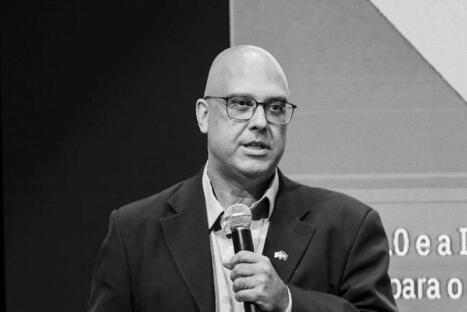
O que acontece quando a maioria faz uso de uma IA para realizar suas atividades laborais? E, no caso dos estudantes, quando os trabalhos passam a ser produzidos com o apoio de uma IA generativa? Luciano Sathler É PhD em administração pela USP e membro do Conselho Deliberativo do CNPq e do Conselho Estadual de Educação de Minas Gerais As diferentes aplicações de Inteligência Artificial (IA) generativa são capazes de criar novos conteúdos em texto, imagens, áudios, vídeos e códigos para software. Por se tratar de um tipo de tecnologia de uso geral, a IA tende a ser utilizada para remodelar vários setores da economia, com impactos políticos e sociais, assim como aconteceu com a adoção da máquina a vapor, da eletricidade e da informática. Pesquisas recentes demonstram que a IA generativa aumenta a qualidade e a eficiência da produção de atividades típicas dos trabalhadores de colarinho branco, aqueles que exercem funções administrativas e gerenciais nos escritórios. Também traz maior produtividade nas relações de suporte ao cliente, acelera tarefas de programação e aprimora mensagens de persuasão para o marketing. O revólver patenteado pelo americano Samuel Colt, em 1835, ficou conhecido como o "grande equalizador". A facilidade do seu manuseio e a possibilidade de atirar várias vezes sem precisar recarregar a cada disparo foram inovações tecnológicas que ampliaram a possibilidade individual de ter um grande potencial destrutivo em mãos, mesmo para os que tinham menor força física e costumavam levar desvantagem nos conflitos anteriores. À época, ficou famosa a frase: Abraham Lincoln tornou todos os homens livres, mas Samuel Colt os tornou iguais. Não fazemos aqui uma apologia às armas. A alegoria que usamos é apenas para ressaltar a necessidade de investir na formação de pessoas que sejam capazes de usar a IA generativa de forma crítica, criativa e que gerem resultados humanamente enriquecidos. Para não se tornarem vítimas das mudanças que sobrevirão no mundo do trabalho. A IA generativa é um meio viável para equalizar talentos humanos, pois pessoas com menor repertório cultural, científico ou profissional serão capazes de apresentar resultados melhores se souberem fazer bom uso de uma biblioteca de prompts. Novidade e originalidade tornam-se fenômenos raros e mais bem remunerados. A disseminação da IA generativa tende a diminuir a diversidade, reduz a heterogeneidade das respostas e, consequentemente, ameaça a criatividade. Maior padronização tem a ver com a automação do processo. Um resultado que seja interessante, engraçado ou que chama atenção pela qualidade acima da média vai passar a ser algo presente somente a partir daqueles que tiverem capacidade de ir além do que as máquinas são capazes de entregar. No caso dos estudantes, a avaliação da aprendizagem precisa ser rápida e seriamente revista. A utilização da IA generativa extrapola os conceitos usualmente associados ao plágio, pois os produtos são inéditos – ainda que venham de uma bricolagem semântica gerada por algoritmos. Os relatos dos professores é que os resultados melhoram, mas não há convicção de que a aprendizagem realmente aconteceu, com uma tendência à uniformização do que é apresentado pelos discentes. Toda Instituição Educacional terá as suas próprias IAs generativas. Assim como todos os professores e estudantes. Estarão disponíveis nos telefones celulares, computadores e até mesmo nos aparelhos de TV. É um novo conjunto de ferramentas de produtividade. Portanto, o desafio da diferenciação passa a ser ainda mais fundamental diante desse novo "grande equalizador". Se há mantenedores ou investidores sonhando com a completa substituição dos professores por alguma IA já encontramos pesquisas que demonstram que o uso intensivo da Inteligência Artificial leva muitos estudantes a reduzirem suas interações sociais formais ao usar essas ferramentas. As evidências apontam que, embora os chatbots de IA projetados para fornecimento de informações possam estar associados ao desempenho do aluno, quando o suporte social, bem-estar psicológico, solidão e senso de pertencimento são considerados, isso tem um efeito negativo, com impactos piores no sucesso, bem-estar e retenção do estudante. Para não cair na vala comum e correr o risco de ser ameaçado por quem faz uso intensivo da IA será necessário se diferenciar a partir das experiências dentro e fora da sala de aula – online ou presencial; humanizar as relações de ensino-aprendizagem; implementar metodologias que privilegiem o protagonismo dos estudantes e fortaleçam o papel do docente no processo; usar a microcertificação para registrar e ressaltar competências desenvolvidas de forma diferenciada, tanto nas hard quanto soft skills; e, principalmente, estabelecer um vínculo de confiança e suporte ao discente que o acompanhe pela vida afora – ninguém mais pode se dar ao luxo de ter ex-alunos. Atenção: esse artigo foi exclusivamente escrito por um ser humano. O editor, Michael França, pede para que cada participante do espaço "Políticas e Justiça" da Folha sugira uma música aos leitores. Nesse texto, a escolhida por Luciano Sathler foi "O Ateneu" de Milton Nascimento.
OKLAHOMA CITY — Em uma tarde de sábado, cerca de 20 horas antes de seu sermão, Darrell Stetler II estava sentado atrás de uma estação de trabalho com dois monitores, apertada na cabine de som de sua igreja, com uma apresentação de slides brilhando em uma tela e o ChatGPT aberto em outra.
Um sermão intitulado "Forjado", parte de uma jornada de verão pelo Livro de Provérbios, estava tomando forma em algum lugar entre suas próprias anotações e alguns chatbots de IA.
Ao abrir Claude, o livro o cumprimentou pelo nome: "De volta à ativa, fazedor de discípulos".
Stetler passou mais de duas décadas construindo a Igreja Metodista Bíblica de Oklahoma City, onde é o pastor principal, praticamente do zero. Ele também faz parte do seleto grupo de 1% dos usuários mais ativos do ChatGPT, administra um grupo no Facebook com 500 pastores que experimentam a tecnologia e criou uma ferramenta capaz de gerar dezenas de ilustrações para sermões em segundos.
No entanto, poucos pastores parecem tão cautelosos com a IA quanto Stetler. "Essa IA não gosta do que encontra", disse ele. "Ela não consegue amar isso."
Stetler, que está entre o 1% dos melhores usuários do ChatGPT, usa IA para planejar e ilustrar seus sermões. A cautela coexiste com uma pressão financeira real. Stetler, casado e pai de sete filhos, ganha US$ 600 por semana, mais um auxílio-moradia mensal de US$ 1.500, que é inferior ao seu custo de vida. Sua igreja mantém reservas para cerca de dois meses de despesas. Ele faz trabalhos de construção civil como atividade paralela, além de um pequeno negócio que cria recursos, como currículos, para outros pastores. Antes, um sermão levava de 10 a 15 horas para ser preparado; um chatbot que faz a pesquisa inicial e a redação reduz esse tempo consideravelmente.
Ele disse que o tempo que economiza é dedicado às pessoas. Mais cedo naquele dia, ele havia se sentado ao lado da cama de um membro da congregação no hospital. No meio da preparação do sermão, seu telefone tocou novamente: outro pedido de visita ao hospital. Essas horas, disse ele, são o que a IA está comprando de volta.
Embora Stetler elogie os benefícios da IA, ele afirma que ela não pode substituir o toque humano, e o tempo que ele economiza é investido em pessoas. Metade dos pastores afirma usar IA para brainstorming ou geração de ideias, segundo o Barna Group, empresa que estuda tendências religiosas nos EUA. E cerca de um quarto utiliza IA para auxiliar na redação de seus sermões, um aumento em relação aos 12% registrados em 2024. Essa tendência gerou resistência teológica até mesmo no Vaticano: no início deste ano, o Papa Leão XIV alertou o clero de que proferir uma homilia verdadeira significa compartilhar a fé. A inteligência artificial, disse o Papa , não consegue fazer isso.
Stetler, de 45 anos, praticamente se conformou com a tensão. Ele citou uma passagem de Isaías 29:13 que condena a hipocrisia — " Este povo se aproxima de mim com a boca e me honra com os lábios, mas o seu coração está longe de mim " — como uma espécie de alerta para seus próprios hábitos. Certa vez, no meio da preparação de um sermão, Stetler se lembrou de que o ChatGPT enviou uma resposta peculiar: "Orando por você enquanto prega", escreveu o chatbot. Stetler deu uma gargalhada. "Não, não está", pensou ele.
PastorGPT Na Califórnia, o reverendo Justin Lester , de 37 anos, que se autodenomina um entusiasta da tecnologia, levou o experimento ainda mais longe. Ele voltou para casa após uma conferência de desenvolvedores da Nvidia com Theo, um cão robô treinado com os próprios sermões de Lester e que percorre os corredores de sua igreja aos domingos.
Anúncio
O cão robô do Reverendo Justin Lester, Theo, é uma presença constante aos domingos em sua igreja. DK HAMMONDS / DK CONSULTS, LLC Theo é a extremidade visível de um sistema maior criado por Lester, chamado PastorGPT: um modelo gratuito para linguagem simples. Treinado inteiramente com base nos sermões e ensinamentos de um determinado pastor, o PastorGPT se atualiza automaticamente a cada semana, baixando e transcrevendo novos sermões enviados do YouTube. Mais de 30 igrejas já utilizam versões dele.
Segundo ele, o sistema possui uma espécie de função de alerta pastoral. Dados anonimizados identificam temas recorrentes nas conversas que os membros da congregação têm com o bot. No ano passado, ele contou, o sistema detectou um aumento repentino de adolescentes falando sobre bullying, então ele criou uma lição sobre o assunto.
Nem todo pastor encara a IA como uma mera ferramenta. O Reverendo Dwight Lee Wolter , da histórica Igreja Congregacional de Patchogue em Long Island, Nova York, recorreu ao ChatGPT em um momento particularmente emotivo: a tentativa de assassinato de Donald Trump em um comício de campanha na Pensilvânia em 2024. Wolter perguntou ao chatbot o que deveria dizer à sua congregação na manhã seguinte. Segundo ele, o chatbot produziu uma oração quase perfeita. Ele também utilizou a IA para fazer a chamada para o culto, as orações e para compor novos hinos com música gerada por IA.
Anúncio
Wolter, de 75 anos, faz questão de ressaltar que não desapareceu no experimento. "Dwight está aqui", disse ele. "Ele não abdicou." Mas ele também é direto sobre para onde acha que as coisas estão caminhando. "Não consigo imaginar que não chegue o momento em que a IA nos apresentará um Deus mais atraente, mais flexível e disponível 24 horas por dia, 7 dias por semana", disse ele, uma perspectiva que incomoda mais os outros membros do clero do que a ele próprio. "Quando menciono isso para o clero, a reação é: 'Meu Deus!'"
'Estou realmente dividido' O uso de IA no púlpito preocupa os críticos. Meghan Sullivan , professora de filosofia da Universidade de Notre Dame e líder de um projeto de pesquisa sobre IA e religião, afirmou que usar IA para redigir qualquer coisa dita em cultos religiosos reflete uma incompreensão fundamental do que os cristãos acreditam que acontece quando um pregador profere uma homilia.
Na visão dela, as igrejas podem estar entre as últimas instituições onde as pessoas são solicitadas a sentar-se quietas, em silêncio, e a encontrar outro ser humano sem mediação. "Martinho Lutero deve estar se revirando no túmulo", disse ela, ao pensar na ideia de entregar as escrituras ao que ela chama de intermediário teológico por software.
A IA ajuda Stetler a rastrear o significado das palavras nas escrituras por meio de suas diversas traduções e usos.
O folheto "Sete Domínios" gerado por IA foi usado por Stetler durante um sermão recente de domingo. Stetler, o pastor de Oklahoma City, cometeu erros com IA. Há dois anos, com pressa para terminar um slide para um sermão sobre um missionário do Pacífico Sul, ele inseriu uma imagem gerada por IA sem verificá-la cuidadosamente. Após o culto, um membro da congregação o abordou. "Você fez isso com IA?" Sim, ele respondeu. "Você sabia que havia uma mulher de topless ao fundo?" Ele se desculpou na hora. Agora, ele conta essa história como um alerta para qualquer pessoa a quem esteja apresentando essas ferramentas. "Não preciso ter pressa."
Ao falar mais tarde sobre a tentação de deixar a IA fazer demais, sua voz embargou.
"Preciso cuidar do coração do Darrell", disse ele, referindo-se a si mesmo e com os olhos marejados. "Quero que meu coração esteja no lugar certo. Nada entra nele até que eu o tenha vivenciado."
Anúncio
Durante um sermão recente de domingo, Stetler estava apresentando seu material de apoio sobre os “Sete Domínios”, gerado por IA, quando este se dessincronizou com seus slides. “A IA me decepcionou”, disse ele aos fiéis. “Ela realmente me atrapalhou.”
As reações às suas ferramentas de IA foram diversas. Um membro da congregação, Chad Christiansen, de 48 anos, disse que usa IA para criar imagens para sua organização sem fins lucrativos voltada para jovens e que está fazendo um curso de IA com foco em agentes junto com o próprio Stetler.
Elizabeth Hughes não gosta de IA, mas diz que seus dois filhos pastores a utilizam. Chad Christiansen, um membro da congregação, faz um curso de IA com Stetler. Mas Elizabeth Hughes, uma voluntária de 67 anos do ministério infantil, foi franca sobre sua resistência.
“Detesto IA”, disse ela. “Gosto de criatividade.” Há um ano, Stetler entregou-lhe material curricular gerado por IA, e ela sentiu-se, nas suas palavras, preguiçosa. Mas o marido usa as ferramentas constantemente e, entre ele e o pastor, disse ela, “conquistaram-me”.
Stetler estava preocupado com uma futura geração de pastores dependentes de IA. "Estou realmente dividido", disse ele. "Eu recomendaria que os pastores a usassem com cautela." O que o preocupa não é tanto a ferramenta em si, mas o que ela poderia permitir que uma versão mais preguiçosa de si mesmo fizesse impunemente. "A pregação é a verdade expressa pela personalidade", disse ele. Então, ele voltou-se para seus dois monitores e continuou a instruir.
This webinar was about the new white paper, “Responsible Assessment in the AI Era: Key Insights from a Future-Focused Convening.” The report highlights the key points of discussion and learning from a convening hosted earlier this year by the Stanford Accelerator for Learning in collaboration with ETS.
The webinar, moderated by the Accelerator's executive director, Isabelle Hau, featured the following panelists: • Candace Thille, Faculty Director of the Adult and Workforce Learning Initiative, Stanford Accelerator for Learning • Kadriye Ercikan, Senior Vice President of Research, ETS • Nancy Otero, Senior Program Officer Leading AI R&D in Measurements and Public Goods, Gates Foundation • Brooke Stafford-Brizard, Senior Vice President of Innovation and Impact at the Carnegie Foundation for the Advancement of Teaching
Faith is precisely this paradox, that the individual as the particular is higher than the universal, is justified over against it, is not subordinate but superior—yet in such a way, be it observed, that it is the particular individual who, after he has been subordinated as the particular to the universal, now through the universal becomes the individual who as the particular is superior to the universal, for the fact that the individual as the particular stands in an absolute relation to the absolute. This position cannot be mediated, for all mediation comes about precisely by virtue of the universal; it is and remains to all eternity a paradox, inaccessible to thought. And yet faith is this paradox—or else (these are the logical deductions which I would beg the reader to have in mind at every point)—or else there never has been faith, precisely because it always has been. In other words, Abraham is lost.
Would you be any more willing to plug into the Experience Machine if you could also use one (or both) of these machines beforehand? (For example, you could use the Transformation Machine to transform yourself into a highly talented doctor, use the Result Machine to produce a cure for the common cold, and then use the Experience Machine to give yourself the experience of discovering the cure through your own research. Would you find as much value in this as you would in actually training to become a doctor and discovering the cure through your own work?)
Reflecting on questions like these, Nozick thinks, reveals that our most central desires — to have certain experiences, to be a certain type of person, to bring about certain outcomes — only have force in the context of the actual lives we are living. As he puts it, “Perhaps what we desire is to live ourselves, in contact with reality. And this, machines cannot do for us.“
Aristotle never saw a chatbot. Augustine never debugged a weapons algorithm. And yet here we are: Anthropic is hiring virtue ethicists, the Pope is weighing in on algorithmic morality, and institutions two thousand years in the making are writing A.I. policy. This session asks what it looks like when the oldest moral frameworks in human history become the most urgent ones in tech, and whether ancient wisdom is our best shot at keeping artificial intelligence on the right side of human values.
SPEAKERS Renée DiResta, Associate Research Professor at the Georgetown University McCourt School of Public Policy Meghan Sullivan, Founding Director of the Institute for Ethics and the Common Good, Director of the Ethics Initiative, Wilsey Family College Professor of Philosophy at the University of Notre Dame
Philosopher Meghan Sullivan, the Wilsey Family College Professor of Philosophy at Notre Dame and director of the university's Institute for Ethics and the Common Good, joins Chris and Eddie for a conversation that starts with Socrates and ends up in a conference room at an AI company. Meghan traces her own path from an intentionally obscure grad-school dissertation on the nature of time to teaching "God and the Good Life," one of Notre Dame's most popular courses. From there the conversation turns to her current work on AI and human dignity, built around a framework she calls DELTA — Dignity, Embodiment, Love, Transcendence, Agency. Along the way: a thought experiment about an all-knowing "Guru app," a visit with Anthropic's engineering team, and her case for why she thinks this disruptive AI moment is exactly the moment the Christian tradition was built for.
Watch the recorded breakout session for educators from the 2026 DELTA Summit on AI, Faith, and Human Flourishing, featuring Lily Abadal, Assistant Professor of Instruction, Judy Genshaft Honors College, University of South Florida, and Meaghan Crowley, iDEAL Institute Curriculum and Professional Learning Developer, Loyola Marymount University.
Watch the recorded keynote address from the 2026 DELTA Summit on AI, Faith, and Human Flourishing, Faith, Research, and Flourishing: AI Leadership and the Imago Dei, featuring Rosalind Picard, Grover M. Hermann Professor in Health Sciences and Technology, MIT Media Laboratory.
Nathaniel Cook, Chief Information and Technology Officer, and Conal Fagan, Senior Manager for Global Strategic Partnerships, Special Olympics International
Over three days, from Sept. 21–23, 300 invited leaders from across education, ministry, technology, and policymaking fields gathered on the University of Notre Dame campus to wrestle together with how to center human formation amidst the rapidly changing artificial intelligence landscape. The second annual DELTA Summit on AI, Faith, and Human Flourishing built on the foundation laid in September 2025, when Meghan Sullivan, Wilsey Family College Professor of Philosophy and director of the Institute for Ethics and the Common Good and the Notre Dame Ethics Initiative, introduced the DELTA framework. DELTA is a faith-informed approach to conversations about AI that is rooted in five enduring principles for human formation: dignity, embodiment, love, transcendence, and agency.
Durante um painel com alunos do ensino médio na conferência de IA da Fordham neste mês, os professores universitários presentes estavam "presos em cada palavra", ouvindo o quanto seus professores estavam experimentando a integração da IA, disse Grimm, que mencionou o uso de uma ferramenta chamada Flint para criar tutores personalizados para diversas tarefas. Sullivan observa uma tendência semelhante. "As escolas de ensino médio estão fazendo um trabalho muito melhor em estratégias de IA do que as universidades", disse ela.
“This is it,” said Sanders, as I entered the sparse room with a large table in the middle. Stacked on the floor in the corner were the copies of Annuarium Statisticum Ecclesiae, the Vatican’s statistical yearbook containing baptism, marriage and ordination data from every archdiocese in the world. Sanders purchased the volumes from the Vatican to scan and ingest into Magisterium AI through his AI-powered software, Vulgate.
In 1978, Kavka wrote the following essay called “The Futurity Problem” which was published in Obligations to Future Generations. The book’s collection of essays centers around the questions of “whether and to what degree it can be morally incumbent on us to make sacrifices to bring happy people into the world or to avoid preventing them being brought into the world.” In a world with diminishing resources, population growth, and environmental risks, the ideas proposed by Kavka and others in this book are frequently and extensively discussed today.
Watch the recorded breakout session for faith leaders from the 2026 DELTA Summit on AI, Faith, and Human Flourishing, featuring Paul Taylor, President and Co-Founder, Faith, Work, and Tech, Jimmy Lin, President, Center for Ethical Intelligence, and Travis Jamieson, Pastor, Author, Podcaster, and Consultant.
Meghan Sullivan is the Wilsey Family College Chair in Philosophy at the University of Notre Dame, director of the God and the Good Life Program, and director of the Notre Dame Institute for Advanced Study. She has published works in many leading philosophy journals. Her first book, Time Biases, was published by Oxford University Press. Her work has been supported by grants from the National Endowment for the Humanities, the Andrew W. Mellon Foundation, and the John Templeton Foundation. Sullivan has degrees from the University of Virginia, Oxford University, and Rutgers University, where she earned a PhD in philosophy. She studied at Balliol College, Oxford University, as a Rhodes Scholar.
Paul Blaschko is an assistant teaching professor in philosophy at the University of Notre Dame. He heads up curriculum design and digital pedagogy for the God and the Good Life Program, and has recently been working to develop similar curricula at universities across the nation as part of an initiative funded by the Andrew W. Mellon Foundation. Blaschko completed an MA in philosophy at the University of Wisconsin–Milwaukee, a PhD at the University of Notre Dame in 2018, and held the Andrew W. Mellon Postdoctoral Fellowship prior to being appointed to his current position.
About The Good Life Method:
For seekers of all stripes, philosophy is timeless self-care. Notre Dame philosophy professors Meghan Sullivan and Paul Blaschko have reinvigorated this tradition in their wildly popular and influential undergraduate course “God and the Good Life,” in which they wrestle with the big questions about how to live and what makes life meaningful.
Now they invite us into the classroom to work through issues like what justifies our beliefs, whether we should practice a religion and what sacrifices we should make for others—as well as to investigate what figures such as Aristotle, Plato, Marcus Aurelius, Iris Murdoch, and W. E. B. Du Bois have to say about how to live well. Sullivan and Blaschko do the timeless work of philosophy using real-world case studies that explore love, finance, truth, and more. In so doing, they push us to escape our own caves, ask stronger questions, explain our deepest goals, and wrestle with suffering, the nature of death, and the existence of God.
Philosophers know that our “good life plan” is one that we as individuals need to be constantly and actively writing to achieve some meaningful control and sense of purpose even if the world keeps throwing surprises our way. For at least the past 2,500 years, philosophers have taught that goal-seeking is an essential part of what it is to be human—and crucially that we could find our own good life by asking better questions of ourselves and of one another. This virtue ethics approach resonates profoundly in our own moment.
The Good Life Method is a winning guide to tackling the big questions of being human with the wisdom of the ages.
Watch the recorded keynote panel discussion from the 2026 DELTA Summit on AI, Faith, and Human Flourishing, featuring members of GenDELTA.
The panel discussion features Ethan Burdin, Senior, Marquette University; Pauline Lu, Senior, Calvin University; Jack Rankin, Junior, University of Notre Dame; and Leorah Roeber, Junior, Cal Poly San Luis Obispo, in conversation with Mary Jordan ‘26, John Charles Bryant Fellow, Memorial Family Medicine Residency Program.
Todo ser humano possui valor intrínseco — não por causa da produtividade, inteligência ou valor econômico, mas porque foi feito à imagem de Deus. Como nos lembra o Papa Leão XIV, “A pessoa não é um sistema de algoritmos”. Numa era de comparação com máquinas, devemos reafirmar que a dignidade humana é inegociável. Isso inclui a forma como projetamos e regulamentamos a IA de maneiras que honrem a dignidade dos trabalhadores, aprendizes, pacientes e usuários.
The Church’s Role in an AI Age Beyond technology, the Church must champion what AI cannot: authentic community, deep discipleship and genuine spiritual formation. In a world where automation is increasing, human connection becomes even more valuable.
Churches should lead the charge in cultivating spaces where people experience God’s presence while thoughtfully optimizing the digital experiences that go along with it all. AI can serve the mission, while not reducing it or derailing it. The best strategy for an AI-powered future is not just adopting technology but doubling down on what makes the church irreplaceable: authentic relationships, transformative teaching and Spirit-led ministry.
To get content containing either thought or leadership enter:
To get content containing both thought and leadership enter:
To get content containing the expression thought leadership enter:
You can enter several keywords and you can refine them whenever you want. Our suggestion engine uses more signals but entering a few keywords here will rapidly give you great content to curate.




 Your new post is loading...