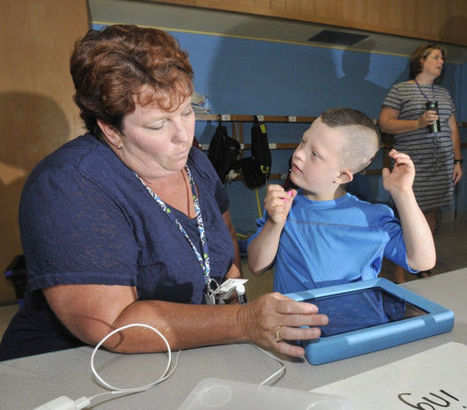
How stigma, stereotype, and labels can affect kids with learning disabilities.


 Your new post is loading...
 Scoop.it! How stigma, stereotype, and labels can affect kids with learning disabilities. 
No comment yet.
Sign up to comment
Scoop.it!
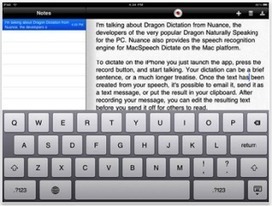
Below is a list of some good iPad apps for people who are blind or have low vision. Besides apps to help visually impaired recognize colours and objects around them, we have also include ViA by Braille Institute which is an excellent app search engine for blond people. ViA allows you to search for apps specifically designed for the blind and in different categories including fun apps, educational apps, apps for colour detection and many more. Via John Evans
Scoop.it!

NASHVILLE, Tenn., July 9, 2015 /PRNewswire/ -- VitalSource Technologies Inc., an Ingram Content Group Company and a leading educational technology company that provides digital solutions to the higher education market, is showcasing new accessibility features of its VitalSource Bookshelf® platform at the National Federation of the Blind National Convention, July 5-10, in Orlando, FL. For more than a decade, VitalSource has provided accessible solutions to learners of all abilities, and was the first company to offer a reading system to support the emerging EDUPUB standard, which brings the benefits of accessible classroom materials into the integrated learning environment.
Scoop.it!

Some of the biggest names in technology are banding together with a new commitment designed to make their products more accessible for people with disabilities.
Scoop.it!

The country has made major strides in including children and youth in school activities because of the Americans with Disabilities Act, but education officials say work remains. Via Mark E. Deschaine, PhD
Scoop.it!
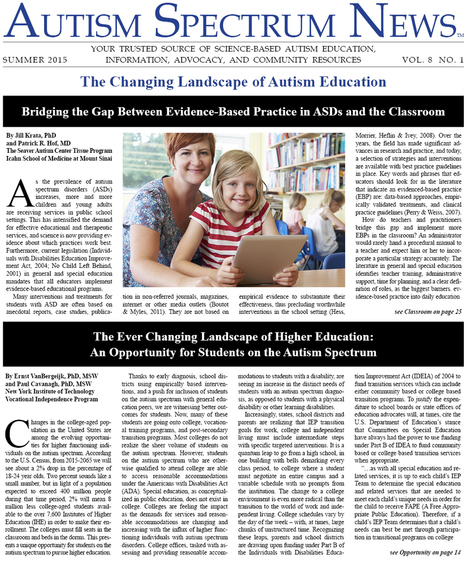
Autism Spectrum News is your trusted source of science-based autism education, information, advocacy, and community resources. Via Anne Pascucci, MPA, CRA, Mark E. Deschaine, PhD
Scoop.it!
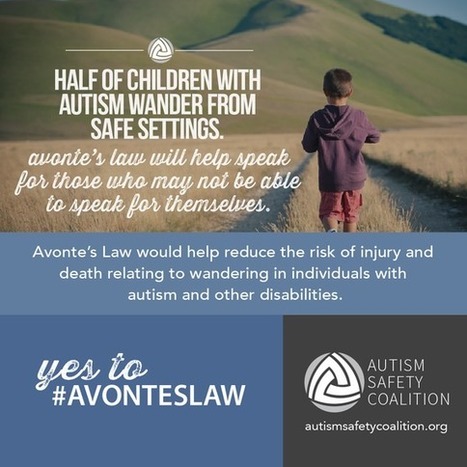
Between the tragic losses of Avonte Oquendo in 2013 and Omarion Humphrey this week, we have lost far too many autistic children and adults in wandering related tragedies. Via Mark E. Deschaine, PhD
Scoop.it!

EdX, an online learning platform that Harvard co-founded with MIT in 2012, entered into a settlement agreement with the Department of Justice on Thursday and will address alleged violations of the Americans with Disabilities Act. That settlement could come to bear on a separate but similar lawsuit against Harvard that revolves around issues of accessibility online.
Scoop.it!

Founded in 2009, the National UDL Center supports the effective implementation of UDL by connecting stakeholders in the field and providing resources and information about: -UDL Basics -Advocacy -Research
Scoop.it!

Here is an excellent video produced by CAST to help understand learner variability
"Learning Goal
Essential Questions
Via Kathleen McClaskey
Scoop.it!

"Students with disabilities require unique support in the online learning environment. Many higher education instructors assume that all materials available online are accessible to all students (Cook, 2002). In fact, a recent survey of online instructors found that 80% did not consider the needs of students with disabilities, and 12% only partially consider the needs of students with disabilities when designing online courses (Bissonnette, 2006). This lack of awareness for students with disabilities in course design is especially pronounced given that approximately 11% of all college and university students have a disability (National Center on Education Statistics, 2009). Considering the needs of students with disabilities when designing online course content benefits these students, but will also benefit all students (Burgstahler, Anderson, Slatin, & Lewis, 2008; Dukes, Koorland, & Scott, 2009). This brief examines issues faced by students with disabilities in online/blended courses and strategies to address these issues as stated in the literature." Via learning designer

Beret Furuseth Hagen's curator insight,
October 1, 2015 3:48 PM
This short paper looks at the issues some students with disabilities might be dealing with when taking an online course, and then examines strategies to address these issues. reScooped via Maggie Rouman 
Marissa Kossoff's curator insight,
June 17, 2016 8:36 PM
This is an important thing to think about because often times classroom content is tailored specifically for the general classroom and accommodations are simply adjustments to make. It might be more useful to create a lesson that accommodates to all abilities in the beginning.
Scoop.it!
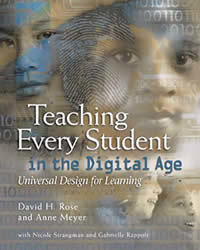
This multimedia book provides hyperlinks to resources, interactive diagrams, videos of techniques and demonstrations, and downloadable pdfs with templates and frameworks for applying UDL. It offers a nice balance of theory and practice and is divided into two sections. The first four chapters address the concept of UDL and its underlying neuroscientific principles. The last four chapters address practical applications of UDL in the classroom. Because of its multimedia content, the book is engaging, easy to understand, and accessible to all learning styles. It is a great resource and must read for all educators, especially current and future online educators, who are interested in personalizing and differentiating instruction in the digital age.
Scoop.it!
Module One: What is Universal Design for Learning? offers an overview of Universal Design for Learning (UDL) by addressing the three principles of UDL, the connection of UDL to neuroscience, and the impact of UDL on curriculum. This module provides you with an interactive learning experience. You may wish to think of it as an interactive text book.
|
Scoop.it!
"Given the popularity of using videos in online courses I am always surprised that these courses often contain a crucial mistake – they don’t include a transcript." Via EDTECH@UTRGV
Scoop.it!
From
medium

Accessibility enables people with disabilities to perceive, understand, navigate, interact with, and contribute to the web. Imagine a world where developers know everything there is to know about accessibility. You design it and they build it… perfectly. In this world, only the design itself can cause people with disabilities to have trouble using a product.
These guidelines will cover the major things you need to know in order for your products to be “design-ready” to meet the minimum of standards in Section 508 and the Web Content Accessibility Guidelines 2.0. The rest will be up to development and quality testing.
Scoop.it!

The decision about whether to say a 'person with autism' or an 'autistic person' is never clear cut. Via Mark E. Deschaine, PhD
Scoop.it!

Mainstream theory presents autism as an “epidemic”, disease or deficit. But what about the strengths and abilities that can be found within the spectrum? Via Mark E. Deschaine, PhD
Scoop.it!
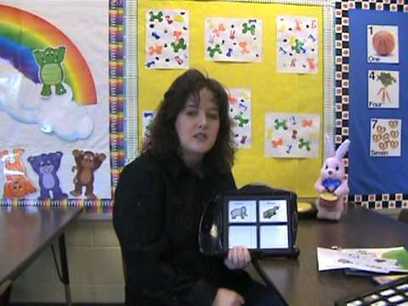
What’s it like to be a special education teacher? Watch these four videos to find out what it's like to teach special needs students.
Scoop.it!

Excellent report on how to apply UDL principles in a Workforce Development Program.
"Universal Design for Learning (UDL) is an educational model for creating general curriculums that are accessible to all learners, regardless of learning style. This information brief is for professionals working directly with youth in workforce development programs. It explains the principles of UDL and how these principles can be used in work experiences and training settings to more effectively and efficiently engage all youth, including youth with disabilities. By incorporating UDL into workforce development programs, youth service professionals can use evidence-based practices to support youth as they prepare to transition from education to the workplace." Via Kathleen McClaskey, Communica8GH
Scoop.it!
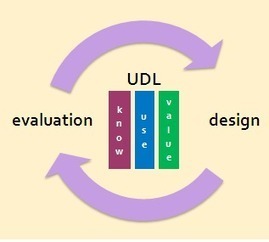
Universal Design of Instruction "The universal design of instruction (UDI) is gaining increased attention and application by educational researchers and practitioners at K-12 and postsecondary levels. UDI means that, rather than designing for the average student, you design instruction for students who potentially have broad ranges with respect to ability, disability, age, reading level, learning style, native language, race, ethnicity, and other characteristics. UDI can be applied to all aspects of instruction, including class climate, interaction, physical environments and products, delivery methods, information resources and technology, feedback, and assessment."
Scoop.it!
Founded in 1984 as the Center for Applied Special Technology, CAST has earned international recognition for its innovative contributions to educational products, classroom practices, and policies.
Scoop.it!

Implementing the principles of universal design in online learning means anticipating the diversity of students that may enroll in your course and planning accordingly. These ten key elements will greatly enhance the accessibility and usability of your course for students with and without disabilities.
Scoop.it!
People are as diverse as their finger prints...so is their learning. Universal Design for lLearning goes beyond accessibilty because it builds support and challenge. This video provides an explantation of the underlying principles of Universal Design for Learning. Created by CAST. (Video)
|