Your new post is loading...

|
Scooped by
Mickael Ruau
December 4, 2021 11:08 AM
|
Leading real-time platform for conducting live developer interviews with video, code editing and execution, and screensharing, with an audience of over a million developers already on EXLskills
|
|
Scooped by
Mickael Ruau
December 4, 2021 10:30 AM
|
Built from scratch, based on 20 years of experience developing IDEs. Fleet uses the IntelliJ code-processing engine, with a distributed IDE architecture and a reimagined UI.
Editor-light…
We built Fleet to be a fast and lightweight text editor for when you need to quickly browse and edit your code. It starts up in seconds so you can begin working immediately, and it can easily transform into an IDE, with the IntelliJ code-processing engine running separately from the editor itself.
…and IDE-smart
Fleet inherits the things that developers love the most from IntelliJ-based IDEs – project and context aware code completion, navigation to definitions and usages, on-the-fly code quality checks, and quick-fixes.
|
|
Scooped by
Mickael Ruau
December 4, 2021 6:13 AM
|
How we connected despite social distancing restrictions
As mentioned above, we migrated the format of the workshop from face-to-face to remote and that came with some challenges. We had to come up with a tool that would allow real-time code collaboration (simultaneous editing).
Luckily, we tried Code With Me by JetBrains that had recently launched at that time.
As we use IntelliJ-based IDEs, the tool worked like a charm. It allows a host to share their locally running project with one or more guests. It is much more than a simultaneous editor; it also provided cool features such as:
Remote trigger of a test suite
Remote debugging
Follow a participant
Customize file, terminal and run access for the guests
Calls
The combination of all these features is key for us to keep the remote coding dojos as engaging as the face-to-face ones.
� In case you don't use IntelliJ-based IDEs, be aware that you don't need to stick with it. There are plenty of open-source alternatives over the internet. I am sure there will be one that suits your use case.
Key takeaways
Here are my key takeaways from running coding dojos.
Coding dojos can be leveraged to cover knowledge gaps.
The receptiveness might be surprising. It was greatly praised not only by the participants but by our managers as well.
Remote coding dojos can still be engaging.
Code With Me plugin by JetBrains is a powerful tool to assist you with remote code collaboration.
Here are some resources I used that you might find helpful:
Jetbrains blog
The Coding Dojo
What is Coding Dojo
Why you should start a team Coding Dojo Randori right now
Rooks By Dojo
Joe Jag - Coding Dojo
|
|
Scooped by
Mickael Ruau
December 4, 2021 6:09 AM
|
A Coding Dojo is a meeting where a bunch of coders get together to work on a programming challenge. They are there to have fun and to engage in DeliberatePractice in order to improve their skills.
The ParisDojo focuses on coding in front of others, most often something from scratch, in a very short amount of time (1 to 1.5 hours). They use various languages, various tools, various exercise formats. They consider the outcome of an exercise successful when it is completed within allocated time AND audience can repeat the exercise at home by themselves.
Maybe the CodingDojoPrinciples help to understand what the CodingDojo is about.
|
|
Scooped by
Mickael Ruau
December 4, 2021 3:33 AM
|
What made Storemapper sell-able
Kevin from SureSwift is probably better equipped to answer precisely why it made sense for them to buy Storemapper, but I think it’s worth my taking a stab at why I think it was a sell-able business.
There are many things that are required, being necessary but not sufficient, of a sell-able business but only one thing makes a buyer want to buy your business: they need to see an opportunity. Entrepreneurs sometimes adopt a strange language when discussing acquisitions that seems to assume that acquirers are just out there as a natural part of the world, and if they create a “good business” someone should want to buy it. But acquirers of all kinds are not simply walking around looking to pay full market price to take over good businesses. They need to see an opportunity. Either they need to feel they are getting a good deal on the business by paying below what it’s worth, or they need to see a pathway to the business performing much better under their ownership. The first one, deal hunters or vultures, are by far the dominant mentality of potential acquirers because it’s the easiest and simplest way to make sure an acquisition is a good investment. As a potential seller you want to sniff out quickly if someone is just poking around looking for distressed assets and move. The best reason for a business to be sell-able is for the buyer to see an opportunity for the business to flourish under their ownership and be a worthwhile investment even when paying full market value for the business; a true win-win. Here are a few examples of good reasons for a buyer to want to buy your business:
Budget dynamics: there is a well known budget dynamic in large SaaS businesses that they often lose money when they grow quickly. If you spend $50 to get a customer for your $40 ebook, you’re doing it wrong. But it’s perfectly rational to spend $50 to acquire a customer who subscribes to your $10/month SaaS plan, who then stays paying for 24 months. But in this case you actually lose money in the short-term, the faster you grow the faster you rack up losses even when your business is doing great. A small bootstrapped startup might not have the budget to sustain this but a well-funded acquirer might be perfectly happy to plow money into customer acquisition, growing the enterprise value of the business quickly, even if it means short-term losses.
Customer synergies: an acquirer may have a product that is complementary to an overlapping customer base. They may be able to cross-sell their product to your customers and vice versa, reducing their customer acquisition costs and creating up-sell opportunities. Cross-selling and up-selling are immensely more efficient than finding completely new customers so an acquirer may see buying your business as a far more effective use of funds than burning through the same money on marketing.
Cost synergies: less fun than the others but still common. An acquirer may have a team or overhead that allows them to run your product for much less than you currently do. This doesn’t always have to be the “chop shop” strategy where they would fire some of your employees to cut costs. For example Storemapper never got very involved in paid Facebook or Adwords ads primarily because we just weren’t big enough to justify having a full time person dedicated to managing it. A larger acquirer might be able to amortize the cost of a smart marketer across a larger business.
Core competencies: businesses as they grow often require different core competencies. A very early stage business needs to be able to connect deeply with customers’ needs and iterate quickly to achieve product-market fit. A more mature business may no longer need to iterate quickly but rather scale up its existing activities. These can be completely different skillsets that different owners excel at, which can make a business sell-able under the right circumstances.
Any one of these, or hopefully several plus others I haven’t mentioned, creates the seed of an opportunity to buy/sell a business. However there are a many other factors that, in combination with an opportunity, make a business sell-able. Ultimately it is the buyers’ opinions on these that matter, but here is my take on the key factors to making your business sell-able.
An awesome team: first and foremost is building a team that can keep the business growing without you. Too often founders want to insinuate themselves into every part of the business, making the entire structure dependent on their engaged focus. Instead you want to build a team and a product that are self-sufficient without you. A buyer can’t possibly learn exactly how active you are day-to-day before a sale, so a great team gives them confidence that the whole thing won’t collapse after you walk away.
Predictable, diversified revenue base: the reason for being of a business is to generate revenue but not all revenue is created equal when it comes to buying and selling a business. A buyer is buying your revenue streams and different revenue streams have different degrees of risk to a buyer. Obviously customers with recurring subscriptions are more valuable than one-off purchasers. But also customers that have been paying for 30 months continuously are more valuable than a customer who subscribed last month. A customer base made up of a diverse group of “boring” businesses is better than a customer base composed entirely of fidget spinner manufacturers. $10,000 per month composed of 1,000 companies paying $10 is more robust than two companies paying $5,000. The more predictable and diversified the revenue base, the more sell-able the business.
Documentation and processes: basically a business needs to have its shit together to be sell-able. Buyers can to some extent be choosy and they can and should pass on buying a great business that will be a nightmare to run. Having thorough documentation and good internal processes may not really increase the value of your business per se, but not having them can be a deal-breaker to an acquirer. You want them to be impressed by how painless it will be to take over operating the business.
This is an incomplete list but I believe some combination of all of these factors lead to Storemapper being a very sell-able business. It had an awesome team who had mostly been with the company for more than two years and who managed the day to day business without me having to be involved. The examples of me going completely offline for 10 days in Tanzania and Fiji really drove this home. It had great documentation and processes and a solid predictable, customer base with recurring low-churn revenue. It was also very easy to see how a buyer with different skillsets could invest time, money or even just more focus to really increase the already growing revenue.
Lessons on how to sell a bootstrapped SaaS business
The book Built to Sell is an essential read for every entrepreneur. It lays out clearly and simply some of the key counter-intuitive features of selling a business versus running a business. Here are some of the most salient lessons from that book and elsewhere.
Run your business to sell it, before you want to sell it
|
|
Scooped by
Mickael Ruau
December 4, 2021 2:51 AM
|
When I decided to write and sell my first ebook, The Tech Resume Inside Out, I expected to learn about the writing process. How to create a high-quality publication. How to work with editors. Designing a cover and illustrations for the book. And I have, indeed, learned plenty on these
|
|
Scooped by
Mickael Ruau
December 4, 2021 2:23 AM
|
Honey earns affiliate commissions from stores when users find savings, as the purchase is confirmed. Honey also makes money with its Honey Gold earning a commission when the member visits a partner store while it offers members a digital coupon to apply at purchase. PayPal acquired honey in 2020 for a $4 billion cash acquisition.
|
|
Scooped by
Mickael Ruau
December 3, 2021 10:28 AM
|
Git on its own is rarely enough. You’ll need to add tools for Git to make it work for your team.
Consider tools for managing:
Git LFS
Git code reviews
Git wikis
Multiple Git repositories
|
|
Scooped by
Mickael Ruau
December 3, 2021 1:18 AM
|
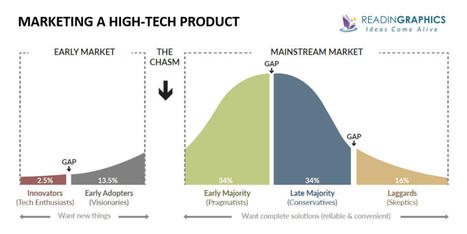
In this Crossing the Chasm summary, we'll briefly explain the strategies for launching a high-tech product, with decision-making guidelines for investors, engineers, marketers and managers in the high-tech community.
|
|
Scooped by
Mickael Ruau
December 3, 2021 12:56 AM
|
MVP, prototyping, and outsourcing can help startups achieve expertise-driven development output at a competitive cost.
|
|
Scooped by
Mickael Ruau
December 2, 2021 1:39 AM
|
by
Chris Smith
reviewed by
Ben Linders
Trainer / Coach / Adviser / Author / Speaker @BenLinders.com
Key Takeaways
Redgate Software runs a deliberate reteaming process to respond to new and changing needs of their business each year. Their approach has been to allow people to strongly influence where in the new team structure they will work, encouraging them to move towards the work they find most engaging.
Aiming to maintain very stable teams might be an unrealistic and harmful goal for software development organizations. Teams naturally change all the time and very stable teams can stagnate and become silos of knowledge, harming the overall organization.
Deliberately changingnup teams and giving people the opportunity to move towards the work they find most engaging has driven personal growth, staff engagement and cross-team collaboration at Redgate. It has also provided the organization with a responsive and popular process to decide team assignments.
Redgate has been able to meet the team preferences for 97% of their engineering staff during their three years of reteaming. Each time around, a third of people have decided to move teams. This has had no detrimental effect on software delivery performance or customer satisfaction.
As with any reorganization process, self-selection reteaming can generate anxiety for participant team members and managers. It’s paramount that leaders have a deep empathy for their people throughout and apply a process that reduces worry and uncertainty as much as possible.
|
|
Scooped by
Mickael Ruau
December 2, 2021 12:31 AM
|
Les méthodes agiles sont de plus en plus utilisées au sein de tous types d'organisations pour les équipes de développement internes. Cela est beaucoup moins vrai pour les développements sous-traités. Le premier obstacle et peut être le principal est l'impossibilité par nature de contractualiser un projet en méthodes agiles pour un coût prévisible.
Quelles alternatives à la pure régie peut-on proposer à nos acheteurs ? Comment rendre compatible un projet agile avec un appel d'offres public ? Doit-on choisir un sous-traitant uniquement sur des critères de prix ? Voici autant de questions auxquelles nous tenterons de trouver une réponse.
|
|
Scooped by
Mickael Ruau
December 1, 2021 4:19 AM
|
Buyer readiness is used to refer to that particular state which denotes the willingness of any individual customer for buying a specific product & service.
|
|
|
Scooped by
Mickael Ruau
December 4, 2021 10:54 AM
|
Codeboard.io is a web-based IDE to teach programming in the classroom.
Easily create and share exercises with students. Analyze and inspect students' submissions with a single click.
Create exercises in a feature-rich IDE and simply share them using their Urls.
Hide any file or folder that students should not see.
Use your favorite teaching language: C, C++, Eiffel, Haskell, Java, Python.
|
|
Scooped by
Mickael Ruau
December 4, 2021 6:14 AM
|
Whether you work on a distributed team or just have the occasional problem-solving session with a friend, you'll find a remote pair programming tool here.
|
|
Scooped by
Mickael Ruau
December 4, 2021 6:11 AM
|
Is cyber-dojo open-sourced?
Yes. The repositories are split across four github organizations:
cyber-dojo-start-points holds the sets of initial source files
cyber-dojo-languages holds the Dockerfiles for the images where the tests run
cyber-dojo holds the microservices for the server
cyber-dojo-tools holds custom tools
Can I run my own cyber-dojo server?
Yes. Instructions and scripts for running on...
a Kubernetes cluster in a cloud, or on a local minukube
Linux
Mac
Windows
|
|
Scooped by
Mickael Ruau
December 4, 2021 6:08 AM
|
Les Coding Dojos, ces moments de partage enrichissants entre passionnés ont été remis en question avec le premier confinement de 2020.
Avec les Software Crafters Lyon, nous avons cependant décidé de garder 2 Coding Dojos par mois, mais à distance. Si on ajoute ceux auxquels j'ai pu participer dans le cadre de mes missions Ippon, en fait, j'en ai fait pas mal pendant cette période !
Cet article est l'occasion de vous partager mon avis sur le déroulement de ces sessions que la distance n'a pas toujours simplifié.
|
|
Scooped by
Mickael Ruau
December 4, 2021 3:10 AM
|
A business model pattern is a blueprint to creating new ideas and achieve business model innovation as a mean to create a lasting competitive advantage.The BMI Lab identified 60 Business Model Navigator Patterns by the research of Oliver Gassmann, Karolin Frankenberger, and Michaela Csik
|
|
Scooped by
Mickael Ruau
December 4, 2021 2:38 AM
|
Born in 1996 as a travel platform of Microsoft, it would be spun off later on. Expedia became among the largest online travel agencies (OTAs) which comprises a set of brands that go from Hotels.com, Vrbo, Orbits, CheapTickets, ebookers, Travelocity, Trivago and others. The company follows a multi-brand strategy.
|
|
Scooped by
Mickael Ruau
December 4, 2021 2:21 AM
|
Customer Validation is when the things get serious and real. The goal of business is to build a repeatable sales road map, Second stage of..
|
|
Scooped by
Mickael Ruau
December 3, 2021 1:21 AM
|
Crossing the chasm decides if product innovation will be successful, or has to leave the market. Innovators have to build first reference customers in the mainstream market to prove their business model and a compelling offering.
Modern entrepreneurship began at the turn of the 21st century with the observation that startups aren’t smaller versions of large companies – large companies at their core execute known business models, while startups search for scalable business models. Lean Methodology consists of three tools designed for entrepreneurs building new ventures: The Business Model Canvas – to write down all…
Via Oliver Durrer swissleap.com
|
|
Scooped by
Mickael Ruau
December 2, 2021 9:12 AM
|
From web threats over IAM principles to auditing and monitoring, learn more about securing serverless architectures in this 2-parter infographic.
|
|
Scooped by
Mickael Ruau
December 2, 2021 12:50 AM
|
De nombreux clients, pourtant demandeurs d’agilité, souhaitent encore être rassurés par un engagement au résultat, même s’ils concèdent leur incapacité à pouvoir spécifier 100% du périmètre dans un temps raisonnable.
Comme s’il fallait s’accorder autour d’un manifeste agile détourné :
● Les individus et leurs interactions plus que les processus et les outils hérités et imposés
● Des logiciels opérationnels plus qu’une documentation exhaustive, quitte à boucler gratuitement les features dépriorisées initialement
● La collaboration avec les clients et les nombreux sponsors sceptiques plus que la négociation contractuelle
● L’adaptation au changement plus que le suivi d’un plan à fixer et à chiffrer parce que l’autre fournisseur en lice l’a fait, donc ça serait bien de s’y risquer également.
Pour sortir de ces injonctions contradictoires, il faut bien exprimer dans un cadre client fournisseur les trois éléments clés de la pratique agile : confiance, engagement et projection.
|
|
Scooped by
Mickael Ruau
December 1, 2021 8:42 AM
|
Key Takeaways
We can define different categories of design patterns, including OOP design patterns, organizational patterns, and so on.
A number of design patterns are specifically suited to the serverless paradigm.
The Pipes and Filters design pattern can be used to decouple a serveless system into simple functional units interconnected in a chain.
|


 Scoop.it!