Devops for Growth
121.1K views | +5 today
Devops for Growth
For Product Owners/Product Managers and Scrum Teams: Growth Hacking, Devops, Agile, Lean for IT, Lean Startup, customer centric, software quality...
Curated by Mickael Ruau
Your new post is loading...

Popular Tags

Scooped by Mickael Ruau
February 24, 2022 5:44 AM
Scoop.it!

How to Edit the Hosts File on macOS (Mac OS X)

How to Edit the Hosts File on macOS (Mac OS X) | Devops for Growth | Scoop.it
No comment yet.
Scooped by Mickael Ruau
February 24, 2022 1:42 AM
Scoop.it!

Lean Analytics: A short summary

I gave this presentation about the Lean Analytics book at the Lean Startup Meetup in Karlsruhe. Follow my blog for updates: http://jan-koenig.com/blog/ Or Twit…
No comment yet.
Scooped by Mickael Ruau
February 24, 2022 1:26 AM
Scoop.it!

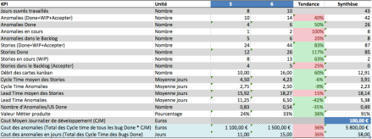
Il était une fois un projet IT en Kanban (Episode 2 – Part II) : Mesurer la performance du système avec les KPI

Il était une fois un projet IT en Kanban (Episode 2 – Part II) : Mesurer la performance du système avec les KPI | Devops for Growth | Scoop.it
Adapter les limites basses/hautes avec la loi de Little

PortfolioCT

« Comment définir les bonnes limites basses et hautes à appliquer à chaque activité d’un système kanban ? ».

Cette question m’a été posée de nombreuses fois lors de la mise en place du management visuel et lorsque j’expliquais la démarche kanban dans un cadre IT.

J’ai trouvé la réponse dans l’excellent ouvrage « Kanban pour l’IT » de Laurent Morrisseau, qui a été une grande source d’inspiration et de compréhension de la démarche kanban et de sa mise en oeuvre.

Bien que la mise en place des premières limites peut parfois sembler « arbitraire », elle est basée en fait sur des études qui disent qu’en moyenne, une personne ne peut plus être efficace si elle gère plus de 2 sujets en même temps.

Lors de la mise en place de notre système kanban, la limite haute de chaque activité a été donc définie selon la formule suivante : (Nombre d’intervenant sur l’activité * 2) – 1.

Concernant la limite basse, nous avons appliqué la formule suivante : Nombre d’intervenant sur l’activité.
No comment yet.
Scooped by Mickael Ruau
February 23, 2022 1:13 AM
Scoop.it!

08 – Estimation de charges et "contrat produit" en mode agile

08 – Estimation de charges et "contrat produit" en mode agile | Devops for Growth | Scoop.it
Les estimations - descendantes ou remontantes, composées ou décomposées - ont pour principaux objectifs de tenter de déterminer puis de justifier les coûts de réalisation, donc de conforter à divers niveaux les hypothèses de rentabilité initialement, comme par exemple les values streams dans le cartouche « 03 - Justifications économiques » traitant du lean startup et du lean canevas. Attention, je ne suis pas en train de vous expliquer qu’il est indispensable de calculer tout cela. Je vous matérialise simplement (si l’on peut dire) une partie de la complexité sous-jacente inhérente au contrôle de l’investissement dans ce type de structure. Ou bien, pour employer une métaphore contextuelle « Pour être agile à l’échelle, faites gaffe aux marches ! »
No comment yet.
Scooped by Mickael Ruau
February 23, 2022 12:56 AM
Scoop.it!

Pitch and sales - MOOC Modules Entrepreneurship

Pitch and sales - MOOC Modules Entrepreneurship | Devops for Growth | Scoop.it


You can Force people to do something for you, but you need a strong power base to do so and forcing people will not build a lasting relationship. You can Pay people to do things for you. It's nicer than forcing but it still doesn't build loyalty and you'll run out of money in no time. You can Beg or Nag people to do things for you but you can guess what that will do for your reputation and I wonder if is actually is a strategy. The last strategy is Charm. It's the only real option for starting entrepreneurs and as long as you keep your promises, charming is good for your reputation and gets things done.
No comment yet.
Scooped by Mickael Ruau
February 22, 2022 1:14 AM
Scoop.it!

Les méthodes agiles by Rtone ou comment concilier innovation et exécution de projet

Les méthodes agiles by Rtone ou comment concilier innovation et exécution de projet | Devops for Growth | Scoop.it
Comment les méthodes agiles peuvent garantir la protection de votre budget et de votre timing ? Les avantages par rapport au développement traditionnel.
Mickael Ruau's insight:


La contractualisation : vecteur de réussite du développement projet

La contractualisation permet également de capitaliser sur la réussite du produit. En effet, certains contrats tiennent davantage de la co-traitance que de la simple relation client-fournisseur. Chez Rtone, nous avons l’habitude de travailler avec des contrats 50/50 ou “stop ou encore” :


1. Le contrat 50/50

Le contrat 50/50 a un coût mensuel et un délai cible estimé pour un périmètre figé à l’avance. Si le projet finit plus tôt, les 2 parties sont gagnantes et se partagent les bénéfices. Si le projet n’est pas fini dans le délai imparti (qu’on donne avec une marge d’erreur, par exemple 8 mois, +/- 2 mois), les 2 parties ré-investissent au prorata du dépassement. Cela va encourager les équipes à finir dans les temps.


2. Le contrat "stop ou encore"

Le contrat “stop ou encore” a aussi un coût mensuel. On établit une liste de fonctionnalités envisagées et à chaque sprint, on engage une partie d'entre-elles. Pour délivrer plus, et afin de toujours rester dans une relation de satisfaction, le fournisseur doit promettre moins, pour que le contrat soit reporté de sprint en sprint. La particularité de ce contrat est que l’une ou l’autre partie peut décider ou non de stopper le projet à tout moment, et ce pour diverses raisons. Cela a un côté rassurant, car cela mise sur la satisfaction mutuelle et permet d’équilibrer les choses. Cela permet au fournisseur d’être partie prenante du projet, de travailler en véritable co-traitants.

Ainsi, équilibrer ce type de relation et faire en sorte que les intérêts soient les mêmes pour les deux parties va permettre de capitaliser sur les résultats et donner plus de force au projet. 

>> Téléchargez nos templates de contrats open-source ici


L’agilité pour s’assurer que son produit rencontre son marché

Le développement doit être entendu dans un prisme technico-économique. Un projet doit avant tout être construit autour d’un marché, mais une analyse marché seule peut s’avérer fragile. D’autre part, un produit ne peut espérer être vendu uniquement pour la nouvelle technologie qu’il embarque. Un produit trouve sa légitimité dans ce qu’il va apporter à l’utilisateur. Il ne doit pas être multifonction, mais doit surtout répondre à une problématique, par sa fonction principale.

Les méthodes agiles permettent une analyse exploratoire tout au long du développement en plaçant des mock-up et des POC plus souvent dans les mains des utilisateurs finaux. Ces tests auprès des utilisateurs vont générer des remarques et permettre de tirer des conclusions à chaque version. Ainsi, l’entreprise porteuse de projet peut s’adapter en fonction et à tout moment rectifier le chemin pris par le développement. Cette méthode représente clairement un moyen de dérisquer facilement et sainement un marché.

L’agilité a certes un coût, mais cette méthode permet réellement de donner les meilleures chances de réussite commerciale à son produit en restant toujours proche de son marché. Ce coût local va donc se récupérer sur le gain global du projet. En morcelant le projet, cette démarche itérative permet de tester et valider plus d’aspects du produit et plus souvent (à chaque version), et pas uniquement au niveau technique. On aboutit donc à un produit beaucoup plus performant aussi bien au niveau business qu’au niveau technique, et donc en totale adéquation avec les attentes marché. L’agilité brille par son efficacité. En garantissant une meilleure réussite business dans sa globalité, les méthodes agiles voient leurs coûts totalement amortis.


No comment yet.
Scooped by Mickael Ruau
February 22, 2022 1:11 AM
Scoop.it!

Agile Methodology in Retail to the Rescue | BCG

Agile Methodology in Retail to the Rescue | BCG | Devops for Growth | Scoop.it
Each company needs to decide how best to apply agile principles across this span of activities in its own organization. But in general, we see a future in which:

Integrated customer teams combine competencies (in corporate merchandising, operations, pricing, promotions, marketing, local merchandising, and analytics, for example) to streamline decision making and act as engines of success. In this model, a traditional merchant- or buyer-led organization could be replaced with department teams that are empowered to make decisions. This could enable greater accountability for a broad set of metrics and outcomes and create shared responsibility for the success of any one category or department.
Component and platform teams coordinate access to, interaction with, and return on the use of shared resources (such as web presence, physical footprint, and store space).
Expert teams and shared services provide high-value standard or bespoke services to the customer teams (such as custom research, loyalty, or data analytics).
Operators manage day-to-day execution on the ground (in the store or distribution center).

The power of agile in retail is to put all staff in a position akin to that of an old-fashioned store owner—accountable for the overall operation and focused on customer satisfaction. Our vision leverages agile to deliver on this promise without sacrificing the scale necessary to be successful in a global, competitive, digital world. Implementing an agile mindset in retail means enabling a singular focus on customer value by dividing both regular workflow and episodic tasks into pieces that deliver value to customers and then organizing teams to execute each piece. It requires deploying experts on these teams to be closer to the decision making and breaking through communication barriers to accomplish work faster and give teams greater empowerment in the process.
Getting Started

Agile is just getting started in retail. Forward-looking retailers should experiment with different degrees and applications of agile teams and principles. We suggest a four-step roadmap.

Select a lighthouse project. Choose a pilot project or projects, taking into account the following criteria:

Visibility. Consider the effect on company culture, the degree of business attention required, and the size and number of organizational stakeholders.
Business Impact. Select a mission that can have a significant effect on the business and achieve measurable progress in eight to ten weeks.
Relevance. Ensure that outcomes are relevant to the larger organization; people should be able to say, “This will work for me.”
Readiness. Make sure that the business units and functional leaders are engaged and excited.

Choose the practices and principles to implement in the lighthouse project.
No comment yet.
Scooped by Mickael Ruau
February 21, 2022 1:16 AM
Scoop.it!

What I learned from Software Engineering at Google | Swizec Teller

What I learned from Software Engineering at Google | Swizec Teller | Devops for Growth | Scoop.it
Programming is about writing code. You take a task and write code to solve it.

Software engineering is when you take that piece of code and consider:

How will this task evolve?
How will this code adapt to those changes?
What does this code encourage others to do?
How does this code encourage other programmers to use it?
How will I understand this code in 5 months?
How will a busy team member jumping around grok this?
What happens when the business becomes bigger?
When will this code stop being good enough?
How does it scale?
How does it generalize?
What hidden dependencies are there?

That's engineering � considering the long-term effects of your code. Both direct and indirect.

You always face the underlying concern of "What's the expected life span of this code?". How you approach a black friday marketing site is different from how you approach your company's payment system.
No comment yet.
Scooped by Mickael Ruau
February 21, 2022 12:41 AM
Scoop.it!

[500DISTRO] The Scientific Method: How to Design & Track Viral Growth…

Brian Balfour, VP Growth, HubSpot
No comment yet.
Scooped by Mickael Ruau
February 19, 2022 2:40 AM
Scoop.it!

Building A Growth Machine —

Building A Growth Machine — | Devops for Growth | Scoop.it
Table of Contents

AUTHENTIC GROWTH | GROWTH PRINCIPLES | GROWTH PROCESS OVERVIEW | ZOOM OUT | ZOOM IN

INTEGRATING INTO YOUR COMPANY | OPTIMIZING THE PROCESS | BUILDING YOUR GROWTH TEAM
No comment yet.
Scooped by Mickael Ruau
February 19, 2022 2:34 AM
Scoop.it!

▷ 19 canaux de traction pour votre startup

▷ 19 canaux de traction pour votre startup | Devops for Growth | Scoop.it
“Quel est votre traction?” Une question presque inévitable dans l’écosystème startup. Pour y répondre honnêtement, et comme toujours en startup, le contexte de votre business vous aidera à définir la meilleure métrique qu’il faudra mettre en avant. Preuve tangible que votre startup prend son envol, la mesure de cette métrique et son amélioration seront la preuve tangible de votr
No comment yet.
Scooped by Mickael Ruau
February 18, 2022 1:41 AM
Scoop.it!

Customer Development Methodology

Steve Blank's presentation on Customer Development. Uploaded by venturehacks.com
No comment yet.
Scooped by Mickael Ruau
February 17, 2022 1:53 AM
Scoop.it!

Good research questions - MOOC Modules Entrepreneurship

Good research questions - MOOC Modules Entrepreneurship | Devops for Growth | Scoop.it
Formulation good research questions seems to be very hard. We prefer "open dialogue" methods above questionnaires, especially when you are not sure what to ask.
No comment yet.
Scooped by Mickael Ruau
February 24, 2022 1:55 AM
Scoop.it!

Scrum Shock Therapy, Part 1

Scrum Shock Therapy, Part 1 | Devops for Growth | Scoop.it


So how does this work out? At MySpace all groups achieved exit. All, but one, improved after that. One group even achieved a whopping 1,650% improvement after just four months (16 sprints). At Jayway one of the teams used such a bootstrap technique, primarily on the technical side, and reached 800% after 3 months.

The second part of this blog can be found here: Scrum Shock Therapy, Part 2 where I will look into how to handle management and organisation with some recipes.
No comment yet.
Scooped by Mickael Ruau
February 24, 2022 1:33 AM
Scoop.it!

Comment la méthode agile fait évoluer les contrats informatiques

Comment la méthode agile fait évoluer les contrats informatiques | Devops for Growth | Scoop.it

Les méthodes agiles de développement informatique affranchissent le contrat de ses clauses traditionnelles, ce dernier devant s’adapter à une logique "terrain". Le juriste doit pouvoir établir le contrat informatique en fonction de cette nouvelle donne technique. Cette chronique de Pascal Agosti, associé du cabinet Caprioli & Associés , en pose les principes à l’occasion d’une jurisprudence récente.
Mickael Ruau's insight:

Un courant jurisprudentiel favorable
Les jurisprudences relatives à l’usage des méthodes agiles dans les projets informatiques s’étoffent au fur et à mesure. Ces dernières sont désormais reçues par les juges comme le démontrait déjà cette jurisprudence du tribunal de commerce de Nanterre du 24 juin 2016, où le client ayant opté pour une méthode agile afin de réaliser la spécification de besoin, ne peut imputée exclusivement au prestataire une responsabilité au prestataire en cas de non-conformité aux besoins exprimés en cas d’incomplétude.

D’autres sont venues renforcer les démarches collaboratives entre Client et Prestataire (en termes de devoir de conseil, de paiement des factures, ou encore de rupture abusive du contrat) au sens des différentes méthodes agiles de développement. Autant de jurisprudences qui prennent en compte leurs spécificités en disqualifiant les méthodes jusqu’alors utilisées.

Une jurisprudence du Tribunal de commerce de Paris du 7 octobre 2020 illustre cette adhésion des tribunaux. En l’espèce, un contrat était conclu entre une société spécialisée dans le marché des animaux de compagnie, et un prestataire informatique, pour la mise en place de deux applications et d’un site web. Ledit contrat est signé sans la rédaction d’un cahier des charges destiné à accompagner le projet.

Le client ayant réglé les trois acomptes correspondant à chacun des produits, relève des dysfonctionnements et indique ne plus vouloir travailler avec le prestataire. Par la suite, elle confie le développement des applications à une autre société et assigne le prestataire pour remboursement des sommes versées. Les juges prennent en compte les spécificités de la méthode agile de développement, notamment la prise en compte des besoins du client tout au long de l’évolution du projet informatique.

Ces derniers indiquent au Client que les erreurs ou les difficultés rencontrées sont liées par nature au type de méthode utilisé pour mener ce projet, et ne peuvent être caractérisées comme des défauts de conformité de la part du prestataire. En outre, ce dernier est soumis à une obligation de conseil et de mise en garde dans le cadre de l’exécution du contrat à condition que les informations données par le client permettent au prestataire d’exercer cette obligation. Les juges considérant que ce dernier a valablement respecté ses obligations, le remboursement des sommes versées ne peut être prononcé à son égard.

No comment yet.
Scooped by Mickael Ruau
February 23, 2022 1:33 AM
Scoop.it!

Travailler avec l'existant : ou comment s'en débarrasser - Agile Tou…

Les problèmes qui présentent l'existant, comment les confronter et les contourner et éventuellement s'en débarrasser Présentation présente à l'Agile Tour Paris…
No comment yet.
Scooped by Mickael Ruau
February 23, 2022 1:12 AM
Scoop.it!

Why You Should Ban Features From Roadmap Discussions | by Noa Ganot | Jan, 2022

Why You Should Ban Features From Roadmap Discussions | by Noa Ganot | Jan, 2022 | Devops for Growth | Scoop.it
Your roadmap should be much more than a list of features. Simply listing your features could be easier or even what is expected of you, but doing so will miss the whole point of why you are creating a roadmap at all. Here’s how you should be thinking about it.
Mickael Ruau's insight:
Prioritizing Without Features

This abstract MECE, outcome-based work can be applied in multiple ways, depending on the company stage and its specific challenges. However, one thing should always be there: an end goal.

You should start your roadmap efforts by defining and refining its goal. Say a roadmap is for 12 or 18 months — where do you want to be by the end of it? What would be considered a success? It’s only once you have full alignment on that that you can start planning towards it. Now, remember that we left features out of the discussion, so what should you plan exactly?

Since your end goal is not to deliver a feature but rather to deliver value or reach certain business results, your path to this goal should be expressed in the same way. To reach certain business results, say an ARR target, you need to reach interim goals along the way. It could be smaller ARR numbers that are in the path to the larger one, but it also could be softer or related goals like demonstrating viability in a new market segment, providing additional value (for example to additional personas or by supporting additional use cases), faster onboarding, reducing churn rates and so on. It could be that to meet your goals, you will need to breakthrough something that is stopping you from getting there, like brand perception, selling to smaller or larger organizations (which often has an impact on how marketing and sales work and not just on product features), or even the efficiency of how you work internally in order to keep your competitive advantage.

What about timelines? Notice that I didn’t discuss timelines at all in this article. They are left for later stages of the roadmap creation, just like features. While timeline considerations can definitely impact the final roadmap (since sometimes if something can’t happen soon enough it’s best to not do it at all), you need to initially figure out the order in which things should proceed, regardless of how long each step takes along the way.

It is at these levels that you want to find a path that makes sense. By not allowing yourself to discuss features, you are forcing yourself to find a roadmap that will help the entire organization meet the goals together because everyone will go on the same route, not just in the same general direction.

No comment yet.
Scooped by Mickael Ruau
February 22, 2022 9:29 AM
Scoop.it!

Il était une fois un projet IT en Kanban (Episode 3) : Tenez vos promesses avec la prédictibilité

Il était une fois un projet IT en Kanban (Episode 3) : Tenez vos promesses avec la prédictibilité | Devops for Growth | Scoop.it
« C’est bien votre Kanban, mais comment je fais pour planifier mon projet ? ». Cette phrase revient souvent dans la bouche des Managers, sur les projets que j’accompagne vers une transformation Agile en Kanban. Les DSI, après avoir rêvées devant les bénéfices de l’Agilité, ont maintenant besoins de résultats tangibles et pérennes auxquels les…
No comment yet.
Scooped by Mickael Ruau
February 22, 2022 1:13 AM
Scoop.it!

The Agile Marketing Organization

The Agile Marketing Organization | Devops for Growth | Scoop.it
To increase their agility, chief marketing officers require very different capabilities and structures than were needed in the past.
Mickael Ruau's insight:

Centralize the Right Activities. Many companies are seeking to centralize functions so that they can put in place better controls and create greater efficiencies. But they often are not strategic enough about what they centralize. In our study, we found that many companies are leaving savings on the table by not centralizing thoughtfully: they are missing out on creating economies of scale and are unable to take full advantage of best practices. (See Exhibit 2.)

No comment yet.
Scooped by Mickael Ruau
February 21, 2022 1:18 PM
Scoop.it!

Le proces la métamorphose vers l'avenir - exploration des conflits …

Un regard sur les conflits existentiels dans le monde de l'informatique, de l'individuel aux processus
No comment yet.
Scooped by Mickael Ruau
February 21, 2022 12:54 AM
Scoop.it!

Agile Contract Manifesto - Agile Contract Manifesto

Agile Contract Manifesto - Agile Contract Manifesto | Devops for Growth | Scoop.it
Agile Contract Manifesto We are uncovering better ways of aligning contracts with agile collaboration by doing it and helping others to do it. Through our work we have come to value: 01 Tangible outcomes more than specified deliverables 02 Clarity and simplicity more than complexity and completeness 03 Adaptive partnerships more than static relationship
No comment yet.
Scooped by Mickael Ruau
February 19, 2022 2:59 AM
Scoop.it!

From 0 to Exit in 18 Months With a Side Project

From 0 to Exit in 18 Months With a Side Project | Devops for Growth | Scoop.it
In this article, I want to discuss how we managed to go from 0 to a successful exit of one our SaaS projects.
No comment yet.
Scooped by Mickael Ruau
February 19, 2022 2:35 AM
Scoop.it!

Pitch deck startup - présenter la traction commerciale

Pitch deck startup - présenter la traction commerciale | Devops for Growth | Scoop.it
La traction commerciale représente un élément déclencheur de la levée de fonds. Pour réussir votre pitch deck, voici tout ce qu'il faut savoir sur le sujet
No comment yet.
Scooped by Mickael Ruau
February 18, 2022 11:13 AM
Scoop.it!

An MVP is not a Cheaper Product, It’s about Smart Learning

An MVP is not a Cheaper Product, It’s about Smart Learning | Devops for Growth | Scoop.it
A minimum viable product (MVP) is not always a smaller/cheaper version of your final product. Defining the goal for a MVP can save you tons of time, money and grief.
Mickael Ruau's insight:

This team got my attention when they said, “Let us tell you about our conversations with potential customers.”  I listened, and as they described their customer interviews, it seemed like they had found, that – yes, farmers do understand that not being able to see what was going on in detail on their fields was a problem – and yes, – having data like this would be great – in theory.

So the team decided that this felt like a real business they wanted to build.  And now they were out raising money to build a prototype minimum viable product (MVP.) All good. Smart team, real domain experts in hyper-spectral imaging, drone design, good start on customer discovery, beginning to think about product/market fit, etc.

Lean is Not an Engineering Process
They showed me their goals and budget for their next step. What they wanted was a happy early customer who recognized the value of their data and is willing to be an evangelist. Great goal.

They concluded that the only way to get a delighted early customer was to build a minimum viable product (MVP). They believed that the MVP needed to, 1) demonstrate a drone flight, 2) make sure their software could stitch together all the images of a field, and then 3) present the data to the farmer in a way he could use it.

And they logically concluded that the way to do this was to buy a drone, buy a hyper-spectral camera, buy the software for image processing, spend months of engineering time integrating the camera, platform and software together, etc  They showed me their barebones budget for doing all this. Logical.

And wrong.

No comment yet.
Scooped by Mickael Ruau
February 18, 2022 1:11 AM
Scoop.it!

rédiger un contrat au forfait sur un projet Agile –

rédiger un contrat au forfait sur un projet Agile – | Devops for Growth | Scoop.it
Comment rédigez-vous un contrat au forfait sur une proposition Agile embryonnaire ? Ce n'est pas aussi difficile que certains le font paraître mais cela implique un vrai changement de mentalité et un exercice d’apprentissage pour tout un chacun. Clairement définir "fait" (« done »), évaluer des histoires et comprendre la vélocité sont clés à la…
Mickael Ruau's insight:

Le temps et les coûts dans un contrat au forfait sont raisonnablement faciles à définir et pour Agile l’approche itérative a durée contrainte est très facile à définir. Ceci nous laisse donc seulement avec le problème du contenu/portée/périmètre. Comment pourrions-nous fixer les livrables sans étrangler la méthodologie Agile que nous suivons si fièrement ? Le problème était de changer le concept de contenu en un budget.

Définition de l’élément « contenu » du Contrat

La toute première étape était de collecter les besoins des utilisateurs sous forme d’un arriéré de produit en utilisant des histoires utilisateur pour détailler les attentes des clients. Nous utilisons alors cet arriéré de produit pour prioriser puis évaluer les fonctionnalités en utilisant des techniques d’estimation de groupe comme le « Planning Poker » et donner des valeurs sous forme de points d’histoire « Story Points ».

En allant plus loin dans ce processus nous passons 1 à 2 jours à définir :

No comment yet.