


We now have the ability to screen for thousands of genetic diseases in newborns. That may not always be the healthy thing to do.


 Your new post is loading...
 Scoop.it! We now have the ability to screen for thousands of genetic diseases in newborns. That may not always be the healthy thing to do. 
No comment yet.
Sign up to comment
Scoop.it!

Adrenoleukodystrophy (ALD) is a rare X-linked disease caused by a mutation of the peroxisomal ABCD1 gene. This review summarizes our current understan…
Scoop.it!
To test, in a newborn screening (NBS) laboratory, the performance of liquid chromatography-tandem mass spectrometry (LC-MS/MS) to assay 5 enzymatic ac…
Scoop.it!

/PRNewswire/ -- Pediatric genetic expert Dr. Melissa Wasserstein has been awarded $3.2 million from the National Institutes of Health (NIH) to conduct th
Scoop.it!

Severe combined immunodeficiency (SCID), the most severe form of T-cell immunodeficiency, can be screened at birth by quantifying T-cell receptor excision circles (TRECs) in dried blood spot (DBS) samples. Early detection of this condition speeds up th
Scoop.it!

Newborn screening (NBS) programs for treatable metabolic disorders have been enormously successful, but molecular-based screening has not been broadly…
Scoop.it!
Some success in identifying acyl-CoA dehydrogenase (ACAD) deficiencies before they are symptomatic has been achieved through tandem mass spectrometry. However, there has been several challenges that need to be confronted, including excess false positives, the occasional false negatives and indicators selection. To select ideal indicators and evaluate their performance for identifying ACAD deficiencies, data from 352,119 newborn babies, containing 20 cases, were used in this retrospective study. A total of three new ratios, C4/C5DC+C6-OH, C8/C14:1, and C14:1/C16-OH, were selected from 43 metabolites. Around 903 ratios derived from pairwise combinations of all metabolites via multivariate logistic regression analysis were used. In the current study, the regression analysis was performed to identify short chain acyl-CoA dehydrogenase (SCAD) deficiency, medium chain acyl-CoA dehydrogenase (MCAD) deficiency, and very long chain acyl-CoA dehydrogenase (VLCAD) deficiency. In both model-building and testing data, the C4/C5DC+C6-OH, C8/C14:1 and C14:1/C16-OH were found to be better indicators for SCAD, MCAD and VLCAD deficiencies, respectively, compared to [C4, (C4, C4/C2)], [C8, (C6, C8, C8/C2, C4DC+C5-OH/C8:1)], and [C14:1, (C14:1, C14:1/C16, C14:1/C2)], respectively. In addition, 22 mutations, including 5 novel mutations and 17 reported mutations, in ACADS, ACADM, and ACADL genes were detected in 20 infants with ACAD deficiency by using high-thorough sequencing based on targe
Scoop.it!

Despite the public health successes of newborn bloodspot screening, uncertainty associated with variant forms of primary screening targets has led to discrepancies in medical management. This study explored health-care providers’ approaches to managing atypical forms of inherited metabolic diseases (IMDs) in the absence of evidence-based guidelines. Semistructured telephone interviews were conducted with metabolic specialists. 3-Methylcrotonyl CoA deficiency and variant forms of phenylketonuria, biotinidase deficiency, and fatty acid oxidation disorders were considered. Data were analyzed inductively and deductively using a novel taxonomy of uncertainty. Health-care providers (n = 12) navigate diagnostic, prognostic, and therapeutic challenges of uncertainty while interpreting patient and family attitudes, preferences, and ideas in the care of children with these result types. Participants explained the limits of classifying mild and atypical metabolic phenotypes. Participants also described the challenge of finding balance between cautious care and overmedicalization. Developing consistent care plans and honest communication with families were perceived as effective strategies when navigating uncertainty. Providers’ experiences suggest a need for transparent and accessible guidelines that account for challenges associated with uncertainty generated by screening. Timely consideration of this challenge is warranted with increasing emergence of genotype-first approaches to screening.
Scoop.it!

To evaluate a systematic newborn screening (NBS) strategy for vitamin B12 deficiency.In a prospective single-center NBS study, a systematic screening …
Scoop.it!
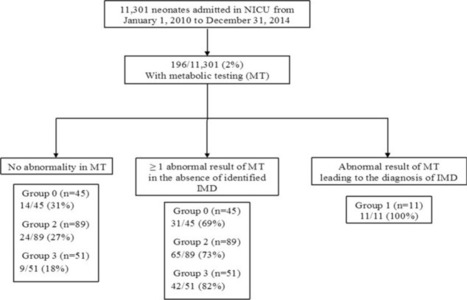
Inherited metabolic disorders (IMDs) in neonates are a diagnostic and therapeutic challenge for the neonatologist, with the priority being to rapidly flag the treatable diseases. The objective of this study was to evaluate the contribution of targete
Scoop.it!

This Special Communication discusses challenges to implementing newborn screening for neuromuscular diseases and how overcoming those challenges can maximize the potential of newly available life-saving therapies.
|
Scoop.it!
Purpose of reviewAdrenoleukodystrophy (ALD) is a peroxisomal disorder with varying clinical presentations, including adrenal insufficiency, neurologic disease, and testicular dysfunction. The present review is intended to describe the current knowledge of the pathophysiology of ALD and provide an up
Scoop.it!
Background: Ataxia Telangiectasia (A-T) is a severe DNA repair disorder that leads to a broad range of symptoms including neurodegeneration and a variable immunodeficiency. A-T is one of the incidental findings that accompanies newborn screening (NBS
Scoop.it!

Mucopolysaccharidoses (MPSs) are lysosomal storage disorders caused by deficiencies of enzymes involved in the catabolism of glycosaminoglycans (GAGs). Various treatments such as enzyme replacement therapy and/or hematopoietic stem cell transplant are available for MPSs. Early initiation of treatment improves the outcome and delays the onset of symptoms, highlighting the need for newborn screening for MPSs. The main objective of this project was to devise and validate a multiplex urine filter paper method for GAG analysis using a tandem mass spectrometry (MS/MS) approach to screen newborns for MPSs. Eluted urine samples from 21-day-old newborns were evaporated and a methanolysis reaction was performed. Samples were resuspended and analyzed using a UPLC-MS/MS system. A one-minute chromatographic method allowed the absolute quantification of heparan sulfate (HS), dermatan sulfate (DS), and creatinine. Method validation revealed high precision (< 9% relative standard deviation) and accuracy (< 7% bias) for all analytes. The reference values normalized to creatinine obtained by the analysis of five hundred 21-day-old newborn urine samples were 34.6 +/-6.2 mg/mmol of creatinine and 17.3 +/-3.9 mg/mmol of creatinine for HS and DS, respectively. We present a rapid and efficient method for populational newborn urine screening using MS/MS, which could also be applied to high-risk screening.
Scoop.it!
Abstract. During the last two decades, neonatal screening in Europe and North America has expanded substantially. This article examines two recent suggestions
Scoop.it!

News and updates from the Public Health England screening programmes
Scoop.it!
Newborn screening (NBS) for cystic fibrosis (CF) not only identifies infants with a diagnosis of CF, but also those with an uncertain diagnosis of cystic fibrosis (CF), i.e. CF transmembrane conductance regulator (CFTR)-related metabolic syndrome (CRMS) or CF screen positive inconclusive diagnosis (CFSPID). These infants have an uncertain long-term outcome and it is currently unclear around time of diagnosis, which infants are at higher risk of later fulfilling a CF diagnosis. In this study, we hypothesised that immunoreactive trypsinogen (IRT) levels, used in NBS as a marker of pancreatic disease and function, may reflect the degree of CFTR dysfunction in each individual and therefore would help to identify those with CRMS/CSPID who are later at risk for meeting the criteria of CF.
Scoop.it!
Patients with severe combined immunodeficiency (SCID) are born with profound deficiency of functional T-lymphocytes. Early detection and diagnosis would allow for prompt institution of isolation from infection and referral for definitive treatment with allogeneic hematopoietic stem cell transplantation. Universal newborn screening for SCID, using an assay to detect T-cell receptor excision circles (TREC) in dried blood spots (DBS), is now being performed in all states in the United States. In this review, we discuss the development and outcomes of TREC screening, and continued challenges to implementation.
Scoop.it!
To evaluate the implementation of the first statewide newborn screening (NBS) program for spinal muscular atrophy (SMA) in Australia. Processes that hinder and support clinical development, translation, and sustainability of the first primary genetic screening program in Australia are appraised. The study prospectively describes the course (timelines, health processes, and preliminary clinical outcomes) for SMA screen-positive newborns from 1 August 2018 to 31 July 2019 in New South Wales and Australian Capital Territory, Australia. In the first year of the program, 103,903 newborns were screened. Ten newborns screened positive for SMA. Genetic confirmation of SMA occurred in 9/10 (90%) of infants. Clinical signs of SMA evolved in 4/9 (44%) within 4 weeks of life, heralded by hypotonia and weakness initially recognized in the neck. Median time to implementing a care plan (including commencement of disease-modifying therapies) was 26.5 days (16–37 days) from birth. NBS is essential for early and equitable identification of patients with SMA. Expedient diagnosis and management are vital, as disease latency appears brief in some cases. NBS shows significant clinical utility to support early parental decision making, improve access to specialist neuromuscular expertise, and facilitate initiation of personalized therapeutic strategies.
Scoop.it!

Abstract
Scoop.it!

International Journal of Neonatal Screening, an international, peer-reviewed Open Access journal. Table of ContentsArticle: Newborn Screening Long Term Follow-Up in the Medical Home Deborah Badawi, Katharine Bisordi, Marilyn J. Timmel, Scott Sorongon and Erin Strovel Int. J. Neonatal Screen. 2019, 5(3), 25; doi:10.3390/ijns5030025 Anne Timonen, Michele Lloyd-Puryear, David M. Hougaard, Liisa Meriö, Pauliina Mäkinen, Ville Laitala, Tuukka Pölönen, Kristin Skogstrand, Annie Kennedy, Sari Airenne, Hanna Polari and Teemu Korpimäki Int. J. Neonatal Screen. 2019, 5(3), 27; doi:10.3390/ijns5030027 Article: A Cost-Effectiveness Analysis of Newborn Screening for Severe Combined Immunodeficiency in the UK Alice Bessey, James Chilcott, Joanna Leaviss, Carmen de la Cruz and Ruth Wong Int. J. Neonatal Screen. 2019, 5(3), 28; doi:10.3390/ijns5030028 Mamatha Ramaswamy, Victor Anthony Skrinska, Rola Fayez Mitri and Ghassan Abdoh Int. J. Neonatal Screen. 2019, 5(3), 29; doi:10.3390/ijns5030029 Catherine Coppinger and Robyn O’Loughlin Int. J. Neonatal Screen. 2019, 5(3), 30; doi:10.3390/ijns5030030 Marven El Osta, Pierre Naubourg, Olivier Grunewald, Gilles Renom, Patrick Ducoroy and Jean Marc Périni Int. J. Neonatal Screen. 2019, 5(3), 31; doi:10.3390/ijns5030031 Ilham Sadik, Inmaculada Pérez de Algaba, Rocío Jiménez, Carmen Benito, Javier Blasco-Alonso, Pilar Caro, Víctor M. Navas-López, Javier Pérez-Frías, Estela Pérez, Juliana Serrano and Raquel Yahyaoui Int. J. Neonatal Screen. 2019, 5(3), 32; doi:10.3390/ijns5030032 Eric R. Bialk, Michael R. Lasarev and Patrice K. Held Int. J. Neonatal Screen. 2019, 5(3), 33; doi:10.3390/ijns5030033 Article: Development of National Newborn Screening Quality Indicators in the United States Careema Yusuf, Marci K. Sontag, Joshua Miller, Yvonne Kellar-Guenther, Sarah McKasson, Scott Shone, Sikha Singh and Jelili Ojodu Int. J. Neonatal Screen. 2019, 5(3), 34; doi:10.3390/ijns5030034 Article: Factors Influencing Parental Awareness about Newborn Screening Věra Franková, Alena Dohnalová, Karolína Pešková, Renata Hermánková, Riona O’Driscoll, Pavel Ješina and Viktor Kožich Int. J. Neonatal Screen. 2019, 5(3), 35; doi:10.3390/ijns5030035 Meeting Report: Screening Pathways through China, the Asia Pacific Region, the World Veronica Wiley, Dianne Webster and Gerard Loeber Int. J. Neonatal Screen. 2019, 5(3), 26; doi:10.3390/ijns5030026
Scoop.it!

This study’s objective was to assess, on a national scale, residual risks of death, major disease-related events, and quality of care during the first five years in children diagnosed at birth with sickle cell disease (SCD). Data were retrospectively collected from medical files of all children with SCD born between 2006–2010 in France. Out of 1792 eligible subjects, 1620 patients (71.8% SS or S/beta°-thalassemia -SB°-) had available follow-up data, across 69 centers. Overall probability of survival by five years was 98.9%, with 12/18 deaths related to SCD. Probability of overt stroke by five years in SS/SB° patients was 1.1%, while transcranial Doppler (TCD) was performed in 81% before three years of age. A total of 26 patients had meningitis/septicemia (pneumococcal in eight cases). Prophylactic penicillin was started at a median age of 2.2 months and 87% of children had received appropriate conjugate pneumococcal vaccination at one year. By five years, the probability of survival without SCD-related events was 10.7% for SS/SB° patients. In contrast, hydroxyurea was prescribed in 13.7% and bone marrow transplant performed in nine patients only. In this study, residual risks of severe complications were low, probably resulting from a good national TCD, vaccination, and healthcare system coverage. Nonetheless, burden of disease remained high, stressing the need for disease-modifying or curative therapy.
|





