Sabotage by divers may have disastrous consequences. In California, the Port of Long Beach (PoLB) has chosen the C-Scope underwater surveillance system from Kongsberg to compile the full above and underwater picture.PoLB is one of the most...
L’été dernier, le ministère danois de la Défense avait lancé la compétition pour trouver un remplaçant à son blindé de transport de troupe M113, entré en service dans les années 1960. Les besoins ont été estimés entre 206 et 450 véhicules, la cible la plus probable étant de 360 engins, déclinés en 6 versions différentes.
La particularité de cet appel d’offres danois est qu’il est ouvert aussi bien aux véhicules à roues qu’à chenilles. Comme quoi, même à Copenhague, il y a des débats qui restent difficiles à trancher.
Quoi qu’il en soit, le ministère de la Défense vient de rendre public les industriels retenus pour la dernière phase de la compétition. Pour les véhicules chenillés, le CV-90 Armadillo de BAE Systems Hagglunds, l’ASCOD de General Dynamics European Land System et le G5 de FFG Flensburger ont été retenus.
Concernant les véhicules à roues, seulement deux industriels ont passé la première étape : Mowag/General Dynamics avec le Piranha 5 et le Véhicule Blindé de Combat d’Infanterie (VBCI) de Nexter. Exit donc l’ARTEC Boxer et le Patria AMV.
Les cinq blindés encore en lice devraient être évalués dans les mois à venir, voire même d’ici quelques semaines. Le vainqueur final devrait être connu en 2014. A moins qu’il y en ait deux, si jamais le Danemark décide de couper la poire en deux entre les deux types de véhicules.
The United Arab Emirates (UAE) Air Force is to take delivery of Guided Precision Aerial Delivery Systems (GPADS), together with a comprehensive training programme, from Airborne Systems. The company announced in an 11 February statement that the purchase confirms the UAE Air Force as Airborne Systems’ largest GPADS customer in the Middle East.
According to the company the DragonFly, FireFly and one-time use FlyClops for use with C130J and C17 aircrafts will be delivered to the UAE. The three systems purchased by the UAE support an operational payload range from 700 – 10,000 lb (317– 4,550 kg).
The GPADS consists of high performance, lightweight ram-air canopies, also known as gliding parachutes, and rugged Airborne Guidance Units loaded with robust autonomous navigation software. Combined with jTrax mission planning software, the system provides precise payload delivery to troops on the ground.
Depending on weather conditions, GPADS can be dispatched from the aircraft over 20km from the landing area. The system only requires the impact coordinates to provide precision cargo delivery from high altitude.
JC Berland, executive VP of technology & strategy, said: ‘Airborne Systems’ GPADS will enable high altitude accurate resupply of UAE distributed operations with reduced risk to air crews.’
La prochaine visite du président russe en Afrique du Sud, prévue fin mars, débouchera sur la signature de nombreux accords bilatéraux, a déclaré le ministre russe des Affaires étrangères Sergueï Lavrov à l'issue d'entretiens avec son homologue...
The Boeing Company and Elbit Systems have entered a cooperation agreement to jointly develop self-defense solutions for Boeing military aircraft in international markets.
Military Sealift Command (MSC) accepted delivery of the Navy's first joint high-speed vessel at Austal Shipyard in Mobile, Ala., Dec. 5 2012. USNS Spearhead ...
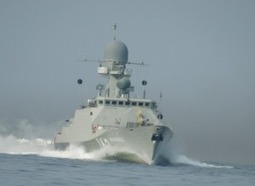
Stealth corvette Makhachkala is commissioned into Caspian Flotilla as reported by South Military Command official. Recall, acceptance certificate of third Project 21630 corvette Makhachkala built for Russian Navy took place on December 4, 2012 at the Almaz Shipbuilding Firm (St. Petersburg). After a certain delay in delivery of the 100-mm gun mount, the ship had successfully passed all sea and state trials in Oct 2012. The ship was laid down in March 2006 and launched in April 2012. The ship's project was developed by JSC Zelenodolsk Design Bureau (Tatarstan, Russia) and is designed for protection of 200-mile economic zone. The 'river-sea' class ship displaces 570 tons; max speed is 26 knots; the ship is equipped with various types of up-to-date artillery systems.
Makhachkala (hull number 163) is a Project 21630 Buyan 'river-sea' class corvette designed for reinforcement of Caspian Flotilla in littoral sea and river zone. CONSTRUCTION
Corvette Makhachkala is the third and the last Project 21630 Buyan ship built by the Almaz Shipbuilding Firm for Russian Navy. The ship was laid down in March 2006 and launched in April 2012. After a certain delay in delivery of the 100-mm gun mount, corvette Makhachkala finished state trials in October 2012. MILESTONES
Acceptance certificate was signed at the Almaz Shipbuilding Firm on December 4, 2012. PERFORMANCE
Speed: 28 knots Operational range: up to 1,500 nautical miles Crew: 29-36 men DIMENSIONS
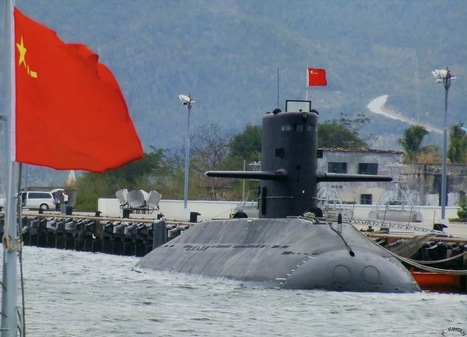
Over the last five years Chinese submarines have been going to sea a lot more, at least the diesel-electric boats have been. This is worrying to other nations in the region, and the U.S. Navy, because it means China is training its submarine crews for war. Previously the Chinese kept their fleet in port most of the time. This was cheaper although in wartime it meant that Chinese warships would not last long in combat against a better trained fleet (like the Americans, or Japanese or South Koreans or Taiwanese.) Now the Chinese are building better quality subs, and feel they may have a fighting chance, if they have better prepared crews as well.
For China, one downside of all this training is that the U.S. Navy has more opportunity to practice hunting Chinese subs. This is particularly true for American subs, which are well equipped with passive (listen only) sonar and are even more effective if they have a lot of sound samples for enemy subs operating underwater or on the surface. The U.S. has discovered that Chinese diesel-electric boats are rapidly getting quieter, apparently because the Chinese have learned more about advanced techniques for “silencing” subs. Still, most of the 60 Chinese subs in service are pretty noisy and easy to find.
Meanwhile the Chinese Navy has been designing and building a rapidly evolving collection of "Song" (Type 39) class diesel-electric submarines that emphasize quietness. The changes have been so great that the latest four Songs have been called Yuan class (Type 39A or Type 41). The original design (Type 39) first appeared in 2001, and 13 have been built. But in 2008, a noticeably different Type 39 appeared. This has been called Type 39A or Type 41. Two of these Type 39As appeared before two of another variant, sometimes called Type 39B, showed up. The evolution continues and there are now six or seven "Type 41 Yuan Class" subs (of at least three distinct models). These latest models appear to have AIP (air independent propulsion system) along with new electronics and other internal improvements.
This rapid evolution of the Type 39 appears to be another example of China adapting Russian submarine technology to Chinese design ideas and new technology. China has been doing this for as long as it has been building subs (since the 1960s). But this latest version of what appears to be the Type 41 design shows Chinese naval engineers getting more creative. Two or more Yuans are believed to have an AIP that would allow them to cruise underwater longer. Western AIP systems allow subs to stay under water for two weeks or more. The Chinese AIP has less power and reliability and does not appear to be nearly as capable as Russian or Western models. The Chinese will keep improving on their AIP, just as they have done with so much other military technology.
The Songs look a lot like the Russian Kilo class and that was apparently no accident. The 39s and 41s are both 1,800 ton boats with crews of 60 sailors and six torpedo tubes. This is very similar to the Kilos (which are a bit larger). China began ordering Russian Kilo class subs, then one of the latest diesel-electric designs available, in the late 1990s. The first two Type 41s appeared to be a copy of the early model Kilo (the model 877), while the second pair of Type 41s appeared to copy the late Kilos (model 636). The latest Yuans still appear like Kilos but may be part of an evolution into a sub that is similar to the Russian successor to the Kilo, the Lada. The Type 39s were the first Chinese subs to have the teardrop shaped hull. The Type 41 was thought to be just an improved Song but on closer examination, especially by the Russians, it looked like a clone of the Kilos. The Russians now believe that the entire Song/Yuan project is part of a long-range plan to successfully copy the Kilo. If that is the case, it appears to be succeeding.
China currently has 13 Song class, 12 Kilo class, seven Yuan class and 18 Ming (improved Russian Romeo) class boats. There are only three Han class SSNs, as the Chinese are still having a lot of problems with nuclear power in subs. Despite that, the Hans are going to sea, even though they are noisy and easily detected by Western sensors. Five Hans were built (between 1974 and 1991) but two have already been retired. There are four newer Shang class SSNs in service, but these are still pretty noisy. The Song/Yuan class subs are meant to replace the elderly Mings.
KAKARAN (Afghanistan) - Des dizaines de villageois ont pris les armes contre les talibans près de Kandahar, le bastion historique des rebelles, après plusieurs soulèvements similaires dans d'autres parties de l'Afghanistan, a-t-on appris auprès de la police et de participants.
De telles manifestations peuvent toutefois être instrumentalisées par des potentats locaux, soucieux de restaurer leur autorité avant le départ des troupes internationales à la fin 2014, ou par le gouvernement, avertissent des analystes.
Le soulèvement survenu dans la province de Kandahar (sud) est l'oeuvre de Haji Abdul Udood, un chef tribal du district de Panjwaji, ulcéré par les menaces de mort des insurgés contre l'un de ses fils qui a rejoint la police locale (ALP), une force financée par les Etats-Unis.
Nous avons pris les armes, mes huit fils et moi et nous avons dit aux talibans que nous les combattrions. Trois autres villageois, qui avaient perdu des membres de leur famille sous des bombes des talibans, nous ont rejoint. D'autres ont suivi, a-t-il raconté à l'AFP.
Un jour, j'allais dans mon verger. Un taliban posait une mine juste devant l'entrée. Je lui ai dit que c'était mon jardin, que cela pouvait me tuer. On m'a insulté, giflé. Maintenant, j'ai un fusil. Je vais les tuer ou les chasser de mon village, a expliqué Allah Dad, 35 ans, un autre habitant révolté, à l'AFP.
Au total, une soixantaine d'hommes, lassés des atrocités commises par les talibans, et notamment de leurs bombes artisanales, qui tuent bien plus de civils que de militaires, ont rejoint les rangs des révoltés en à peine deux jours, a expliqué M. Udood depuis Kakaran, un village situé à 10 km de Kandahar.
Dimanche soir, soutenus par la police, ils ont tué trois insurgés et ont contraint des dizaines d'autres à fuir, ont expliqué le chef tribal, une source policière locale et le général Abdul Raziq, chef de la police pour la province de Kandahar.
A l'heure qu'il est, nous entraînons les villageois. Nous leur avons fourni des armes et des munitions. Nous les soutenons, a déclaré le général Raziq à l'AFP, ajoutant que les jeunes révoltés seraient ensuite intégrés à l'ALP, une force destinée à combattre la rébellion dans les zones rurales.
D'autres soulèvements du genre, soutenus par Kaboul, se sont produits l'été dernier dans des provinces plus proches de Kaboul.
Après onze années de présence internationale, pour soutenir des soldats et policiers afghans, la rébellion menée par les talibans n'a toujours pas été vaincue. La grande majorité des forces de l'Otan quitteront l'Afghanistan à la fin 2014. Nombre d'Afghans craignent le pire une fois le retrait achevé.
Ces derniers mois, il y a eu 60 mines qui ont explosé dans notre village. Toutes ont touché des civils, a observé un habitant de Kakaran, qui a requis l'anonymat. Nous ne voulons pas cela. Les talibans nous tuent, pas les militaires, a poursuivi l'homme, qui se dit âgé de 35 ans.
En mars 2012, le district du Panjwaji a été le théâtre d'un massacre commis par le sergent américain Robert Bales, qui lors d'une marche nocturne macabre, a tué 16 villageois et brûlé certains des corps. La justice militaire américaine a requis la peine de mort contre lui.
The Russian air force command has composed a letter outlining its complaints about the progress of the Antonov An-70 transport, and has also prepared...
Russian aircraft manufacturer IRKUT has made a case for the Yak-130 advanced combat trainer to be a part of the Indian Air Force (IAF) fleet. The aircraft which has been inducted into the Russian Air Force to offer both basic and advanced jet training for fourth and fifth generation fighter aircraft is considered a good fit for the MiG-29, SU-30 MKI, the Rafale MMRCA and the potential acquisition of the PAK-FA fifth generation fighter.
During the course of a press conference at Aero India 2013, Vitaly Borodich, Senior Vice-President (Military- Aviation) of IRKUT said that the Yak-130 can be used both as a trainer and as combat jet when the need arises. Unlike the Hawk-100 which India has ordered from BAE Systems which is more than 15 years old in design terms, the Yak-130 was developed in the late 1990s and early 2000s.
India has ordered a total of 111 Hawk 100 trainers and in mid-1012 issued a request for proposal for 20 additional Hawk jets to equip the IAF’s aerobatics team, ‘Surya Kiran’. The total value of the Hawk-100 orders is over US$2 billion. IRKUT would surely bid with the Yak-130 should India announce a second round of tendering for combat trainers.
IRKUT pins its hopes on the fact that the Yak-130 is more versatile than the Hawk 100- it can be used as a combat jet and can mimic the flying the characteristics of several front-line fighters- both Russian and western such as the Rafale MMRCA which India has ordered from Dassault. The Hawk -132 (a variant of the Hawk-100 ordered by India) is known only to offer training for prominent western fighters such as the Eurofighter Typhoon and Lockheed Martin F-16 and F-35.
Aside as a trainer, the Yak-130 can be used as a light combat and reconnaissance plane. It is a highly manoeuvrable aircraft with an extended range of about 2,000 kilometers and a maximum speed of 1,060 km in level flight. It can carry a combat payload of up to 3,000 kilograms consisting of fire-and-forget and guided weapons.
The Yak-130 has been ordered by Bangladesh and talks are afoot with Malaysia and Vietnam to buy the Yak-130. It is also a competitor in a tender for delivery of six light fighter jets to the Philippines to replace retired U.S.-built Northrop F-5A Tiger fighters. IRKUT Corp. sees a potential market of 2500 planes over the next 10-15 years for the Yak-130.
L’US Navy a décidé de ne pas remplacer ses sous-marins nucléaires lanceurs de missiles de croisière (SSGN).
L’US Navy a récemment retirés les 4 sous-marins nucléaires lanceurs de missiles de croisière de la liste des bâtiments de combat dont elle a « actuellement besoin ». Les 4 sous-marins — USS Ohio, USS Michigan, USS Florida et USS Georgia — continueront de naviguer jusqu’à l’épuisement de leur combustible nucléaire au milieu des années 2020, a expliqué un porte-parole de l’US Navy, le Lt. Courtney Hillson. Aucun sous-marin de remplacement ne sera construit.
Les sous-marins avaient été inscrits en 2010 dans l’édition 2010 d’un document intitulé “Structure des Forces des Bâtiments de combat de l’US Navy”. Mais ils ont été retirés de la version mise à jour de ce document, publiée la semaine dernière. Cette version diminue le nombre minimal de bâtiments nécessaires à l’US Navy de 313 à 306. Ils sont actuellement 282.
Le rapport explique que, si la Navy déterminait qu’elle avait besoin des missions accomplies par les SSGN, elle équiperait ses SNA d’une capacité de frappe accrue. Elle a déjà envisagé d’ajouter des tubes de lancement supplémentaires aux futurs sous-marins de la classe Virginia pour compenser la perte des SSGN.
« Avec leur capacité importante de frappe et de guerre irrégulière, ces SSGN contribuent de façon importante aux capacités de combat de l’US Navy, » explique le plan de construction. Mais à cause des couts de construction de 12 nouveaux SNLE, la Navy ne peut se permettre de les remplacer.
ATK Rocket Motors Support Sustainment of AIM-9P Missiles Production of ATK's AIM-9P Rocket Motors to be Performed at Allegany Ballistics Laboratory (ABL) in Rocket Center, W. Va. ARLINGTON, Va., Feb.
The Royal New Zealand Air Force's fleet of NH Industries NH90 medium utility helicopters has cleared the first phase of operational testing and evaluation...
Le 2 février dernier, le président iranien, Mahmoud Ahmadinejad présentait le Qaher-313, un avion furtif figurant parmi “les plus avancés du monde” et “conçu et réalisé par les ingénieurs iraniens.” Et d’ajouter que cet appareil avait déjà effectué “des milliers d’heures de vol”.
De son côté, le ministre iranien de la Défense, Ahmad Vahidi, a précisé que le Qaher-313 avait été construit avec “des matériaux modernes” (faisait-il référence au coet qu’il disposait d’une “avionique avancée.”
Il suffit de regarder attentivement les photographies de l’appareil largement diffusées à l’issue de sa présention pour avoir de gros doutes sur la véracité des déclarations iraniennes.
La verrière du cockpit semble être en plexiglas, les entrées d’air ont des dimensions étonnamment réduites de même que la taille du moteur, lequel serait le plus petit jamais imaginé pour un avion de combat. Par conséquent, il est peu probable que le Qaher-313 puisse disposer de la post-combustion. Et puis que dire d’un avion dont le pilote aurait pratiquement les genoux sous le menton?
Quoi qu’il en soit, si une vidéo de mauvaise qualité censée montrer le Qaher-313 en vol a été diffusée, l’on n’a vu aucune image de cet appareil en train de décoller ou d’atterrir. Du moins pour le moment.
Cela étant, des médias iraniens ont montré le Qaher-313 en vol. Et là, l’on se dit que finalement, c’est bel et bien un avion révolutionnaire car c’est le seul à pouvoir voler avec les rubans “Remove before flight”… En fait, l’image diffusée n’est qu’un photomontage, au demeurant bien réussi. Si ce n’est quelques détails oubliés.
Les auteurs de cette mystification ont pris ajouté à une photographie du mont Damavand un cliché du Qaher-313 pris lors de sa présentation officielle. Quelques éléments y ont été ajoutés, comme le pilote (le principal quand même) et un arceau sur la verrière du cockpit, qui est cette fois teintée. Bref, c’était quand même bien tenté.
Shortly after 5PM today, the Indian government announced that it had asked the Central Bureau of Investigation (CBI), which reports to the Ministry of Home Affairs, to conduct a full investigation into the allegations of corruption and payment of illegal commissions by AgustaWestland in the 2010 AW101 VVIP copter deal. Here's the MoD's full statement:
Operational testers at Edwards AFB, California, are expected to receive their first Lockheed Martin F-35A Joint Strike Fighters (JSF) on 21 February....
As India’s newest trainer aircraft, the Pilatus PC-7 Mark-II, made its first maiden landing at Aero India 2013 in Bangalore, India everyone including the defense minister wanted a closer look.
Unfortunately for Defense Minister AK Antony, who arrived at the air show dressed in traditional clothing, climbing into the jet became quite a task. Antony had to be helped into the jet by several IAF members including Chief of Air Staff, Air marshal N.A.K. Browne.
Antony (72) was seen relying heavily on members of his security crew as he made his way out of the cockpit.
Meanwhile, India will begin inducting 75 Basic Trainer Aircraft from 2013 with the last delivery to be concluded in 2015.
To get content containing either thought or leadership enter:
To get content containing both thought and leadership enter:
To get content containing the expression thought leadership enter:
You can enter several keywords and you can refine them whenever you want. Our suggestion engine uses more signals but entering a few keywords here will rapidly give you great content to curate.


 Your new post is loading...


 Scoop.it!