DEFENSE NEWS
7.0M views | +2.6K today
Follow
 
Scooped by Romain
onto DEFENSE NEWS
July 11, 2013 5:37 AM
Scoop.it!

Making the Army's Abrams tank

Making the Army's Abrams tank | DEFENSE NEWS | Scoop.it

LIMA, Ohio -- If you were planning an American manufacturing plant for essential military equipment in the early 1940s, you probably wanted to keep it far from the coasts, where the facilities would be most vulnerable to attack.

That was the thinking that led U.S. military decision makers to think of this small western Ohio town as the location for a tank manufacturing plant in 1941. That, and the fact that it is close to the deep-water port of Toledo, Ohio, as well as easy rail and highway access.

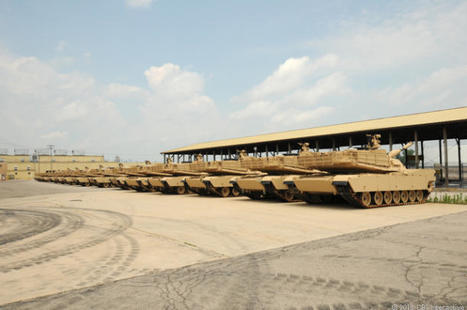
Building the U.S. Army's M1A2 Abrams tank (pictures)35-36 of 36Scroll Left Scroll Right

Indeed, in 1941, the Army opened the Lima Tank Depot here with plans on making gun tubes. But when the U.S. became embroiled in World War II that December, plans changed, and this sleepy town became home to a major combat vehicle production facility, churning out tanks for the remainder of the war.

After World War II ended, the plant returned to a peacetime footing, only to kick back into gear for the Korean War in the 1950s. Then, when that conflict ended, things slowed down once again.

But in 1978, Lima became home to the Army's nascent Abrams tank program, and until 2001, the plant was devoted solely to producing what eventually became one of America's best-known and most-used combat vehicles. The terrorist attacks of September 11, 2001, changed that, and the plant began turning out other equipment, including the Stryker armored combat vehicle and the Navy's MK46 naval gun system. But still, the Abrams tank is a mainstay of the facility.

As part of Road Trip 2013, I visited Lima for a close-up look at how the Army's main battle tank is made, a fascinating process that in some ways resembles how a car like the Corvette is produced, and that in some ways has all the hallmarks of a high-security military effort.

'Rusties'
One of the first things I learned about production of the Abrams -- specifically today's M1A2 model -- is that General Dynamics Land Systems, which operates the government-owned facility, hasn't made all-new Abrams for the U.S. Army since 1996.

Instead, GDLS takes older, decommissioned Abrams and brings their hulls and turrets back to Lima to recondition them, turning them out as new tanks. The older equipment is known affectionately, thanks to the exterior coloration that comes with age and exposure to the elements, as a "Rusty."

Trains from the Anniston Army Depot in Anniston, Ala., deliver the Rusties to the Lima facility, which takes up 396 acres, of which 1.6 million square feet are devoted to production. They are brought inside the main plant and put through a process known as shot blasting, which strips the turrets and hulls of their years of rust and other imperfections. Then they're painted, and the production process begins in earnest.

A completed Abrams turret awaits being married to its corresponding hull.

(Credit: Daniel Terdiman/CNET)

For the turrets, the next step is to having a set of ammunition doors mounted. These are a key to the crew's survival in the case of a direct hit by an enemy. The doors are meant to insulate the crew from an explosion by having their panels blow off upwards rather than inwards.

Next, plant workers install the tank's 120 mm main gun, making sure that the vehicle can properly absorb the recoil that comes with firing the gun. And before the turret goes off to an assembly line where a series of additional systems and equipment are installed, workers first mount what's known as "the basket." This is the pod where the gunner, commander, and loader sit, along with about 2,000 pounds of electronics and other gear.

The hull
For the hull, the process is more or less the same. First, there's shot blasting and painting sessions, and then workers put it through one more reconditioning step, known as de-masking and de-taping.

At this point, the hull heads down its own assembly line, at first sitting on the floor because its suspension system has yet to be added. At this stop in the line, known as Station 2, pretty much all of the systems and equipment meant for the hull are installed. This includes things like its gas tanks, hydraulic lines, cabling, and more. This step alone takes about 11 hours, and usually requires two workers to complete.


More from Road Trip 2013: Midwest tech

Check out the latest from Daniel's trip to discover some of the best tech spots in America's heartland.

How the Wright brothers won the race to invent the airplaneRobie House, Frank Lloyd Wright's masterpiece, regains its gloryUp close with America's national supercomputer, Blue WatersRoad Trip 2013 roundupFollow Dan on Twitter

These days, the Lima plant is working at a leisurely pace -- about half a tank per day. But when needed, it can ramp up to about 2.5 tanks a day. All told, the process takes about a week from the time the Rusty rolls off the rail car until cannon installation.

At Station 3, the full suspension system is added. This includes a series of parts like the shock absorbers, the torsion bars, and the road arms and road arm housings -- which hold the tank's road wheels.

Those wheels are added at Station 4, allowing the tank to be lifted off the ground so it can proceed down the line on its own weight. At Station 11, equipment known as the final drive, a gear system that transfers power from the transmission to the track, is added. A large sprocket, which moves the tanks track, is then mounted on top of the final drive.

By Station 14, it's time to install what's known as the full-up power pack, or FUPP. This is a plug-and play package containing the tank's 1,500-horsepower turbine engine, as well as its transmission, and all its cooling systems. The FUPP is designed to be pulled out of an Abrams tank if it is damaged or malfunctioning, and quickly replaced with another. When that happens, the dysfunctional FUPP is taken away and repaired somewhere nearby. Heavy trucks and even airplanes carry additional FUPPs into combat.

The engine itself is meant to give the Abrams' crew an advantage in combat. It can take nearly any kind of fuel, meaning it doesn't depend on any specific type of fuel and can fill up on anything from diesel to peanut oil.

At Station 16, crews mount the tank's track. First they lay two tracks down, bolting one end of each, and then a drag line pulls the tank forward until it sits on top of the tracks. Then a pulley and winch system connects the ends of each track.

At this point, crews have completed what they call a "convertible," a finished hull that's ready to be married with its turret counterpart.

Add some fire control systems, calibrate them so they all work in concert, and the now-finished 70-ton Abrams tank is on to the so-called test and accept building.

There, General Dynamics Land Systems teams put the tanks through a 1,200-point inspection to make sure they're ready for the Army. Those steps can be anything from making sure specific parts are installed (and adding some of them on-site if necessary) to multi-day inspections. There's also about 30 miles of driving the tank around, including taking it up a man-made hill, engaging the parking brake, turning off the engine, and being sure that it can sit there at a perilous angle for a specific amount of time.

After it passes this intensive inspection, the tank is then inspected again, this time by the government's own Defense Contract Management Agency personnel, who subject it to an additional 600 to 700 checks, including driving it around for another five miles or so. All told, all these checks take longer than producing the tank does.

Finally, it's on to "prep and ship," where the government signs off, puts the tank onto a rail car, straps it down, and the Army takes over responsibility for it.

With America's involvement in Iraq over, and the war in Afghanistan ramping down, the call for Abrams tanks has slackened considerably. In fact, the Army itself has tried to stop production, asking to use the financial resources elsewhere. But Congress wants the tank and has continued to fund it. Given the financial problems at the federal level, this is an odd state of affairs. But here in Lima, the continued funding means jobs still exist, and so, day after day, the tanks keep on rolling off the line.


No comment yet.
DEFENSE NEWS
Revue de presse quotidienne des principaux articles concernant le secteur de la Défense, de ses industriels, des armements et technologies.
Curated by Romain
Your new post is loading...
Scooped by Romain
Today, 6:11 PM
Scoop.it!

L’US Navy va renforcer ses capacités autonomes de combat avec le drone sous-marin Dive-XL d’Anduril

L’US Navy va renforcer ses capacités autonomes de combat avec le drone sous-marin Dive-XL d’Anduril | DEFENSE NEWS | Scoop.it
En avril 2025, l’Unité d’innovation de la défense du Pentagone [DIU – Defense Innovation Unit], chargée de permettre aux forces américaines de s’approprier des technologies commerciales émergentes dans les délais les plus brefs, lança un appel d’offres portant sur l’acquisition d’un grand drone sous-marin pouvant emporter une importante charge utile et parcourir de longues distances dans des environnements contestés.

«Les capacités actuelles des drones sous-marins présentent des limitations en termes de portée et de capacité d’emport, ce qui entrave le déploiement efficace de ressources critiques dans certains scénarios opérationnels», avait avancé la DIU pour justifier ce programme, appelé CAMP [pour Combat Autonomous Maritime Platforme Project].

Dans ce domaine, l’US Navy disposait déjà, à l’époque, du drone sous-marin autonome «extra-large» à propulsion diesel-électrique Orca XLUUV, développé par Boeing à partir de l’Echo Voyager. Affichant un déplacement d’environ 80 tonnes, il dispose d’une autonomie de 6 500 nautiques [plus de 12 000 km] en emportant une charge utile de 8 tonnes. En outre, son Centre de guerre sous-marine [NUWC] venait de mettre à l’eau le Snakehead LDUUV, un drone sous-marin susceptible d’être déployé depuis un sous-marin nucléaire d’attaque [SNA] de type Virginia. Mais ce projet est a priori suspendu.

Quoi qu’il en soit, dans le cadre du programme CAMP, la DIU entend acquérir un drone sous-marin doté d’une portée supérieure à 1 000 nautiques et pouvant naviguer à 200 mètres de profondeur dans des environnements contestés. Et cela pour effectuer, entre autres, des missions dites ISR [renseignement, surveillance, reconnaissance], des relevés bathymétriques ou encore pour faire de la cartographie et transporter du fret.. Et le tout en ayant la capacité de laisser et de récupérer des «charges utiles» dans les fonds marins.

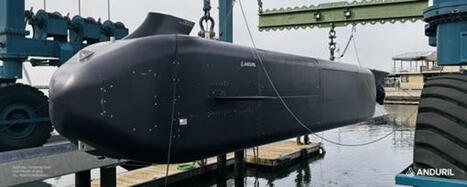
Moins d’un an après, la DIU et l’US Navy ont jeté leur dévolu sur le Dive-XL, sur lequel est basé le Ghost Shark XL que l’américain Anduril a développé à la demande de Royal Australian Navy [RAN].

«Anduril a été sélectionné suite à l’appel d’offres de la DIU, après avoir réalisé la plus longue démonstration jamais menée d’un XL-AUV, validant ainsi les performances en portée étendue et l’endurance du système dans des conditions opérationnelles réalistes», a expliqué l’industriel. «À ce jour, les drones sous-marins autonomes d’Anduril ont parcouru plus de 42 355 km et totalisé 6 752 heures de mission, démontrant ainsi la maturité, la fiabilité et l’autonomie nécessaires aux opérations maritimes distribuées», a-t-il ajouté.

Doté d’une propulsion électrique, ce qui lui évite de faire surface, le Dive-XL aurait la capacité de parcourir plus de 2 000 nautiques. Sa conception modulaire permet de l’adapter à différents profils de missions. En outre, il peut embarquer trois types de charge utile simultanément, dont, par exemple, des engins sous-marins autonomes de petite taille susceptibles d’être utilisés pour surveiller une zone donnée ou pour effectuer une frappe sous-marine.
La capacité d’Anduril à produire rapidement de tels drones sous-marins en quantité a sans doute compté dans le choix de la DIU et de l’US Navy.

«Aujourd’hui, Anduril produit des Dive-XL à Sydney [Australie] et dispose d’une usine à Quonset Point [Rhode Island] pouvant produire des dizaines de Dive-XL et des centaines de Dive-LD par an», a fait valoir l’entreprise.

En tout cas, a-t-elle souligné, de tels systèmes autonomes ont le «potentiel de bouleverser l’équilibre des forces sous-marines» et de permettre «aux États-unis et à leurs alliés d’étendre leur rayon d’action, de contenir les risques à distance et d’opérer de manière permanente dans des environnements contestés».
No comment yet.
Scooped by Romain
Today, 6:08 PM
Scoop.it!

Israel Says it Destroyed Iran’s Air Force One

Israel Says it Destroyed Iran’s Air Force One | DEFENSE NEWS | Scoop.it
The Israeli Air Force claims it has destroyed the Airbus A340-313 used by Iranian officials, including Khamenei, which was at Tehran's Mehrabad ​airport.
No comment yet.
Scooped by Romain
Today, 6:07 PM
Scoop.it!

Norway and UK plan joint acquisition of up to 30 new Joint Commando Craft

Norway and UK plan joint acquisition of up to 30 new Joint Commando Craft | DEFENSE NEWS | Scoop.it
Norway and the United Kingdom are considering a joint acquisition of up to 30 new vessels for coastal operations. The initiative will strengthen the ability to operate together in demanding maritime areas in the North Atlantic and the High North.
No comment yet.
Scooped by Romain
Today, 6:07 PM
Scoop.it!

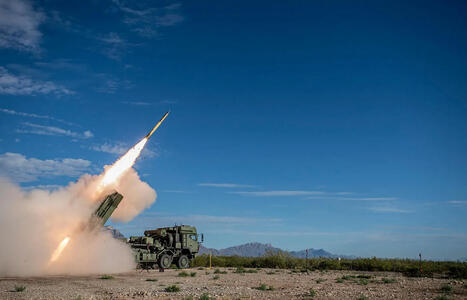
Washington temporise sur la construction de roquettes GMLRS en Pologne

Washington temporise sur la construction de roquettes GMLRS en Pologne | DEFENSE NEWS | Scoop.it
Les roquettes guidées GMLRS ont pris une part dominante sur le feu à longue portée européen, en particulier après 2022 et l'arrivée des HIMARS en Ukraine.
No comment yet.
Scooped by Romain
Today, 6:04 PM
Scoop.it!

StrikeMaster to Remain in Europe following Strong International Interest

StrikeMaster to Remain in Europe following Strong International Interest | DEFENSE NEWS | Scoop.it
KONGSBERG has confirmed that the StrikeMaster Missile Launch Vehicle will remain in Europe for the foreseeable future following strong and growing interest from international partners.
No comment yet.
Scooped by Romain
Today, 6:01 PM
Scoop.it!

Plus de 5 000 munitions tirées durant les 4 premiers jours du conflit avec l'Iran selon le Foreign Policy Research Institute

Plus de 5 000 munitions tirées durant les 4 premiers jours du conflit avec l'Iran selon le Foreign Policy Research Institute | DEFENSE NEWS | Scoop.it
Plusieurs médias et centres de recherches ont publié des estimations des coûts de la phase initiale de l'opération Epic Fury pour le seul camp américain.
No comment yet.
Scooped by Romain
Today, 6:00 PM
Scoop.it!

Au Joint Culinary Training Event 2026, la France sacrée Équipe internationale de l'année.

Au Joint Culinary Training Event 2026, la France sacrée Équipe internationale de l'année. | DEFENSE NEWS | Scoop.it
Lors de la 50e cérémonie annuelle de remise des prix du Joint Culinary Training Event, le 6 mars, en Virginie, l'US Air Force a été élue comme l'Equipe c
No comment yet.
Scooped by Romain
Today, 5:57 PM
Scoop.it!

Japan's EC-2 Electronic Warfare Jet, Arguably The World's Ugliest Aircraft, Just Flew For The First Time

Japan's EC-2 Electronic Warfare Jet, Arguably The World's Ugliest Aircraft, Just Flew For The First Time | DEFENSE NEWS | Scoop.it
In a world of increasingly homogeneous-looking military aircraft designs, the platypus-like Kawasaki EC-2 is a radical outlier. In a world of increasingly homogenous-looking military aircraft designs, the Japanese Kawasaki EC-2 is a radical outlier.
No comment yet.
Scooped by Romain
Today, 5:55 PM
Scoop.it!

US Air Force seeks capabilities to improve C3 for aircraft fleet and warfighters

US Air Force seeks capabilities to improve C3 for aircraft fleet and warfighters | DEFENSE NEWS | Scoop.it
The USAF published RFIs for enhancing its C3 capabilities after losing, in Operation Epic Fury, four aircraft in non-confrontational, unclear situations that could have been related to command, control and communication failures.
No comment yet.
Scooped by Romain
Today, 5:54 PM
Scoop.it!

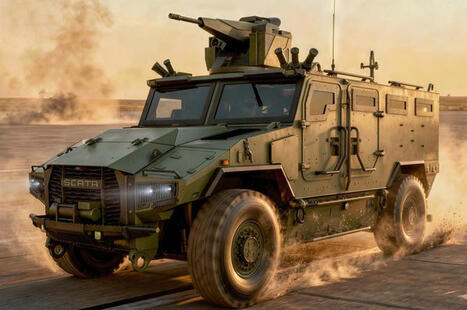
Fourth company looks to Texelis Celeris chassis to develop a new 4x4 vehicle 

Fourth company looks to Texelis Celeris chassis to develop a new 4x4 vehicle  | DEFENSE NEWS | Scoop.it
Finnish company SCATA will use the Texelis Celeris chassis for a new vehicle similar to the Serval 4x4 which Texelis is building with KNDS France for the French Army.
No comment yet.
Scooped by Romain
Today, 5:54 PM
Scoop.it!

Défense : comment Orasio veut renforcer la souveraineté européenne grâce à l'IA

Défense : comment Orasio veut renforcer la souveraineté européenne grâce à l'IA | DEFENSE NEWS | Scoop.it
Cette pépite française, fondée en 2025, intervient dans le domaine crucial de l’IA appliquée à la vidéo.
No comment yet.
Scooped by Romain
Today, 5:52 PM
Scoop.it!

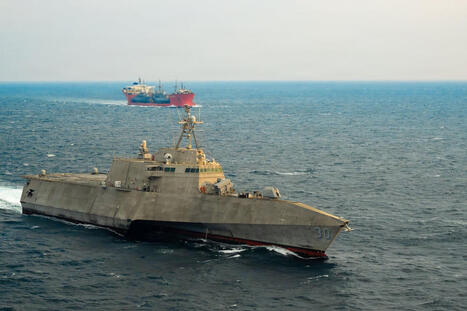
The US has several options to counter Iranian mines. These are some key assets.

The US has several options to counter Iranian mines. These are some key assets. | DEFENSE NEWS | Scoop.it
The U.S. Navy decommissioned its only four minesweepers in the Middle East last year, but still maintains other countermine capabilities it can deploy.
No comment yet.
Scooped by Romain
Today, 5:51 PM
Scoop.it!

UK and Germany advance deep precision strike missile programme

UK and Germany advance deep precision strike missile programme | DEFENSE NEWS | Scoop.it
The United Kingdom and Germany have taken further steps to advance the joint development of a Deep Precision Strike missile system capable of travelling more than 2,000 kilometres.
No comment yet.
Scooped by Romain
Today, 6:10 PM
Scoop.it!

La 27e Brigade d’infanterie de montagne a battu le rappel de sa réserve opérationnelle de niveau 2

La 27e Brigade d’infanterie de montagne a battu le rappel de sa réserve opérationnelle de niveau 2 | DEFENSE NEWS | Scoop.it
La Loi de programmation militaire [LPM] 2024-30 prévoit de doubler le former de la réserve opérationnelle de niveau 1 [RO 1] afin d’atteindre le ratio d’un réserviste pour deux militaires d’active à l’horizon 2035. Ce qui suppose d’en recruter et d’en fidéliser 105 000 d’ici là, ce que permettra sans doute le nouveau Service national volontaire, mis en place à partir de cette année.

Cela étant, si nécessaire, les armées peuvent s’appuyer sur la réserve opérationnelle de niveau 2 [RO 2], laquelle concerne les anciens militaires qui, ayant rendu leur uniforme depuis moins de cinq ans, restent mobilisables puisqu’ils sont soumis à une obligation de disponibilité.

S’il a pu être important au début des années 2010, avec les vagues de départs engendrées par la Révision générale des politiques publiques [RGPP] et les restructurations ayant affecté le ministère des Armées, l’effectif de cette RO 2 reste théorique dans la mesure où un ancien militaire peut avoir quitté la région où il était affecté, rompant ainsi ses liens avec sa dernière unité.

Or, souligne le ministère des Armées, la RO 2 «représente une précieuse ressource humaine capable de renforcer les formations de l’armée de Terre déployées en opération». D’où les exercices de type Vortex, qu’elle mène régulièrement.

En clair, organisé au niveau du régiment ou à celui de la brigade [voire de la division], un tel exercice vise à vérifier la disponibilité des réservistes de la RO2 afin d’être en mesure de les mobiliser en cas de crise majeure. En règle générale, le taux de réponse s’établissait autour de 40 % dans les années 2016/20.

Plus précisément, un exercice Vortex consiste pour une unité à convoquer l’effectif de sa RO 2 sur court préavis. Les réservistes qui y répondent perçoivent un complément de paquetage, passent une visite médicale et actualisent leur situation administrative.

Ce mois-ci, la 27e Brigade d’Infanterie de Montagne [BIM] a ainsi battu le rappel de sa RO 2. Visiblement avec succès, à en juger par le bilan qu’en a tiré l’armée de Terre.

«Afin de valoriser la convocation, la brigade a présenté ses matériels majeurs : véhicule Serval, canon CAESAr, démonstration de drones. Dans le même temps, les réservistes ont également pu profiter d’un rappel au maniement de l’armement individuel de dotation. Afin de combattre en comprenant les enjeux actuels des forces terrestres, une présentation de la transformation de l’armée de Terre a été réalisée», a-t-elle expliqué.

Effectivement, beaucoup de choses ont changé en cinq ans. Par exemple, en 2021, les drones FPV et les munitions téléopérées n’avaient pas l’importance qu’ils ont désormais. Les tactiques ont évolué, de même que les structures de l’armée de Terre, y compris au niveau régimentaire. Même les treillis ont changé, le BME [bariolage multi-environnement] étant désormais la norme. Une journée permet-elle de se remettre dans le bain ? Voire…

Quoi qu’il en soit, la 27e BIM est parvenue à réunir 350 réservistes de sa RO 2 en une semaine.

C’est «un résultat très positif dont les leçons sont encourageants pour l’avenir. Le fort taux de participation montre que les formations de la brigade ont maintenu des liens avec leurs RO 2 qui n’hésitent pas à répondre présents à cette convocation», a commenté le lieutenant-colonel Michel, lui-même réserviste à l’état-major de la 27e BIM.

En outre, cet exercice Vortex a aussi visé à préparer la chaîne de l’organisation territoriale interarmées de défense [OTIAD] à un rappel massif de la réserve opérationnelle et à mettre l’épreuve la chaîne logistique et administration en «réincorporant» un nombre conséquent de réservistes de la RO 2.
No comment yet.
Scooped by Romain
Today, 6:08 PM
Scoop.it!

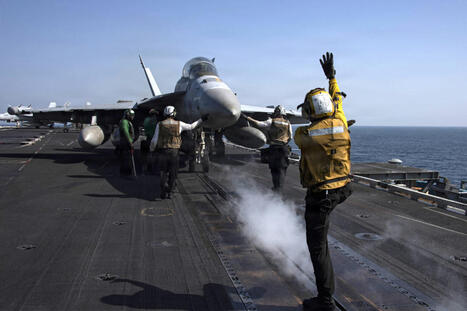
EA-18G Growlers Appear to Be Flying Over Iran with Four Anti-Radiation Missiles

EA-18G Growlers Appear to Be Flying Over Iran with Four Anti-Radiation Missiles | DEFENSE NEWS | Scoop.it
SEAD missions appear to be still a big focus of Operation Epic Fury, with EA-18Gs shown flying with four AGM-88s and F-16s flying with mixed AGM-88/JDAM loads.
No comment yet.
Scooped by Romain
Today, 6:07 PM
Scoop.it!

Indian Navy Adapts Carrier Doctrine for UAV Integration Ahead of IAC-2 Clearance

Indian Navy Adapts Carrier Doctrine for UAV Integration Ahead of IAC-2 Clearance | DEFENSE NEWS | Scoop.it
SOURCE: RAUNAK KUNDE / NEWS BEAT / IDRW.ORG The Indian Navy is entering a defining phase in its carrier strategy, balancing ambition with operational pragmatism. With an expected 2026 nod for the second indigenous aircraft carrier, IAC-2, internal debates have shifted from a binary choice between a 65,000-tonne supercarrier and smaller alternatives toward a hybrid, […]
No comment yet.
Scooped by Romain
Today, 6:04 PM
Scoop.it!

Operation Epic Fury's Tomahawk Fires: An Open-Source Counter

Operation Epic Fury's Tomahawk Fires: An Open-Source Counter | DEFENSE NEWS | Scoop.it
Naval News has complied U.S.-released media to tally the number of Tomahawks recorded to have been fired during Operation Epic Fury.
No comment yet.
Scooped by Romain
Today, 6:03 PM
Scoop.it!

Il a fallu plus de 30 heures pour éteindre l’incendie à bord du porte-avions américain USS Gerald R. Ford 

Il a fallu plus de 30 heures pour éteindre l’incendie à bord du porte-avions américain USS Gerald R. Ford  | DEFENSE NEWS | Scoop.it
Il a fallu plus de 30 heures aux marins pour éteindre l'incendie à bord du porte-avions Gerald R. Ford la semaine dernière, ont déclaré des marins et des responsables militaires, alors que le navire en difficulté poursuivait son long périple à travers les opérations militaires du président Trump.
No comment yet.
Scooped by Romain
Today, 6:00 PM
Scoop.it!

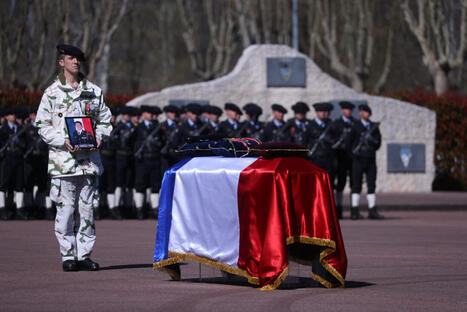
A Varces, l'hommage national au militaire français tué au Kurdistan irakien

A Varces, l'hommage national au militaire français tué au Kurdistan irakien | DEFENSE NEWS | Scoop.it
Une cérémonie d’hommage national à Arnaud Frion, le militaire français tué jeudi au Kurdistan irakien, s’est tenue ce mardi matin au 7e bataillon de chasseurs alpins à Varces (sud-est) où il servait. La cérémonie a été présidée par la ministre Catherine Vautrin, en présence du chef d’état-major de l’armée de Terre, le général Pierre Schill.

De son côté, le président Emmanuel Macron de son côté s’entretiendra avec la veuve de l’adjudant-chef Arnaud Frion, qui a été promu au grade de major, et « ira auprès de ses frères d’arme blessés », a indiqué l’Elysée.

L’adjudant-chef Frion 42 ans, a été tué jeudi soir dans une frappe de drone qui a également blessé six militaires français, depuis rapatriés et hospitalisés en France. Les militaires ont été frappés alors qu’ils se trouvaient dans l’enceinte du « camp Black Tiger », une base placée sous l’autorité des combattants kurdes peshmergas, située au sud-ouest d’Erbil, à Mala Qara. Ils y étaient déployés dans le cadre de la coalition internationale mise en place en 2014 contre le groupe djihadiste Etat islamique.
A Varces, au pied des Alpes, les alpins du 7e BCA a rendu hommage à leur camarade. (Photo by Alex MARTIN / AFP)

A noter que le traditionnel passage du cortège funéraire de l’ADC du 7e BCA sur le pont Alexandre III n’a pas eu lieu. En revanche, un rassemblement s’est tenu ce midi au au parc André Citroën (XVe). Alice Rufo était sur place.
No comment yet.
Scooped by Romain
Today, 5:59 PM
Scoop.it!

Ormuz: Trump dit n'avoir "plus besoin d'aide" de la part des alliés des Etats-Unis

Ormuz: Trump dit n'avoir "plus besoin d'aide" de la part des alliés des Etats-Unis | DEFENSE NEWS | Scoop.it
Donald Trump enrage: après que sa demande d’assistance pour rouvrir le détroit d’Ormuz a été rejetée par la majorité des (soit disant, selon Trump) « alliés » des Etats-Unis, il a assuré ce mardi n’avoir « plus besoin d’aide ».

« Grâce aux succès militaires que nous avons eus, nous n’avons plus besoin et nous ne voulons plus de l’aide des pays de l’Otan. NOUS N’EN AVONS JAMAIS EU BESOIN » a assuré le président américain qui en a profité pour régler, de nouveau, ses comptes avec l’Alliance atlantique.

« Les Etats-Unis ont été informés par la plupart de nos alliés de l’Otan qu’ils ne voulaient pas être impliqués dans notre opération militaire contre le régime terroriste iranien », a-t-il écrit sur son réseau Truth Social. « Je ne suis pas surpris par leurs actions toutefois, parce que j’ai toujours considéré l’Otan, qui nous coûte des centaines de milliards de dollars par an pour protéger ces pays, comme un système à sens unique », a jugé Donald Trump, sans brandir cette fois de menaces de représailles.

Pour sa part, le président français a confirmé son refus d’intégrer les forces françaises dans une opération de sécurisation du détroit sous supervision US. « Nous ne sommes pas partie prenante au conflit et donc jamais la France ne prendra part à des opérations d’ouverture ou de libération du détroit d’Ormuz dans le contexte actuel », a déclaré le président français, opposant une fin de non-recevoir à Donald Trump, au début d’un conseil de défense à l’Elysée.

« Par contre, nous sommes convaincus qu’une fois la situation plus calme (..) c’est-à-dire une fois que le cœur des bombardements aura cessé, nous sommes prêts, avec d’autres nations, à prendre la responsabilité d’un système d’escorte » de pétroliers et porte-conteneurs dans le détroit par des bâtiments militaires, a ajouté Emmanuel Macron.
No comment yet.
Scooped by Romain
Today, 5:57 PM
Scoop.it!

EA-18G Growlers Carrying Mixed Load Of Old And New Jamming Pods Are Flying Iran Missions

EA-18G Growlers Carrying Mixed Load Of Old And New Jamming Pods Are Flying Iran Missions | DEFENSE NEWS | Scoop.it
A Pentagon report says the new pods are still having significant teething issues even though they are being used in active conflicts.
No comment yet.
Scooped by Romain
Today, 5:55 PM
Scoop.it!

European CCA programmes see progress as industry narrows in on key flight milestones 

European CCA programmes see progress as industry narrows in on key flight milestones  | DEFENSE NEWS | Scoop.it
European defence firms including Airbus, Helsing, General Atomics and Anduril are accelerating development and testing of collaborative combat aircraft to meet Germany’s loyal wingman requirement, targeting operational deployment by the end of the decade.
No comment yet.
Scooped by Romain
Today, 5:54 PM
Scoop.it!

Russia Offers Irbis-E Radar and AL-41F-1S Engines for Su-30MKI Modernization

Russia Offers Irbis-E Radar and AL-41F-1S Engines for Su-30MKI Modernization | DEFENSE NEWS | Scoop.it
SOURCE: RAUNAK KUNDE / NEWS BEAT / IDRW.ORG The modernization of the Indian Air Force’s Su-30MKI fleet is entering a critical decision phase as India evaluates competing upgrade pathways involving both Russian and indigenous technologies. While Hindustan Aeronautics Limited (HAL) is developing a domestic upgrade package under the “Super Sukhoi” program, Russia has also presented […]
No comment yet.
Scooped by Romain
Today, 5:53 PM
Scoop.it!

Patriot air defense interception is costly: Here’s how it works

Patriot air defense interception is costly: Here’s how it works | DEFENSE NEWS | Scoop.it
The system has become a key tool for protecting bases and infrastructure from aerial attacks, but at a high cost.
No comment yet.
Scooped by Romain
Today, 5:51 PM
Scoop.it!

Pentagon raises Golden Dome missile defense cost estimate to $185 billion amid accelerated space capability development

Pentagon raises Golden Dome missile defense cost estimate to $185 billion amid accelerated space capability development | DEFENSE NEWS | Scoop.it
The Pentagon has raised its baseline cost estimate for the Golden Dome missile defense system to $185 billion, an increase of $10 billion driven by expanded requirements for space-based sensing and data infrastructure.
No comment yet.