


On November 1, 2013, Secretary Clinton announced a new Clinton Foundation program, No Ceilings: The Full Participation Project, which will measure the global...
Via bobbygw

 Your new post is loading...
 Scoop.it! On November 1, 2013, Secretary Clinton announced a new Clinton Foundation program, No Ceilings: The Full Participation Project, which will measure the global... Via bobbygw 
No comment yet.
Sign up to comment
Scoop.it!

Janet Bloch. Self Portrait as Shakti, 2004.
"Full Disclosure: I am a feminist. It never crossed my mind that there might be anything problematic about labeling myself this way since I have openly articulated my interests in gender issues and social, political, and economic equality since my early undergraduate days. Of course, I knew that researchers had shown women today often reject the term “feminist” (McRobbie 2004; Rowe-Finkbeiner 2004; Levy 2006). However, I somehow had convinced myself that these individuals were just not informed. I truly believed that if men and women could critically examined the social construction of gender, see the ways in which gendered notions impact their lives, and take the time to critique these forces there could be greater understanding, acceptance, and embracement of feminist politics.
Last fall I found myself working on a project on women’s art. I met with several female artists whose work examined, questioned, and challenged cultural gender expectations. What I found utterly shocked me; within the art world, there are a number of female artists that use art as a vehicle to challenge gender inequality but are cautious, hesitant, or dismissive of being labeled as “feminist artists.” I found that many female artists believe that term “feminism” is so deeply connected to a stigmatized social movement that strongly reject the label even while creating feminist art." Via Caroline Claeys
Scoop.it!

If only 12 Years a Slave (or Roots, or any other wrenching American slave narrative) could move audiences beyond those already eager for a dose of feel-good shame. ...Which leads to the more important question: Could this film possibly preach to the unconverted? Could it reach Americans who at this late date, in the 21st century, still haven’t gotten Stowe’s message? Will it even be seen by any of the millions who swear by Glenn Beck? This question might be asked of all the recent movies that touch upon America’s unfinished racial business: Lee Daniels’ The Butler, the Jackie Robinson biopic 42, and Fruitvale Station, as well as Django and Lincoln. Liberals are fond of chastising the right (accurately) for living in a media echo chamber of Rush and Drudge by day and Fox News by night, with no other reality penetrating the bubble. The left has never been able to replicate that mass-media ecosystem; an exclusive diet of, say, the Times and NPR would be far more porous to contrary views than 24/7 of Fox and friends. But whenever mainstream media start gushing en masse about a cultural work with an uplifting historical or political message, a smaller liberal echo chamber does spring up that I’ve at times been part of: We tend to assume that a wide audience will be converted by the power of the new masterpiece at hand, especially under the tutelage of critics, editorial pages, magazine cover stories, and awards ceremonies. Much as the right can convince itself that all of America must regard Obamacare as the worst piece of legislative blight in the country’s history, or that easy access to guns is a God-given right tantamount to freedom of speech, so liberals can become prisoners of our own bubble.
Deanna Dahlsad's insight:
Thoughts for feminism here too.
Scoop.it!

To Flatten A Heroine: Artist Puts Disney Princess Filter On 10 Real Life Female Role Models So that was my intent, to demonstrate how ridiculous it is to paint an entire gender of heroes with one superficial brush.
Scoop.it!

Raise your hand if you think it’s time for us to un-teach Google some of these things.
Scoop.it!

"Women in my family have been shrinking for decades," declares Lily Myers.
Scoop.it!

CAP examines both the progress made and the challenges remaining for women of color across the country. Throughout the 20th century, women fought for and achieved countless victories for women’s rights and became a political and economic force in our society after winning the right to vote, equal pay, and reproductive rights. While women have continued to organize for collective gains into the 21st century, the benefits of those achievements have not been equally shared. Over time, those gaps have expanded into wide and deep inequalities for some women—namely, women of color.

Deanna Dahlsad's curator insight,
October 28, 2013 6:43 PM
Endnotes and citations are available in the PDF version of this report.
Scoop.it!

The idea of having a baby boy scared me: What kind of man will he grow up to be? Here’s what I learned about what it takes to raise compassionate men. Via malek

malek's curator insight,
October 26, 2013 8:36 AM
Some of the deepest thoughts and feelings of a a new father in a new violent world
Scoop.it!

Don’t say, “Men oppress women” – that’s sexism, as bad as any sexism women ever have to handle, possibly worse. Instead, say, “Some men oppress women.” Whatever you do, don’t generalise. That’s something men do. Not all men – just some men. -- Of course all men don’t hate women. But all men must know they benefit from sexism (via albinwonderland)
malek's comment,
October 28, 2013 7:26 AM
But the further you dip into legalities, the more blurring it gets
Scoop.it!

The Guardian Via bobbygw
Scoop.it!

In May of this year, I talked to Deon Haywood, Executive Director of Women With A Vision in New Orleans about her approach to organizing. WWAV scored a significant grassroots legal and political victory in the last year with the NO Justice campaign, which removed hundreds of cis and trans women from Louisiana’s registered felony sexual offender rolls. Deon is a longtime activist in the city of New Orleans, with a history of organizing low-income women of color around reproductive justice, harm reduction, and human rights.
...We are not all in the same boat. And if we keep playing like we are, we’re not really going to make the kind of change we’d like to see. Because the women I work with are never going to be able to jump into the sex workers’ rights movement. They don’t feel like that movement is for them. Via Gracie Passette, Deanna Dahlsad
Scoop.it!

The ACLU has enlisted the help of comic artist Jen Sorensen to help illustrate (literally) the coordinated, national efforts that anti-abortion groups are waging across the country to outlaw women's health clinics and block access to abortion care.
Scoop.it!

If you believe that poverty is the domain of the comfortably poor, black, unemployed, unmotivated and uneducated among us, you have been sadly misled.
Scoop.it!

euronews Via bobbygw
Scoop.it!

You may have heard my story, thanks to Anonymous who trended #justice4daisy. I'm not done fighting yet.
Deanna Dahlsad's insight:
Astonishingly articulate; astonishingly horrible.
Deanna Dahlsad's curator insight,
October 18, 2013 4:32 PM
Astonishingly articulate; astonishingly horrible.
Scoop.it!

Using a "secret bank," the Koch Bros. gave $8.2 million to a virulently anti-LGBT committee that lobbied for strict abortion laws in Texas and pushes regulations designed to force clinics to close t Via J'nene Solidarity Kay
Deanna Dahlsad's insight:
Not really a secret if you watch Rachel Maddow (or read her blog).
Scoop.it!

The biopic tracks Arendt's experiences reporting on the trial of Nazi SS-Officer Adolf Eichmann, unapologetically centralising her role as a public intellectual. Relationships with friends and her husband, including notable author Mary McCarthy, are also rather sensitively depicted. But they are subplots to the real deal, Arendt's ideas. Unlike the majority of films or television shows when they deign to give airtime to women, “Hannah Arendt” refuses to replicate the stereotypical territory of acceptable-woman-characters. It is not about Arendt the lover (see: almost all women in films), Arendt as a writerly version of the oh-so-“normal” woman hung up on weight and boyfriends (see: Bridget Jones), or Arendt the supposed high-flyer beseiged by mental health issues (see: Scandinavian drama). “Hannah Arendt” is, instead, about Hannah Arendt the thinker. It rightly credits Professor Arendt, responsible for some of the most publicly enduring theories in 20th century philosophy, with an intellectual interiority mostly reserved – at least in the public eye – for white men.
Scoop.it!
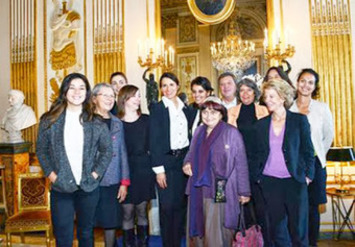
France has launched a five-point gender equality charter for its film industry, put together by Le Deuxième Regard, a Paris-based ‘lobby’ (read ‘activist’) group founded by Bérénice Vincent, Delphyne Besse and Julie Billy, who will circulate it for signature, to all segments of the industry.
Deanna Dahlsad's curator insight,
October 18, 2013 3:15 PM
Click for more info - and an interview with president Bérénice Vincent.
Scoop.it!

Tech startups, like any other business sector, gravitate towards jargon that conveniently glosses over what they're really talking about. Wall Street has its collateralized debt obligations, Silicon Valley has growth hacking. Via Thabo Mophiring
Scoop.it!
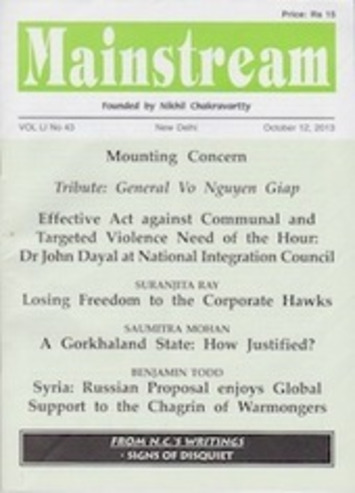
The singular inability of India’s feminist movement to decrypt the coded messages tucked into the aggressive marketing campaigns of giant corporates pushing products and services of subjective “goodness” is bothersome. At one level it implies that the gains achieved by the previous generation of feminists have been frittered away. Since the 1920s, a mix of feminism and feminist-consumerism, which originated in the United States, has inspired Indian feminists and led to sharpened advocacy for pro-women legislations and the adoption of pro-active policies in favour of India’s repressed other half. But sadly those who inherited the movement from the pioneers were unable to hold the candle. Their failure to check the market economy’s juggernaut as it suppressed women’s aspirations for equality is indeed unfortunate. Secondly, “women’s studies”, the discipline conceived for Indian conditions by the recently deceased Vina Mazumdar (“Vinadi” to her associates) as the bedrock of the Indian feminist struggle seems to have died out. This sad fact is evident daily in the utter disinterest, even stony silence, on the effects of an inexplicable trade policy allowing unregulated imports of daily essentials on women’s health, wealth and happiness. Via bobbygw
Scoop.it!

Innovative Solutions to End Gender-Based Violence w/ @GriffinSchein client Futures @WithoutViolence http://t.co/Yck2uJys8O #worldpulse Via bobbygw
Scoop.it!

Laura Ortberg Turner writes at Christianity Today that feminism is the Christian f-word. Turner argues that evangelicals have wrongly dismissed feminism as "anathema" to the body of Christ. She con... Via bobbygw, Deanna Dahlsad
Scoop.it!

New research suggests people tend to hold negative views of political and social activists
Deanna Dahlsad's insight:
Terribly maddening.
Scoop.it!
And then in Zami, when Audre Lorde shares with us another memory, a memory of people spitting at her in the streets, I understood something. An experience of racism can involve the loss of the words to explain what is going on. It was a memory of her mother explaining to her that people were spitting into the wind because they were ill-mannered and rude, because the mother wants to protect her black child from the knowledge that those people are spitting at her, because she is a black child. I understood something. I understood that racism can be what happens right in front of us – in the direction of violence towards some of us – but also that we learn not to see it. We might learn not to see racism as a way of being protecting from racism: but of course we are not protected. We might not learn the word ‘racism’ or learn not to say that word ‘racism’ as if by not saying it, it might go away. Not naming racism as if racism is not going-on keeps racism on-going. This is why, in naming racism, we are always doing something. We need to find the words. Black feminism can be a way of finding the words. From Black feminism as a Life-Line by Sara Ahmed. (via tamghrabit)
Scoop.it!
We’re told that if a woman shows too much of her body men will do stupid things. Let’s be clear: A woman’s body is not dangerous to you. Her body will not cause you harm. It will not make you do stupid things. If you do stupid things, it is because you chose to do stupid things. From How to See a Woman: A Conversation Between a Father and Son (via falldownlikefire)
|

Curated by Deanna Dahlsad
An opinionated woman obsessed with objects, entertained by ephemera, intrigued by researching, fascinated by culture & addicted to writing. The wind says my name; doesn't put an @ in front of it, so maybe you don't notice. http://www.kitsch-slapped.com

Other Topics

A Marketing Mix
Adventures in advertising and marketing - the contemporary, the historical, and the hysterical. http://deanna.dahlsad.com/
Antiques & Vintage Collectibles
Collecting old things; heirlooms and new to you things! Companion to http://www.inherited-values.com/

Colorful Prism Of Racism
Racism past and present. Companion to http://www.kitsch-slapped.com/category/colorful-prism-of-racism/

Consumption Junction
Consumerism meets marketing; who & what manipulates the free market of goods & services. See also: http://www.kitsch-slapped.com/category/ze-big-mouth-promotions-stuff/

Crimes Against Humanity
From lone gunmen on hills to mass movements. Depressing as hell, really.
Cultural History
The roots of culture; history and pre-history.
Dare To Be A Feminist

For Art's Sake-1
Art, crafts, and the people who make them. To inspire and purchase. Companion to http://www.ululating-undulating-ungulate.com/
Herstory
History as this woman sees it. The serious, the kitsch, the opinionated. Companion to http://www.kitsch-slapped.com/

In The Name Of God
Mainly acts done in the name of religion, but also discussions of atheism, faith, & spirituality.

Kinsanity
Let's just say I have reasons to learn more about mental health, special needs children, psychology, and the like.
Kitsch
Mostly vintage and retro "badness" but you can decide how delicious it is. http://www.kitschy-kitschy-coo.com/blog/

Nerdy Needs
The stuff of nerdy, geeky, dreams.

Readin', 'Ritin', and (Publishing) 'Rithmetic
The meaning behind the math of the bottom line in publishing and the media. For writers, publishers, and bloggers (which are a combination of the two).

Sex Positive
Sexuality as a human right.

Vintage Living Today For A Future Tomorrow
It's as easy to romanticize the past as it is to demonize it; instead, let's learn from it. More than living simply, more than living 'green', thrifty grandmas knew the importance of the 'economics' in Home Economics. The history of home ec, lessons in thrift, practical tips and ideas from the past focused on sustainability for families and out planet. Companion to http://www.thingsyourgrandmotherknew.com/

Visiting The Past
Travel based on grande ideas, locations, and persons of the past.

Walking On Sunshine
Stuff that makes me smile.

You Call It Obsession & Obscure; I Call It Research & Important
Links to (many of) my columns and articles.
|




