


The Sand Creek Massacre of 1864 scandalized a nation still fighting the Civil War and planted seeds of distrust and sorrow among Native Americans that endure to this day. A personal investigation.

 Your new post is loading...
 Scoop.it! The Sand Creek Massacre of 1864 scandalized a nation still fighting the Civil War and planted seeds of distrust and sorrow among Native Americans that endure to this day. A personal investigation. 
No comment yet.
Sign up to comment
Scoop.it!

On the 30th Anniversaries of Band Aid and Live Aid
Scoop.it!
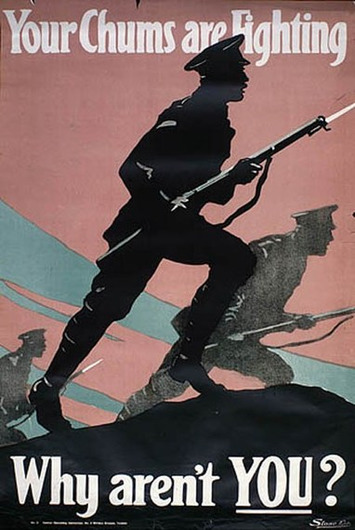
The world has just commemorated the 100th annivesary of the beginning of the First World War. While most historians have come to categorize the war as, in the words of Richard Evans, ‘the seminal catastrophe of the entire period’, ideologically driven government officials and some military historians insist that the war was a triumph of good over evil, and a resounding victory for Britain and its allies. Many controversies have therefore arisen about who, what, and how to commemorate, and about the very nature of the war itself. In this post, I’ve chosen to commemorate some drunk Canadians in London in 1916, the police who impersonated them, and the women who sold sex in the bars that they frequented. With a title like this, of course I want to entertain. But I also want to argue that the sexual history of war lies at the very heart of the history of war itself. Via Gracie Passette
Scoop.it!

A series of eerie symbols and markings have been discovered under the floorboards of one of Britain’s most important historic houses, scratched into the wood to protect King James I from witches. Via SIN JONES, rita roberts, Skuuppilehdet
Scoop.it!
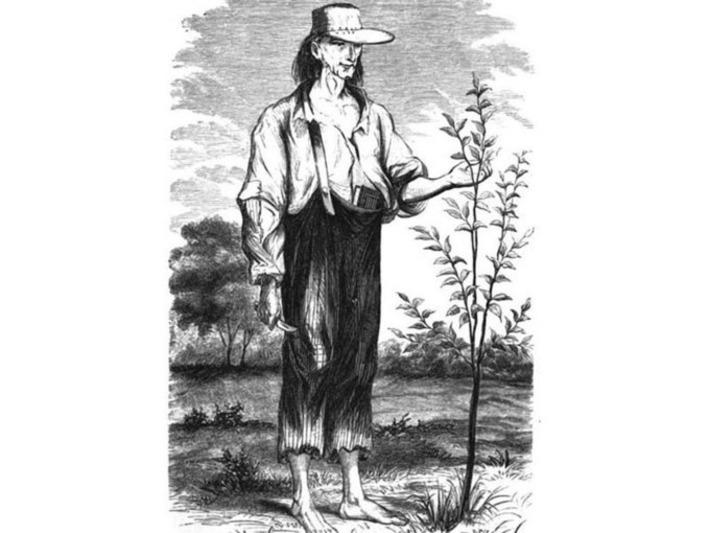
The apples John Chapman brought to the frontier were very different than today's apples—and they weren't meant to be eaten John Chapman died in 1845, and many of his orchards and apple varieties didn't survive much longer. During Prohibition, apple trees that produced sour, bitter apples used for cider were often chopped down by FBI agents, effectively erasing cider, along with Chapman's true history, from American life.
Via Seth Dixon, Skuuppilehdet
Scoop.it!

Archaeology shows that these fierce women also smoked pot, got tattoos, killed—and loved—men.
Scoop.it!
From the opium trade routes of the 1900s to CND’s operations in the 1980s, maps reveal the political leylines of history – except when it comes to the holiday islands of San Serriffe, as a new British Library book reveals Via Suvi Salo, Mike Busarello's Digital Storybooks, Skuuppilehdet
Scoop.it!

From
io9

Between the 9th and 19th centuries, Arabic-speaking scholars translated Greek, Latin and even Sanskrit texts on topics such as medicine, mathematics and astronomy, fostering a vibrant scientific culture within the Islamic world. Via David Connolly
Scoop.it!

A few weeks ago, my husband & I attended an auction at the Cass Country Historical Society. The museum was deaccessioning hundreds of items in order to raise funds to replace the historic St. J...

Deanna Dahlsad's curator insight,
October 30, 2014 7:05 PM
If you find this inspiring, I've also posted some tips on how to make your very own folk art family tree here http://www.thingsyourgrandmotherknew.com/2014/10/making-folk-art-family-tree.html
Scoop.it!

Researchers had tried for 23 years to connect this piece of metal to Amelia Earhart's disappearance. They finally think they've proven it was part of her plane.
Scoop.it!
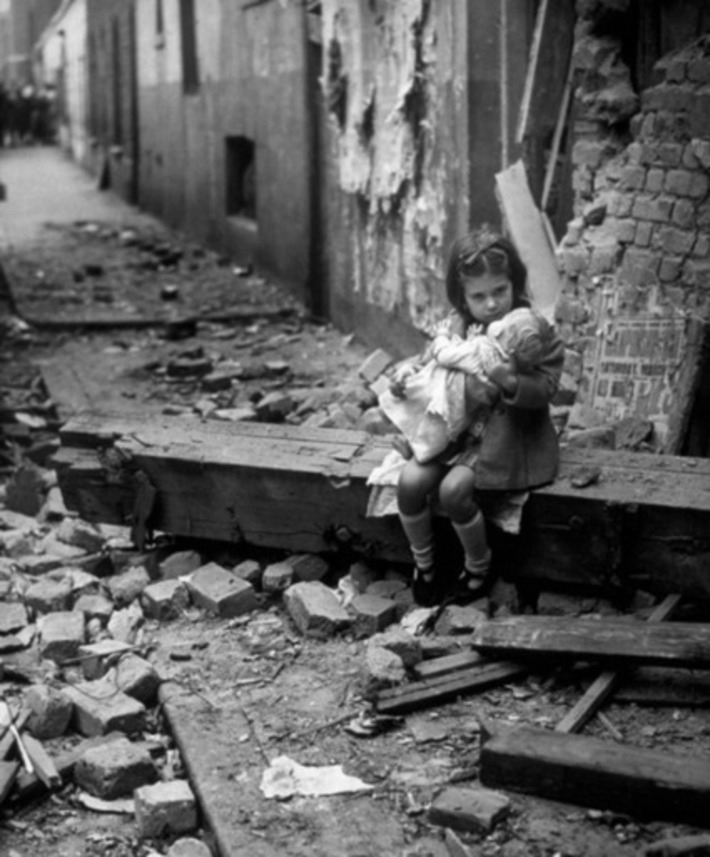
A young girl holds her doll while sitting on a busted beam in a debris ridden street the morning after a Luftwaffe bombing, 1940.
Scoop.it!

SAN ANTONIO (AP) — British pop star Phil Collins on Tuesday handed over his vast collection of artifacts related to the Battle of the Alamo and the Texas Revolution to the state of Texas. Via Gallery225
Scoop.it!

How a fashion statement at the turn of the 19th century led to the creation of the first Audubon societies. Via Skuuppilehdet
Scoop.it!
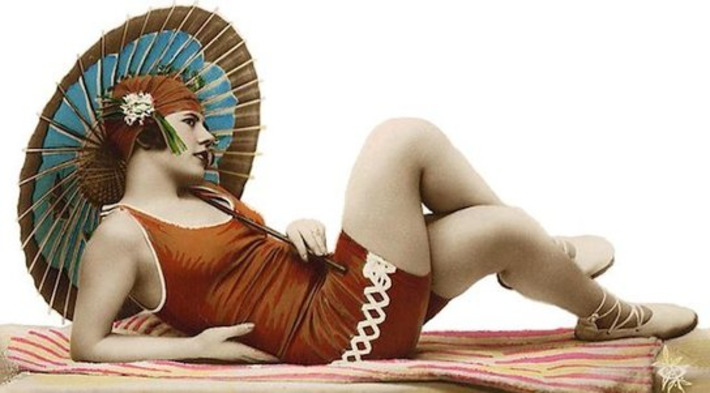
Steven Johnson traces the unintended consquences of technological innovations.
Scoop.it!

Priceless manuscripts housed in Srinagar museum, including the oldest Buddhist manuscripts, damaged.
Scoop.it!
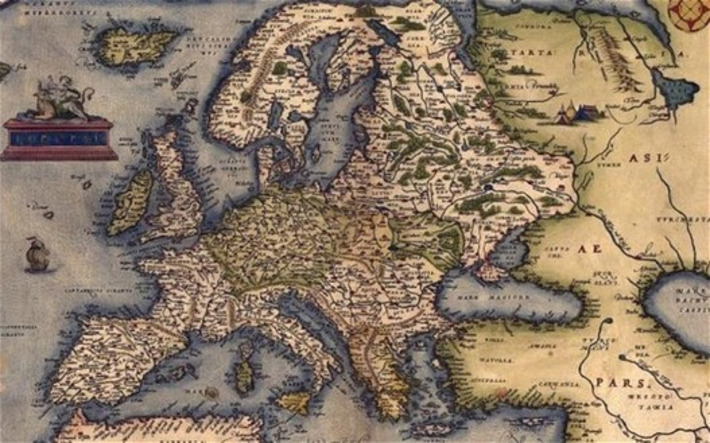
Tim Martin has his eyes opened by an enthralling new history that argues that Druids created a sophisticated ancient society to rival the Romans
Scoop.it!
Why did Americans drop the "u" from British words like "humour" and "behaviour"? What about "theater" vs. "theatre?" Siobhan Thompson explains the spelling d... Via Skuuppilehdet
Scoop.it!

Overall, the archaeologists found 34 shallow graves with seven male adults, three male infants, and one female child, roughly 1,000 years old. Via David Connolly
Scoop.it!

Sex, or fear of it, has been almost as important in the construction of this nightmare state as racism. Just as the legal gains of the civil rights movement were blunted by LBJ’s Safe Streets Act and the incipient “war on drugs,” the sexual revolution and women’s liberation were short-circuited by serial sex panics, police power in loco mariti, Victims’ Rights as a mask for vengeance and the conception of the Sex Offender as a new, utterly damnable category of human being. It’s significant that the police state’s expansion in the late 1960s–70s coincided not only with the blowing winds of freedom and conservative backlash but with the falling rate of profit. Twenty years on, with the welfare state exhausted, the punishment state found its greatest champion in Bill Clinton, whose neoliberal down escalator for the working class required a vast reserve army of unemployed. Capitalism needed the penitentiary. It always has. Old fears in new skins helped oil the machinery.
Scoop.it!
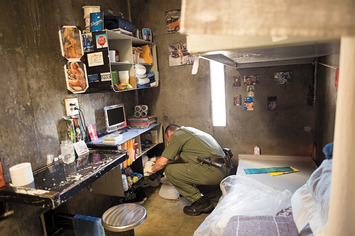
Originally formed for self-protection, prison gangs have become the unlikely custodians of order behind bars—and of crime on the streets. Via Jocelyn Stoller
Scoop.it!

collective-history:
Scoop.it!
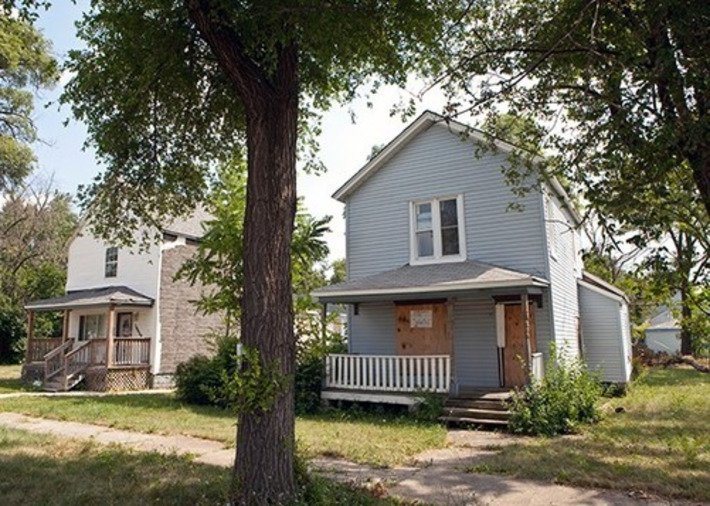
Before we can understand what makes some suburbs so miserable, we first have to understand what makes others succeed. The most successful suburban neighborhoods fall into two categories. First, there are the dense and walkable ones that, like the most successful urban neighborhoods, have town centers that give local residents easy access to retail and employment opportunities. These neighborhoods generally include a mix of single-family homes and apartment buildings, which allows for different kinds of families and adults at different stages of life to share in the same local amenities. The problem with these urban suburbs, as Christopher Leinberger recounts in his 2009 book The Option of Urbanism, is that there are so few of them, and this scarcity fuels the same kind of gentrification that is driving poor people out of successful cities.
The other model for success can be found in sprawling suburban neighborhoods dominated by households with either the time or the resources to maintain single-family homes and to engage in civic life. As a general rule, the neighborhoods in this latter category don’t allow for apartment buildings or townhomes on small lots. They implement stringent local land-use regulations that keep them exclusive, and they attract families that tenaciously defend the character of their neighborhoods. Via Mathijs Booden, Skuuppilehdet

Mamie Davis's comment,
September 13, 2014 3:18 AM
I really do think you desire as an adult what you grew up with as a child, especially if happy memories are associated with it. I grew up in a large house with a one acre yard of green grass, flowers, garden, garage, shed. We could see our neighbor's houses but they were far away enough that we didn't feel claustraphobic is we out in our yards at the same time. My parents also put up little shrubs around our yard to add to the feeling of privacy. However my friend from Spain, who I imagined lived in a house with a yard too for an entire year prior to visiting his family, lives in a flat in an apartment building. It is completely normal to him to live in a place like that your whole life. When I asked him where he went to be outside, relax and enjoy the sunshine he said they went to the street or the neighborhood center. He said only rich people lived in houses and had yards in places where you have little contact with neighbors. What I am saying is that we desire what we had as children, that the economics of our parents time and allowed them to get the place they have made an impression on us and our expectation about our future.
Scoop.it!

For those of you who prefer to think of the 1950s as an idyllic time, one to romance over, there were issues and crises. In fact, one of them was regarding journalism itself
Scoop.it!

Little Alida Baruch a few months old, taken shortly before she was deported with her parents to Auschwitz on July 16th, 1942.
|

Curated by Deanna Dahlsad
An opinionated woman obsessed with objects, entertained by ephemera, intrigued by researching, fascinated by culture & addicted to writing. The wind says my name; doesn't put an @ in front of it, so maybe you don't notice. http://www.kitsch-slapped.com

Other Topics

A Marketing Mix
Adventures in advertising and marketing - the contemporary, the historical, and the hysterical. http://deanna.dahlsad.com/
Antiques & Vintage Collectibles
Collecting old things; heirlooms and new to you things! Companion to http://www.inherited-values.com/

Colorful Prism Of Racism
Racism past and present. Companion to http://www.kitsch-slapped.com/category/colorful-prism-of-racism/

Consumption Junction
Consumerism meets marketing; who & what manipulates the free market of goods & services. See also: http://www.kitsch-slapped.com/category/ze-big-mouth-promotions-stuff/

Crimes Against Humanity
From lone gunmen on hills to mass movements. Depressing as hell, really.
Cultural History
The roots of culture; history and pre-history.
Dare To Be A Feminist

For Art's Sake-1
Art, crafts, and the people who make them. To inspire and purchase. Companion to http://www.ululating-undulating-ungulate.com/
Herstory
History as this woman sees it. The serious, the kitsch, the opinionated. Companion to http://www.kitsch-slapped.com/

In The Name Of God
Mainly acts done in the name of religion, but also discussions of atheism, faith, & spirituality.

Kinsanity
Let's just say I have reasons to learn more about mental health, special needs children, psychology, and the like.
Kitsch
Mostly vintage and retro "badness" but you can decide how delicious it is. http://www.kitschy-kitschy-coo.com/blog/

Nerdy Needs
The stuff of nerdy, geeky, dreams.

Readin', 'Ritin', and (Publishing) 'Rithmetic
The meaning behind the math of the bottom line in publishing and the media. For writers, publishers, and bloggers (which are a combination of the two).

Sex Positive
Sexuality as a human right.

Vintage Living Today For A Future Tomorrow
It's as easy to romanticize the past as it is to demonize it; instead, let's learn from it. More than living simply, more than living 'green', thrifty grandmas knew the importance of the 'economics' in Home Economics. The history of home ec, lessons in thrift, practical tips and ideas from the past focused on sustainability for families and out planet. Companion to http://www.thingsyourgrandmotherknew.com/

Visiting The Past
Travel based on grande ideas, locations, and persons of the past.

Walking On Sunshine
Stuff that makes me smile.

You Call It Obsession & Obscure; I Call It Research & Important
Links to (many of) my columns and articles.
|






Heart-breaking history.